The Intersection of Bitcoin and Trump: The Game of Freedom and Control
TechFlow Selected TechFlow Selected
The Intersection of Bitcoin and Trump: The Game of Freedom and Control
Bitcoin and the Republican Party have been on equal footing in this election, each getting what they want from the other—but the same cannot be said for the rest of the crypto space beyond Bitcoin.
 Navigating Web3 tides with focused insights
Author: Zeke, Researcher at YBB Capital
I. Whatever Does Not Kill Me, Makes Me Stronger
"I'm Back, Bitches!"—a salute to all doubters, and to all those who tried to bury me.
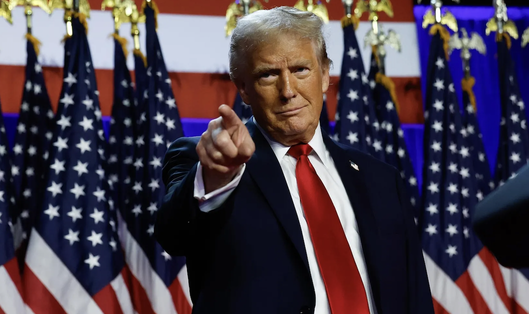
The first U.S. president in history to be criminally convicted, a so-called "tech madman" known for womanizing and advocating brain-computer interfaces and Mars colonization, a few fragmented former allies, past political enemies, and a cryptocurrency that mainstream media has declared dead hundreds of times since 2011. This seemingly bizarre and absurd coalition formed the visible foundation of the Republican Party’s campaign in America's 60th presidential election. At its center stands Trump—a figure around whom the alliance appears fragile. Two key figures, Musk and Vance, have repeatedly criticized his policies publicly, while Trump himself has long dismissed Bitcoin as a Ponzi scheme and money-laundering tool.
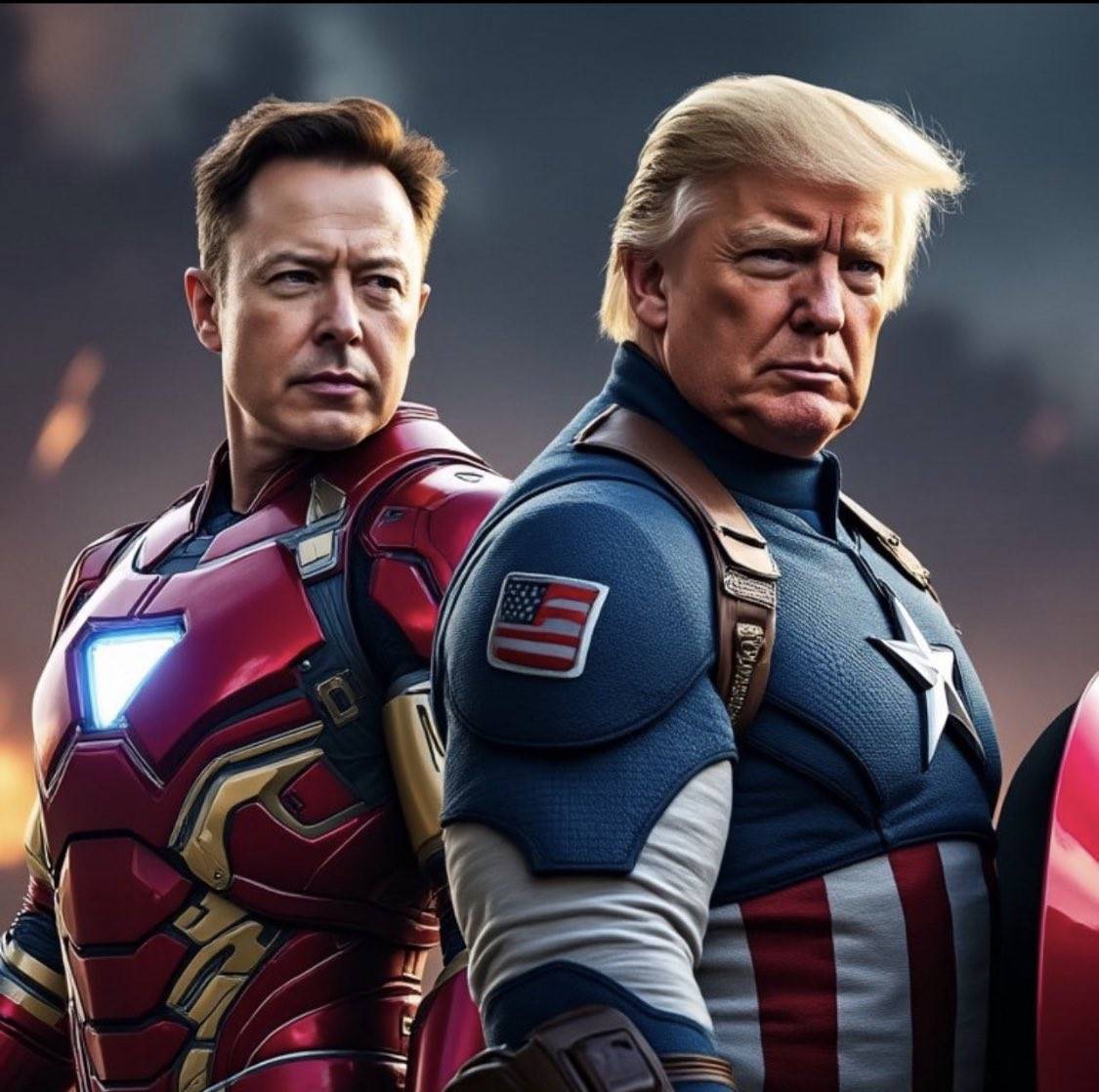
Yet, as the ancient saying goes: “All men hustle; some for profit, others for gain.” People and things alike will set aside differences when interests align. For Trump, this is a fight for survival and family legacy. For Musk, it's a battle for humanity's future. For Vance, it's a defense of the old American Dream against the new Silicon Valley elite. All their conflicts converge on one target: the Democratic Party.
From the moment God cast the first vote in Pennsylvania, the balance began to tilt. Democrats pulled out every stop—rotating veteran politicians, mobilizing Hollywood stars, spending lavishly on media campaigns—but nothing could halt the Trump team’s victory.
Contrary to pre-election narratives from mainstream U.S. media claiming the closest race in history with Harris holding a narrow lead, on November 6—the final voting day—the Republicans swept all seven swing states, wrapping up the contest within half a day. Trump defeated the Democrats’ full-scale encirclement with overwhelming force. One of the GOP’s key advantages was the silent majority: legal citizens oppressed by illegal immigration and authoritarian liberalism. They don’t speak up on social media, but they show up to vote. Once again, the man in the red MAGA hat stormed back into the White House.
In this spectacular U.S. election, I can understand each member’s motivation for backing Trump—but why did he choose Bitcoin? A common explanation is that crypto owners make up 13% of the U.S. population, and Trump needed their votes. According to Trump himself, Bitcoin could help repay the $35 trillion national debt and replace gold as a strategic reserve. The first reason seems weak; the second, outright absurd. To convince myself, I’ve read countless articles and watched numerous videos from traditional financial commentators since November 6. My conclusion: Bitcoin intersects with Trump and Musk’s vision for America over the next four years in multiple ways—energy, anti-Fed sentiment, opposition to Democrats, anti-big-government ideology, and a new symbol of the old American Dream.
II. Energy
Politicians' true intentions often hide behind lofty rhetoric. Let’s revisit the strangest part of Trump’s vision for Bitcoin: in June, he posted late at night on Truth Social, “Bitcoin mining might be our last line of defense against CBDCs (central bank digital currencies)... We want all remaining Bitcoin made in the USA!!! This will help us dominate the energy sector.”
He’s made similar statements—wanting all future Bitcoin labeled “Made in the USA,” aiming to turn America into the global crypto capital. On the surface, these messages signal alignment with grassroots voters, resistance against Democratic “tyranny” over crypto, opposition to CBDCs, and rejection of Bitcoin mined in Europe or Asia. But upon closer inspection, whether Bitcoin carries an American label has little real connection to these goals. Trump’s actual intent lies in the last phrase: dominating energy. His primary donors include Kelcy Warren (CEO of Energy Transfer), Harold Hamm (founder of Continental Resources), Jeff Hildebrand (CEO of Hilcorp Energy), Timothy Dunn (CEO of CrownQuest Operating), and Koch Industries—the largest private oil company in the U.S. Fossil fuel funding forms the backbone of Trump’s re-election campaign. The Democratic push for renewable energy has severely hampered traditional oil industries. Trump aims to revive fossil fuels—burn more oil, power everything with it, and drill like there’s no tomorrow.
Musk’s Mars ambitions are equally tied to energy. What stands in the way of colonizing Mars? First, energy; then rocket launch costs, AI robots, and communications—areas directly addressed by Tesla EVs, SpaceX, Tesla bots, and Starlink. Yet today, the biggest obstacle isn't technology—it's government. Democratic-aligned automakers receive most of their support from legacy giants like GM and Ford. Despite promoting clean energy laws and EV subsidies, Democrats consistently exclude Tesla. NASA’s lunar program was launched under Trump, with $146 million in contracts mostly awarded to SpaceX. But after Biden took office, NASA redistributed the contracts—cutting SpaceX’s share to just $9.4 million, handing the bulk to Bezos’ Blue Origin. Worse, Democratic regulators have repeatedly blocked SpaceX launches on flimsy environmental grounds—like potential harm to marine life. Starlink played a crucial role in Ukraine’s war effort, yet payment remains unpaid. Musk initially planned to shut down service, but under Democratic pressure, had to restore it.
Going all-in on Trump is Musk’s only viable path. Energy policy and space contracts are the chips Trump can offer in return. Beyond reviving internal combustion engines, this aligns perfectly with Trump’s anti-extreme-environmentalism stance—making their alliance a natural fit.
Energy also plays a critical role in AI development. As I wrote last year in *Emerging Frontier: Decentralized AI Compute Markets*, computing power is the oil of the future. Breaking that down further: electricity and chips. “Tokens per dollar per watt” represent future productivity. Strengthening the energy industry ensures U.S. leadership in AI—a priority for Vance and the new Silicon Valley faction. Thus, Bitcoin mining is merely a smokescreen for Trump. “Made in the USA” has no direct link to stopping CBDCs or foreign mining. The Don may not fully understand Bitcoin—he only needs to know people love it, and it consumes massive amounts of power.

III. Anti-Federal Reserve
Zuckerberg was once the Democrats’ top fan. He demonstrated loyalty by immediately banning Trump’s account after his departure. Trump has vowed that if re-elected, he’ll throw Zuckerberg in jail. Yet even such devotion didn’t earn Facebook’s Libra project any leniency—because launching a private currency is tantamount to declaring war on the Federal Reserve, America’s most powerful private bank. Meta’s fate? Plummeting stock prices and a failed metaverse. Compared to past politicians, however, Zuckerberg got off lightly.
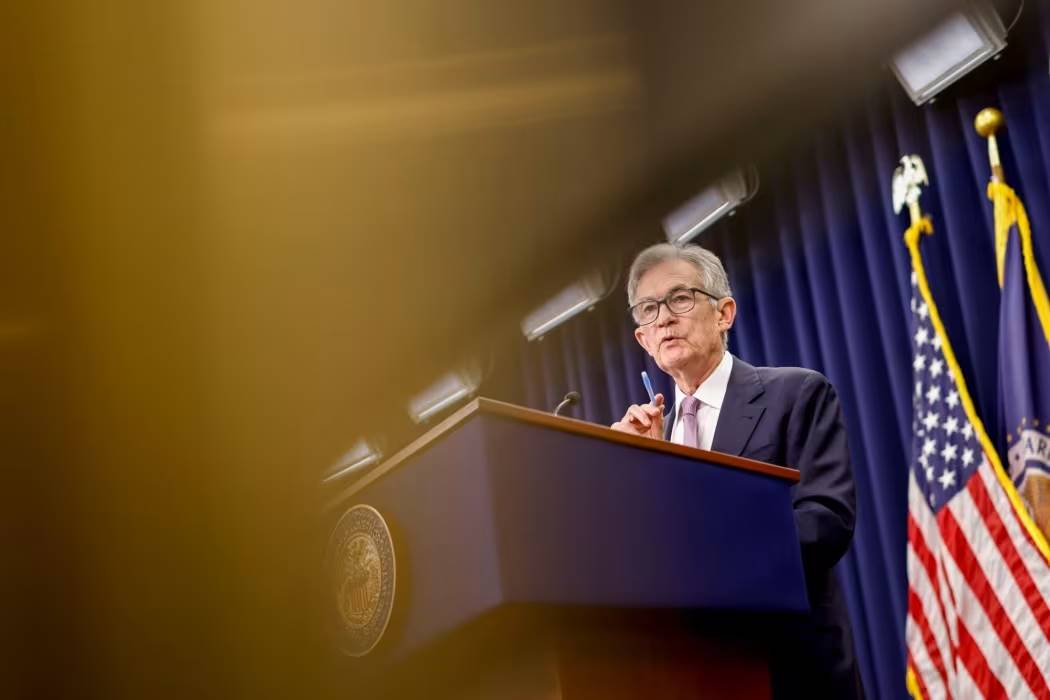
Historically, two presidents dared challenge the Fed: Lincoln, who sought to reclaim coinage rights, and John F. Kennedy, who wanted to issue silver-backed currency. Both ended up assassinated. Still, both Musk and Trump aim to become the next challengers. During his previous term, Trump frequently criticized the Fed’s rate hikes. The Fed’s independence prevented him from influencing monetary policy—this time, he wants to fire Fed Chair Jerome Powell outright. Musk, during the last crypto cycle, briefly allowed Tesla to accept Bitcoin payments before halting them, citing environmental concerns. But I believe the real goal was challenging the dollar’s dominance—and the shutdown likely had nothing to do with environmentalism.
Destruction before construction—that’s the shared philosophy. Trump is the craziest politician, Musk the craziest entrepreneur, Bitcoin the craziest currency. Perhaps there’s nothing they won’t challenge. On November 8, when a senator tweeted, “The executive branch should operate under presidential authority—that’s what the Constitution intended,” Musk replied with a single emoji: “💯”. The tweet included the hashtag #EndtheFed (“End the Fed”), stating: “The Fed is one of many examples where we’ve strayed from constitutional principles. Another reason we should end it.”
Let’s revisit Trump’s promises about Bitcoin: using it to pay off national debt, building strategic reserves, surpassing gold. Anyone who passed elementary math knows this is nonsense—holding just 1% of global Bitcoin supply wouldn’t cover a week’s interest on U.S. debt. But the subtext is clear: Trump wants control over monetary power. And Bitcoin, as the ultimate challenger to fiat currency, is the perfect standard-bearer in this anti-Fed crusade. It wins over ordinary supporters and pressures Democrats simultaneously. If Trump succeeds in dismantling the Fed, he won’t just be the most powerful president in decades—he’d become the only one in U.S. history with total control.
IV. Anti-Big Government
I’ll skip detailed critiques of Democrats here—the article *Crypto War 33 Years: Begins with Biden, Ends with Biden* by author Chao offers a sharper analysis. Instead, let’s clarify what “big government” means under Democrats versus the Republican ideal of small government.
Jefferson once said, “That government is best which governs least.” Small government—low taxes, minimal regulation, emphasis on individual freedom and market mechanisms—has long been the Republican creed. Democrats favor big government: high taxes, strong oversight, prioritizing social equity and public services. Crypto’s ethos of decentralization closely mirrors small government ideals—both value free markets and personal liberty. The difference? Small government advocates still see a minimal state as necessary to protect freedoms.
As crypto integrates with America, we may see Republicans shape blockchain governance along small-government lines—a new front against Democrats. Over the past four years, the Democratic Party, infused with far-left ideologies, has transformed into an apparatus exploiting legal citizens through unprecedented moral coercion. Efforts to correct social injustice via state power have devolved into tolerance or even support for extreme movements—rainbow flags, looting, drug use now commonplace. Illegal immigrants get hotel rooms and shopping cards, enjoying benefits above legal citizens. The Democratic strategy is clear: exploit and indoctrinate citizens to maintain power—even losing some votes, they gain more from undocumented migrants and radical leftists. Trump, meanwhile, envisions a regulated crypto ecosystem where citizens enjoy efficient, free financial activity. Even election fraud—the bane of his 2020 loss—could be eradicated via blockchain, reclaiming the lost four years and securing Republican dominance beyond 2028.
V. A New Symbol of the Old American Dream
The new American Dream is embodied by Kamala Harris—first female Vice President, of African and South Asian descent—an immigrant success story perfectly fitting Democratic “political correctness.” She represents openness, multicultural integration. In contrast, the old American Dream lives in JD Vance: a child of the Rust Belt, a veteran, author, businessman, and now Vice President-elect and voice of new Silicon Valley. He embodies the original American belief that hard work, courage, creativity, and determination lead to prosperity—core values of democracy, rights, freedom, opportunity, and equality.
As Trump’s running mate, Vance’s strengths are perfectly complementary. And Bitcoin—or crypto at large—aligns seamlessly with this old American Dream. Proof-of-Work (PoW) means you earn exactly what you put in. In this parallel blockchain world, miners are absolutely equal. This dream resonates even stronger in developing nations, where people use stablecoins or Bitcoin to bypass unreliable banks and unstable local currencies, finding freedom and opportunity in DeFi and blockchain economies. If Trump keeps his word, the next era of Web3 will become a global “American Dream” for crypto users worldwide.
Conclusion
Satoshi Nakamoto once replied to BM (EOS founder): “If you don’t believe me or can’t understand me, I don’t have time to convince you. Sorry. We’re past the stage of explaining what Bitcoin is, or whether it’s a Ponzi scheme. For sixteen years, it has never failed. It exists across the Atlantic, and right beside you.”
I don’t mind Bitcoin becoming Americanized. Any nation, institution, or individual can buy Bitcoin. Crypto is inherently free. Owning tokens doesn’t mean controlling the network—everything happening on the Bitcoin blockchain remains decentralized. But I do resent the constant linkage between crypto and politics. First, I genuinely don’t understand U.S. politics. Second, as an industry blending finance and emerging tech, we’ve spent far too much time discussing politics over the past year—an abnormal state for any developing technological field. In this election, Bitcoin and the Republican Party stood side by side, each serving the other’s interests. But the rest of the crypto ecosystem is not so fortunate.
Join TechFlow official community to stay tuned
Telegram:https://t.me/TechFlowDaily
X (Twitter):https://x.com/TechFlowPost
X (Twitter) EN:https://x.com/BlockFlow_News
 @YBBCapital