How to Become the Best VC in Silicon Valley?
TechFlow Selected TechFlow Selected
How to Become the Best VC in Silicon Valley?
Answer: Organize events.
 Navigating Web3 tides with focused insights
By Jessica
"Which event did you go to today?"
In San Francisco last week, this became the standard greeting between friends and me.
"So packed today—too many great events, hard to choose. Back at it again tomorrow."
This was also the common farewell I heard every night when parting ways with newly met founders in San Francisco.
Over the past week, entrepreneurs and investors across Silicon Valley gathered in every corner of San Francisco for a flurry of events. Some had carefully scheduled agendas; others flew in from around the world; some asked a quick question at one event before rushing off to the next.
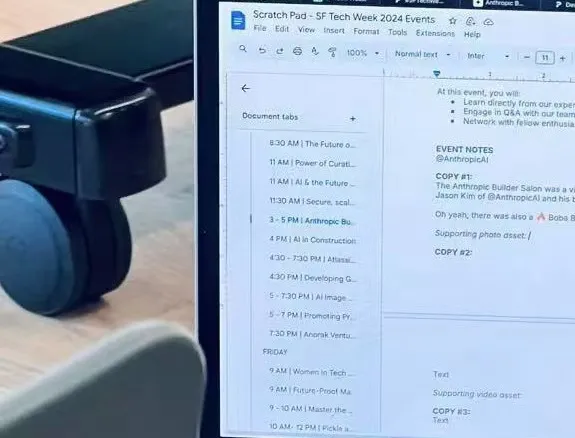
These events, diverse in form, all revolved around AI and entrepreneurship.
And at nearly every gathering, one name came up repeatedly: a16z.
Welcome to SF Tech Week—the annual tech festival organized by top-tier U.S. venture capital firm Andreessen Horowitz (commonly known as a16z). Held each October and November across major cities like San Francisco, Los Angeles, and New York, the week-long series of discussions, workshops, demo days, and investor meetups aims to connect global tech professionals, industry leaders, startups, and investors, fostering broad collaboration and exchange.
Throughout the Tech Week, a16z curates flagship events while allowing any company or organization to submit and host their own activities. This decentralized approach brings immense flexibility and diversity, helping Tech Week rapidly gain popularity within the global tech and venture community since its launch in 2022.
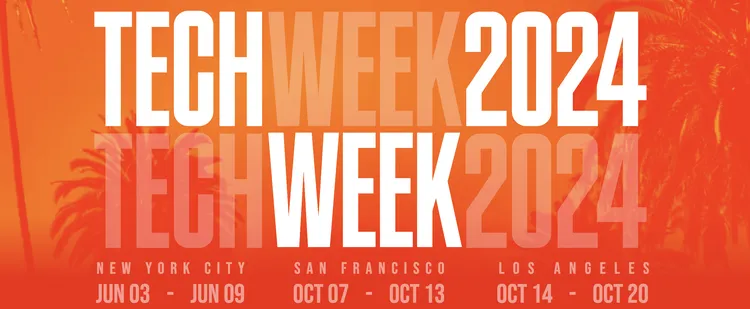
This year’s theme centered on “Artificial Intelligence, Climate Tech, and Women in Entrepreneurship,” while also covering cutting-edge fields such as robotics, enterprise automation, Web3, gaming, and aerospace.
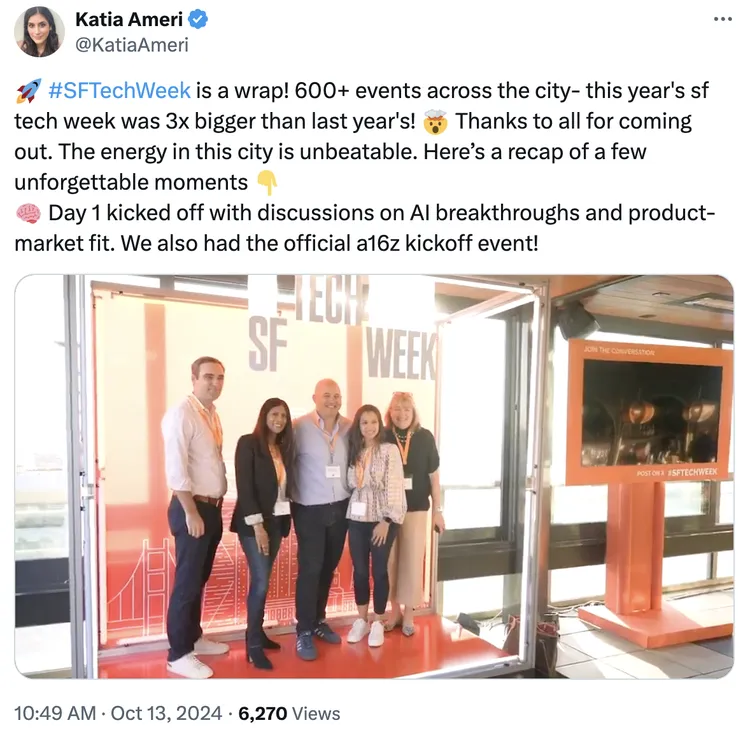
According to a summary by a16z partner Katia Ameri on X (formerly Twitter), the recently concluded San Francisco Tech Week hosted over 600 events in just seven days—nearly 90 per day—tripling last year's scale.
Participants included tech giants like Google, OpenAI, and Snowflake; hot AI unicorns such as Anthropic, Runway, Mistral AI, and Anyscale; developer and founder communities like GitHub and Plug and Play; and countless AI agent, application, and hardware startups. Attendees spanned beyond a16z’s star partners to include virtually every well-known expert and technical leader in the AI space.
The variety of event formats felt like stepping into a whole new world.
From standard keynote speeches, panel discussions, and themed breakfasts:
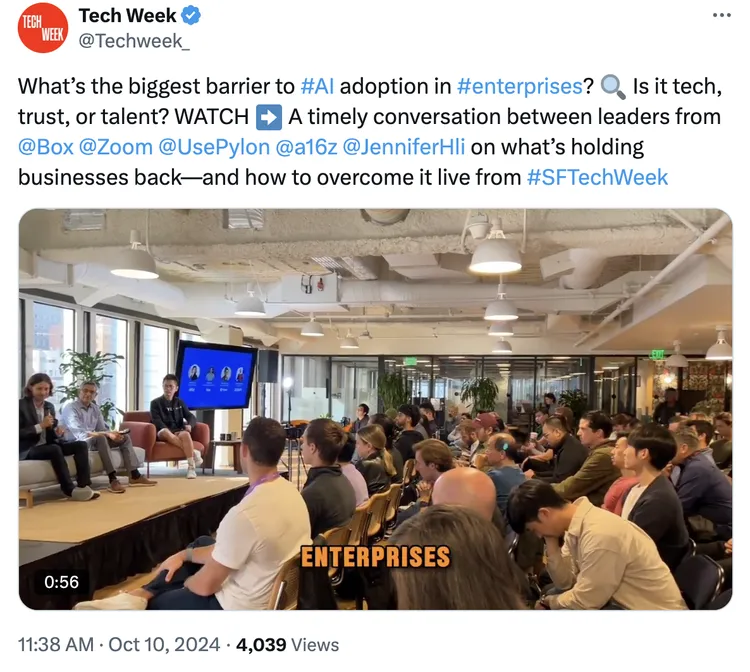
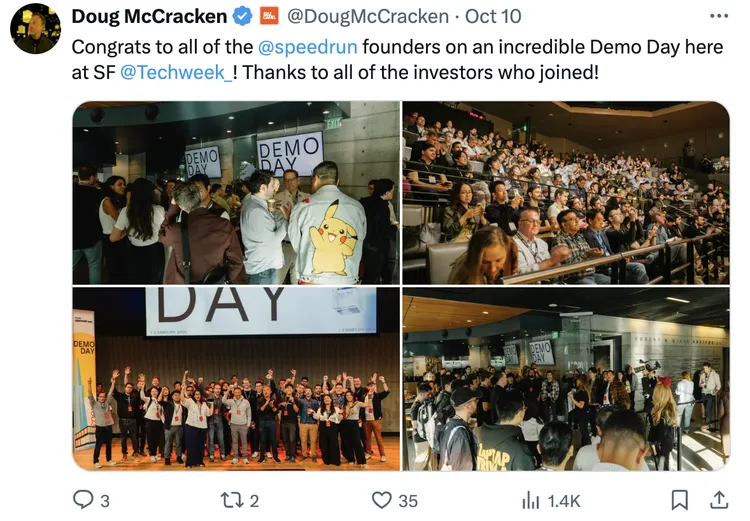
To founder pitch Demo Days:
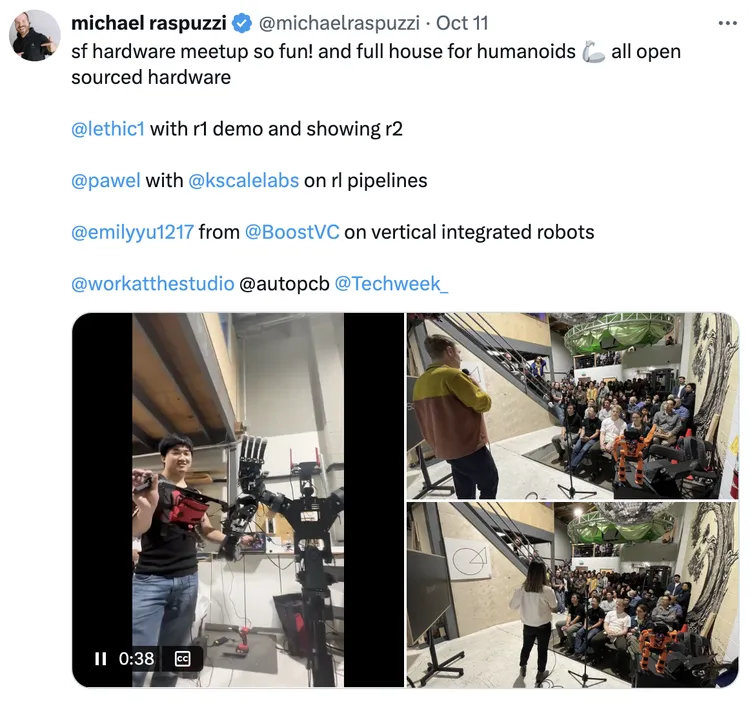
Robot prototypes brought live from garages:
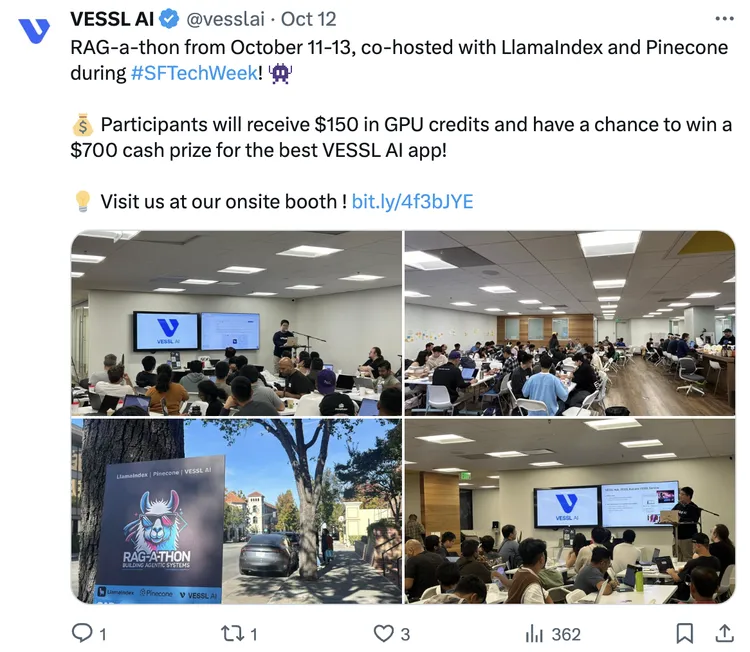
Hackathons focused on agent-building, retrieval-augmented generation, and other AI topics:
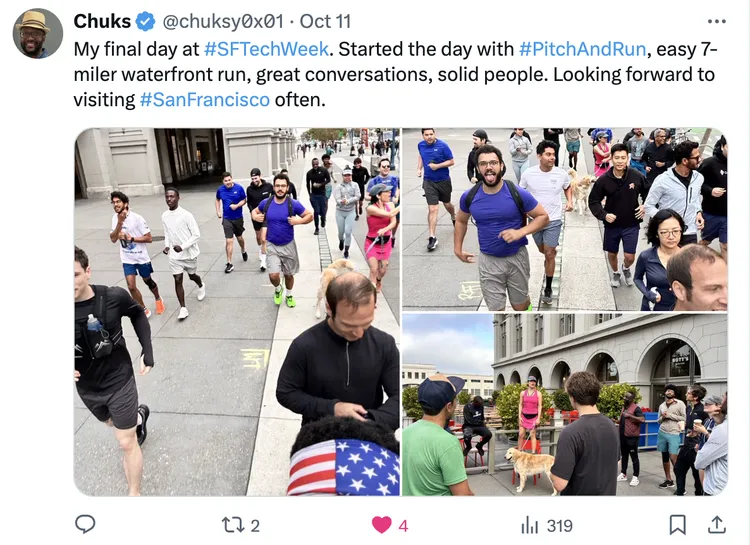
And even more creative formats. Take "Pitch and Run," a jogging meetup that attracted 43 tech professionals from Nigeria, Poland, Canada, India, and elsewhere.
Founders of AI startups, tech enthusiasts, and investors exchanged ideas and explored collaborations while jogging along San Francisco’s coastline. Organizers revealed that Pitch and Run has already facilitated at least eight investment deals in recent years.
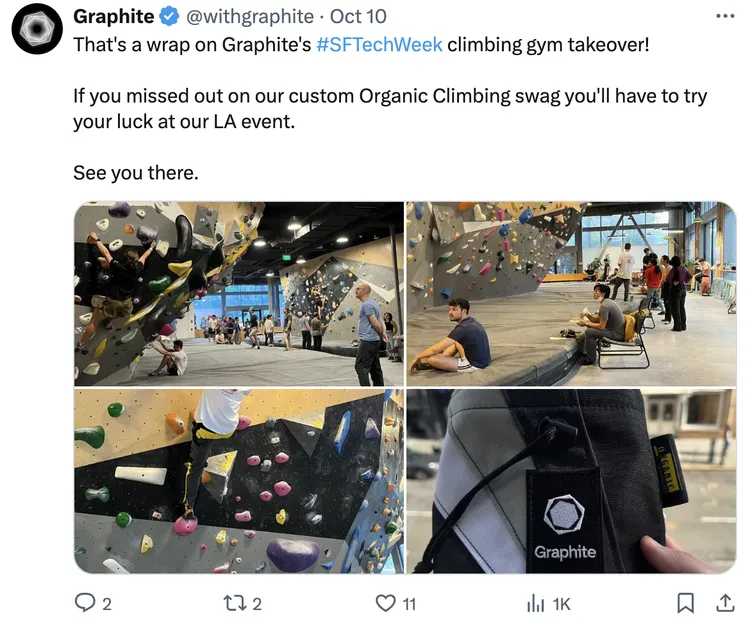
Other offerings included rock climbing, poker nights, stand-up comedy—social events blending fun with learning.
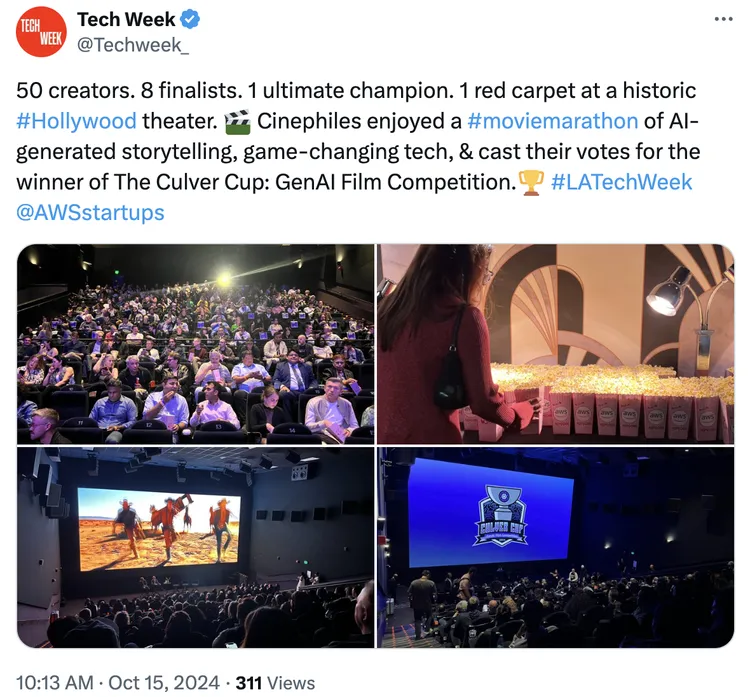
Meanwhile, LA Tech Week has taken over from San Francisco and is now in full swing, adapting content to local strengths in entertainment and gaming. For example, a generative AI film competition featuring 50 creators premiered at a Hollywood theater.
To be honest, while many major VCs now host events to boost visibility, few have achieved anything close to a16z’s level of cultural phenomenon.
Gathering tens of thousands of like-minded people, when founders, talent, technology, products, capital, and customers converge in San Francisco during late autumn, the result is nonstop sold-out events. The name a16z dominates social media, with every discussion around Tech Week spreading rapidly and gaining momentum.
Beyond hosting large-scale offline events like Tech Week, a16z maintains strong visibility through its partner team and consistent content output.
Compared to traditional venture capital firms, a16z operates more like a media-savvy marketing company. Through prolific content creation and event curation, it deeply integrates into the tech community, maintaining constant engagement and staying top-of-mind—amplifying its brand presence. Whether via blogs, podcasts, or social media, a16z appears in nearly every tech conversation, emerging as a key player and thought leader in the venture ecosystem.
Building Its Own Media
In fact, a16z’s “media-first” approach has deep roots.
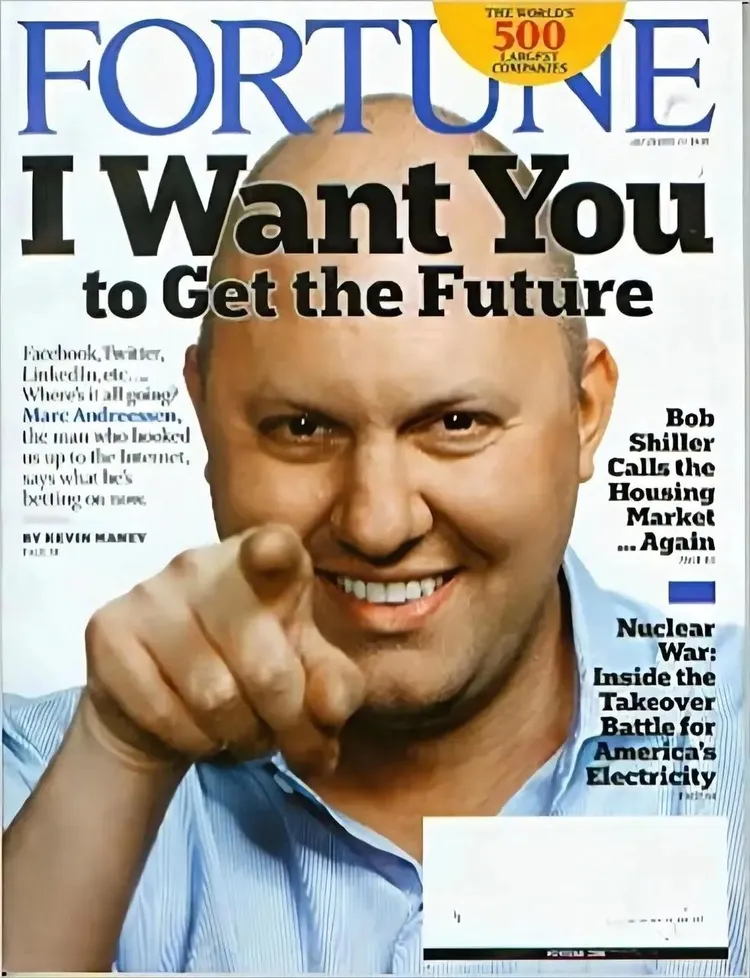
From its founding in 2009, Andreessen and Horowitz hired Margit Wennmachers—dubbed the “home run queen of PR”—to build the firm’s public profile. She helped Marc Andreessen land the cover of Fortune magazine styled as Uncle Sam. By cultivating relationships with mainstream media, a16z quickly gained prominence in the industry.
But by 2015, after more than a decade of cooperation, tensions emerged.
A major scandal shook Silicon Valley: Theranos, a blood-testing startup championed by a16z (whose founder emulated a female Steve Jobs), was exposed as a massive fraud. Afterward, media sentiment toward startups shifted from praise to skepticism and criticism—and a16z, having backed numerous startups, began facing increasingly negative press.
a16z believed traditional media often lacked depth in understanding technology, reporting with preconceived biases and sometimes exaggerating or fabricating stories for clicks.
So they decided to take control of the narrative. They would build their own media platform and directly challenge institutional media.
In 2021, a16z launched Future, a media site built on the idea of “going direct” to create a space for “techno-optimism.” It aimed to provide an open platform for policymakers and technologists, bypassing traditional media to deliver unfiltered, positive, and objective insights.

Yet Future failed to achieve the disruptive or lasting impact expected.
Despite initial buzz and a steady stream of articles, updates slowed over time, and the platform never made a significant mark in tech or journalism. Critics argued its content primarily served a16z’s portfolio companies, lacking independent investigative reporting or rigorous critique. Ultimately, Future was seen more as a corporate PR tool than a serious news outlet—and shut down in 2022.
Expanding the Content Matrix
After Future’s closure, a16z swiftly adjusted its media strategy. The firm realized that while “going direct” helped bypass traditional media, it risked limiting broader public trust and recognition. So a16z gradually resumed engagement with institutional media. On major news or tech launches, senior leaders—including Marc Andreessen and Ben Horowitz—began giving interviews to outlets like The New York Times and CNBC to enhance credibility and influence.
a16z also expanded its investments into content platforms. Substack, often called the “U.S. version of WeChat Official Accounts,” is a newsletter platform enabling creators to earn through paid subscriptions. a16z led Substack’s Series B round, pushing its valuation to $650 million. Through such investments, a16z strengthened its influence in media while leveraging its network to help Substack attract more writers and users.
At the same time, a16z doubled down on building its internal content platforms, combining blogs, email newsletters, and books. Every team member, in addition to their core role, took on a new identity: “Author at Andreessen Horowitz.” Each had their own author page, functioning like media editors. a16z partners became high-profile自媒体 writers whose analyses of industry trends were widely shared and often cited as authoritative references.
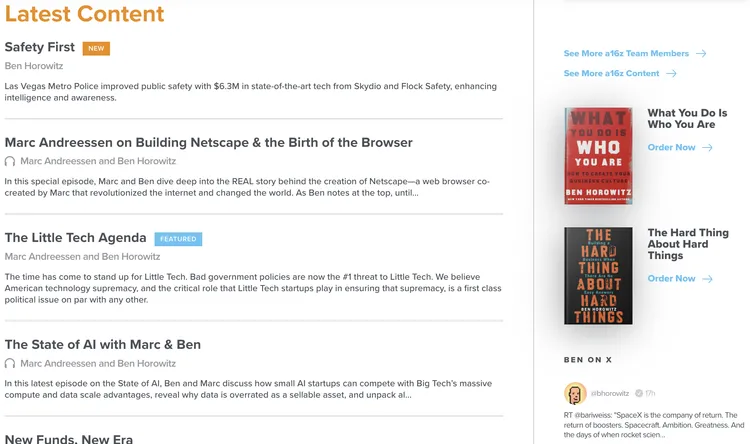
Ben Horowitz’s author page, showcasing all his published content and updates
In terms of content transparency, a16z strengthened conflict-of-interest disclosures, clearly labeling its investments in relevant industries or companies. This shift earned greater trust in its objectivity and professionalism.
Beyond written content, a16z expanded into podcasts and multimedia, embracing videos, live webinars, and in-depth industry reports. Using multiple channels, it maintained ongoing engagement with diverse audiences.
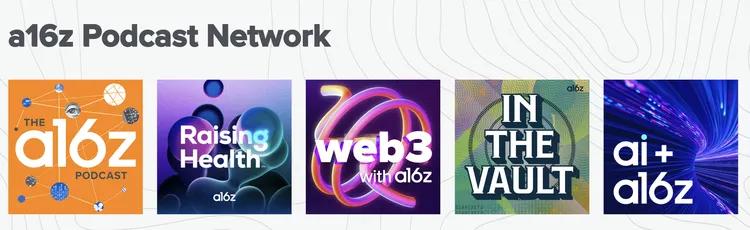
According to official a16z data, its podcast receives over 900,000 monthly downloads
One standout is the “a16z Podcast,” which features deep conversations between a16z investors and leading tech figures or renowned founders. Covering topics from startups to tech trends, the podcast delivers high-quality analysis and has become a must-listen for tech and venture audiences.
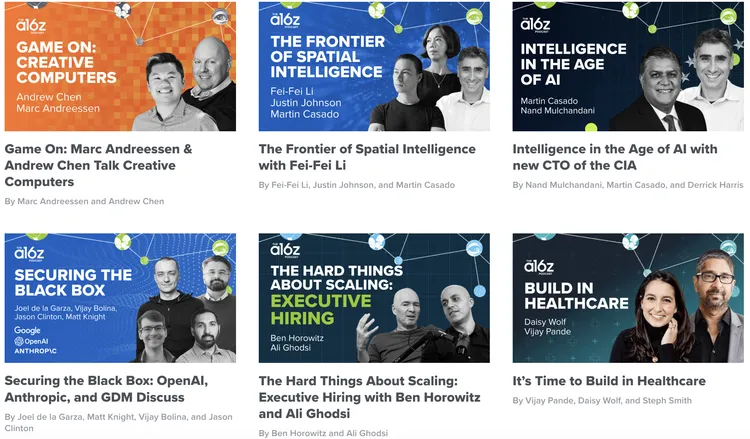
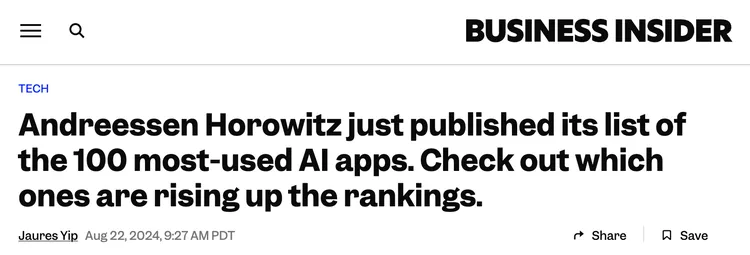
a16z has also released several influential industry reports across domains: *State of Crypto*, *Top 100 Gen AI Consumer Apps*, *Marketplace 100*, and *American Dynamism*—focusing on security and infrastructure.
The *Gen AI Consumer Apps Report* is updated every six months, ranking the 100 most popular generative AI apps based on independent traffic and active user data across web and mobile. It serves as a vital reference for founders and investors and has become a benchmark closely watched by media and industry alike.
Cultivating Superstar Partner-KOLs
Leveraging powerful media operations, a16z has built a vast content empire and cultivated a team of key opinion leaders (KOLs).
Marc Andreessen boasts 1.4 million X followers, actively engaging in debates on tech and society, regularly publishing blogs and videos analyzing industry trends. Ben Horowitz is a bestselling Silicon Valley author with over 10 million blog readers. Known for using rap lyrics to deliver business advice, he’s hailed as “the most valuable blogger among Silicon Valley entrepreneurs.”
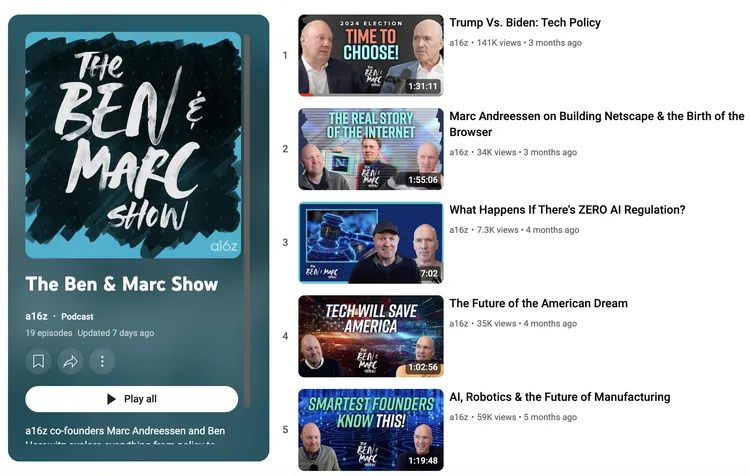
Through public appearances and debates, the two co-founders drive discourse on major industry shifts. They even co-host a series called *The Ben & Marc Show*, discussing the hottest topics in tech, policy, and society.
Another star partner, Chris Dixon, is a leading voice in Web3, blockchain, and crypto. Sharing deep insights via blogs and social media, he helps demystify decentralized technologies. With over 900,000 X followers, his essay *Why Web3 Matters* sparked widespread debate. His early investments in Coinbase and OpenSea cemented his influence and positioned a16z as a central player in Web3.
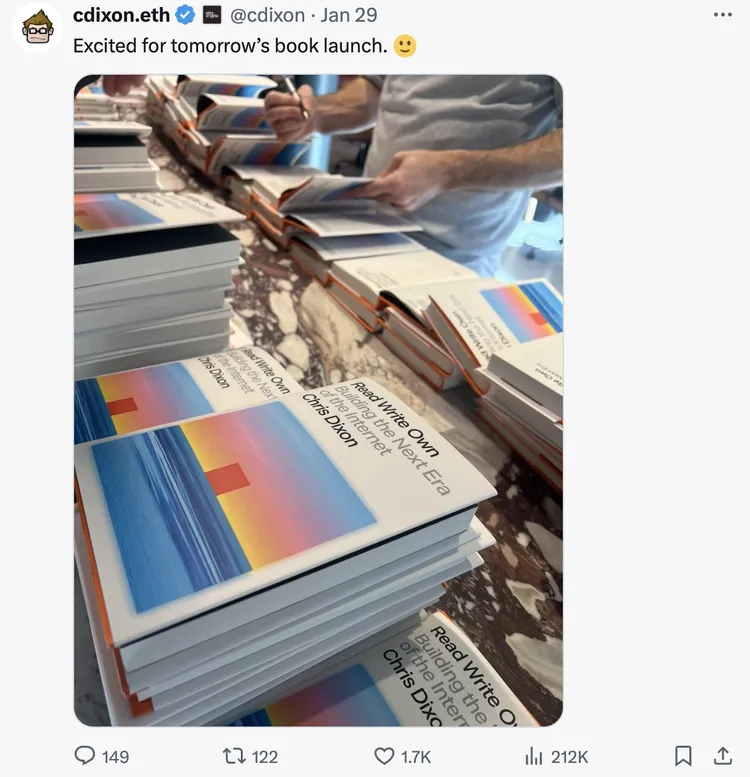
Chris Dixon’s 2024 book Read Write Own, exploring how blockchain could reshape the internet’s future, became a New York Times bestseller
Martin Casado, a16z partner focused on cloud infrastructure and enterprise software, also commands a wide following. His concept of the “cloud cost paradox” highlights the rising expenses companies face with large-scale cloud adoption, advocating for “cloud repatriation” to cut costs. This insight has saved enterprises billions and influenced infrastructure strategies across the tech industry.
Casado now leads a $1.25 billion AI infrastructure fund, further spreading his views through high-quality content and deep technical discussions on cloud systems and generative AI models.
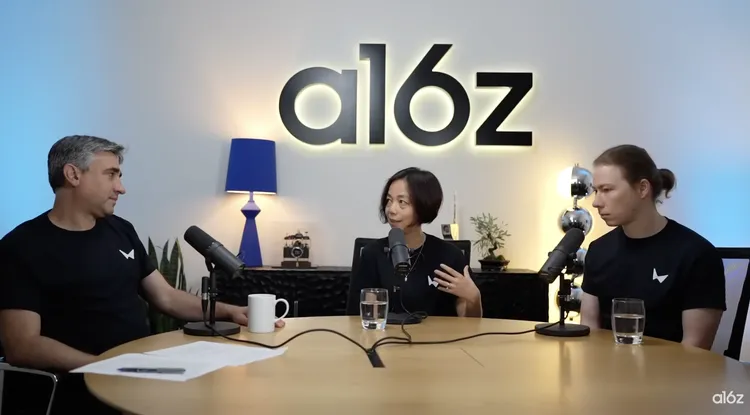
September 2024: Martin Casado visits World Labs co-founders Fei-Fei Li and Justin Johnson
Through consistent, impactful content and active participation in elite tech events, these partners have generated extensive media attention in their respective fields. As a result, a16z has evolved not only into a top-tier VC but also a media powerhouse shaping innovation narratives.
Hands-On Promotion: Partners Leading the Charge
Beyond building partners into media personalities, a16z encourages them to actively engage with emerging platforms in their portfolio.
As a key investor in Clubhouse, a16z partners—especially Andrew Chen—led many of the app’s early discussions. Chen played a pivotal role in growing the Clubhouse community. By frequently hosting and joining conversations, a16z helped turn Clubhouse into a cultural phenomenon for real-time tech dialogue. Chen himself emerged as a public thought leader, continuing to shape industry discourse.

In AI, a16z has deployed massive capital. Recognizing that open source is critical for AI startups, the firm strongly advocates openness.
To oppose California’s SB-1047 bill—which threatens to restrict AI innovation—a16z published numerous articles and podcast episodes educating the community on its implications and offering countermeasures. It mobilized AI developers, researchers, and founders to launch a petition website, rallying public resistance. Simultaneously, a16z continues releasing educational materials, industry analyses, and rankings to promote AI innovation broadly.
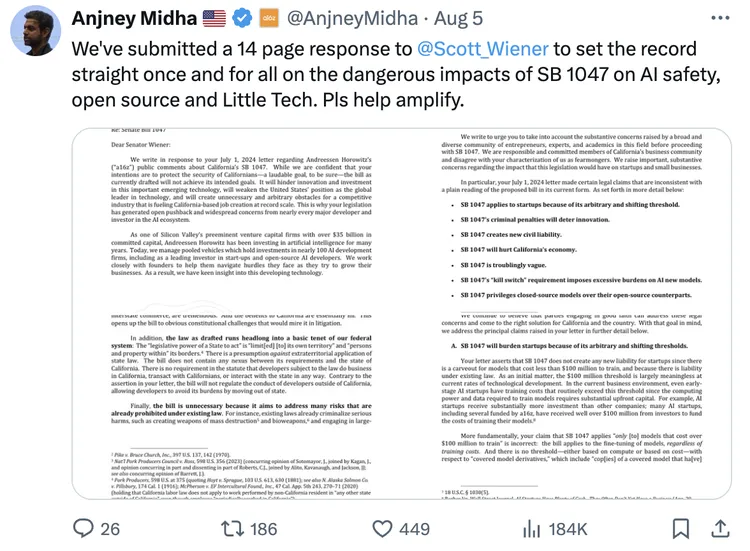
a16z partner Anjney Midha speaks out consistently on X, a leading advocate against SB-1047
By turning partners into highly visible thought leaders, actively promoting technological platforms, and combining comprehensive media outreach with offline events, a16z ensures it is not just a capital provider—but a key force shaping the future of technology and driving industry transformation.
Since its founding in 2009, a16z has managed over $43 billion in assets and backed more than 500 startups across AI, Web3, blockchain, and cloud computing.
In 2023, a16z launched a new $4.5 billion AI fund dedicated to generative AI and AI infrastructure. Behind many breakout AI stars—including OpenAI, Luma AI, Mistral AI, Runway, and Black Forest Labs—is a16z. As one of the world’s most active venture firms, a16z participated in 79 funding rounds last year, ranking first in annual deal volume.
Through years of strategic media development and expanding investments, a16z has transcended the traditional VC model, becoming a dominant voice in global tech and a leader in shaping the future of technology.
There’s no doubt: a16z is simply too comprehensive.
Join TechFlow official community to stay tuned
Telegram:https://t.me/TechFlowDaily
X (Twitter):https://x.com/TechFlowPost
X (Twitter) EN:https://x.com/BlockFlow_News