Rollup Interoperability Progress Study: Why ZK Rollup Is the Optimal Solution?
TechFlow Selected TechFlow Selected
Rollup Interoperability Progress Study: Why ZK Rollup Is the Optimal Solution?
As Rollups become central to Ethereum's scaling, interoperability between L2s is critical, and the latency and fragmentation issues of OP Rollups make ZK Rollups a more ideal long-term solution.
 Navigating Web3 tides with focused insights
Written by: @2077Research
Translation: Baicai Blockchain
As rollups become central to Ethereum's scalability, interoperability between L2s is critical to the success of its rollup-centric roadmap. Fragmentation across L2s creates inefficiencies and slows adoption.
A few months ago, we published research exploring “The State of Rollup Interoperability in 2024.” Here are our findings.
1. Current Problem: L2 Fragmentation
L2 rollups such as Arbitrum, zkSync, and Optimism operate independently, making cross-chain communication expensive and slow. Without seamless cross-rollup transactions, the Ethereum ecosystem will remain fragmented, undermining liquidity and composability.
2. Optimistic Rollups: The Standard Bridge Issue
Rollup bridges prove their state to Ethereum L1 to inherit security. However, OP Rollups introduce delays (typically 7 days) due to the "challenge window."
This delay becomes a bottleneck for cross-chain transactions—no one wants to wait a week to complete a DEX trade!
3. ZK Alternative
ZK rollups offer faster finality using zero-knowledge proofs, but their bridge finality still takes several hours (@zksync Era: 21 hours, @Starknet: 9 hours). Delays primarily stem from execution buffers and costly proof verification on L1. While ZK proof verification is faster than OP Rollups, it remains computationally intensive.
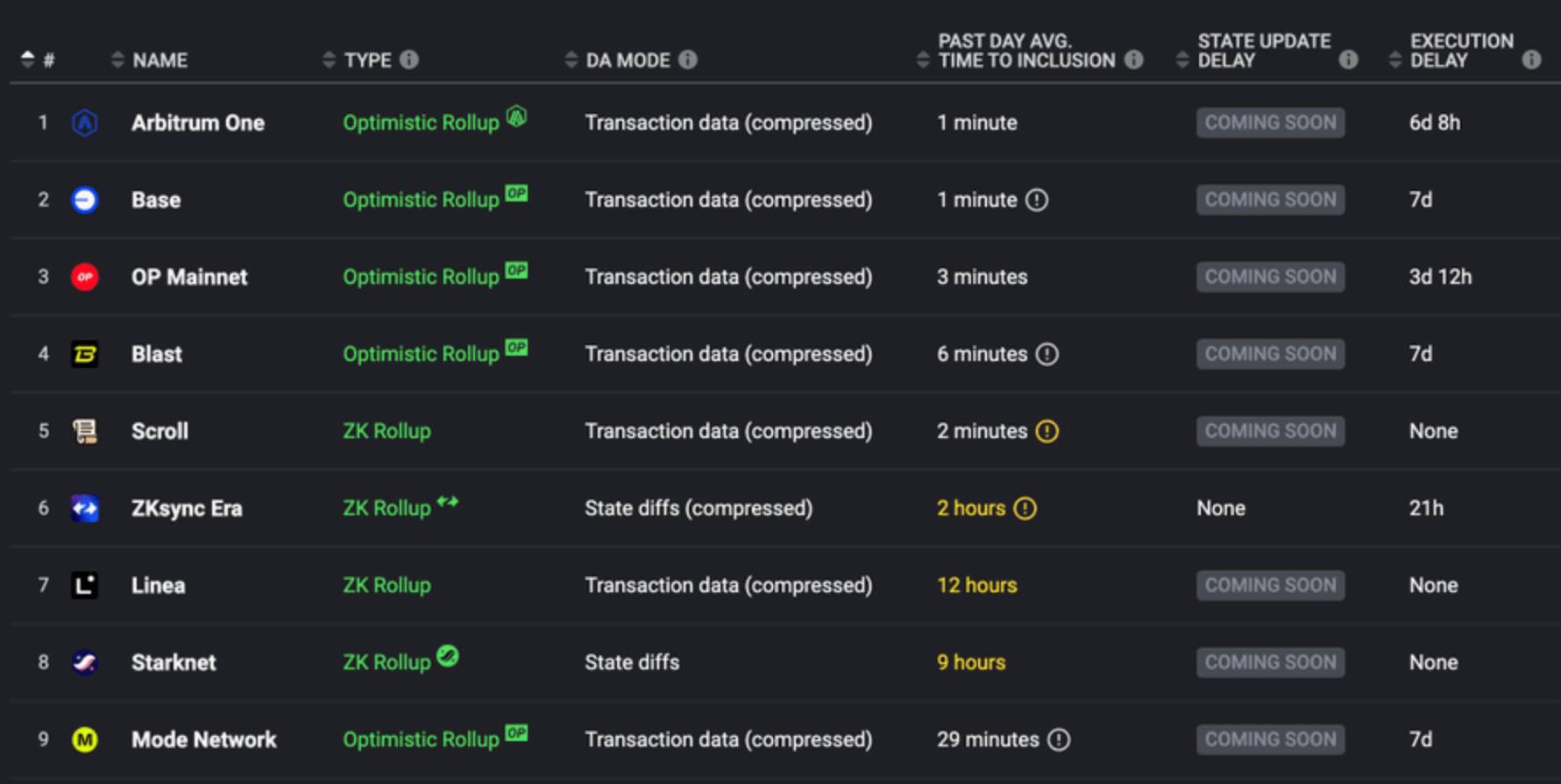
Source: @l2beat
4. Keystore Rollups: Simplifying Account Management
Last year, @VitalikButerin proposed keystore rollups—a model focused on storing account keys rather than full virtual machines (VMs). By verifying transactions via Merkle proofs of keys stored on L1, this approach simplifies wallet interactions across different rollups. Users can verify and manage accounts across L2s from a primary wallet, improving user experience.
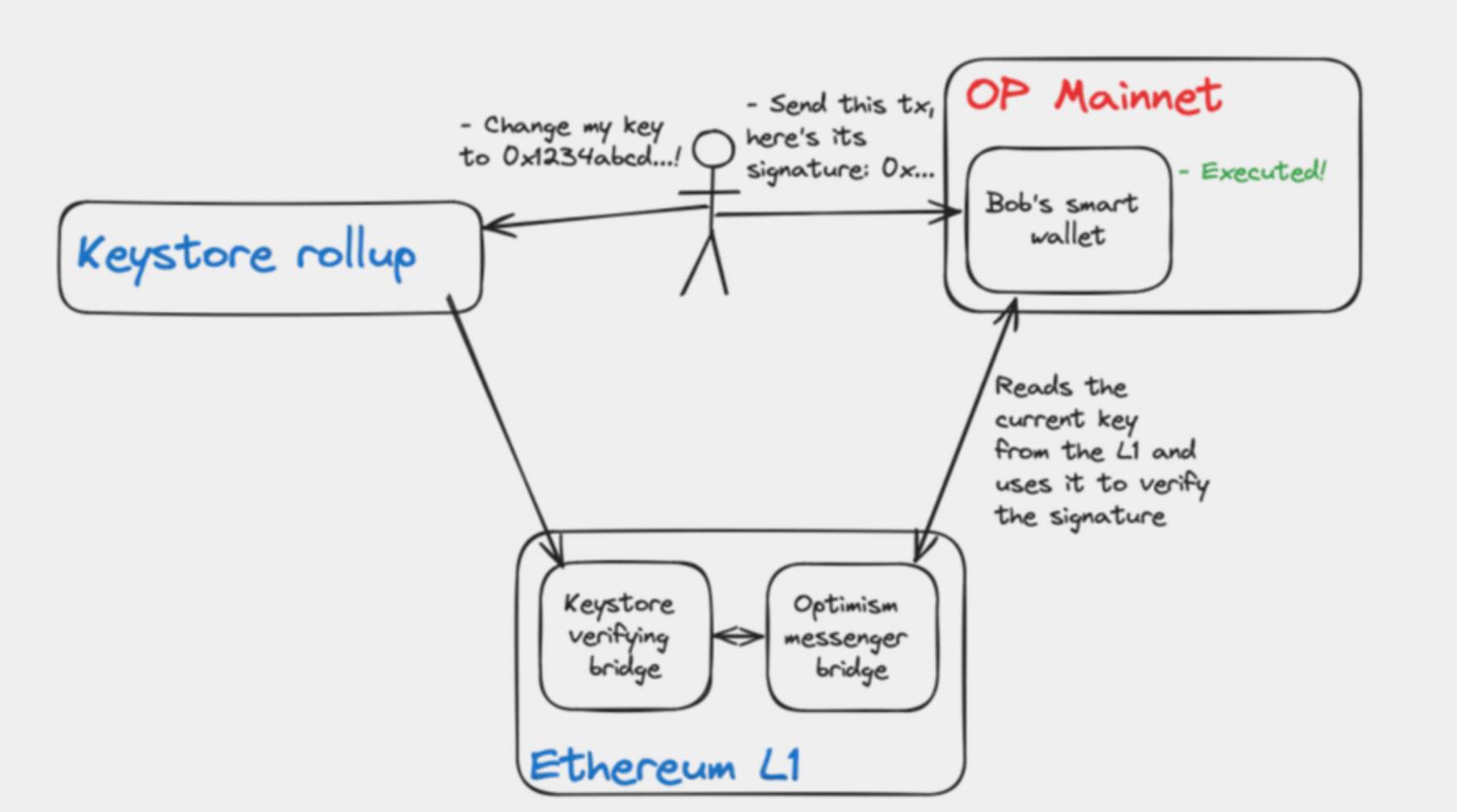
Beyond Vitalik’s original design, three leading keystore rollup models have emerged:
1) @Scroll_ZKP’s approach: Stores keystore data on L1; zkEVM rollups use the L1SLOAD precompile to synchronize account configurations, enabling low-cost L1 reads.
2) @base’s design: Stores only the state root on L1, using calldata for transaction ordering. Merkle proofs are used to sync account data across L2s.
3) @0xStackr’s design: Very similar to Base, but employs a “micro-rollup” framework with a minimal VM.
Despite these advances, gas costs for proof verification remain a key challenge.
5. Aligned Layer: Efficient ZK Proof Verification
@alignedlayer offers a solution to the high cost of ZK rollup proof verification. As an AVS of @EigenLayer, it enables Ethereum validators to verify ZK proofs at extremely low cost by leveraging staked verifiers.
Aligned reduces verification costs to just 3,000 gas per proof—nearly negligible on Ethereum L1—and provides a scalable solution for smaller rollups.
However, this introduces trust assumptions—if a rollup’s total value locked (TVL) exceeds the staked collateral, attacks could become profitable.
6. Proof Aggregation Layer: Enhancing Proof Efficiency
Proof aggregation is another innovation that allows multiple ZK proofs to be merged into a single proof, reducing on-chain verification overhead.
There are two main types of proof aggregation protocols:
-
General-purpose aggregation: Supports multiple proof types (Groth16, Halo2, Plonky2), lowering gas fees for applications.
-
Aggregated Rollup Bridges: Built into ZK stacks such as @0xPolygon’s AggLayer and @zksync’s Hyperbridge, designed to minimize verification costs and enhance cross-rollup composability.
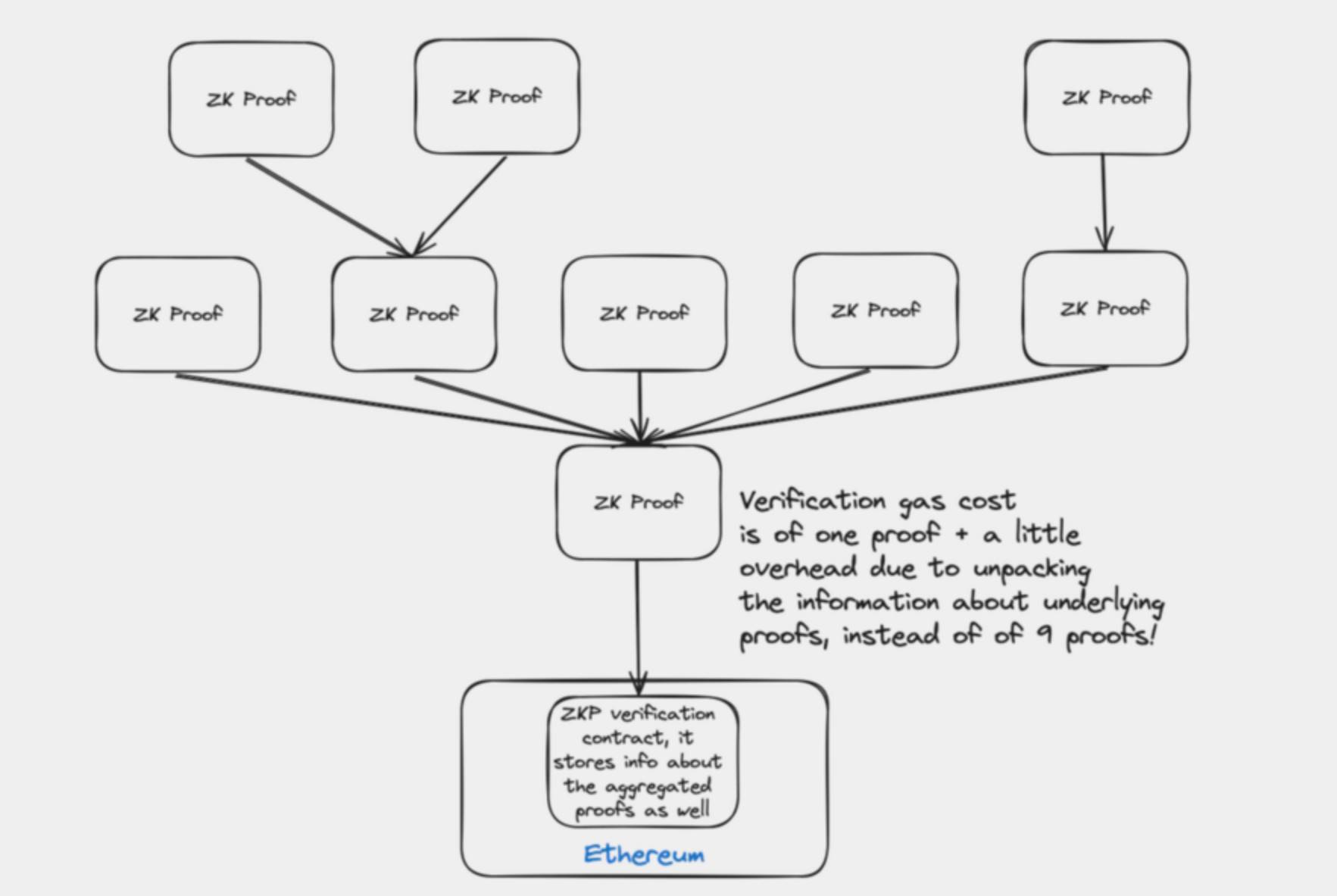
7. Efficient Intent-Based Bridging and Keystore+ Rollups
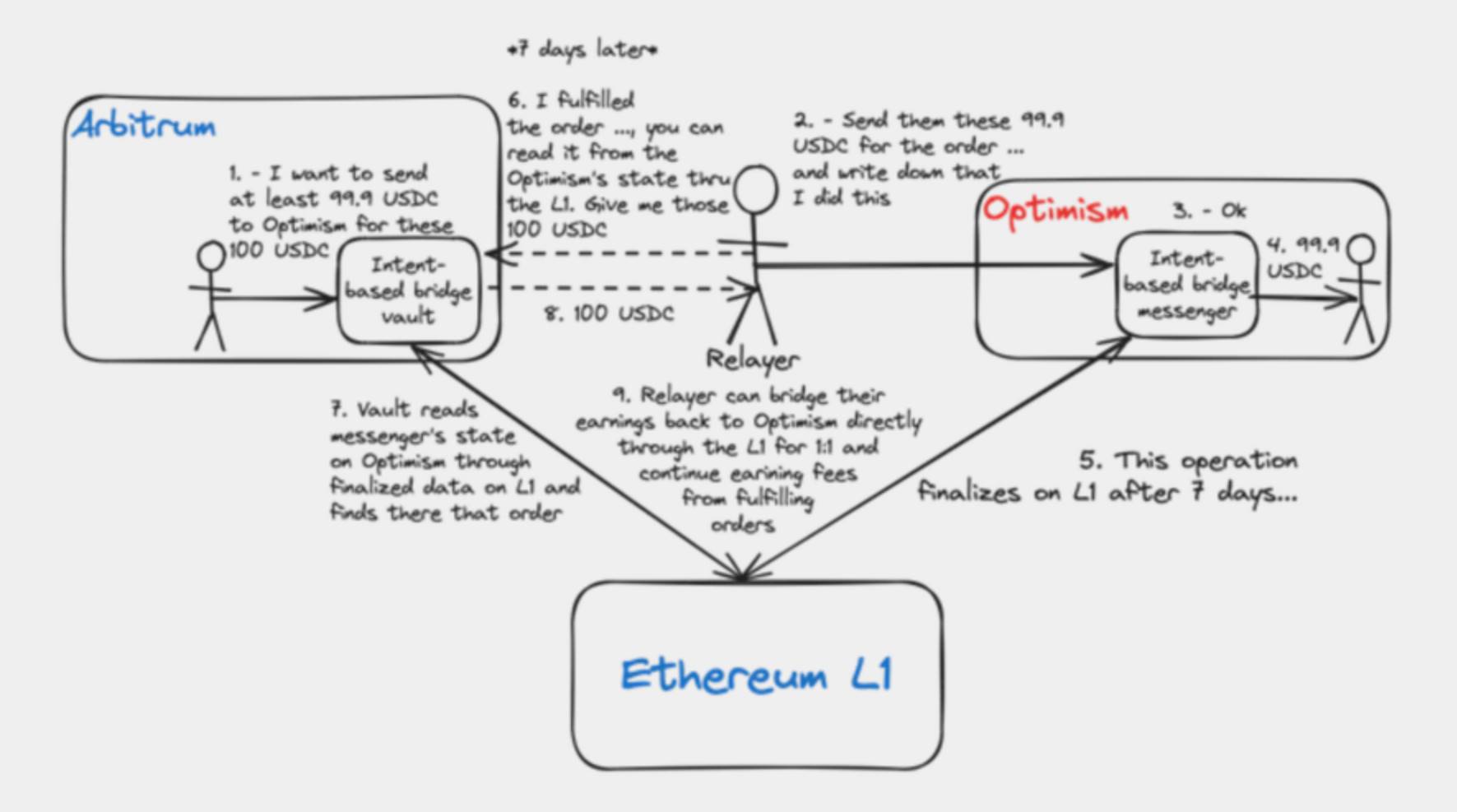
Most cross-chain bridges, like @StargateFinance (using @LayerZero_Core), are message-based. They lock tokens on the source chain, send a message to the destination chain, then unlock equivalent tokens. However, this method heavily relies on the trust assumptions of the message-passing protocol.
In contrast, intent-based bridging eliminates the need for message passing.
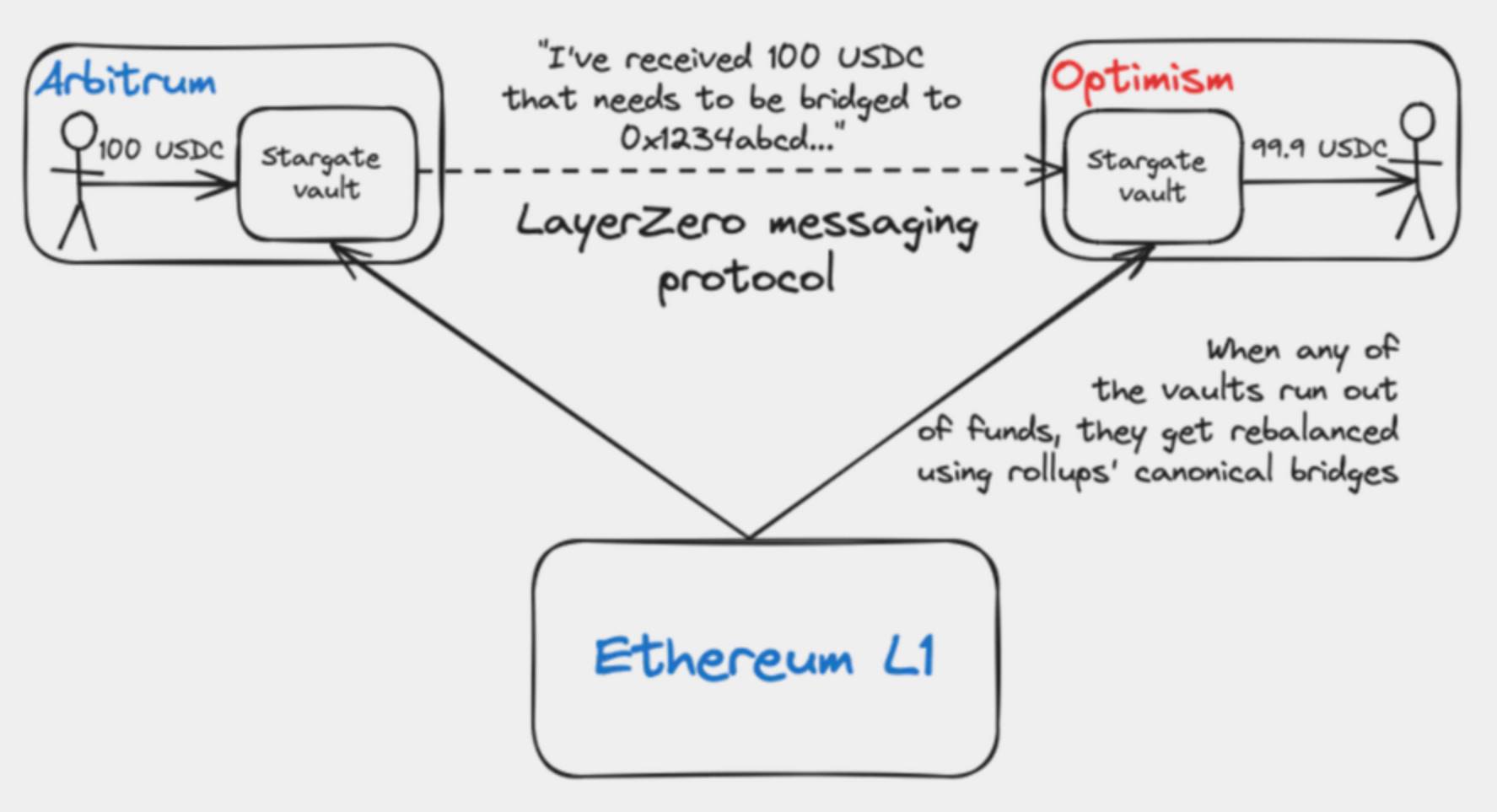
How does it work?
Funds are locked as a “cross-chain order,” which anyone can fulfill by sending tokens on the destination chain. After transaction confirmation on the destination chain, the fulfiller can claim the locked funds on the source chain.
Example: Protocols like @AcrossProtocol leverage optimistic oracles such as @UMAprotocol to obtain the final state of Layer 2 before finality is achieved.
Unified Cross-Chain ENS
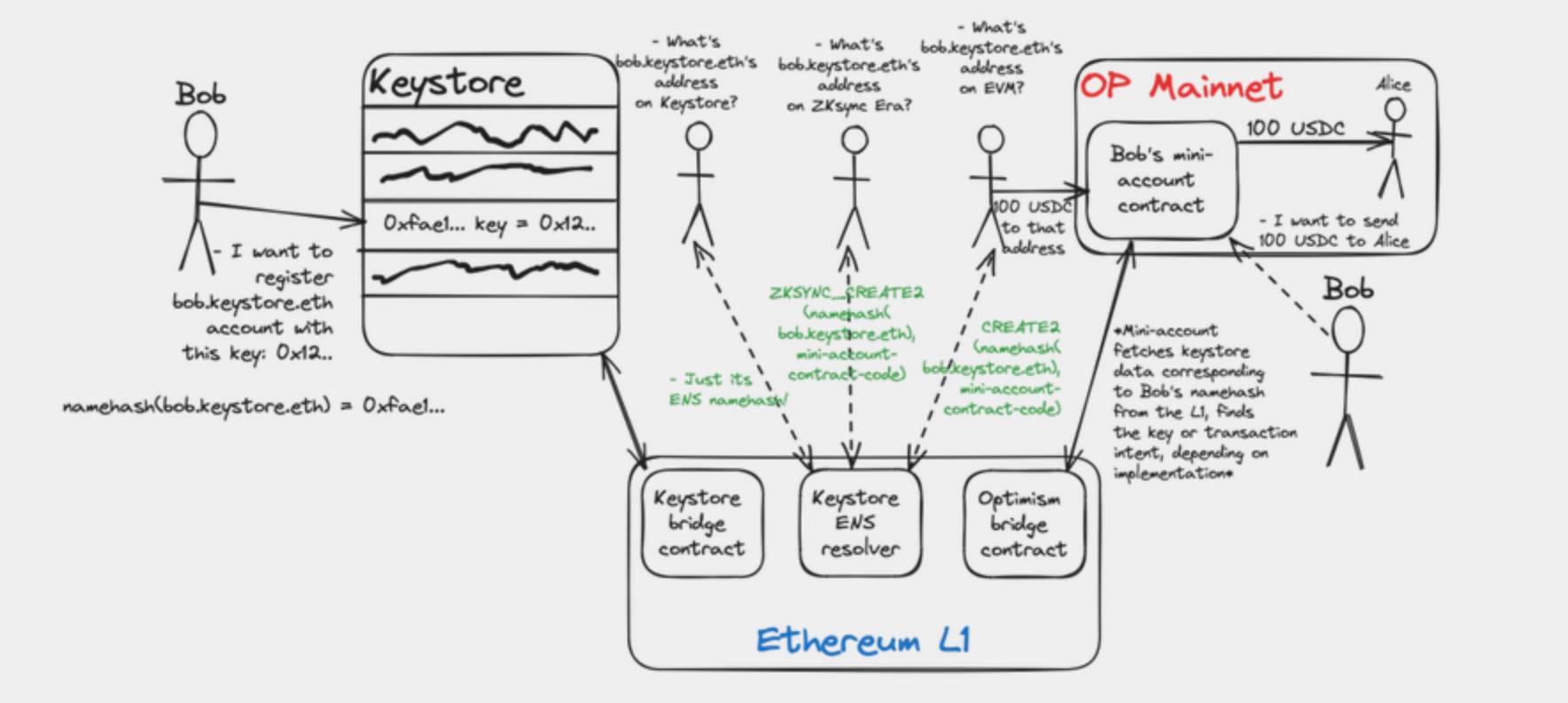
Imagine having a single Ethereum Name Service (ENS) address usable across all rollups. Keystore rollups make this possible by deploying mini-accounts on bytecode-equivalent chains.
Using CREATE2 and multi-chain factories, users can maintain the same address across all rollups, simplifying account management and enhancing overall user experience.
Ordering Mechanisms in Keystore+ Rollups
Ordering is another critical aspect of rollup interoperability. In keystore rollups, centralized sequencers can be replaced with decentralized ordering mechanisms, eliminating single points of failure and enhancing censorship resistance.
Decentralized ordering enables transactions to be processed within a ~12-second time window, ensuring fast cross-rollup transactions without sacrificing decentralization.
8. Why We Don’t Rely on Shared Sequencing
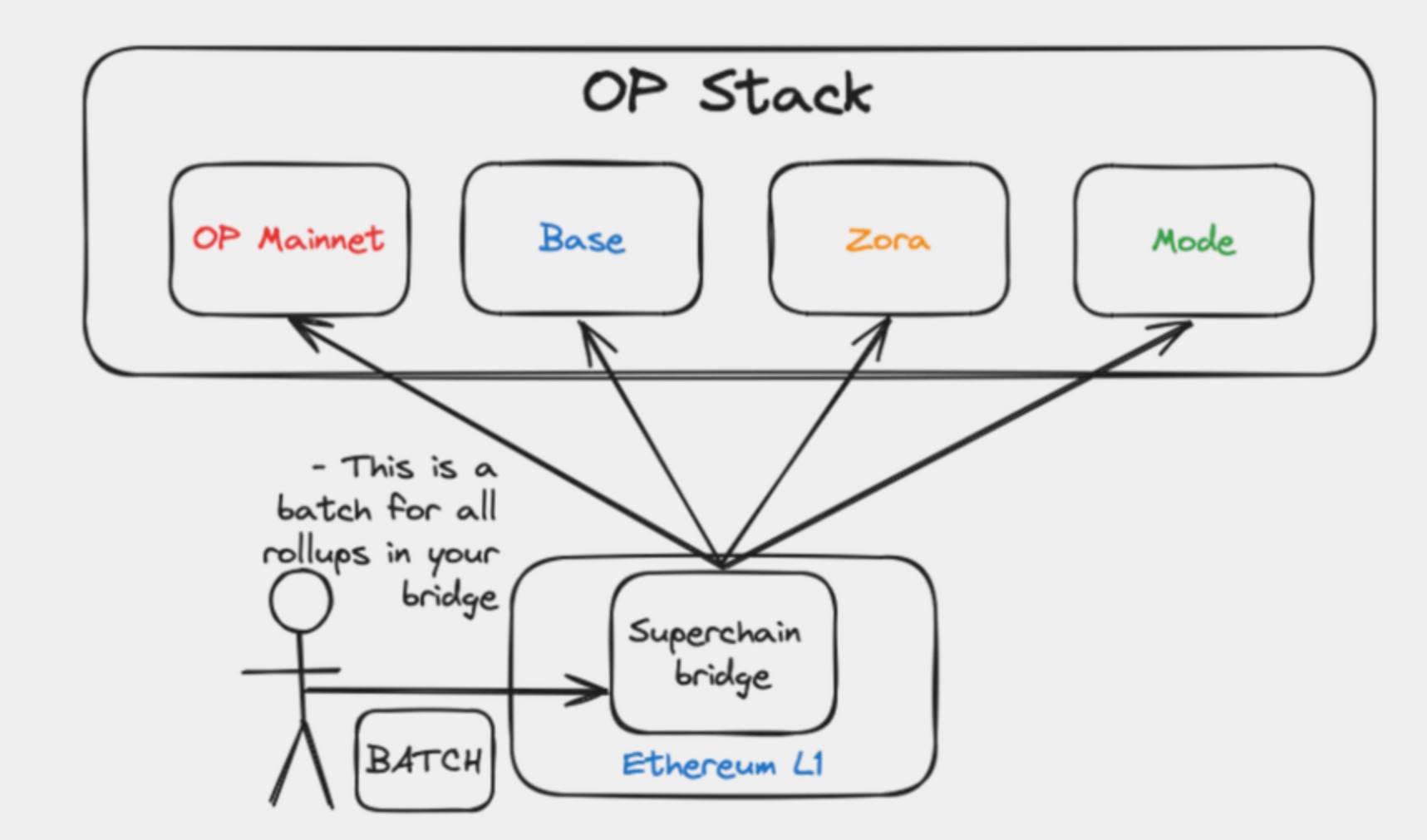
Shared sequencing is often discussed as a solution for OP rollup interoperability, but our research highlights its limitations. Shared sequencing allows a single sequencer to manage multiple rollups, leading to centralized control and potential oligopolistic dominance over the rollup ecosystem.
In contrast, ZK rollups using shared proof aggregation bridges achieve fast finality across multiple rollups while preserving decentralization—making it a more sustainable and secure approach to rollup interoperability.
This research focuses primarily on ZK rollups and ZK technology because OP rollups fundamentally lack fast objective finality. Only ZK proofs enable objective finality, making ZK rollups the ideal long-term solution for interoperability.
Despite these limitations, significant progress exists within the optimistic rollup ecosystem. For example, Optimism is researching validity-centric designs and partnered with @RiscZero several months ago to explore new integrations.
9. ZK Rollups vs. OP Rollups
Thanks to zero-knowledge proofs, ZK Rollups confirm transactions faster than OP Rollups. They do not require a challenge period (which can last up to 7 days in OP Rollups), giving them a clear advantage in cross-rollup interoperability.
-
ZK Rollup Advantage: Independent aggregated proofs allow ZK Rollups to achieve composability across different rollups without centralization concerns.
-
Current State of Optimistic Rollups: Despite technical limitations, optimistic rollups like @Optimism, @arbitrum, and @base dominate due to strong ecosystems, excellent developer tools, and user-friendly infrastructure.
Join TechFlow official community to stay tuned
Telegram:https://t.me/TechFlowDaily
X (Twitter):https://x.com/TechFlowPost
X (Twitter) EN:https://x.com/BlockFlow_News
 @2077Research