Understanding Lumoz: A New Paradigm of Rollup Platformization
TechFlow Selected TechFlow Selected
Understanding Lumoz: A New Paradigm of Rollup Platformization
The emergence of Lumoz will address key challenges that have hindered the development of ZK-Rollups, such as difficult deployment and high computational resource requirements for ZKP leading to centralization, taking the most critical step forward for the future advancement of ZK-Rollups.
 Navigating Web3 tides with focused insights
Author: Trustless Labs
Environmental Drivers Prompting Rollup Evolution
Urgent Need for Layer1 Scalability
As the number of Ethereum users continues to grow, the network is becoming increasingly congested. Especially during primary market launches, gas fees often spike sharply. Coupled with the rising price of $ETH, high transaction costs have effectively blocked small transactions. Therefore, improving storage efficiency, transaction throughput, and reducing latency are crucial for Ethereum's development.
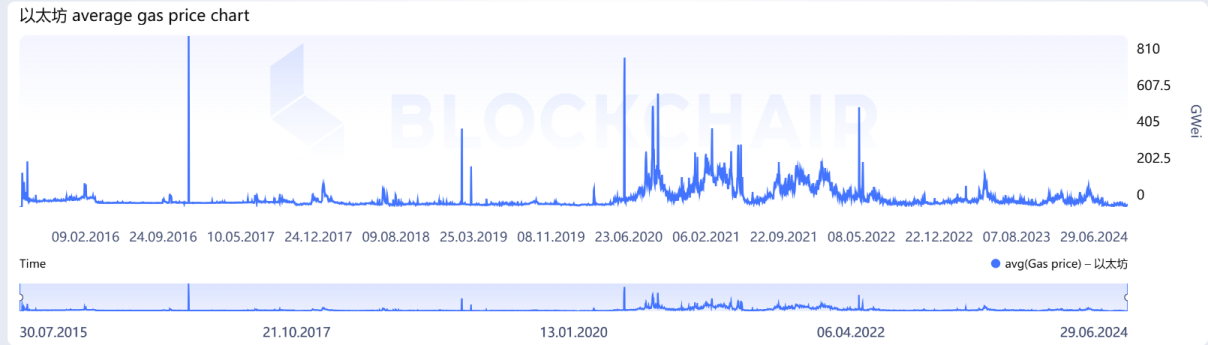
Figure 1 Ethereum Gas Fee Trends
Traditional Layer1 scalability solutions generally fall into two categories: on-chain and off-chain. On-chain approaches involve upgrading Layer1 through changes in consensus mechanisms, sharding implementation, or increasing block size. Off-chain solutions refer to scaling outside the main chain, primarily including sidechains and Layer2. The key difference lies in security: sidechains rely on their own security protocols, while Layer2 inherits the mainnet’s security, making Layer2 inherently more secure.
In past developments, Layer2 operates by processing transactions off-chain and then submitting results back to the main chain—improving computational efficiency while leveraging Ethereum’s robust security. Current mainstream Layer2 implementations include Channel, Plasma, and Rollup. Since Rollup is essentially an evolution of Plasma with enhanced security, state validity, and data verifiability, it has become the foundational direction for future Layer2 development.
Which Rollup Leads the Pack?
Rollup has two major branches: Optimistic Rollup and ZK-Rollup. In Optimistic Rollup, submitted transactions are assumed valid by default, enabling fast processing without immediate verification. A challenge period—typically around one week—is set up, during which validators can dispute incorrect submissions with evidence. If proven wrong, transactions are reverted and penalties applied. In contrast, ZK-Rollup uses zero-knowledge proofs to instantly verify transaction correctness, ensuring near 100% fraud resistance. Overall, ZK-Rollup offers superior security and eliminates confirmation delays caused by challenge periods, giving it greater application potential. This is why Vitalik Buterin has repeatedly stated that ZK-Rollup represents the future of Layer2.
However, due to significantly higher technical complexity compared to Optimistic Rollup, the current Rollup market remains dominated by Optimistic Rollup solutions.
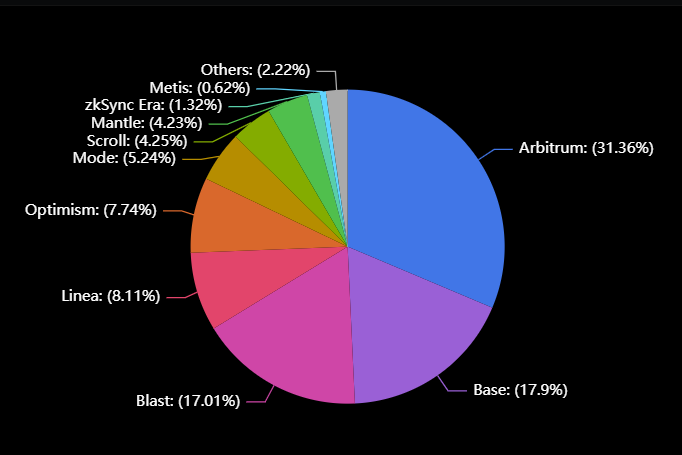
Figure 2 Rollup Market TVL Distribution
Among them, Arbitrum leads the Optimistic Rollup sector with 31.36% of total value locked (TVL), whereas zkSync Era holds only 1.32%. Thus, a critical question arises: how can standardized ZK-Rollup solutions be developed and expanded? Lumoz’s comprehensive approach may hold the key to breaking this bottleneck.
Lumoz’s Strong Foundation
Lumoz: A Comprehensive ZK Platform
Lumoz Network is a globally distributed modular computing network integrated with DePIN architecture, creating a powerful, secure, and flexible computing platform that supports ZK-Rollup, ZK ML, ZKP, and more. Additionally, Lumoz focuses on ZK RaaS (Rollup-as-a-Service), aiming to provide a complete suite of deployment and implementation tools to solve existing issues such as incompatibility between ZK-Rollup solutions, centralized computation power, and concentrated risks.
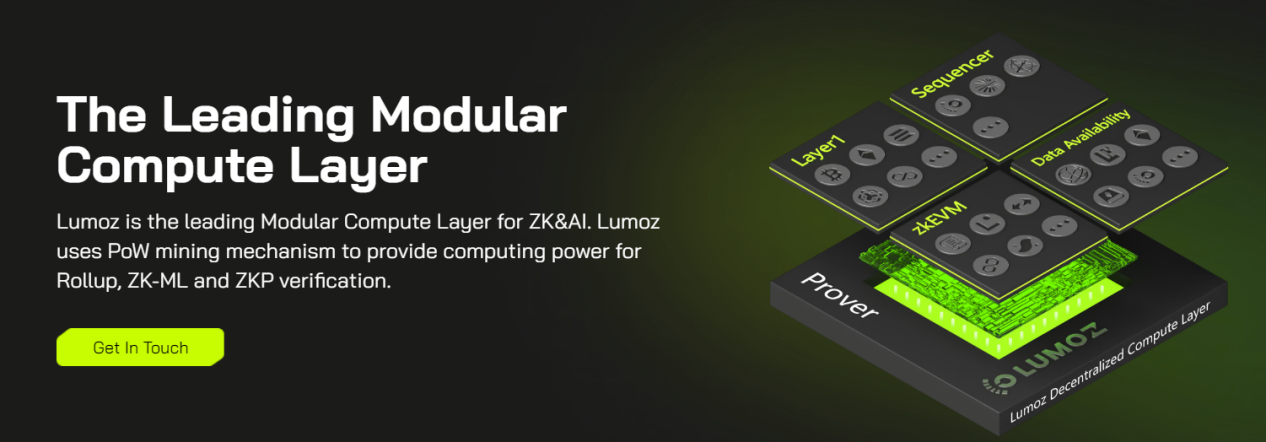
Figure 3 ZK Rollup Illustration
Years of Deep Expertise in ZK
Unlike many Web3 projects merely riding the hype wave, Lumoz has been deeply engaged in the ZK field for years. Its founder, Nanfeng, previously held executive roles at top-tier tech and investment firms, bringing extensive technical knowledge and exceptional blockchain project management experience. This forward-thinking vision led him to guide his team into ZK research and development starting in 2018.
-
Project Launch: In March 2022, Opside was founded in Hong Kong, aiming to become a blockchain scaling infrastructure provider focused on ZK-RaaS, helping developers create custom zkEVM chains via “one-click deployment.”
-
Seed Funding: In April 2023, Opside raised $4 million in seed funding to accelerate development, expand teams, and scale operations to meet growing demand.
-
Rebranding: In October 2023, Opside officially rebranded to Lumoz to avoid confusion with Optimistic Rollup and better reflect its focus on ZK technology. The name "Lumoz" derives from the Latin word "Lumos," meaning light, symbolizing the bright future of ZK technology.
-
Pre-Series A Round: In March 2024, Lumoz completed a $6 million Pre-Series A round led by Hashkey Capital and OKX Ventures, achieving a valuation of $120 million.
-
Strategic Financing: In May 2024, Lumoz secured strategic investment from IDG Blockchain, Blockchain Coinvestors, Gate Ventures, Summer Capital, EVG, 7upDAO, Sweep Ventures, and others, reaching a valuation of $300 million.
-
Node Sales: In June 2024, whitelist node pre-sales began, attracting significant investor interest.
-
OKX Launchpad: In July 2024, public node sales launched alongside an OKX Launchpad event.
Figure 4 ZK Rollup Illustration
Beyond these impressive valuations, Lumoz has delivered tangible achievements. Since launching its testnet in May 2023, it now boasts 28,403 PoW nodes, 16 active Rollups, 470,000 ZKP submissions, and over 20 million transactions.
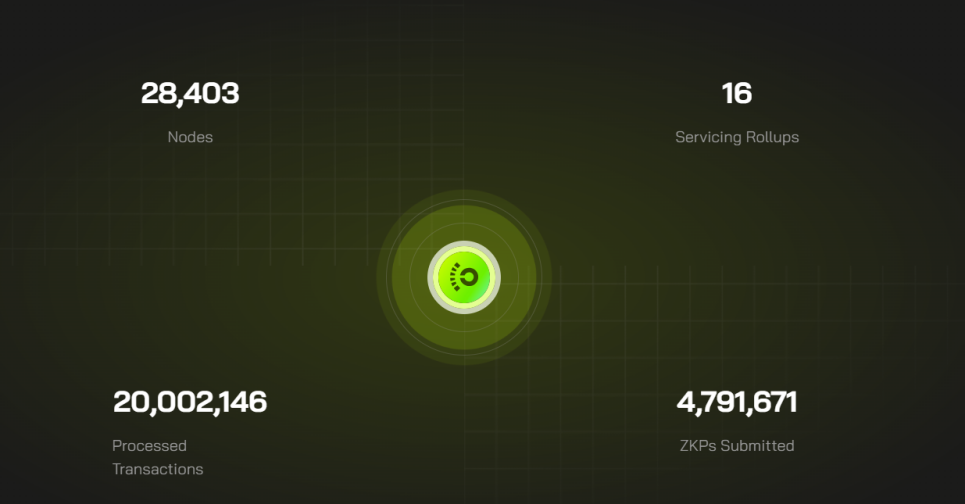
Figure 5 Lumoz Operational Status
On the technical front, Lumoz introduced the ZK-Rollup Launchbase, adding support for ETH, BSC, and Polygon testnets, along with modular components like Data Availability (DA) and shared sequencers. It achieved breakthroughs including the ZKP Two-step Algorithm, NCRC, zkVerifier node validation mechanism, and the highly compatible Lumoz RaaS Launchbase tech stack. Merlin Chain and ZKFair’s ZK computations are already powered by Lumoz, marking initial real-world adoption.
Unified Technical Framework for ZK
Lumoz Provides a Modular Compute Layer
Modular Rollup offers a new approach to addressing the blockchain trilemma. By decomposing blockchain systems into distinct modules, it enables layered architectures that improve transaction processing and data management, balancing decentralization, security, and scalability. Traditional Rollup typically includes settlement, execution, consensus, and data availability layers.
-
Settlement Layer: Updates asset states on Layer1, ensuring asset security.
-
Execution Layer: Processes transactions on Rollup, recording and updating transaction data.
-
Consensus Layer: Reaches agreement on transactions, ensuring security.
-
Data Availability Layer: Records and aggregates all transaction data, ensuring traceability.
Beyond these four standard Rollup layers, Lumoz introduces a core Prover Layer that provides censorship-resistant distributed computing, generates ZKPs, and ensures transaction state integrity and validity.
Dual Narrative: ZK Computing Resources + EigenLayer Restaking
Lumoz integrates powerful ZK computing resources with EigenLayer’s restaking mechanism via Lumoz Oracle, zkProver, zkVerifier, and Lumoz Chain. Users can restake tokens already pledged on other networks into EigenLayer, enhancing the security of Lumoz’s Active Verification Service (AVS). These staked tokens also act as collateral to prevent malicious node behavior.
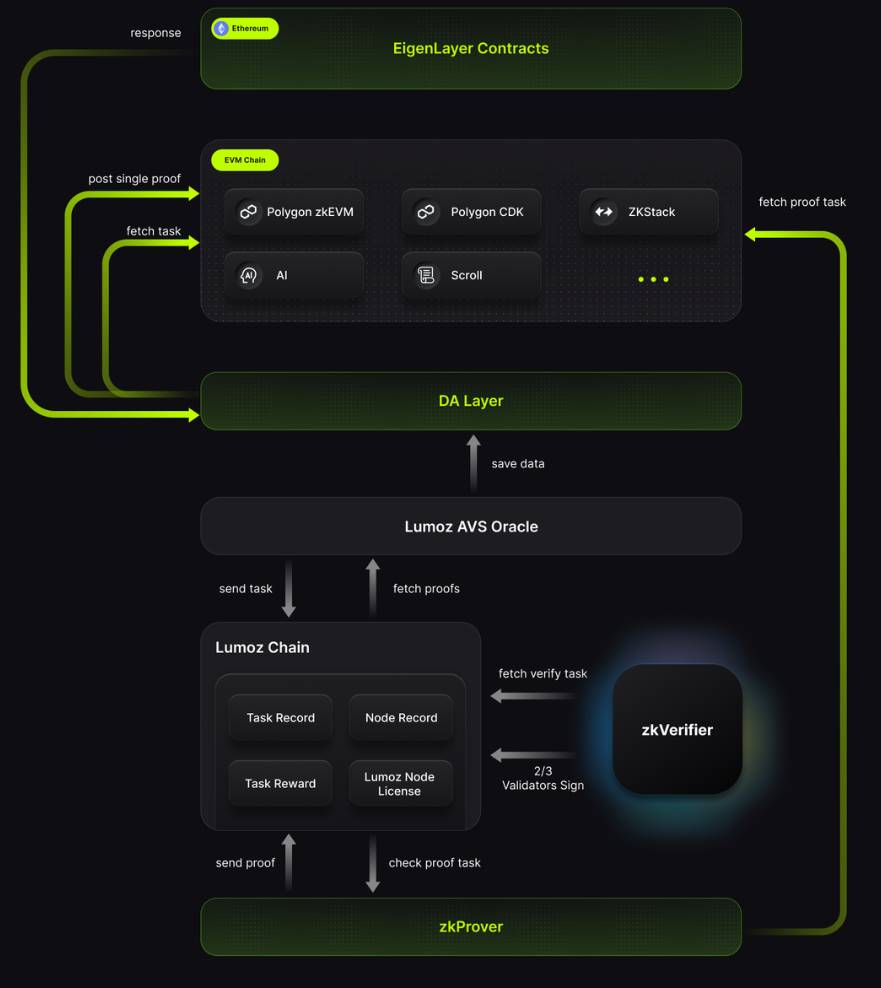
Figure 6 EigenLayer Restaking Process
-
Staking and Restaking: Users stake tokens on blockchains like Ethereum, which are then restaked via EigenLayer into Lumoz’s AVS, boosting verification service security.
-
Data Processing and Storage: Lumoz AVS Oracle retrieves and stores data from EVM-compatible chains, ensuring availability and integrity. This data serves as input for zkProver and information for zkVerifier.
-
Task Allocation and Execution: Lumoz Chain handles task scheduling, assigning computation tasks to zkProver nodes, which generate ZKPs.
-
Result Verification and Confirmation: zkVerifier nodes validate proofs generated by zkProvers to ensure correctness. Once verified, Lumoz Chain records the result on-chain and rewards participating nodes.
This process allows multiple verification services to share a common pool of staked tokens, improving resource utilization and computational efficiency—especially vital for high-demand ZKP generation. Through restaking, Lumoz can better support various EVM-compatible environments such as Polygon EVM and Scroll, enhancing platform scalability.
Optimized ZKP Computation and Submission Mechanism
Lumoz optimizes ZKP computation and submission by supporting parallel computation and sequential submission. ZKPs are broken down into subtasks, computed across different zkProver nodes, and then submitted in the correct order.
Additionally, Lumoz introduces a novel recursive aggregation algorithm that combines multiple ZKPs into a single, smaller proof. Using recursion, this reduces ZKP size and complexity, minimizing blockchain storage and computational overhead.
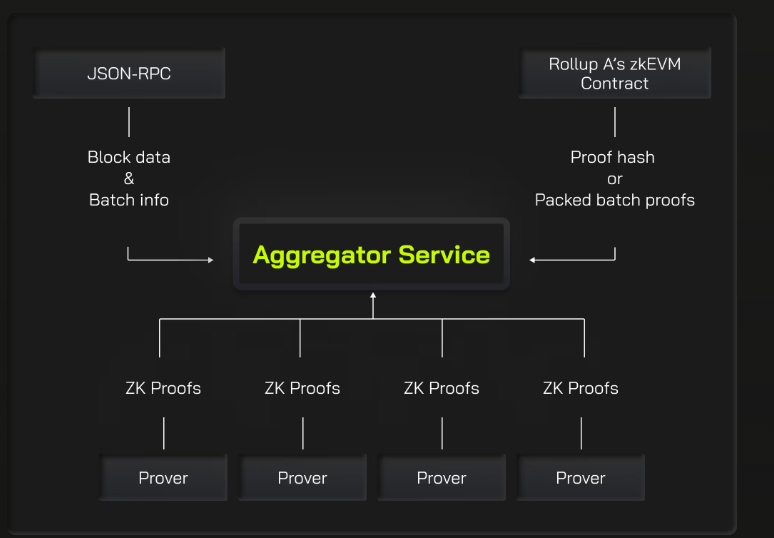
Figure 7 ZKP Optimization Strategy
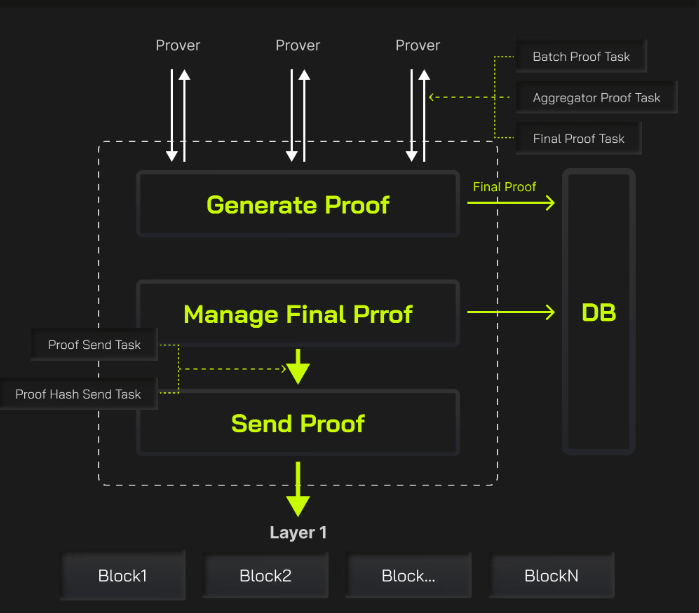
Figure 8 High-Performance Aggregator Component in zkProver
The Aggregator acts as the core manager within zkProver, ensuring efficient task allocation and precise verification scheduling.
Most Compatible ZK-RaaS Solution
From its inception, Lumoz aimed to deliver the easiest-to-deploy and most compatible ZK-Rollup solution. Today, ZK-RaaS LaunchBase supports all major zkEVM technologies, allowing developers to easily deploy and launch ZK-Rollups with minimal effort.
-
Base Layer Selection: Lumoz supports multiple networks including ETH, Polygon, and Lumoz Chain.
-
zkEVM Configuration: Choose from various zkEVM types based on needs, such as Polygon zkEVM, zkSync, Scroll, and StarkNet.
-
Gas Token and Data Availability Layer: Select appropriate gas tokens and DA layers per project requirements to ensure transaction security.
-
Modular Customization: Lumoz offers a range of functional modules that can be directly integrated into ZK-Rollups as needed.
Specifically, Lumoz’s ZK-RaaS platform supports multiple architectural models:
-
Modular Compute Layer: Lumoz’s modular compute layer supports various Layer2 solutions, including Op Stack + ZK Fraud Proof architectures. This modular design allows developers to freely mix base layers, zkEVM types, DA layers, and sequencers.
-
Native Cross-Rollup Communication: Lumoz enables native cross-Rollup communication between different ZK-Rollups on the same base chain, allowing addresses on one Rollup to directly interact with contracts on another, enhancing interoperability.
-
Customizable Infrastructure Services: Lumoz provides diverse infrastructure services such as bridge interfaces, customized zkEVM types, block explorers, decentralized exchanges, decentralized identity systems, and wallet infrastructure—enabling full customization of ZK-Rollup features.
Thanks to Lumoz’s contributions, deploying ZK-Rollups will transition from difficult to effortless—possibly marking the beginning of a ZKP application wave.
Seize the Opportunity During Node Pre-Sale
zkVerifier License Sale
Lumoz implements a zkVerifier license system, offering 100,000 licenses across 10 pricing tiers. Only license holders can run zkVerifier nodes, though they may delegate operation to other nodes for profit. The sale occurs in three phases: whitelist registration (June 17, 15:00 UTC+8), whitelist sale (June 25, 15:00 UTC+8), and public sale (July 3, 15:00 UTC+8). Whitelist participants receive a 10% discount during the whitelist sale, and referrers earn a 10% rebate on referred purchases.
Unlike traditional node license sales, Lumoz distributes Lumoz Points daily from June 25 to August 4—one million points per day. Point distribution depends on license staking weight; participation in community teams increases overall weight, and earlier license purchases yield higher returns. After TGE, users holding Lumoz Points will share 25% of the token supply.
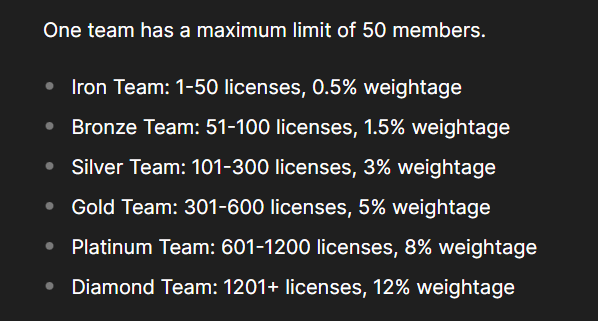
Figure 9 Team-Based License Weight Boost
Lumoz offers a refund mechanism for unresold licenses, allowing users to return 80% of their purchase amount within a six-month window after TGE—significantly reducing investment risk.
Clearly, purchasing a zkVerifier License presents a low-risk, high-reward opportunity, driving intense demand. As of writing, 64,708 licenses have been sold, reaching stage 7, with an FDV reaching an astonishing $79,131,216.
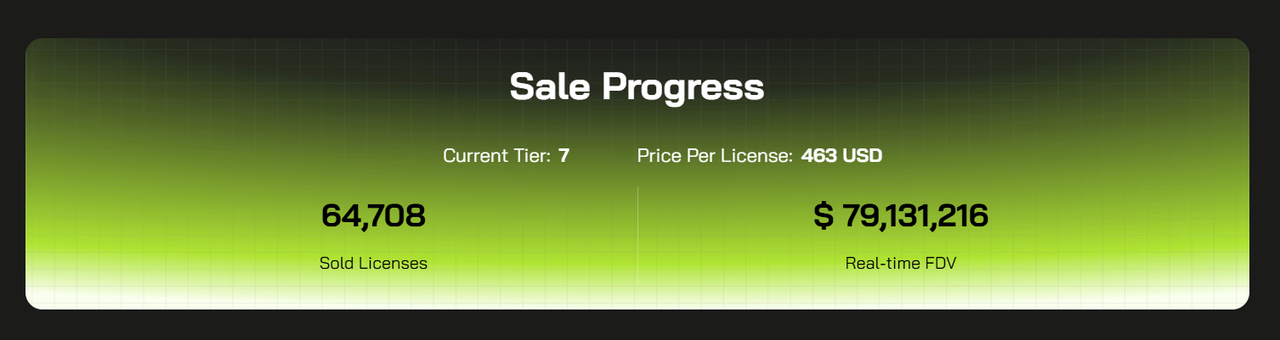
Figure 10 License Sales Data
OKX Launchpad Node Sale
OKX collaborates with Lumoz on a zkVerifier Launchpad event (July 11, 18:00 – July 18, 00:00 UTC+8), featuring 200 Tier 3 nodes ($265 each) and 800 Tier 4 nodes ($304 each). Participants completing tasks on the OKX website can apply for nodes at up to 60% off. Over 36,352 people have already joined.
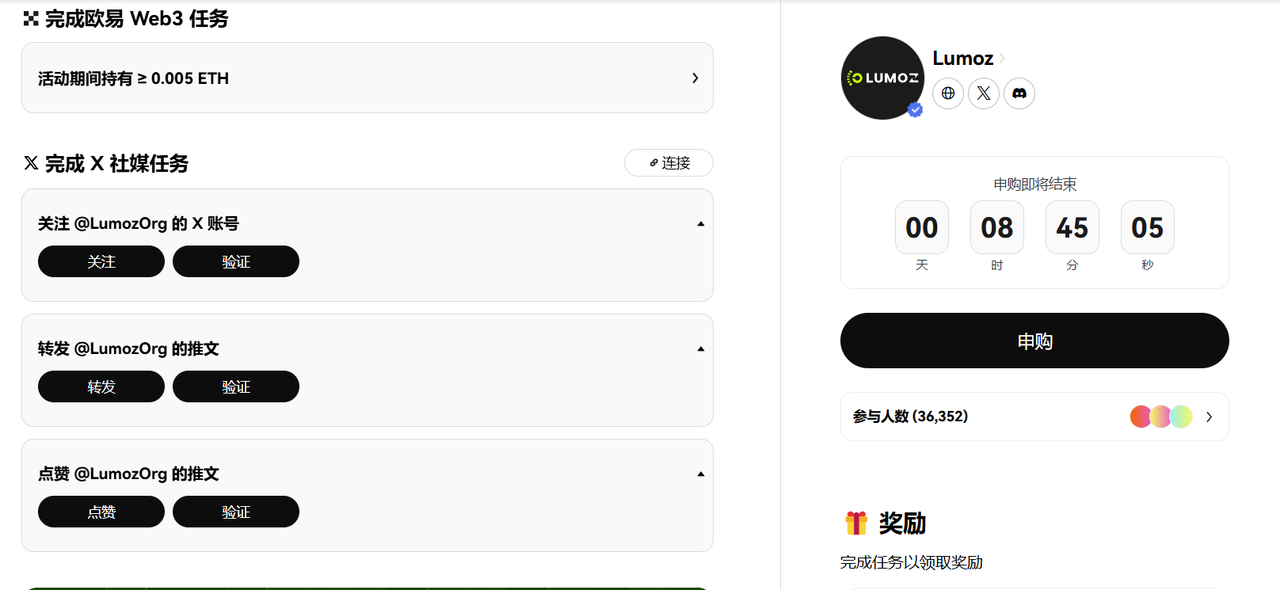
Figure 11 OKX Launchpad Event
Token Model
Lumoz employs a typical dual-token governance model with MOZ and esMOZ.
MOZ is the native token of the mainnet and serves as the core asset.
-
MOZ is used to pay gas fees on the Lumoz mainnet.
-
ZKP services and AI computing services provided by Lumoz require payment in MOZ.
-
MOZ can be converted 1:1 into esMOZ.
esMOZ functions as the ecosystem governance token, supporting mainnet development and maintenance.
-
Lumoz rewards compute providers and node operators with esMOZ.
-
Users stake esMOZ for delegation and participate in decentralized governance.
Notably, the redemption rate of esMOZ to MOZ varies over time: 100% within a 10-day redemption window, 70% within 7 days, 50% within 3 days, and 10% within 1 day. This mechanism reduces market pressure from miner token dumps and prevents attackers from rapidly cashing out large amounts of esMOZ, protecting MOZ holders’ interests.
Why Lumoz Is Worth Watching
Back in 2022, when Vitalik proposed that ZK-Rollup would be the optimal Layer2 solution, the path toward ZK-Rollup dominance was already set.
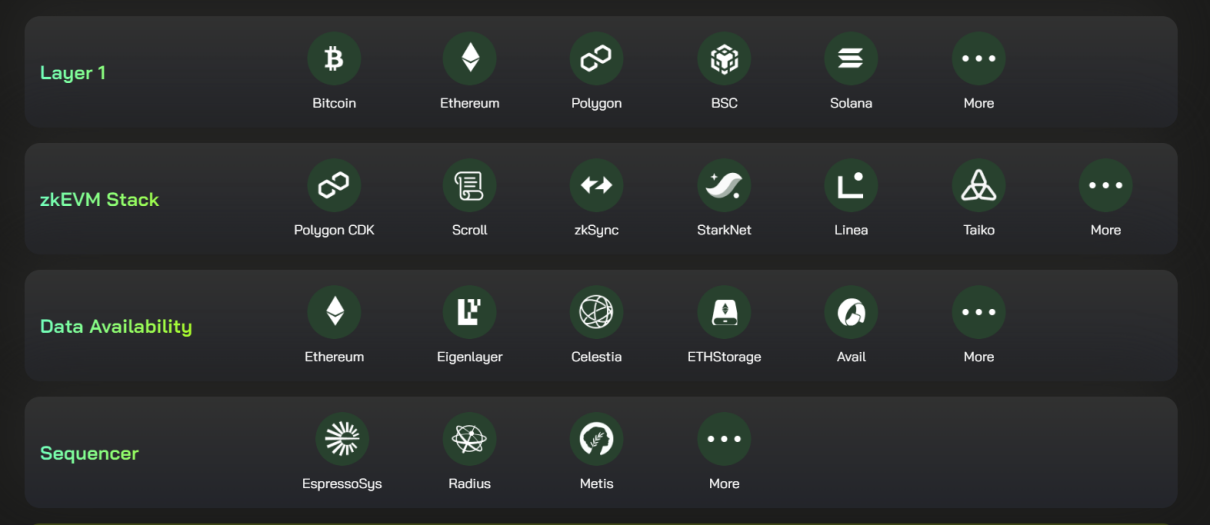
Figure 12 Lumoz Architecture
Lumoz emerges to unify the fragmented landscape of ZK-Rollup, streamlining deployment while optimizing construction processes.
-
A Rollup transformation is imminent, and Lumoz meets the urgent need to consolidate ZK-Rollup efforts and drive industry-wide upgrades.
-
Lumoz delivers a modular compute layer combined with EigenLayer-style staking concepts, enhancing both mainnet security and scalability.
-
Lumoz optimizes the ZKP process, maximizing resource utilization and computational efficiency.
-
Lumoz offers a complete ZK-Rollup deployment framework, potentially sparking a new wave of ZK-Rollup project growth.
Overall, Lumoz addresses longstanding challenges in ZK-Rollup deployment—including high complexity and centralized computation due to demanding ZKP resource requirements—taking the most critical step forward for the future of ZK-Rollup.
Join TechFlow official community to stay tuned
Telegram:https://t.me/TechFlowDaily
X (Twitter):https://x.com/TechFlowPost
X (Twitter) EN:https://x.com/BlockFlow_News
 @TrustlessLabs