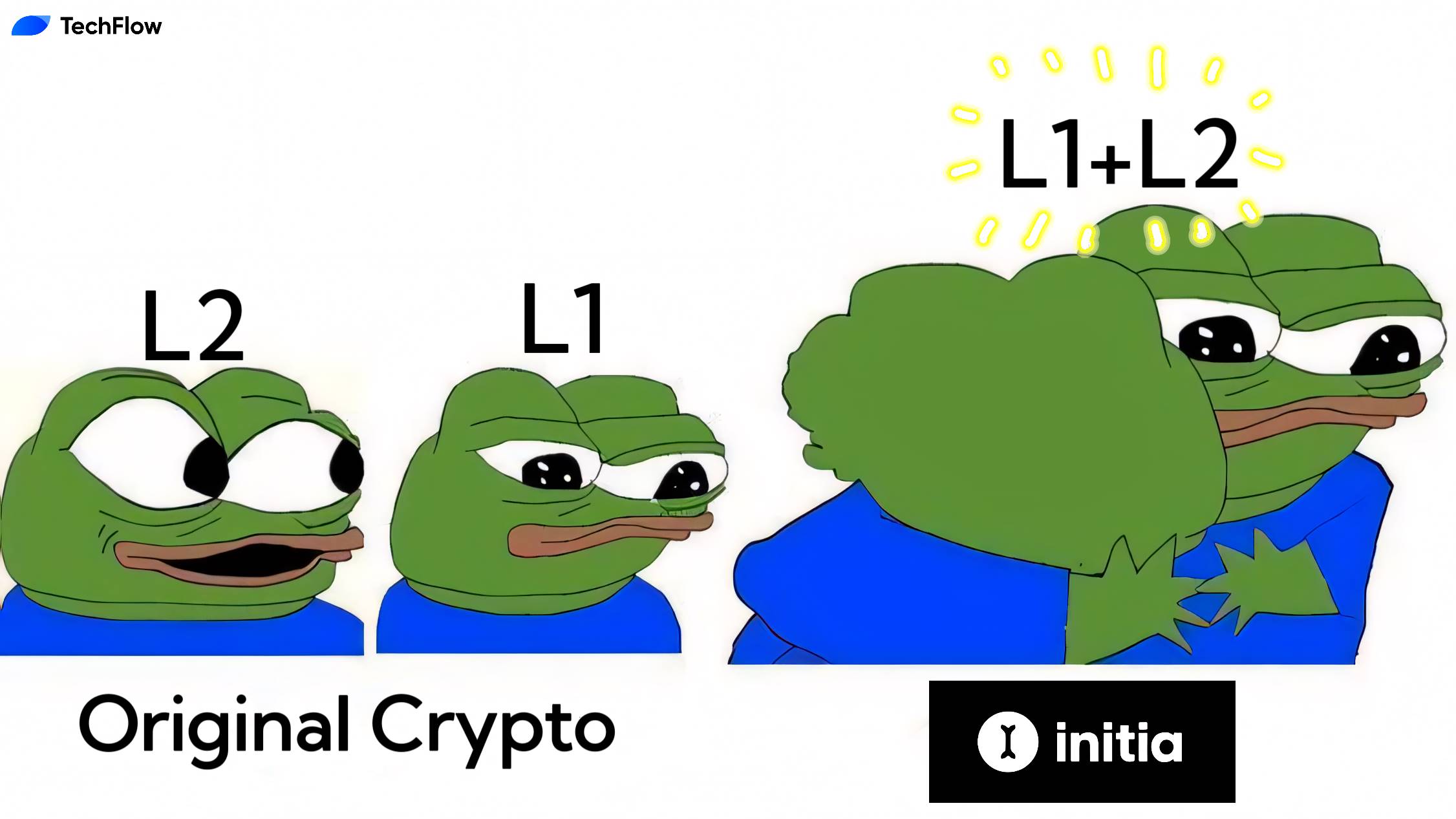
Initia: Connecting All Rollups to Build a "Layer1 + Layer2" Interoperable Multichain World
TechFlow Selected TechFlow Selected
Initia: Connecting All Rollups to Build a "Layer1 + Layer2" Interoperable Multichain World
The gateway to universal blockchain interoperability is about to open. This article will详细介绍 the core concepts, technical features, and progress of Initia.
 Navigating Web3 tides with focused insights
Written by: TechFlow
"One-Click Chain Deployment"
As the cost of launching a blockchain decreases, we're seeing more and more Layer1s and Layer2s entering the market. Regardless of whether you believe a new chain is useful, it's undeniable that more projects will launch their own chains to meet specific needs.
Just as the growing number of DEXs has led to projects building a "DeFi liquidity layer,"
when there are more and more blockchains, what can connect them all together?
The protagonist of today’s story, Initia, aims to solve exactly this problem.
Last week, Initia announced another $14 million in Series A funding and $2.5 million in community funding, bringing its total raised capital to $25 million. This includes the $7.5 million seed round from October last year led by Binance Labs, Delphi Ventures, HackVC, and others. The team also revealed that mainnet launch and TGE are expected in Q4.
Yi He, Co-Founder of Binance and Head of Binance Labs, commented: "Binance Labs continuously identifies infrastructure providers introducing novel solutions to accelerate Web3 application growth. Initia's innovative architecture and tooling represent a significant step toward broad developer adoption."
A year later, this article will detail Initia’s core vision, technical features, progress, and more—ushering in the era of interconnected chains.
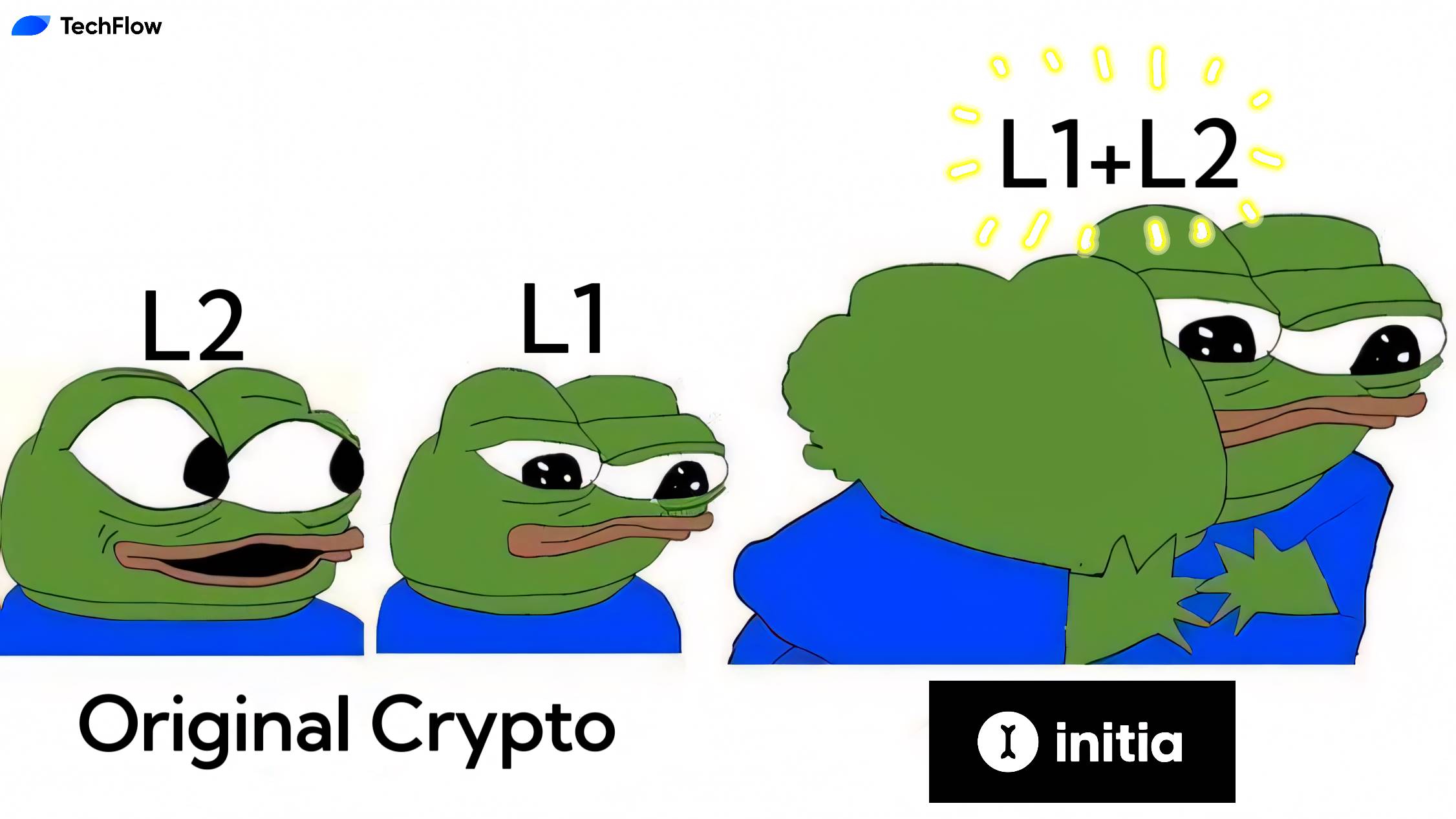
Building the Tech Stack from Scratch: Weaving a World of Interconnected Chains 🪢
When learning about Initia, you'll often come across the word “interwoven,” which translates to “intertwined” or “interconnected.”
This concept refers to seamless interoperability between different Layer2s—reflected in consistent user experience, shared liquidity, and enhanced security. Since Initia supports EVM, MoveVM, and WASM, Ethereum-based and non-Ethereum projects alike can theoretically migrate smoothly onto Initia and interoperate with each other.

SVM is not currently supported. However, Zon, co-founder of Initia, mentioned in a previous podcast that SVM support may be considered if demand increases.
Is Initia a Layer1 or Layer2?
Initia = Layer1 + Layer2. To realize its vision, Initia has built an entire new tech stack from the ground up—including both a Layer1 and Layer2 solutions.
According to the official documentation: possessing a full-stack technology enables Initia to implement chain-level mechanisms that align economic incentives among users, developers, Layer2 app-chains, and the Layer1 itself.
For more details, refer to the project docs: https://docs.initia.xyz/
Key Concepts of Initia
Before diving into Initia’s mechanisms and logic, it’s essential to understand some new terms and concepts that clarify its long-term vision.
-
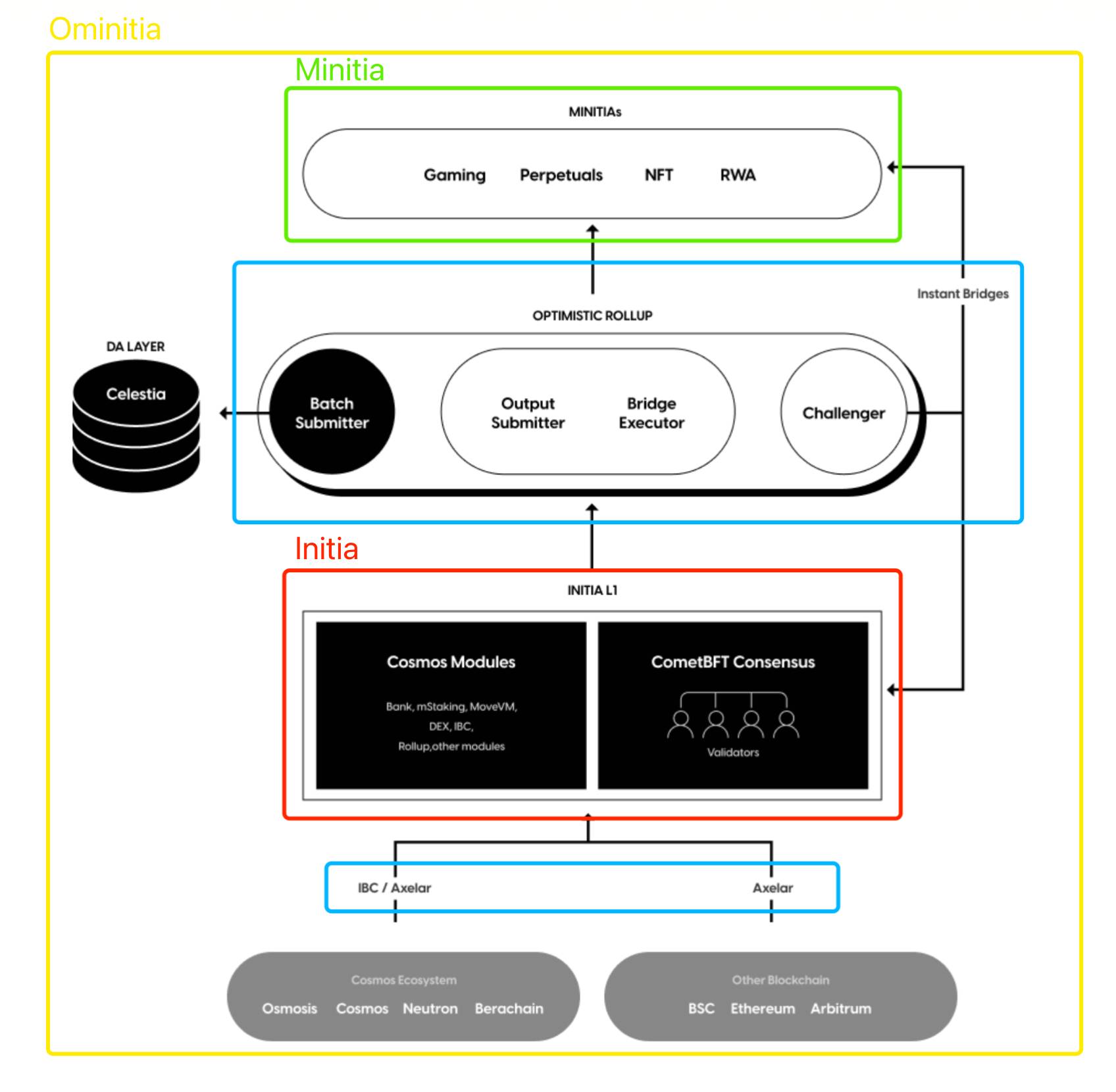
Ominitia / Initia / Minitia / OPInit Stack
Initia: Full name Initia Orchestration Layer—the Layer1, simply called Initia. It serves as the foundational layer coordinating network security, consensus, governance, interoperability, liquidity, and cross-chain messaging.
Minitia: Initia Rollups—these are Layer2 solutions built on top of Initia Layer1, designed to enhance scalability and transaction throughput. Also referred to as “Minitia” or mini-Initias, they can operate using EVM, MoveVM, or WasmVM, with CosmosSDK as the underlying framework.
OPInit Stack: The Initia Optimistic Rollup framework (short for OPInit Stack), built within CosmosSDK. It secures Initia Rollups via fraud proofs and rollback mechanisms.
Ominitia: The complete platform encompassing all core components including Initia (Layer1), Minitias (Layer2s), OPInit Stack, Bridging Middleware, etc.
-
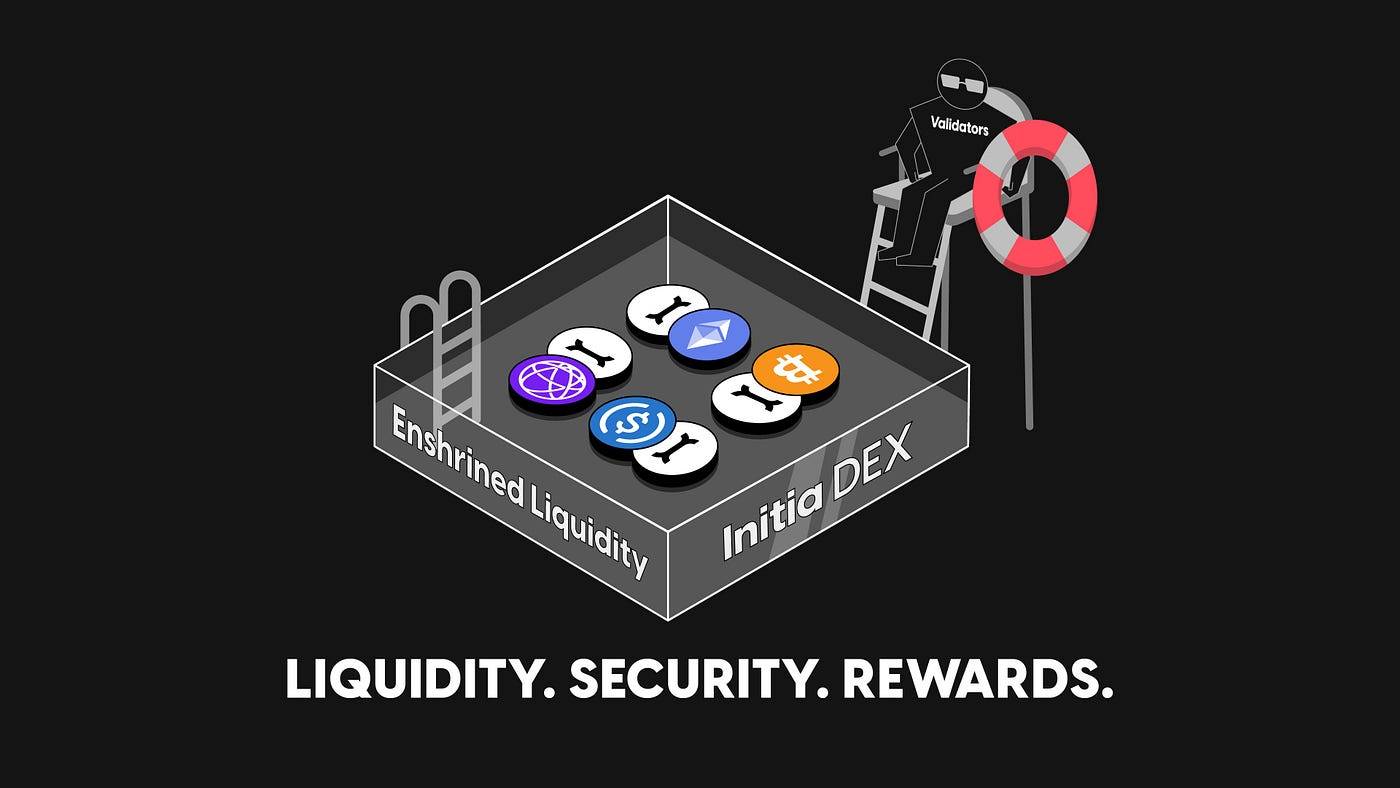
Enshrined Liquidity / InitiaDEX / VIP
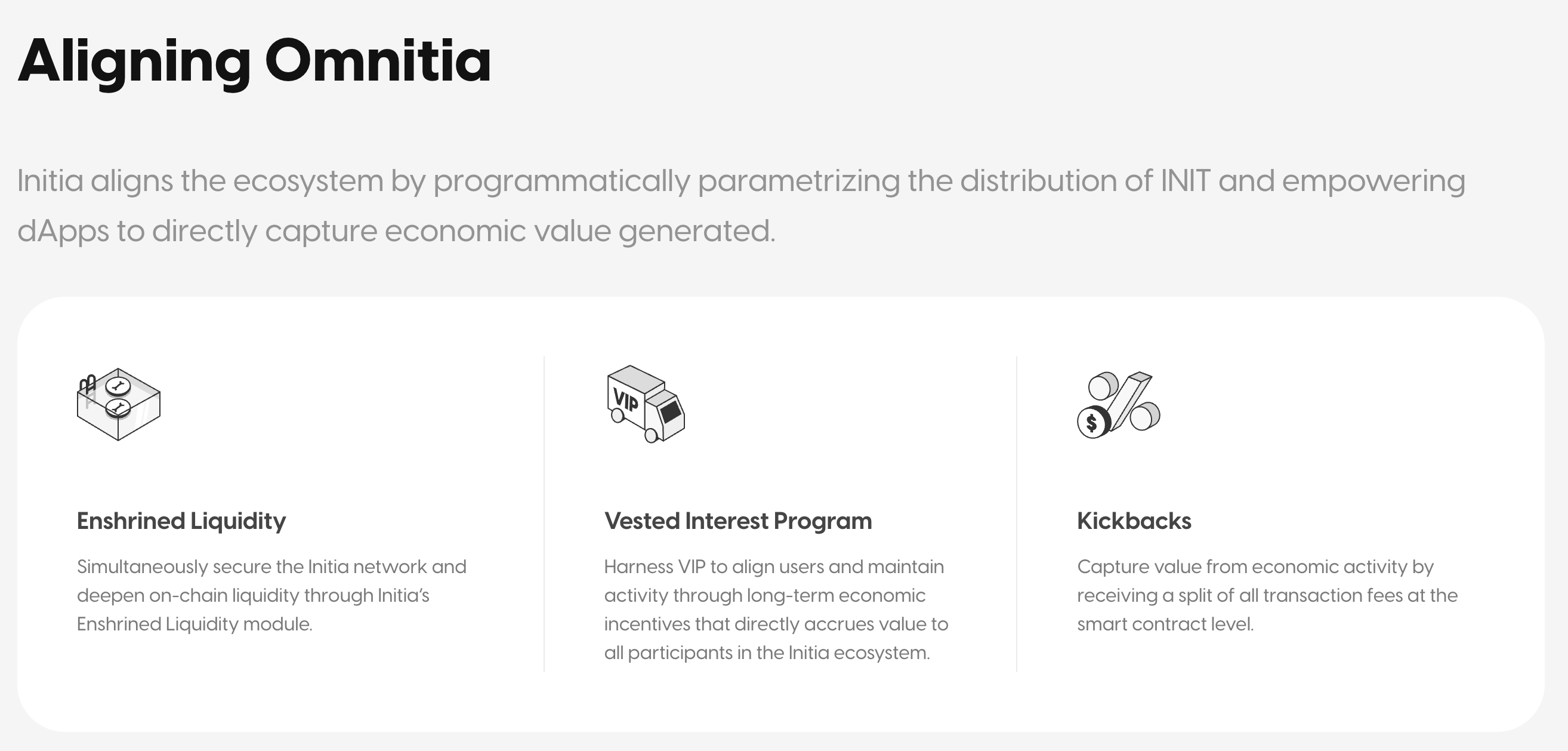
Enshrined Liquidity: Initia Layer1 introduces a unique consensus mechanism leveraging Delegated Proof-of-Stake (DPoS), enhanced through the x/mstaking module. This allows multiple tokens to be directly staked to validators for voting power. The module accepts either native INIT tokens or whitelisted INIT-X (corresponding token) LP tokens from InitiaDEX as stake—this design is known as Enshrined Liquidity.
This improves liquidity on L1, facilitates interaction between L1 and L2, increases rewards for LP stakers, reduces reliance on the price volatility of $INIT alone, and offers various other benefits.
InitiaDEX: The cornerstone of the Initia blockchain, InitiaDEX is a native decentralized exchange built on Layer1 using the Move programming language. Beyond being a trading platform, InitiaDEX plays a vital role in the Omnitia ecosystem by promoting liquidity and enabling seamless interactions between Layer1 and Layer2.
VIP: Short for Vested Interest Program, VIP addresses challenges arising from the proliferation of rollups—such as inconsistent dApp incentives, underutilization of native tokens, and inefficient distribution of protocol-level subsidies. Initia uses the VIP program to resolve incentive alignment issues across Minitias (Layer2s), harmonizing interests among participants and fostering healthy ecosystem growth. More details below.
These are some key concepts. Overall, Initia has designed several unique mechanisms to align ecosystem actors toward common goals and encourage genuinely valuable innovation. For deeper insights, consult the official documentation.
Apple vs Android: Delivering the Best Experience for Users and Developers
For any public blockchain, users and developers form the backbone of its ecosystem. While many chains rely on grants and hackathons to attract developers or users, Initia focuses on delivering the best possible user and developer experience (BEST UX/DX).
Seamless User Interaction Experience
In a past presentation, Stan, co-founder of Initia, explained the project’s design philosophy. He emphasized that Initia was conceived with cross-application liquidity in mind. While experienced Ethereum users can easily move assets across mainnets, the process becomes significantly more complex when dealing with Layer2s.
For users unfamiliar with the ecosystem, moving assets from one Layer2 to another might require consulting resources like DefiLlama just to figure out how to proceed. During execution, they may also face confusion over different token standards.
To address these pain points, Initia is building a new ecosystem designed to simplify cross-chain operations and improve overall user experience—a truly interconnected multi-chain network.
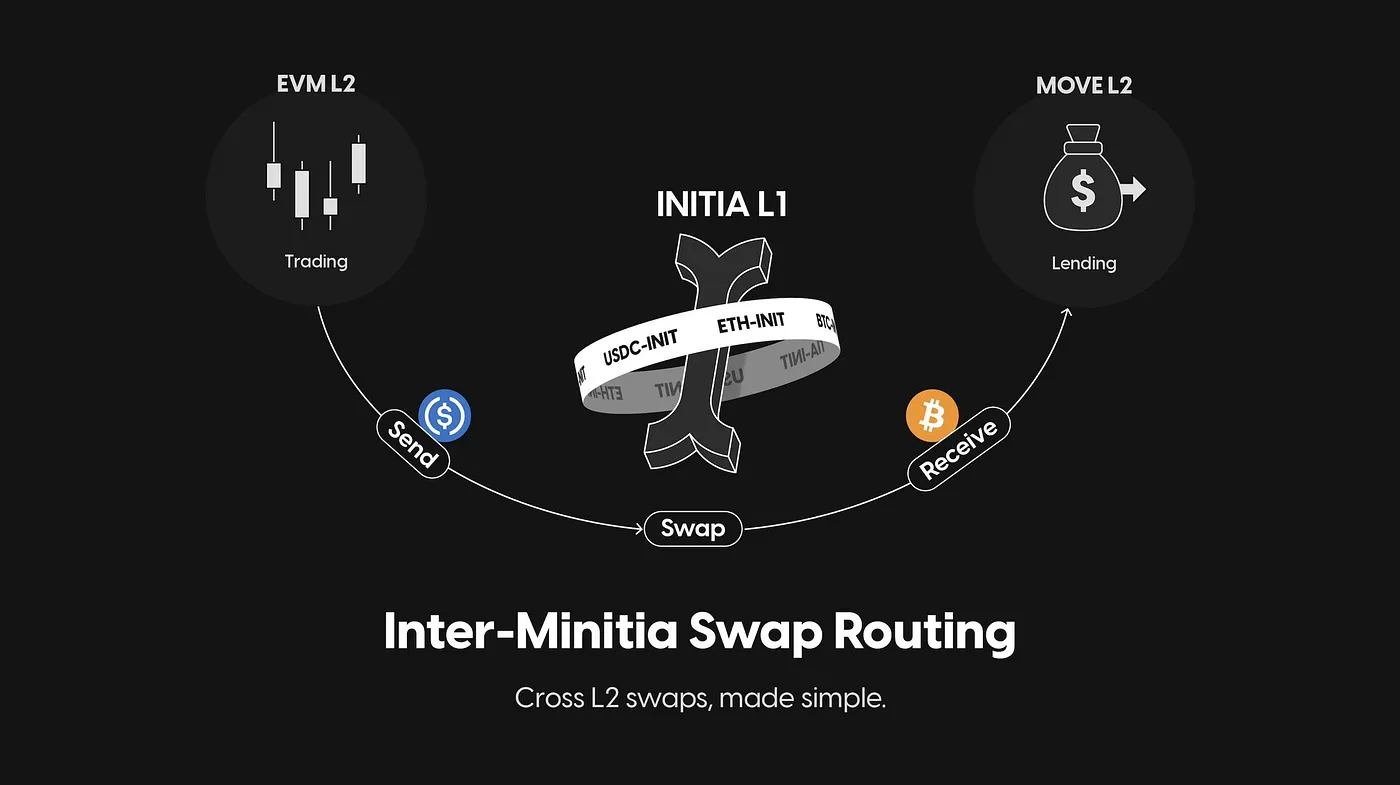
Technically, this involves Enshrined Liquidity, InitiaDEX, Minitswap, and other components. From a UI perspective, the image below illustrates how a user moves from Minitia A (EVM L2) → Minitia B (Move L2).
Thanks to built-in liquidity on Initia Layer1, a user can seamlessly swap USDC on Minitia A for BTC on Minitia B with one click. Moreover, USDC on Minitia A and Minitia B are identical—no need to deal with variations like USDC.e.
This drastically simplifies user operations, both in bridging and token standard compatibility.
Full Development Toolkit for Developers
Ecosystem growth depends heavily on developers. Many blockchains use blunt grant programs to attract projects, inadvertently drawing in "grant hunters" who lack loyalty to the ecosystem.
Initia takes a different approach with two key strategies:
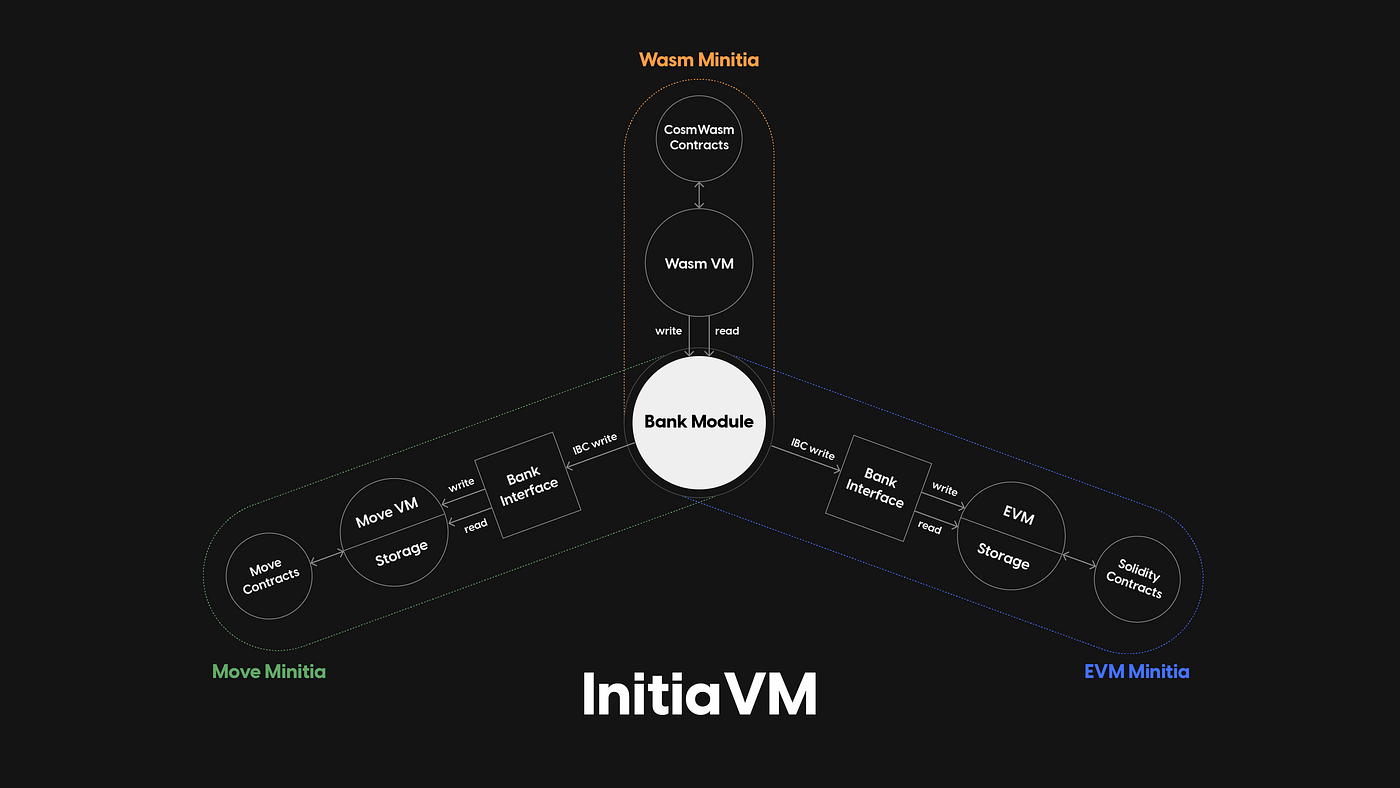
1. Supporting three VMs to welcome the widest range of developers
As previously noted, Initia supports EVM, MoveVM, and WASM virtual machines. While EVM and MoveVM are well-known, WASM (WebAssembly VM) stands out—it runs across blockchains and supports multiple programming languages such as C, C++, Rust, etc., opening doors to a broader pool of potential developers and laying a strong foundation for ecosystem expansion.
Last month, Arbitrum launched Stylus, also supporting WebAssembly VM—highlighting the growing importance of WASM in modern blockchain ecosystems. As such, Initia is positioned to attract developers and applications from nearly all major blockchain platforms.
2. Plug-and-play development environment: Let developers focus on apps and users
Zon, co-founder of Initia, said they were inspired by Apple’s design philosophy. He compared rollups on Ethereum to Android—providing infrastructure but leaving users overwhelmed with choices regarding service providers, bridges, oracles, etc. In contrast, Initia takes a stronger stance, clearly defining the system's evolution path.
Within Initia’s Layer1 and Layer2 framework, many components are pre-integrated into the system. For example, bridging uses only IBC and LayerZero; data availability relies on Celestia, etc. The belief is that all applications should evolve in alignment with Layer1 to deliver value to users and the ecosystem.
Each Minitia is a fully-equipped L2 environment where applications can “move in ready-made,” becoming plug-and-play app-chains without rebuilding everything from scratch.
Beyond high performance and interoperability, key built-in components include: unified wallet services, username services, blockchain explorers, oracles, economic incentive programs, one-click native USDC receipt, and multiple SDK supports, among others.
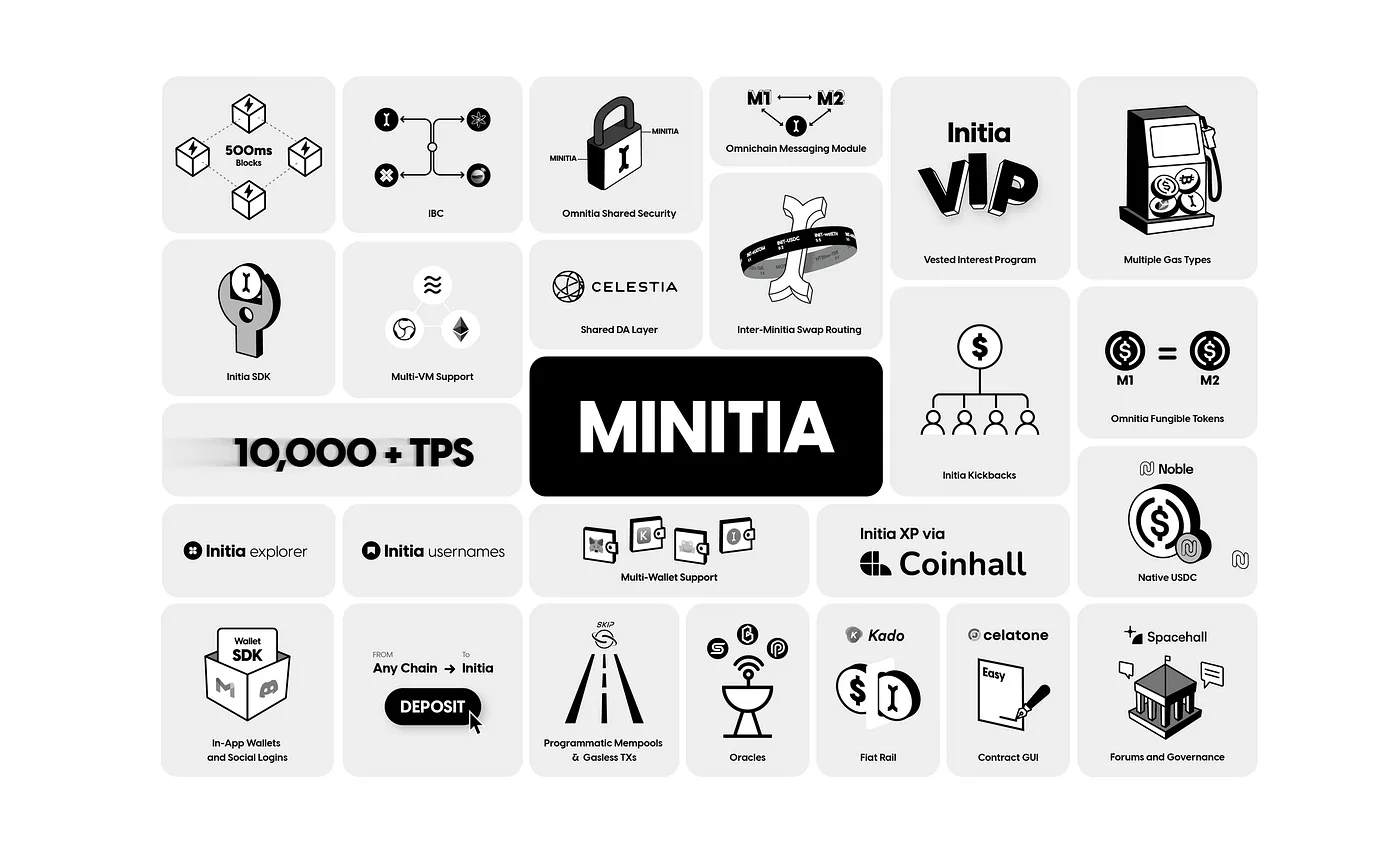
These plug-and-play tools provide each Minitia with an optimal environment tailored to specific applications. This lowers the barrier to entry for developers, accelerates deployment and market reach, and frees developers to focus on innovation rather than infrastructure.
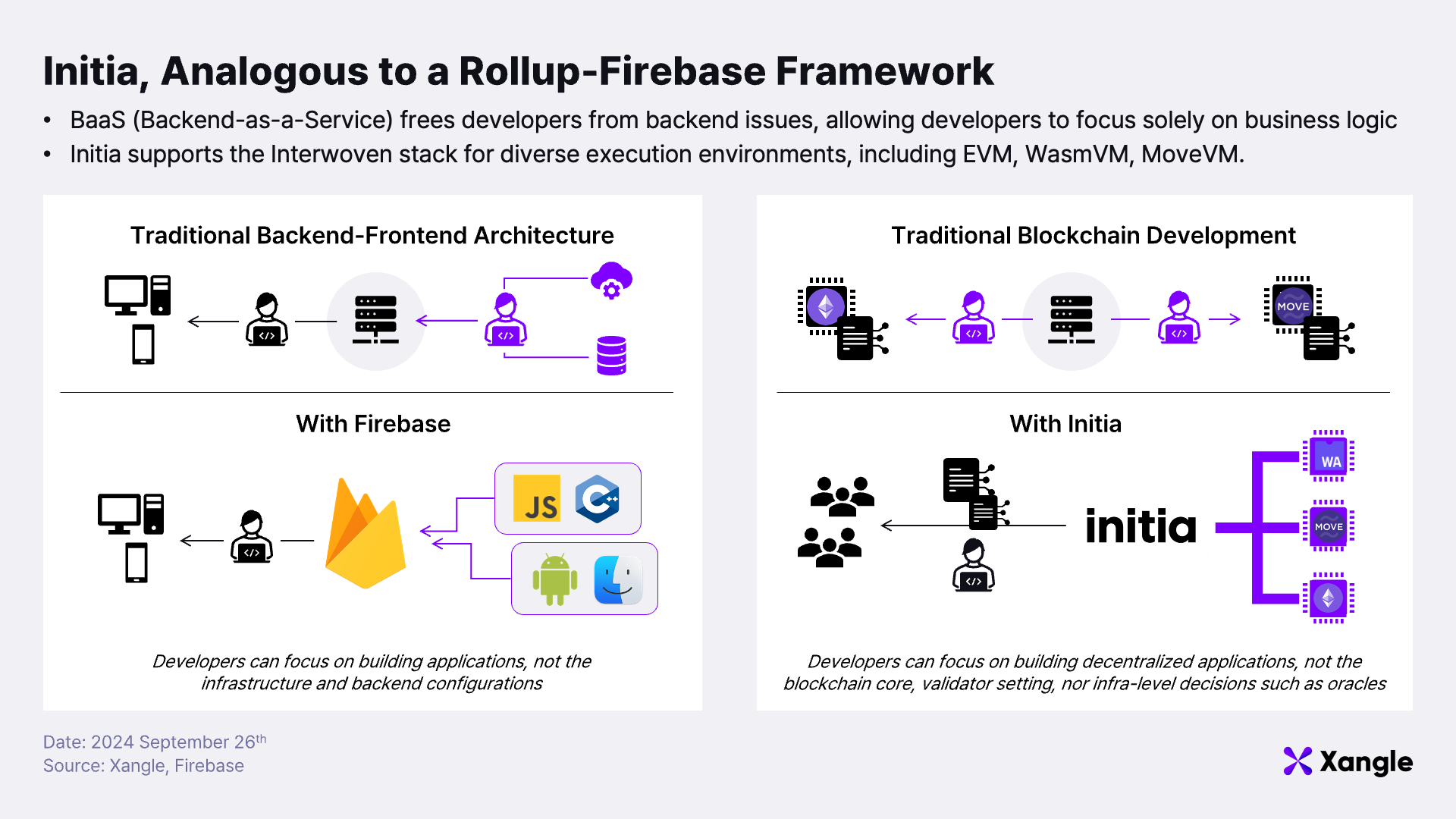
By Xangle
Growing the Ecosystem: Uniting Users, Developers, and Initia as One Community
VIP Program: Aligning Users, Developers, and Initia Toward a Shared Goal
We’ve mentioned the “VIP” program several times. Why is it so crucial to Initia?
Initia will allocate a dedicated portion of $INIT tokens exclusively for the VIP program. These tokens will be distributed as rewards to operators and users of individual Minitias based on their operational performance. The exact allocation amounts and criteria will be determined through voting.
User rewards are tied directly to their activity on specific platforms. For instance, active participation in an app unlocks more token rewards, incentivizing sustained engagement and driving ecosystem growth.
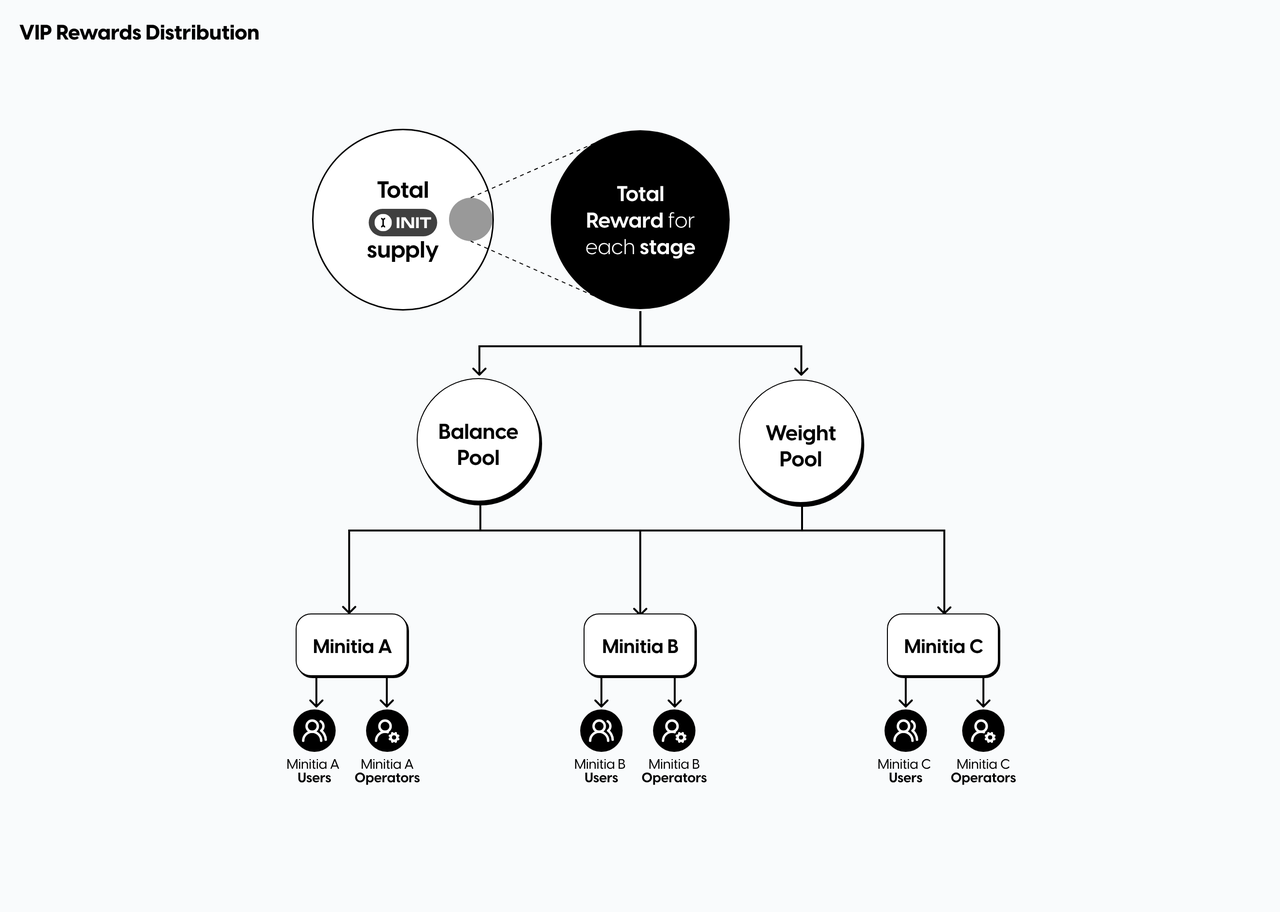
The co-founders have stated that VIP eliminates middlemen found in traditional grant programs, ensuring rewards go directly to end users instead of being absorbed by teams or treasury funds. Developers benefit too, as they earn rewards by attracting users and creating economic value for the ecosystem.
The goal of the VIP program is to align incentives across all participants—Minitia teams, users, and the broader Initia ecosystem.
Finding Innovative Teams to Support Native App Development
Building an ecosystem is both easy and hard.
It’s easy because you can quickly attract established projects by offering incentives to fork onto your chain. But it’s hard because such forked projects often lack loyalty and aren’t sustainable in the long run.
Initia does not aim to lure projects from other ecosystems and “standardize” them. Instead, it encourages unique, innovative teams to build native applications specifically for Initia. The team also provides marketing, incentive, and development support to help these projects succeed.
According to the official website, 12 ecosystem projects (Minitias) have been disclosed so far, spanning AI, DeFi, GameFi, and NFTs. Here’s the list:
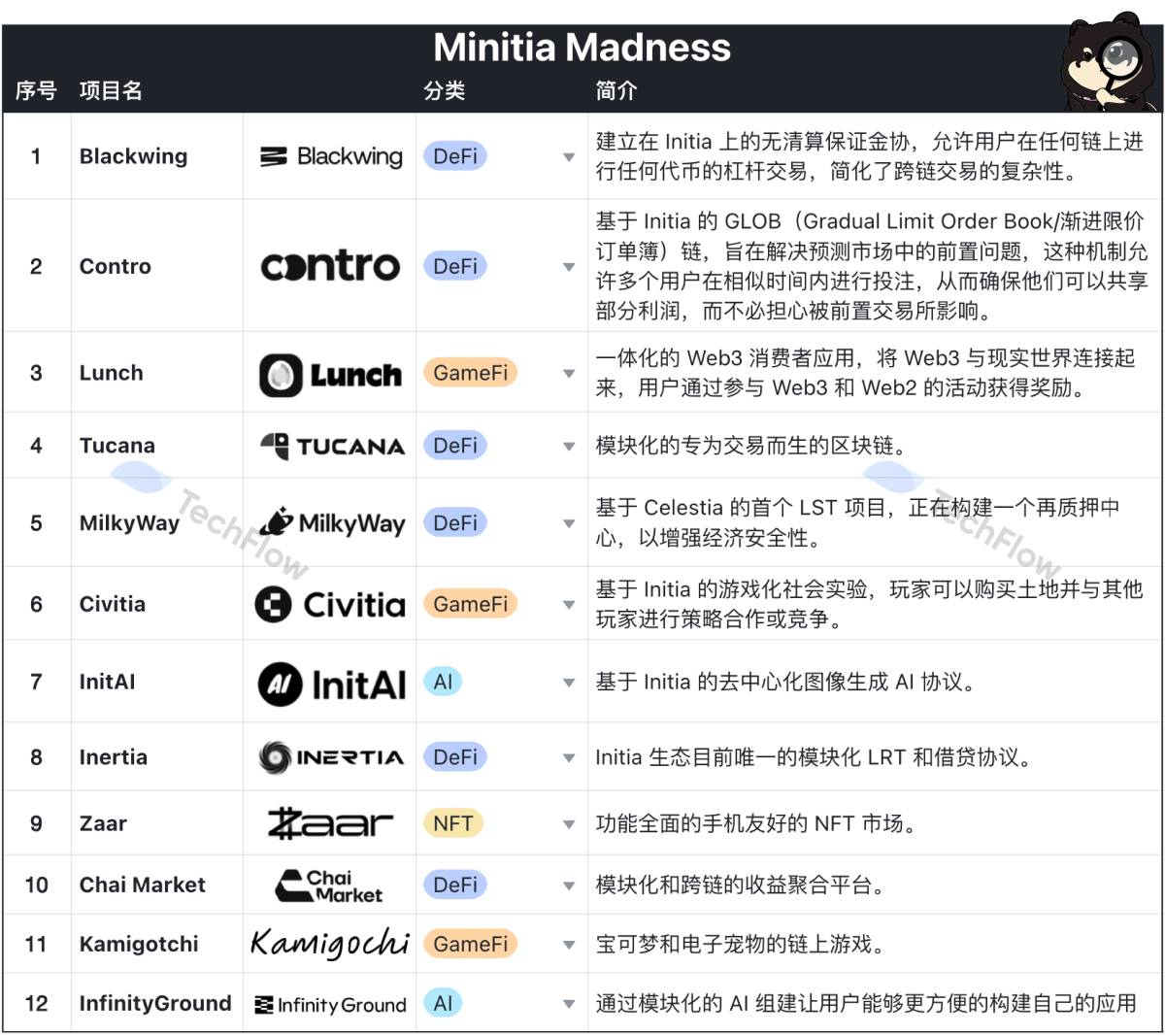
Many of these projects involve notable backers such as Binance Labs, Hashed, Polychain, and HackVC—indicating market recognition of Initia’s narrative.
Valuing Real Engagement: Mainnet Launch and TGE Coming in Q4
Recently, Initia completed a 12-week testnet campaign. Participants had to complete multiple tasks and remain active throughout to receive the Jennie NFT reward (Jennie is the pet of the Initia team and the source of many memes). Users who deeply engaged in the VIP program, interacted with MinitSwap, and explored Minitias could also earn special Stickers.
Below are official statistics from the event: over 3 million active wallet addresses participated, generating more than 100 million transactions.
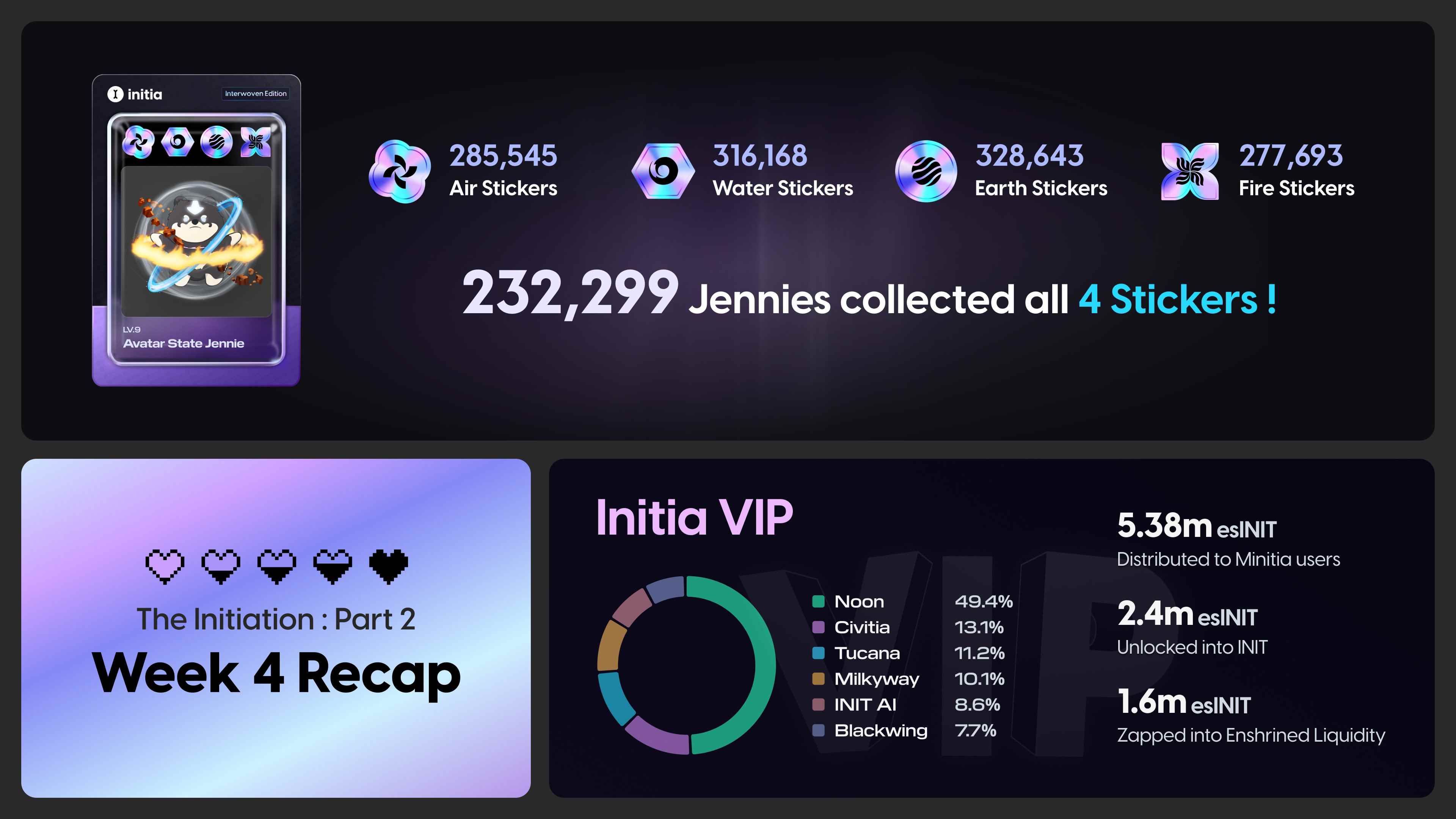
From personal experience, the testnet required sustained activity and verification criteria (e.g., GitHub score, Google score), which helped prevent simple bot participation to some extent.
More importantly, Initia also confirmed during this funding round that mainnet and TGE will launch within the next two months.

Many people follow Initia due to early backing by Binance Labs. However, I believe strong VC affiliations are only part of the story. In fact, the influence of “well-known VCs” is gradually fading—as shown by recent surveys, users are increasingly indifferent to brand-name investors.
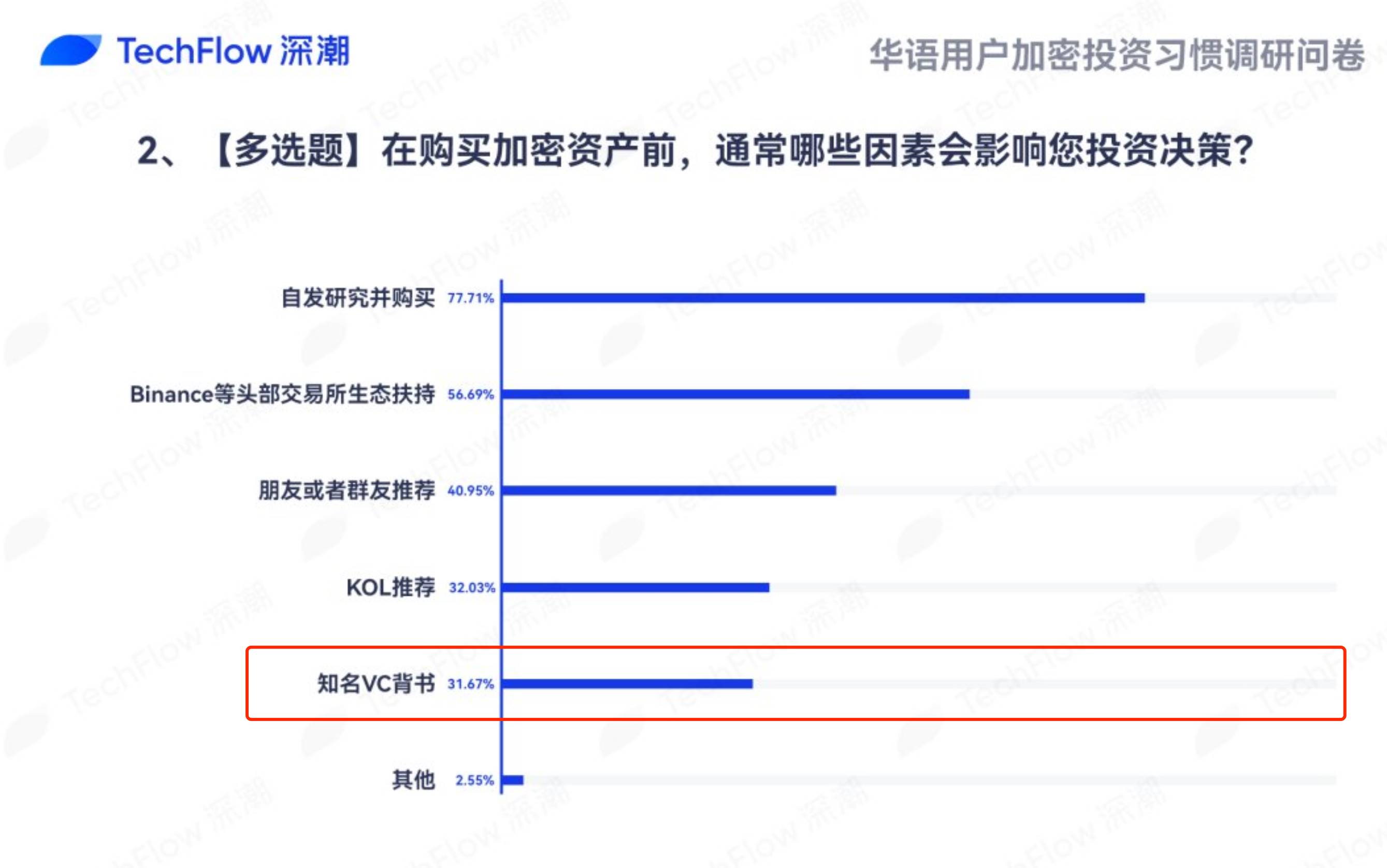
If a project lacks solid community foundations and fails to engage users and ecosystem projects authentically, it’s destined to become a ghost town.
I initially noticed Initia simply because of how prominently cultural icons like Yu-Gi-Oh!, One Piece, and Neon Genesis Evangelion appeared in their social media content—elements I personally enjoy.
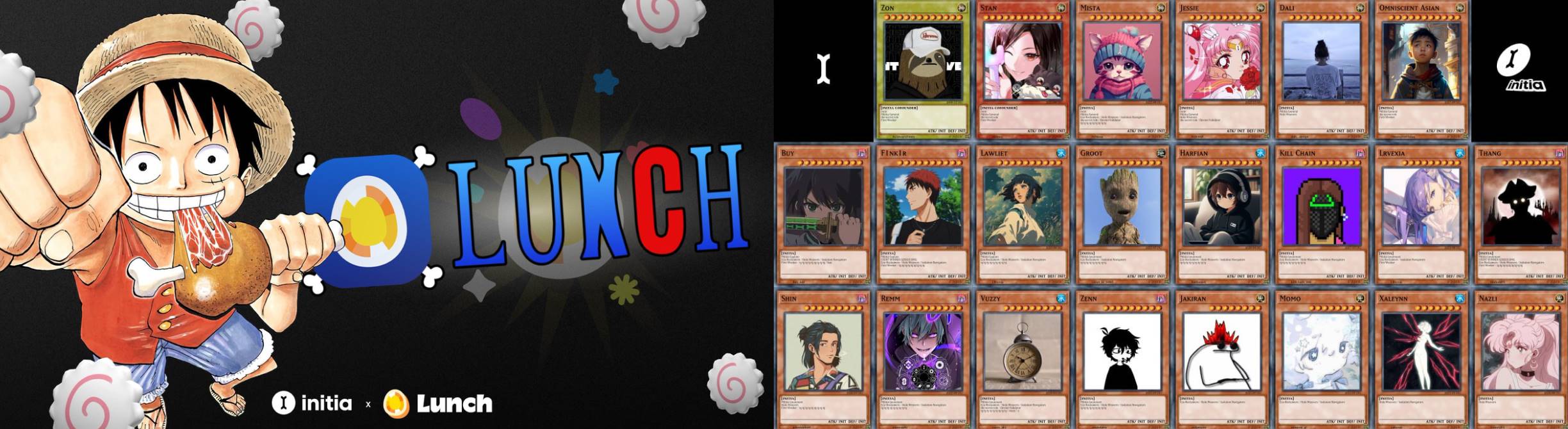
Only later did I realize how deeply culture is embedded in their team, community, events, and ecosystem projects—and truly understood the importance of making things fun and engaging for community building.
We are all Jennie's fans.
Join TechFlow official community to stay tuned
Telegram:https://t.me/TechFlowDaily
X (Twitter):https://x.com/TechFlowPost
X (Twitter) EN:https://x.com/BlockFlow_News
 深潮TechFlow