








Is the crypto market really in a bull market?
TechFlow Selected TechFlow Selected
Is the crypto market really in a bull market?
The real bull market may not have arrived yet.
 Navigating Web3 tides with focused insights
Author: NingNing
The Bitcoin on-chain Tx Volume chart from Glassnode's latest weekly report is quite misleading. The 30-day SMA structure of Tx Volume since October 2023 bears a strong resemblance to the period from October 2020 to September 2021, leading some market participants to conclude that "we are already in a super bull market and it's already halfway through."
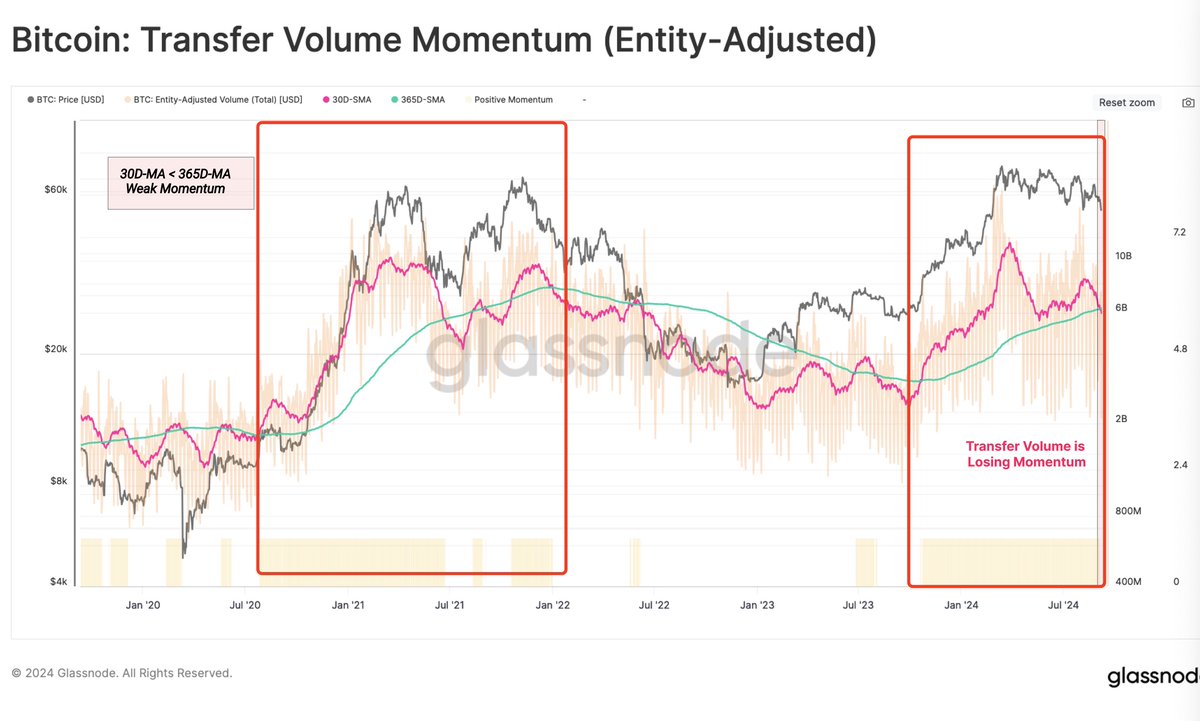
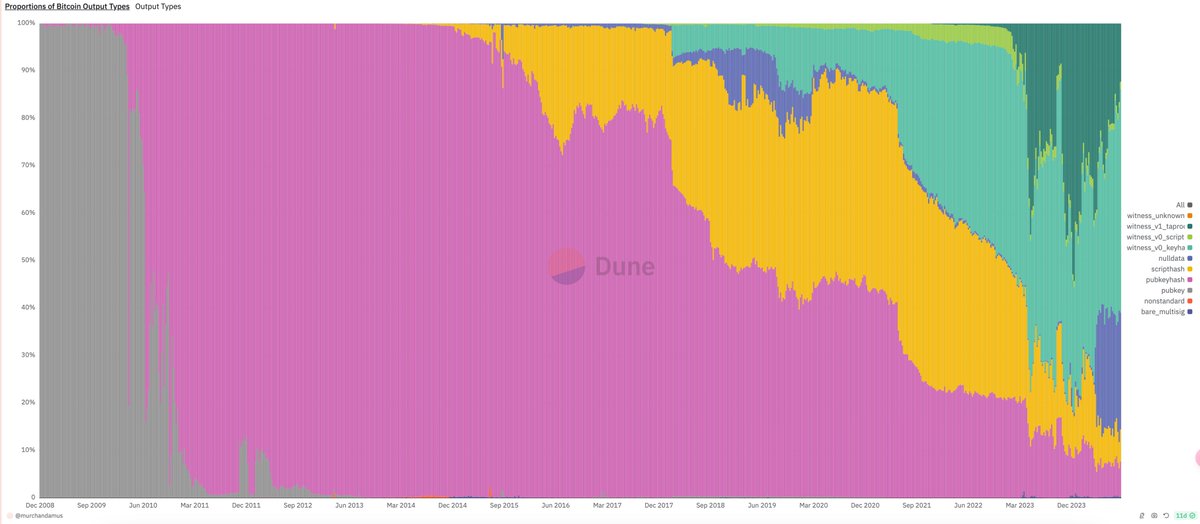
The deception lies in the fact that the underlying structure of the compared Tx Volume has drastically changed. Since 2023, Taproot Witness TXs related to inscriptions and runes have grown rapidly, at peak accounting for 41.8% of total Tx Volume—something absent in the previous cycle.
This can also be verified by examining changes in Bitcoin miner fees. Once the impact of the inscription/ruin boom periods is removed, the base level of miner fees since 2023 remains far below that seen during the bull market from March 2020 to July 2021, only slightly higher than levels observed during the 2022 bear market.
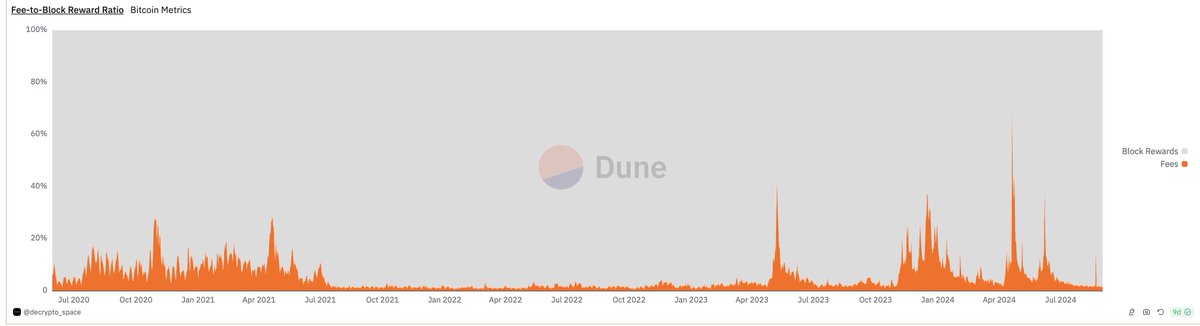
Therefore, the so-called "bull market" experienced between October 2023 and March 2024 was not a true super bull market, but rather a combination of two seasonal rallies (one autumn and one spring)叠加 with a new asset issuance frenzy.
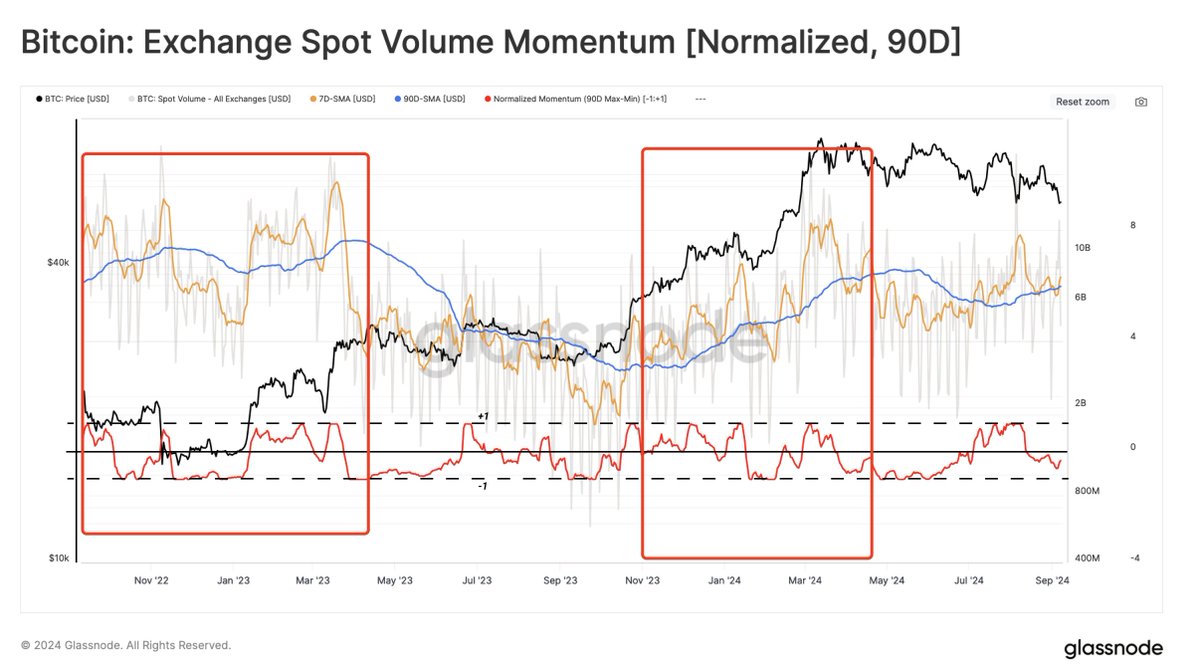
The trend in spot trading volume on exchanges since November 2022 further supports this view. As shown in the chart, there has only been seasonal fluctuation, without any structural upward trend.
In summary, the myth that "halving brings bull markets, every four years a bull market" has been debunked this year. This myth arose because Bitcoin’s halving cycles historically coincided closely with the Federal Reserve's monetary cycles—Bitcoin was born during the subprime crisis era, and each four-year supply reduction happened to fall at the tail end of Fed easing cycles, aligning with the recovery phase of the Merrill Lynch Investment Clock.
However, this time the Fed's monetary cycle has been delayed by about a year, resulting in 2024 being a halving year without a super bull market—only seasonal movements. Nevertheless, there's no need for pessimism: the absence of a major bull market in 2024 implies that the real super bull market will likely arrive in 2025–2026.
Join TechFlow official community to stay tuned
Telegram:https://t.me/TechFlowDaily
X (Twitter):https://x.com/TechFlowPost
X (Twitter) EN:https://x.com/BlockFlow_News
 @0xNing0x






