Dialogue with Framework Co-Founder: Can Cryptocurrency Survive an Economic Recession?
TechFlow Selected TechFlow Selected
Dialogue with Framework Co-Founder: Can Cryptocurrency Survive an Economic Recession?
The guests unanimously agreed that despite the risk of recession, government spending and upcoming interest rate cuts could provide support to the market.
 Navigating Web3 tides with focused insights
Compiled & Translated by: TechFlow
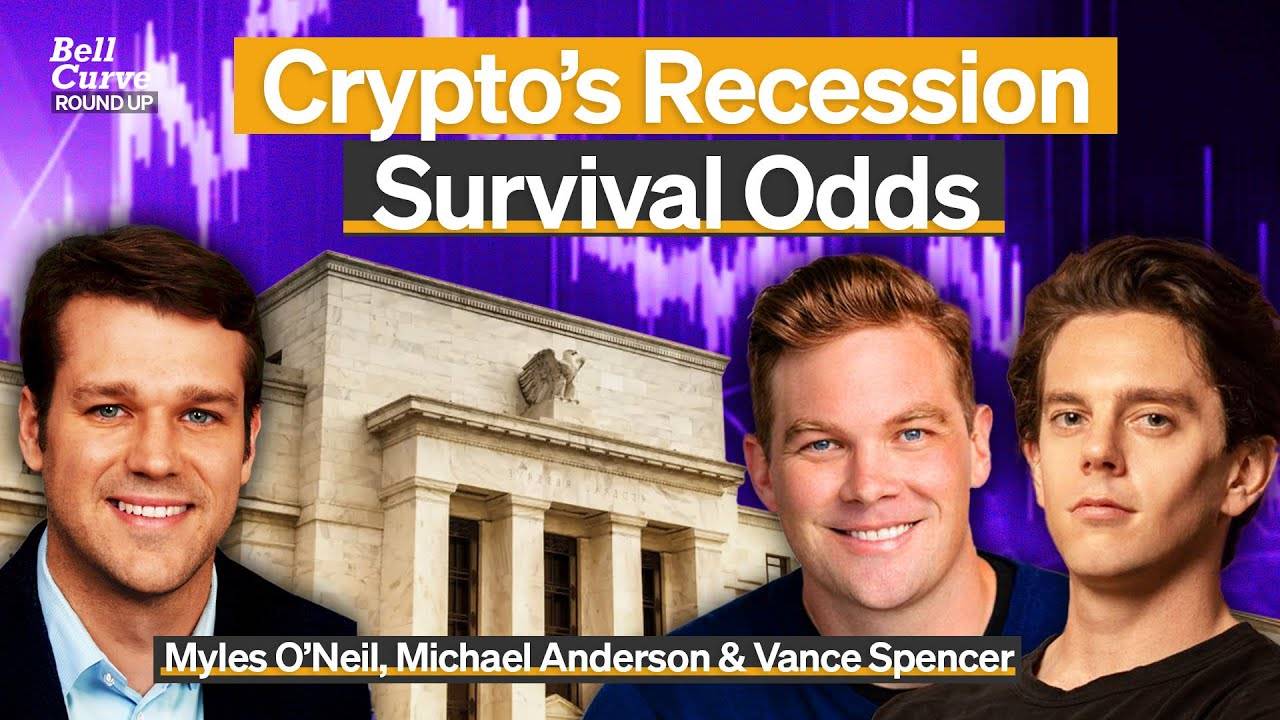
Guests: Myles Oneil, formerly at Fidelity; Vance Spencer, Co-founder of Framework Ventures; Michael Anderson, Co-founder of Framework Ventures
Host: Michael Ippolito
Source: Bell Curve
Original Title: Can Crypto Survive a Recession? | Roundup
Release Date: August 3, 2024
Key Takeaways
In this episode, the Roundup team and Myles O'Neil dive into key topics amid a turbulent week in the markets. They discuss the recent governance attack on Compound Finance, the first week of Ethereum ETF trading, and how teams should approach token unlocks. Additionally, they explore whether crypto has become a bipartisan issue and how governance tokens should be classified. Finally, they speculate on whether we're entering a recession.
Trump’s Speech at the Bitcoin Conference
-
Michael Ippolito noted that Trump's speech at the Bitcoin conference drew widespread attention. His remarks covered multiple points, some likely tailored to appeal to the Bitcoin community. He promised to fire Gary Gensler on day one and said he would "free" Ross Ulbricht—comments that were met with enthusiastic applause. While Vance expressed skepticism about Trump’s authority to dismiss Gensler, he also observed Trump’s surprise at the audience’s strong reaction.
Proposal for a Strategic Bitcoin Reserve
-
The host mentioned that Trump’s reference to a strategic Bitcoin reserve during his speech received extensive media coverage. Compared to more comprehensive proposals from Cynthia Lummis and Robert F. Kennedy, Trump’s commitment was relatively simple: stop selling the Bitcoin the U.S. already holds. Michael pointed out that while this pledge is positive, the U.S. has actually resumed selling Bitcoin.
The Future of Crypto Policy
-
Michael believes Trump will emerge as the pro-crypto candidate, and any other candidate trying to follow suit may appear insincere. He noted that while Trump’s promises are basic, if translated into actual policy, they could positively impact the crypto market. The guests discussed whether governments should buy Bitcoin and how to allow crypto businesses to operate in the U.S. without risking unfair prosecution.
Government Holdings of Cryptocurrency Assets
-
Vance said it's possible the government holds various crypto assets without public disclosure, though the full extent remains unclear. Overall, while Trump’s speech sparked discussion, the panelists emphasized the need for a clear policy framework going forward to support the healthy development of cryptocurrency.
Is Cryptocurrency Now a Bipartisan Issue?
Cryptocurrency as a Bipartisan Matter
-
Michael mentioned recent efforts to position crypto as a bipartisan topic but expressed doubt about its feasibility.
-
Vance noted that while Trump may take a proactive stance on crypto policy, if Kamala Harris becomes president, the difference in policy might not be significant. He believes future legislative frameworks will shape the market structure of crypto.
Political Stances and Voter Impact
-
Myles said opposition to crypto has negative implications for voter appeal, especially during an election year.
-
The host added that the Democratic Party’s current attitude toward crypto may not be as open as before, though this remains uncertain. He suggested that confronting major political parties directly isn’t wise and advocated for constructive engagement instead.
Market Impact of Elections
-
Michael believes market volatility isn't entirely due to elections—perhaps 70% stems from structural factors like liquidity and government sales, while 30% may relate to election-driven sentiment. He likened the current political climate to the final stretch of a race, noting that market reactions could be affected by uncertainty in the absence of clear platforms.
Kamala Harris’ Political Prospects
-
The panel discussed Kamala Harris’ political outlook, suggesting her rising popularity is partly due to comparisons with President Biden and former President Trump.
-
The host noted that Harris previously proposed a $10 trillion climate change plan, but her specific policy positions remain unclear. The guests agreed that in the absence of concrete policy details, market reactions to Harris could fluctuate.
Waiting for More Information
-
Finally, the guests agreed that market participants should remain cautious until more information emerges about future political platforms and policies. Michael concluded that this is a waiting game, and everyone needs to patiently observe how things unfold.
Compound Finance Governance Attack
The Governance Attack on Compound
-
The host discussed the recent governance attack on Compound involving a participant named Humpy, who has years of experience in crypto. Humpy voted to allocate himself $25 million worth of COMP tokens—a proposal previously rejected in April but unexpectedly passed this time. The host noted that governance participation on Compound has significantly declined, which may have enabled the proposal’s passage.
Progress and Challenges in DAO Governance
-
Myles shared his experience with DAO governance, noting that despite high interest in DAOs in the past, innovation and progress in most DAO tools stalled during the bear market. He acknowledged that while some DAO projects failed, efficient ones like Maker and Lido still exist. He emphasized that improving governance frameworks isn’t technically complex but lacks innovation in the current market environment.
Reflections on Voting Mechanisms
-
The host brought up the “ve (vote-escrowed)” mechanism, where locking tokens grants governance rights, designed to encourage long-term holders to participate in governance. However, this raises concerns about activist investors potentially influencing decisions by purchasing large amounts of tokens.
-
Vance added that DAOs lack the legal protections found in traditional corporate governance, creating additional challenges for crypto projects.
The Role of Activist Investors
-
The guests discussed the role of activist investors in crypto projects, suggesting Humpy’s actions might have been an attempt to revitalize a struggling project through governance means. Michael noted that while activist involvement might bring short-term benefits, the lack of legal frameworks and governance consistency makes such models unsustainable.
Impact of the Political Environment on the Crypto Industry
-
The host mentioned that the future political environment could profoundly affect the crypto industry. Friendly regulatory policies from a new administration could foster greater innovation and experimentation.
-
Michael added that the slowdown in current market activity is closely tied to shifts in the political landscape, particularly the upcoming election.
Outlook for Cryptocurrency
-
The guests discussed how different political stances could impact crypto. They believe that if Democrats establish a reasonable regulatory framework, it could help the industry grow. Michael emphasized the need for Democrats to balance regulation and innovation to attract entrepreneurs who have left due to uncertainty.
If Governance Tokens Aren’t Securities, What Are They?
The Classification Dilemma of Governance Tokens
-
Myles raised a controversial question about the legal definition of governance tokens. He asked what these tokens would be if, five years from now, they aren’t considered securities. He noted that while some tokens might be seen as commodities, protocols like Compound—with dividend mechanisms and fee switches—add complexity to their classification.
Exchange Trading vs. Governance Rights
-
Vance pointed out that although certain tokens trade on exchanges like CME, they lack traditional commodity features such as voting rights or entitlement to revenue shares. This raises deeper questions about the nature of governance tokens, especially in the absence of a clear legal framework.
Relationship Between Politics and the Crypto Industry
-
Vance noted that the relationship between the crypto industry and politics is evolving. He believes communication channels with Kamala Harris may be smoother than with Biden. While Harris’ policies may not be as aggressive as Trump’s, he expects overall improvement compared to the current situation.
Public Perception of Cryptocurrency
-
The host emphasized that despite the industry’s technological and economic potential, public perception of crypto remains largely negative. He argued that while pushing for political change, industry participants must also address external perceptions and advocate positively.
Balancing Advocacy and Confrontation
-
The host noted that industry participants should avoid overly aggressive rhetoric when fighting for fair treatment, as this could deepen public skepticism. He recommended a more constructive approach to advocacy to gain public support and understanding.
Future Outlook
-
The guests unanimously agreed that despite many challenges, the industry still has growth potential through proper advocacy and policy advancement. Michael added that more information about political platforms may emerge in the coming weeks, which could influence the industry’s trajectory.
Are We Heading Into a Recession?
Current Stock Market Conditions
-
Vance commented on current stock market performance, particularly the Russell index dropping 5%, an unusual occurrence. He noted NASDAQ also fell 3.2%, possibly signaling the start of a recession. With unemployment rising to 4.3%, markets expect a 50-basis-point rate cut in September.
Japan’s Stock Market Crisis
-
The host noted Japan’s stock market experienced its worst trading day since 1987, falling 6%. This highlights global market instability.
Crypto Performance
-
Despite declines in U.S. equities, Bitcoin remained relatively stable and even rose slightly. The host suggested this indicates crypto may be decoupling from traditional markets, reflecting different dynamics.
Changing Economic Environment
-
Vance noted the economic environment is shifting, with unemployment potentially rising further to 5%. He believes signs of economic weakness are emerging and will significantly impact the upcoming election.
Impact of Fiscal Spending
-
The host pointed out that despite market pressures, government fiscal spending continues to provide support. This suggests that even with recession risks, the economy may avoid severe damage due to ongoing government expenditure.
Outlook for the Crypto Market
-
Vance emphasized that rate cuts could positively impact Bitcoin and the broader crypto market. He believes the current economic conditions may present a favorable opportunity for crypto, especially amid uncertainty in traditional markets.
Future Outlook
-
The guests agreed that despite recession risks, government spending and anticipated rate cuts could support markets. Vance called for swift rate cuts to stimulate economic and crypto market recovery.
First Week of ETH ETF Trading
Initial Performance of ETH ETFs
-
The host noted that the first week of ETH ETF trading has concluded with positive market performance. Although GBTC previously saw outflows, inflows turned positive recently, especially for BlackRock’s ETF product, which attracted substantial capital.
Bitcoin and ETH Capital Flows
-
Vance mentioned that Bitcoin and ETH capital flows have recently balanced out. He expects BlackRock’s ETF to drive continued inflows into both assets—yesterday saw around $1.7 million flow into Bitcoin and $970,000 into ETH. He believes this liquidity will keep growing.
Grayscale’s Impact
-
Vance noted that Grayscale’s outflows still affect the market, but their impact is diminishing as ETFs succeed. He said mini trusts are helping absorb outflows, contributing to improved overall market sentiment.
Outlook for the ETF Market
-
The host added that BlackRock and other ETF providers have a responsibility to ensure these products succeed—an important positive signal for the entire market. Their performance will significantly influence market confidence.
How Should Teams Handle Token Unlocks?
Background on Token Unlocks
-
The host mentioned that Namada, a privacy-focused Layer 1 project, proposed unlocking 100% of its token supply at the token generation event (TGE). He explained the rationale: many are tired of low-liquidity, high fully diluted valuation (FDV) token launches, which often lead to continuous selling pressure from investors or teams over one to two years during unlock periods.
Differing Views on Unlock Timing
-
Vance noted that current token unlock practices are far from ideal. He believes a project’s value and appeal are the key factors. Whether successful projects like Ethereum (ETH) or Solana choose 100% or 0% unlocks, the outcome may not differ much—the quality of the project ultimately determines its value.
Market Self-Correction
-
Vance said the market is self-correcting: low-quality projects face higher barriers to listing, and only more valuable ones will gain support from major exchanges. As the market reevaluates tokenomics, low-liquidity, high-FDV projects will lose appeal.
Challenges in Listing Pricing
-
The host expanded on listing pricing, noting that in crypto markets, many projects set excessively high initial prices, leading to sharp post-listing declines. He said this isn’t sustainable and that the market needs a more rational initial price discovery mechanism.
Balancing Early and Retail Investors
-
Both speakers agreed the market needs better balance between early investors and retail participants. Early investors want quick returns, while retail investors seek fair entry prices.
Future Outlook
-
Vance emphasized that the market will continue adjusting, reducing investment in low-quality projects while aiming to prevent investor disillusionment. He noted the high attrition rate among "meme coins" is concerning and stressed the need to draw these investors back into the ecosystem.
Join TechFlow official community to stay tuned
Telegram:https://t.me/TechFlowDaily
X (Twitter):https://x.com/TechFlowPost
X (Twitter) EN:https://x.com/BlockFlow_News
 深潮TechFlow