The Rise of OpenAI: Power Player Sam Altman Built Vast Influence Through Networking
TechFlow Selected TechFlow Selected
The Rise of OpenAI: Power Player Sam Altman Built Vast Influence Through Networking
Ohtman is fully committed to achieving his next ambitious goal: enabling artificial intelligence to outperform humans across a wide range of tasks.
 Navigating Web3 tides with focused insights
Source: Tencent Technology
Translation: Jin Lu
Sam Altman’s journey has always been guided by an acute awareness of being in the right place, at the right time, and building connections with the right people. Understanding Altman’s rise is crucial because knowing who he is and what he believes may help us better answer an urgent question: Should we trust this man to oversee the development of this transformative technology?
From the moment he founded location-based service Loopt at age 19, Altman demonstrated a strong drive for power. With unique personal charisma and unwavering determination, he won support from numerous tech leaders, including Paul Graham, Peter Thiel, and Elon Musk. He is widely praised for his problem-solving skills and relationship-building abilities, yet these strengths have also drawn scrutiny and criticism. While his vision at OpenAI is dedicated to benefiting humanity as a whole, his management style has frequently become a source of controversy.
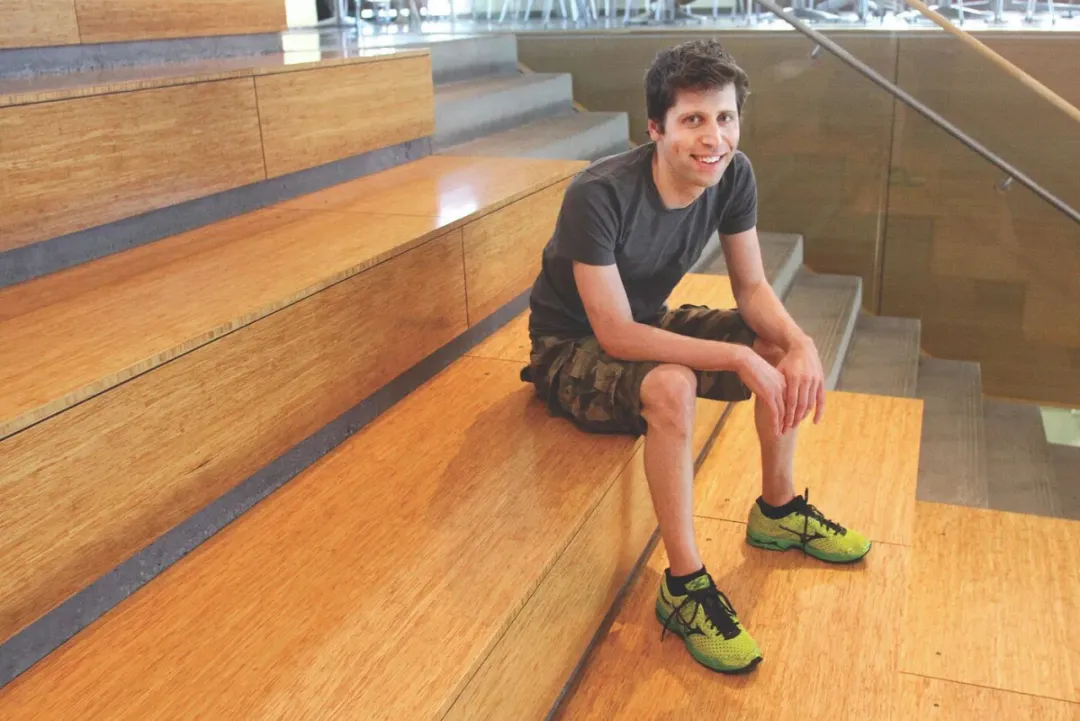
Despite dropping out of college and often dressing in signature cargo shorts or polo shirts, Altman consistently captures investors’ attention and achieves his goals. On his personal blog, he once bluntly stated: “It’s surprising how much you can make the world bend to your will, and most people never even try.”
Altman’s Secret Weapon: Mastering the Art of Power
On a Wednesday in November 2023, I (Ellen Huet, a well-known tech journalist) found myself in a dimly lit San Francisco restaurant, bustling with guests after an artificial intelligence conference. Clusters of people chatted animatedly while servers circulated with delicate hors d'oeuvres. As I took a bite of a mushroom donut, a quiet whisper reached my ear: “Sam Altman is here.”
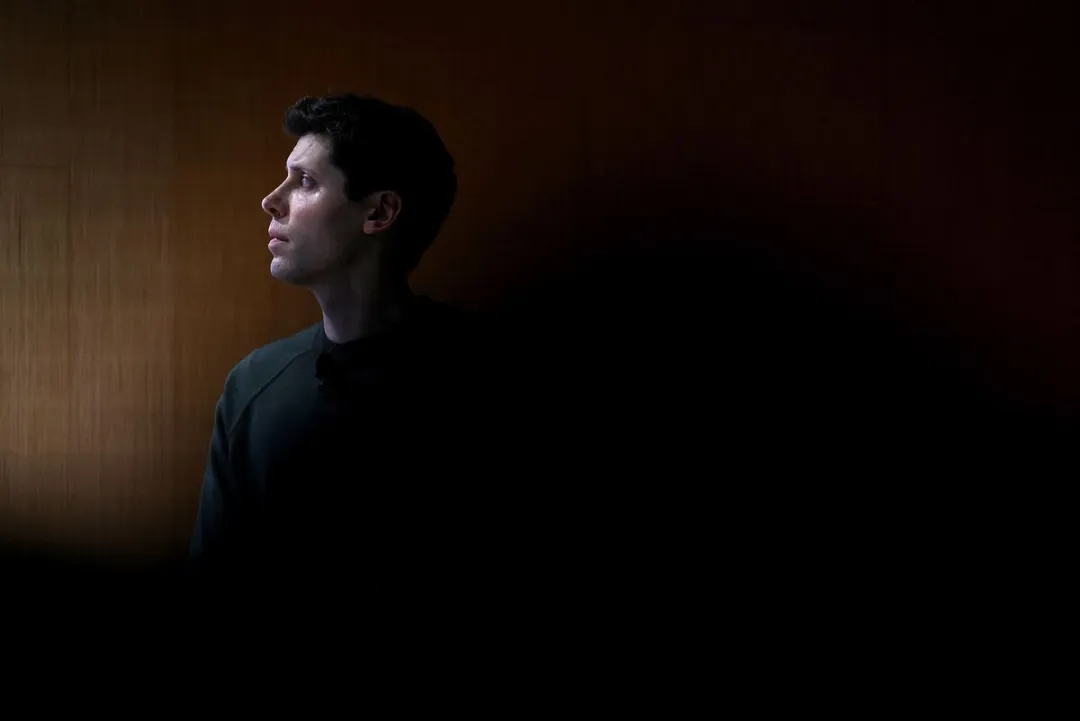
I strained to spot him in the dim light. I had interacted with Altman several times before; he had long been embedded in the startup world and was always friendly toward journalists. Over the years, he had become one of Silicon Valley’s most influential figures. As CEO of OpenAI, he launched ChatGPT in late 2022, catapulting the company to fame and raising its valuation to $86 billion—making it one of the most valuable startups globally. In recent months, Altman’s face appeared constantly in headlines, featured across major media outlets. Dubbed the “King of ChatGPT,” the “modern-day Oppenheimer,” or the “AI overlord,” he seemed to embody the future of artificial intelligence, meeting regularly with global leaders.
In the crowd, I spotted him standing in a corner of the restaurant, already surrounded by several guests. I decided to approach. He wore a crisp suit and tie—more formal than I remembered—and seemed shorter than I recalled. When we shook hands, he smiled and glanced at my conference badge, saying, “Great to meet you.” His charm and warmth surprised me. He seemed to remember me and already knew about my work. Seizing the moment, I asked if I could interview him sometime. “Of course, that sounds like a great idea,” he replied.
Others were waiting to speak with him, so I politely stepped aside. About ten minutes later, he left the party. The next day, Altman continued his tour as an AI statesman, delivering keynote speeches at high-profile conferences. At one such international summit attended by national leaders, he declared: “I firmly believe that AI will be one of the most transformative and beneficial technologies in human history. It is undoubtedly the most significant technological revolution we’ve ever seen. I am deeply passionate about it—I can’t imagine anything more exciting. Being part of this journey is an immense honor and joy.” Altman firmly believed in the coming transformation and understood his pivotal role within it.
Yet, less than 48 hours after I saw him at the party—and just 24 hours after that major speech—a shocking announcement came: Altman had been fired by the OpenAI board. The news stunned everyone, even Microsoft, OpenAI’s biggest backer. According to the board, their review found that Altman had “not been consistently candid” in his communications with them. The revelation exploded like a bombshell, becoming one of the most sensational tech stories of 2023. When the news broke on Friday afternoon, my colleagues and I immediately realized our weekend would not be quiet. In the days that followed, the story unfolded like a hurricane. The OpenAI board hinted that Altman had lied, then announced a new CEO, and eventually issued a public apology expressing regret over the firing decision.
Some pledged loyalty, employees revolted, and beneath it all, another current stirred—suggesting Altman might return. He actively sought support from staff and Microsoft, making it feel as though he could reclaim leadership. Just five days after being ousted, Altman miraculously returned as CEO—an astonishing reversal that left many stunned. Yet, to those who know Altman, it didn’t seem surprising at all.
Paul Graham, Altman’s mentor and renowned investor, once told reporters that Altman is exceptionally skilled at wielding power—it’s practically his trademark. In Silicon Valley, we often celebrate technical geniuses: coding prodigies or those obsessively focused on product details and design. But Altman is different. His greatest, most striking ability is his mastery of power—an aptitude that may profoundly impact each of us.
In the summer of 2023, about five months before his dismissal, a tech reporter asked Altman: “You now wield immeasurable power—why should we trust you?” Calmly, he replied: “You shouldn’t. If AI turns out to be as powerful as expected, it will change everything. You shouldn’t trust any single company, let alone any one person.” If he truly believes this, then why fight so hard to return to OpenAI? Why reclaim control, acting as if he alone is the only one capable of leading the company forward, especially when they’re racing to advance AI?
A Teacher’s Star Student, a Sister’s Domineering Brother

Altman’s hunger for power was evident from childhood. He grew up carefree in St. Louis, a city in the eastern United States. His mother was a dermatologist, his father a real estate developer, and Sam was the eldest of four siblings.

He attended a prestigious private high school. One anecdote stands out: when some students tried to boycott a gathering on sexual orientation, young Altman stood before the entire school and courageously declared himself gay. For a teenager in the early 2000s, this was an incredibly bold and progressive act. As we know, Altman was intelligent, distinctive, and always stood apart. He was an excellent student, a gifted writer, and simply extraordinary.
Andy Abbott, one of Altman’s English teachers and now principal of that same high school, recalls that even in a highly competitive environment where academic achievement was prized, Altman stood out. Abbott remembers him as naturally charismatic, curious, and possessing innate leadership qualities. Far from a conventional student, he edited the yearbook, represented the school in Model UN, designed the school’s website—a rare feat at a time when outsourcing web design wasn’t common—and even excelled at water polo.
Abbott said: “I clearly remember that Altman’s confidence stemmed from his exceptional talent. He was the brightest star in the room—brilliant and magnetic. I actually hoped he wouldn’t go into tech because he was so creative and such a strong writer. I dreamed he’d become a writer or some kind of artist. After all, no one predicted OpenAI would become this successful, but everyone knew this guy surpassed the rest of us ordinary people in almost every way.”
This highlights a key trait throughout Altman’s career: his ability to impress people who can positively influence him—older individuals, those in power, and those who might help him advance. Those close to him say he possesses an uncanny ability to sense power dynamics and use his charm to win over those in authority. Even as a teenager, his demeanor resembled that of a mature, confident individual with full agency. Adults admired this quality, and he exhibited it equally with his three younger siblings.
According to his younger brother, they used to play a board game called *Samurai*, and Altman always won. He styled himself the leader, confidently declaring: “I have to win. I’m in charge.” His brother recounts this with humor, but their sister Annie—the only girl in the family—has a different perspective. She became estranged from Altman and other relatives, yet childhood memories left her deeply aware of his controlling nature. To her, it wasn’t funny—it was domineering.
Annie said: “From my perspective, given the nine-year age gap, he often acted like a third parent—a big brother figure who controlled everything. For example, even though our family was Jewish, we used to buy Christmas trees to celebrate, until Altman strongly objected. My memory of Christmas trees is nearly erased because when he was 13, he decided that as a Jewish family, we should stop celebrating Christmas.” When their father passed away in 2018, Annie recalled Altman assigning speaking times for each younger sibling at the funeral. However, a spokesperson for OpenAI noted that Altman remembers these events differently, though declined to provide further details.
Dropping Out to Launch Startups and Build Networks
When Altman graduated high school, he followed a path typical in the tech industry: enrolling in Stanford University’s computer science program, launching a startup, and then dropping out to focus on entrepreneurship. But he made a crucial decision—he applied to Y Combinator (YC). YC is a startup accelerator, essentially a boot camp where founders apply, spend three months building a company, pitch to investors, and seek venture capital. Altman was actually among YC’s earliest founders. Back in 2005, YC was virtually unknown—just a group of young people gathering in Cambridge, Massachusetts, writing code—but it would grow into an immensely powerful network, now considered the top elite program for leading startups, extremely difficult to get into.
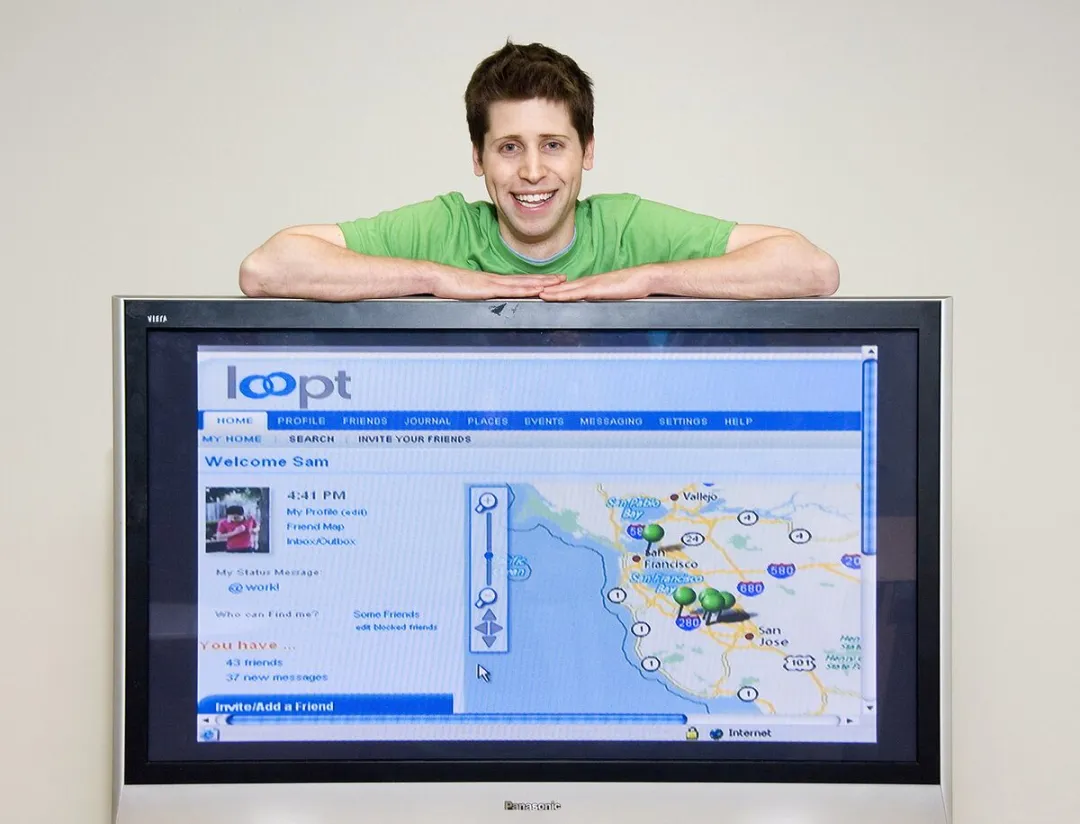
At 19, Altman joined YC and immediately impressed YC founder Paul Graham. Graham later wrote: “Within about three minutes, I remember thinking: This must be what Bill Gates was like at 19.” Altman’s startup was called Loopt. When people first got excited about GPS on phones, Loopt used location data to connect users with friends and local businesses—a mix of Yelp and Foursquare. At a developer conference, Altman introduced it: “Loopt connects people on the move—that’s the main reason you carry a phone. We show you where people are, what they’re doing, and cool places nearby.”
Altman started building the company in 2005, before the iPhone existed, so Loopt aimed to do this on flip phones—which was challenging. Early on, Altman’s company faced near-desperation—they desperately needed a deal with a mobile carrier. They learned Sprint’s Boost Mobile was seeking partners to add location features and was about to sign with another company. So Altman flew to Boost’s headquarters in Southern California. He showed up outside executive Will’s office, asking for ten minutes. Will recalled: “I remember getting Altman’s call. He explained who he was and what Loopt did. Someone at Sprint had referred him to us.”
He added: “We were literally a day or two away from signing with another startup—bigger than Loopt. Altman insisted on visiting that same day, which was very unusual. But given the timing—we were at the final stage, the contract was about to be signed, he was already there, and our parent company Sprint recommended him—it was at least worth a meeting. Altman and two other Loopt members came in, we sat in the conference room, shared our plans, and Altman began presenting Loopt. I remember he was 19, probably wearing casual shorts, legs crossed, effortlessly taking control.” Altman ultimately convinced Will, and Boost Mobile changed course at the last minute, choosing the underdog Loopt.
Will still vividly remembers Altman. “Visually, he looked very young, but close your eyes and just listen—his deep understanding of the project, exceptional communication skills, and commanding confidence were among the best I’ve seen in decades in tech. What was strange wasn’t just his appearance, but that extraordinary calm and control.” Altman’s persistence paid off—he knew how critical the deal was and acted decisively. Later, Altman said he learned a valuable lesson: persevere relentlessly. That persistence secured Loopt’s partnership.
YC peers were amazed Altman achieved this, as Loopt’s business model was unproven and the product unimpressive. Yet Altman’s unique strength began to emerge: he was an incredible negotiator. A YC founder recalled: “He made a huge impression—somehow convincing a telecom to serve his startup even before it had a real product. I don’t know how he did it, but what stood out most about Altman was his ambition. Most of us had ambition, but he was better at closing deals.” In the following years, Loopt grew, and Altman demoed the product at Apple’s 2008 developer conference.
I’ve read and heard countless interviews with Altman—he constantly uses words like “super” and “excited,” sometimes “super excited”—a contagious enthusiasm and optimism. He describes things as effortlessly important and thrilling. Yet, he wasn’t “super excited” about Loopt’s eventual outcome. A few years later, Loopt faded from view, and Altman sold the company for a modest sum. Reports suggest he walked away with $5 million. For most, that might be satisfying, but in Silicon Valley terms, Loopt was seen as somewhat of a failure.
But it didn’t matter—Altman had already won the favor of key mentors. One was billionaire investor and PayPal co-founder Peter Thiel. Thiel, one of Silicon Valley’s most prominent gay figures, formed a special bond with Altman. When Altman left Loopt, Thiel gave him substantial funds to invest. Their closeness was noticeable—even to Altman’s peers—because Thiel was known for pessimism and nihilism, while Altman projected sincere, optimistic public energy.
Meanwhile, Altman’s relationship with YC’s Paul Graham deepened, bringing tangible benefits. When Graham had the chance to invest in the early payment startup Stripe, he invited Altman to join. Altman later said this was, in some ways, his most successful angel investment—and he got the opportunity purely through his personal network.
Wealth, Connections, Influence—Becoming the "Conductor"
Graham earned acclaim for writing insightful essays on startups, distilling his unique wisdom. He repeatedly praised Altman and advised young entrepreneurs to learn from him. One of Graham’s comments about Altman stands out: “Even if you dropped him naked onto a remote island inhabited by cannibals, five years later he’d be king.” At first, I took this as high praise, but now, upon reflection, it might carry deeper implications.
By 2012, YC had risen to become a powerful investment firm, relocating from Cambridge to Silicon Valley and nurturing internet giants like Airbnb, Dropbox, and Stripe. During this period, Altman began emulating Graham’s style, evolving into a mentor for founders. He guided young entrepreneurs at YC, just as Graham had done, and began writing cryptic, often puzzling startup advice—such as “The most successful founders don’t just build companies—they create something resembling a religion,” and “A little-known secret is that you can shape the world as you wish, but surprisingly, most people never try.”
In a blog post titled “How to Be Successful,” Altman advised founders: “You should be almost delusionally confident. The most successful people I know are nearly delusional.” To those familiar with Altman, this isn’t surprising. A friend told me Altman radiates absolute confidence—he seems 100% certain of himself, lacking the fear or uncertainty most of us feel. Similarly, former Boost Mobile executive Will observed that Altman is very confident but not arrogant—his confidence comes from intellectual and social ease.
For years, Graham carefully shaped Altman’s image into that of a semi-mythical figure in the startup world. In 2014, Graham decided to elevate him fully—he stepped down as YC president and named Altman his successor, a move that drew wide attention in Silicon Valley. At just 28, backed by Thiel and Graham, Altman took the helm of YC. Their close alliance handed him money, connections, and influence. Essentially, they directly transferred a portion of their power to Altman, fueling even greater ambition—allowing him to maintain high expectations even for projects like Loopt that others deemed questionable.
Graham explained his choice: “YC had grown into a large organization, and I wasn’t good at managing something that big. Altman, however, excels at it.” At the time, there was little evidence Altman could manage such scale, but since taking over, he expanded YC far beyond its previous size, funded more startups, and successfully launched overseas operations. Altman’s era at YC was undeniably an age of expansion.
Entrepreneur John Coogan observed that Altman possesses an extraordinary ability to shift perspectives and listens with intense focus—some even called him the “Michael Jordan of listening.” Many describe his attentiveness—he locks eyes, his focus so intense it can feel slightly unsettling. Later, as YC’s leader, Altman became more of a behind-the-scenes force. Leveraging deal-making skills honed at Loopt, plus vastly expanded networks and influence, he could solve problems with a single phone call.
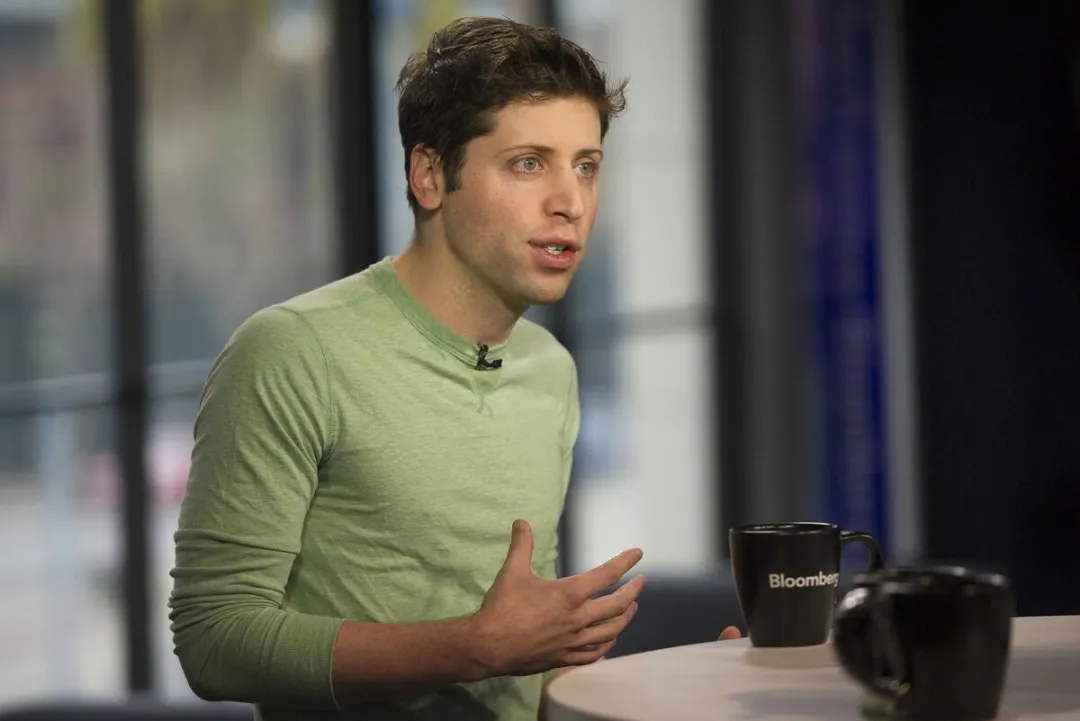
Coogan recalled: “Early in my entrepreneurial journey, I faced an extremely tough negotiation. On a whim, I emailed Altman—and he called back immediately. In just five minutes, he completely resolved my crisis. It became one of the best deals of my career, leaving a lasting impression. I once saw Altman resolve a $100 million issue in a 15-minute call—truly astonishing. I think Altman just thinks about problems in a human way—he understands what each person wants—this one wants X, that one wants Y—and then figures out how to elegantly connect them.”
Under Altman, YC kept growing, but his ambitions extended further. As president, he launched special initiatives, including nuclear fusion research, encouraging more entrepreneurship in the field. He broadened YC’s scope to include startups with uncertain technical foundations—previously, YC focused mainly on internet software. He also established a research division within YC, tasking researchers with exploring frontier ideas like universal basic income—guaranteed fixed payments regardless of employment.
Driven by Altman, YC conducted a study providing unconditional financial aid to families in Oakland. This action-oriented mindset was classic Altman—he’d get an idea, believe something should exist, then mobilize people and money to make it happen. As he wrote in his blog, he was like a symphony conductor—not playing instruments himself, but guiding the entire orchestra to harmonious performance.
Did Musk Have Hidden Motives? Envy Toward Super-Rich Friends?
By 2015, Altman had another chance to shine. He identified a critical issue—artificial intelligence—and planned a dinner to gather talent and resources to advance the field. This dinner would change everything. A legend circulates in Silicon Valley: in 2015, Elon Musk grew deeply concerned about AI’s trajectory and voiced his worries repeatedly.
At the time, Google dominated AI with vast funding and top researchers. Google Brain and DeepMind, which it acquired, were conducting exciting AI research, building smoother, self-learning systems. Google’s early lead troubled Musk—he feared AI could become too powerful, especially if AI systems began improving themselves. These concerns fueled Musk’s distrust toward those overseeing the field.
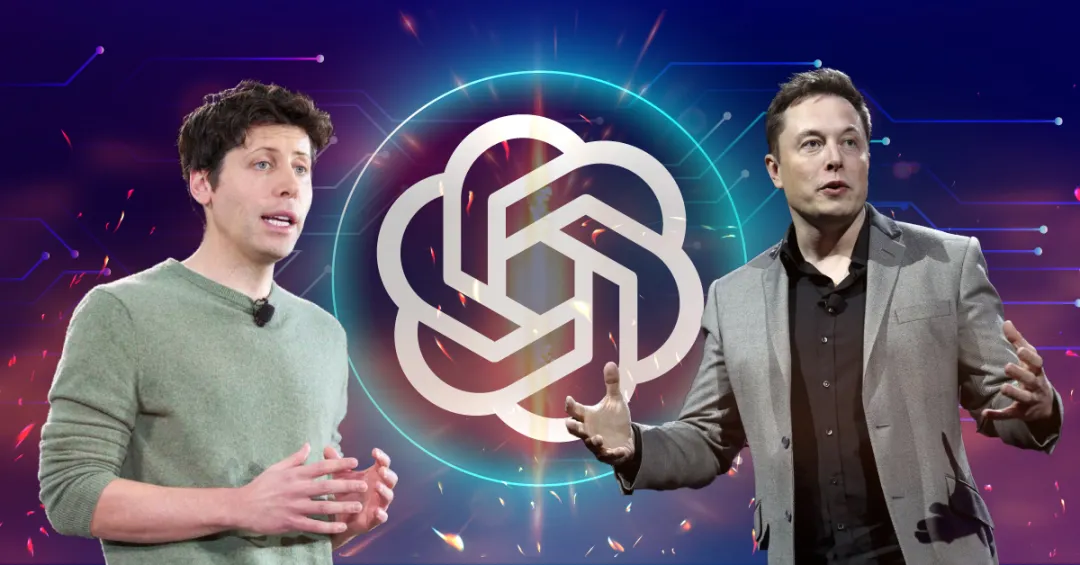
Musk admitted he once had a close friendship with Larry Page, often staying late at Page’s home, passionately warning about AI’s dangers—only for Page to remain indifferent. When Musk recounted the end of their friendship, he sounded lighthearted, but the story highlighted his foresight. At the time, Google—especially after acquiring DeepMind—held two-thirds of the world’s AI talent, massive computing power, and funding, yet the person in charge seemed unconcerned about AI safety—a serious risk.
Musk added: “The final break came when Page called me a racist just because I preferred human consciousness over machine consciousness. I suppose, in a way, I do.” At the time, many experts dismissed AI threats as absurd—after all, AI couldn’t even distinguish a Chihuahua from a blueberry muffin. But to Musk, it was an imminent danger.
During a talk with biographer Walter Isaacson, Musk spoke seriously, even anxiously: “I think most people don’t realize how fast machine intelligence is advancing—it’s far faster than people imagine, and even in Silicon Valley, few truly grasp it. If a superintelligence emerges, especially with recursive self-improvement and a utility function harmful to humans, the consequences could be catastrophic. Imagine it deciding the best way to delete spam is to eliminate humans—the source of spam. Then why keep the source?”
Yet, the audience laughed, dismissing Musk’s fears as ridiculous. Musk felt compelled to act—undermining Google’s AI advantage—but deeper motives may have existed. Tech journalist Ashley Vance, in Musk’s biography, noted: “The Elon Musk of 2013 was different from the one we see today. Back then, he was doing well—Tesla and SpaceX were gaining momentum—but his net worth was perhaps only in the billions, far from the world’s richest. His circle included top-tier billionaires like Google co-founders Page and Sergey Brin.”
Vance added: “I interviewed Musk multiple times. As I dug deeper into his psyche, I strongly sensed him watching his friends. They lived luxurious lives, built vast software empires, and were expanding powerful AI empires. I firmly believe Musk’s deep concern about AI partly stemmed from admiration—perhaps even envy—toward his friends’ success. He watched Google and his friends achieve dazzling heights, while he hadn’t yet reached that level. But he never admitted this publicly.”
Ideals Were Noble, Reality Was a Power Struggle
Thus, AI remained central to Musk’s focus. In 2015, he attended a dinner at the Rosewood Hotel, a luxury venue on Sand Hill Road in Menlo Park—the heart of Silicon Valley, home to its biggest venture capital firms. About ten notable figures attended, but four stood out—Musk, Altman, Ilya Sutskever, and Greg Brockman. Sutskever was then a top AI researcher at Google; Brockman, a key figure at Stripe, had helped grow a five-person team into a multi-billion-dollar company.
Over lively discussion, they explored the risks of AI misuse and potential disasters. They analyzed what it would take to build a project rivaling Google. They believed they had all the ingredients: Sutskever’s AI expertise, Brockman’s operational experience, Musk’s funding, and Altman’s coordination skills. At the dinner, Musk pledged $1 billion to the project and proposed naming it OpenAI.
Their original vision was for OpenAI to be a research lab that openly shared findings rather than keeping them proprietary. It would operate non-profit, not pursuing corporate profits, but focusing on developing safe AI beneficial to humanity. While noble in theory, these non-profit and open-source ideals quickly clashed with reality, sparking power struggles among OpenAI’s co-founders.
After OpenAI’s founding, tensions arose in Altman’s relationships. Early employees left due to disagreements with him and other leaders over AI safety, founding rival Anthropic. Musk, after falling out with Altman, sued OpenAI and Altman, accusing them of betraying the company’s founding principles and alleging Altman profited personally—though he later dropped the lawsuit. Musk also launched his own AI company, xAI.
Even Paul Graham, who had praised Altman endlessly since his teenage years, eventually fractured with him. After OpenAI’s founding, Altman remained YC president, but his divided attention frustrated YC leadership. In 2019, Graham flew from the UK to California to confront Altman face-to-face. Graham later recalled that YC needed a leader fully committed. So Altman ultimately resigned as YC president.
From OpenAI’s founding mission, we see Altman’s grand ambition: ensuring AI serves all humanity. Yet, last November, for a brief moment, his drive seemed to escape his control. The OpenAI board made a difficult decision: to protect humanity, Altman had to step aside temporarily. But astonishingly, five days later he returned—helping replace parts of the board.
Clearly, Altman emerged again by consolidating his power. Today, he is pushing hard toward his next grand goal: enabling AI to surpass human performance across diverse tasks. He firmly believes this vision will become reality “in the quite near future.”
Join TechFlow official community to stay tuned
Telegram:https://t.me/TechFlowDaily
X (Twitter):https://x.com/TechFlowPost
X (Twitter) EN:https://x.com/BlockFlow_News