Rereading Martti's Satoshi Email: Bitcoin Operated Much Like a Startup in Its Early Days
TechFlow Selected TechFlow Selected
Rereading Martti's Satoshi Email: Bitcoin Operated Much Like a Startup in Its Early Days
The first college student to get rich in crypto history.
 Navigating Web3 tides with focused insights
Author: OneKey
In 2009, Martti Malmi@marttimalmi, then a sophomore at the Helsinki University of Technology, stumbled upon bitcoin.org and sent an email to Satoshi Nakamoto saying: "I would like to help with Bitcoin, if there’s something I can do."
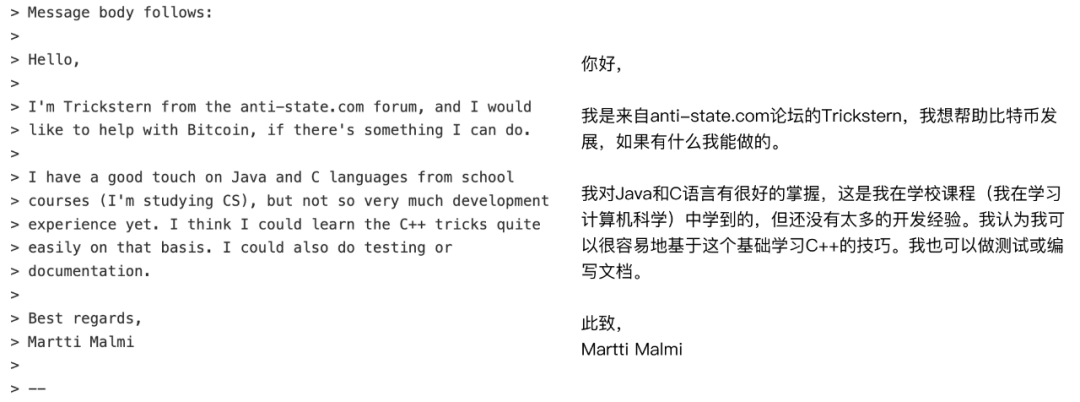
Let's be honest—this was quite a casual job application. But from that moment on, the gears of fate began to turn.
Martti Malmi became Satoshi Nakamoto’s first collaborator and most trusted partner, and his life was forever changed by Bitcoin. There's a long-standing legend in crypto about college students going "all in" and becoming overnight millionaires—Martti is undoubtedly the original blueprint for that story.
Last month, he publicly released his historical email correspondence with Satoshi Nakamoto (https://mmalmi.github.io/satoshi/), offering us new perspectives into Bitcoin’s epic early days. Below are some fascinating findings from OneKey.
Bitcoin’s Early Operations Were Like a Startup
Much like typical startups of the time, they rushed to register the domain “bitcoin.org” and held extensive discussions about product features, UI (user interface), and website design.
What set it apart from other startups was that all communication happened via email—and no one had ever seen their boss, “Satoshi.” Today, remote work is standard across the crypto industry, with major companies like Binance, Paradigm, and even our own OneKey embracing global collaboration to varying degrees.
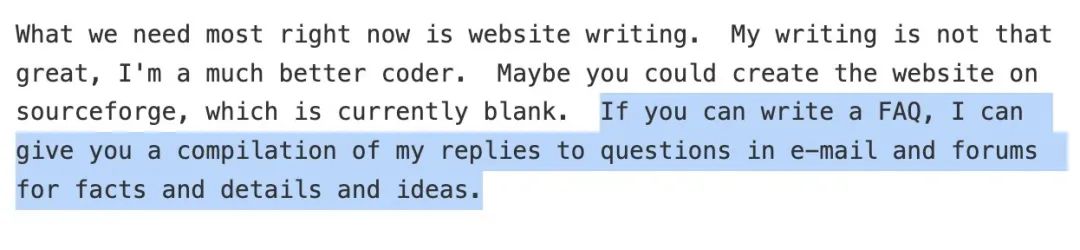
Satoshi’s first remote task assigned to college student Martti Malmi? Writing a FAQ (Frequently Asked Questions). Satoshi noted that the website urgently needed written content, but admitted, “I’m not good at writing—I’m better at coding.” Translation of the original message: “You could consider setting up a website on SourceForge; it’s empty right now. If you prepare a FAQ, I can share with you my previous answers from emails and forums, which might help you gather information and inspiration.”
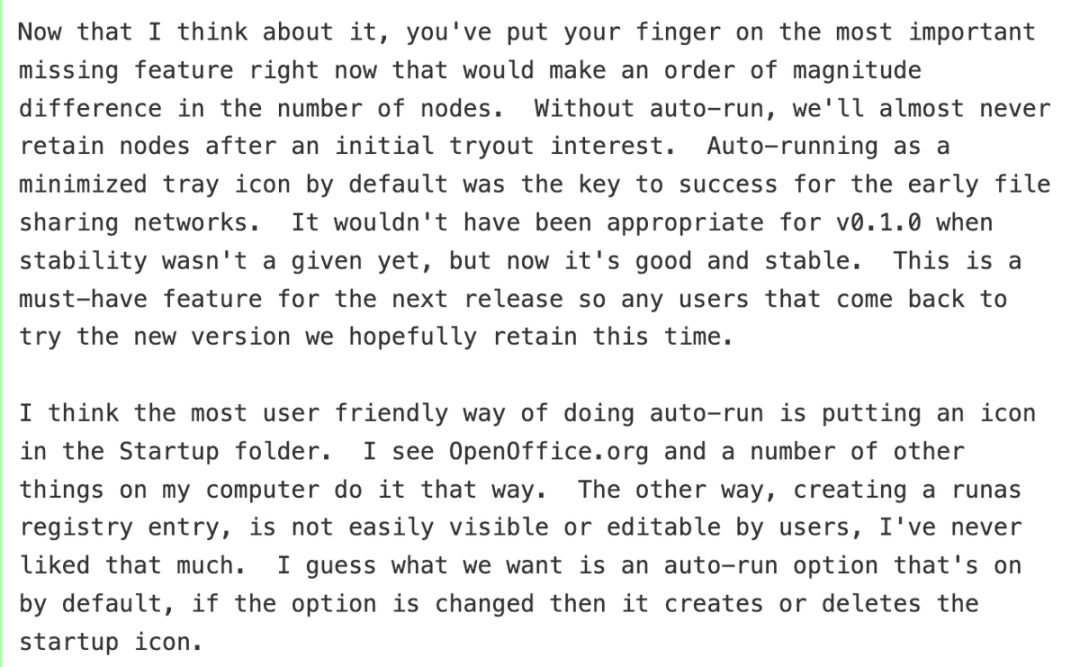
Satoshi clearly made a great boss—thoughtfully considering suggestions from a young student like Martti. Here, he acts like a product manager discussing core client features such as “minimize to tray” and “auto-start on boot.” Just like many desktop applications back then, everyone was competing for user retention. Of course, Bitcoin’s motive was noble: encouraging more people to run full nodes to strengthen network security in its early days. Translation of the original message:
“My next plan is to add functionality allowing Bitcoin to automatically start when Windows boots and minimize to the system tray, significantly increasing the number of online nodes.
Looking back, you were absolutely right pointing out this currently critical missing feature—one with huge potential to increase node count. Without auto-start, we’d struggle to retain users after their initial trial. The secret to early file-sharing networks’ success was having programs auto-run and default-hide in the system tray. While introducing this in our first version (v0.1.0) seemed inappropriate due to stability concerns, now that the software has matured, adding this feature in the next release is essential—to ensure users trying the new version have a better experience and stay engaged.”
As an entrepreneur himself, Satoshi occasionally vented to Martti about internet startups gaining massive hype despite having no actual code.
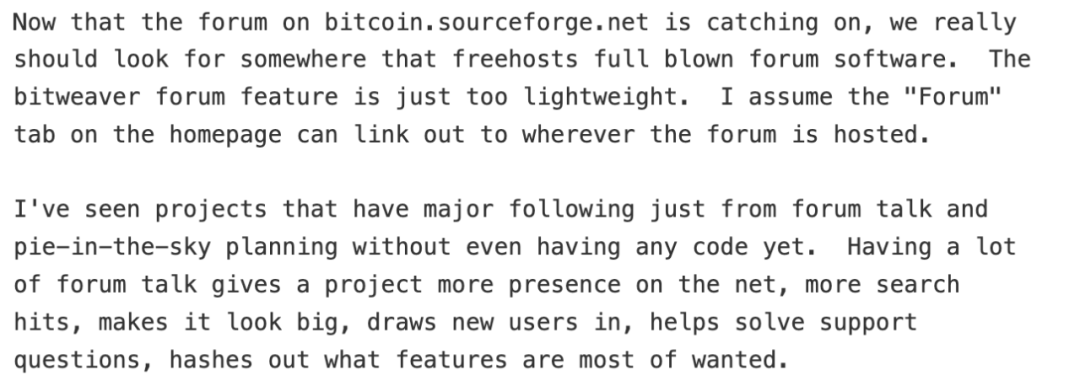
In the email below, Satoshi felt SourceForge’s forum capabilities no longer met Bitcoin’s needs and suggested switching providers. He added: “I’ve already seen projects gain significant attention purely through forum discussions and planning, even before writing a single line of code. Forums serve as exposure platforms, attract new users, help resolve support issues, and clarify top-priority features. (So yes, this forum matters.)”
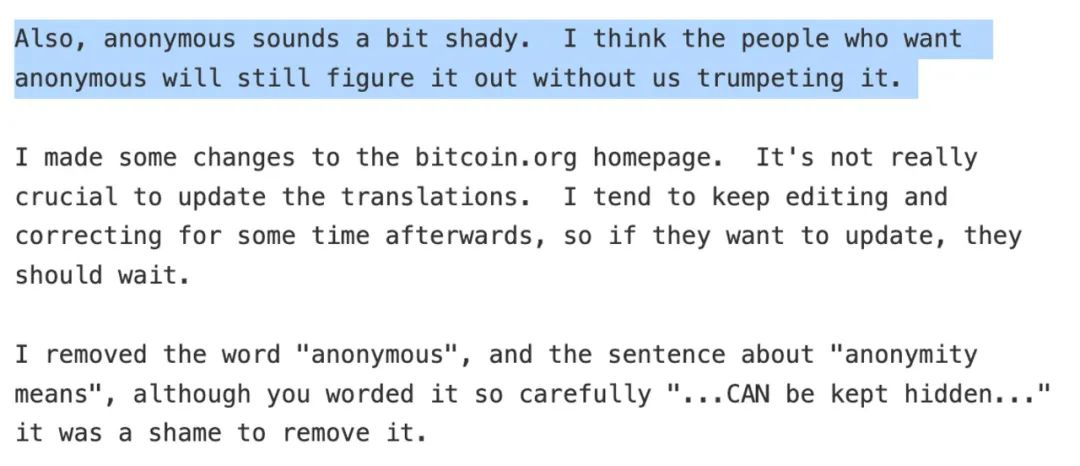
When it came to marketing, Satoshi wasn’t entirely the extreme “geek” stereotype. In one email, he mentioned that highlighting “anonymity” on the official site sounded too suspicious and believed that should remain something users figured out privately.
Translation of the original message: “The word ‘anonymous’ sounds a bit shady. I think those who want anonymity will figure it out themselves—we don’t need to advertise it. I’ve made some edits to bitcoin.org’s homepage. Translating the updates isn’t urgent. I prefer to keep editing and refining over the next while, so if they plan to update, better to wait.”
Ultimately, Martti Shouldered It All
Throughout their email exchanges, Satoshi repeatedly expressed his desire to avoid being the public face (though ironically, he’s the one almost everyone remembers today). He encouraged Martti to use his real name and address, and asked him to use his personal credit card/ID to set up servers and bank accounts.
If you were Martti, wouldn’t you have been scared off?
Translation of the original message: “I received a donation request for $2,000. But I need your mailing address to let them send it. Yes, the donor wants to stay anonymous, so please also protect the envelope’s origin privacy.”

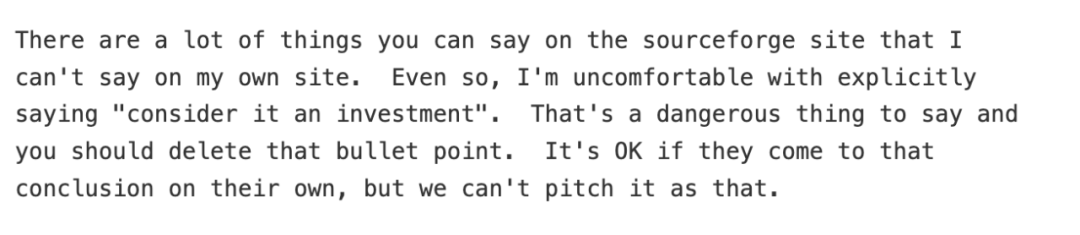
On certain promotional talking points for Bitcoin, Satoshi even had Martti speak on his behalf, while cautioning about marketing risks. Translation of the original message:
“On the SourceForge site, you can express many views that I couldn’t publish on my own website. However, explicitly stating ‘Bitcoin as an investment’ still feels uncomfortable to me. That claim carries risk—you’d better remove it. Users may think that way individually, but we shouldn’t promote it as a selling point.”
Delegating interview requests to newcomer Martti didn’t seem unreasonable either. Translation: “A blog writer wants to write an article about Bitcoin, but I’m too busy to answer his questions right now. If I introduce him to you, would you be willing to respond? This could get us a great backlink.”

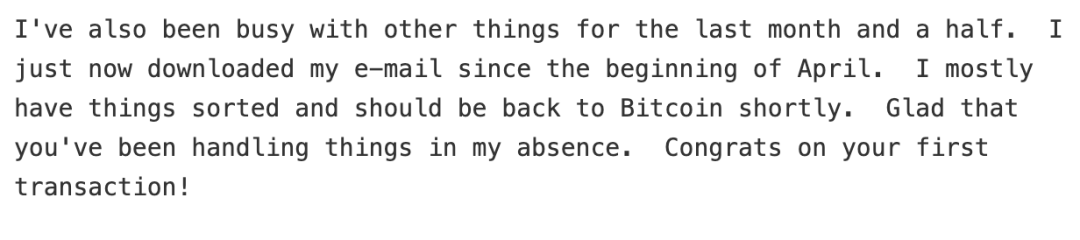
When boss Satoshi suddenly disappeared for a month, it was Martti who took over forum operations. Translation of the original message: “I’ve been busy with other matters for the past six weeks. I just started downloading my emails since early April. I’ve handled most things and should return to Bitcoin work soon. Glad to see you managed things during my absence. Congratulations on completing your first Bitcoin transaction!”
Reinforcing Martti’s Belief
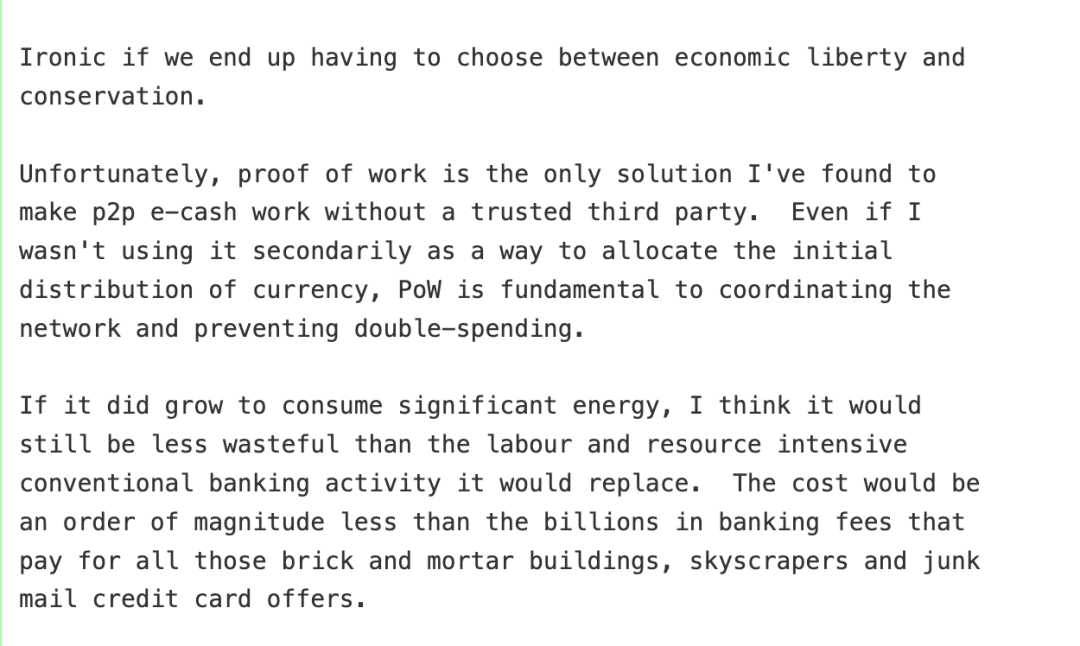
Satoshi also foresaw that if Bitcoin went mainstream, it would consume substantial energy. At the time, this was a radical idea: traditional banking systems waste far more resources than PoW.
“It would be ironic if we ultimately had to choose between economic freedom and conserving resources.
Unfortunately, proof-of-work is the only solution I’ve found that allows a peer-to-peer electronic cash system to function without a trusted third party. Even if I didn’t initially intend PoW as a way to distribute currency, it remains crucial for coordinating the network and preventing double-spending.
If it truly starts consuming large amounts of energy, I believe this energy expenditure would still be less than the labor and resources consumed by the traditional banking activities it replaces. Its cost would be much lower than current banking fees—billions spent annually on brick-and-mortar buildings, skyscrapers, and useless credit card promotion mail.”
The Final Email
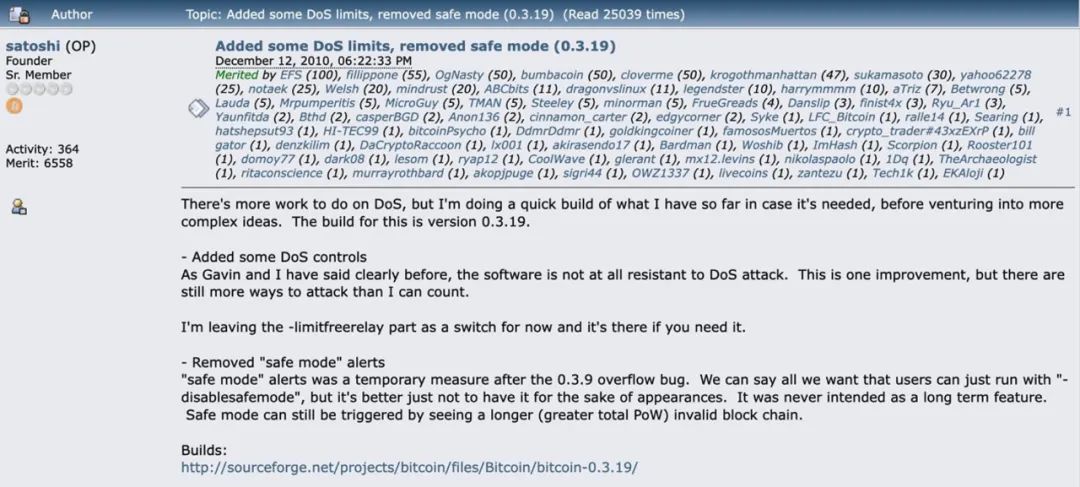
We all know that on December 12, 2010, after discussing a DoS (Denial of Service) attack on the Bitcoin forum, Satoshi stopped posting there. But that wasn’t actually his last email.
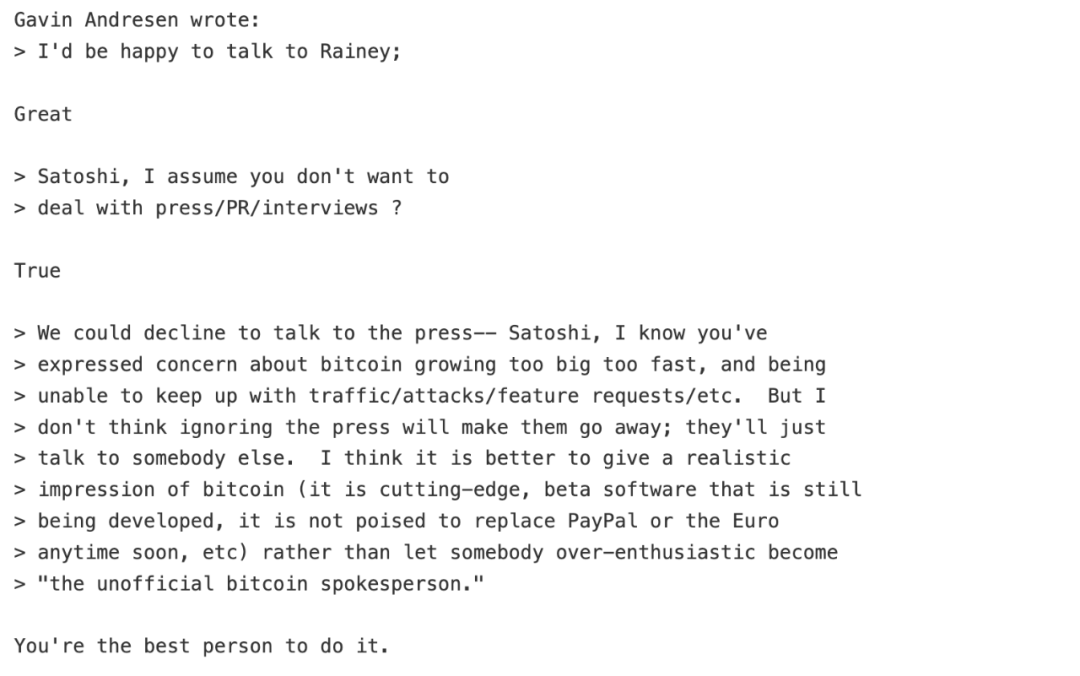
A month later, in an email to Gavin Andresen (cc’d to Martti), Satoshi reaffirmed he did not want to participate in any media outreach or interviews. We can also see here that he was deeply concerned Bitcoin was growing too fast—features and defenses against attacks couldn’t keep pace. They were also worried about rising hype, as unofficial Bitcoin spokespersons began over-promoting it, even claiming it would replace PayPal or even the euro. They wanted the media to emphasize Bitcoin was still an experimental frontier technology, far from ready for mass adoption.
Another month passed. This was Satoshi’s final email to Martti—arranging some administrator password matters—then he vanished again. That farewell lasted 13 years, and likely, we’ll never see him again.
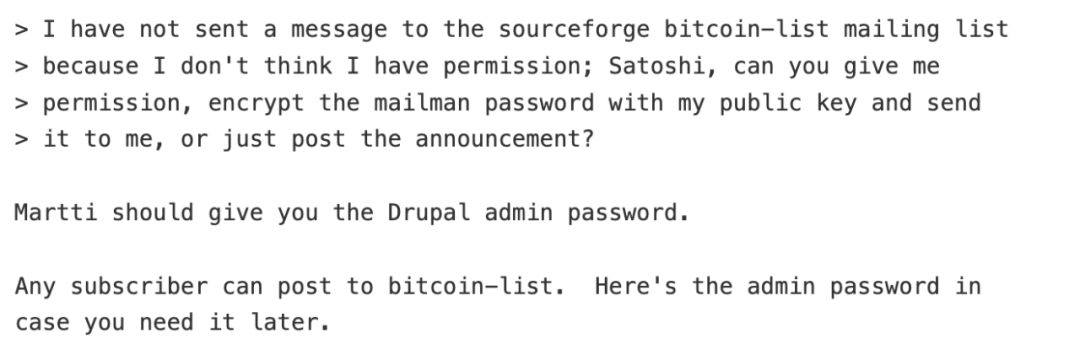
Satoshi’s disappearance is shrouded in legend. Yet through these emails, we glimpse a more human side of him—a reminder that perhaps the “god” wasn’t so distant after all, maybe even walking among us. In a way, anyone could be Satoshi.
Martti’s story is no mirage. As a new bull market wave approaches, how many more “college student” legends will we witness?
Join TechFlow official community to stay tuned
Telegram:https://t.me/TechFlowDaily
X (Twitter):https://x.com/TechFlowPost
X (Twitter) EN:https://x.com/BlockFlow_News
 @OneKeyCN