








From VC Banquet to Community Ownership: ZKFair's Journey Toward a Billion-Dollar Goal
TechFlow Selected TechFlow Selected
From VC Banquet to Community Ownership: ZKFair's Journey Toward a Billion-Dollar Goal
Reclaiming the glory of ZK, ZKFair bears the responsibility without hesitation.
 Navigating Web3 tides with focused insights
Author: TechFlow
As the upcoming Cancun upgrade draws near, excitement around L2 Summer continues to grow. But it's crucial to distinguish: Is this a feast for VCs, institutions, and whales—or an opportunity for the community, retail users, and decentralization?
ZKFair has decided to become the people’s L2—where all rights belong to the community.
ZKFair is an Ethereum L2 showcase built by RaaS platform Lumoz—the same team behind Merlin, another breakout BTC L2 project. Their consistent mission? Returning L2 profits directly to users to truly drive the adoption of Rollup technology.
ZKF launches fairly with a unique IGO model.
ZKFair takes inspiration from Bitcoin’s economic model. In Bitcoin, 100% of transaction fees go to miners. In contrast, most Ethereum L2 Rollups retain a portion of user-paid gas fees as profit.
ZKFair was created to change this unfair model: users are the true drivers of L2 Summer, so they should capture all the rewards. Hence, ZKFair’s token ZKF will be 100% airdropped to users. Furthermore, even the “channel” fee paid in ZKF for gas will be fully returned to users.
Recently, the market has responded positively—ZKF surged 40% in one day, while related PFP NFTs skyrocketed by 180x.
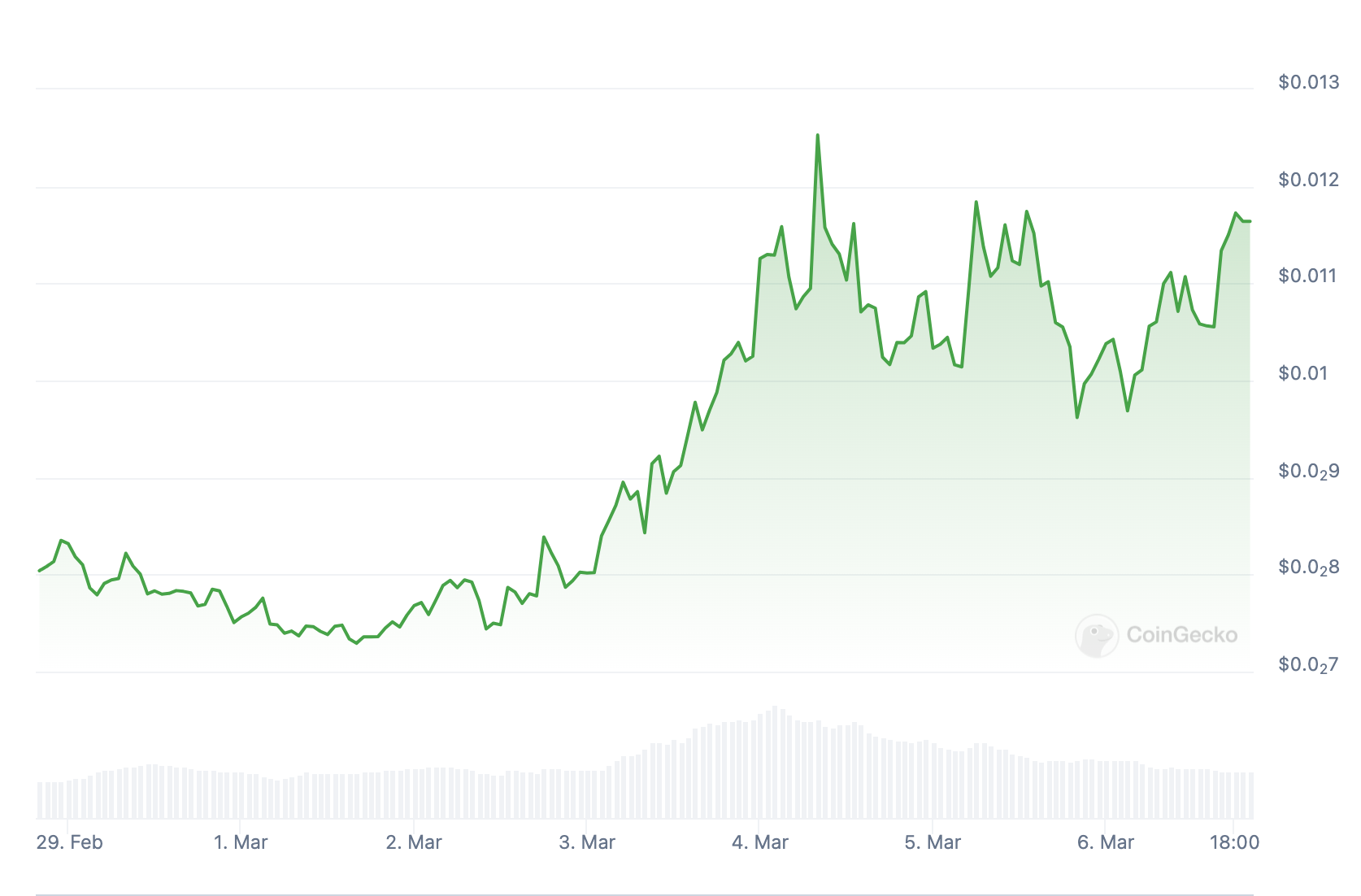
Day 70: A Community-First Journey
Fairness is once again becoming a core value in the industry, bringing back the free and open spirit of crypto.
Back on Christmas Eve 2023, Lumoz launched ZKFair using a "Fair Launch" model, pioneering a new paradigm called IGO (Initial Gas Offering). The core idea: participants earn token airdrops based on the proportion of gas burned during on-chain transactions, while the issuer uses collected gas fees as revenue for the token launch.
100% rebate, not a single cent kept.
In this process, users earn ZKF tokens through gas fees acting as proof-of-participation—a mechanism distinct from traditional “free minting,” emphasizing fairness and inclusivity.
ZKFair has a total supply of 10 billion tokens. Initially, users can use USDC as gas to interact with the mainnet and burn fees to qualify for airdrops and additional community rewards.
Specifically, airdrops are split into two parts: gas fee-based airdrops and community distribution. To lower entry barriers, ZKFair allows users to pay initial gas fees in USDC. After mainnet launch, these fees are fully refunded.
Ultimately, all collected gas fees are redistributed back to users in USDC, strictly adhering to a 100% fair launch—no tokens reserved or retained by the team.
To further support the Bitcoin community, 5% of ZKF tokens were airdropped to Ordinal inscription holders. Additionally, 25% were distributed to active community members based on contribution.
ZKF also powers staking incentives: 75% of network transaction fees are allocated as staking rewards, ensuring users are proportionally rewarded for supporting the ZKFair network.
From its fair launch onward, ZKFair has grown robustly under the banner of community-first principles—each step prioritizing community interests, culminating in explosive organic growth.
Launched by the community, growing with the community.
Unlike typical L2 communities, ZKFair’s team *is* the community. Operating under 100% community ownership, within just 70 days of launch, ZKFair has integrated with major platforms like Bitget Wallet and gained trading support on mainstream exchanges such as Gate.io.
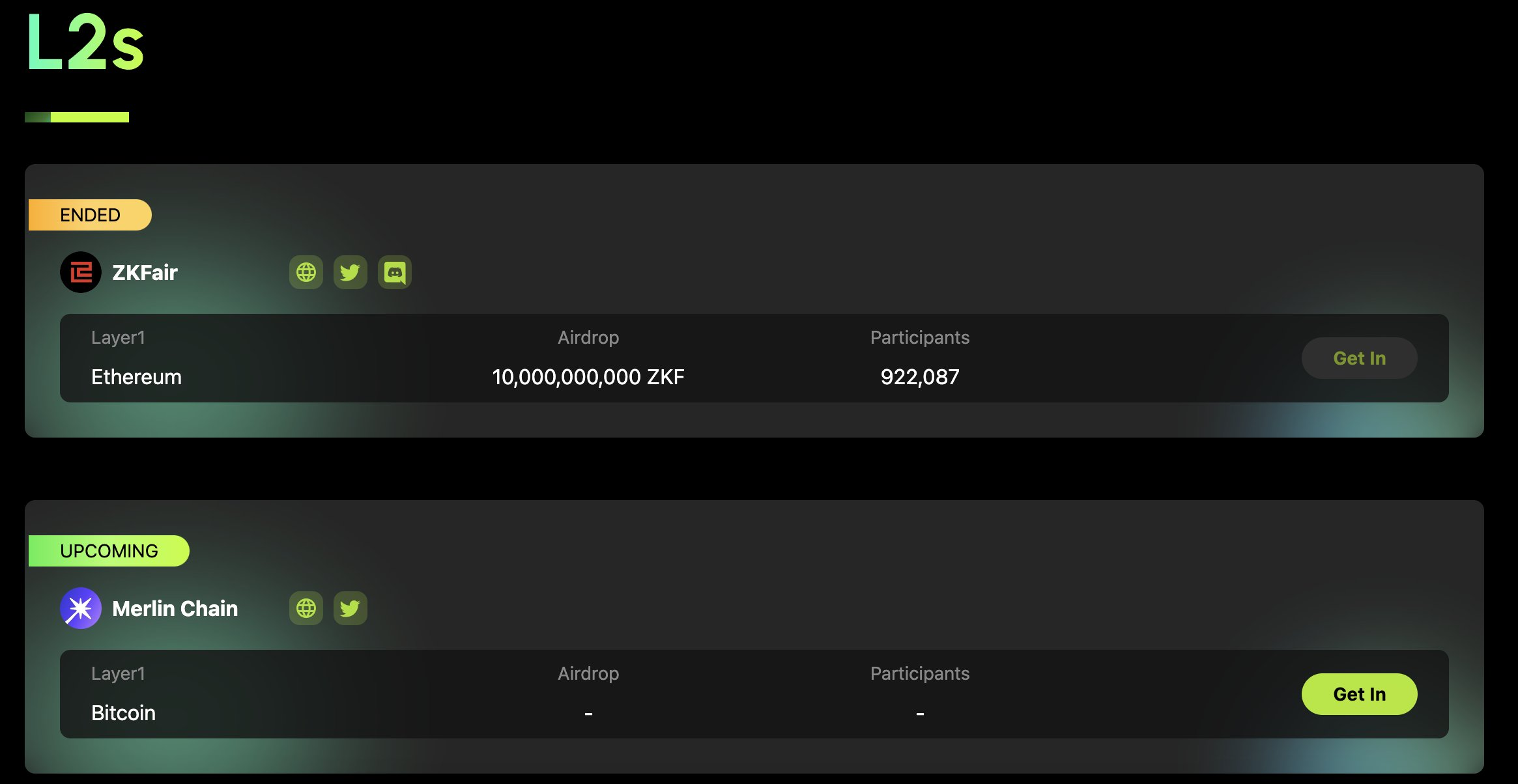
Having passed its early growth phase, ZKFair now functions not only as a participant but also as a launch platform. Five projects have already joined the ZKFair Launchpool, including the standout Merlin Chain. Continuously onboarding high-quality projects strengthens long-term support for the ZKF token.
Growing from the community, led by the community.
ZKFair does have development and support teams—but they are part of the broader community. Driven by community momentum, ZKFair’s TVL has reached $300 million, making it the highest among L2s built with Polygon CDK and ranking within the top 10 on L2BEAT.
Behind the rapid rise in both TVL and token price lies ZKFair’s aggressive business development. New partnerships are announced every few days—security collaboration with Go+ Plus, domain issuance with Space ID. To date, ZKFair’s ecosystem includes at least 150 diverse projects.
According to ZKFair’s previously published roadmap, Q1 2024 targeted connections with 200 projects and collaborations with over 100. These goals are already being met.
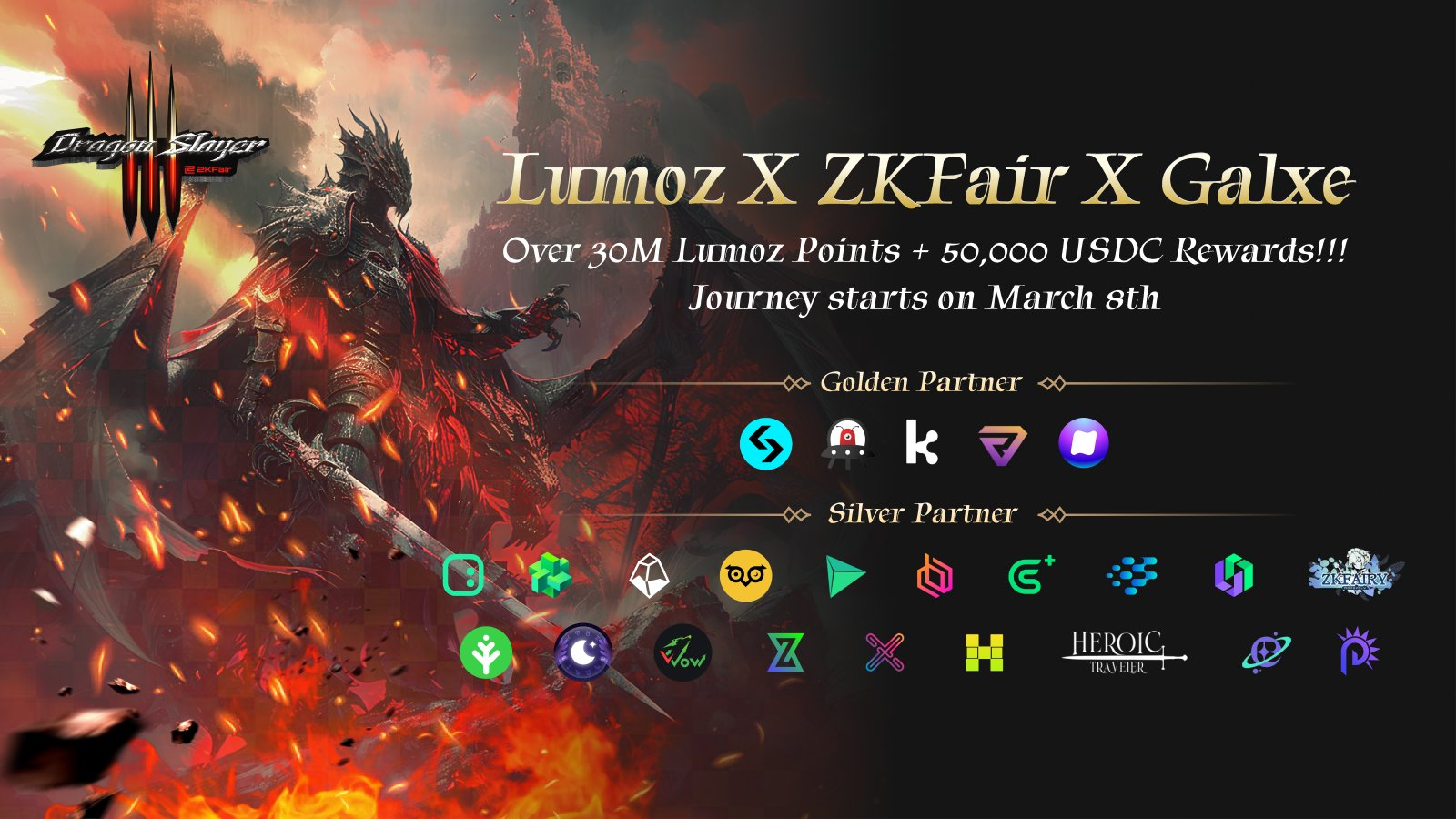
Moreover, on March 8, ZKFair and Lumoz co-hosted a major ecosystem event, with 25 project sponsors contributing a prize pool of 30 million Lumoz points and 50,000 USDC—points redeemable for future Lumoz tokens.
Notably, Lumoz is currently raising funds at a $120 million valuation, with investment slots fully taken. The allocation of Lumoz points to ZKFair users underscores strong backing for ZKF—worth over $1 million at current valuations.
After 70 days of growth, ZKFair now boasts over 200,000 community members. But this is just the beginning. The next milestones: 1 million members, $1 billion+ TVL, and a ZKF market cap surpassing $10 billion—building a mass-market L2 blockbuster.
Per ZKFair’s Q2 roadmap, deeper integration with the BTC ecosystem is coming—ushering in powerful synergy between ZKF and Bitcoin.
The BTC ecosystem will undoubtedly be a focal point this year, and fairness is a core principle cherished by Bitcoiners. Just as ZKF airdropped tokens to inscription communities, entering the BTC space will enhance ZKF’s value capture.
Q2 2024:
-
New collaboration with Lumoz RaaS on a fresh ETH L2 to further empower ZKFair and $ZKF.
-
Enable cross-chain transfer and trading of BTC ecosystem assets.
-
Expand ecosystem aggressively, targeting 150+ deployed projects with focus on DeFi, Gaming, and AI.
-
List on more centralized exchanges.
-
Continue collaboration with Polygon Labs to optimize ZKP generation and improve on-chain UX.
Achieving these goals requires global expansion. Following February’s ecosystem groundwork, key markets in Q2 include the U.S., Hong Kong, Turkey, Vietnam, Indonesia, India, Japan, South Korea, Russia, Singapore, UAE, and China.
Community-Owned, ZK-Powered
ZKFair’s community ownership isn’t just marketing—it reflects confidence in ZK technology. With mature ZK-Rollup tech, Lumoz and the ZKFair team believe the network can self-sustain via community governance, allowing them to focus on market expansion.
Technology and market strategy go hand in hand.
While OP-Rollups dominate today, ZK-Rollups are widely seen as Ethereum’s long-term solution. Yet current L2s face challenges: limited interoperability or narrow use cases—e.g., Loopring as a payment channel.
True to its name, ZKFair leverages ZK technology for fair launch and community ownership. Built with Polygon CDK and Celestia for DA, ZKFair benefits from Lumoz’s status as an official Polygon CDK provider—proving their technical strength.
For example, ZKFair uses Native Cross Rollup Communication (NCRC), enabling atomic message exchange across multiple Rollups. Users can directly call Ethereum dApps from ZKFair without bridging assets.
Additionally, ZKFair supports cross-contract calls with other L2s, helping reunify Ethereum’s fragmented L2 landscape.
Choosing Celestia for DA is also cost-effective—gas fees are reduced by over 100x compared to EigenDA or Ethereum, better serving community interests.
Underpinning its market strategy is ZKFair’s deep technical foundation—only with such strength can it confidently transition to full community operation.
As mentioned, ZKFair’s governance model—100% token airdrop at mainnet launch—aims to create a fair, autonomous community, solving existing inequities in ZK-Rollup projects.
Pure technology needs effective tokenomics—ZKF will play a central role in community governance.
On community-driven mechanics, ZKF primarily enables staking and voting. Staking is live: users stake ZKF to earn gas fee revenue shares. Of the total fee profits, 75% goes to ZKF stakers, 25% to developers incentivizing native app creation on ZKFair.
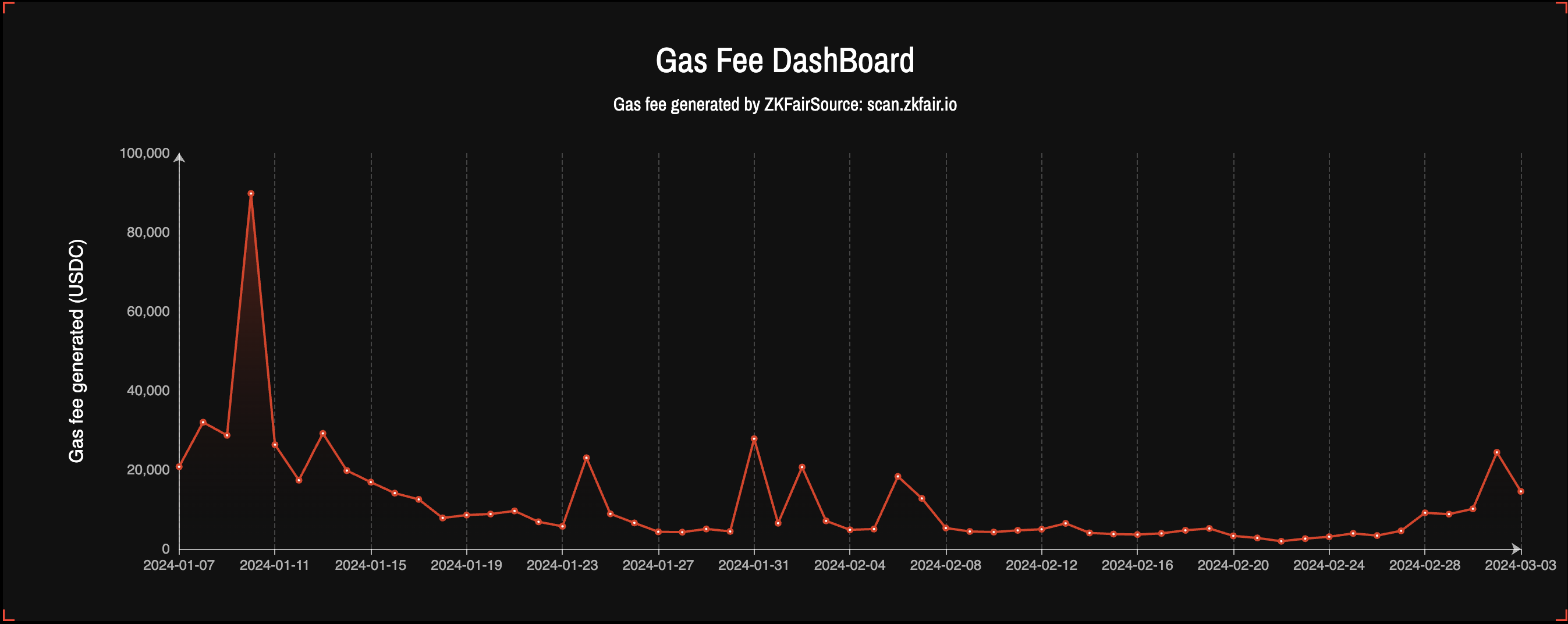
Currently, around 3.5 billion ZKF tokens are staked, distributing 630,000 USDC, with stable annual yields around 15%. Among them, 1 billion ZKF are locked in Merlin Chain, strongly supporting ZKF’s price and market cap.

Another key value driver is ZKF’s FDV (fully diluted valuation). Since ZKF is 100% circulating, FDV equals actual market cap—reflecting real value, not artificial scarcity from locked supplies.
The correlation between ZKF’s FDV and TVL is also healthy. A large gap suggests idle tokens; FDV/TVL ratio indicates overvaluation. At ~0.64, ZKF’s ratio is far below StarkNet’s ~1.45—indicating room for growth.
Limitless Empowerment: Building the Premier On-Chain Launchpad
While community-controlled, ZKFair recognizes that pure decentralization alone cannot ensure long-term sustainability or governance quality. Setting the right community culture is vital.
Take the Launchpool partnership with Merlin Chain, now in its fifth round. This isn’t just fundraising—it’s mutual empowerment. Participants receive 1% of Merlin tokens, creating stronger alignment and setting an example for future projects.

Merlin also showcases ZKFair’s project discovery strength. Since 2024, ZKFair has expanded aggressively across NFTs, DeFi, infrastructure, gaming, and AI.
On February 6, 2024, ZKFair partnered with Element to launch ZKFair Pass—20,000 limited NFTs sold out in 10 minutes. More than just an NFT drop, it granted airdrop rights to all ZKFair Launchpool projects in February 2024.
Building on this, ZKFair launched premium PFP NFTs offering enhanced benefits—holders gain lower-cost, higher-reward participation in future Launchpool events.
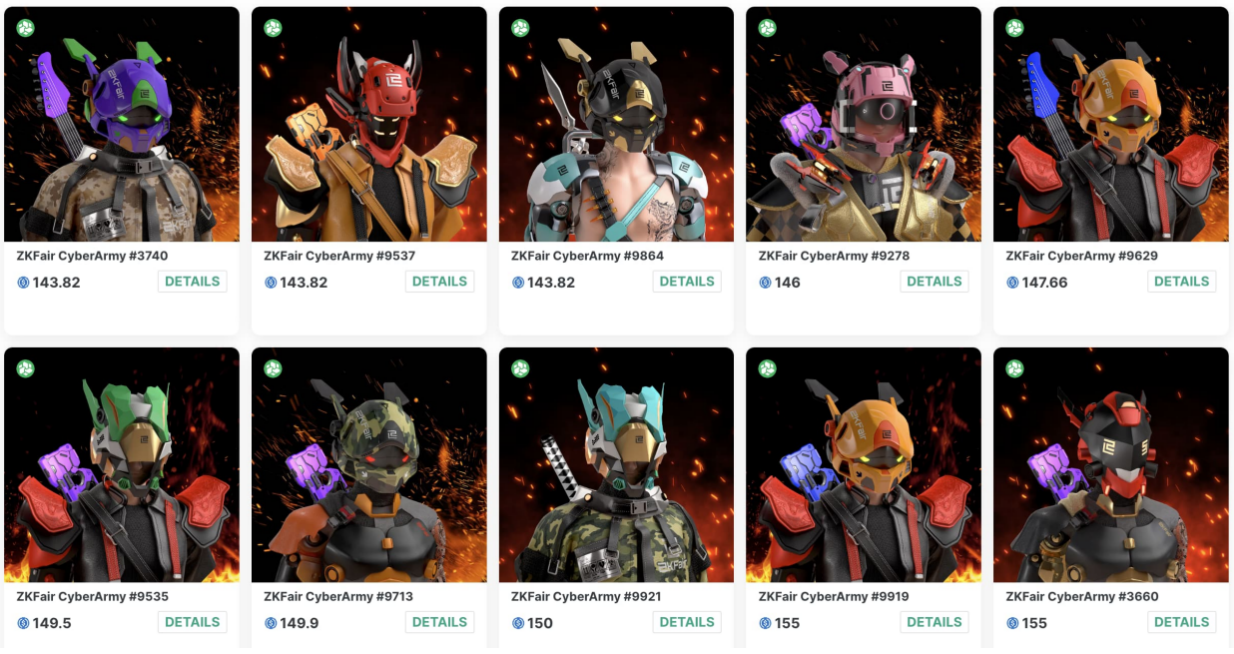
On March 2, the ERC-404-based CyberArmy NFT series launched on Element—9,999 units sold out in under an hour, peaking at 150x appreciation.
Conclusion
ZKFair began with the community—and will always return to it.
Everything ZKFair creates stems from empowering users. Today’s blockchain tech has overdeveloped—amid countless infra products, users’ roles and values remain obscured.
ZKFair chooses to rediscover them. With over 600,000 on-chain users, ZKFair remains committed to its vision: a $10 billion market cap. This isn’t fantasy—it’s a path validated by Arbitrum. Especially when ZK-Rollups lag in TVL, restoring ZK’s glory is ZKFair’s duty.
Join TechFlow official community to stay tuned
Telegram:https://t.me/TechFlowDaily
X (Twitter):https://x.com/TechFlowPost
X (Twitter) EN:https://x.com/BlockFlow_News
 深潮TechFlow


