Pixels 2nd Anniversary: The Pixel-Art Metaverse Farming Game Carrying the Ronin Ecosystem
TechFlow Selected TechFlow Selected
Pixels 2nd Anniversary: The Pixel-Art Metaverse Farming Game Carrying the Ronin Ecosystem
For a P2E game to maintain stable operation, the team needs mature strategic thinking.
 Navigating Web3 tides with focused insights
Author: Joyce, BlockBeats
According to data from Coingecko, Ronin, the token of Ethereum sidechain Ronin Network, has shown a significant upward trend in the past week, surging 63.3% and trading at $0.82 at the time of writing.
Additionally, according to Nansen data, the number of active wallet addresses on Ronin has tripled in recent days, soaring to over 7,000. While no definitive data confirms the cause, the community widely attributes this surge to Pixels, a game recently promoted by Ronin.

In 2022, Pixels raised a $2.4 million seed round led by Animoca Brands and PKO Investments, with participation from OpenSea and others. On October 31, 2023, Pixels migrated to Ronin. Ronin Network, launched by Sky Mavis—the creator of Axie Infinity—is an EVM blockchain specifically designed for gaming.
Having migrated to Ronin over a week ago, coinciding with Pixels’ second anniversary on November 10, what makes Pixels’ gameplay unique? How has its ecosystem progressed since moving to the Ronin chain? BlockBeats reviews relevant information below.
Core Philosophy of Pixels
Pixels is a metaverse farming game launched in 2021 that recreates the atmosphere of classic 16-bit RPG adventures, allowing players to navigate a pixel-art world, interact with others, farm land, play mini-games, and earn token rewards. It also allows holders of select NFT profile picture (PFP) collections to use their avatars within the game.
For a P2E game to operate sustainably, its team must have mature strategic planning. This can be understood through three aspects: gameplay fun, interoperability, and decentralization—key elements shaping the vision of the Pixels team.
On gameplay enjoyment, Pixels is designed to offer enjoyable experiences for all types of users. Community KOL @0xPixelPenguin believes that Pixels' rich gameplay and ecosystem cater to diverse player needs. Pro players can spend money to upgrade their Land NFTs and earn land taxes by letting other players farm on their property; casual players can "work" for these pro players to earn wages. Additionally, players can participate in irregular events hosted by the team (such as Thanksgiving turkeys or Easter eggs) to receive rewards.
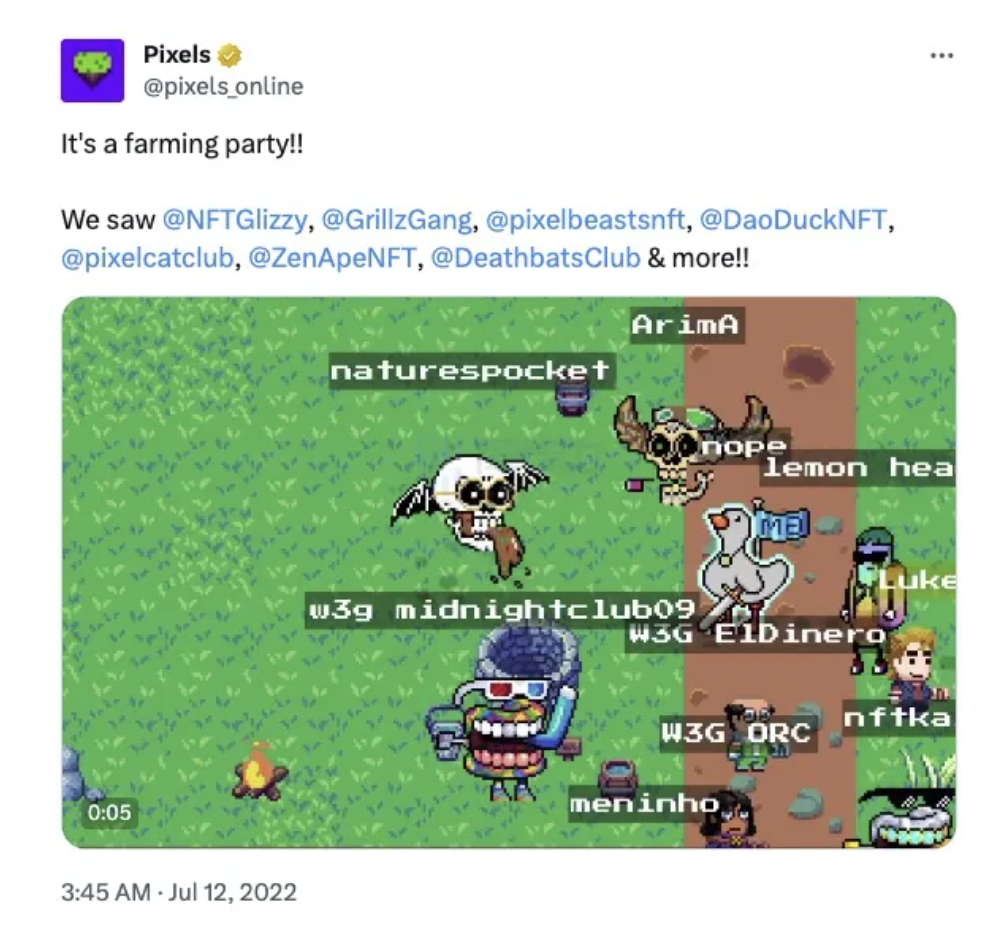
On interoperability, Pixels leverages the unique advantages of blockchain gaming—Pixels achieved the first NFT integration, enabling users to connect their Metamask wallets and roam the Pixels world as their NFT avatars. According to the Pixels team, over 50 NFT collections have already been integrated. "To us, discussions about the metaverse refer to an interconnected grid of adventures, games, and spaces where your digital identity can flow freely."
Regarding decentralization, Pixels adopts a product-first approach, gradually achieving decentralization. Early decentralization primarily means owning game items on-chain, while many game mechanics are executed server-side. This accelerates development speed and reduces response time, improving the overall player experience. In the future, actual mechanisms can be migrated on-chain into smart contracts.
Early decisions remain largely centralized under the core Pixels team to focus on the ecosystem’s long-term health during its formative stages. The team is designing systems that will eventually allow decentralized financial management, economic planning, and more. As the game and ecosystem mature, increasing system components can begin to be decentralized.
Gameplay
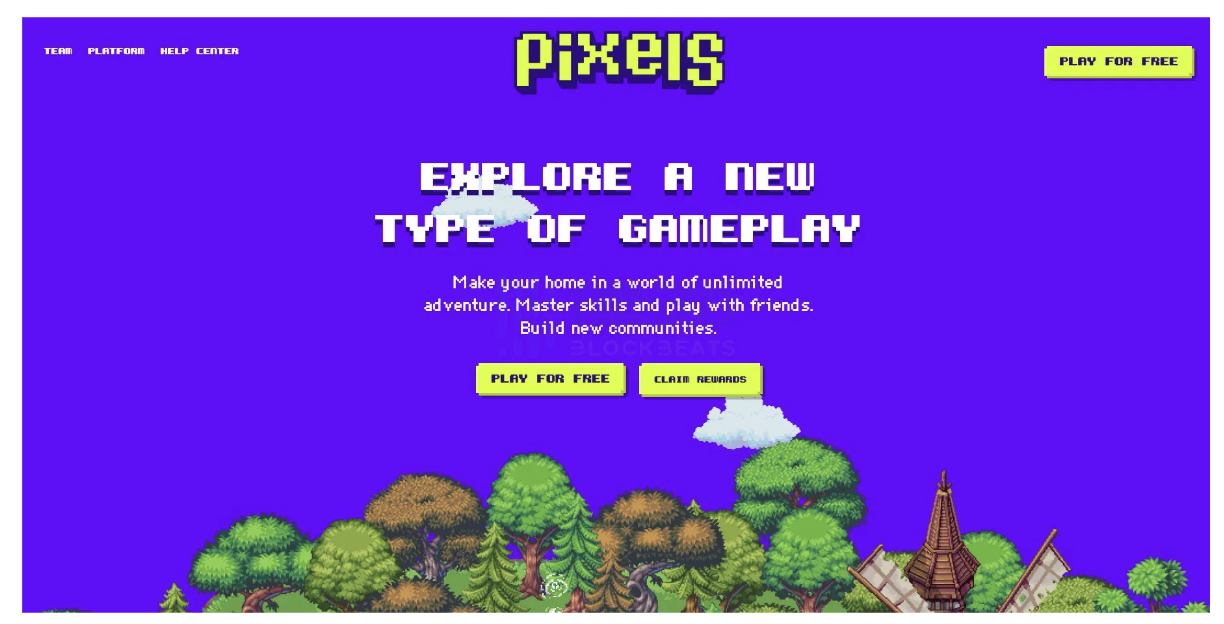
Account Creation: Visit the game homepage and click PLAY FOR FREE. Currently, you need to create a game account via the Ronin wallet.

After creating an account, new player quests begin. Some players have shared detailed guides for completing starter tasks.
Interoperability: NFT Integration
Pixels provides tools for native integration of external projects, including tokens, land NFTs, utility NFTs, and PFP NFTs. To date, Pixels has integrated over 50 NFT brands as in-game avatars, including BAYC and Crypto Phunks. Users can integrate additional NFT collections.
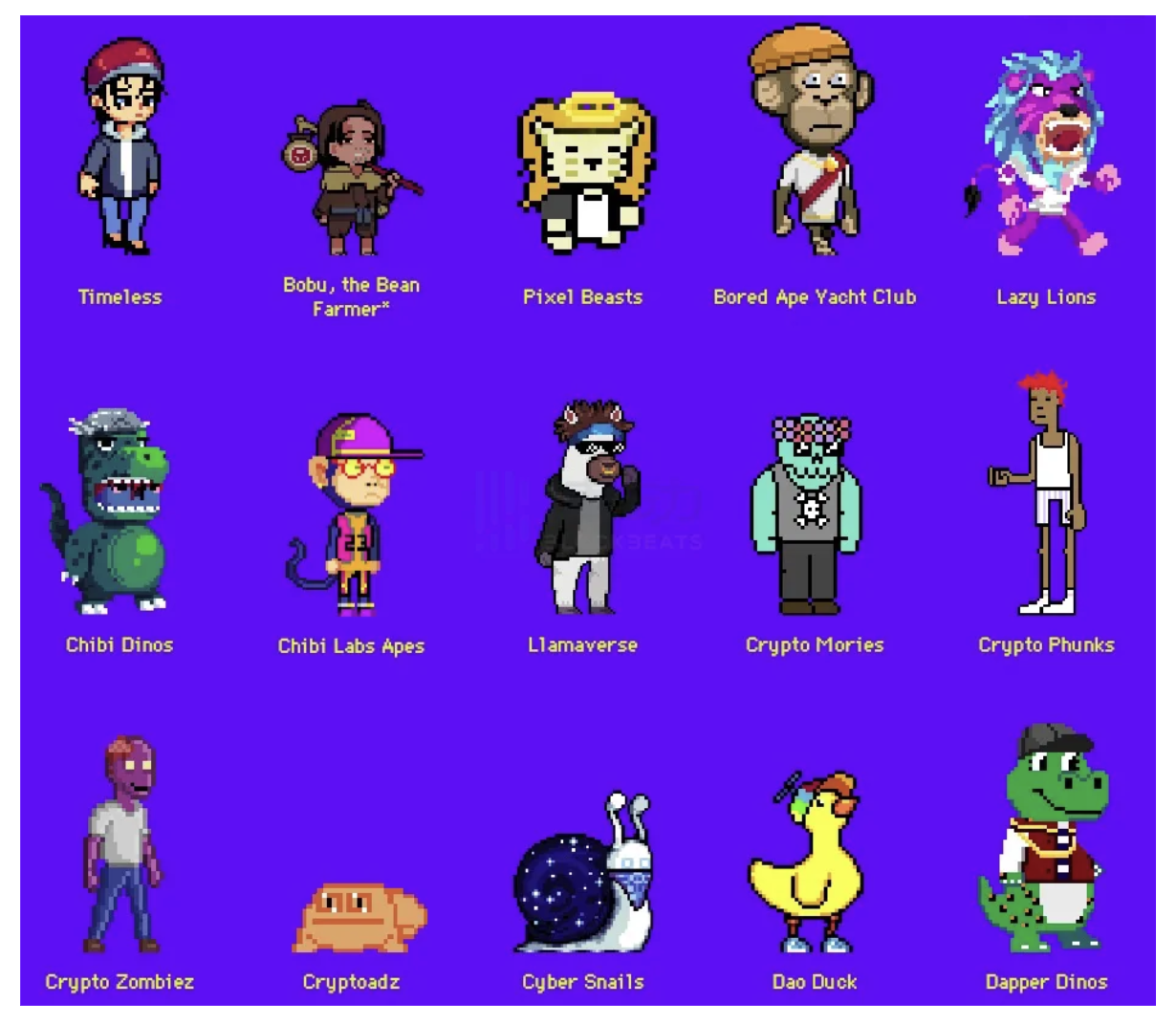
Some NFTs already integrated into Pixels
Tokenomics
There are three types of assets in the Pixels Universe: land, resources, and tokens—all stored on-chain. Plots are floating land features in the Pixels universe. Players can settle on three types of plots, each with distinct privileges and limitations.
Land
Free and rented plots are mainly single-player instances, meaning other visitors cannot see a player's farm. Players do not need to own land to access core game functions.
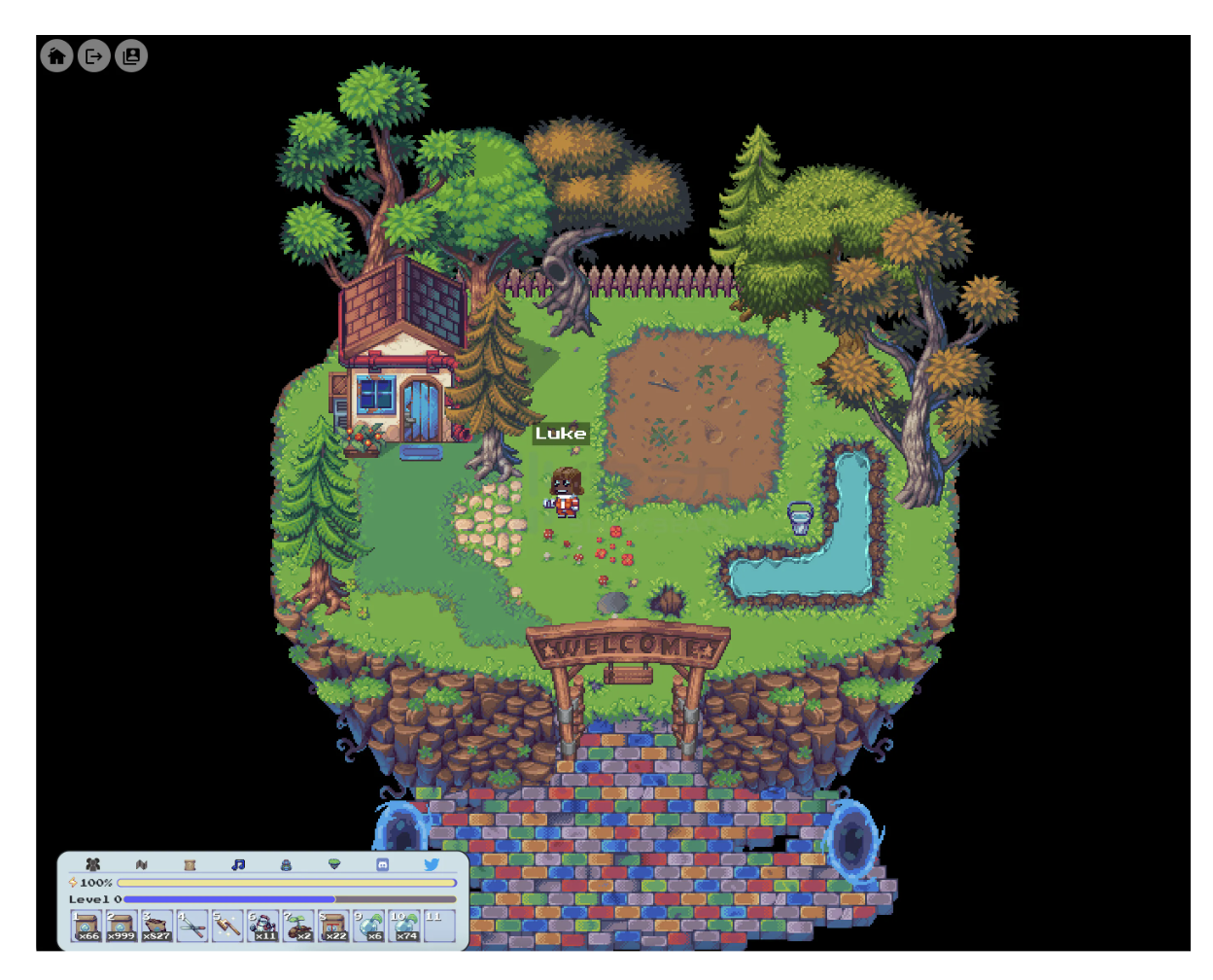
Free Plots: Also known as Specks, these are the most basic type, allowing players to engage in fundamental farming activities. Free plots offer limited functionality and significantly lower yields compared to other types.
Rented Plots: Rented plots give players greater freedom, better yields, and decoration options, but they require rental payments. Using this plot type forfeits most bonus earnings.
Owned Plots: Owned plots provide extra space, enhanced functionality, and the highest income/yield among all plot types. There are two variants: small owned NFTs and large owned NFTs, each with corresponding yield levels.
Landowners enjoy unique benefits tied to ownership. All industries are available on owned land, some exclusively so. Landowners increase their NFT value through labor, industrialization, automation, and decorating with NFTs. Active industries are limited by available land area but are unlimited in total number—as long as sufficient land exists, a new industry can always be established.
Landowners experience the richest tapestry of interactions in Pixels. They can manage their land resources directly, benefit from tenant-farmed land, or become tenants themselves on other owned lands.
Each NFT farm holds accessible resources and the highest-tier resources unavailable on public land (including free tenant Specks and rented tenant plots). Players gain access to these resources by establishing tenant relationships with landowners.
Resources
Resource generation is the primary faucet in the game. To prevent land and resource inflation, acquiring rarer and harder-to-obtain resources becomes increasingly difficult with game updates—players must invest time and effort to consistently collect higher-quality resources.
The Pixels team adjusts the amount of resources generated within a given timeframe using several variables: restock time, inputs required to increase resources, quantity generated per action, and effort required to harvest specific resources.
Tenants (Farmers)
The tenant system enables F2P players to participate fully. Players can freely harvest, plant, and sell. Rented plots are entirely leased and not owned by the player. As long as rental fees are paid, the plot remains assigned to the player’s account. As players accumulate in-game resources, they can rent progressively larger plots.
Tenants can build new skill upgrades by working in industries on NFT farms.
Since non-landowners may vastly outnumber landowners, multiple tenants can establish identical relationships with a single landowner’s industry. However, forming multiple relationships does not produce cumulative returns. In terms of production leveling, active management and continuous output are key. Landowners can also be tenants. Simultaneously, landowners can personally manage their own industries, oversee tenants using their land, and work as skilled laborers on other landowners’ properties.
Tokens
Pixels uses a dual-token system: BERRY and PIXEL. Both tokens are intended to have uncapped total supplies, but serve completely different utilities and are acquired differently.
$BERRY
$BERRY is the primary circulating currency in Pixels and is essential to the core gameplay loop—easy to access and earn.
In the early stages of the game, $BERRY is obtained through the in-game store. Players can sell generated resources to the in-game store in exchange for $BERRY.
The main burn mechanism involves purchasing in-game items that help players progress further in the game cycle—unlocking new industries, events, areas, quests, and content. Even players without land need $BERRY to maintain their plots.
Pixels has several levers to adjust $BERRY supply inputs, including controlling resource generation (restock timing, input requirements, output amounts, harvesting effort, and energy needed for actions) and adjusting in-game store prices.
In the future, Pixels might limit or even remove the in-game store entirely, halting new $BERRY minting altogether.
$PIXEL
$PIXEL is the premium currency used to buy items, upgrades, and visual enhancements that sit outside the core gameplay loop and are harder to obtain. Players acquire $PIXEL for higher-order needs such as saving gameplay time or enhancing social status.
Unlike $BERRY, $PIXEL supply will be strictly controlled and predictable. A total of 100,000 new $PIXEL will be minted daily and distributed to active players engaging in behaviors beneficial to the Pixels ecosystem.
A large portion of $PIXEL distribution occurs through a daily rewards system for completing various tasks, quests, or finding specific items. The team also rewards other behaviors such as creating unique user-generated content, encouraging broader participation and community engagement.
Premium items will be purchasable in the in-game store, which will not repurchase them. Proceeds go to a treasury managed by Pixels, which may burn most of the revenue daily.
Team and Development
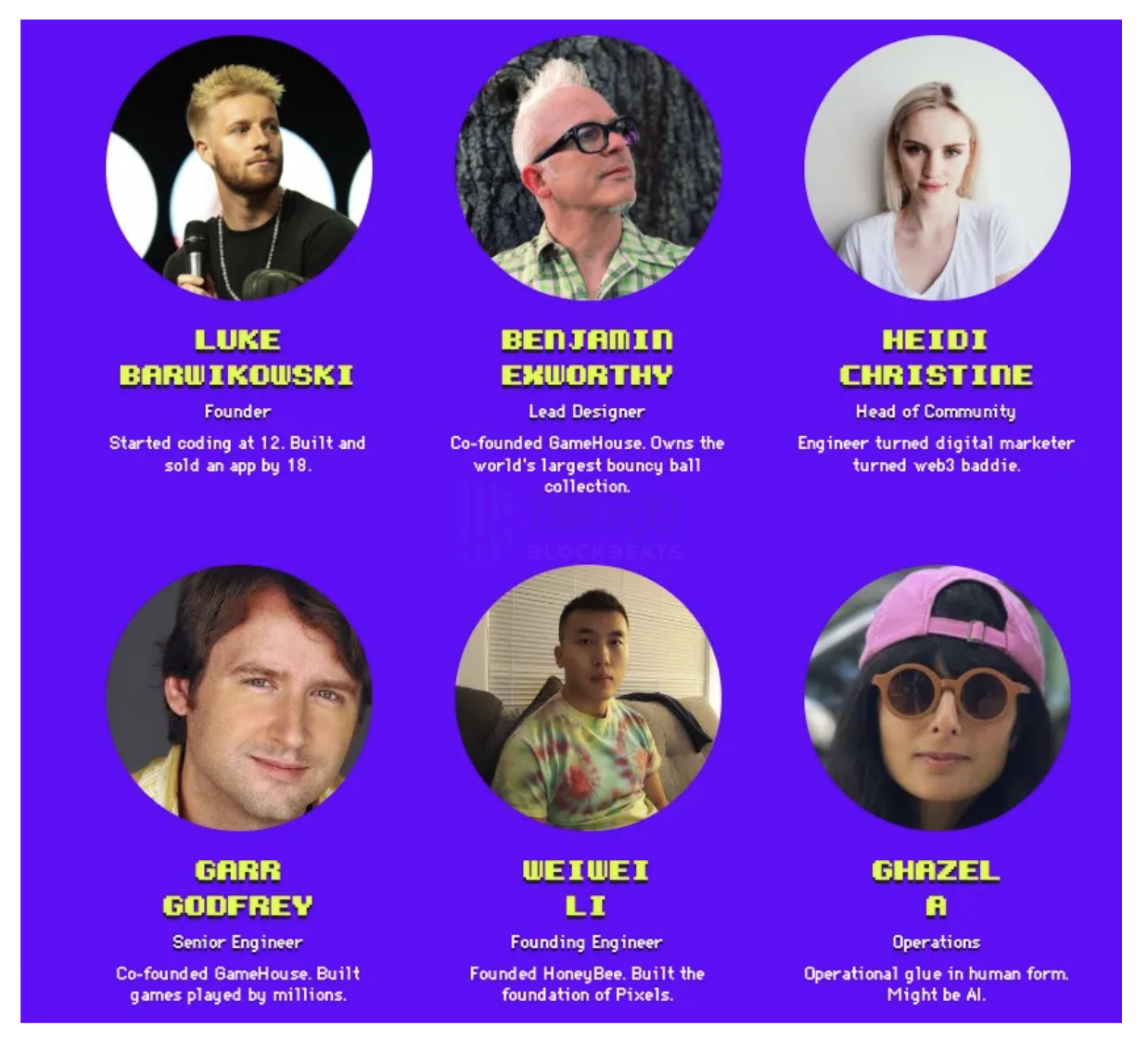
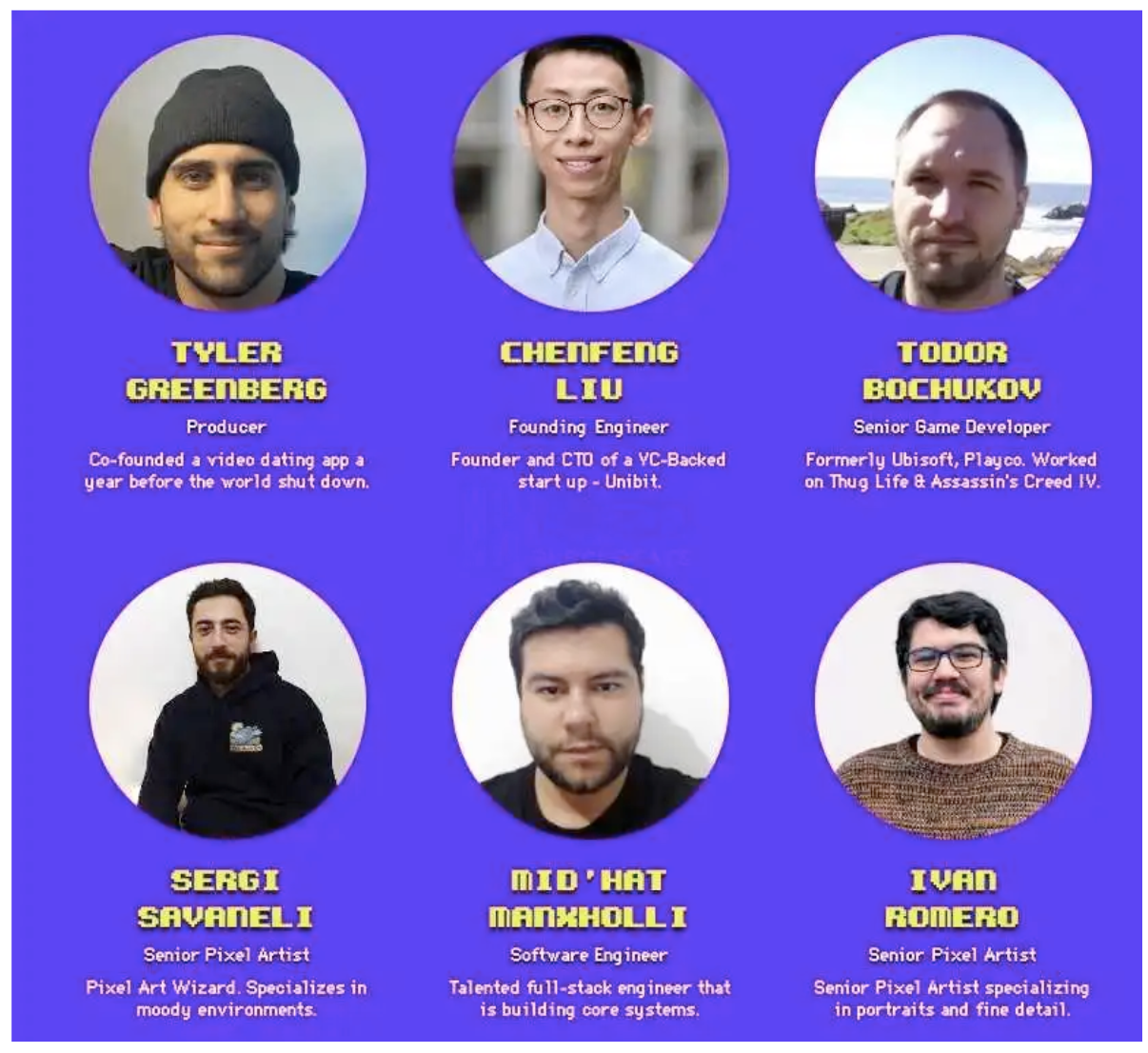
The Pixels team brings extensive experience in game product development. Founder Luke Barwikowski began coding at age 12 and built and sold apps by 18. Engineers Benjamin Exworthy and Garr Godfrey are co-founders of GameHouse, a renowned U.S.-based game developer.
In February 2022, Pixels closed a $2.4 million seed round led by Animoca Brands and PKO Investments, with OpenSea participating. The funding was allocated to fully build and expand initial game features and prepare for the token launch planned for the end of Q2 2022. In October, Pixel airdropped reward tokens $BERRY to the top 20,000 community members based on积分 rankings.
Post-Migration Ecosystem Activity on Ronin
On September 12, Pixels announced its migration from Polygon to the Ronin network. On October 31, Pixels announced its official launch on Ronin Network, simultaneously opening the minting of Pixels Pets (NFTs with immediate in-game utility) on Ronin Chain. In the announcement, Pixel stated, "Our community has always been our driving force. And Ronin has more Web3 users than any other blockchain network."
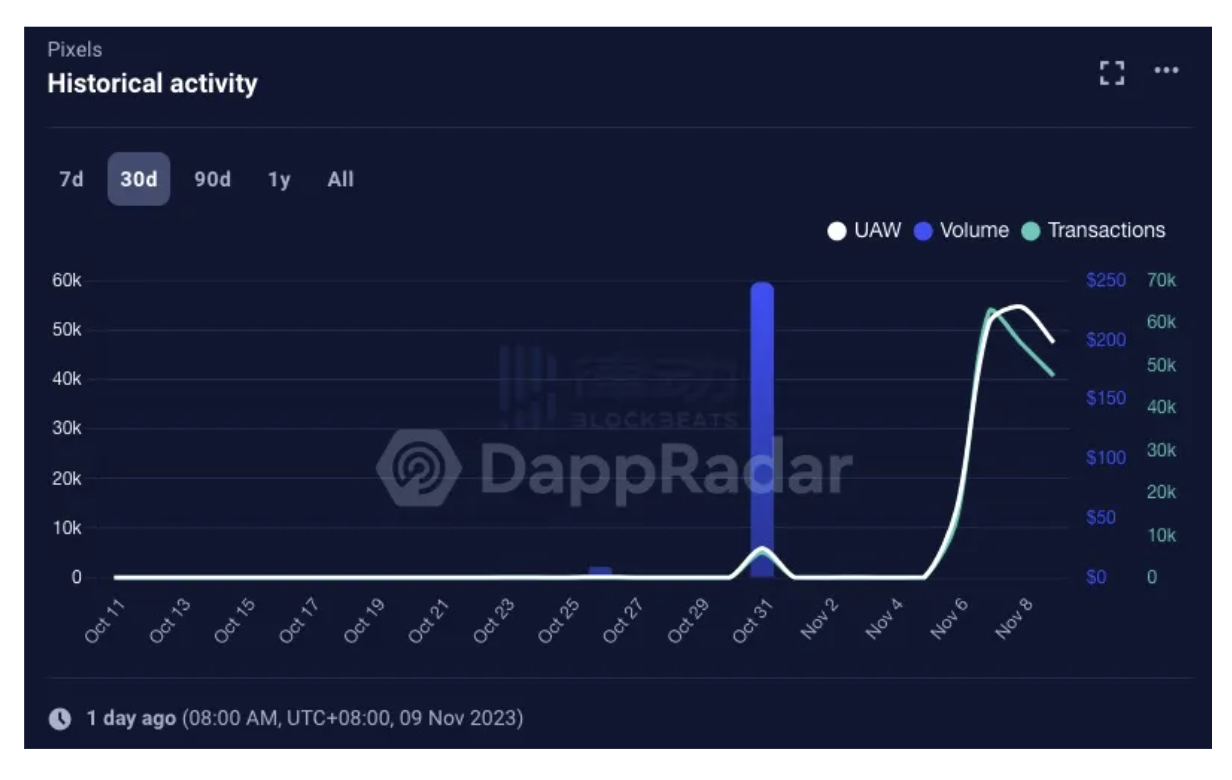
On the day of its Ronin launch, transaction volume within Pixels saw a clear spike. One week later, unique active wallets (UAW) surged over 500%. According to the team, Pixel plans to launch its $PIXELS governance token in Q4.
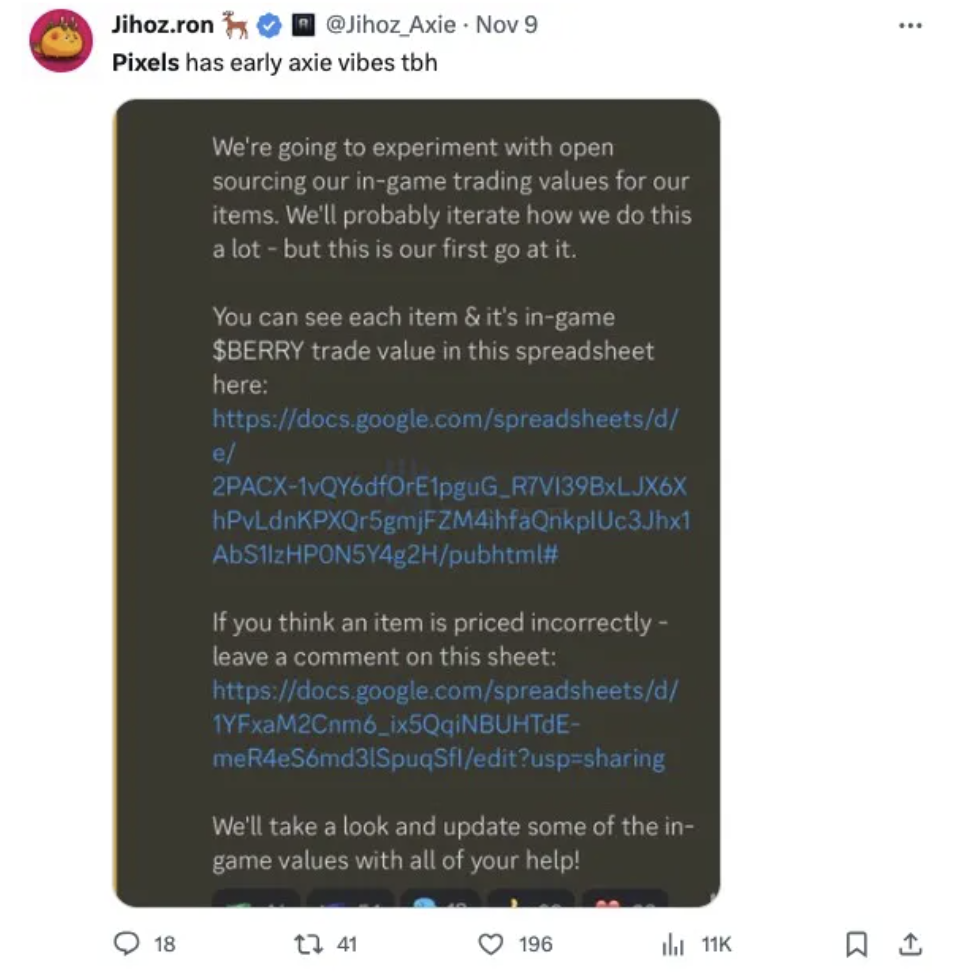
BlockBeats found that many KOLs promoting Pixels are also deep players of Axie Infinity. Moreover, Jihoz, founder of both Ronin and Axie Infinity, appears as an NPC in Pixel. Jihoz himself frequently promotes Pixels on his official account, stating, "Seriously, Pixels feels like early Axie."

One thing is certain: this migration represents a "win-win." DappRadar Ambassador @0xxNathan commented on X: "We’re seeing a perfect synergy between Pixel and Ronin, strongly supported by the Ronin community. This shows Ronin has the potential to become one of the top blockchain networks for gaming, thanks to its outstanding and loyal community."
Recently, the blockchain gaming market has shown signs of recovery alongside broader crypto trends, and Pixels is already showing early success. BlockBeats previously reported that on November 7, according to Blur market data, floor prices across the blockchain gaming NFT sector rose broadly. Specifically, the floor price of Pixels land NFTs reached 0.39 ETH, up 59.18% weekly.
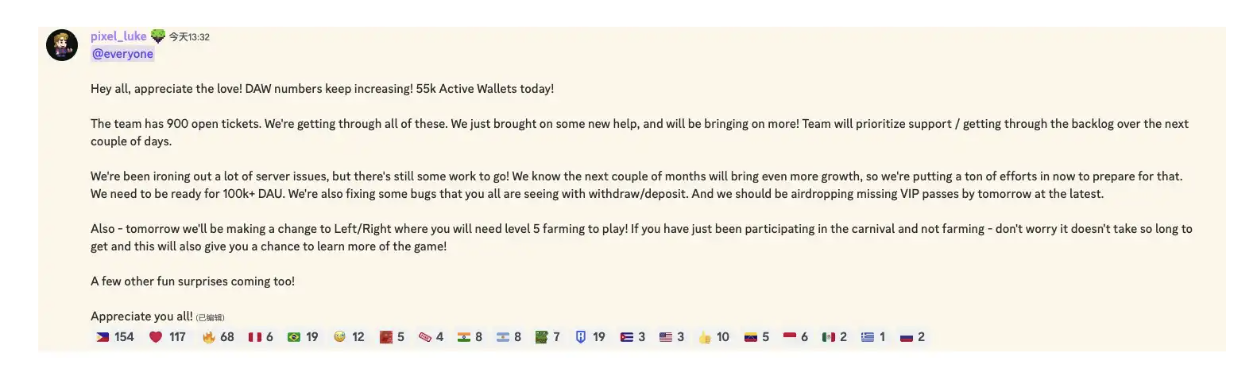
On November 10, the Pixels team announced in Discord that daily active users had surpassed 55,000 and added, "We know the coming months will bring even more growth—we need to prepare for 100k+ DAU."
How much momentum Ronin will provide for Pixels—and whether Pixels can become Ronin’s second Axie Infinity—remains to be seen.
Join TechFlow official community to stay tuned
Telegram:https://t.me/TechFlowDaily
X (Twitter):https://x.com/TechFlowPost
X (Twitter) EN:https://x.com/BlockFlow_News
 BlockBeats
![In-depth Analysis of Trade[XYZ]: How Were 92 Markets and 98% HIP-3 Trading Volume Established?](https://upload.techflowpost.com/upload/images/20260716/20260716061117965147.jpeg?x-oss-process=image/resize,p_50/quality,q_80)