








Deep Dive into Masa Network: Unlocking the Value of Web3's Dormant Data and Exploring the Possibility of a Decentralized Google
TechFlow Selected TechFlow Selected
Deep Dive into Masa Network: Unlocking the Value of Web3's Dormant Data and Exploring the Possibility of a Decentralized Google
Can Masa Deliver Both Privacy and Profit?
 Navigating Web3 tides with focused insights
Author: David
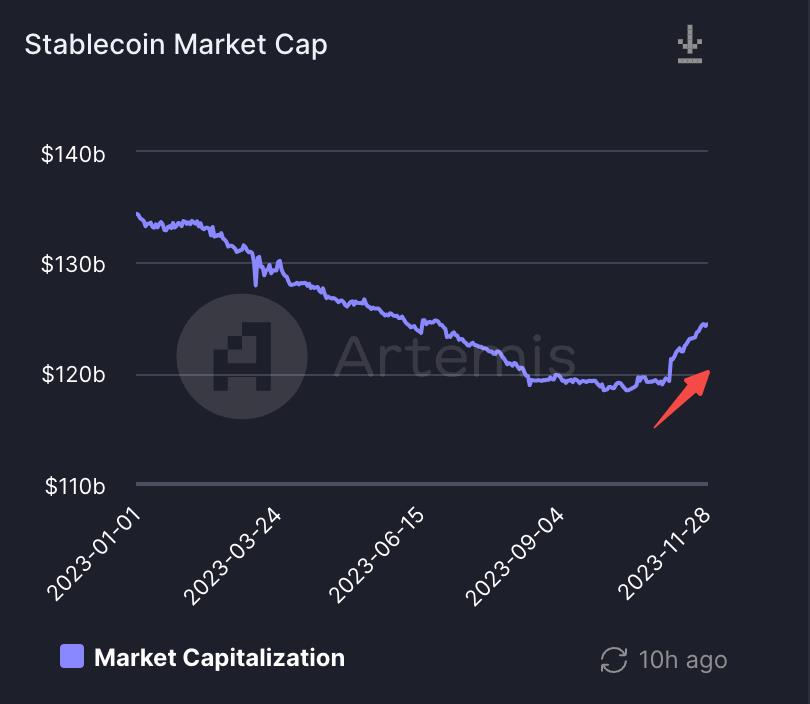
After several months, the crypto market is finally showing signs of recovery.
Stablecoins flowing into the market are increasing, major sectors are taking turns to rise, and recently, after Binance was fined, the market did not experience a significant pullback. Meanwhile, Bitcoin has continued heating up, returning to price levels last seen in April 2022.
Everything seems to be clearing the way for a 2024 bull run.
Against this backdrop, it's clear that market participants are becoming active again—driven by expectations for the 2024 bull market, engaging in various project marketing campaigns, farming rewards, claiming airdrops, and performing interactions. At the same time, everyone is searching for new alpha projects, actively aligning with emerging narratives, and hunting for the next hot trend.
Yet, while users eagerly embrace the shift from bear to bull markets and pursue short-term gains, they may not realize that a goldmine is being formed in parallel: user data.
Whether it’s wallet interactions, fund transfers, or browsing history and comments on social media, vast amounts of behavioral data are quietly accumulating—and during a bull market, this accumulation only accelerates.
This data flows like an undercurrent, carrying far greater long-term value than immediate profits.

Looking beyond the crypto space, “data” has already become the new oil.
Global tech giants like Google are essentially data companies, monetizing user behavior through advertising and search engines. In the AI field, players are racing to acquire massive datasets for model training...
Web3 has evolved a rich ecosystem by now, but when it comes to leveraging data value, it still remains barren compared to the outside world.
The behavioral data of hundreds of millions of Web3 users worldwide is a sleeping giant of a goldmine. With blockchain’s unique technological advantages, users can own their personal data, protect their privacy, and transparently trade their data for direct monetization.
Recently launched Masa Network is one of the pioneers aiming to awaken this dormant data value in Web3.
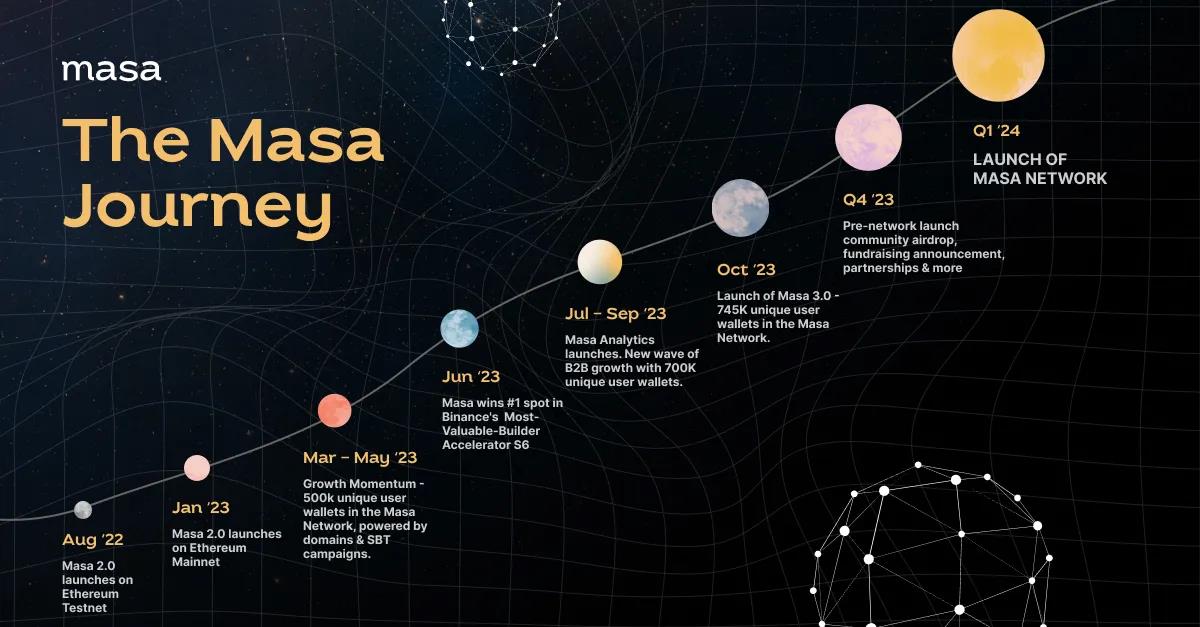
After more than a year of foundational development, the project has already secured data authorization from 880,000 wallet users, generated 1 million SBTs, and accumulated 7 million unique user data records. Headline projects such as Polygon, QuickSwap, NEAR, and Injective have already adopted Masa’s products early on. A Web3 user behavior data network is beginning to take shape.
Meanwhile, under the protection of zero-knowledge proof (ZKP) technology for data privacy, the behavioral data of hundreds of millions of Web3 users can be used by developers for AI modeling or by projects for decentralized ad targeting—while users earn token rewards for contributing data without compromising their privacy. According to public information, Masa Network’s mainnet is set to launch in Q1 next year, along with its token launch.
In this article, we will dive deep into Masa’s current products, the problems it aims to solve, and its future roadmap, offering a clear and comprehensive understanding of the project’s value.
User Journey: More Than Just Tasks
User data sounds abstract. You might wonder how it relates to you personally.
Let’s start with a smaller, more familiar scenario—completing tasks.
A typical Web3 user journey often begins by connecting a wallet, linking social media accounts, completing various on-chain and off-chain tasks set by projects, and finally receiving rewards such as NFTs, tokens, or whitelist access...
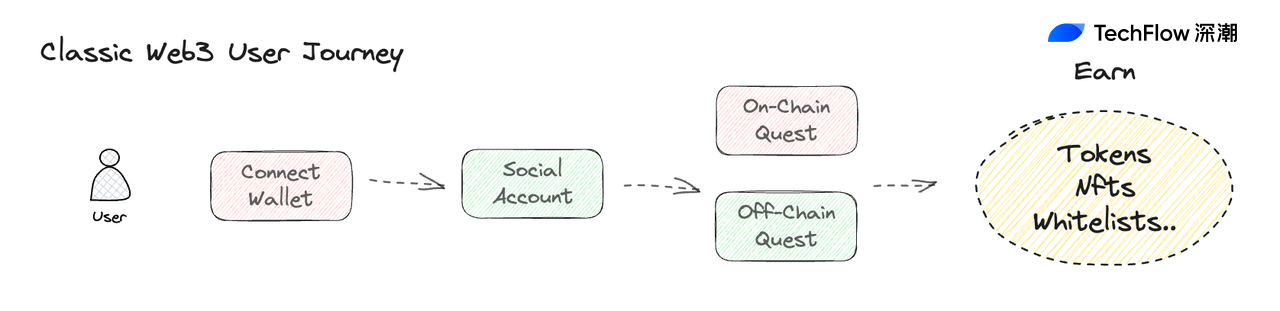
You can complete this process on nearly any popular task platform. Masa Network is no exception. Currently, on Masa, users can complete diverse tasks from projects across multiple chains and receive various rewards. They can also apply for a unique Soulname (similar to premium domain names) to display publicly.
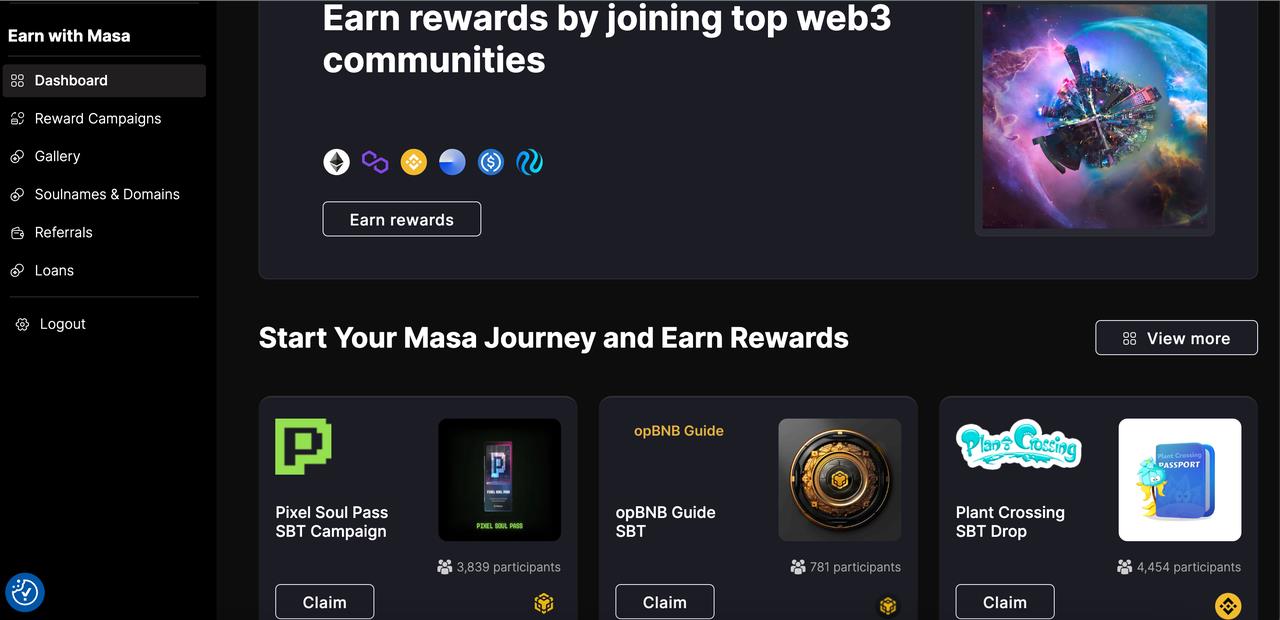
But behind this seemingly simple and familiar task flow, each user leaves behind a rich trail of information. When you visit a page, connect your wallet, or click a button, every action becomes a unique footprint.
However, these user footprints appear chaotic—especially in Web3, where many users operate multiple wallets for arbitrage, and the ecosystem remains fragmented.
Masa Network uses proprietary technology to collect, associate, and integrate large-scale user data—including multi-wallet user profiles and scattered on-chain and off-chain data.
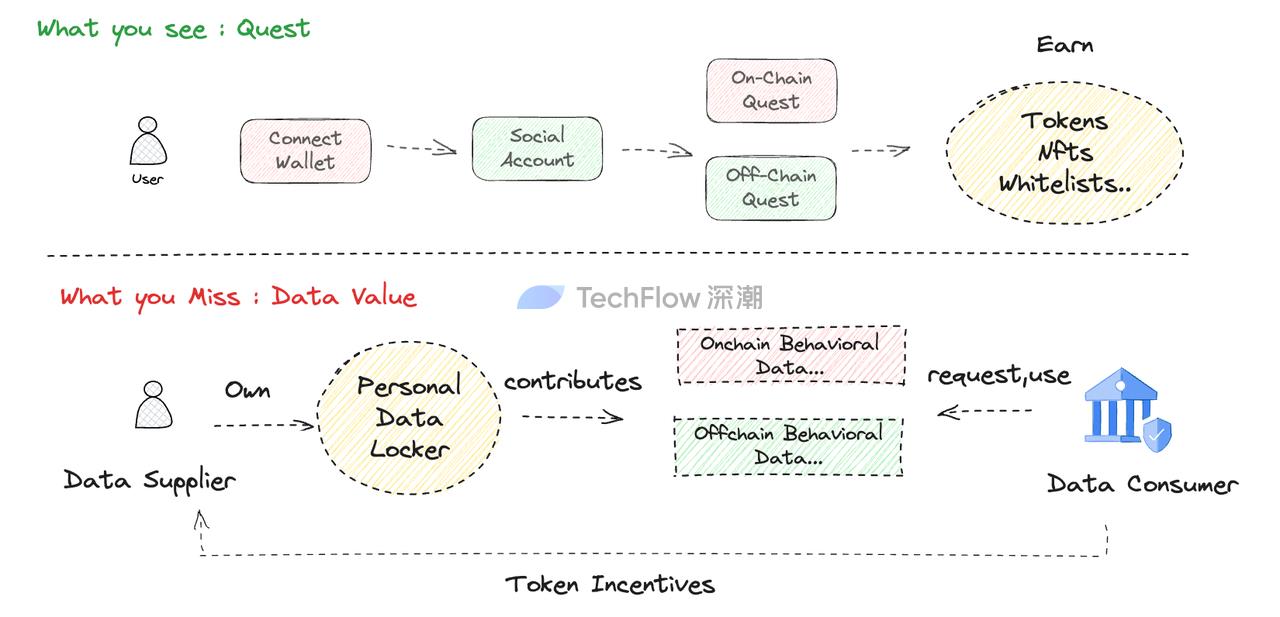
This transforms the previously chaotic data of hundreds of millions of Web3 users into a mineable goldmine. We’ll detail the specific technologies later.
But here, let’s first consider a key question: what value could this data hold?
First, as the next Web3 bull market approaches, top-tier projects are getting smarter, using precise user profiling and data analytics to acquire new users and improve marketing;
Beyond Web3, the rise of generative AI products is evident, rapidly being applied across industries.
With the strong arrival of the AI era, demand for high-quality user data among developers is exploding. Beyond algorithms and computing power, AI’s need for multidimensional, high-quality, globalized data is expected to grow exponentially.

Since the crypto world isn’t bound by geography, globalized projects combined with economic incentives can quickly, efficiently, and openly gather vast amounts of user data from diverse regions—something nearly impossible under traditional Web2 models.
If more data can be collected and provided to developers needing AI training, while users are rewarded for contributing data, it creates a win-win scenario—and a much larger market beyond Web3.
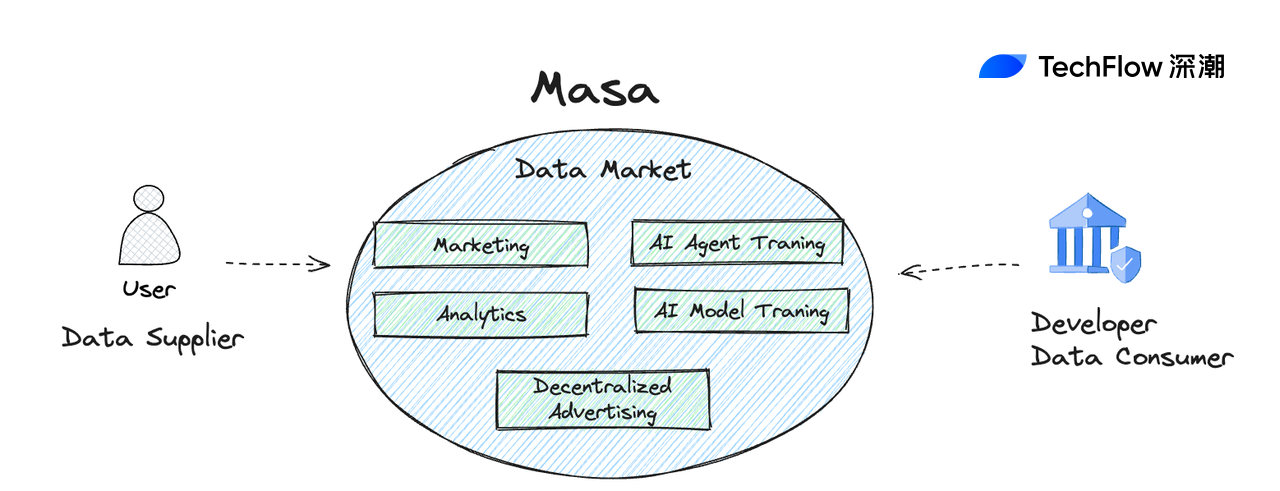
This data market looks promising, but beneath the shiny surface, a sensitive concern arises when discussing data collection:
What about my data security and privacy? How can Masa Network ensure privacy while collecting user data? Can Masa truly achieve both privacy and profitability?
Privacy First, Profit Second
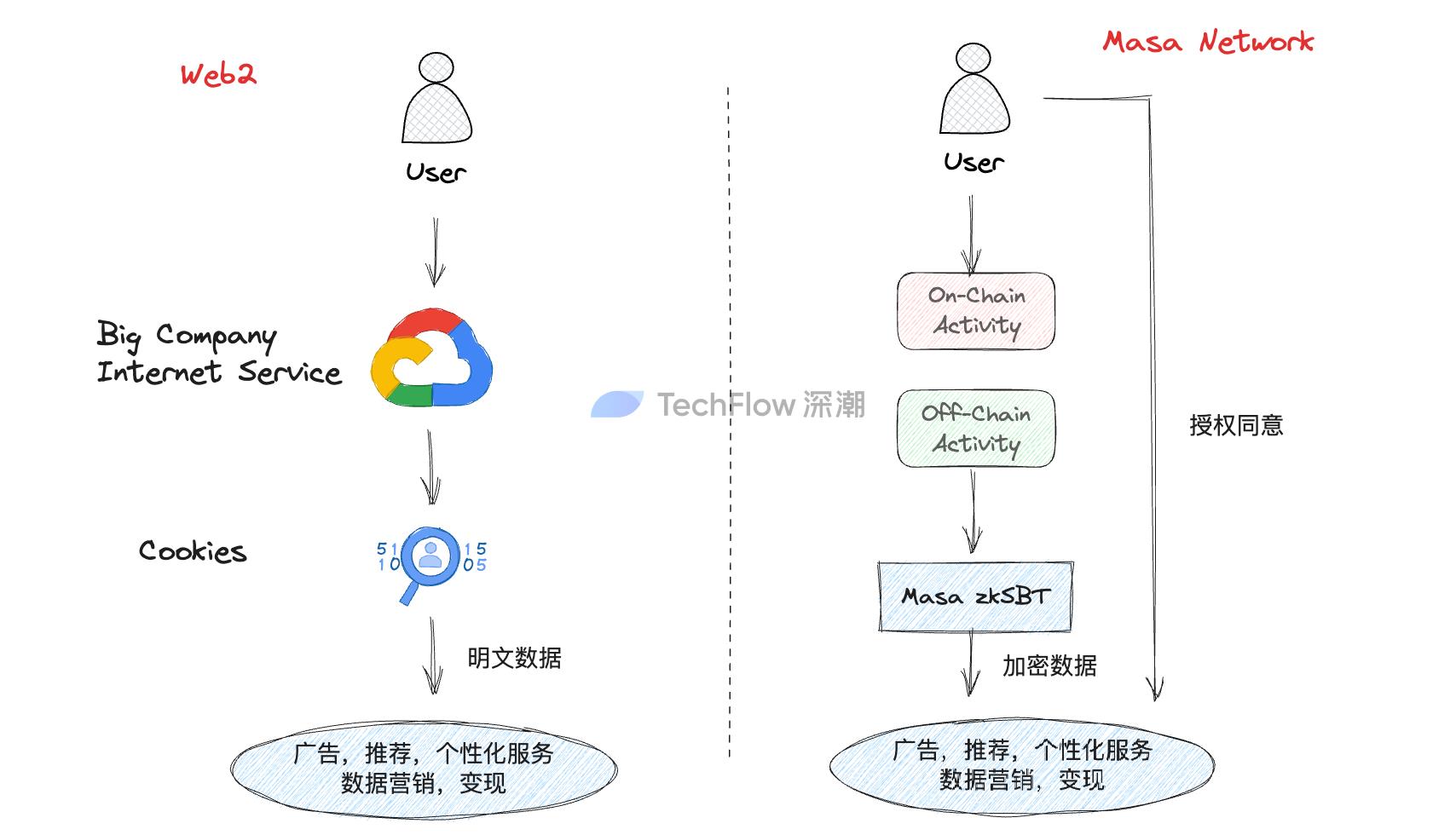
In the Web2 world, large internet service providers often use cookies to collect user behavioral data. Websites silently track user actions, fueling growing anxiety over data privacy.
Recently, European and American governments introduced GDPR compliance rules, explicitly allowing users to reject cookies. Major companies like Google are also planning to ban third-party cookies. In the Web3 world, data shows over 30% of users either reject cookies or use privacy-focused browsers like Brave to stay “invisible.”
As awareness of data privacy grows stronger, Web3’s transparent and traceable on-chain nature makes collecting web browsing or on-chain interaction data equally unsettling.
To address this privacy anxiety, Masa Network offers ZKP (zero-knowledge proofs), implementing privacy protection throughout data storage, access, and analysis.
Data Storage: First, in Masa’s data collection scenarios, zkSBT design means that on top of standard SBTs linked to user addresses, zero-knowledge proofs are added. This allows multiple data points associated with an SBT to be securely encrypted and stored under the same user.
Data Access: Second, based on encrypted storage, unless users directly authorize developers to access their personal data, developers can only see encrypted, anonymous wallet data and cannot identify the user’s identity or device information.
Data Analysis: If analyzing personal identity information—such as Twitter handle, age, passport number—Masa only needs to provide a “yes” or “no” proof, without revealing actual user identity details to the data requester.
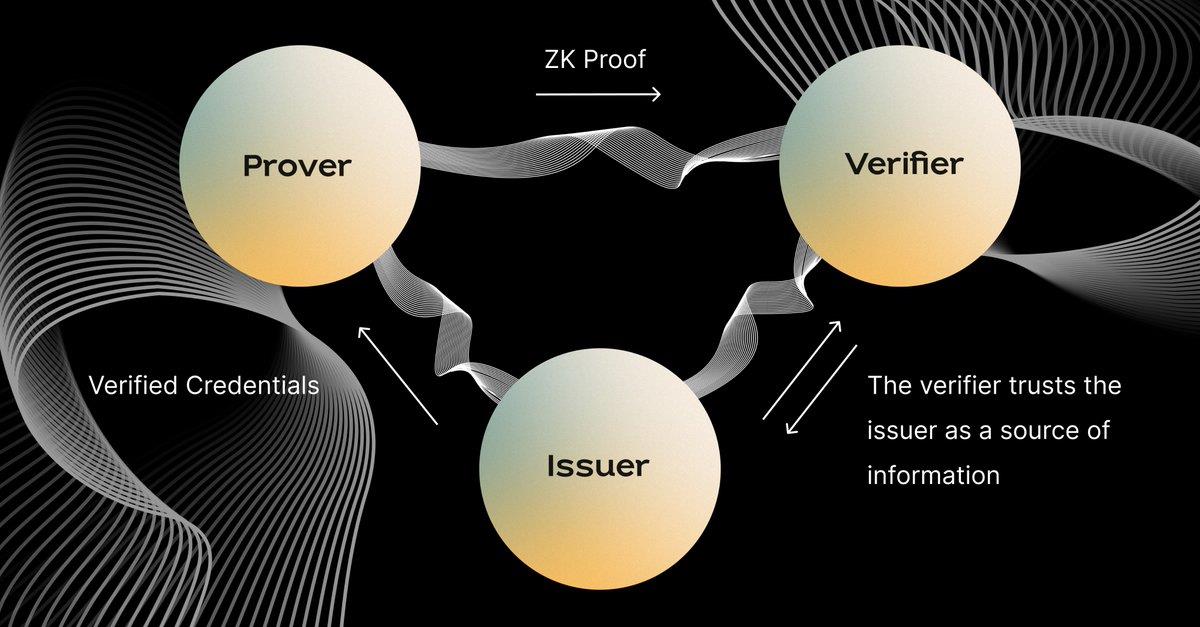
If the above still feels too technical, consider this concrete example:
A user might visit a website, participate in a social media event, and conduct asset swaps in their wallet. During this process:
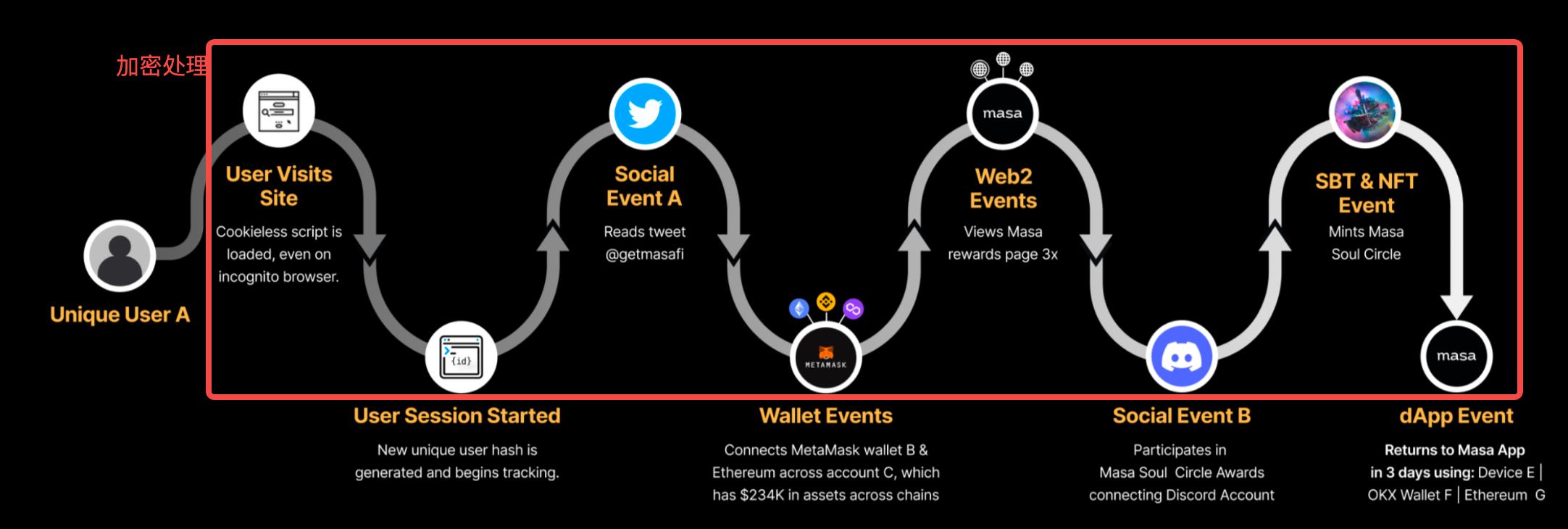
1. Different actions generate different types of data;
2. The tools provided by Masa do not use privacy-invasive cookies. Each unique user is represented by a UUID (unique user ID), and each login device is encrypted into a unique device hash. User information is protected by an anonymous session ID and encrypted wallet address;
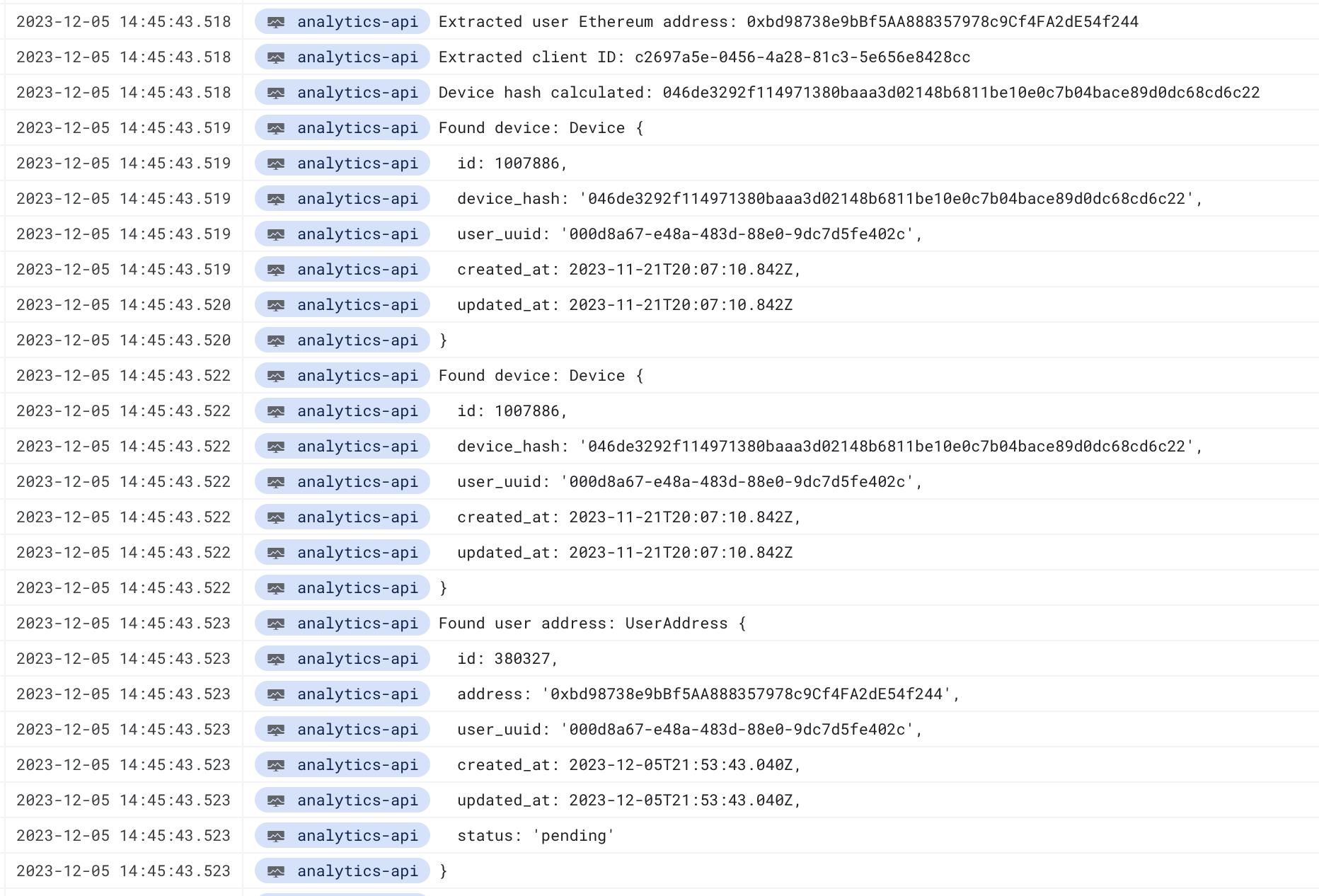
3. Without direct user authorization, developers can only see encrypted wallet information, not personally identifiable information (PII);
4. If developers want to access PII, they must request user permission. Upon request, a smart contract triggers a ZKP verification process—a “yes” or “no” response—without exposing actual user identity data.
From this detailed flow, it’s clear that the introduction of zero-knowledge proofs and related encryption enables data supply-demand matching without exposing private data. Thus, I believe Masa Network’s role in the data market is not just a trader—but more importantly, a guardian of data; the strength of the latter determines the scale and credibility of the former.
Overall, Masa Network is fundamentally in the data business, but its data protection processes—powered by blockchain encryption—differ significantly from today’s Web2 data giants.
Building the Largest User Data Network in the Shortest Time
Once privacy concerns are addressed, our next question is:
How did Masa Network manage to gather data contributions from 880,000 wallets in just over a year? And for projects and developers, what use does Masa Network’s collected user data serve?
Currently, Masa Network focuses on two core products—Masa Growth and Masa Analytics—to attract both consumer and enterprise users to contribute data.
Consumer Product: Masa Growth – Task Marketing Now, Data Staking Soon
Earlier, we introduced the main features of Masa Growth—users can complete tasks, earn rewards, and register domains.
According to Masa Network team members, since launching in August 2022, Masa Growth alone has attracted over 400,000 Web3 users and collected over 1 million encrypted, ZK-protected user behavior records.
Under incentive-driven models, users focus on immediate rewards from tasks, but overall, these tasks serve as groundwork—accumulating data in preparation for future data contribution and monetization.
With Masa’s mainnet launching in Q1 next year, the current Masa user interface will undergo significant updates, withone of the most important new features being “data staking”.
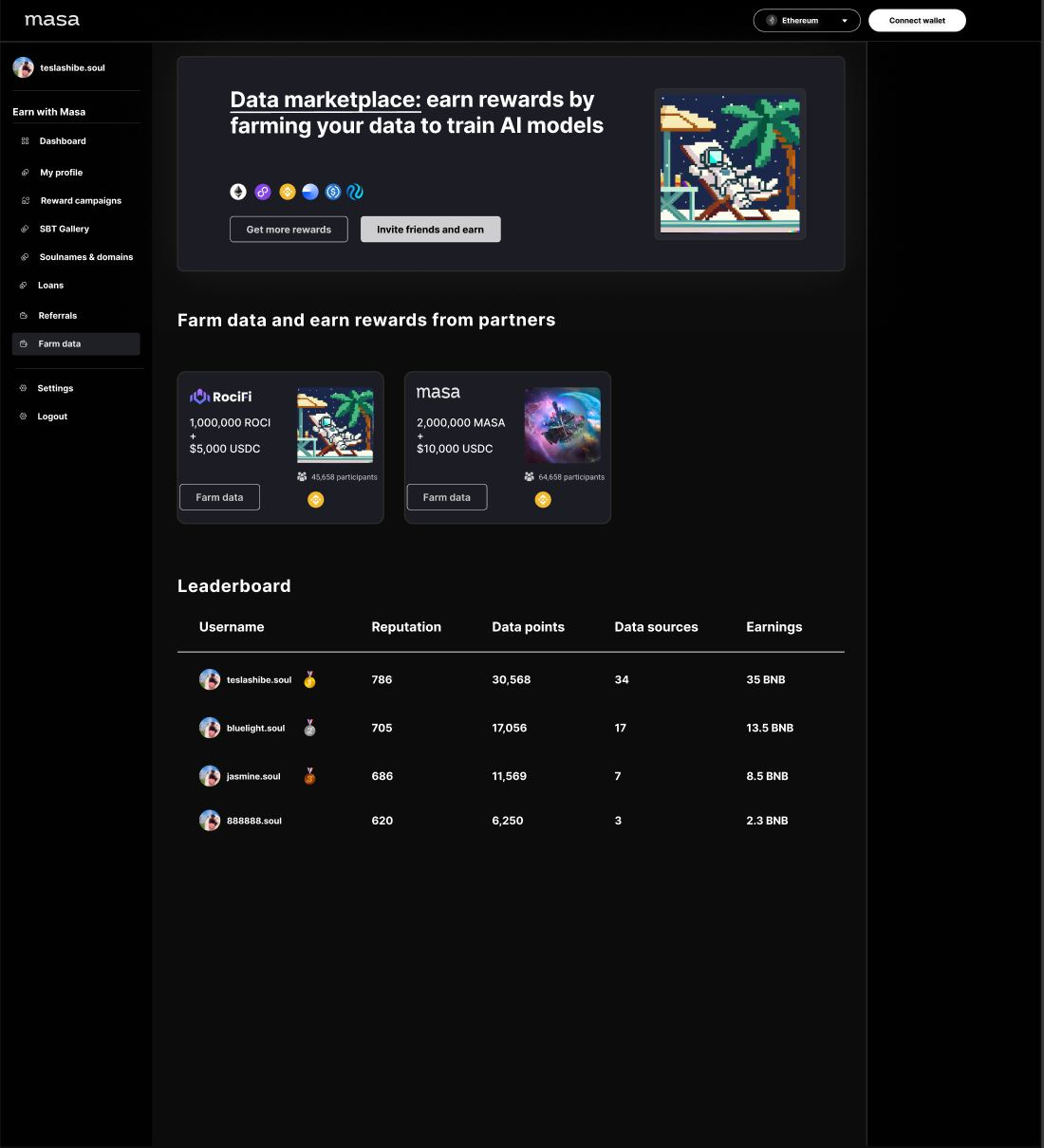
Note: This doesn’t mean staking visible assets like NFTs or SBTs, but follows this logic:
1. All your historical behaviors and information footprints within Masa Network are encrypted and stored in your personal data vault—the zkSBT;
2. You can view this data directly in the Masa app and have the right to choose to “stake” part or all of your data, meaning actively granting permission to share this data with organizations in need, for a specified period;
3. For contributing data, you receive corresponding rewards, potentially in the form of Masa tokens or stablecoins.
For individual users, data contribution involves no learning curve or operational burden. As mentioned earlier, ordinary users’ footprints are already monetized by big tech firms.
Same tasks, same interface—just an extra staking option. Under privacy protection, it simply opens a new path to monetize your activity.
Enterprise Product: Masa Analytics – Simple Integration, Unlocking the Data Goldmine
For enterprises and organizations seeking to analyze user behavior data, Masa Analytics lifts the veil on Web3 users.
The Web3 data space is still early. Many projects attract large numbers of bots. Fragmentation in the blockchain ecosystem makes integrating on-chain and off-chain, cross-chain, and cross-platform data a technical challenge.
Many projects struggle to answer basic questions: How many real users do I actually have? Which users are more valuable? What does my user profile look like? Where exactly is my product conversion failing?
At first glance, Masa Analytics appears to mirror Google Analytics. The latter tracks where Web2 users come from, their activities on-site, dwell time, conversion rates, and other key performance metrics—providing crucial insights for targeted marketing.
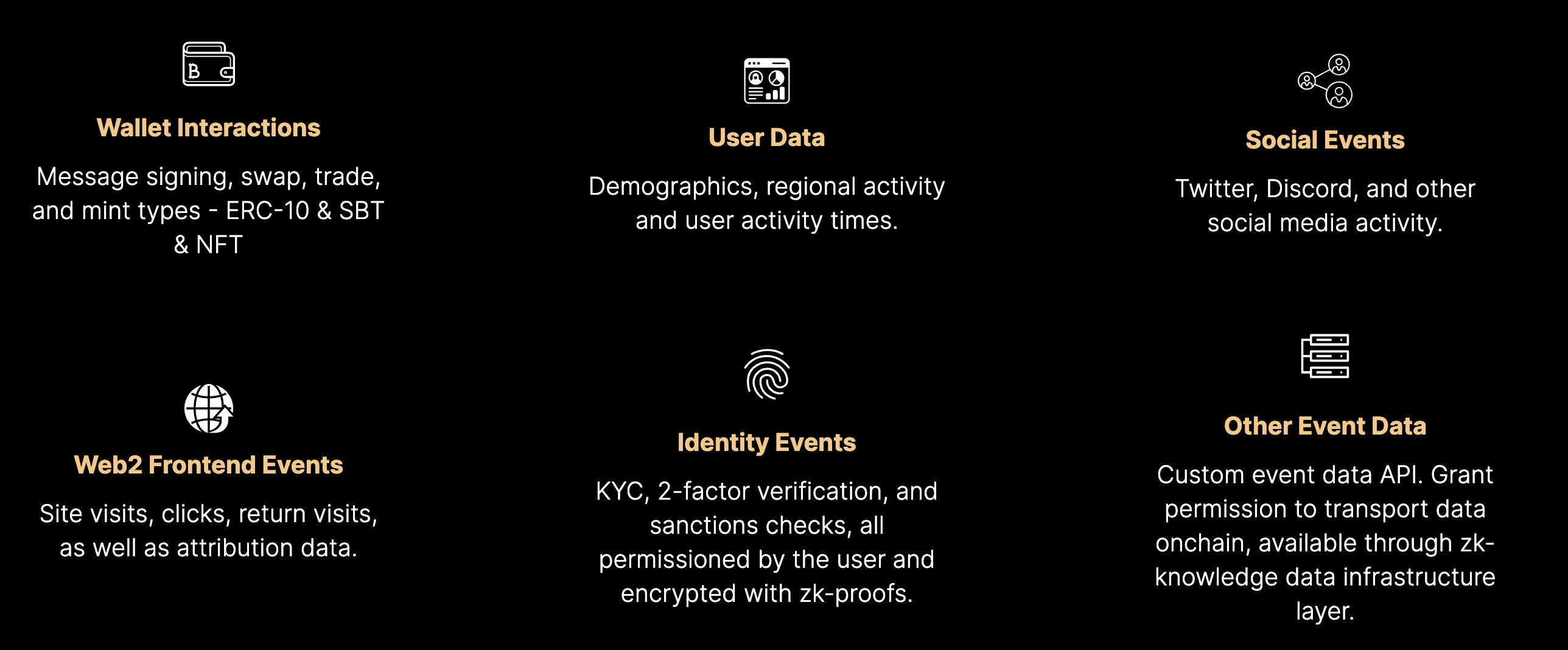
Masa Analytics similarly analyzes these metrics. Websites and developers in need can integrate Masa’s JavaScript tracking code or use its Typescript SDK, generating a cookie-free script to track user behavior on target sites—including page views, clicks, form submissions, etc.
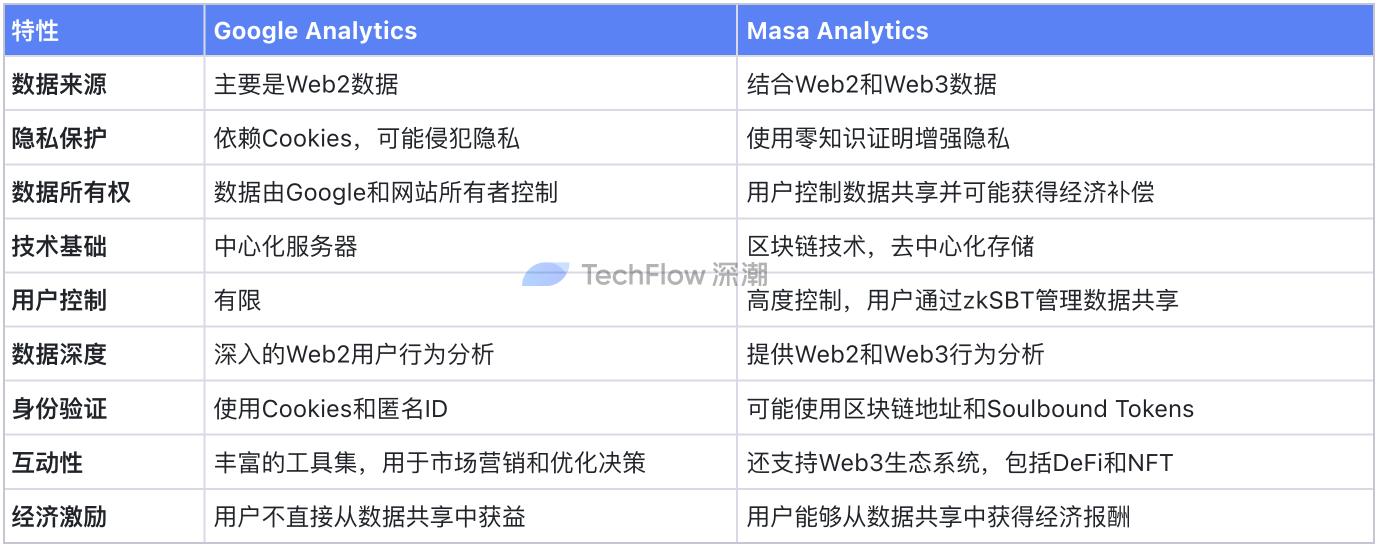
However, due to its Web3 focus and stronger emphasis on privacy, Masa Analytics differs from Google in several ways:
-
In data sources, Masa Analytics collects not only Web2-like data but emphasizes Web3 data—blockchain transactions, wallet interactions, smart contract calls, and dApp usage behaviors.
-
In user identification, Masa Analytics uses blockchain addresses or Soulbound Tokens to link user identities—directly tied to Web3 identities—enabling more accurate data while preserving anonymity. It can also link multiple wallets belonging to one user, solving the challenge of analyzing multi-wallet users in Web3.
-
In application scenarios, Masa Analytics supports not only analytics and marketing but also emerging Web3 ecosystems like NFT markets, DeFi platforms, and other blockchain-based applications.
Notably, thanks to ready-to-use SDKs, organizations can adopt Masa Analytics without complex development—simply integrating a few lines of code into their front-end to start monitoring user behavior data.
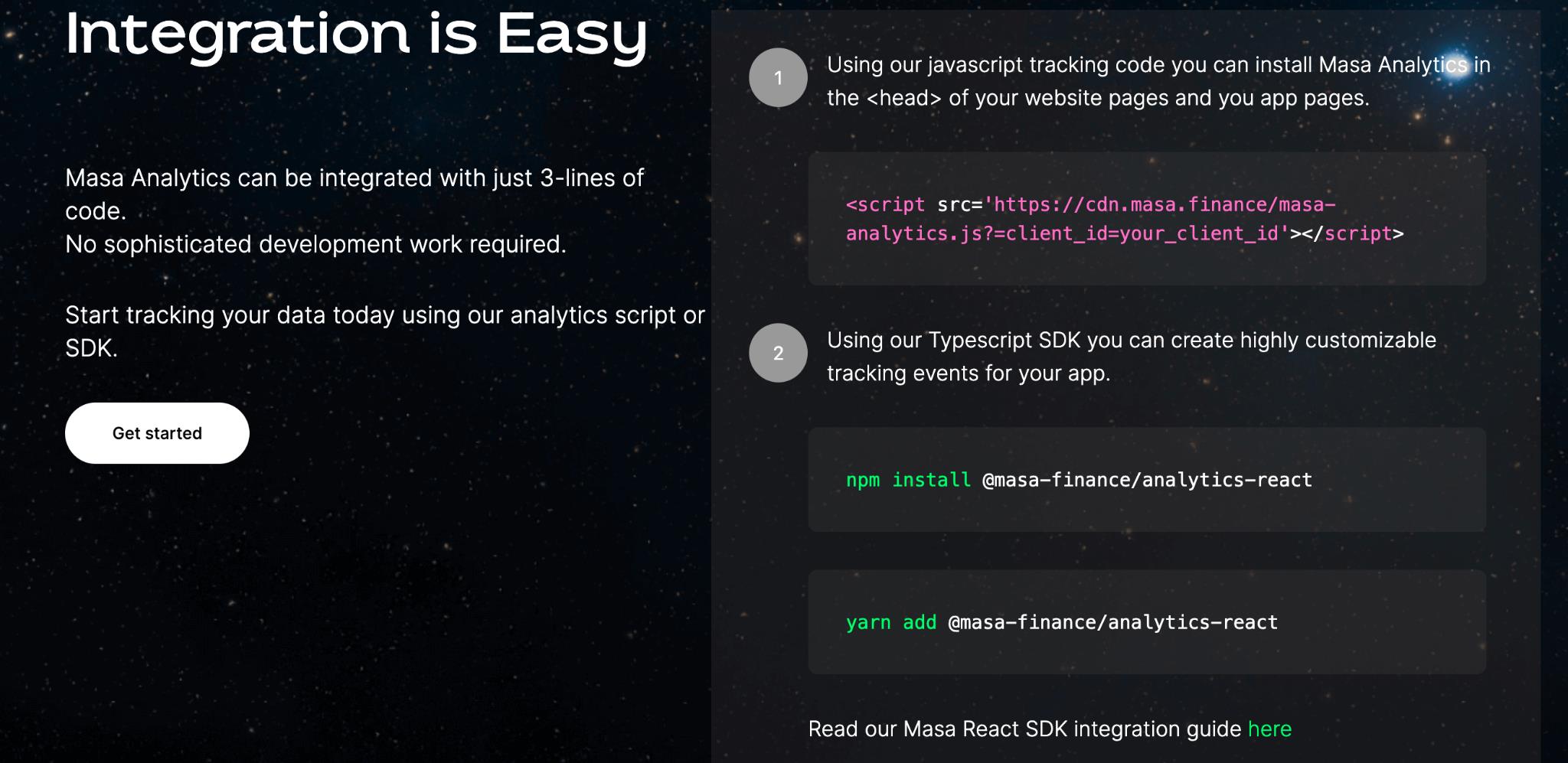
This greatly reduces workload for data consumers, allowing them to focus on core operations without additional analytical overhead.
This lightweight integration approach has won favor among projects.
For instance, the well-known L2 DEX Quickswap, after integrating Masa Analytics, discovered through anonymous user behavior analysis that only 30% of users participating in its marketing campaign connected wallets and explored QuickSwap on the new chain.
Additionally, Quickswap could analyze the proportion of users using different wallet types, enabling them to tailor marketing strategies accordingly.
Based on publicly available data, by segmenting users according to activity, asset value, and frequency, Quickswap’s new data-driven campaigns saw a 300% increase in swap transaction volume using new wallets compared to previous campaigns.
Here, we return to the opening argument—waking up dormant data may bring far greater value than speculation and hype.
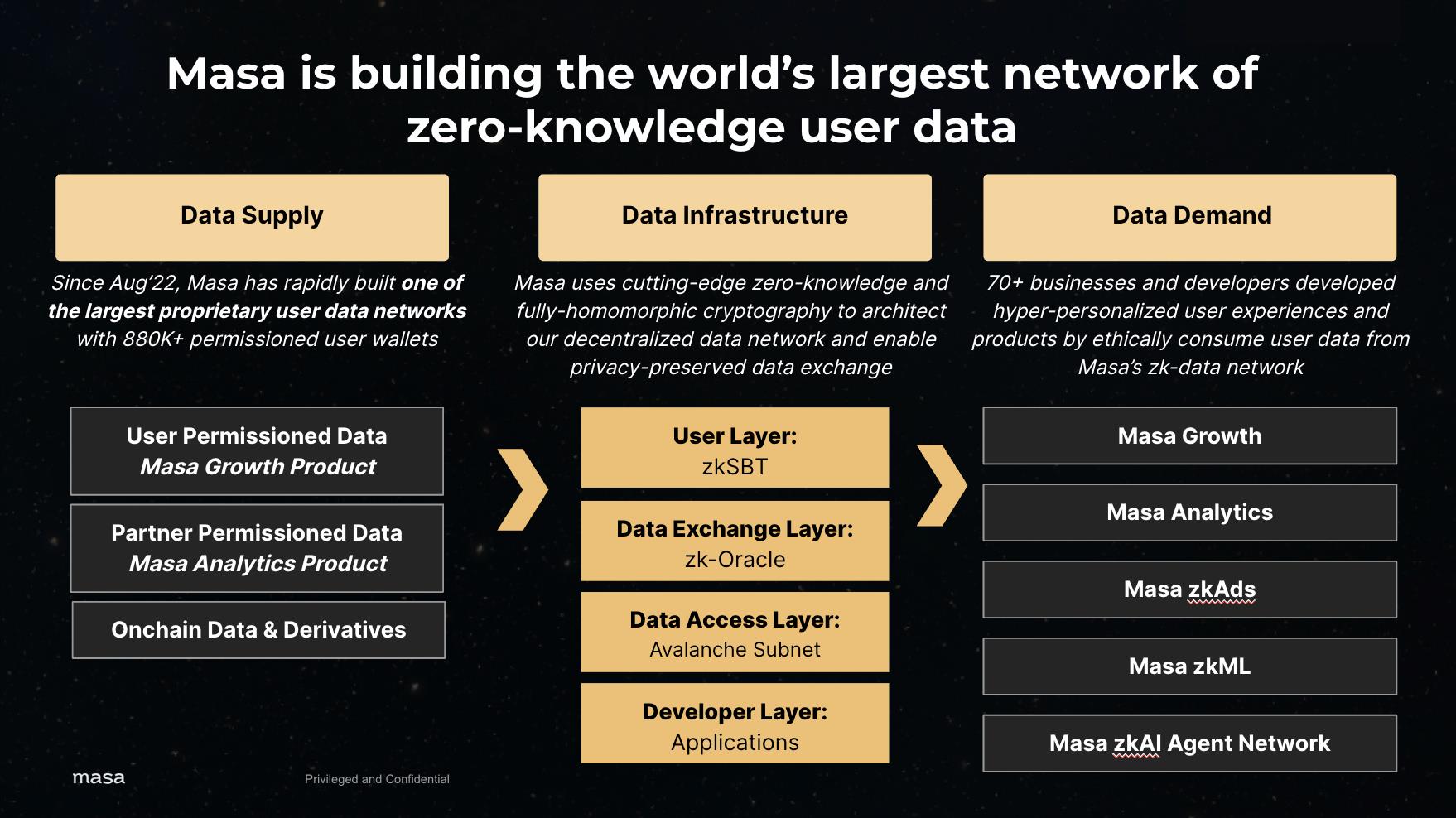
Finally, we can now piece together Masa Network’s full product logic and envision the complete data market post-mainnet launch:
-
Using Masa Growth and Masa Analytics, Masa quickly broke through, gathering data from 880,000 wallets and 7 million unique data points;
-
After the mainnet launches in Q1 2024, Masa will introduce a decentralized data market, allowing data providers (users) to sell behavioral data to data consumers (developers, enterprises, etc.) while protecting privacy;
-
Transactions in the data market will leverage blockchain for transparency and ZKP for privacy protection;
-
Users control their data via personal zkSBT data vaults and can selectively grant access to developers and projects;
-
Users earn economic rewards—stablecoins or native MASA tokens—for contributing data;
-
In the final data market, Growth and Analytics function at both ends of the data supply-demand chain. Blockchain records transactions and provides economic incentives. Users contribute data for rewards, enterprises spend tokens to access data. Masa itself, as infrastructure, offers more data-driven services such as advertising and datasets for AI model training.
Beyond Web3: Exploring the Possibility of a Decentralized Google
Through Masa Network, I observe a trend: the project isn’t merely building a standalone task platform or analytics tool, but aims to evolve into a major data company.
The task platform may not be Masa’s core focus. In today’s Web3 landscape, similar projects are already in a hyper-competitive red ocean, with increasingly homogeneous offerings. More importantly, rather than fighting over existing Web3 users doing repetitive tasks, it’s far more strategic to expand outward into the broader data market and become a true data company.
What defines a data company?
I believe a data company’s core business revolves around collecting, processing, integrating, and utilizing data. A task platform may just be an early manifestation of these functions.
Google dominates as the Web2 data giant. Could there emerge a decentralized Google in Web3, making waves in the data space?
Clearly, Masa Network is moving in that direction.
Data is undoubtedly critical in the AI-driven era, but user rights and ownership matter even more: the former determines whether your data can generate income, the latter ensures you retain control over whether to share it.
Web3 offers better incentives and organizational models, enabling efficient, direct, and consent-based data contribution. User acquisition is faster. If Masa Network expands outward to meet Web2 enterprises’ data needs—especially for AI training—the market potential is vastly greater.
But turning this vast potential into reality requires solid execution—one step at a time.
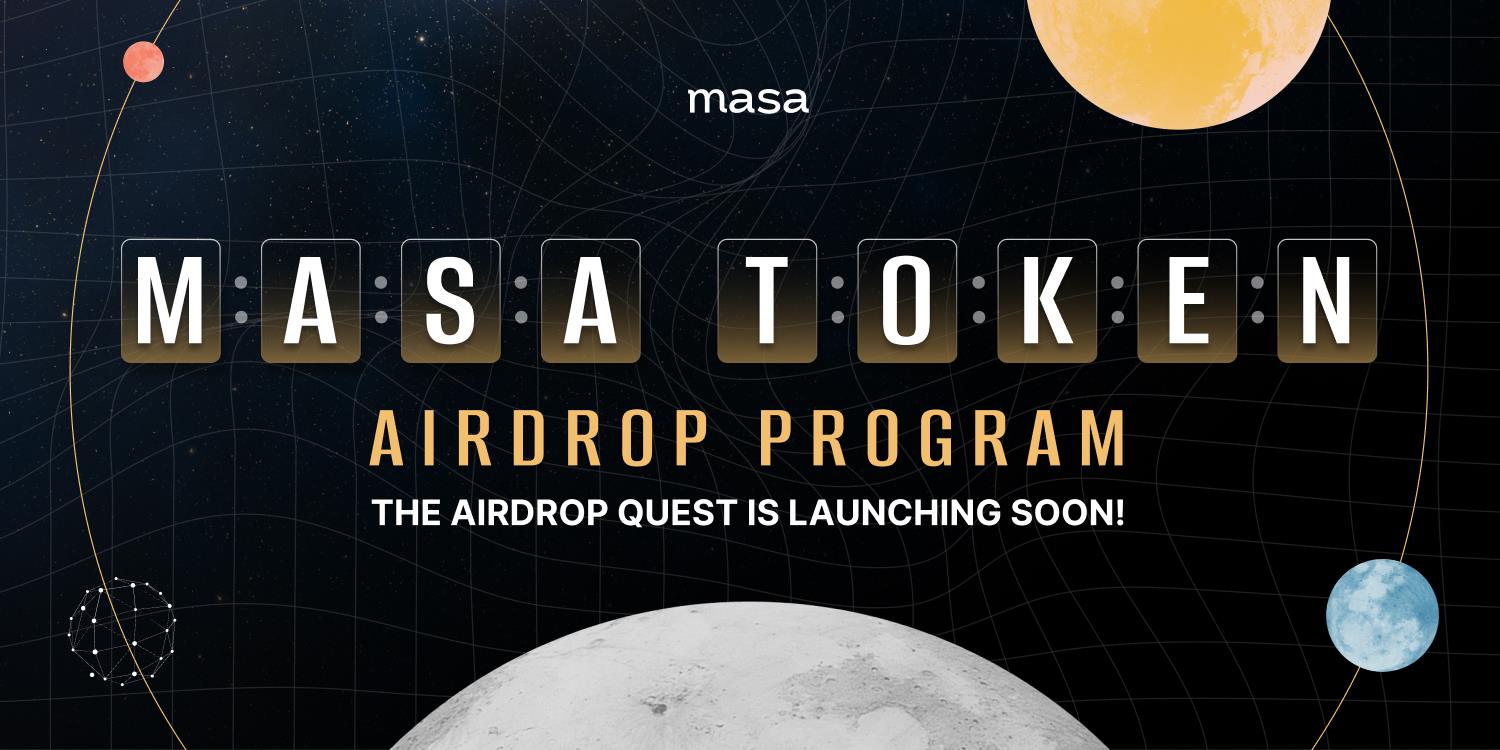
Masa’s mainnet is set to launch in Q1 next year. To further incentivize data contribution, the project may roll out more token airdrop campaigns in the next 1–2 months, encouraging users to engage with its own and partner products.
Finally, from an individual user perspective, if you can gain additional returns while upholding data privacy, actively following and participating is certainly a rational choice. From an industry standpoint, the more data accumulated through participation, the greater the potential to connect with external data demanders in the future.
On one hand, chasing personal gains; on the other, creating industry value—these seem contradictory. But as free-market economist Adam Smith noted centuries ago in *The Wealth of Nations*: “It is not from the benevolence of the butcher, the brewer, or the baker that we expect our dinner, but from their regard to their own interest.”
May the data needed in this new era, guided by Masa Network’s economic incentives, help build a better future.
Join TechFlow official community to stay tuned
Telegram:https://t.me/TechFlowDaily
X (Twitter):https://x.com/TechFlowPost
X (Twitter) EN:https://x.com/BlockFlow_News
 深潮TechFlow


