Podcast Notes | Interview with eGirl Capital Partner: Viewing Cryptocurrency Trading as a Game
TechFlow Selected TechFlow Selected
Podcast Notes | Interview with eGirl Capital Partner: Viewing Cryptocurrency Trading as a Game
CL believes that when all altcoins have high liquidity, it is often a signal of a market top.
 Navigating Web3 tides with focused insights
Compiled & Translated: TechFlow
In this episode, eGirl Capital partner CL shares his journey in crypto and some of his favorite memories from the last market cycle.
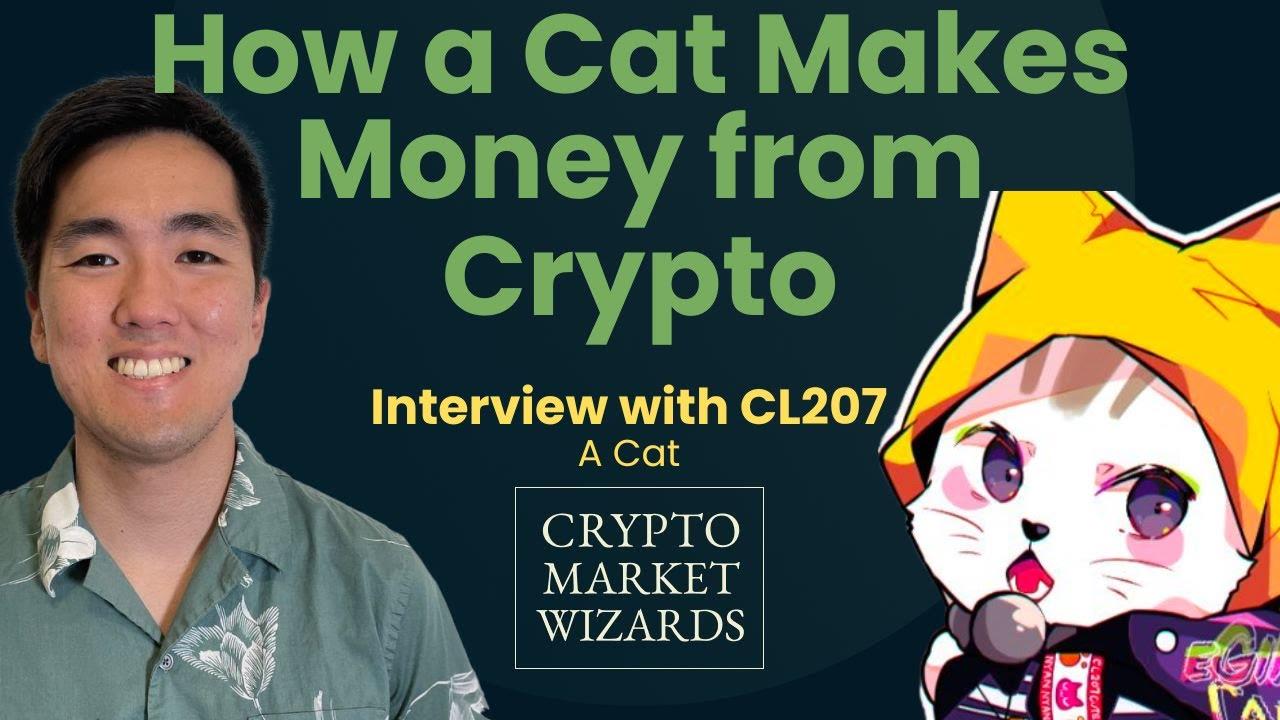
Host: Taiki Maeda, Crypto Market Wizards Podcast
Guest: CL, Partner at eGirl Capital
CL’s Crypto Journey: From Personal Trading to Fund Management
-
CL began exploring cryptocurrency trading in 2018. Initially, he tried a simple buy-and-hold strategy but quickly realized it wasn’t generating the wealth he expected. When Bitcoin rose from $3,000 to $12,000, CL noticed he still hadn’t made significant profits, prompting him to consider leveraged trading to amplify potential returns.
-
For CL, crypto trading feels more like a game. He is deeply curious about the reasons behind price movements, which drove him to study the market intensively. His frequent sharing of trading ideas on Twitter caught the attention of a hedge fund, leading to an invitation to become a proprietary trader—an important turning point in his career.
-
Working at the fund gave CL extensive hands-on experience. He gained deeper insights into market mechanics, particularly around price manipulation and liquidity, allowing him to understand how crypto markets truly operate. He learned how to navigate different trading platforms and adapt strategies based on evolving market conditions.
-
CL mentioned that his trading style is primarily short-term; he rarely holds any position for longer than a month, with most trades aiming for small gains or losses. In 2020, CL decided to trade independently—not due to a detailed plan or logical analysis, but rather driven by intuition and perceived market opportunities.
CL’s Trading Experiences and Strategies
Top Signals in $Doge
-
CL started trading $Doge in late 2020, before its massive price surge. He and his team captured a significant share of the market, with CL personally holding over 10% of the circulating supply.
-
He experimented with a long-term hold strategy and once purchased a quarterly futures contract. However, due to a lack of buyers in the market, CL had to seek help exiting the position. He reached out to SBF and successfully exited via an over-the-counter (OTC) deal.
-
CL noted that at the peak, $Doge's daily trading volume reached an astonishing $20–30 billion—surpassing the daily transaction volumes of some national fiat currencies. The high liquidity and intense trading activity around meme coins like $Doge reflect the speculative nature of the market, where reactions to negative news or shifts can be extreme.
-
He emphasized that when even low-cap altcoins exhibit extremely high liquidity, it often signals a market top, indicating peak enthusiasm and excessive speculation among market participants.
Risk Management
-
CL believes viewing the crypto market as a game helps traders separate emotions from money. Those who treat it like a game often perform better, though there’s a risk they may not take it seriously enough as a financial endeavor.
-
CL stresses the importance of risk management. Starting in late 2020, he gradually reduced exposure because even minor slippage could lead to massive losses. Knowing when to start scaling back risk is crucial. He sees the crypto market primarily as a trading arena—while some value exists, most projects are fundamentally worthless.
-
From 2018 to 2021, CL achieved a comfortable lifestyle through trading. Starting with just a few thousand dollars, he eventually reached financial freedom.
Price-Volume Intuition
-
CL considers intuition a critical factor in crypto trading. Given the market’s high volatility and incomplete data transparency, intuition plays a vital role in decision-making. He notes that every trader’s intuition is unique, shaped by personal experience, knowledge, and understanding of the market. Therefore, strategies should be tailored to individual intuition and experience.
-
Through prolonged observation and chart analysis, traders can develop an intuitive sense of market dynamics, helping them anticipate price levels and directional moves. Deep understanding of trends, volume, and price action is key to forming effective intuition.
-
CL describes himself as a highly aggressive trader who doesn’t focus much on entry points or fixed stop-losses. Instead, he relies on market momentum and liquidity rather than specific price targets or technical indicators.
-
For example, he described routine trades such as going long when Bitcoin hit $37,700 and exiting near $38,000 for a small profit—decisions based purely on momentum, reflecting his grasp of market flow despite minimal gains.
Building Connections with Other Traders
-
CL believes building relationships and exchanging insights with other traders is invaluable and essential for successful trading.
-
He advises new traders to follow on-chain activity and smaller centralized exchange traders who may be overlooked but offer valuable market insights. Large accounts are often overrated—even if they influence altcoin momentum, their information may be less useful than that from smaller, more agile traders.
-
He recommends using social media platforms like Twitter to identify and connect with traders offering meaningful market perspectives. Building these connections leads to deeper market understanding.
Treating Crypto Trading as a Game
-
CL views crypto trading as a game. He is more interested in understanding market dynamics and the causes behind price changes than simply making money. This mindset helps him analyze the market more objectively and make smarter trading decisions.
-
He observes that many fundamentally worthless projects in crypto can still reach multi-billion dollar valuations, highlighting excessive optimism and speculation among participants. This often happens after major market swings or downturns, when investors chase high-return opportunities in projects lacking real substance.
-
He notes that cryptocurrencies offer artists and creators a new payment method that’s more convenient and efficient than traditional systems. CL remains open-minded about crypto’s future. While many projects lack value, crypto as a global asset class opens up new financial opportunities for people worldwide.
Fundamentals in the Crypto Market
-
CL points out that the concept of "fundamentals" differs significantly between crypto and traditional markets. In traditional finance, fundamentals include financial health, profitability, and market position. In crypto, however, fundamentals are fuzzier and often tied to social media influence and public attention.
-
Social media plays an increasingly critical role in crypto. CL argues that online visibility and engagement have become a form of “fundamental” value. If a project or token gains widespread discussion on social platforms, its price tends to rise accordingly.
-
He explains that trader decisions are typically driven by two types of reasoning: factual and social. Factual reasoning relies on data and analysis, while social reasoning is influenced by popularity and trends.
-
When assessing a cryptocurrency’s value, CL says it often comes down to how many people know about the token and how much attention it receives. Even a technically excellent project is unlikely to succeed if no one talks about it.
DeFi
-
CL highlights DeFi’s emergence in 2020 as the newest and most hyped sector in crypto. Its appeal lay in offering a novel, smart contract-based way to earn yield—for instance, depositing funds to receive token rewards—a model seen as highly innovative at the time.
-
He recalls a trade in 2019 on Synthetix where he deposited ETH and earned a 4% return.
-
One standout feature was transparency: CL could directly see how his ETH was being lent out—a level of visibility rare in traditional finance, where users usually cannot track how their deposits are used. On Synthetix, someone wanting to borrow ETH needed to find another user willing to lend the same amount, creating a direct peer-to-peer mechanism unlike the indirect nature of traditional banking. Users felt secure knowing that borrowers faced steep penalties for default, providing mutual protection.
-
CL remains optimistic about DeFi’s future, believing any yield-generating project will remain attractive. Over time, DeFi could continue drawing new investors, especially those familiar with traditional financial concepts.
RWA
-
Though unfamiliar with certain areas, CL finds any yield-related project appealing, as people are naturally drawn to passive income. Whether in DeFi, gaming, or AI, projects offering returns attract investor interest.
-
While he may not master every corner of crypto, CL stays open to new opportunities. Engaging with emerging fields could unlock fresh trading edges and revenue streams.
-
He sees RWA (Real World Assets) as particularly appealing to older investors familiar with traditional finance. He cites Ripple (XRP), whose payment solutions—especially RippleNet—have partnered with numerous banks and financial institutions. These partnerships help attract conservative or crypto-skeptical traditional investors.
-
By demonstrating how crypto can integrate with existing financial systems, Ripple enhances its appeal to mainstream finance. Projects like Ripple drive crypto’s maturation by collaborating with traditional institutions, fostering broader awareness and trust, while setting a blueprint for other crypto ventures.
-
As the crypto market evolves, RWA could become a major gateway for traditional investors. By bridging tangible assets with blockchain, RWA offers a more familiar entry point for those wary of purely digital assets.
-
CL views RWA as a bridge helping traditional investors understand and embrace crypto. Since RWAs involve physical assets—more familiar and trustworthy to conventional investors—they create a more accessible environment that reduces uncertainty around fully digital investments.
-
The integration of RWA strengthens crypto’s appeal to traditional investor groups, expanding participation, boosting legitimacy, and increasing market confidence. As RWA adoption grows, it will further mature the ecosystem and open pathways for more traditional assets and investors to enter crypto.
The Role of KOLs in Crypto
-
There are many rumors about the origin of CL’s nickname “Cat.” In reality, his mother once visited a fortune teller who predicted CL would become a great writer and achieve success—but also face risks of being pursued. To protect him, the fortune teller advised humility and suggested a cute nickname. Thus, his mother began calling him “Cat.”
-
As a public figure, CL enjoys the freedom to express his thoughts. However, his visibility sometimes intimidates others with fewer followers, who might mistakenly assume he’s a billionaire—highlighting a downside of public recognition.
-
CL observes that as online activity grows—especially among younger generations—influencers play an increasingly powerful role in crypto. He warns this trend could pose problems, particularly when influencer power becomes too concentrated.
-
With advances in AI, we might even see AI-powered influencers dominate corners of social media and exert massive market influence. CL worries this could increase market manipulation and fraud, such as fake accounts or phishing scams misleading investors.
-
Due to crypto’s anonymity and volatility, establishing and maintaining a credible identity is challenging. This makes it harder to identify and trust genuine participants. While starting a new identity is easy, gaining real influence takes time and effort—especially in such a competitive and fast-moving space.
Reputation Systems
-
CL has considered building a reputation system within crypto to distinguish authentic, trustworthy participants from fraudsters or bots. Such a system would enhance market transparency and credibility by helping users identify genuine actors versus malicious ones.
-
He acknowledges that creating such a system would require broad societal participation and sustained effort. Effective implementation depends on widespread community support and collaboration. Despite the challenges, such a system could significantly improve transparency and security in crypto—key to building user trust and ensuring long-term market health.
Join TechFlow official community to stay tuned
Telegram:https://t.me/TechFlowDaily
X (Twitter):https://x.com/TechFlowPost
X (Twitter) EN:https://x.com/BlockFlow_News
 深潮TechFlow