Elon Musk: Adversity shaped me; my pain threshold has become extremely high
TechFlow Selected TechFlow Selected
Elon Musk: Adversity shaped me; my pain threshold has become extremely high
What formative experiences lie behind a willingness to take risks and a high tolerance for uncertainty?
 Navigating Web3 tides with focused insights
Editor: Liu Yudian
Preface
In early 2022, a year after SpaceX successfully launched 31 satellites, Tesla sold nearly one million electric vehicles, and Elon became the richest person on Earth, he spoke somewhat wistfully about his motivations behind repeatedly provoking dramatic confrontations. "I need to change my mindset," he told me. "I can't stay in crisis mode all the time. I've been like this for about 14 years—most of my life." This sounded more like self-pity than a resolution for a fresh start. Even as he made these reflections and promises, he was secretly buying Twitter stock...
Some see Musk as an innovator reshaping the world; others call him a "madman" or a "demon"—at the very least, an overbearing, paranoid, and difficult man to deal with. On *Saturday Night Live*, Musk himself said bluntly: "To everyone I've offended, I just want to say: I reinvented the electric car, and I'm sending rockets to Mars. Do you really think I could do all that if I were some easygoing, relaxed regular guy?"
So who exactly is Elon Musk? What formative experiences lie behind his appetite for risk and high tolerance for danger? The biography *Elon Musk*, released globally on September 12, may offer us some answers.
Below is the prologue of the book.
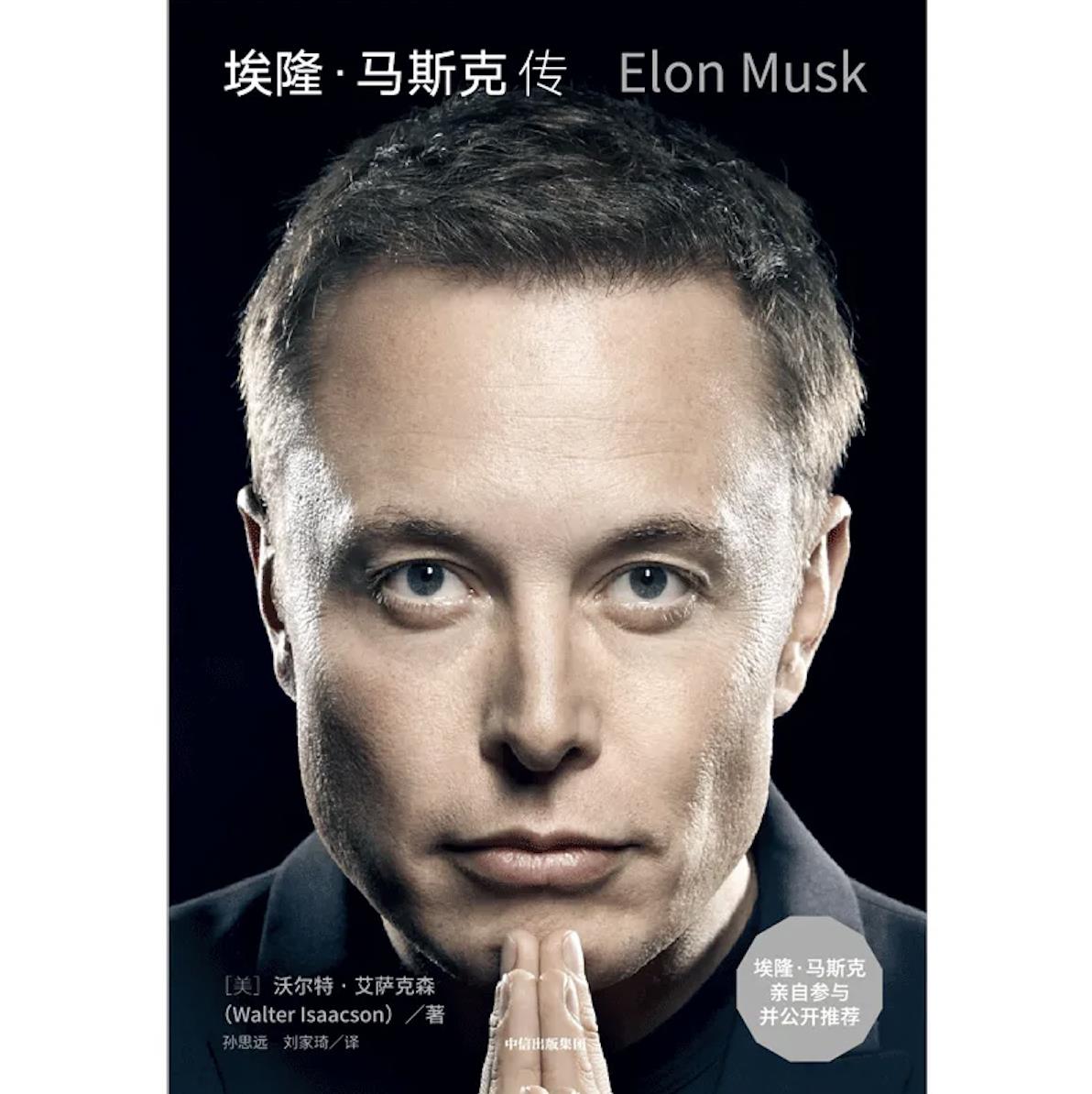
*Elon Musk*, published by CITIC Press Group
Prologue: The Muse of Fire
Elon Musk spent his childhood in South Africa, where he experienced deep pain and learned how to survive through suffering.
At age 12, he took a bus to a wilderness survival camp called "veldskool." In his memory, "it was like a real-life version of *Lord of the Flies*." Each child received only minimal food and water, and fighting over supplies wasn't just allowed—it was encouraged. His brother Kimbal said: "Bullying was seen as a virtue here." Older boys quickly began punching younger ones in the face and stealing their belongings. Small, awkward, and slow, Elon was beaten twice and ended up losing 10 pounds.
Near the end of the first week of camp, the boys were divided into two groups and instructed to attack each other. Musk recalled: "It was insane. Once you go through it, you never forget it." Every few years, a child died there. Counselors used such cases as cautionary tales, saying: "Don't be a dumb idiot like the kid who died last year, and don't be a weak coward."
When Elon returned to the wilderness school at nearly 16 years old, he had shot up to 6 feet 3 inches, grown stronger and bulkier—like a bear—and learned some judo. This time, the camp was no longer his nightmare. Elon said: "That's when I realized that if someone bullies me, I can punch them right in the nose, and they won't dare touch me again. They might beat me senseless, but if I land a solid hit on their nose, they'll think twice before coming back."
South Africa in the 1980s was rife with violence—machine gun fire and stabbings were commonplace. Once, after getting off a train with Kimbal to attend an anti-apartheid concert, they stepped in a pool of blood beside a body with a knife stuck in its head. That night, with every step, the blood caked on their sneakers made a sticky sound.
The Musks owned several German shepherds trained to attack anyone running past their house. When Elon was six, his favorite dog attacked him while he was running down the driveway, biting him hard on the back. In the emergency room, doctors prepared to stitch his wound, but he refused treatment unless the adults promised not to punish the dog. "You're not going to kill it, right?" Elon asked. They swore they wouldn't. Recounting the story, Elon paused, staring blankly into space for a long time. Then he said: "They killed it anyway."
Elon's most painful experiences happened at school. For a long time, he was the youngest and smallest student in his class, struggling to understand social cues. Empathy didn't come naturally to him—he had no desire or instinct to please others. As a result, bullies often targeted him, throwing punches at his face. He said: "If you've never had your nose broken, you can't know how deeply bullying affects your entire life."
One morning during a school assembly, a boy playing around with friends bumped into Elon. Elon shoved him back, sparking an argument. During break, the boy and his friends found Elon eating a sandwich. They approached from behind, kicked his head, and pushed him down a concrete staircase. Kimbal, who was sitting with Elon, recalled: "They jumped on top of him, beating him, kicking his head. Afterward, I couldn't even recognize his face. It was just a swollen lump—his eyes were almost gone." Elon was taken to the hospital and couldn't return to school for a week. Decades later, he still undergoes corrective surgery to repair tissue inside his nose.
But compared to the emotional trauma inflicted by his father, Errol Musk, these injuries were trivial. Errol Musk—an engineer, a rogue, a charismatic fantasist—remains a figure whose traits continue to haunt Elon. After the bullying incident, Errol sided with the attacker, saying: "That boy's father just committed suicide, and Elon called him stupid. Elon always calls people stupid. How can I blame the kid?"
When Elon returned home from the hospital, his father berated him harshly. Elon recalled: "I stood there for an hour while he screamed at me, calling me an idiot, telling me I was worthless." Kimbal, who witnessed the scene, said it was one of the worst memories of his life. "My father completely lost control—furious, raging. We'd seen so many scenes like this. He had no sympathy for us at all."
Elon and Kimbal stopped speaking to their father. They both insisted that their father's claim—that Elon provoked the whole incident—was pure nonsense. The aggressor was eventually sent to juvenile detention because of the attack. They said their father's lies were erratic, constantly inventing stories laced with fictional elements, sometimes deliberately fabricated, sometimes sheer delusions. Both described him as having a split personality—one moment kind and gentle, the next launching into relentless tirades lasting over an hour. At the end of each rant, their father would tell Elon how pathetic he was. Elon had to stand there, unable to leave. "It was psychological torture," Elon said, pausing for a long time, his voice slightly choked. "He always knew how to make things worse."
When I called Errol, he talked with me for nearly three hours. Over the next two years, we regularly spoke and exchanged messages. He was eager to tell me about all the good things he'd provided for his children, sending me photos—proof that, at least during periods when his business was thriving, he did so. He once owned a Rolls-Royce, built a cabin in the wild with his kids, and acquired natural emeralds from a mine owner in Zambia, selling them to jewelers until the business collapsed.
But Errol also admitted he wanted his children to grow strong—physically and mentally. "Being with me helped them adapt to the wilderness school," he added, noting that violence was simply part of what they learned in South Africa: "Two guys hold you down, another hits you in the face with a piece of wood, stuff like that. On your first day, you have to fight the school bully." Proudly, he acknowledged imposing an "extremely strict dictatorship" on his children, modeled after street gang leadership. He specifically added: "Elon later applied the same harsh, authoritarian style to his relationships with others."
"People say every man spends his life either trying to fulfill his father's expectations or making up for his father's mistakes," Barack Obama wrote in his memoir. "Maybe that explains where my vulnerabilities come from." In Elon Musk's case, despite countless attempts to escape his father's shadow physically and psychologically, the emotional imprint remains. His moods cycle between bright skies and utter darkness, between passionate intensity and numb detachment, between cold aloofness and genuine emotion—sometimes slipping into a dual-personality "demon mode" that frightens those around him. One thing he doesn't share with Errol: he takes care of his children. But in other ways, a dangerous tendency lurks beneath his behavior—one he must constantly resist. As Maye said: "He could become like his father." It's one of the most resonant lines in any myth. Intriguingly, how much must this hero, charging through his own "Star Wars"-style saga, battle the dark side of the Force to exorcise the Darth Vader-like demons left by his father?
Elon's first wife, Justine, said: "I think someone who had a childhood like his in South Africa has to close off emotionally to some degree." Justine is the mother of five of his ten children. "If your father constantly calls you an idiot or a fool, maybe the only way to respond is to shut down. Because even if you open up emotionally, you lack the tools to handle emotions." This may make him appear ruthless, but it also enables him to be a daring innovator. Justine said: "He learned to eliminate fear. And if you block out fear, you might also block out other emotions—like joy or empathy."
Bits and pieces of childhood nightmares made him despise contentment. "I just don't think he knows how to enjoy success, appreciate birdsong or flowers," said Claire Boucher (stage name "Grimes"), artist and mother of three of his other children. "I think the deepest constraint from his childhood is: life equals suffering." Elon agrees: "Adversity shaped me. My pain threshold is extremely high."
In 2008, SpaceX's rocket exploded on its first three launches, and Tesla was on the verge of bankruptcy—the darkest, hellish period of his life. Sometimes he'd wake up thrashing in agony. Talulah Riley, who later became his second wife, recalled that Elon would recount horrifying things his father had said. "I've heard him say the exact same things his father used to say. These experiences deeply shaped his character," Talulah said. When he recalls them, he zones out—you can't read his thoughts behind those steel-colored eyes. "I don't think he realizes how much this affected him, because he assumes it's just something that happened in childhood," Talulah said. "But he retains a childlike part of himself—a part that never fully matured. Deep down, he's still a child—standing in front of his father."
Step outside the crucible of his upbringing, and you'll find Elon developed a presence that sometimes makes him seem alien—his Mars mission feels like a longing to return home, his desire to build humanoid robots like a psychological yearning for intimate connection. If he tore off his shirt and you saw he had no belly button, you shouldn't be surprised—he never quite seems human. Yet his childhood was steeped in humanity: a strong yet vulnerable boy embarking resolutely on an epic journey.
A fervor masks his awkwardness, and that awkwardness tightly wraps around his fervor. Such a soul crammed into such a body makes him slightly uncomfortable—a large, athlete-like frame moving like a mission-driven bear, dancing like a robot parody.
With prophetic conviction, he preaches the necessity of shaping human consciousness, exploring the cosmos, saving Earth. At first, I thought this was mostly persona-building—like a big kid who reads *The Hitchhiker's Guide to the Galaxy* using grand dreams in speeches and podcasts to inspire teams. But the more I interacted with him, the more I believed that mission is one of the forces driving him forward. While other entrepreneurs are still forming worldviews, he's already developed a cosmic view.
His genetics, upbringing, and mind sometimes make him both cold and impulsive—granting him an extraordinary tolerance for extreme risk. He can calmly calculate risks and passionately embrace them. "Elon takes risks for the sake of risk," said Peter Thiel, who partnered with Elon in PayPal's early days. "He seems to genuinely enjoy it—sometimes, perhaps, even addicted."
When hurricanes approach, he's among the most excited. Andrew Jackson once said: "I was born for stormy weather—calm doesn't suit me." So it is with Elon. Turbulent environments and intense conflicts hold immense appeal for him—sometimes he even craves them, whether at work or in romantic relationships he strives to maintain but fails to sustain. Faced with major crises, deadlines, and turning points, he charges forward through thorns and waves. Confronted with daunting challenges, tension often keeps him awake at night, even making him vomit. But these are the nutrients he thrives on. "Drama is his best companion," Kimbal said. "He can't live without it—he'd die for it, live for it."
In early 2022, a year after SpaceX successfully launched 31 satellites, Tesla sold nearly one million electric vehicles, and Elon became the richest person on Earth, he reflected somewhat sorrowfully on the motivations behind his repeated provocations of dramatic conflict. "I need to change my mindset," he told me. "I can't stay in crisis mode all the time. I've been like this for about 14 years—most of my life."
This sounded more like self-pity than a New Year's resolution. Even as he made these reflections and promises, he was secretly buying Twitter stock. As everyone knows, Twitter is the world's largest, ultimate playground. That April, accompanied by his romantic partner, actress Natasha Bassett, he took a rare vacation at the Hawaiian home of Larry Ellison, his mentor and Oracle founder. Twitter had offered him a board seat, but after that weekend, he felt it wasn't enough—his nature demanded full control. So he decided, regardless of opposition, to make an offer for 100% ownership of Twitter. Then he flew to Vancouver to meet Grimes. There, he played a new action role-playing game, *Elden Ring*, until 5 a.m. Right after finishing the game, he "pulled the trigger," launching his plan to acquire Twitter. "I made the offer," he announced.
Over the years, whenever he felt cornered or threatened, he'd recall the terror of being bullied on the playground. Now he had the chance to own the entire playground.
Book Summary
Elon Musk is today's most captivating and controversial innovative entrepreneur—a rule-breaker who has ushered the world into the eras of electric vehicles, private space exploration, and artificial intelligence, and who now owns Twitter.
For two years, renowned biographer Walter Isaacson followed Musk closely, attending his meetings large and small, touring factories with him, and conducting in-depth interviews with Musk himself, as well as his family, friends, colleagues, ex-wives, and rivals. From an extraordinarily intimate vantage point, Isaacson lifts the veil on this complex figure—revealing triumphant highs, chaotic lows, and astonishing stories. These narratives answer one central question: Is the demon driving Musk also essential for innovation and progress?
The author of *Elon Musk* is acclaimed biographer Walter Isaacson, also known for *Steve Jobs*. Isaacson followed Musk closely for two years, granted unprecedented access by Musk himself. Released globally on September 12, 2023, the exclusive simplified Chinese edition is published by CITIC Press Group.
Join TechFlow official community to stay tuned
Telegram:https://t.me/TechFlowDaily
X (Twitter):https://x.com/TechFlowPost
X (Twitter) EN:https://x.com/BlockFlow_News