Peeking into Animoca Ventures' investment principles and strategies, uncovering future opportunities amid AI and regulatory trends
TechFlow Selected TechFlow Selected
Peeking into Animoca Ventures' investment principles and strategies, uncovering future opportunities amid AI and regulatory trends
What are Animoca Ventures' investment principles, strategies, and views on the current market environment?
 Navigating Web3 tides with focused insights
Author | Baicai Blockchain
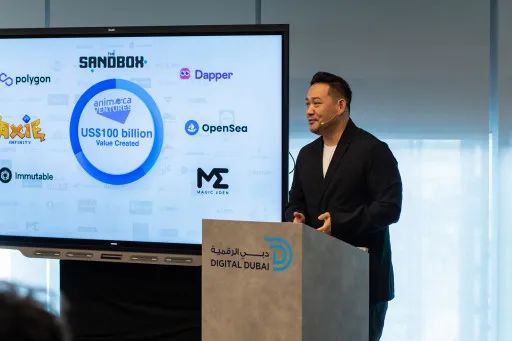
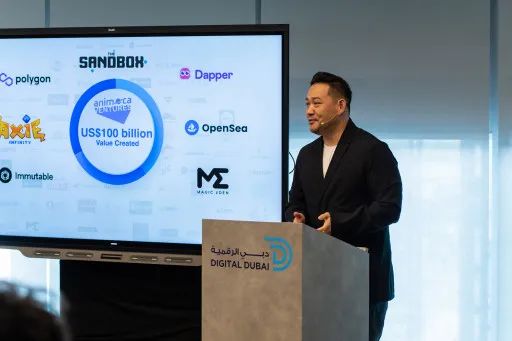
When it comes to Animoca Brands, many in the industry are already familiar. It was the first investor in Axie Infinity’s founder—the leading GameFi project—and its early acquisition of The Sandbox also made it a flagship metaverse project. In fact, Animoca Ventures, the venture capital fund under Animoca Brands, now has an investment portfolio extending far beyond GameFi, including star projects such as OpenSea, Polygon, The Sandbox, LayerZero, Aptos, and ConsenSys.
So, what are the key factors Animoca Ventures prioritizes when selecting investment opportunities? What is their view on the current market environment and the future of GameFi? And how do they see the convergence between crypto technology and the rapidly advancing AI?
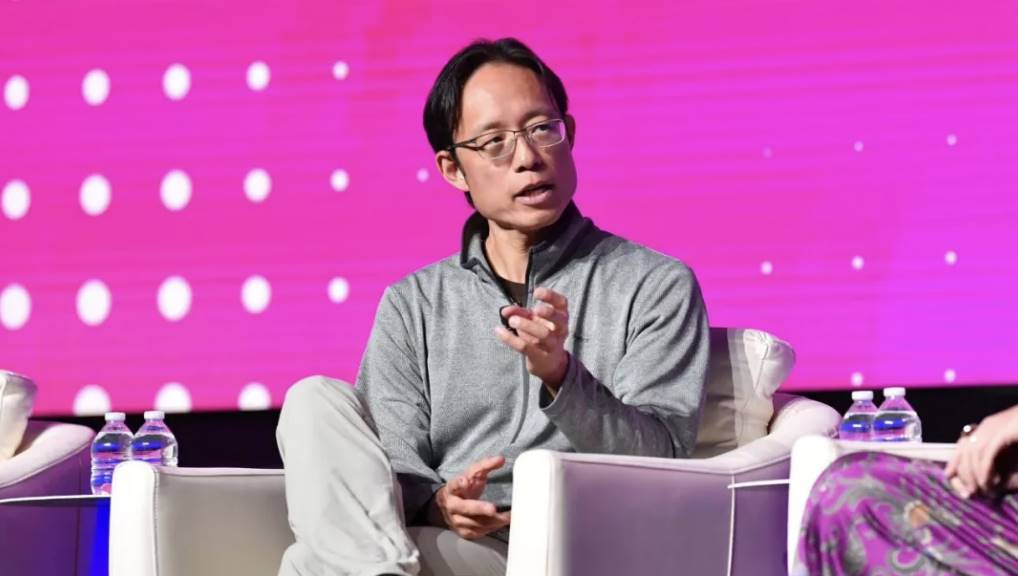
In this episode, Joyce, founder of Baicai Blockchain, invites James Ho, Head of Animoca Ventures, to discuss Animoca Ventures’ investment principles, strategies, and perspectives on the current market landscape.
1. As the head of Animoca Ventures, could you briefly introduce your background and experience in the crypto space? What inspired you to become a crypto venture capitalist?
James Ho: I joined Animoca Brands in 2018. Animoca Ventures is the venture fund under Animoca Brands. Initially, Animoca Brands made only one key investment in the crypto space—Dapper Labs. Dapper Labs was one of the earliest crypto companies. When it launched CryptoKitties in Greater China, it marked a pivotal moment in crypto history by causing the Ethereum network to crash, which laid the foundation for future developments.
What amazed us wasn't just the popularity of CryptoKitties, but rather that we saw: the true combination of digital ownership and gaming (as demonstrated by Dapper Labs) would be the future of the next-generation internet and next-generation games.
Looking back, 2018 was indeed the right timing. This reinforced our belief in a simple investment philosophy: invest in industries we believe are inevitable, and learn from successful Web1 and Web2 companies across markets, gaming, wallets, and security.
In 2018, there weren’t many investable companies. We focused our attention on true founders—visionary builders—not just those chasing financial returns. Thus, we wrote the first checks to pioneer this blue ocean, turning it into one of the key markets driving blockchain adoption. For example, we were the first investor in Jihoz (founder of Axie Infinity). One of our best investments was the acquisition of The Sandbox. But we always remember: this industry is still in its early stages, so betting on founders who can continuously build is one of our core goals.
2. Now we can see that the entire crypto market is quite cold, including GameFi. What do you think about the future development of crypto gaming?
James Ho: We’re confident navigating bear markets. During the last bear market (2018), Animoca accumulated rich experience and achieved success. Even though the crypto market is currently cold, we firmly believe the future of crypto gaming will continue to grow and expand.
In the Web3 gaming space, tokenization of games, token economics, and gameplay experience are three fundamental elements for breakthroughs. We are already seeing increasing maturity among game companies in the market.
I believe Web3 gaming is beginning to become IP-driven. Since 2000, new industry giants have been entering the space. Recently, I communicated with Sega and Sony in Tokyo, and some of our partners are talking with Nintendo in the gaming sector.
These giants are actively exploring and researching Web3. They are global leaders in the gaming industry, unmatched in game design and architecture. Once they fully grasp the technological innovation, they will take real action. We are very excited about what’s coming and believe the entry of these giants could make history in the Web3 gaming space—we are confident in being part of it.
Currently, the Web3 gaming industry is clearly constrained by distribution channels, primarily Apple and Google. As I mentioned earlier, we are still in the early phase of industry development, and we respect the market. Therefore, our strategy is to build so-called "Web2.5" games to leverage existing distribution channels. These games technically integrate Web3 infrastructure, and we believe investing in such companies will attract millions of users into Web3 gaming and true digital ownership, gradually opening up understanding. We believe the Web3 gaming industry will soon accelerate.
4. It's well known that Animoca Ventures is a venture capital firm focused on the crypto space. Currently, gaming-related investments account for 35% of total investments. What considerations drive this allocation?
James Ho: As I mentioned at the beginning, Animoca Ventures is the fund management arm of Animoca Brands. Fund I has a size of $100 million, comprising both internal and external capital. Animoca Brands and Animoca Ventures have slightly different investment focuses. Simply put, Animoca Ventures tends to focus more on early-stage startups.
We believe gaming is the largest gateway into Web3. That’s why we started in 2018 by investing in a free-to-play mobile game developer, then expanded into Web3. These investments proved highly effective, validating our investment thesis. Leveraging Animoca Brands' extensive experience in gaming investment and operations, Animoca Ventures’ professional team holds a strategic advantage in Web3 gaming operations.
A recent strong example is our investment in Open Campus and its underlying team, Tiny Tap. Launched in 2016, Tiny Tap focuses on Web3 education. Today, approximately 250,000 educators create no-code educational courses and assignments on Open Campus and earn revenue from them.
We are using blockchain technology to explore all kinds of new possibilities—not just crypto, but understanding the advantages blockchain and crypto bring to different ecosystems. We believe true digital ownership is the future of the gaming industry.
5. AI is very hot right now. What’s your take on it?
James Ho: Artificial intelligence is a field we deeply research. In 2018, we acquired Zeroth, an AI incubator, which has since nurtured around 60 companies. We believe the combination of blockchain and artificial intelligence is perfect. While blockchain and crypto assets grow slowly, data remains a key driver for AI advancement.
Blockchain provides clear, immutable data, greatly benefiting AI development. It’s a powerful tool applicable to many trusted data use cases, including gaming. Although we're still in the early stages, we’re actively researching stability, diffusion models, open AI, and will continue focusing on these areas. We hope future Animoca Ventures funds will also prioritize AI investments.
Some argue that crypto leans toward decentralization while AI is more centralized, potentially creating conflict. How do you view this?
James Ho: One challenge AI currently faces is limitations in knowledge and data bases. Even with ChatGPT-4, data extraction capabilities remain somewhat limited. To address this, we’ve engaged companies like KIPLEY.ai and Immersion_ to build foundational knowledge bases tracking progress across our ~101 portfolio companies. Using AI to clearly visualize relevant data, predict trends, and identify patterns allows us to detect subtle shifts invisible to the human eye.
When discussing AI with crypto or blockchain, our ultimate goal is decentralization. AI is merely a tool in this process. The future may involve hybrid models combining both centralized and decentralized capabilities. Such hybrid models would allow AI to extract information from clean, verifiable data sources. Fully on-chain games don’t yet exist, but whether full on-chain deployment is necessary remains debatable. Hybrid models could act as catalysts attracting millions of users, eventually becoming part of AI systems pulling data from decentralized sources.
6. The crypto space evolves rapidly. How do you balance short-term gains with long-term prospects when making investment decisions? Do you have any investment principles?
James Ho: This is a great question. In this fair market, we prioritize a founder’s integrity and capability above all. We rigorously screen founders’ entrepreneurial histories, how they’ve built past projects, and their confidence in their vision. Typically, our ideal investment range is $2–2.5 million. We also prefer co-investing with others, as different investors bring unique strengths to support startups.
We look for investees who possess genuine appeal—those solving real problems, demonstrating execution ability and experience, or coming from proven, highly recognized domains. For instance, we recently invested in a company whose founder is a veteran producer with 21 years at Tencent, having successfully led development of the mobile version of *Call of Duty*, which achieved around 40 million daily active users. Now, he’s building a Web3-integrated game. If he can convert just 10% of those users, that’s 4 million users—a massive growth driver.
Hong Kong and Shenzhen are just 45 minutes apart. Our geographical advantage allows easy access to Shenzhen to explore gaming opportunities and provide strategic and tokenomic guidance to startups. We also seek talent with strong track records in Web2 success stories, helping them grow through close collaboration.
So, do you lean toward talent with backgrounds in major traditional internet companies?
James Ho: When we first invested in The Sandbox, despite it not being a large company, we evaluated it within a broader context. However, in this current investment cycle, we’re particularly interested in the emergence of Alibaba, Tencent, Google, Facebook, and other tech giants in Web3, as they recognize weakening competitive dynamics in Web2. Thus, we’re drawn to teams with proven technical achievements and operational experience managing platforms with hundreds of millions of active users—experience critical to realizing the Web3 vision.
Imagine if even 1% of these giants’ users adopt Web3—it would represent a massive user base. Therefore, we seek projects with sound integrity, conviction, vision, and the ability to build strong teams.
Beyond writing checks, I want to emphasize that Animoca Ventures is an ecosystem. With around 485 companies in our portfolio, real network effects are emerging. When introducing ourselves, I tell people not to see us just as investors—if we can deliver 100,000 users, that’s far more valuable than our check. If we offer five different innovative technologies to help their business grow, that’s stronger than capital alone.
These are the things we focus on, and they matter greatly to companies. We bring deep market experience, security expertise, and wallet resources. Our investment is just one aspect; our priority is helping them succeed.
7. We know the crypto market constantly evolves. How do you stay highly sensitive to emerging technologies and trends?
James Ho: In Animoca Ventures’ early days, we held an agnostic stance. Some companies initially resisted this view, but we firmly believe the future should be open. We openly invest and adapt well to core gaming, while also partnering with projects like Polygon. We maintain uncertainty about early bets.
This agnosticism extends to our operating philosophy, shaping our investment strategy. We don’t know who will ultimately win, but we believe diverse approaches are viable. We place high value on our investment in LayerZero, a cross-chain messaging platform. Hence, we believe the future may be multi-chain—collaborating with Polygon, Solana, etc., rather than limiting to single chains. Multi-chain enables us to enter various key markets, including OP and ZK.
We will maintain our agnostic stance and support companies with strong convictions, helping them build development teams for sustained growth. We believe games are becoming increasingly important for users of all ages, as gaming will likely be the first industry to drive rapid adoption of new technologies.
So how do you stay highly responsive to fast-moving technological changes?
James Ho: Yes, on this point too, we must remain agnostic. Even during peak cycles, different projects receive varying funding—for example, Polygon—which gives them different resources and room to develop. However, we must stay highly sensitive to user liquidity. Some companies raise large sums but lack real users. When evaluating investments, we favor those compatible with the Ethereum Virtual Machine (EVM), as this enables better user interaction. Of course, we also collaborate with non-EVM-compatible projects like Solana.
In short, the main industry challenge stems from insufficient user numbers. Regarding how teams build products, we must remain opportunistic and realistic.
In Web3, user acquisition and marketing aren’t as straightforward as in traditional free-to-play games. In this emerging space, there’s no clear equivalent yet to SEO or SEM paid ads for measuring customer acquisition cost. However, we’ve seen progress from Google and Apple, who are opening up their markets. On tokenization and user acquisition, we’re actively seeking clearer paths.
So do you spend most of your time attending conferences or meeting project teams?
James Ho: Yes, I spend significant time on site visits. Last week I was in Paris, two weeks ago in Tokyo and Kyoto. My main mission is to understand how participants enter the space, guide and learn from them, and study investment landscapes, as we’re confident in fund innovation.
We have 100 projects in our portfolio, about 60 of which are in a bear market cycle. Many are striving to find product-market fit. We fully support them, observing how they navigate, adjust, survive tough times, and grow. On-site visits give us deeper insight into these projects’ core realities. Even though we receive many deal flows, it’s hard to assess reinvestment or founder screening solely through standard metrics. We can’t evaluate their next steps from a single angle. Therefore, closely watching their fundraising and growth strategies is crucial.
8. How do you balance short-term returns and long-term prospects when making investment decisions?
James Ho: I see Animoca Ventures as a hybrid fund, investing in both tokens and equity.
Within our portfolio, 35% is in gaming, while the remaining 65% includes equity and promising, liquid tokens. We primarily hold equity long-term, while considering high-potential tokens for shorter-term exposure. We also have a digital asset team that can sell portions of tokens without harming projects, mitigating investment risk. This strategy benefits us financially and strategically.
Yes, indeed, most projects don’t want investors selling their tokens.
James Ho: We are builders and long-term holders. We don’t dump tokens—we work continuously with dozens of projects. For example, even during bull markets when token valuations exceeded $1 billion, we remained calm and didn’t rush to sell. Conversely, during bear markets when tokens dropped over 90%, we used stablecoins to acquire three game studios.
We consistently focus on building utility and conviction, creating better games and content for token and equity holders. We keep building across the project network—even if book values drop 90%, we continue developing behind the scenes.
You can see our portfolio spans tower defense, casual games, fan communities, and more. Galxe represents our first 3A attempt, with more racing games on the way. We believe diverse game types will attract varied audiences. Currently, we’re searching for the first killer game and aim to be an active enabler and storyteller.
9. Animoca Ventures has previously invested in many crypto projects. Could you share a particularly challenging case that ultimately became highly successful?
James Ho: Early on, Animoca Ventures made a substantial investment in Yuga Labs—$5 million and acquiring 55 monkeys—a critical decision. Though highly rated today, whether this investment has truly succeeded may require more time to judge. But we believe Yuga Labs’ game development will drive its growth.
How did you discover them? Why did you decide to invest so early?
James Ho: We believe a founder’s conviction and technological foresight are vital to a project’s success. On interoperability and blockchain encryption, we shared the same long-term vision with the founders—this common ground was key to our partnership and a critical factor.
Additionally, founder motivation is crucial. Can they persevere and achieve their goals? This determines project success. Yuga Labs already had a strong investor base, raising about $200 million, reflecting broad trust and recognition.
We’ve noticed a common trait among great founders: extremely careful capital management. They avoid bloated teams, opting instead for efficient, lean operations. For example, the CEO and co-founder of LayerZero in Paris leads a team of just 55, yet achieves high productivity. This prudent management and operational efficiency enable sustainable future growth.
Therefore, we believe in these founders and look forward to growing with them. Their vision, technical foresight, and smart resource use give us confidence in the project’s future, and we’re committed to being collaborative partners.
10. We know the crypto industry occasionally faces regulatory challenges. How do you view industry regulation?
James Ho: Our journey is still long. When raising funds, we must engage banks. Currently, our capital sits in banks, and we have clear guidelines for custody services, though only minimal fiat custody is deployed so far.
We follow regulatory best practices, ensuring group-level compliance on AML and KYC for investments. Notably, Animoca’s founder has been nominated to join Hong Kong’s Digital Assets Discussion Working Group, giving us the opportunity to collaborate with the government to shape Hong Kong’s Web3 infrastructure and become a leader in the Web3 space.
We are confident in blockchain’s future. Regulatory frameworks are forming, and we actively participate in discussions, striving to be a leader. As China pushes Hong Kong to lead in token listings, we have the chance to play a significant role in this dynamic field.
11. Finally, for startups or projects hoping to secure investment support from Animoca Ventures, what advice or expectations do you have?
James Ho: I must emphasize one key point: please deeply research our ecosystem and understand the problem you aim to solve. We have 485 companies in our network. We provide capital but value ecosystem collaboration—whether through partnerships or joint innovation—far more.
For example, if you’re in infrastructure, clearly define your problem. Could any of our existing portfolio companies be potential partners? If your vision is still evolving—say, you’re building a game—how do you plan to leverage our user base and growth channels? I believe entrepreneurs should see us not just as a VC fund, but as a foundational network ecosystem capable of better supporting startups and teams.
12. How do you see crypto technology impacting and transforming the world?
James Ho: Blockchain can transform the world by enabling decentralized business models and creating a fairer internet. I believe this will foster a more equitable environment for creators. True digital ownership and decentralization will revolutionize revenue-sharing mechanisms.
We firmly believe there are better ways to distribute wealth. Through decentralized models, every user can share in revenues, rather than a few monopolizing profits. We are convinced this will create more sustainable, fair, and improved systems for the future.
13. Finally, have you encountered any particularly challenging situations in your career?
James Ho: From early bull market investments, we learned that creating tokens is easy, but investor protection is often inadequate. Some founders failed to deliver, and we couldn’t force them to build—that was a major challenge.
To address this, we established simpler agreements for future tokens and adjusted foundational terms. We realized we needed to change how we protect and disburse investments, so we advised partners to add more safeguards within our funding. While some founders turned out to be bad actors—taking funds without delivering, with no recourse—fortunately, such cases are rare.
I think during bull markets, some people spent too freely because money came too easily. Now, with the bear market, we must control team spending and construction methods, and invest responsibly to protect investor capital—this is critical for long-term success.
Join TechFlow official community to stay tuned
Telegram:https://t.me/TechFlowDaily
X (Twitter):https://x.com/TechFlowPost
X (Twitter) EN:https://x.com/BlockFlow_News
 白话区块链
白话区块链