RSS3 Founder on AI & Web3 Entrepreneurship Insights: Trends Cannot Be Predicted, Stick to Doing the Right Thing
TechFlow Selected TechFlow Selected
RSS3 Founder on AI & Web3 Entrepreneurship Insights: Trends Cannot Be Predicted, Stick to Doing the Right Thing
Short-term liquidity or market volatility issues will not significantly impact the overall development of the industry.
 Navigating Web3 tides with focused insights
In just two to three months, the information protocol RSS3 successfully developed a new plugin called "Web3 User Activity," which has recently launched officially on the ChatGPT Store. This plugin significantly fills the gap of on-chain data in the AI field, allowing ChatGPT users to freely access vast amounts of on-chain data from the open web and gain a more comprehensive and user-friendly understanding of, and participation in, the Web3 ecosystem.
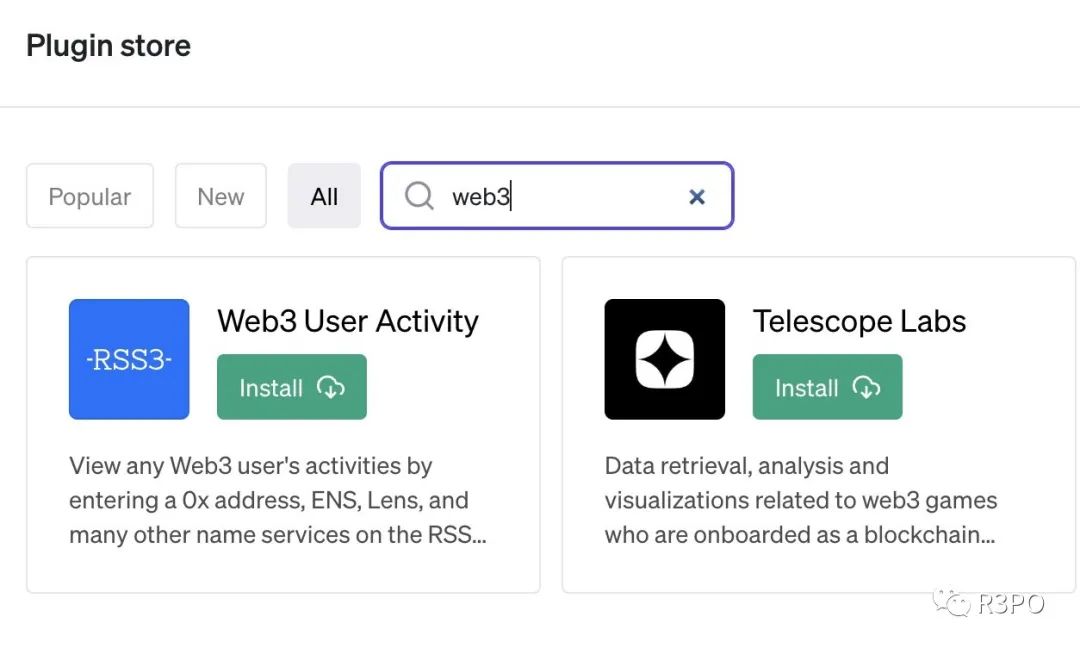
The launch of this plugin is highly significant. Combined with ChatGPT, it opens the door to the open internet, enabling users to experience more conveniently the fairness and decentralization of the open internet, while gaining broader access to information and communication spaces. Against this backdrop, R3PO interviewed Joshua, founder of RSS3—a serial entrepreneur with extensive experience in traditional social media.
Joshua stated that after navigation, search engines, and algorithmic recommendations, large language models are poised to become the next-generation method for information distribution on the open internet. Moreover, by using AI to interpret and convey information, large language models can interact with people in a more human-centric way.
Three years ago, when Joshua realized that a single application could not solve the content monopoly problem in traditional internet, he decisively pivoted toward the open internet and founded RSS3, aiming to achieve freedom in the open internet—efficient and secure information flow. This vision has received support from established investment firms such as Coinbase and GGV.
During our conversation, we discussed how AI will impact the internet and Web3, as well as where opportunities lie for entrepreneurs amid the current bear market. We hope these insights offer valuable guidance for professionals in the Web3 and AI fields, helping them identify new breakthroughs in this rapidly evolving landscape.
01Under the ChatGPT Ecosystem: Where Do Web3 Startups Fit?
Since OpenAI launched ChatGPT plugins, many have compared it to Apple’s App Store. Jim Fan, an AI scientist at NVIDIA, tweeted: “If ChatGPT’s release was the ‘iPhone moment,’ then the plugin launch is the ‘iOS App Store’ event.”
He believes the App Store is just the beginning. OpenAI's ultimate vision is an “app for everything”—one that can read documents, connect in real time to various applications, and exert tangible influence on the world.
Packy McCormick, founder of Not Boring Capital and advisor to a16z’s Web3 fund, explored in his article “Attention is All You Need” how OpenAI challenges Google and Meta to become the primary gateway to the future internet. He argues that ChatGPT’s potential far exceeds that of the App Store—not only capturing consumer attention but also sparking developers’ imaginations.
Currently, about half of YC founders are building products using OpenAI’s API. “With browsing plugins, it does everything search does—and more, with customization; with third-party plugins, it becomes a platform where all providers add further functionality.”
A global wave of AI-driven innovation and entrepreneurship is underway. Tech giants like Amazon, Google, Alibaba, and Baidu have entered the arena, and AI startups are thriving.
According to research firm PitchBook, in 2018 when OpenAI first released its initial GPT model, total annual funding in the generative AI sector was only $408 million. After ChatGPT’s release last year, that figure surged to $4.5 billion in 2022.
This year alone, in just the first quarter, generative AI startups have announced around $11.6 billion in deal funding across 46 transactions.

For the AI industry, these deals represent only the first step in a long journey. This capital surge has also reached the Web3 space. Since the beginning of this year, there have been numerous funding rounds involving AI and Web3 projects. However, the market generally remains skeptical about the integration of AI and Web3.
RSS3’s recent plugin launch on ChatGPT further demonstrates the feasibility of combining AI and Web3. Joshua shared his perspective on this trend and explored potential ways AI and Web3 could converge. He said: “Where liquidity flows, people follow—that’s a real phenomenon. Smaller projects, in particular, are more easily drawn by shifts in liquidity.”
Regarding the convergence of AI and Web3, he outlined three possibilities:
-
First, leveraging Web3 to solve AI computing power needs by aggregating distributed computing resources for AI training;
-
Second, using incentive mechanisms to improve training data quality by involving domain experts in data generation, aligning datasets with expert preferences;
-
Third, treating Web3 as an information source and feeding it back into AI models—this is what RSS3 is currently doing. Initially focused on Web3 use cases, this approach will gradually break boundaries and unlock greater potential as open internet data grows.
Could such scenarios be exclusive to big tech giants? Where do startups fit in?
Joshua believes that although large companies hold advantages in user base and data, smaller startups can excel in specific core technologies and niche applications. For instance, compared to general-purpose language models from big tech, RSS3 has stronger competitiveness in handling and distributing decentralized and open information. He believes startups will maintain unique strengths in vertical sectors like finance and healthcare.
“Large companies currently dominate traffic, and that advantage won’t vanish overnight,” Joshua noted. Using information aggregation and redistribution as an example, the rise of social media hasn’t diminished demand for search engines—different tools solve different problems. Generative AI may fulfill existing demands, but technical hurdles remain. Current language models still struggle to accurately interpret the context and intent behind user queries. For instance, asking ‘What is Apple?’ might return results about the fruit, phone, or company without clear distinction—this requires further research and technical advancement.
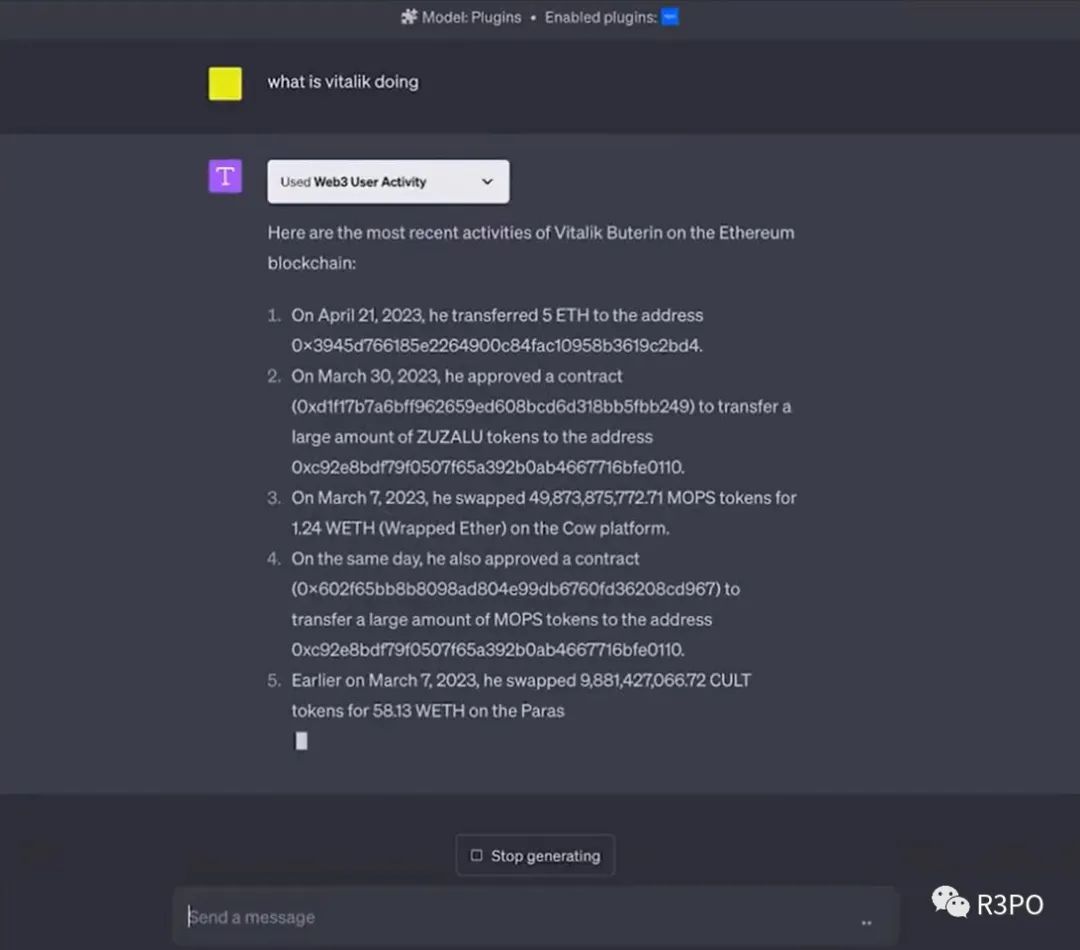
However, RSS3 can already precisely track on-chain data. When you ask ‘Who is Vitalik?,’ the answer goes beyond Wikipedia or recent news—it includes Vitalik’s latest on-chain activities.
02Breaking Monopolies: RSS3 Ushers in a New Era of Open Internet Information Distribution
RSS3 is one of the few startups to deeply integrate Web3 and AI from day one. “When we built our AI team, Web3 and artificial intelligence seemed somewhat conflicting because Web3 was seen as decentralized, while AI required centralization,” Joshua recalled. Despite early skepticism, he now sees validation in their vision and the value of persistence.

As a seasoned serial entrepreneur in traditional social media, Joshua deeply understands that one or two apps alone cannot resolve the issue of internet content monopolies. Over the past two decades, a handful of tech giants have monopolized content and user data, creating centralized environments that stifle innovation. No matter how well-designed an app is, it cannot compete with data monopolists.
In contrast, blockchain technology ensures data security and privacy through cryptography and adherence to the principle of “code is law.” With the rise of Web3, people increasingly desire to escape the control of traditional centralized platforms and reclaim the rights to create, share, and distribute information.
To enhance the efficiency and freedom of information flow online, three years ago Joshua committed all his resources to the open web and founded RSS3. Positioned as an information platform for the open internet, RSS3 differs from traditional centralized platforms. RSS3 does not directly participate in data encryption but acts more like a courier or transport system, ensuring absolute ownership and data security.
In the interview, Joshua outlined three core areas for RSS3’s future development: data coverage, information distribution methods, and degree of decentralization.
-
First, RSS3 aims to comprehensively cover data across the entire open web, ensuring accessibility and relevance.
-
Second, beyond information feeds, search, and large language models, RSS3 will continuously improve and expand its information distribution methods to meet user needs.
-
Third, RSS3 strives for higher decentralization and ensures node openness and fairness.
Joshua revealed that RSS3 plans to open external nodes in August. In the early stages, node numbers may be limited before gradually reaching dynamic equilibrium. During this initial phase, there may be soft requirements—for example, project contributors or active community members might get earlier access to testing. However, these criteria won’t be overly strict, as RSS3 hopes to attract more self-motivated node operators.

In terms of business model, RSS3 resembles Chainlink and The Graph. Their network architecture can be compared to Ethereum, where Ethereum nodes ensure transaction security and confirmation. In contrast, RSS3 nodes index information and deliver it to users in specific formats. Once mature and open externally, these nodes may charge fees for providing information services.
Regarding future fundraising, Joshua emphasizes partnering with investors who share a strong mission and vision for the open internet, rather than those solely seeking short-term financial returns. Funds will primarily support node and community development, along with continued investment in user experience and developer tools to increase user base and engagement.
03Web3 Entrepreneurship Insights: Trends Are Unpredictable—Stay Committed to What’s Right
Over the past few years, the cryptocurrency market has faced significant volatility and challenges. What reflections and experiences can Joshua share? He pointed out that previously, Web3 was widely associated with concepts like decentralization and ownership. However, as various projects emerged, people began viewing Web3 as a new stock market or investment opportunity, shifting the narrative from decentralization to mere token speculation. This reflects market dynamics and the pursuit of quick profits.
Yet, “short-term smart choices often don’t help much in the long run,” Joshua said. At the time of founding RSS3, traditional social media projects like Clubhouse were booming. As founder of the Chinese version of Clubhouse, “Juju,” Joshua attracted interest from top-tier VCs globally. Pursuing such ventures might have seemed wise at the time, but those projects quickly faded. In contrast, RSS3 continues to thrive in the Web3 space.
“Throughout the entrepreneurial journey—including myself—we’ve all faced various temptations. Sometimes we consider chasing short-term gains or hopping on current trends, but ultimately, we chose not to,” he said. Even if such opportunities yield immediate benefits, they aren’t truly aligned with the long-term path of an entrepreneur.
Entrepreneurs are not just builders—they’re seekers of self-purpose. As someone dedicated to improving information flow efficiency and freedom in the open network, Joshua emphasized that in the Web3 era, short-term temptations and trends should not guide entrepreneurial decisions. Instead, founders should adopt a broader perspective, focusing on long-term societal impact and value creation. Society, in turn, will eventually reward such efforts.
“Many Web3 entrepreneurs didn’t anticipate crypto becoming so explosive. Similarly, AI practitioners didn’t foresee large language models suddenly gaining massive popularity,” Joshua said. In fact, before the rise of language models, the AI field had experienced seven or eight years of stagnation. Whether it’s crypto or AI, trend shifts are unpredictable. Therefore, entrepreneurs must maintain independent thinking, stick to their beliefs, and persevere.

Today, the crypto market is in a bear phase, making patience and perseverance even more critical for entrepreneurs. Short-term liquidity fluctuations or market swings won’t significantly affect the industry’s overall trajectory. Although growth speeds vary, the adoption of cryptographic technology and the open internet will continue to expand.
At this moment, entrepreneurs need to uphold their values, focus on long-term societal impact and value creation, and avoid blindly chasing short-term fads. As Joshua put it: “Keep doing what you believe is right and beneficial to society. If we’re lucky, we’ll get rewarded early; if not, we’ll just have to persist longer.”
Join TechFlow official community to stay tuned
Telegram:https://t.me/TechFlowDaily
X (Twitter):https://x.com/TechFlowPost
X (Twitter) EN:https://x.com/BlockFlow_News
 R3PO
R3PO