Ancient poems are being sung anew, RSS3 and the unfinished ideal of the internet
TechFlow Selected TechFlow Selected
Ancient poems are being sung anew, RSS3 and the unfinished ideal of the internet
RSS3, a simple, straightforward, and highly modular Web3 feed protocol, was born precisely to ignite this revolution.
 Navigating Web3 tides with focused insights
Author: PING
“Aggregation applications will evolve into the core of the internet economy, where businesses and individuals can control their personal data online while enjoying the benefits of large-scale networks.” —— Kevin Werbach
This quote comes from tech commentator Kevin Werbach in 1999. At that time, people believed the future of the internet rested on aggregation protocols like RSS, enabling users to retain ownership of their data and connect decentralized services easily, aggregating information from diverse sources as an alternative to one-stop platforms.
However, history took a different turn. Users quickly gravitated toward centralized yet barrier-free web services, bringing nearly everyone online—but also leading to today’s reality: data and information controlled by a handful of tech giants.
RSS, the protocol allowing real-time aggregation of content based on user subscriptions, launched in 1999 and enjoyed widespread use after the millennium. But due to poor user and developer experience and lack of a viable business model, it gradually retreated, declared “dead” by media outlets after the rise of social media around 2010, fading from public view.
Werbach’s prediction may have come too early, but it wasn’t wrong. The vision of an aggregated, open web never truly died with the temporary victory of Web2 services. After years of silence, it has returned—revived through blockchain technology and the ideals of Web3—once again standing at the forefront of internet innovation, challenging dominant tech platforms in an unfinished information revolution aimed at restoring user autonomy and openness online.
A simple, highly modular Web3 information feed protocol called RSS3 was born precisely to ignite this revolution.
What is RSS?
Before diving deeper into RSS3, let's briefly review the basics and evolution of RSS to better understand what problems RSS3, derived from RSS, aims to solve.
RSS stands for Really Simple Syndication—a simple open-source program that allows users to actively subscribe to content. Content creators only need to implement RSS, and users can then subscribe to blogs, news sites, or other web content based on personal preferences. The RSS program delivers updated content instantly without any platform censorship.
But why did decentralized RSS lose out to centralized content platforms?
RSS initially gained popularity thanks to its open nature. However, as centralized content platforms rapidly expanded, amassing more data and users, the rigid standardization of RSS failed to meet diverse developer needs. Internal fragmentation within the open-source community further weakened RSS, making it increasingly unable to compete with centralized platforms. These closed-tech giants began rejecting RSS’s open technical standards, adopting proprietary formats to strengthen their competitive advantage.
Beyond external competition, RSS had internal flaws: standardized development led to slow updates, poor user experience, and high entry barriers.
Moreover, RSS lacked any business model, resulting in insufficient capital for active development. While traditional RSS preserved publisher ownership and prevented subscriber tracking, this very openness discouraged commercial publishers who needed audience analytics—pushing them toward centralized platforms offering data-tracking services.
RSS vs. Social Media Platforms
What ultimately crushed RSS might have been the rise of social media.
Social media not only fulfilled RSS’s core function—allowing users to proactively subscribe to and aggregate content from various sources—but also added interactive social features that RSS couldn’t offer, creating a lower-barrier, faster-paced environment for content creation and aggregation.
As user bases grew, social platforms moved beyond simple chronological feeds. Instead, they leveraged vast user data and algorithms to infer user preferences, serving tailored content while meeting demands for content moderation and advertising—effectively filtering information for users algorithmically.
Whether users actually want algorithmic curation remains debatable, but they’ve had no choice about having their data sold or being forced into algorithm-driven experiences.
Despite scandals like Cambridge Analytica, centralized platforms haven't changed their opaque recommendation systems. With slowing new-user growth, they've intensified monetization strategies that harm existing users to sustain high revenue growth.
In a way, social media once replaced RSS by fulfilling its core functions and adding extra value. Yet now, under the dominance of Web2 algorithms, even basic RSS functionality—user-controlled aggregation of self-subscribed content—is missing from the internet.
Born atop RSS’s legacy, RSS3 now finds new historical opportunity in the Web3 era.

Do you really need centralized platforms using algorithms to filter information for you?
RSS3: RSS for the Web3 Era
What is RSS3?
As co-founder DIYgod puts it, the "RSS" in RSS3 pays homage to its predecessor, while the "3" signifies Web3.
An RSS for the Web3 age, carrying forward the torch of openness and freedom.
RSS3 empowers users to own their content and subscriptions, aggregating and presenting content without relying on centralized platforms, and achieves decentralization at the storage layer—giving users full control over their data.
RSS3 will evolve through multiple modular projects, such as RE:ID (mapping Web2 content onto RSS3), Web3 Pass (personalized homepage), and Revery (content aggregation and subscription engine).
Overall, this is a gradual “To 3” process:
-
Step 1: Map user-generated content from centralized platforms to RSS3, freeing content from absolute Web2 platform control;
-
Step 2: Aggregate information into a standalone portal;
-
Step 3: Build a decentralized content network where users can mutually subscribe and interconnect.
Recognizing Data Value and User Autonomy
RSS3 enables users to store data on decentralized networks, with full ownership and private keys held entirely by users. It combines the scalability and decentralized strengths of traditional RSS, efficiently aggregating information according to user preferences.
Unlike traditional RSS, which ignored the commercial potential of content aggregation, RSS3 acknowledges data value—empowering users to leverage their personal data for economic benefit.
Reimagining Web2 Social Features with Web3 Decentralization
Unlike traditional RSS, which declined partly due to weak social interaction, RSS3 reimagines Web2 social functions through Web3 decentralization principles.
At its most basic level, think of RSS3 as a Twitter or Facebook without censors or algorithmic filters—an application where your feed shows exactly what you choose to follow.
But RSS3 goes further: its aggregation spans the entire internet. Any centralized or decentralized app supporting RSS3 can automatically feed content to users’ RSS3 feeds based on individual preferences.
Modular Applications
1) RE:ID – Mapping Web2 Applications
Web2 content can escape algorithm-controlled platforms via RE:ID and be directly mapped onto RSS3. Currently, among major centralized social platforms, only relatively open ones like Twitter support this feature.
2) Web3 Pass – Building Personal Profiles on Web3
Mirroring common Web2 social media profile pages, RSS3 allows users to set up RNS domains via Web3 Pass, customize personal profiles, and showcase activities across decentralized networks—such as NFT collections.
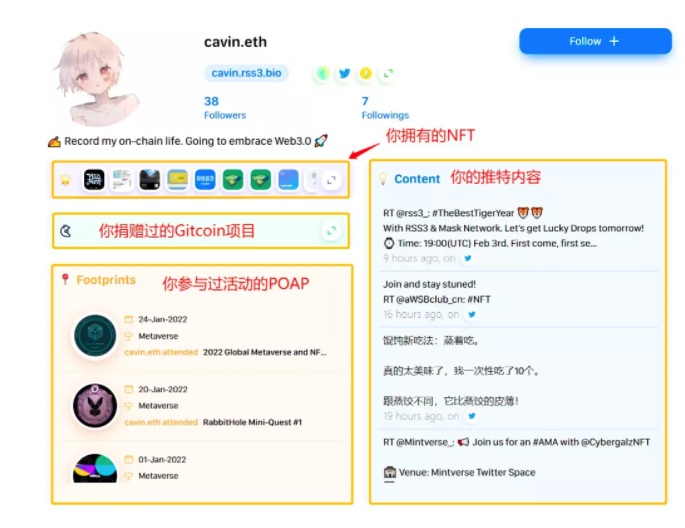
3) Revery – RSS3 Feed Reader
Revery is an RSS3 feed reader allowing users to subscribe to and track different accounts or addresses. RSS3 is currently collaborating closely with several decentralized apps such as Mask, Arweave, and Mirror, aiming to provide tracking and subscription services for these platforms.
On January 13, 2022, RSS3 partnered with the Web2 social app Jike (i.e., “Jike App”), enabling indexing of Jike content. Users can now view Jike content within RSS3’s ecosystem product Revery.
These developments are incremental, not instantaneous. Importantly, all components are open-source demos, allowing developers to freely fork and build their own on-chain homepages or readers.
Currently, over ten applications—including Mask Network, Showme, Revery, Cheers Bio, InGroup, and Flowns—are already distributing information via RSS3.
Openness is Web3.
Economic and Governance Model
Blockchain technology not only makes decentralized information aggregation possible but also introduces a self-sustaining economic model with strong incentives. It treats open-source contributors and users alike as stakeholders, recognizing the value of user data and rewarding non-shareholder contributions.
According to the whitepaper, the RSS3 DAO governs all matters related to RSS3 and its network, with governance token named $RSS3.
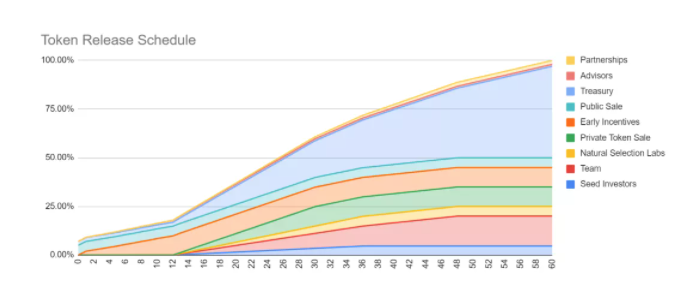
Per latest disclosures, 1 billion $RSS3 tokens were minted at genesis, with no additional mining. Aside from public sale and airdrop rewards, most tokens enter lock-up periods ranging from one to five years before gradual release. Distribution details are as follows:
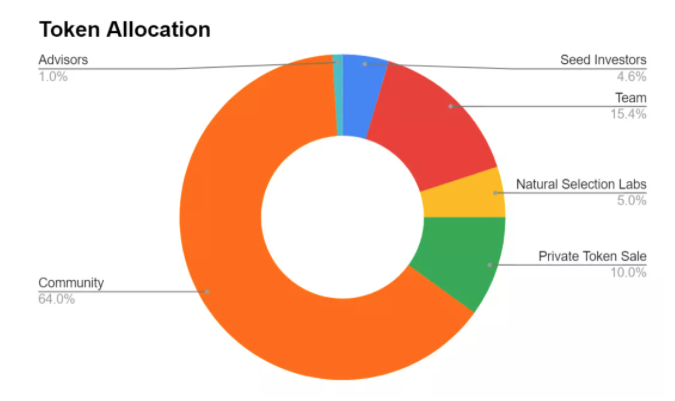
Community (64%)
5%: Public sale. Unlocked immediately after LBP.
10%: Early rewards. 2% airdropped to existing RSS3 ecosystem users one month after LBP; the remainder linearly unlocked over 12 months, distributed as rewards to stakeholders (active users, ecosystem app developers, testnet node operators).
2%: Partner projects and organizations. 12-month lock-up followed by 36-month linear unlock.
47%: Managed by RSS3 DAO for future development, including initial liquidity pool on Uniswap. Subject to 12-month lock-up and 48-month linear unlock.
Seed Investors (4.6%)
$RSS3 acquired at $0.04 USD. 12-month lock-up followed by 24-month linear unlock.
Private Round (10%)
$RSS3 priced between $0.06–$0.15 USD. 12-month lock-up followed by 18-month linear unlock.
Natural Selection Labs (5%)
Natural Selection Labs, the company behind RSS3, receives 5% of total supply, unlocked linearly over 24 months after a 12-month lock-up.
Team (15%)
Approximately 15% allocated to current and future RSS3 team members, unlocked linearly over 36 months after a 12-month lock-up.
Advisors (1%)
Awarded to those who assisted in the early stages of RSS3, linearly unlocked over 12 months.
As a governance token, $RSS3 will be used to vote on the following:
1) Elect operators of global index and service nodes
2) Determine number of copies of RSS3 files stored per service node
3) Threshold for distributed key shard generation
4) Subgroup scaling parameters
5) Module upgrades
6) Duration of each Epoch cycle
7) Treasury asset allocation
8) Incentive mechanisms
Team and Investors
The development team behind RSS3, Natural Selection Labs (also known as “Natural Selection Laboratory”), operates as a distributed organization resembling an open-source collective, carrying a certain hacktivist ethos.
According to previous reports, founder Joshua said he first worked on RSS-related projects in 2018, discovering the popular open-source project RSSHub on GitHub, though it didn’t gain much traction at the time.
In late 2020, Joshua revisited RSSHub, aiming to “take the essence and discard the dross,” reaching out to its creator DIYgod. With help from Suji, founder of Mask Network, Natural Selection Labs secured seed funding. Joshua noted that Suji was also the first to suggest changing the project’s name (formerly “AIR”) to “RSS3.”
DIYgod is a renowned open-source developer with over 43,000 stars on GitHub. All 11 visible team members on GitHub have verifiable technical contributions to the project. Even without knowing their true identities, from the “Talk is cheap, show me the code” perspective, the team’s technical capability is credible.
In June 2021, RSS3 completed its seed round, backed by Sky9 Capital, Mask Network, ByteDave, Hash Global, Chen Yuetian, Liang Xinjun, SPT Capital, and Variable Capital, raising several million dollars.
In December 2021, RSS3 announced another funding round led by CoinShares Ventures, with participation from Coinbase Ventures, Dragonfly Capital, Mask Network, HashKey Group, Arweave, Dapper Labs, Youbi Capital, Headline VC, Formless Capital, imToken Ventures, and former Coinbase CTO Balaji Srinivasan.
Conclusion
As a Web3.0 infrastructure protocol, RSS3 represents the convergence of open-source communities and blockchain technology. Its novel economic model and technical tools largely address the earlier challenges faced by open-source projects like RSS—particularly lack of incentives—while preserving full user data ownership.
RSS3 introduces a more social, inclusive aggregation platform incorporating content from multiple centralized and decentralized apps. The development team boasts strong coding skills and ideological conviction, recently gaining support from top-tier VCs and ecosystem funds. The platform itself is non-rent-seeking, highly compatible, and designed for modularity.
Currently, beyond Ethereum, RSS3 supports and collaborates with public blockchains including Arweave, Polygon, BSC, Arbitrum, Avalanche, Flow, and xDai.
Yet, just as RSS once suffered from high usability barriers, limited to niche, tech-savvy users, RSS3’s success will depend on whether its developer community can improve user experience enough to overcome the shortcomings that doomed its predecessor—and finally realize its full potential to replace centralized information platforms.
The internet dream left unfinished by RSS is now carried forward by RSS3—still running, still striving.
Join TechFlow official community to stay tuned
Telegram:https://t.me/TechFlowDaily
X (Twitter):https://x.com/TechFlowPost
X (Twitter) EN:https://x.com/BlockFlow_News