








Modular Blockchains: The Final Piece of the Web3 Puzzle
TechFlow Selected TechFlow Selected
Modular Blockchains: The Final Piece of the Web3 Puzzle
The trend toward modular blockchains is not merely a technological shift, but a crucial strategy driving the entire blockchain ecosystem to meet future challenges.
 Navigating Web3 tides with focused insights
Author: GeekCartel
I. Introduction
Modular blockchains represent an innovative design paradigm aimed at enhancing system efficiency and scalability through specialization and division of labor. Before the emergence of modular blockchains, a single monolithic chain was responsible for handling all tasks, including execution, data availability, consensus, and settlement layers. Modular blockchains address these challenges by treating these functions as interchangeable modules, with each module focusing on a specific function.
-
Execution Layer: Responsible for processing and validating transactions and managing changes to the blockchain state.
-
Consensus Layer: Reaches agreement on the order of transactions.
-
Settlement Layer: Finalizes transactions, verifies proofs, and bridges different execution layers.
-
Data Availability (DA) Layer: Ensures all necessary data is accessible to participants in the network for verification purposes.
The trend toward modular blockchains is not merely a technological shift but also a strategic move to prepare the entire blockchain ecosystem for future challenges. GeekCartel will analyze the concept of modular blockchains and related projects, aiming to provide a comprehensive and practical interpretation of modular blockchain knowledge, helping readers better understand this architecture while exploring its future trajectory. Note: This article does not constitute investment advice.
II. Pioneer of Modular Blockchains – Celestia
In 2018, Mustafa Al-Bassam and Vitalik Buterin published a groundbreaking paper offering a new approach to solving blockchain scalability issues. "Data availability sampling and fraud proofs" introduced a method allowing blockchains to automatically scale storage capacity as the number of network nodes increases. In 2019, Mustafa Al-Bassam further developed this idea in his work titled "Lazy Ledger," proposing the concept of a blockchain system dedicated solely to data availability.
Based on these ideas, Celestia emerged as the first modular data availability (DA) network. Built using CometBFT and the Cosmos SDK, it operates as a proof-of-stake (PoS) blockchain that significantly improves scalability while maintaining decentralization.
The DA layer is critical to any blockchain’s security because it ensures anyone can inspect the transaction ledger and verify its integrity. If a block producer proposes a block without making all data available, the block may achieve finality but contain invalid transactions. Even if the block is valid, incomplete data availability negatively impacts user experience and network functionality.
Celestia implements two key features: Data Availability Sampling (DAS) and Namespaced Merkle Trees (NMT). DAS enables light nodes to verify data availability without downloading the full block. NMTs allow block data to be partitioned into separate namespaces for different applications, meaning apps only need to download and process relevant data, greatly reducing processing demands. Importantly, DAS allows Celestia to scale with increasing numbers of users (light nodes) without compromising end-user security.
Modular blockchains are enabling the creation of new chains in unprecedented ways, with different types of modular systems collaborating flexibly for various purposes and architectures. Celestia has proposed severalmodular architecture designs, showcasing the flexibility and composability of modular blockchains:
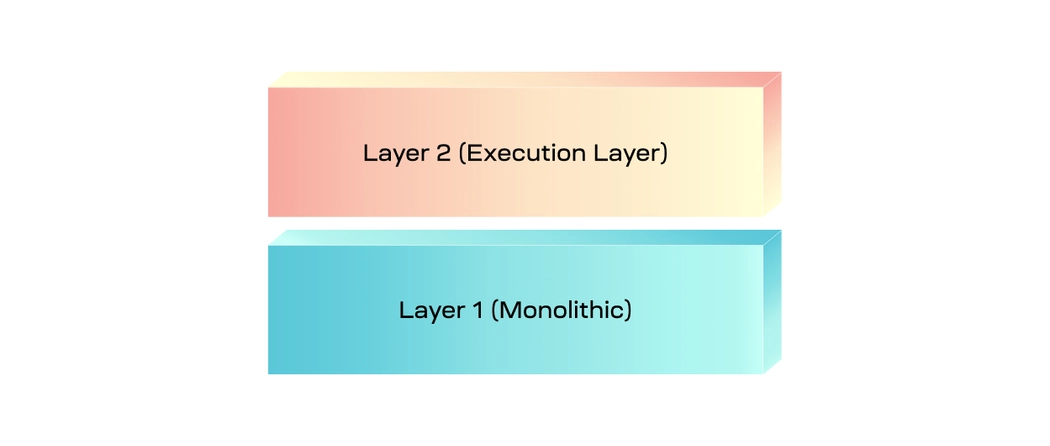
Figure 1: Layer1 and Layer2 Architecture
Layer 1 and Layer 2: Celestia refers to this as "naive modularity," originally designed to scale Ethereum as a monolithic Layer 1. Here, Layer 2 focuses on execution, while Layer 1 provides other essential functions.
-
Celestia supports chains built on Arbitrum Orbit, Optimism Stack, and Polygon CDK (coming soon) to use Celestia as their DA layer. Existing Layer 2 rollups can switch from publishing data on Ethereum to publishing on Celestia using rollup technology. Commitments to blocks are posted on Celestia, which is more scalable than traditional methods of posting data on a monolithic chain.
-
Celestia supports RollApps—application-specific chains—built using Dymension components as execution layers. Similar to Ethereum's Layer1/Layer2 model, RollApps rely on the Dymension Hub for settlement (explained later), use Celestia for DA, and communicate via the IBC protocol (IBC, based on Cosmos SDK, enables cross-chain communication. Chains using IBC can share any type of data as long as it is encoded in bytes).
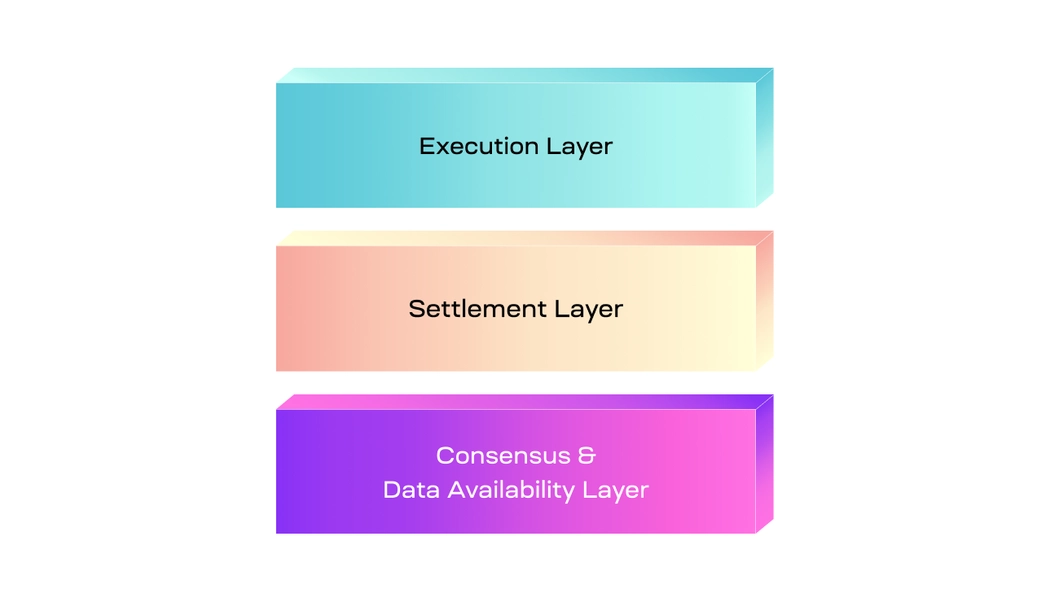
Figure 2: Execution, Settlement, and DA Layer Architecture
Execution, Settlement, and Data Availability: Optimized modular blockchains decouple execution, settlement, and data availability layers across specialized modular chains.
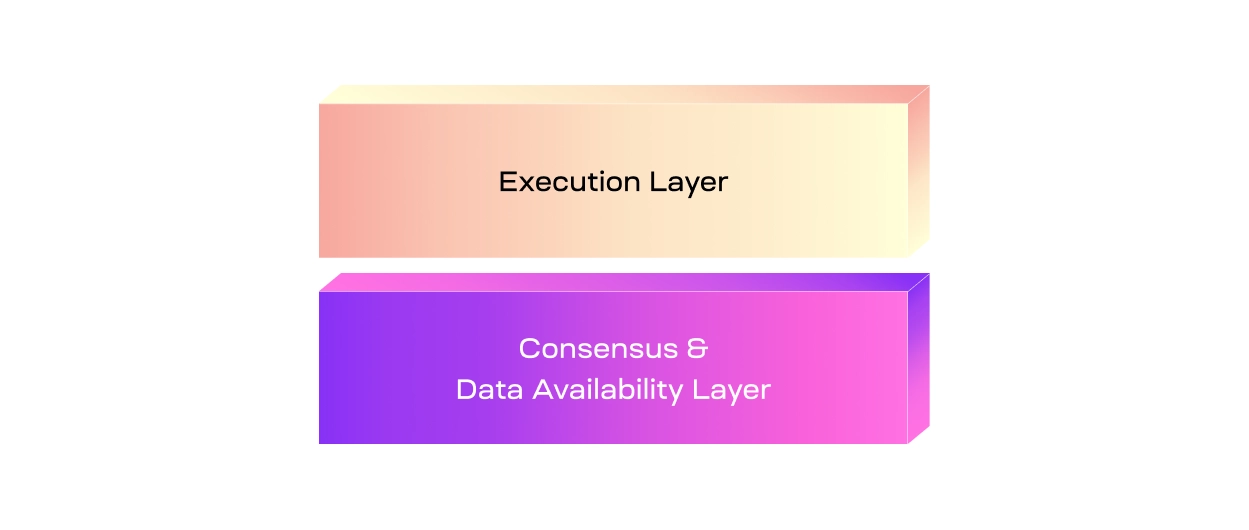
Figure 3: Execution and DA Layer Architecture
Execution and DA: Since the goal of modular blockchains is flexibility, the execution layer isn't limited to posting blocks to a settlement layer. For example, a modular stack could consist only of an execution layer atop consensus and DA layers, excluding settlement.
In such a setup, the execution layer would be sovereign, publishing transactions to another blockchain primarily for ordering and data availability, but handling its own settlement. Within this context, sovereign rollups manage execution and settlement, while the DA layer handles consensus and data availability.
The difference between sovereign rollups and smart contract rollups lies in the following:
-
Smart contract rollup transactions are validated by a smart contract on the settlement layer. Sovereign rollup transactions are validated by the sovereign rollup’s own nodes.
-
Compared to smart contract rollups, sovereign rollup nodes operate autonomously. In a sovereign rollup, transaction sequencing and validity are managed by the rollup’s own network, independent of a separate settlement layer.
Currently, Rollkit and Sovereign SDK provide frameworks for deploying sovereign rollup testnets on Celestia.
III. Exploring Modular Approaches in the Blockchain Ecosystem
1. Execution Layer Modularity
Before discussing execution layer modularity, we should first understand what rollup technology is.
Currently, execution layer modularity mainly relies on rollups—a scaling solution operating off the Layer1 chain. These solutions execute transactions off-chain, consuming less block space, and are one of Ethereum’s key scaling strategies. After executing transactions, they send batches of transaction data or execution proofs back to Layer1 for settlement. Rollup technology offers scalability while preserving decentralization and security for Layer1 networks.

Figure 4: Rollup Technology Architecture
Using Ethereum as an example, rollup performance and privacy can be enhanced via ZK-Rollups or Optimistic Rollups.
-
ZK-Rollups use zero-knowledge proofs to verify the correctness of bundled transactions, ensuring security and privacy.
-
Optimistic Rollups assume transactions are valid when submitting state updates to Ethereum, allowing anyone during a challenge period to compute fraud proofs to dispute invalid transactions.
1.1 Ethereum Layer2: Building Future Scaling Solutions
Ethereum initially explored sidechains and sharding for scaling. However, sidechains sacrificed some decentralization and security for high throughput. Layer 2 rollups have advanced much faster than expected, delivering significant scalability—and even more after implementing Proto-Danksharding. As a result, “shard chains” are no longer needed and have been removed from Ethereum’s roadmap.
Ethereum outsources execution to Layer2s based on rollup technology to reduce mainnet load. The EVM provides a standardized and secure execution environment for smart contracts on rollup layers. Some rollup solutions were designed with EVM compatibility in mind, allowing smart contracts on rollups to leverage EVM features and functionalities—such as OP Mainnet, Arbitrum One, and Polygon zkEVM.
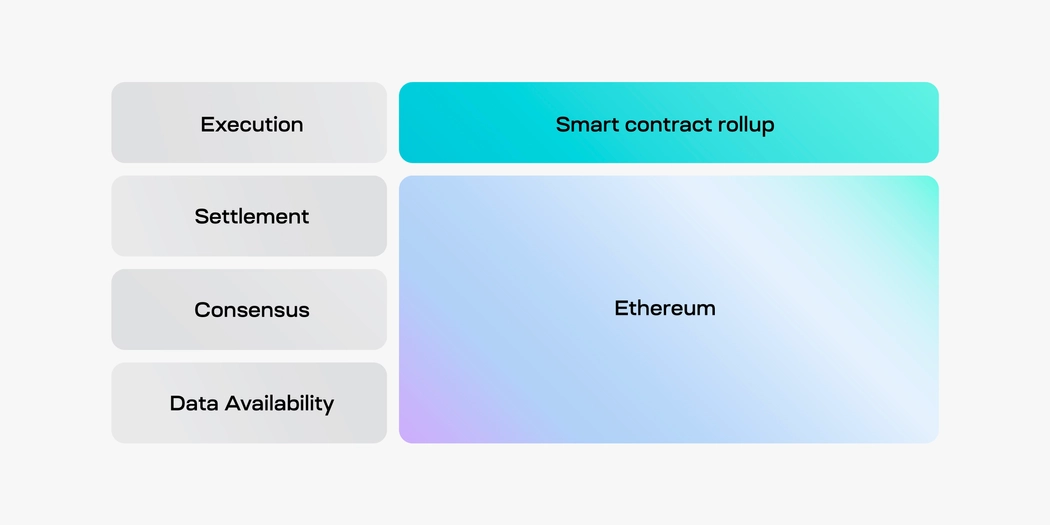
Figure 5: Ethereum’s Layer 2 Scaling Solutions
These Layer2s execute smart contracts and process transactions, but still depend on Ethereum for:
-
Settlement: All rollup transactions are finalized on the Ethereum mainnet. Users of Optimistic Rollups must wait out the challenge period or until fraud proofs invalidate a transaction before it is considered valid. ZK Rollups users must wait until validity proofs are confirmed.
-
Consensus and Data Availability: Rollups publish transaction data to Ethereum as calldata, enabling anyone to re-execute rollup transactions and reconstruct state if needed. Before confirmation on Ethereum, Optimistic Rollups require substantial block space and a 7-day challenge window. ZK Rollups offer instant finality and store verifiable data for 30 days but demand significant computational power to generate proofs.
1.2 B² Network: Pioneering Bitcoin ZK-Rollup
B² Network is the first ZK-Rollup on Bitcoin, increasing transaction speed without sacrificing security. Leveraging rollup technology, B² Network provides a platform capable of running Turing-complete smart contracts for off-chain transactions, improving efficiency and minimizing costs.

Figure 6: B² Network Architecture
As shown, B² Network’s ZK-Rollup Layer uses a zkEVM solution responsible for executing user transactions within the Layer2 network and generating associated proofs.
Unlike other rollups, B² Network’s ZK-Rollup consists of multiple components: account abstraction module, RPC Service, Mempool, Sequencers, zkEVM, Aggregators, Synchronizers, and Prover. The account abstraction module enables native account abstraction, allowing users to program higher security and improved UX directly into their accounts. The zkEVM is EVM-compatible, helping developers migrate DApps from other EVM-compatible chains to B² Network.
Synchronizers ensure information syncs from B² nodes to the rollup layer, including sequence info and Bitcoin transaction data. B² Nodes act as off-chain validators and perform multiple unique functions within the B² Network. The Bitcoin Committer module constructs a data structure recording B² Rollup data and generates a Tapscript known as a “B² inscription.” Then, the Bitcoin Committer sends a one-satoshi UTXO to a Taproot address containing the $B^{2}$ inscription, writing the rollup data onto Bitcoin.
Additionally, the Bitcoin Committer sets a time-locked challenge, allowing challengers to dispute zk-proof commitments. If no challenge occurs during the lock period or the challenge fails, the rollup is finalized on Bitcoin; otherwise, it is rolled back.
Whether Ethereum or Bitcoin, fundamentally, Layer1s are monolithic chains receiving scaled data from Layer2s. In most cases, Layer2 capacity depends on Layer1 capacity. Therefore, the Layer1-Layer2 stack is suboptimal for scalability. When Layer1 reaches throughput limits, Layer2s are affected, potentially causing higher fees and longer confirmation times, harming overall system efficiency and user experience.
2. DA Layer Modularity
Beyond Celestia’s DA solution favored by Layer2s, other innovative DA-focused approaches have emerged, playing crucial roles across the blockchain ecosystem.
2.1 EigenDA: Empowering Rollup Technology
EigenDA is a secure, high-throughput, decentralized DA service inspired by Danksharding. Rollups can publish data to EigenDA to achieve lower transaction costs, higher throughput, and secure composability across the EigenLayer ecosystem.
When building decentralized ephemeral data storage for Ethereum rollups, data storage can be directly handled by EigenDA operators. Operators participate in network operations, responsible for processing, validating, and storing data. EigenDA can scale horizontally as staking amounts and the number of operators grow.
EigenDA combines rollup technology and moves the DA component off-chain to achieve scalability. Thus, actual transaction data no longer needs to be replicated and stored on every node, reducing bandwidth and storage requirements. On-chain only handles metadata related to data availability and accountability mechanisms (accountability allows off-chain data storage while still enabling verification of integrity and authenticity when needed).
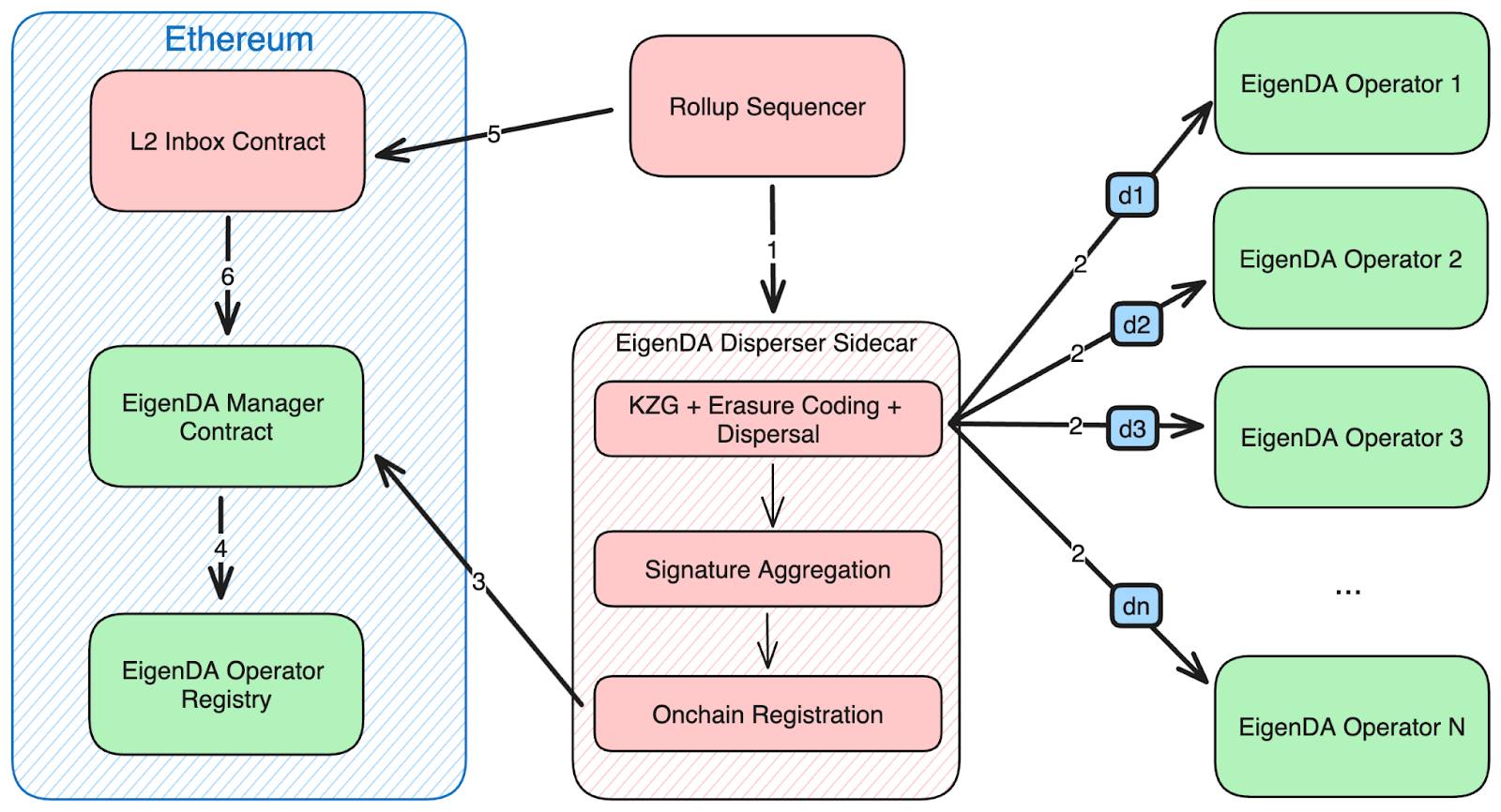
Figure 7: Basic Data Flow of EigenDA
As illustrated, rollups write transaction batches to the DA layer. Unlike systems using fraud proofs to detect malicious data, EigenDA divides data into chunks and generates KZG commitments and multi-reveal proofs. EigenDA requires nodes to download only a small portion of data [O(1/n)] instead of the entire blob. Rollup fraud arbitration protocols can verify whether blob data matches the KZG commitments provided in EigenDA proofs. Through this verification, Layer2 chains ensure rollup state roots aren’t manipulated by sequencers/proposers.
2.2 Nubit: First Modular DA Solution on Bitcoin
Nubit is a scalable, Bitcoin-native DA layer. Nubit is pioneering a Bitcoin-native future, aiming to enhance data throughput and availability services to meet growing ecosystem demands. Their vision is to bring the vast developer community into the Bitcoin ecosystem, providing scalable, secure, and decentralized tools.
Nubit’s team includes professors and PhD students from UCSB (University of California, Santa Barbara), renowned for academic excellence and global influence. They excel not only in academic research but also in blockchain engineering implementation. The team co-authored a paper on modular indexers with domo (creator of BRC20), integrating DA layer design into Bitcoin meta-protocol indexer structures and contributing to industry standard development.
Nubit’s core innovations: Consensus mechanism, trustless bridging, and data availability. It leverages an innovative consensus algorithm and the Lightning Network to inherit Bitcoin’s censorship resistance, and uses DAS to improve efficiency:
-
Consensus Mechanism: Nubit explores an efficient PBFT-based (Practical Byzantine Fault Tolerance) consensus powered by SNARKs for signature aggregation. Combining PBFT with zkSNARKs drastically reduces communication complexity among validators verifying signatures, enabling transaction correctness verification without accessing the full dataset.
-
DAS: Nubit implements DAS via multi-round random sampling of small portions of block data. Each successful round increases confidence in full data availability. Once a preset confidence level is reached, the block data is deemed accessible.
-
Trustless Bridge: Nubit uses a trustless bridge leveraging payment channels from the Lightning Network. This aligns with native Bitcoin payment methods and adds no extra trust assumptions, bringing lower risk compared to existing bridge solutions.
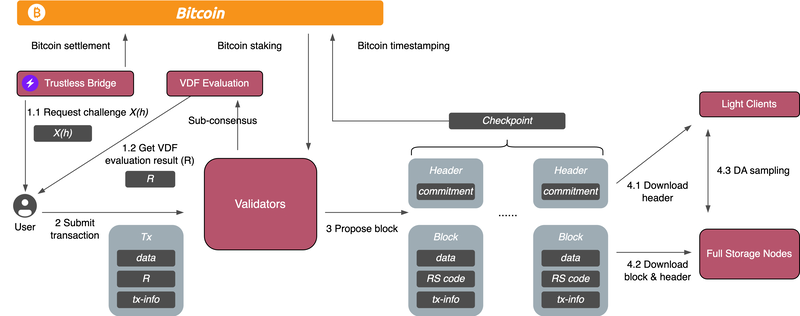
Figure 8: Nubit’s Core Components
We now walk through a concrete use case to illustrate the full lifecycle shown in Figure 8. Suppose Alice wants to complete a transaction using Nubit’s DA service (Nubit supports various data types, including inscriptions, rollup data, etc.).
-
Step 1.1: Alice must first pay gas fees via Nubit’s trustless bridge to continue service. Specifically, she obtains a public challenge X(h) from the trustless bridge (X is a cryptographic hash function from the Verifiable Delay Function (VDF) hash range to the challenge domain, h being the hash of a certain block height).
-
Step 1.2 and Step 2: Alice must obtain the evaluation result R of the current round’s VDF, then submit R along with her data and transaction metadata (e.g., address and nonce) to validators for inclusion in the mempool.
-
Step 3: Validators propose blocks and headers after reaching consensus. The block header includes commitments to data and associated Reed-Solomon Coding (RS Code), while the block itself contains raw data, corresponding RS Code, and basic transaction details.
-
Step 4: The lifecycle ends with Alice retrieving her data. Light clients download block headers, while full nodes retrieve both blocks and headers.
Light clients perform the DAS process to verify data availability. Additionally, after a threshold number of blocks are proposed, checkpoints of this history are timestamped on the Bitcoin blockchain. This ensures the validator set can prevent potential long-range attacks and support fast unbonding.
3. Other Solutions
Beyond chains focused on modularizing specific layers, decentralized storage services can offer long-term support for DA layers. Some protocols and chains provide customizable, full-stack solutions—enabling users to easily build their own chains, even code-free setups.
3.1 EthStorage – Dynamic Decentralized Storage
EthStorage is the first modular Layer2 to implement dynamic decentralized storage, offering programmable key-value (KV)storage driven by DA, expanding programmable storage at 1/100 to 1/1000 the cost to hundreds of TB or even PB. It provides long-term DA solutions for rollups and opens new possibilities for fully on-chain applications like gaming, social networks, and AI.
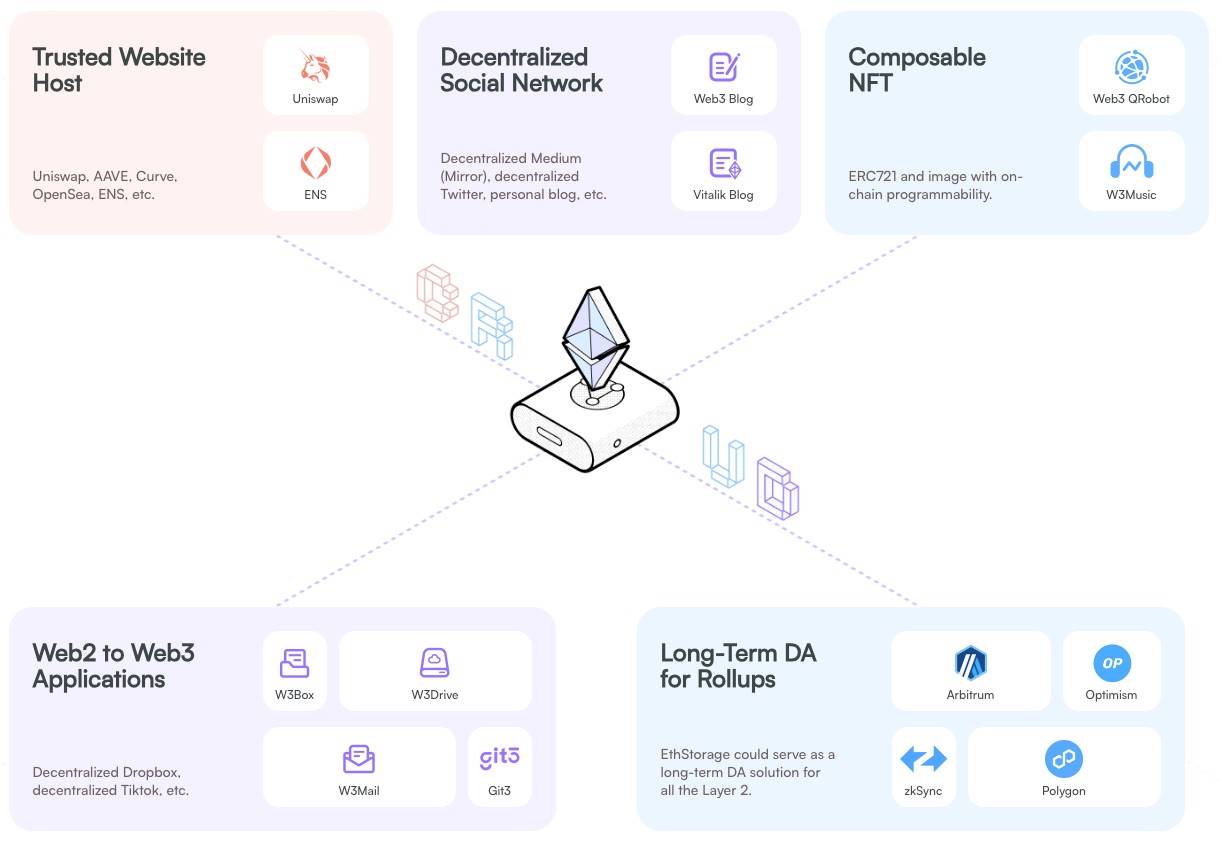
Figure 9: EthStorage Use Cases
EthStorage’s founder, Qi Zhou, has been fully dedicated to Web3 since 2018, holds a PhD from Georgia Tech, and previously worked as an engineer at top companies like Google and Facebook. The team also receives support from the Ethereum Foundation.
As a core feature of Ethereum’s Cancun upgrade,EIP-4844 (also known as Proto-danksharding), introduces temporary data blobs for Layer2 rollup storage, enhancing network scalability and security. The network doesn’t need to validate every transaction in a block—only confirm that attached blobs carry correct data—greatly reducing rollup costs. However, blob data is only temporarily available and discarded after weeks. This creates a major issue: Layer2s cannot unconditionally derive the latest state from Layer1. If certain data can no longer be retrieved from Layer1, syncing via rollup becomes impossible.
With EthStorage as a long-term DA storage solution, Layer2s can always retrieve full data from their DA layer.
Technical Features:
-
EthStorage enables decentralized dynamic storage: Existing decentralized storage solutions support large uploads but lack modification or deletion—only re-uploading new data. EthStorage introduces original key-value storage paradigms enabling CRUD operations (create, read, update, delete), significantly enhancing data management flexibility.
-
Decentralized Layer2 solution based on DA layer: EthStorage is a modular storage layer that can run on any blockchain with EVM and DA to reduce storage costs (though many current Layer1s lack DA layers), even on Layer2s.
-
Tight ETH integration: EthStorage clients are supersets of Ethereum client Geth, meaning nodes running EthStorage can still fully participate in Ethereum processes—one node can simultaneously serve as an Ethereum validator and an EthStorage data node.
EthStorage Workflow:
-
Users upload data to application contracts, which interact with the EthStorage contract to store data.
-
In the EthStorage Layer2 network, storage providers receive notifications about data awaiting storage.
-
Storage providers download data from the Ethereum data availability network.
-
Storage providers submit storage proofs to Layer1, proving numerous copies exist in the Layer2 network.
-
The EthStorage contract rewards storage providers who successfully submit proofs.
3.2 AltLayer – Modular Customization Service
AltLayer offers a versatile, no-codeRollups-as-a-Service (RaaS) platform. Designed for a multi-chain, multi-VM world, RaaS supports both EVM and WASM. It integrates various Rollup SDKs—OP Stack, Arbitrum Orbit, Polygon zkEVM, ZKSync’s ZKStack, Starkware—as well as shared sequencer services (e.g., Espresso, Radius) and diverse DA layers (e.g., Celestia, EigenLayer), along with many other modular services across rollup stack layers.
With AltLayer, multifunctional rollup stacks become feasible—for instance, an app-specific rollup built using Arbitrum Orbit can use Arbitrum One as both DA and settlement layer, while a general-purpose rollup built with ZK Stack can use Celestia for DA and Ethereum for settlement.
Join TechFlow official community to stay tuned Telegram:https://t.me/TechFlowDaily X (Twitter):https://x.com/TechFlowPost X (Twitter) EN:https://x.com/BlockFlow_News
 @geek_cartel






