








From Mirror to RSS3: The Hotspots and Future Potential of the Web3.0 Social Track
TechFlow Selected TechFlow Selected
From Mirror to RSS3: The Hotspots and Future Potential of the Web3.0 Social Track
Five active decentralized social applications in Web3.
 Navigating Web3 tides with focused insights
Author: ping twitter@pingunman
At the beginning of this year, during the peak of the bull market, a flood of social dapps (also known as socialFi) emerged overnight, each claiming to migrate Twitter, Facebook, Instagram, BBS forums, and other Web2 social platforms onto blockchain. These so-called socialFi projects grandly wave the banners of Web3 ideals—decentralization and ownership—but in reality, they recklessly issue short-term-value-only shitcoins to early users, creating hype and myths of quick riches for bounty hunters.
Frankly speaking, the vast majority of these socialFi projects are financial games co-conspired by coin speculators and bounty farmers. Users, developers, and investors alike come solely for short-term profits. Once the hype dies down, most platforms become ghost towns.
The current bull market offers a clearer opportunity to assess which Web3 social projects are truly promising and actively building. Below are five active decentralized social applications in Web3:
1. Mirror.xyz

Minimalist Decentralized Publishing Tool
Mirror is currently the best-known and most active Web3 social product, arguably leading the pack. Backed by renowned crypto VC firm a16z, it enjoys support from numerous global crypto influencers.
Mirror’s functionality resembles that of a traditional blog, but publishing on it signals Web3-native credibility, carrying a certain prestige within the community.
Its success stems not only from promotion by major crypto figures but also partly because Web2 giants like Google and Meta have abandoned or deliberately deprioritized clean, long-form blog publishing services, leaving a gap. Mirror has thus carved out a genuine niche distinct from countless Web2 copycats.
Users connect via wallet to the Ethereum network and create a writing page tied to their ENS name. They can publish posts for free, edit them unlimited times, and the platform automatically uploads content via Arweave to decentralized storage (IPFS). Additionally, each post can instantly be set as an NFT with custom pricing and quantity; readers can directly mint and collect the article's NFT to support the author.
Poor Social Experience and Organic Traffic
However, Mirror is criticized for its extremely basic user experience and clunky editing tools. While posts enjoy decent SEO, the interface lacks built-in social interaction features beyond the NFT system—no comments, no follow function to build personal reading feeds, and no algorithmic content recommendation to readers.
Unless a writer is already a well-known influencer or leverages external networks, ordinary users struggle to gain attention purely through posting. Sharing links on Twitter may be the best way for average users to expand reach, as organic traffic is nearly non-existent outside of self-promotion and limited search engine visibility. Finding buyers for one’s article NFTs is even harder. Authors cannot view any reading analytics or traffic sources in the backend—a clear deficiency for a writing platform.
Decentralization à la OpenSea
Even ignoring UX, Mirror still falls short of true decentralization. The codebase isn't open-source, and both frontend and backend designs rely heavily on the platform for uploading and modifying content rather than direct on-chain publishing. Users don’t truly own their data (how can you claim ownership if you can't even see your traffic data?), and posts don't automatically generate ERC-721 NFTs. Only through the platform can NFTs be sold.
For technical critiques of Mirror, see Atlas’s article: Redefining Publishing: Mirror Isn't Enough, We Need to Keep Exploring
Underwhelming Progress Relative to Valuation
Given that Mirror is backed by tens of millions in funding, valued at over $100 million, and has been developing for more than five years, its current level of progress is underwhelming. This slow development pace makes it hard to believe Mirror will deliver groundbreaking innovations in the future. That said, there’s no denying it currently leads in user numbers.
Third-party Mirror Readers and Search Tools
Due to Mirror’s sluggish development, all current Mirror readers and search tools are third-party creations.
-
Ask Mirror

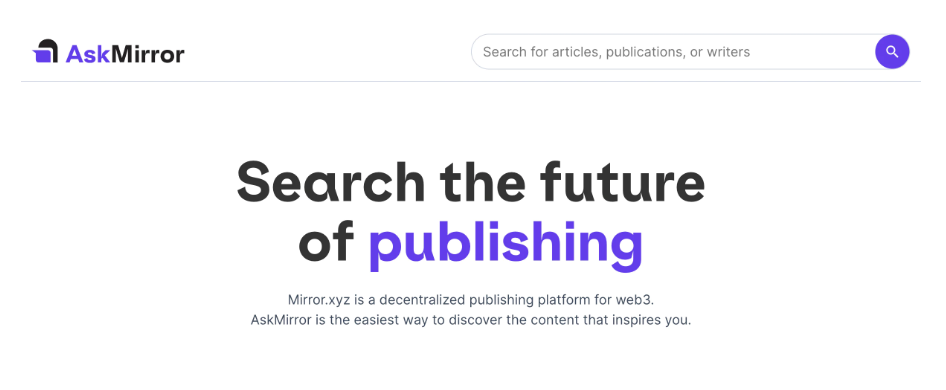
Developed by the Sepana team, which leads in Web3 search engines, featuring solid algorithms supporting personalized reading preferences.
-
MirrorBeats
Built by the blockchain media outlet "BlockBeats."
-
Bress
Primarily Chinese content, operated alongside MirrorCuratorDAO, offering XML RSS subscription services.
2. Lens Protocol
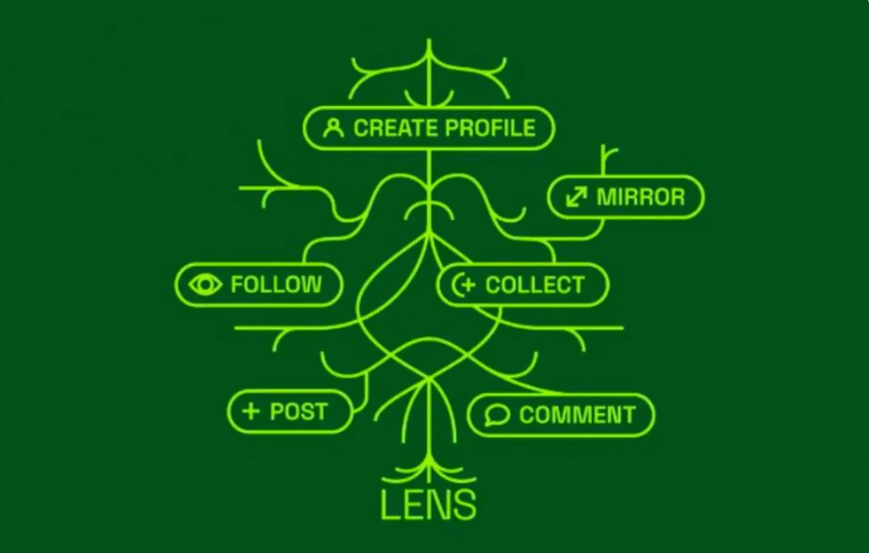
Lens serves as the root identity for Web3, connecting various social front-end applications
What is Lens Protocol?
Lens Protocol itself is not a social media platform, but ratheraims to establish a new on-chain social identity standard, designed to improve upon (or replace) ENS-based Web3 identities. It seeks to address the lack of social interaction features in ENS and technical limitations inherent in Ethereum.
Lens Team: Reputation and User Base from AAVE
It’s impossible to ignore that Lens is a new product launched by the team behind AAVE, a pioneer in DeFi lending. With strong developer reputation and an established user base in Web3, their launch has helped Lens gradually build a sizable ecosystem of social app developers. Applications based on Lens Protocol resemble Web2 platforms like Twitter, but with key differences: followers, posts, comments, and interaction records are stored on-chain as part of a unique profile NFT. Each post automatically becomes an NFT owned by the user, enabling more direct monetization and trading of social content and activity history.
Scarcity Marketing Through Limited Public Testing of Lens Handles

Lens Protocol is still in limited public testing. Access requires a Lens Handle NFT, which isn’t freely claimable, preventing bot abuse and farming while creating a sense of exclusivity akin to Clubhouse’s invite-only model. The last large-scale distribution was in May; now, Handles appear to be used mainly as rewards for new users in third-party apps within the ecosystem. Occasional updates are posted on Lens’s official Twitter.
Understanding Lens’s Ecosystem Strategy
Since Lens Protocol is not a social app itself but aims to become a new Web3 identity standard replacing ENS, it fosters a semi-closed, semi-open application ecosystem. Lens welcomes third-party developers to build social apps using its on-chain identity framework. Different Lens-based apps share the same social graph and interaction history—like having your Facebook friends automatically followed on Twitter.
Unifying Fragmented Web3 Communities — Or Creating a New Centralized Giant?
The advantage of Lens is its ability to consolidate the small number of active Web3 users scattered across various decentralized platforms. However, this design ironically risks creating a new giant: without a Lens Handle, your digital identity doesn’t exist, and you can’t participate in Web3 social activities. Unlike ENS, which relies on Ethereum’s decentralized, publicly verifiable network, Lens does not guarantee that interaction data is stored on-chain or in decentralized storage (see official statement).
In the short term, Lens’s operational model has indeed sparked rare vitality among Web3 developers and users. Long-term, however, it contradicts Web3’s original ethos of resisting centralized power.
Notable Apps in the Lens Ecosystem
Within the Lens ecosystem, several applications stand out:
-
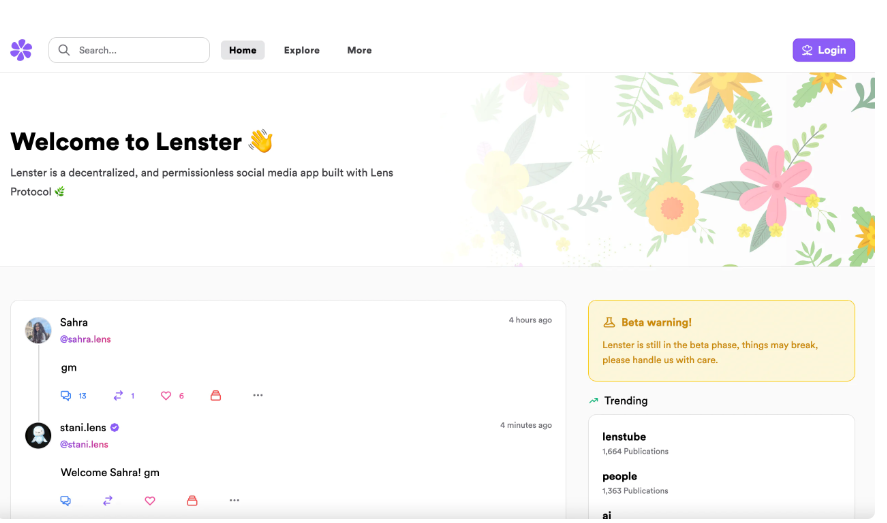
Lenster
A Twitter-like app for Lens, the most popular among users
-
Sepana Lens
A search engine and content discovery tool for Lens
-
Tea Party / Iris
Two similar apps developed separately, both Twitter clones and feed readers
-
LENSFRENS
An official follow-tracking tool promoted by Lens
-
RSS3/RSS3 Piñata
On the RSS3 website, you can directly search a user’s Lens activity using their ENS. It also functions as an RSS-style cross-platform reader. A new member of the Lens ecosystem, RSS3 is about to launch its dedicated app, Piñata.
-
Others
See Lens’s official site: https://lens.xyz/#apps
3. Matters

The Most Community-Like Web3 Platform
Among Web3 platforms, Matters feels least like a hardcore Web3 enclave. Active crypto users might find it unfamiliar, but it likely hosts the largest base of organic writers and readers (primarily Chinese-speaking). Most users are here for genuine expression, not crypto speculation or farming token airdrops. Discussions on Matters aren’t dominated by Web3 or cryptocurrency topics. Like any Web2 platform, users comfortably share daily life, discuss music and films, politics, economics, or exchange ideas without awkwardness.
An IPFS-Version of Medium
Matters’ interface and functionality closely resemble Medium. Its user experience is among the most mature and comfortable in the Web3 space. The key difference is that content is permanently stored on IPFS, a decentralized storage network, and every article has an IPFS address—though accessing it outside the platform via browser can be tricky.
Token Rewards That Feel Almost Meaningless
Founded during earlier Bitcoin bull runs, Matters benefits from blockchain tech but maintains loose ties to the industry. Though it integrates Likecoin—users earn small crypto rewards when liked or tipped—and supports ENS login, most interactions occur off-chain. The platform avoids marketing to crypto bounty hunters.
Likecoin itself trades minimally on Osmosis DEX within Cosmos, suffers from abysmal prices, and isn’t listed on any CEX as spot or futures. Frankly, its fiat value is nearly zero. The project’s operators, hit hard by this year’s crypto crash, may lack the resources to revive this philanthropic endeavor.
Pitiful Organic Traffic
Operationally, Matters gives me the impression of thunderous sound but little rain. Subjectively, I observe many authentic interactions and a global feed to discover trending authors and articles. Yet quantitatively, organic traffic is minimal. Its SEO performance as a blogging tool is poor. When I first checked my dashboard, I found my carefully written film review—posted over two years ago—had fewer than 100 views, even less than my elementary school nonsense blog. Truly heartbreaking.
The Dilemma of Web2.5 Pragmatists
Matters occupies a pragmatic middle ground. It lacks the radical, infrastructure-level empowerment seen in blockchain-native Web3 social apps, yet clearly doesn’t match the algorithmic traffic advantages of centralized giants like Twitter or Meta. It’s stuck in an awkward Web2.5 limbo. Still, as mentioned earlier, its number of authentic community users leads many Web3 platforms. The question is whether Matters’ team can break through.
4. ENS, EIP-1577, IPFS, and the Open-Source Tool Planet

Free open-source software Planet combining IPFS and ENS
Simple Integration of ENS and IPFS
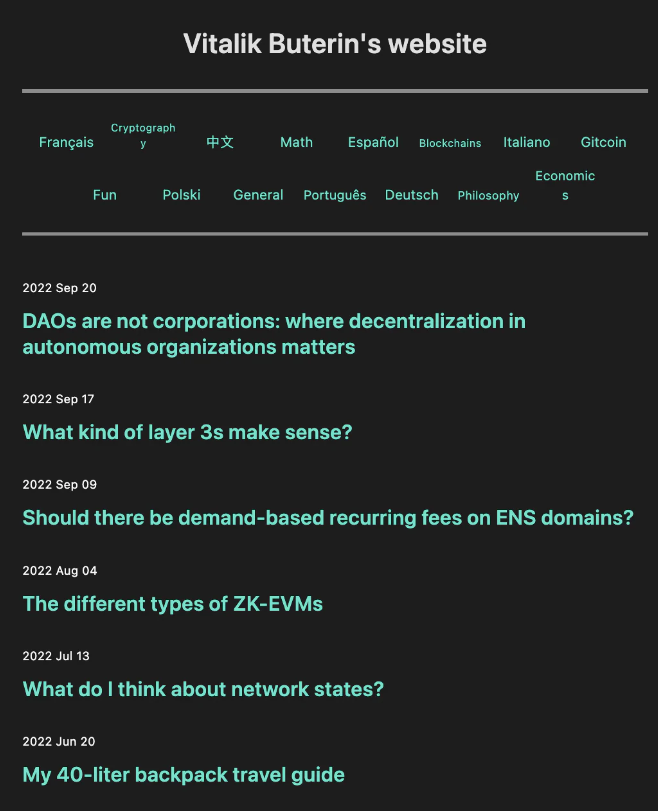
This publishing method uses existing ENS domain identities and leverages EIP-1577’s ENS contenthash feature to point IPFS (decentralized storage) content to an ENS address. This allows anyone to create a decentralized blog simply by ENS name—for example, Vitalik’s personal site: https://ipfs.io/ipns/vitalik.eth.
High Technical Barrier
From a pure decentralization standpoint, this approach is quite ideal. However, due to high technical barriers and geeky complexity, slow loading speeds on IPFS browsers (often resulting in 504 Gateway Timeout errors), and lack of social interaction (and speculation) opportunities, only a tiny fraction of technically proficient users (like Vitalik himself) or Ethereum maximalists regularly use this method.
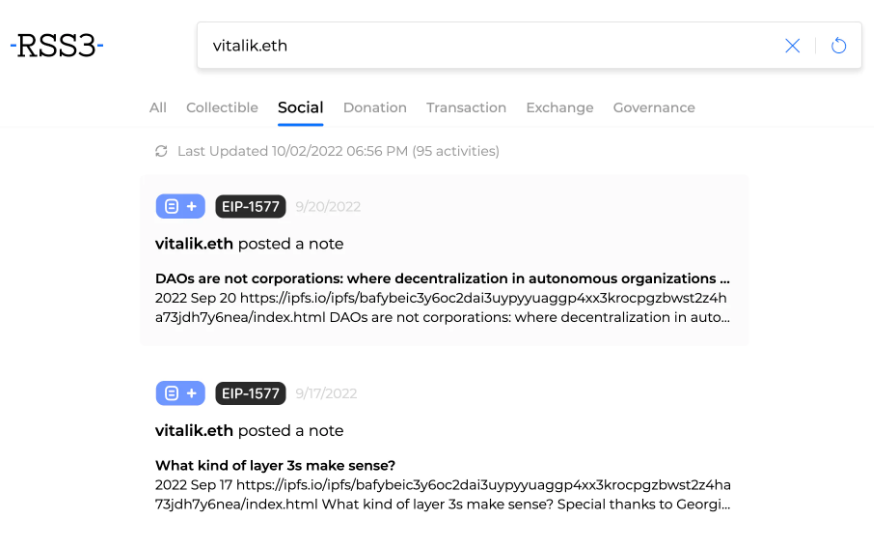
Reading EIP-1577 content (IPFS + ENS) is slightly easier via RSS3
Most Popular Open-Source Publishing Tool: Planet
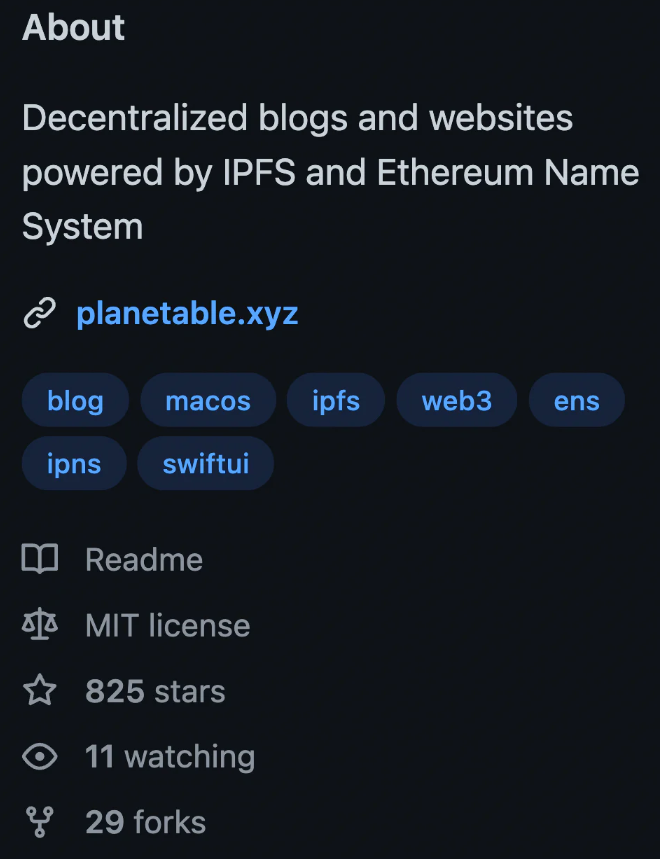
Planet is an open-source frontend app implementing this technology, available for free download on its website, currently supporting only Mac OS.
5. RSS3
Name inspired by the RSS protocol
Radical Decentralization Advocates Against Platforms
RSS3 stands out as a particularly radical outlier in the Web3 space. While most Web3 apps mimic Web2 platforms, competing to maximize DAU (daily active users), RSS3 believes all platforms have limits and should be eliminated as intermediaries. Only by returning to user-owned, self-hosted systems—free from reliance on centralized platforms—can true Web3, true decentralization, and real user freedom be achieved. This philosophy naturally leads to unique Web3 technologies. RSS3 focuses on solving pre-Web2.0 challenges: “How can users remain discoverable while maintaining autonomy?” and “How can blockchain technology enable individuals—without server setup skills—to easily self-publish and retain maximum control?”
How Can Content Spread Without a Platform?
To address the first challenge of dissemination, RSS3 proposes the open-source RSS3 protocol, inspired by RSS, providing a platform-free subscription service. Thanks to the public nature of blockchain activities, all on-chain actions can, after classification and transformation by RSS3, become human-readable, trackable RSS-like content. On-chain content creators can thus establish direct relationships with readers—just like RSS feeds—without any centralized social platform management.

RSS3.io implements this protocol—enter any ENS to view and subscribe via RSS to their on-chain activity.
Maximizing User Autonomy and Ownership via Blockchain
For the second publishing challenge, RSS3 launched xLog, an open-source on-chain blogging service. More decentralized than Mirror, xLog lets users publish content freely to both IPFS and Crossbell (an EVM-compatible blockchain), offering highly customizable personal blogs—including layout, URL, and navigation—all stored on-chain.
See The First Open-Source On-Chain Blog System: xLog
How to Use xLog for Decentralized Publishing
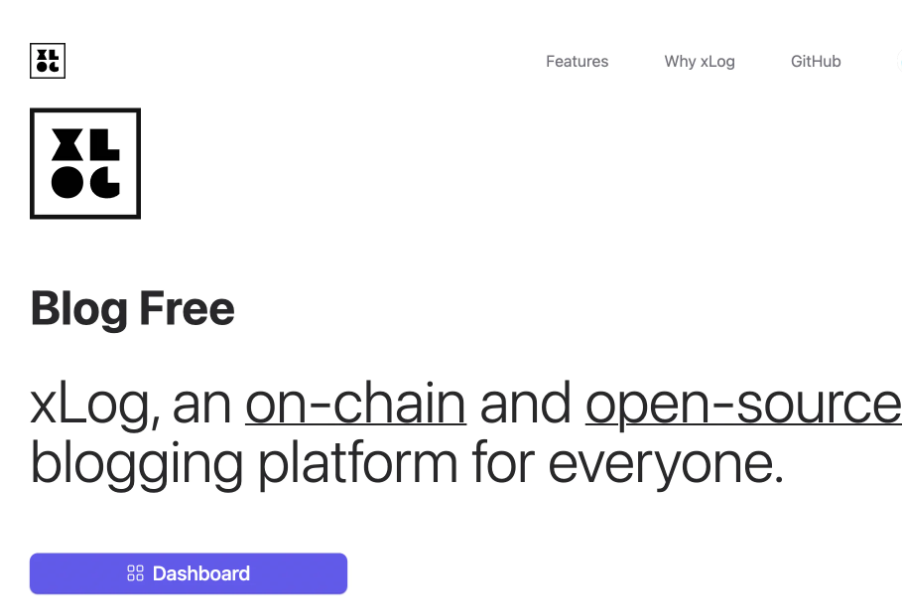
Users simply log in via wallet using ENS and claim free CSB tokens to begin publishing and engaging socially on xLog. While many actions require CSB for blockchain verification, CSB acts less like currency and more like an operational beacon—usable daily, replenishable via Crossbell faucet, with no transaction fee concerns.
Crossbell Faucet
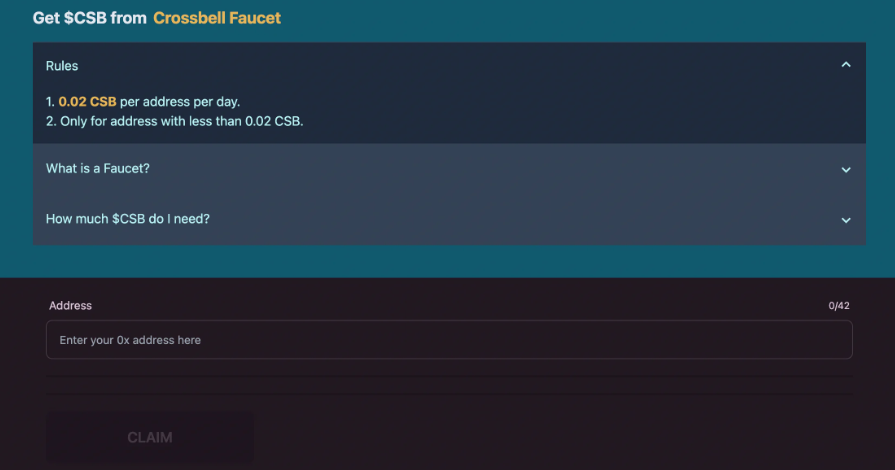
Enter your ENS address to claim free CSB
A Small-Nation Utopian Vision for the Internet
The RSS3 ecosystem currently has few users, but given the team’s strong open-source technical capabilities (see core developer’s GitHub), its radical yet practical vision for decentralized networking, and user-friendly development approach, the future looks promising. In many ways, RSS3’s small-community digital utopia aligns more closely with my personal vision for Web3’s future than emerging social empires merely wearing Web3 skins.
Conclusion
Above are my thoughts on several notable Web3 social tools and applications—from Mirror, which dominates crypto circles despite poor UX, to Lens, still underground but attracting many Web3 developers; from pragmatic Matters and tech-centric Planet, to platform-agnostic decentralization fighter RSS3. Each has its own technical and operational strengths. I welcome your thoughts, shares, and feedback.
Join TechFlow official community to stay tuned
Telegram:https://t.me/TechFlowDaily
X (Twitter):https://x.com/TechFlowPost
X (Twitter) EN:https://x.com/BlockFlow_News






