How to solve user conversion challenges and unlock revenue opportunities for Web3 applications?
TechFlow Selected TechFlow Selected
How to solve user conversion challenges and unlock revenue opportunities for Web3 applications?
The conversion and revenue challenges of Web3 applications require an "all-in-one" solution.
 Navigating Web3 tides with focused insights
When talking about Web3 products, what comes to mind first?
Trending narratives, new technologies, economic models, decentralization, or data ownership rights.... While these terms frequently appear, one term closer to the essence of business seems overlooked: revenue.
Most product applications are created with commercial objectives in mind and ultimately need to generate profit. This holds true for Web3 as well. However, how Web3 applications can better create revenue remains a topic rarely discussed.
In contrast, this same question has a clear answer in the Web2 world. Data shows that users' average daily time spent on mobile devices continues to rise—increasing from 2.5 hours in 2014 to nearly 4 hours in 2021.
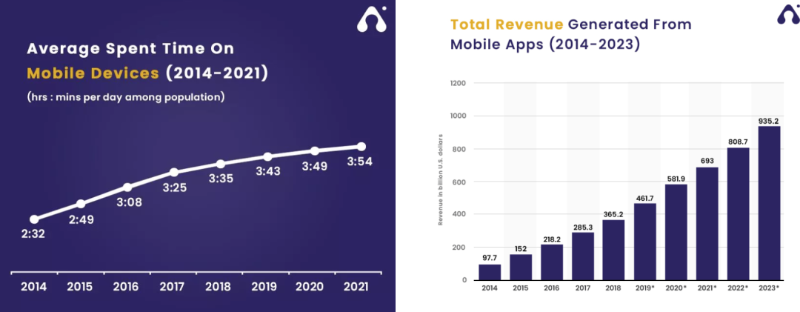
Figure 1: Time spent on mobile devices and mobile app revenues show an upward trend. Source: Appventurez
Under the attention economy, where user time goes, revenue follows. It is evident that total mobile app revenue has also grown rapidly during the same period. Therefore, mobile-first has become the primary consideration for most application developments.
But perhaps even more important is how to continuously generate revenue on mobile. We might find answers from the most commercially mature mobile application category—games.
For mobile games, in-app purchases, advertising, and paid downloads constitute their main sources of revenue. In 2022, in-app purchases accounted for 53.6% of mobile gaming revenue, with absolute figures continuing to grow.
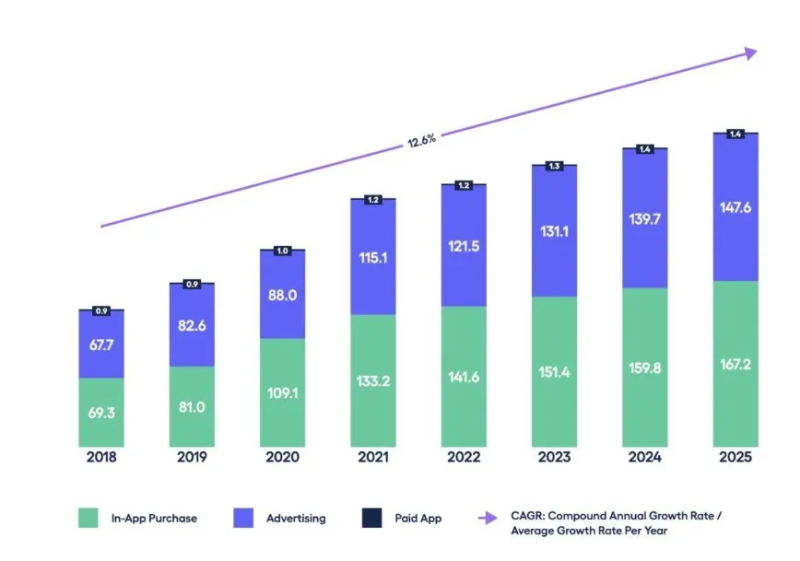
Figure 2: Mobile game revenue composition and growth trends. Source: Mirror World
All of this—from acquisition to engagement, retention, and conversion—forms a seamless closed loop within a single app. As “mobile-first” and “built-in marketplaces” become trends in Web2 applications, Web3 applications seem to be lagging behind in catching up.
Undeniably, Web3 applications have sensed the opportunity in mobile. The number of downloadable Web3 apps available on Apple's App Store and Google Play in 2022 was nearly five times that of 2021. Additionally, many new users for Web3 applications, especially games, come from Southeast Asia, where data indicates increasing time spent on mobile apps year-over-year.
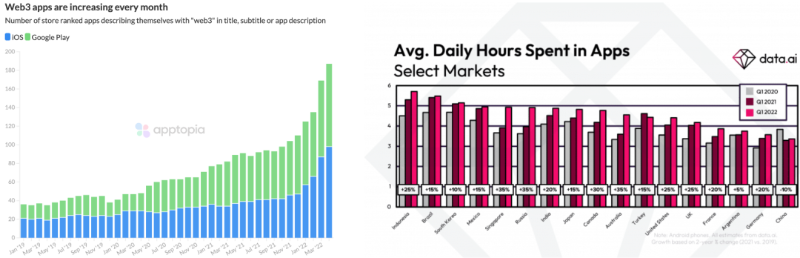
Figure 3: Growth in the number of Web3 applications and time spent on mobile apps by major regions. Sources: data.ai, apptopia
However, positive numerical trends cannot mask underlying quality issues. The current reality for most Web3 applications is that clients and markets are fragmented. For example, gameplay occurs within the client of a Web3 game, but when it comes to trading NFT assets, users must exit the app and go to another NFT marketplace, connect their wallet, and bind their gaming account to complete transactions.
This setup leads to the result that "players don’t want to buy, buyers don’t play."
Exiting the app inevitably causes user attrition, while those purchasing NFTs on third-party platforms are primarily speculators. Poor user experience and mismatched user bases make current Web3 applications struggle with user conversion and revenue generation. In contrast, StepN—one of the few breakout Web3 applications—rapidly acquired users early on by building an in-app marketplace similar to Web2 applications.
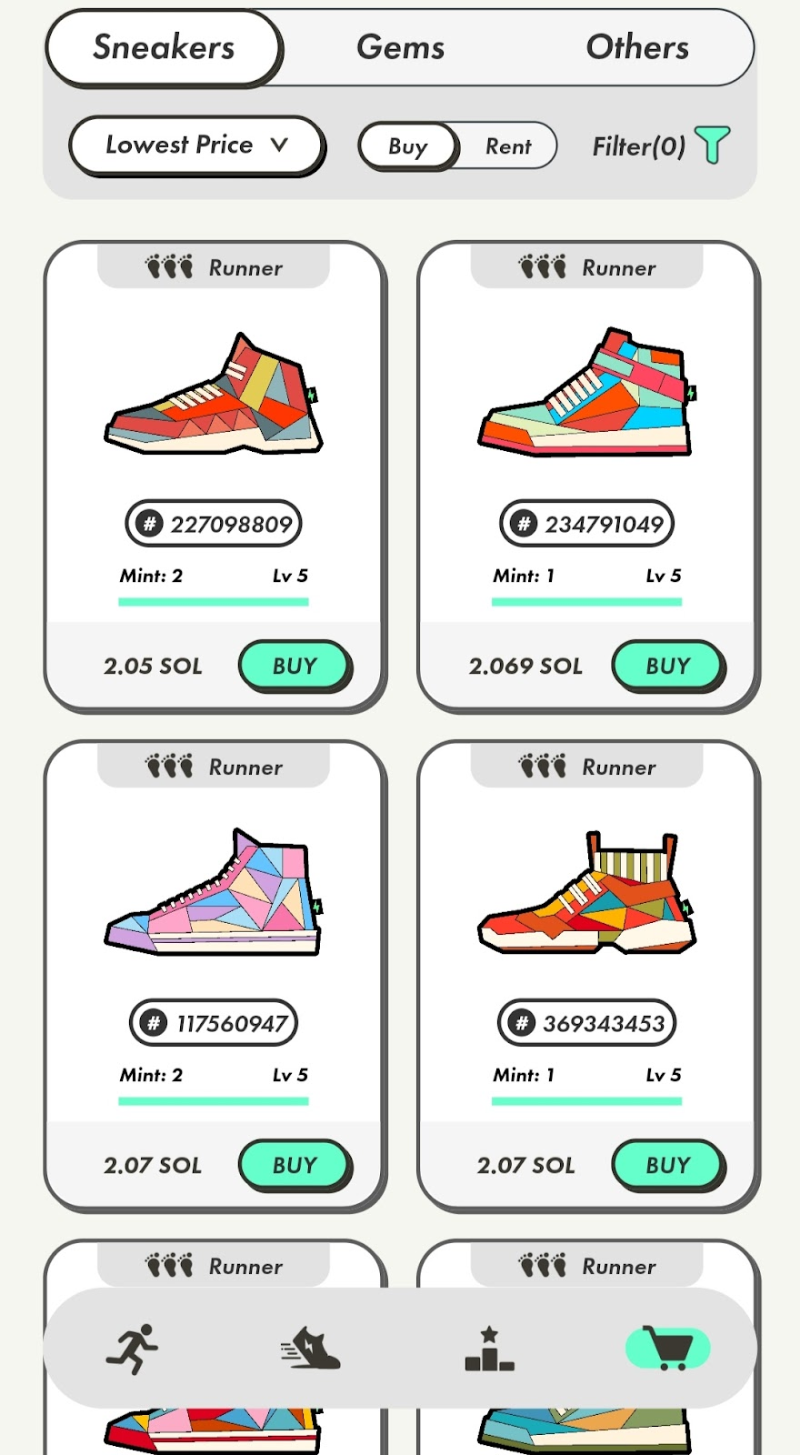
Figure 4: StepN’s early in-app transaction marketplace
By keeping actions like minting, renting, and transferring sneaker NFTs entirely within the app, StepN ensured continuity of user experience and bypassed Apple's 30% commission on in-app payments. This is highly attractive for any Web3 project focused on user conversion and revenue.
Whether looking at the Web2 trend of in-app purchases or StepN’s success story, we realize: focusing on building internal marketplaces may well be the key to unlocking revenue for mobile Web3 applications. But how should such markets be built? Who should build them? And what is the ROI? These are deeper questions worth exploring—questions tied not only to industry breakthroughs and development but also to the future of every project hoping to develop Web3 applications.
Building In-House Markets: Key to User Conversion and Revenue
Since Web3 applications inherently involve token and NFT transfers, they naturally require transaction markets. Currently, there are two main forms of implementation:
One type consists of third-party trading platforms represented by Opensea and MagicEden, where different NFT collections can be listed;
The other is application-built marketplaces integrated directly into the app itself, such as StepN’s Marketplace.
Which model works better for applications? This actually ties back to user conversion and revenue creation.
Looking at history, competition in Web2 business models offers some insight. E-commerce giant Amazon functions as a third-party marketplace where sellers open stores to conduct transactions. Shopify, however, uses a different approach: providing tools and technology enabling sellers to build their own independent websites, supported by full-service offerings including payment processing, marketing, operations, and customer relationship management.
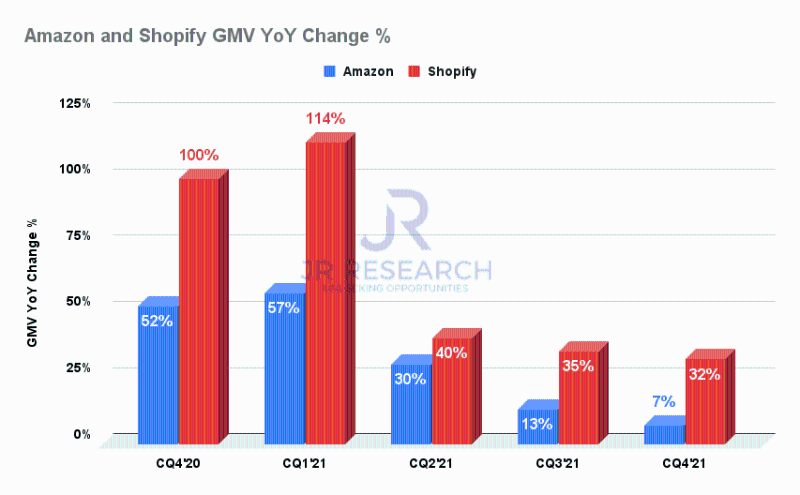
Figure 5: Quarterly YoY GMV growth rates for Amazon and Shopify. Source: JR Research
Recent quarterly gross merchandise volume (GMV) data shows Shopify’s year-over-year growth rate far exceeds Amazon’s. This suggests that Shopify’s self-built marketplace model meets real demand in Web2, with more independent e-commerce players emerging who use their own channels to address user acquisition, conversion, and revenue challenges.
Bringing our focus back to Web3, the situation is quite similar.
Web3 projects place greater emphasis on community and brand stickiness. A project’s community often develops its own unique culture and subculture, attracting passionate users who voluntarily test products, provide feedback, or contribute builds around the brand or technology. To engage these high-engagement users effectively and achieve higher conversion and revenue, having an in-house marketplace becomes crucial because:
First, in-house marketplaces help projects reach the right user base.
When Web3 applications list assets like NFTs on third-party platforms such as Opensea, their original intent is usually to serve the application ecosystem. For instance, listing game asset NFTs aims to allow users to trade items, enhance gameplay experiences, earn rewards, and stay engaged long-term.
But reality often differs.
We surveyed 315 Web3 games featuring NFT trading functionality and found that nearly half of these projects see core trading activity occur primarily on Opensea. According to Footprint data, among all addresses conducting transactions on Opensea, 66% had never previously traded assets from gaming protocols, only 22% could be classified as actual gamers, and an additional 11% traded across multiple categories including DeFi and PFP NFTs beyond just games.
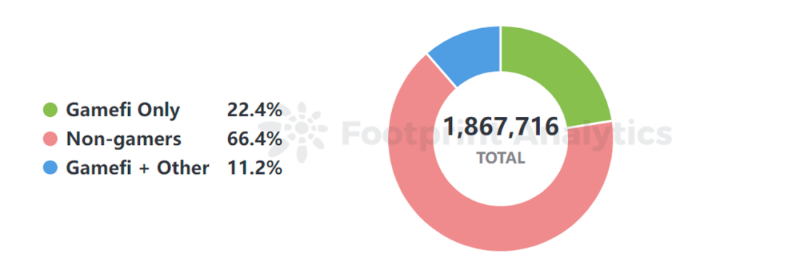
Figure 6: User profile analysis of Opensea. Source: Footprint
That means, on third-party platforms, a Web3 game may face users who aren't actually playing the game.
When game assets are sold mostly to traders and speculators, the phenomenon of "buyers don’t play" impacts the game’s economy. Volatile asset prices harm genuine players seeking enjoyable gameplay through asset trading, further reducing their engagement and willingness to spend.
In contrast, traditional Web2 mobile games and StepN both feature built-in marketplaces, ensuring users transacting within the app remain inside the ecosystem, locking in those willing to pay for play, thereby extending game lifecycle and maintaining user activity.
Second, in-house marketplaces boost user conversion and revenue.
Every application follows a user journey of “acquisition → engagement → retention → revenue,” with drop-off occurring between each stage. With poor user experience, Web3 applications can lose over 50% of users across these stages, leading to prohibitively high customer acquisition costs.
A user growth lead at prominent Web3 gaming platform Decentral Games publicly stated that due to issues like wallet connection difficulties, the cost per acquired user reached as high as $311.
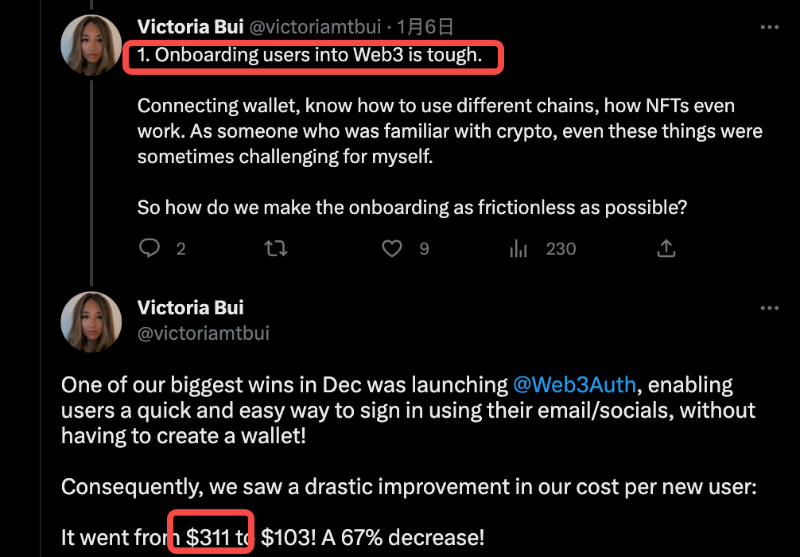
Figure 7: Discussion by Decentral Games’ user growth lead on Web3 acquisition costs.
For a Web3 application, if a user becomes interested in content and wants to pay, but must exit the app to visit another site to connect a wallet or link accounts, what kind of experience does that create? Passing complexity and learning burden to users creates fragmentation and distrust, resulting in lower spending intent and reduced app revenue.
In early Axie Infinity, the team provided an official marketplace, but usage remained separate from gameplay, creating a disjointed experience. Only after StepN embedded the marketplace directly into the game did it deliver a truly seamless loop. Clearly, an officially provided in-app marketplace ensures legitimacy and security, encouraging primary market sales.
Moreover, besides maintaining existing asset distribution methods, the presence of a secondary market expands monetization avenues. Projects gain incentives to thoughtfully integrate skins, items, and other in-game assets into gameplay via mechanism design, enhancing player experience while increasing asset value and turnover.
Comparing peak-era revenues of traditional and Web3 games reveals: Axie and StepN, whose marketplaces serve as core revenue drivers, achieved average revenue per user (ARPU) of $778 and $192.4 respectively—far exceeding traditional games. If built-in marketplaces improve conversion and reduce average acquisition costs, profits will increase even further.
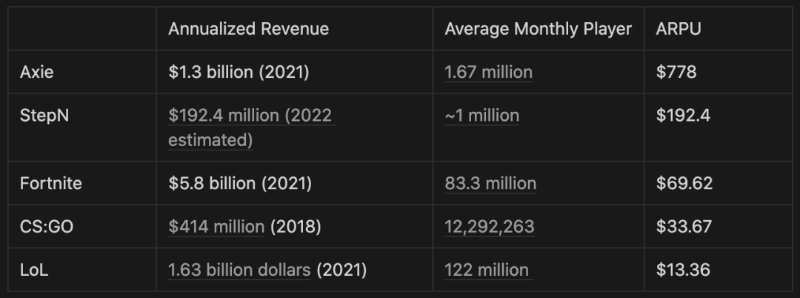
Figure 8: Comparison of typical Web3 and traditional games in revenue and user metrics. Source: Public data compilation
Self-Building Has Advantages, But the Path Is Long
Although in-house marketplaces offer benefits in user conversion and revenue enhancement, how widespread is this approach across the Web3 industry today?
Currently, most Web3 applications still rely on third-party marketplaces like Opensea for asset sales, but the cost is significant: platform fees consume too much revenue.
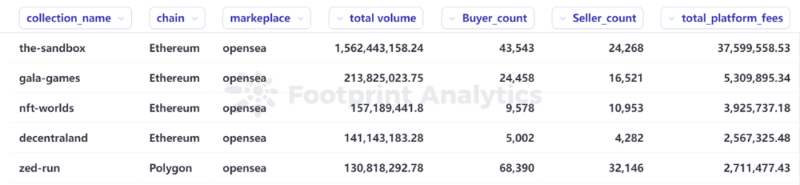
Figure 9: Transaction fees paid by top Web3 games on Opensea. Source: Footprint
Our research shows that under a 2.5% platform fee, leading Web3 games have collectively paid over $2 million in platform fees since September 2020.
Why do most projects continue to bear high transaction fees and user loss instead of building an in-app marketplace? The key pain point lies in development difficulty.
To fully integrate with Web3, an app needs more than just a built-in marketplace—it requires integration across identity verification, wallet services, fiat on/off ramps, NFT management, and more. Each component involves different technical providers, standards, interfaces, and integration timelines.
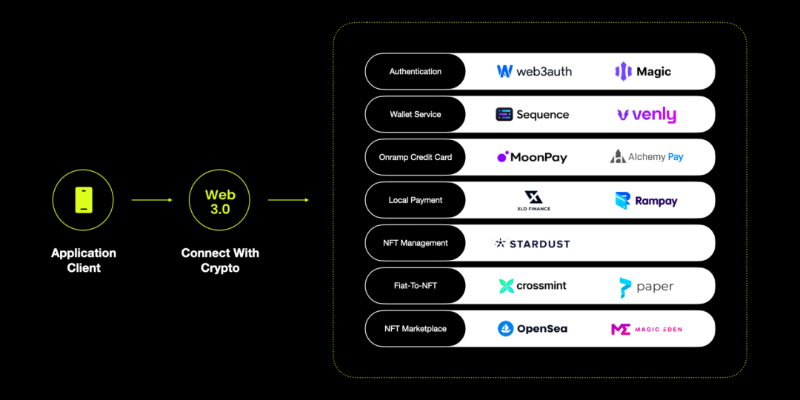
Figure 9: Current state of Web3 app integrations
This means building a Web3 app requires integrating with multiple vendors separately; for small teams, development resources get severely drained. Rough estimates suggest that a five-person dev team would need at least four months to implement these integrations. For teams unfamiliar with Web3, the timeline could be even longer.
Even after investing heavily in development, user experience remains fragmented. This implies projects face low ROI—bearing high R&D and acquisition costs without proportional revenue gains. In Web2, unified SaaS solutions like Firebase already exist, offering all-in-one toolkits that streamline every aspect of app development.
Does such a role exist in Web3?
Smart Platform: An All-in-One Solution for Web3 Application Development
Today, comprehensive solutions addressing Web3 development pain points are rare. The Smart Platform developed by Mirror World stands out as a leader: an easy-to-use Web3 application development platform providing complete solutions for deployment, growth, and monetization.
This ease of use begins with being “all-in-one.”
Unlike the cumbersome process of working with multiple service providers, Smart Platform integrates marketplace, authentication, wallet services, fiat on/off ramps, and NFT management into a single platform. Developers simply call these features via APIs to quickly complete Web3 integration.
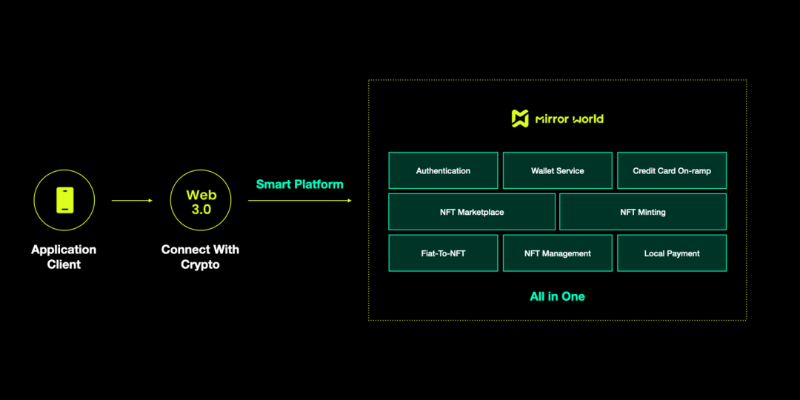
Figure 10: Mirror World Smart Platform’s all-in-one development services
The product is currently open for beta access. Interested readers can apply using the links at the end of this article for full体验.
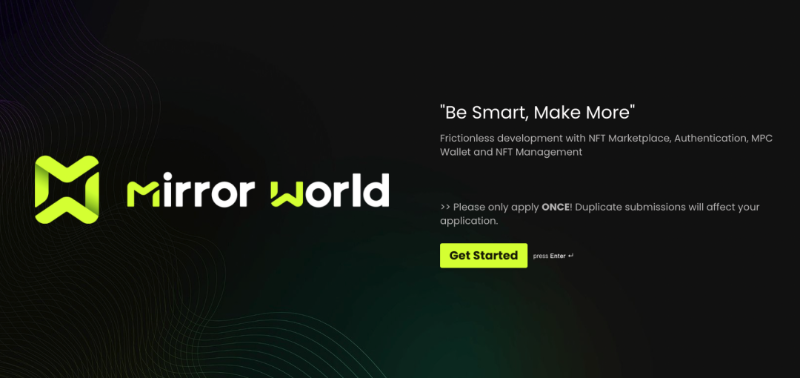
Figure 11: Smart Platform application page
Take building an in-app marketplace as an example: Smart Platform offers a solution called Smart Marketplace, which enables developers to complete development in just 15 minutes. Without this solution, developers would need to manually handle everything—from frontend user profiles to transaction parsing and signing, marketplace construction, NFT metadata storage, and smart contract coding.
Smart Platform provides pre-built SDKs. Developers can simply use APIs to call functions and examples, creating an in-app marketplace with minimal code.
Additionally, considering potential barriers users may face when buying NFTs, Smart Marketplace supports both native crypto payments and various fiat payment options, such as credit cards, Google Play, and App Store in-app purchases.
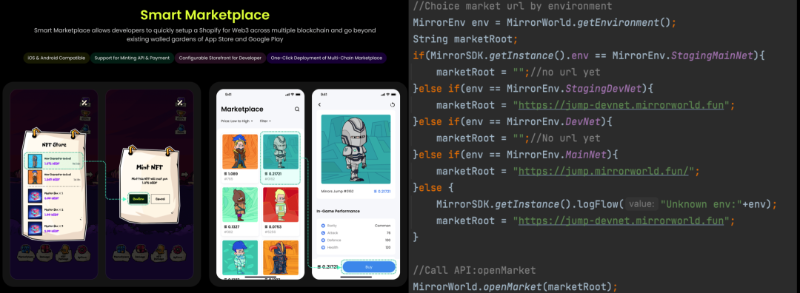
Figure 12: Smart Marketplace demo and low-code setup
Furthermore, each Web3 app has its own UI style. If the in-app marketplace doesn’t match the overall look and feel, it can negatively impact user experience and purchase intent. On current third-party marketplaces, styling options are limited by platform requirements.
To address this, Smart Marketplace allows developers to customize the appearance of their marketplace, freely selecting modules and UI components to integrate.
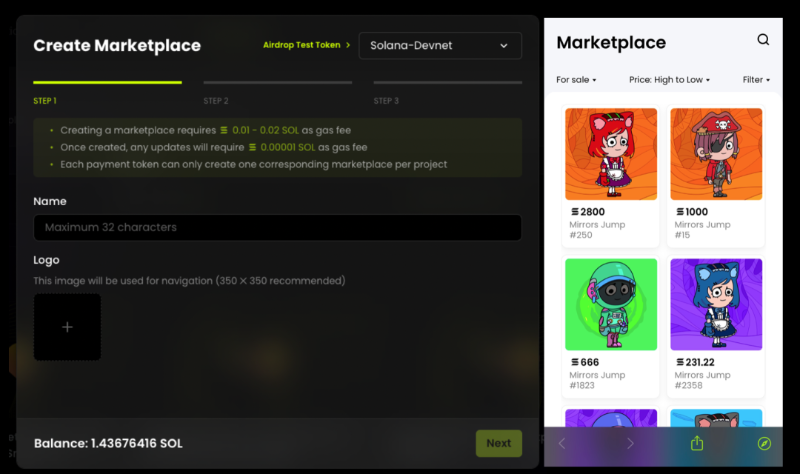
Figure 13: Smart Marketplace backend configuration and mobile preview
Developers can customize their marketplace to align visually with the app, allowing stronger expression of brand identity amid the homogenized designs of third-party platforms.
Beyond setup, Smart Marketplace also supports advanced marketplace operations and analytics.
After rapid marketplace creation, Smart Marketplace provides monitoring and analysis of end-user metrics such as NFT transaction data, volume, click-through rates, and search frequency, helping teams make data-driven decisions and adjust marketing strategies accordingly. Beyond accelerating in-app marketplace development, Smart Platform also offers solutions for user acquisition and activation:
Smart Auth (Intelligent Authentication):
Accessing the marketplace starts with accessing the app itself. For many outsiders, familiar login methods include email, social media, and browser accounts.
Therefore, Smart Auth enables seamless integration with these traditional login methods, letting users authenticate using familiar Web2-style logins directly—similar to current app “third-party logins”—without leaving the app or understanding wallet concepts.
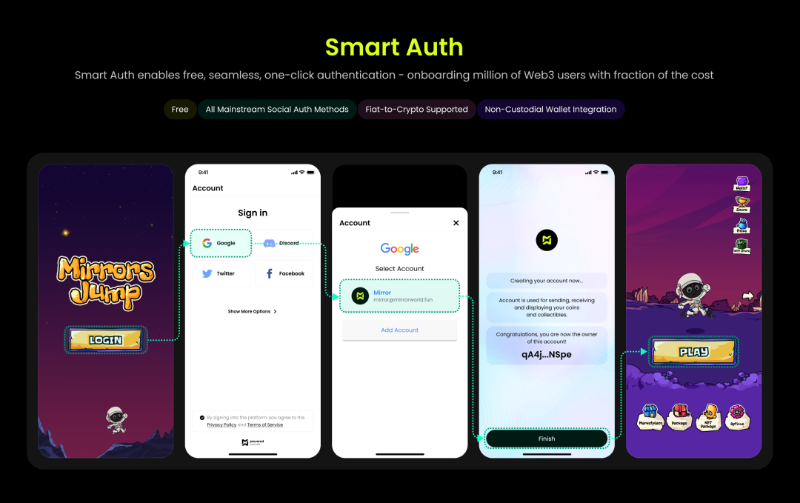
Figure 14: Smart Auth features and use case illustration
Smart Wallet (Intelligent Wallet):
Smart Wallet provides “in-app wallet” functionality. After integration, users can transact without being aware of wallets.
Technically, Smart Wallet leverages cutting-edge MPC (Multi-Party Computation), eliminating private key management. It also includes fiat on-ramps, enabling users to purchase crypto assets directly within the app, compliant with local regulations.
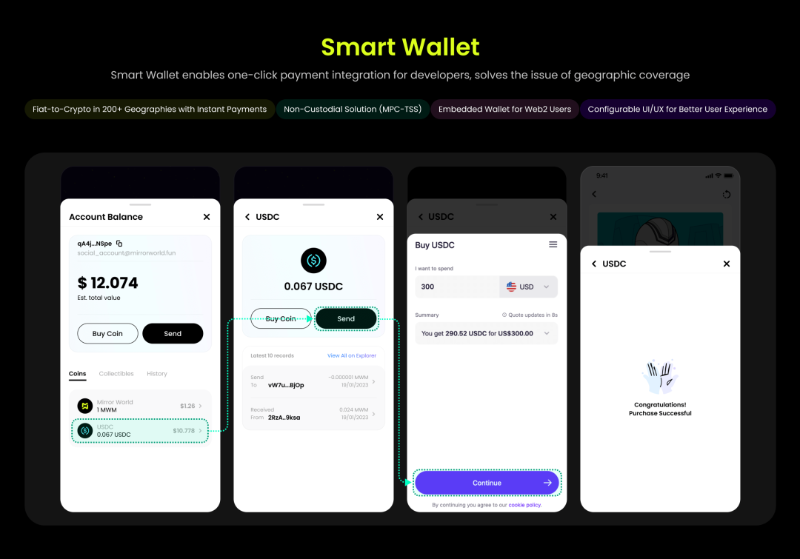
Figure 15: Smart Wallet features and use case illustration
Smart NFT Management (Intelligent NFT Management):
A complete NFT marketplace should support not only secondary market trading but also primary market NFT issuance. Smart NFT Management helps projects create NFT collections, perform minting, and manage fetching/querying via NFT APIs, seamlessly integrating into various types of applications.
To meet diverse developer needs, Smart Platform supports both low-code API calls and no-code configuration directly within the Dashboard.
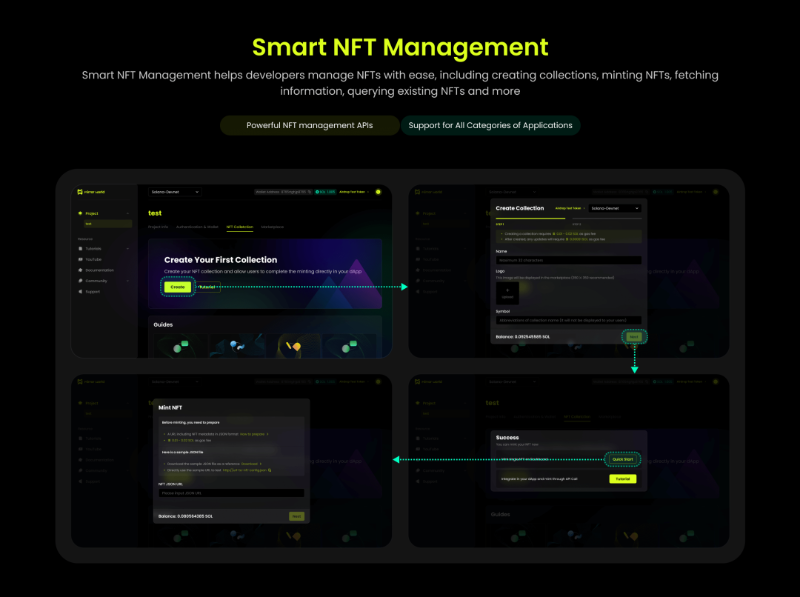
Figure 16: Smart NFT Management features and use case illustration
Putting together all the above capabilities, the essence of Smart Platform becomes clear: “an all-in-one development capability provider.”
This approach of solving multiple problems through a single platform saves significant development time, freeing developers to focus on refining their core product. Once the bottleneck of development capacity is removed, it unlocks not just time—but infinite possibilities for innovation in Web3 user experience and content.
Future Outlook
After fully understanding Smart Platform’s solutions, we believe it accurately targets current pain points faced by Web3 developers. Behind this precision lies accumulated experience and insights.
Mirror World, the builder of Smart Platform, previously encountered low user conversion, high acquisition costs, and misaligned target audiences on third-party marketplaces while developing Web3 games. Their firsthand experience gives them deep understanding of which parts of Web3 app development need optimization. By turning this experience into a product, they not only solve their own needs but also provide viable solutions for widespread industry challenges.
Meanwhile, under the mobile-first trend, the Web3 industry has the potential to see many more usable and experiential Web3 apps emerge on mobile. But such emergence depends heavily on simplified development.
As the first all-in-one Web3 application development platform, Smart Platform aims to fully resolve the dilemma developers face between shorter development cycles, lower integration costs, and better user experience. By reducing effort required for user onboarding and monetization, it allows developers to dedicate more energy to creating superior content and experiences. Only by truly lowering the development barrier can developers have the time and freedom to reimagine the future of Web3 applications.
To improve scalability and accommodate more ecosystem projects, Smart Platform continues iterative development. After supporting the Solana ecosystem in October last year and providing API support to over 250 projects, it launched a multi-chain version on February 24, integrating Ethereum, Polygon, BNB Chain, and others. Early access is now open on its official website.
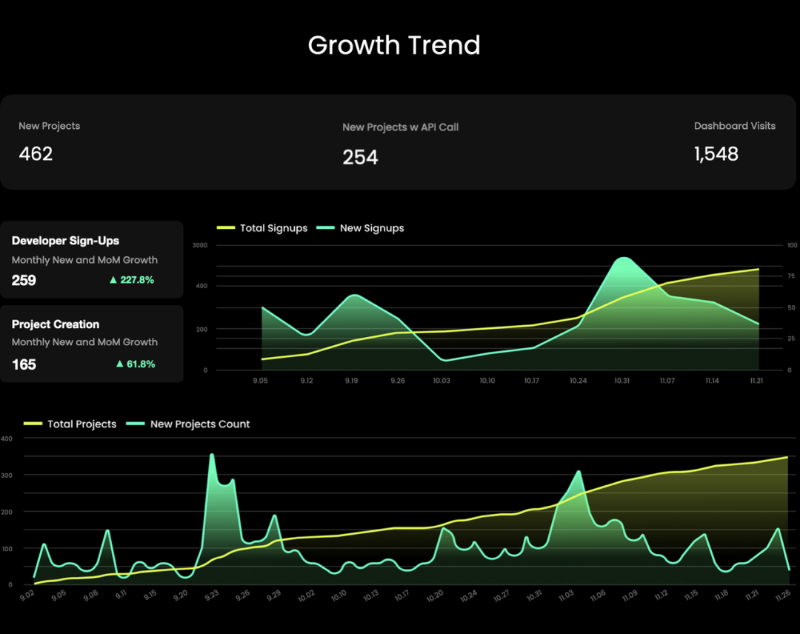
Figure 18: Usage statistics after Smart Platform launch
The number of projects served and usage data are rising rapidly.
Offline, Mirror World will co-host the Web3 Social House event with Mask Network, Next.ID, Chainbase, Collab.Land, and others during ETHDenver on February 28, marking the first offline launch of the product. Supported by developer communities like Gitcoin, Lens Protocol, and RSS3, this event will enable Mirror World to offer zero-cost onboarding opportunities to more projects.
Mirror World plans to launch a series of well-funded hackathons and developer incentive programs in Q1, aiming to expand adoption and reward developer contributions. We have good reason to expect more developers will discover the key to unlocking revenue doors, collectively building a brighter future for Web3.
If you're interested in Mirror World Smart Platform, visit the following links for more information:
Product trial application: https://5uoekr5pezt.typeform.com/to/xVhzCLDZ
Dashboard: https://app.mirrorworld.fun
Developer documentation: https://mirrorworld.fun/docs
Official website: https://mirrorworld.fun
Twitter: https://twitter.com/MirrorPlatform
Blog: https://mirrorworld.fun/blog
Join TechFlow official community to stay tuned
Telegram:https://t.me/TechFlowDaily
X (Twitter):https://x.com/TechFlowPost
X (Twitter) EN:https://x.com/BlockFlow_News
 CryptoDada