Smart Layer: Middleware connecting Web3 and public blockchains
TechFlow Selected TechFlow Selected
Smart Layer: Middleware connecting Web3 and public blockchains
Smart Layer, as middleware between public blockchains and Web3 applications, inherits the security of public blockchains while being capable of executing complex Web3 business logic.
 Navigating Web3 tides with focused insights
Author: Fishery, Core Contributor of Biteye
Editor: Crush, Core Contributor of Biteye
Public blockchains and Web3 have always shared an ambiguous relationship, with highly overlapping user bases, yet most projects operate independently—ultimately linking the two only through their native tokens.
At face value, Web3 is clearly an upgraded version of Web2, envisioned as the next stage of the internet—a decentralized network where users control their data, identity, and transactions rather than relying on centralized entities or platforms. Public blockchain technology serves as one of the key infrastructures enabling this Web3 vision.
To realize a truly decentralized, secure, and user-driven Web3 internet, the underlying technologies must support these characteristics. Blockchains provide a secure, transparent, and immutable method for recording data, making it possible to exchange value, execute contracts, and store data without central authority. Thus, public blockchains are a pivotal technology on the path toward achieving the Web3 vision.
However, due to current limitations in performance and functionality, many Web3 projects still rely partially on centralized technologies in practice.
For instance, projects may use centralized servers to handle compute-intensive tasks or store large volumes of data, reserving the blockchain solely for core value-transfer functions. While such compromises improve efficiency and functionality, they also reduce the degree of decentralization.
Achieving the full Web3 vision requires continued innovation built upon blockchain technology.
Smart Layer is an innovative infrastructure designed to solve these issues—an intermediary (middleware) between public blockchains and Web3 applications that inherits blockchain security while executing complex Web3 business logic. It represents a completely new concept.
01 Introduction to Smart Layer
Smart Token Labs, formerly known as TokenScript, is an open-source middleware platform for programmable smart tokens and Web3 applications, enabling a smooth transition from existing Web2 businesses into Web3.
Smart Layer is an ecosystem providing a programmable service network for public blockchains, ushering in the era of executable smart tokens and enabling complex interactions across various systems and tokens.
For token issuers, this platform not only enables the creation and management of programmable smart tokens but also offers a middleware solution for Web3 services, greatly simplifying the integration of web services with token functionalities. Smart Layer is precisely the missing layer needed to unlock mainstream tokenization use cases.
Smart Token Labs has solid technical foundations and a long development cycle. The team raised an initial $6 million in July 2021 from investors including Mark Cuban, Crypto.com, Framework Ventures, and Mechanism Capital.
In September 2022, the project secured another $6 million at a valuation four times higher than the previous round, led by renowned Chinese investor Liang Xinjun, with participation from HashGlobal, BODL, and Fenbushi Capital—demonstrating strong professional investor confidence and support for the sector.
Earlier this year, Smart Layer published a retrospective highlighting its progress, announcing that it had completed support for EVM-based blockchains and could now manage token logic not stored on-chain.
Additionally, the project launched the compelling Smart Cat xNFT game, attracting significant player interest. The team also proposed the ERC-5169 standard, adding new dimensions to token interoperability and functionality.
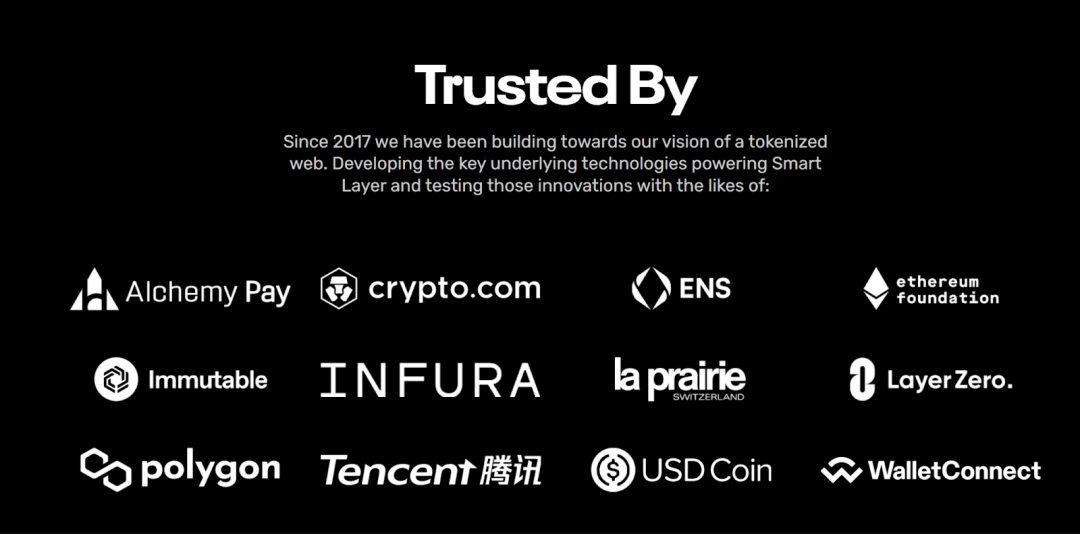
Meanwhile, through close collaboration with InsomniaLabs, Smart Layer successfully launched the Loyalty+ program, aiming to strengthen brand-user loyalty using blockchain technology. The project already boasts over 50 partners, including Polygon, LayerZero, and Alchemy, demonstrating its broad industry potential.
Operationally, Smart Layer partnered with Glenn Maxwell, a top-10 global cricket star, launching a worldwide fan engagement initiative powered by proof-based executable NFTs built on Smart Layer.
As middleware, Smart Layer holds significant importance. It not only reduces the complexity of transitioning traditional Web2 businesses to Web3 by offering flexible tools that make it easier for development teams to build and deploy decentralized applications, but it also effectively bridges the gap between public blockchains and Web3.
Through Smart Layer, users gain access to a more secure, transparent, and non-centralized experience. By addressing existing limitations within the blockchain environment, it unlocks broader application possibilities.
Most importantly, Smart Layer announced plans to launch an airdrop campaign this year (2024). Based on available information, the SLN token will serve as the service utility and incentive point within the Smart Layer network, ensuring decentralization and stable network operations.
02 Technical Details
From a macro perspective, Smart Layer's overall technology consists of three components: public blockchains, anchoring nodes, and service nodes. From the user’s standpoint, Smart Layer’s innovative three-layer architecture can be divided into two main parts:
-
Smart Token ERC-5169: An innovative token standard issued on EVM-compatible blockchains that adds interactivity to tokens while preserving traditional token functions.
-
Smart Layer Network: The network layer enabling token interactivity—a decentralized infrastructure distinct from traditional blockchains.
Smart Tokens
In May 2022, Smart Token Labs introduced Ethereum Improvement Proposal ERC-5169, aiming to enhance token functionality and interoperability by introducing the scriptURI() function.
This proposal allows tokens to link to executable scripts, transforming them from mere value carriers into active instruments capable of executing complex logic and interacting with diverse systems. From an industry evolution perspective, ERC-5169 is a crucial innovation toward realizing the Web3 vision, enabling tokens to become intelligent tools connecting users, data, and services.
Currently, ERC-5169 has attracted widespread community attention and gained notable recognition. By allowing tokens to directly reference external scripts, it opens up entirely new dimensions of token utility and functionality. It is believed that ERC-5169 may eventually be adopted as an official standard within the Ethereum community.
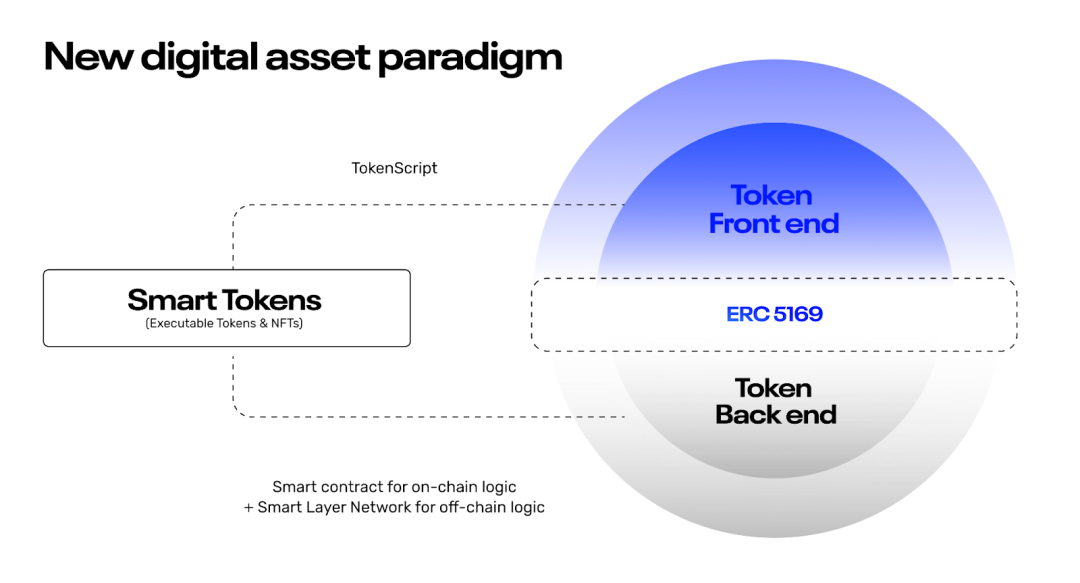
Technically, the core of the ERC-5169 standard lies in the scriptURI() function. This function enables a token contract to point to an externally stored script address, which can contain any form of logic—from simple information display to complex application workflows.
This means developers can add extra features to tokens—such as automated trading, conditional execution, and data retrieval—greatly expanding their application scope and potential.
Developers use the scriptURI() function to specify the location of an external script associated with the token. This location is typically a URL pointing to a script file hosted on a distributed file system like IPFS or other reliable storage services.
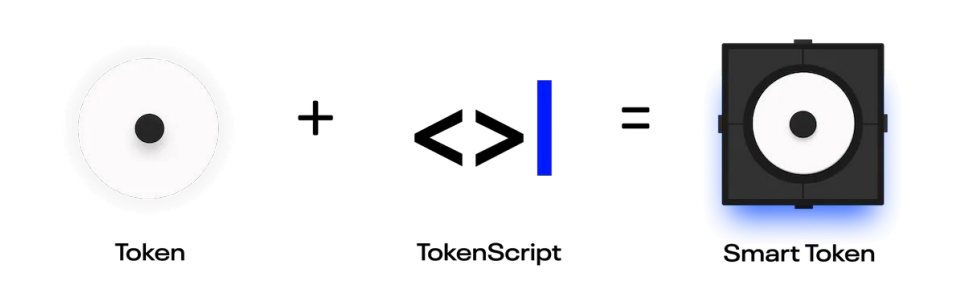
ERC-5169 not only enables the creation of feature-rich smart tokens but also drives innovation in decentralized applications (DApps) and Web3 services, delivering richer, more flexible, and secure digital asset experiences to users.
Smart Layer Network
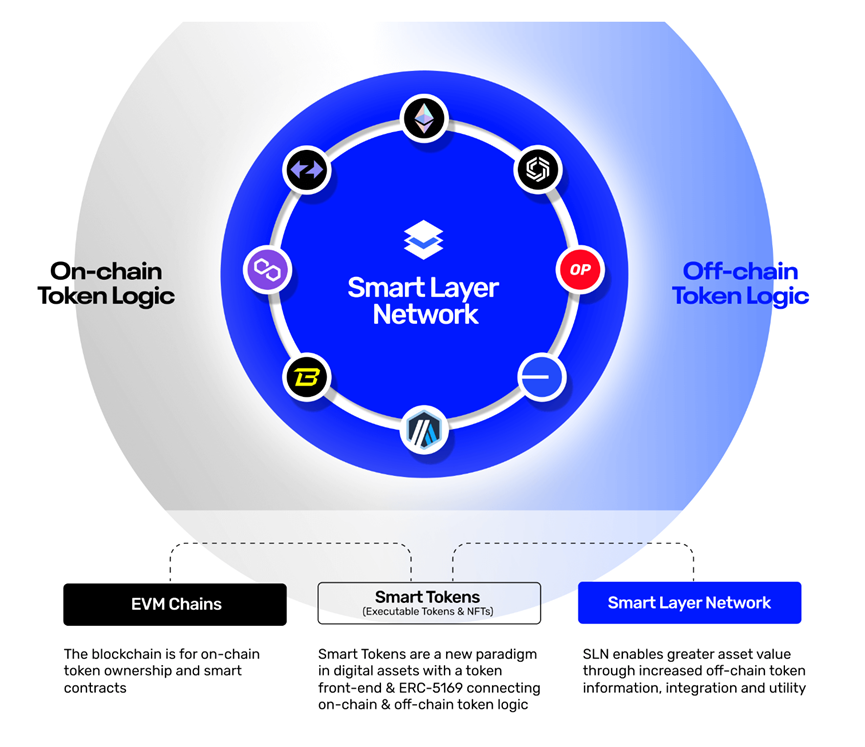
Beyond the new token standard, Smart Layer’s core technology is a decentralized service layer network that enables EVM-based tokens to deliver more sophisticated functions and services.
The Smart Layer Network uses an architecture composed of anchoring nodes and service nodes to maintain network stability and security, while leveraging Distributed Hash Table (DHT) technology to ensure efficient distribution and access to information across the network.
-
Anchoring Nodes: Monitor and maintain the overall health of the network, assign tasks to service nodes, oversee Service Level Agreement (SLA) compliance, and manage recordkeeping and submission of token operations.
-
Service Nodes: Execute specific service tasks such as data storage and content delivery. They are rewarded via an incentive mechanism based on the efficiency and quality of their performance.
Unlike traditional blockchains that rely on consensus mechanisms, Smart Layer focuses on real-time monitoring and load balancing—where anchoring nodes play a critical role. These nodes act as network guardians, ensuring consistent service availability and stepping in when necessary.
Anchoring nodes share information via a Distributed Hash Table (DHT), determining task assignments for service nodes during intelligent token servicing.
This decentralized approach not only mitigates potential attacks arising from matching node IDs with token IDs but also ensures timely responses to integrated queries. Anchoring nodes cooperate with peers to maintain a DHT that maps any given smart token to its corresponding service node.
Through this design, Smart Layer aims to provide a highly efficient and flexible backend service platform for decentralized applications (DApps), decentralized finance (DeFi) services, and other blockchain-based applications, significantly expanding the real-world applicability and depth of blockchain technology.
Together, these two major components of Smart Layer technology extend executable capabilities atop existing EVM token functionalities while leveraging its own network infrastructure to support these enhanced features—elegantly bridging public blockchain technology with the Web3 vision.
03 Ecosystem and Interaction
According to the official website, the SLN token is expected to launch early in 2024, though specific details remain pending further updates from the team. Currently, Smart Layer is running the Smart Pass points campaign, and the team has repeatedly indicated that Smart Pass points are directly linked to future airdrops.
Smart Pass is a developer tool suite developed by the Smart Layer team to drive Web3 user and community growth. It not only promotes the expansion of the Smart Layer ecosystem but also supports other Web3 projects in accelerating product adoption and community engagement.
Interaction Tasks
Users can register their Pass via email in the top-right corner of the Smart Layer website. After registration, two activity sections appear:
-
Quest: The Pass pass synchronizes dynamically with total points earned. Users complete quests to accumulate points. These tasks are simple and cost-free, requiring only wallet connection and completion of social account tasks. Note: Each wallet address can bind to a Pass card only once—this links the wallet and email permanently, and cannot be undone. Since this may affect future airdrops, users should prioritize completing wallet binding before snapshots to ensure eligibility.
-
Perks: Perks Hub is where Smart Layer Pass holders claim rewards, benefits, and opportunities. It offers exclusive discounts, access to premium content, early feature previews, and more. These perks will be regularly updated and expanded over time, providing sustained value to Pass holders.
Currently, Perks includes three tasks. The third-party task JoyID requires no cost and grants 1,500 points; participants may also qualify for future JoyID rewards. The other two tasks are native Smart Layer game activities requiring ownership of a Smart Cat NFT. Over 940,000 of these NFTs have been minted, and both trading volume and floor price have shown steady increases—indicating rising demand.
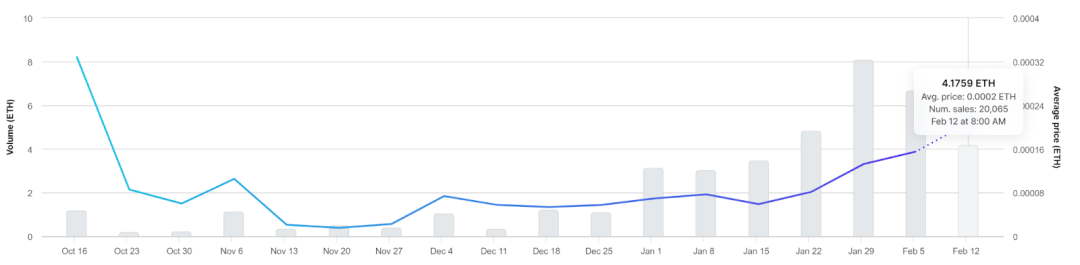
Users can interact daily with Smart Cat to earn points—25 points per interaction, up to 15 interactions per day. Additional rewards are granted as Smart Cat levels up: 500 points at level 7, 1,200 at level 10, 2,500 at level 14, 3,000 at level 17, and 3,500 at level 20.
Interactions can be performed using the Android and iOS versions of Alpha Wallet, or via the TokenScript Viewer if using a wallet incompatible with TokenScript.
Open-Source Ecosystem
Beyond showcasing achievements within its own ecosystem, Smart Layer actively contributes to the broader Ethereum community.
Staying closely aligned with market trends, after the emergence of ERC404, the team released an open-source improved version integrating features from ERC404 V2, ERC5169, and TokenScript. By using ERC5169 and TokenScript as the frontend for ERC404 tokens, this solution provides a standardized HTML-like framework, standardizing token display and interaction.
Moreover, this improved protocol enhances both security and user experience, extends use cases beyond collectibles, and embeds ERC-5169 and TokenScript as frontends for ERC404 tokens. This change significantly improves holders' visibility and control over transfers of ERC-20 and ERC-721 components. It also expands ERC404’s application scenarios—for example, granting membership rights or enabling advanced account functionalities.
Beyond these advantages, this improvement highlights the inherent extensibility of Smart Layer technology. If it can integrate with ERC404 today, it can potentially incorporate even more emerging technologies and narratives in the future, further expanding the Smart Layer ecosystem.
04 Outlook
After reviewing both the technical architecture and user interaction aspects, the team’s commitment is evident. Whether through core technologies like ERC-5169 and the Smart Layer Network, or user-facing tools like Alpha Wallet and TokenScript Viewer, the team has invested heavily in ecosystem development to bring smart tokens to market.
The integration of ERC404 and Smart Layer showcases the latter’s strong compatibility and scalability, reflecting a technically proficient and market-savvy team with high development efficiency and sharp strategic insight.
Overall, Smart Layer fills a critical technological gap between Web2 and Web3, offering the industry’s first viable solution to the challenge of integrating traditional blockchain technology with the Web3 vision. With the upcoming mainnet launch and incentive programs, its ecosystem is poised for further expansion.
Join TechFlow official community to stay tuned
Telegram:https://t.me/TechFlowDaily
X (Twitter):https://x.com/TechFlowPost
X (Twitter) EN:https://x.com/BlockFlow_News
 @BiteyeCN