Conversations with Moonshot, PermaDAO, and Social Layer: How Far Are We from a "Dedicated Commons"?
TechFlow Selected TechFlow Selected
Conversations with Moonshot, PermaDAO, and Social Layer: How Far Are We from a "Dedicated Commons"?
Besides the "tragedy of the commons," can we achieve a Wikipedia-style "comedy of the commons" through increasing returns to scale?
 Navigating Web3 tides with focused insights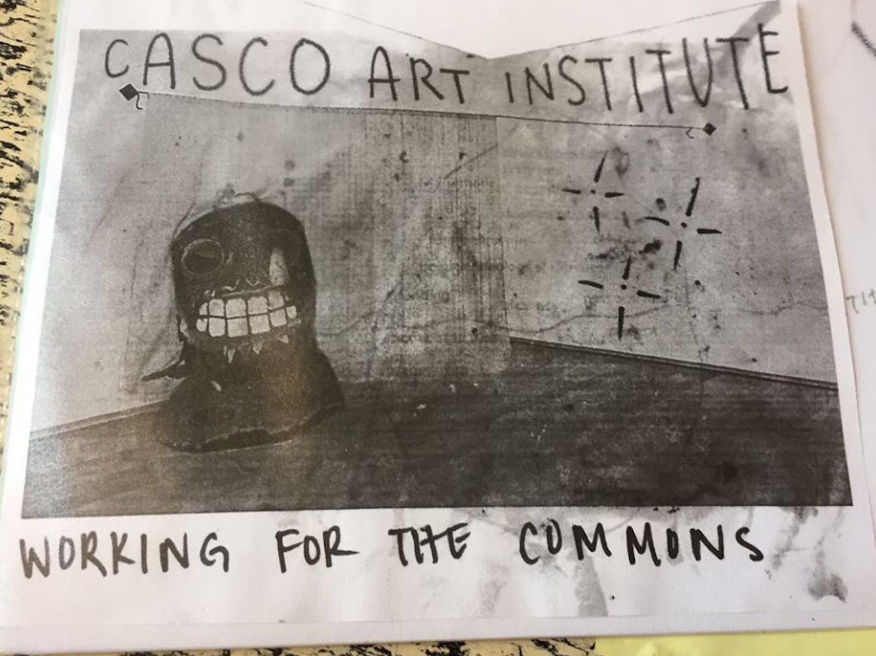
The Commons: Imagining “Other Possible Worlds”
The idea of "the public" constantly hovers above us. Is the current organization of the world necessarily the "best possible version," or merely a form of appeasement toward hierarchical power structures disguised as "historical inevitability"?
Beyond the so-called "tragedy of the commons," can we achieve a "comedy of the commons"—akin to Wikipedia—through increasing returns to scale?
A single individual detached from any network cannot constitute society; two people introduce complexity squared; but when multiple individuals co-create simultaneously, they generate a two-dimensional plane of governance, creating countless connections and modes of interaction, exponentially producing infinite mathematical solutions for “other possible worlds.”
One thing is certain: among these solutions, we are still at the starting point.
In addition to launching the open-source Grants for “Summer of Public Goods” (link: https://m.techflowpost.com/article/detail_11785.html), we conducted a series of Q&As exploring public goods and governance issues within the Chinese-speaking community. Beyond this “construction site” of Chinese-speaking Web3, we hope to sit down together on the ground, starting from our present initial state, and imagine other possible worlds.
How to apply for Summer of Public Goods Open-Source Grants (open to all developers): https://tally.so/r/meMVZk
Series Q&A List:
1) What is your view on the current state of Web3 public goods in the Chinese-speaking region? Within your domain, which area is the weakest? *(Foundational question)
2) Is it a false premise to expect free markets to provide genuine public goods? If not relying on centralized institutions, what do you consider the most critical market precondition for the Chinese-speaking Web3 community?
3) In long-term development, how do you balance self-value with public value? Please describe the Schelling point between builders and the public within your community/project philosophy.
4) What kind of Web3 public infrastructure is required to realize your community/project’s ultimate vision?
5) If “fairness, low barriers, abundant resources” form an impossible trilemma for publicness, what has been your most outstanding attempt in navigating this during your project's development?
Interviewees: Initiated by Web3MQ, answers provided by Moonshot, PermaDAO, and Social Layer (in chronological order).
Author: Fang Ting
Moonshot Workshop
*Text-based Q&A.
"The new mode of production in Web3 needs to be objectively proven capable of sufficient value capture"; "While building moonshots, we're also conducting ethnographic research on tech entrepreneurs of this era"; "Missing Web3 public infrastructure centers around developer education."
What is your view on the current state of Web3 public goods in the Chinese-speaking region? Within your domain, which area is the weakest? *(Foundational question)
Cameron: In recent years, the field of Web3 public goods in the Chinese-speaking region has actually seen solid progress. The phase of rampant scamming is gradually fading. More people are now recognizing and pursuing the core ideas behind Web3. Driven by these genuine builders, the ecosystem is shedding its previous short-term, profit-driven character. Projects with real value and meaningful value-capture potential are emerging one after another, and overall ecological quality continues to improve.
Of course, compared to the Web3 public good environment in the U.S., there remains a gap in the Chinese-speaking context. In my opinion, the weakest link lies primarily in the insufficient number of Web3 builders. This shortage stems from various factors. Currently, understanding of Web3’s philosophical core remains relatively underdeveloped in our region. Beyond cultural misalignment between Web3 ideals and traditional models, broader environmental policies—including the Great Firewall—restrict the flow and updating of information within Chinese-speaking communities.
We have one of the largest populations of programmers in the world, yet the number of those who truly engage with and learn Web3, becoming actual Web3 builders, amounts to less than one-thousandth of that total. In many grant programs and startup initiatives, organizers eventually realize they’re repeatedly engaging the same group of people. This difficulty in expanding circles and stagnant personnel turnover means that the speed of iteration and transformation within Chinese-speaking Web3 projects still has significant room for improvement. Therefore, I believe the biggest bottleneck to accelerating Web3 development in this region is how to onboard the vast pool of Web2 developers into becoming Web3 builders.
Is driving free markets to provide genuine public goods a false premise? If not relying on centralized institutions, what do you consider the most critical market precondition for the Chinese-speaking Web3 community?
Cameron: To me, whether free markets can deliver true public goods largely depends on whether we can reshape the mode of production. Under traditional capitalist frameworks, expecting companies to provide genuine public goods is nearly impossible.
Compared to Web2, I believe Web3’s defining feature is its transformation of capital allocation—in other words, community and ecosystem occupy a central role in Web3’s ethos. Indeed, blockchain infrastructure itself is fundamentally a public good. Thus, we believe that **to truly enable free markets to produce public goods, the key prerequisite is seeing Web3’s new mode of production objectively proven to possess sufficient value-capture capability.** The clearest manifestation of this reality would be a self-reinforcing cycle where providers of public goods bring fresh talent into the ecosystem, drive prosperity across the Web3 public goods landscape, and benefit fairly from that growth—a mutually reinforcing, win-win dynamic.
In long-term development, how do you balance self-value with public value? Describe the Schelling point between builders and the public within your community/project philosophy.
Cameron: When we first founded Moonshot, our intentions were very pure. We believed every era produces extraordinary entrepreneurs, and we wanted to find the most exceptional ones among Gen Z and grow alongside them. The cycle of witnessing early innovation mature and bear fruit may take ten, twenty, or even more years. So **while building Moonshot, we’re also conducting ethnographic research on the tech entrepreneurs of this generation.** Looking back in the future, if we’ve inspired some people, generated sufficient returns for investors, and witnessed groundbreaking innovations from Z-generation founders, then we’ll know we’re getting closer to success.
In the long run, I don’t see inherent conflict between our intrinsic value and public value. But we aren’t in a rush to monetize our own value. We trust in the power of community. When we cultivate a sufficiently valuable community and see founders emerge who gain global influence, our own value realization will naturally follow.
What kind of Web3 public infrastructure is needed to achieve your community/project’s ultimate vision?
Cameron: As mentioned earlier, I believe the most urgent task is attracting more builders into the Web3 world. For Web3 to sustain continuous development and iteration, it must draw constant streams of new participants. This means Web3 urgently needs a comprehensive developer education system—one accessible to broad audiences of Web2 developers and suitable for computer science students. With such a system in place, combined with existing projects that offer newcomers zero-to-one pathways to experiment and grow, I believe Web3’s entire ecosystem will flourish much more robustly under the support of a well-rounded Web3 education framework.
PermaDAO
*Voice interview Q&A.
"Those outside Web3 tend to show more self-protection and hierarchy." "Contributor overlap among DAOs is high." "The biggest keyword for PermaDAO is 'fluidity'."
What is your view on the current state of Web3 public goods in the Chinese-speaking region? Within your domain, which area is the weakest?
Coral: If we divide public goods into three categories, I’d say: first, builder resources (human capital); second, infrastructural resources; third, governance rules.
Starting with builder resources: recently I posted something on social media reflecting a deep observation—when exploring Web3 and interacting with others, I notice that people in Web3 are generally more open, approachable, and authentically friendly compared to those in Web2. Those outside the Web3 space often exhibit stronger self-protectiveness and hierarchical tendencies. Among all Web3 participants, DAO members feel to me the most sincere and welcoming. DAOs inherently carry a utopian quality—they freely share resources without reservation and enjoy equal access. Builder resources are especially vital here. Since the Web3 industry is still small, contributor overlap across different DAOs is quite high.
Regarding infrastructural resources, I mean foundational tools like Notion and Dework—some Web2, some Web3—that support collaboration, transparency, and leaving traces at every step. Supporting features like voting mechanisms and on-chain login must also function well, maintaining usability as the organization scales from 0 to 100, even to 200 or 500 members.
Governance methods are an ongoing exploration—not something easily copied—but rather an emergent outcome approached through experimentation. It should look “most blockchain-like,” fair and just. Such governance can only arise organically from within a specific organization’s journey.
Fang Ting: Can you give a concrete example of a governance method? Will PermaDAO develop its own distinct governance model?
Coral: For us, the biggest keyword is “fluidity.” All our tasks are open, yet we also have a sort of leveling-up progression system—one that’s open, not closed. Leadership roles across guilds are never fixed. People can maintain specialization or cross domains; both are valid forms of contribution. Fluidity is the best principle for sustaining vitality over time, under conditions of fairness.
Fang Ting: Can this be understood as replacing upfront criteria (like resumes or paper credentials) with post-hoc evaluation, dynamically adjusted through fluidity? Do you have any basic pre-screening mechanism?
Coral: We use application forms, but our fundamental attitude welcomes everyone. There’s an observation and learning period, during which alignment with our brand ethos is assessed. If someone doesn’t fit, they won’t receive positive feedback from activities, and likely won’t return—this creates a relatively natural filtering mechanism, not artificial intervention. (Fang Ting: This reminds me of an interesting metaphor—DAOs embody more of a “plant philosophy,” while traditional employment reflects an “animal philosophy”: forming food chains or survival-of-the-fittest dynamics. But plant philosophy is slower, longer-term, more aligned with natural laws—softer, gentler selection that doesn’t consume anyone.)
Coral: Yes. Outprog, founder of PermaDAO’s parent company, has strong ideals about exploring what a true DAO can be. The early contributors who shaped DAO governance had profound influence on its culture—determining whether it’s truly a DAO or just a facade. Whether there’s a parent company matters less than how much control it exerts. Is it replicating traditional equity structures one-to-one? Are roles progressive? I think ideally, DAOs shouldn’t have full-time employees—everyone should be a builder—to minimize hierarchy as much as possible.
Fang Ting: Several healthy, sustainable DAOs in China initially had charismatic leaders. This connects to our next question about how public goods can be supplied in free markets. I’m curious—if this model appears centralized at first, relying on a few individuals to transfer initial resources—is this how Chinese-speaking DAO ecosystems will continue evolving for the foreseeable future?
Coral: I think DAOs fall into several types. PermaDAO has strong market orientation—we aim to popularize knowledge about permanent storage and attract more developers to contribute and strengthen the AR ecosystem. Here, DAO powers serve a specific project. But most domestic DAOs are “purposeless social organizations,” lacking substantial funding and struggling to quickly find a stable foundation. As a result, they lack a unifying thread—especially economic incentives—that runs through their governance.
Fang Ting: Yes, publicness initially requires personal sacrifice—taking on impact-driven risk investment to pursue an ideal structure. So it’s a kind of investment, albeit impact-focused venture capital.
Coral: The ideal state for a DAO is minimizing manual intervention in governance and voting—people simply work according to their natural strengths. This also demands mature tools. In essence, DAOs are quite cold—though rationally so. Reducing human interference and interpersonal dynamics enables fairness and efficiency.
Fang Ting: At least it’s not negative—humans constantly impose bias; DAOs proactively flatten those biases retroactively. That’s an ideal state—actually not coldness, but restraint.
Coral: Reflecting on this, we realize we’re engaged in a cyclical process—a return. After exploring new organizational forms and achieving efficiency, ensuring positive returns brings us back to a corporate-style “revenue exceeds cost” proposition—but this time, it’s a better answer, one that’s more transparent and beneficial to more people.
Social Layer
*Text-based Q&A.
"Users need to be able to choose and define their values"; "We emphasize non-transactional use cases—human connections are hard to quantify"; "There’s a lack of better integrated and authenticated Web2 identity product solutions."
What is your view on the current state of Web3 public goods in the Chinese-speaking region? Within your domain, which area is the weakest?
Jiang: Public goods development in the Chinese-speaking region is still very early-stage. Industry-wide awareness is far from sufficient, and importance isn’t adequately recognized. The personal value of publicness hasn’t been realized, and many infrastructures remain immature. Communities still require education. For Social Layer, focusing on social domains, user wallet experiences remain suboptimal. Integration and migration of Web2 data and social relationships into Web3 lack critical components. Societally, we hope to see discussions around user data security and data sovereignty, helping users recognize the qualitative difference ownership of their data can bring.
In long-term development, how do you balance self-value with public value? Describe the Schelling point between builders and the public within your community/project philosophy.
Jiang: We’re exploring co-growth between project-specific value and societal public value, actively advancing industry-wide public discourse and collaborating with global and local communities on events. We aim to build, via Web3, a more open, composable social relational network, where users can choose and define their own values, allowing community value to better accumulate and enabling unique value systems to emerge. We value non-transactional use cases—human connections are difficult to measure, yet highly composable and generative. Social Layer encourages greater user interaction and participation, lowers barriers to entry, and stays closely integrated with the community.
What kind of Web3 public infrastructure is needed to achieve your community/project’s ultimate vision?
Jiang: For Social Layer, needed Web3 infrastructure includes better-integrated and authenticated Web2 identity solutions, flexible, rich, multi-chain-supporting NFT data APIs, and technical tools and frameworks that make social protocols easier to compose. These are still evolving and urgently need refinement.
How far are we from “working for the commons”? Perhaps still distant, perhaps already zero: because in the verb “working,” we are always at the center of the event, in motion, moving forward. This dynamism must be sustained, and conclusions must remain suspended: what lies on the commons is never a pristine, universally accessible object (the commons is not and never will be virgin land), but always a geometric average of diverse interests. Before this equilibrium point is reached in any historical moment, we face compromises, uneven developmental stages, and a scale perpetually tipping to one side or another. In this interview series, we see varied perspectives from individuals with different backgrounds and positions in Web3, offering divergent views on the state of public goods development in the Chinese-speaking world. Stay tuned for the series—observe the swaying scale, make space for the commons, and witness the stances of builders.
Apply for Summer of Public Goods
Join Social Infra Insights as participant or researcher
Join TechFlow official community to stay tuned
Telegram:https://t.me/TechFlowDaily
X (Twitter):https://x.com/TechFlowPost
X (Twitter) EN:https://x.com/BlockFlow_News
 Social Infra Insights