Interview with Taiko's Co-Founder: Ethereum Scaling Solutions Should Be More Thoroughly Decentralized
TechFlow Selected TechFlow Selected
Interview with Taiko's Co-Founder: Ethereum Scaling Solutions Should Be More Thoroughly Decentralized
Taiko's uniqueness lies in its implementation of a based rollup architecture, enabling Ethereum validators to ultimately be responsible for block production on Taiko, thereby achieving decentralized proposers.
 Navigating Web3 tides with focused insights
Author: Climber, Jinse Finance
On July 23, Taiko unveiled its future development roadmap, revealing that the Ontake upgrade is scheduled to launch on mainnet in Q4 this year, along with new transaction types and other features. This has further heightened community expectations for Taiko.
Since the launch of Taiko's mainnet at the end of May, the project has drawn significant attention and delivered a series of impressive performance metrics, including reducing L1 gas costs by over 30%, reaching a peak TVL of nearly $200 million, and seeing its token price rise逆势 to surpass $3 despite broader market downturns.
Taiko (meaning "drum" in Japanese) was founded in early 2022 as an Ethereum Layer 2 protocol designed to be the most Ethereum-equivalent and fully general-purpose ZK-Rollup (Type-1 ZK-EVM). The protocol aims to lower Ethereum transaction costs while preserving Ethereum’s core characteristics, enabling developers to build dApps more effectively.
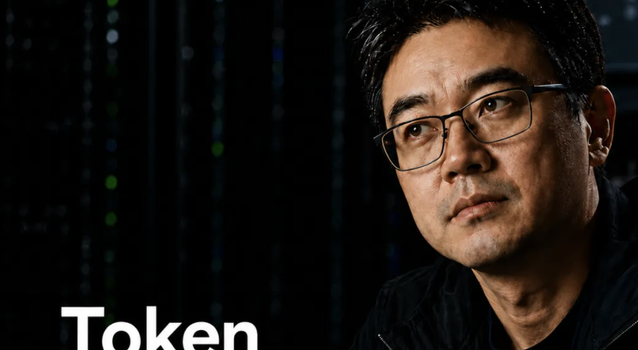
To gain deeper insights into Taiko’s mechanisms and value proposition, Jinse Finance conducted an exclusive interview with Daniel Wang, Co-Founder and CEO of Taiko, discussing the project’s technical design, future plans, and perspectives on the broader L2 landscape.
Jinse Finance: Congratulations on Taiko’s mainnet going live nearly two months ago. Could you briefly introduce Taiko?
Daniel Wang: Thank you for your interest in Taiko’s mainnet launch. Let me give a brief introduction.
Taiko is a Type-1 zkEVM, meaning we provide identical opcodes and functionalities to Ethereum, ensuring seamless compatibility with the existing Ethereum ecosystem. This allows developers to migrate their applications from Ethereum to Taiko without any modifications.
What sets Taiko apart is our implementation of based rollup technology. This innovation enables Ethereum validators to ultimately be responsible for block production on Taiko, thereby decentralizing the proposer role. Our goal is to scale Ethereum without sacrificing decentralization, fostering an ecosystem where both centralized and decentralized Layer 2 networks coexist. This gives dApp developers and users more choices, allowing them to select the network type that best suits their needs.
In March this year, Taiko completed a $15 million Series A funding round led by Lightspeed Faction, Hashed, Generative Ventures, and Token Bay Capital, bringing our total funding to $37 million. These investments not only provide financial support but also strategic partnerships. We highly value synergies with our investors, whose industry insights and network resources are crucial to Taiko’s growth.
It’s encouraging that Taiko has rapidly grown into one of the largest Discord communities globally—with over 1.07 million members—and attracted hundreds of dApps to deploy on it. This achievement stems from a combination of factors: our technological edge (Type-1 zkEVM), commitment to decentralization, community-building strategy, and the support and trust of our investors.
We believe Taiko’s success relies not just on technological innovation, but also on how effectively we empower the entire ecosystem. We’re dedicated to providing developers with the best tools and environment, while continuously exploring ways to better serve end users so that the benefits of blockchain technology can truly reach the masses.
Jinse Finance: What motivated your team to create and develop this decentralized zk-powered Ethereum L2? What has been its development journey so far? What have been the biggest challenges, and how did you overcome them?
Daniel Wang: Our core motivation for creating Taiko stems from a deep understanding of and commitment to the essence of blockchain technology. In 2017, I founded Loopring, which later became the first zkRollup in the blockchain world. Although due to technological limitations at the time, Loopring could only function as a non-programmable Layer 2 with a centralized block production mechanism, this experience provided us with invaluable insights—including key learnings about Ethereum scaling.
Loopring’s successful launch served as an important reference point for Ethereum’s Rollup-centric roadmap. This experience taught us that the true appeal of blockchain lies in permissionlessness and decentralization. Therefore, when building Taiko, we made these two principles central to our design philosophy.
We firmly believe that a Layer 2 can add new features on top of being permissionless and decentralized, but the reverse is extremely difficult. That’s why Taiko launched with a permissionless and decentralized model from day one. We believe widespread adoption of applications—especially decentralized social networks—requires a foundational layer that is itself permissionless and decentralized. Just as a skyscraper cannot stand on sand, or as the saying goes, “Without the skin, where would the hair attach?” Here, the “skin” represents a permissionless and decentralized Layer 2, and the “hair” represents decentralized applications.
The primary challenge in building a Type-1 zkEVM lies in combining Type-1 with zkEVM, compounded by a scarcity of relevant talent. We needed not only to design the rollup architecture but also to write zk circuits, develop zk proof systems, and even build distributed zk proving infrastructures.
In choosing our zk approach, we initially took some wrong turns. Fortunately, we soon realized that the proof system must be decoupled from system design, ensuring it remains pluggable. About a year ago, we made a pivotal decision: to abandon developing our own zkEVM and instead wait for and adopt third-party general-purpose zk proof solutions—specifically, zkVMs.
This decision may have disappointed some community members in the short term, who perceived it as abandoning zk development.
But in the long run, it was a wise move. It allowed us to focus more on overall system design and user experience optimization, while also positioning us to quickly integrate future advancements in zk proof technology.
Currently, another major challenge we face is improving user experience through transaction preconfirmation and reducing block production frequency. Preconfirmation enables sub-second transaction finality, which is critical for gaming and payment applications. Meanwhile, lowering block frequency helps reduce operational costs for our Based Rollup.
Jinse Finance: Could you share updates on Taiko’s current products and business progress? What standout performance metrics does the project have so far—such as TVL, on-chain projects, and interaction data?
Daniel Wang: Nearly two months after mainnet launch, Taiko has achieved remarkable results across multiple dimensions. Taiko Labs has compiled the following statistics:
In the first month post-launch, Taiko reached a total value locked (TVL) of $138.7 million, with an average of 19.53 transactions per second (TPS), peaking at 45.3 TPS. Total transactions exceeded 21.57 million, and unique wallets approached 700,000.
Additionally, in gaming and DeFi, Taiko has integrated over 80 projects including LayerZero, Stargate, and Oku Trade. The Trailblazers loyalty program attracted nearly 600,000 participants, resulting in over 220,000 badges minted.
Jinse Finance: What are the key differences between Taiko’s scaling solution and other Rollup projects?
Daniel Wang: There are several key distinctions:
1. Based Rollup Mechanism
One of Taiko’s core innovations is the Based Rollup mechanism. Instead of relying on a centralized sequencer, we leverage Ethereum validators to order transactions and blocks. This significantly enhances network decentralization, making Taiko the only rollup today that achieves decentralized proposing and proving.
2. Based Contestable Rollup (BCR) Concept
At the end of 2023, we introduced the concept of Based Contestable Rollup (BCR), a major innovation for Taiko. BCR introduces a dispute mechanism based on the following considerations:
ZK-EVM code may contain unknown bugs, and as a decentralized network, Taiko has low tolerance for errors.
A mechanism is needed to resolve potential software bugs without halting operations like centralized networks do.
Security must be balanced with verification cost and degree of decentralization.
In BCR, anyone can contest a block state transition by posting Taiko tokens as a bond. Disputes are resolved via higher-level proofs, creating both security guarantees and economic incentives.
3. Multi-layer Proof System
Taiko’s BCR architecture allows each level to use its own proof system. This flexibility enables combinations of different proof types—such as Optimistic, SGX, zkEVM, or zkVM proofs—enhancing system credibility and paving the way for future tech developments, Layer 3s, and appchains.
4. Flexibility and Scalability
Contestable Rollup can be seen as an abstraction of zkRollup and Optimistic Rollup. This design grants Taiko exceptional flexibility and scalability. Depending on future tech advances and application needs, we can configure the system as a pure zkRollup, Optimistic Rollup, or hybrid model.
Jinse Finance: The Ethereum L2 space is fiercely competitive. As a newcomer, how do you view the current L2 landscape? What are Taiko’s greatest strengths and differentiators compared to competitors?
Daniel Wang: Before Taiko’s mainnet launch, most L2 solutions were highly centralized. Whether zkSync and StarkNet representing zkRollups, or Optimism and Arbitrum representing Optimistic Rollups, these are relatively centralized models typically operated by companies relying on centralized data and user acquisition.
We believe that if Rollups are truly to be the core of Ethereum scaling, we shouldn’t settle for these centralized Layer 2s. Ethereum’s scaling should be more decentralized—that’s exactly what Taiko strives to achieve.
Despite numerous Layer 2 applications already existing, the actual technical approaches remain limited. We believe there’s still ample room for innovation, especially in enhancing decentralization and security.
Compared to competitors, Taiko’s key advantages include the following.
First, Taiko uses Based Rollup technology—a more thoroughly decentralized approach. We aim to offer Ethereum a genuinely decentralized scaling solution.
Second, our goal is to achieve “ownerless” status as quickly as possible. This means Taiko Labs, as the development entity, will gradually relinquish all special privileges. We want the Taiko network to remain trustworthy even if Taiko Labs or its members lose trust. Once we surrender all permissions, Taiko as a mature network becomes unkillable, ensuring the applications built on it are indestructible. I believe once we hit this milestone, Taiko’s advantage will become clearly evident.
We also hope our accelerated push toward decentralization and ownerless operation will influence the decentralization efforts of other Layer 2s. Ethereum’s rollup-centric roadmap is still in its early stages—I don’t believe today’s popular rollups are necessarily the final solution. Many problems remain unsolved, and Taiko is striving to be part of that ultimate solution.
Jinse Finance: Bitcoin L2s are gaining momentum. Do you think this trend will disrupt the Ethereum L2 landscape? With shifting market attention, will this affect Taiko’s timeline or strategy?
Daniel Wang: I believe Bitcoin Layer 2 projects lack substantive long-term significance and should arguably cease development. Their short-term “impact” on Ethereum mainly comes from diverting attention and talent that might otherwise contribute to Ethereum’s ecosystem. However, in the long run, they pose no real threat to Ethereum’s Layer 2 networks.
Bitcoin was originally designed as a digital currency, not a smart contract platform. While some attempt to build complex application layers on Bitcoin, these efforts often face significant technical constraints. In contrast, Ethereum was built from the ground up as a general-purpose smart contract platform, offering far greater programmability and flexibility.
For Taiko, short-term shifts in market attention won’t affect our development pace or strategy. We firmly believe in the long-term value and potential of the Ethereum ecosystem. As a project committed to delivering a decentralized, efficient Ethereum Layer 2 solution, our goals and roadmap remain unchanged regardless of short-term market sentiment.
Vitalik proposed the first block on Taiko’s mainnet and expressed admiration for the project. After the launch, he repeatedly mentioned and endorsed Taiko’s technical implementation. During ethCC, Vitalik again acknowledged Taiko’s unique positioning in his presentation slides. Previously, Taiko attracted backing from institutions such as Sequoia, OKX, and IOSG, raising a total of $37 million across three rounds. Taiko’s rapid rise to become one of the largest Discord communities globally (over 1.07 million members) and its ability to attract hundreds of dApps stem not only from its Type-1 and fully decentralized architecture but also greatly from investor support.
Jinse Finance: What are the main reasons Taiko has gained recognition from industry leaders and capital?
Daniel Wang: As Taiko’s founder, I’m deeply grateful for the recognition and support from Vitalik, the Ethereum Foundation, and our investors. I believe they appreciate our commitment and execution in scaling Ethereum in the most native and decentralized way. Taiko’s recognition stems primarily from our technological innovation and steadfast dedication to decentralization.
Our use of Type-1 and Based Rollup technologies represents a more thorough approach to decentralization. Our continuous technical breakthroughs, combined with our pursuit of “ownerless” status, align closely with Ethereum’s core values, attracting attention from industry experts.
Community building is another key factor. Taiko boasts a Discord community of over 1.07 million members—one of the largest crypto Discord servers and among the top globally. Through regular content series, community dialogues, tea chats, weekly tests, and games, we maintain high engagement and cohesion. Special roles and rewards incentivize participation. This openness and community strategy have drawn many developers and users into the Taiko ecosystem.
Our support for developers has also been recognized. We provide collaborative spaces for developers via GitHub and Discord, and boost visibility through conferences, hackathons, and sponsorships, attracting more developers to join.
I believe our efforts in building an open, positive community are a key reason investors have taken notice. We don’t just focus on tech innovation—we also prioritize community and ecosystem development, and this holistic approach resonates with investors.
Overall, Taiko’s recognition stems from our strong performance across technological innovation, commitment to decentralization, community building, and openness.
Jinse Finance: In February, CoinDesk quoted Taiko’s CEO saying the Year of the Dragon opened new doors for Ethereum, particularly due to ETF expectations. Now that the ETF has been approved, what are your thoughts on Ethereum and L2 prospects? When do you expect the L2 breakout period to arrive?
Daniel Wang: I am very optimistic about the outlook following the approval of the Ethereum ETF. The ETF’s approval opens new doors for Ethereum and its L2 ecosystem, driving broader participation from institutional and retail investors.
As more capital and talent flow into the Ethereum ecosystem, we’ll see innovation and development in the L2 space accelerate further. The ETF approval not only boosts confidence in Ethereum but also brings greater legitimacy and recognition to the entire crypto industry. This recognition will attract more top engineers and researchers into Layer 2 scaling, potentially leading to entirely new, revolutionary rollup designs.
Regarding the L2 breakout period, I believe it has already begun, though the peak may still take time. As more institutional investors enter Ethereum via ETFs, they will gradually recognize the importance and potential of L2 solutions. I expect that within the next 12 to 24 months, we’ll see a significant increase in L2 usage and adoption.
This development presents both opportunities and challenges for existing L2 projects, including Taiko. We must continue innovating and improving our technology to stay competitive. But from a macro perspective, this competition and innovation will greatly advance the Ethereum ecosystem, delivering more efficient and cost-effective blockchain experiences. As industry participants, we welcome this healthy competition—it ultimately benefits the entire Ethereum ecosystem.
Jinse Finance: What are your team’s plans and expectations for Taiko’s future development?
Daniel Wang: Our top priority is to enable transaction preconfirmation as soon as possible, which is crucial for the user experience of based rollups. This requires not only improvements in Taiko’s technology but also maturation of ecosystem infrastructure like restaking. Meanwhile, we’re working to further optimize the protocol and reduce fees. We aim to make the Taiko BRC protocol easier to upgrade and less gas-intensive on Ethereum, ensuring proposers can operate profitably.
On governance, we plan to quickly relinquish owner privileges and introduce community voting, enabling token holders to manage Taiko through a DAO. Additionally, we’ll continue strengthening ecosystem development to attract more developers and users. Finally, while ensuring stability of the Taiko BCR mainnet, we’re also exploring more radical rollup designs through the Taiko BBR initiative.
These goals reflect our comprehensive focus on technological innovation, user experience, decentralization, and ecosystem growth. We believe this will enable Taiko to maintain a leading position in the competitive L2 market.
Join TechFlow official community to stay tuned
Telegram:https://t.me/TechFlowDaily
X (Twitter):https://x.com/TechFlowPost
X (Twitter) EN:https://x.com/BlockFlow_News