Exploring the Future of Web3 Social: From Definition to Business Models, Examining the Impact of the AI Wave
TechFlow Selected TechFlow Selected
Exploring the Future of Web3 Social: From Definition to Business Models, Examining the Impact of the AI Wave
Are the ever-emerging social products here today and gone tomorrow, or the next mass adoption?
 Navigating Web3 tides with focused insights
Author: Fred, Ryze Labs
I. Introduction: What is Web3 Social?
The recent surge in popularity of friend.tech has once again drawn attention to Web3 social. The concept of assigning monetary value to KOLs' influence attracted widespread interest and FOMO. Later projects like Bodhi also gained traction by pricing content and returning data value to creators. In the realm of social networking, Web3 social appears to be undergoing new transformations and explorations. With the development of blockchain technology, it is redefining our understanding of social interaction and offering innovative solutions. Whether it's SocialFi or DeSoc (Decentralized Society), Web3 social is actively exploring the future possibilities of social networks. Looking back at the evolution of social products, Web2 platforms such as Facebook, X (formerly Twitter), Instagram, and WeChat have provided unprecedented convenience for sharing, interacting, and communicating. However, this convenience comes with its own set of challenges.
Web2 social platforms typically centralize user data, lack transparency and privacy protection, and are governed by a few centralized entities. Additionally, creator incentives remain a controversial issue in Web2 social products. In contrast, Web3 social is redefining social networks in a completely new way. Emphasizing decentralization, user data privacy and control, along with crypto-economic incentive mechanisms, a wave of protocols and products—such as Lens, CyberConnect, Farcaster, Phaver, Debox, and friend.tech—have emerged. Concepts like SocialFi integrate finance and social interaction, reshaping the landscape of social networks, while DeSoc aims to build decentralized social ecosystems to address many of the issues inherent in Web2 social networks.
Although the social sector has long been seen as the next potential catalyst for mass adoption, no large-scale applications have emerged so far. What does the future hold for Web3 social? Are these emerging social products fleeting trends or harbingers of the next mass adoption? This report will delve into the core concepts and solutions of Web3 social, analyzing its current state, advantages, and challenges. We'll return to the essence of social interaction, examine the Web3 social space, uncover its strengths and limitations, and explore its role in redefining social networks.
II. Why Do We Need Web3 Social?
1. The Essence of Social Interaction Remains Unchanged Across History
As Tom Standage notes in "Writing on the Wall: Social Media—the First 2,000 Years," we often assume that social media is a modern phenomenon born from the internet and digital technologies. In reality, humans have always engaged in various forms of social interaction and information dissemination. From ancient letters and coffeehouses to today’s social networks, the essence of social media hasn't changed—it's only the formats and tools that have evolved. Social media is an extension of human nature, reflecting our enduring desire for connection and communication.
Looking across different historical periods, technology has played a pivotal role in shaping the development and evolution of social media, acting as a key driver of transformation.
- Ancient and Traditional Media Era: In ancient times, letters and postal systems were primary means of social exchange. The invention of printing made books and newspapers major tools for information dissemination, though social reach was limited by geography and communication speed.
- Telegraph and Telephone Era: From the late 19th to early 20th century, the telegraph drastically reduced information transmission time, while the telephone revolutionized long-distance communication, enabling faster exchanges.
- Radio and Television Era: In the 20th century, broadcast media transformed mass communication, allowing broader dissemination of information and shaping culture, politics, and societal views.
- Internet and Web1.0 Era: From the 1990s to early 2000s, the rise of the internet enabled wider and more immediate information sharing. Web1.0 consisted mainly of static web pages with one-way, top-down content delivery; users had limited ability to create content, resulting in low interactivity.
- Web2.0 and Rise of Social Media: Since the mid-2000s, the emergence of Web2.0 brought more interactive and user-driven platforms like Facebook, X, and YouTube. These platforms emphasized user-generated content and social features, becoming essential tools for daily communication, sharing, and interaction.
- Web3.0 and Decentralized Social: Recently, with advances in blockchain and cryptocurrency technologies, new social platforms emphasizing decentralization, privacy protection, and user control have emerged. These aim to solve issues in Web2.0 such as data privacy, algorithmic filtering, and information authenticity, offering safer and more transparent social experiences.
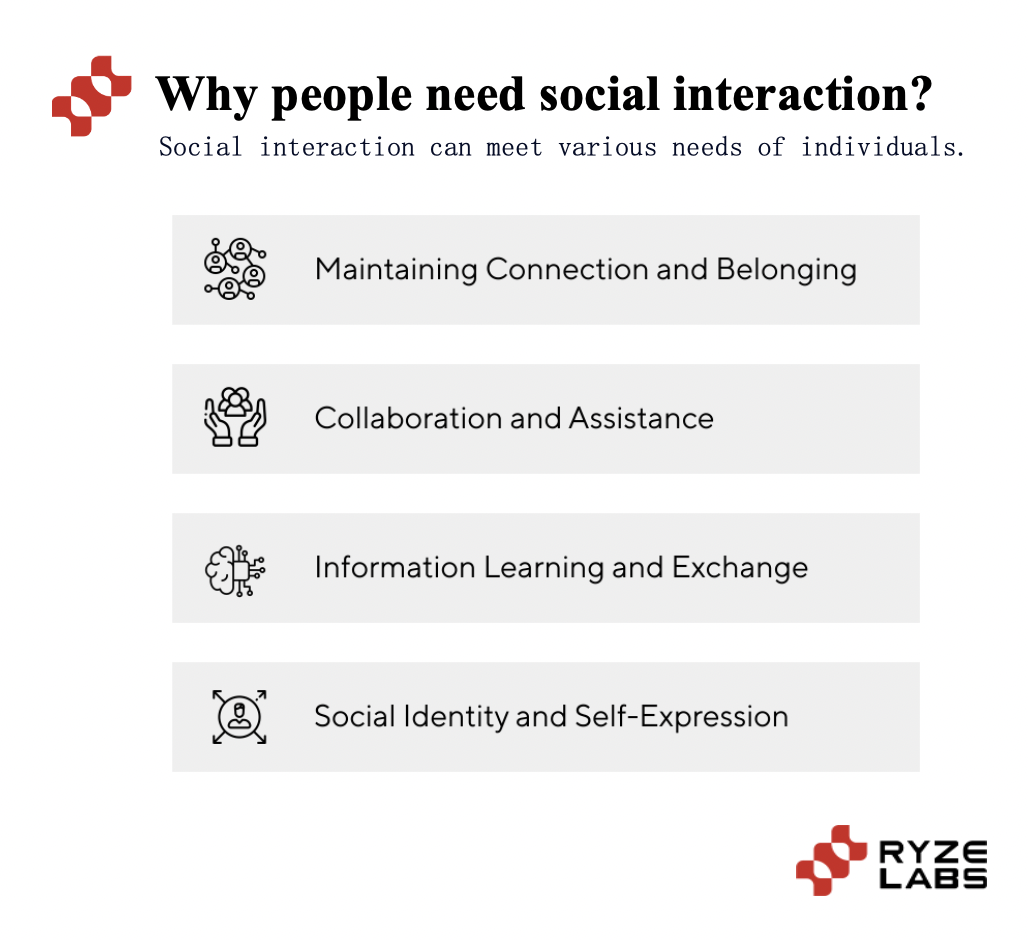
It's clear that humans have always had a need for social interaction. At its core, whether through face-to-face meetings, carrier pigeons, or inscriptions on stone tablets, the fundamental needs of social interaction have remained largely unchanged over time. These can be summarized into four key aspects:
- Maintaining Connection and Belonging: Social interaction gives people a sense of belonging, fulfills emotional needs, builds close relationships, and provides support.
- Learning and Information Exchange: Through social interaction, people share experiences, knowledge, and information, promoting learning, growth, and personal development.
- Cooperation and Mutual Support: Social connections enable collaboration, joint problem-solving, and achieving shared goals.
- Social Identity and Self-Expression: Social platforms allow individuals to express themselves, establish identity, and gain recognition.
 2. Web2 Social Solves the "Fast, Good, Cheap" Needs
After the mid-2000s, Web2 social media began to flourish. Facebook pioneered the space by enabling users to share information, photos, videos, and status updates, helping them build social networks. Platforms like X, YouTube, LinkedIn, and others followed.
Each platform developed unique features: X became a vital hub for real-time messaging and discussion, with its 140-character limit enabling rapid information spread and making it a hotspot for news and trending topics. YouTube transformed how people watch and share videos, becoming a popular platform for content creation and distribution. LinkedIn focused on professional networking, offering a space for career development, experience sharing, and expanding professional contacts. Instagram attracted a massive user base with its powerful image-sharing capabilities and high interactivity, becoming a leading platform for photo and video sharing.
During the Web2 era, emphasis was placed on user participation, interaction, and content generation. Websites evolved from static information displays into dynamic, interactive social platforms where users could create and share diverse content—from text and images to rich videos, blogs, and profiles. With the rise of mobile internet and smartphones, people could access social platforms anytime, anywhere, greatly enhancing the convenience and frequency of social activities.
As user bases grew, social media became a major channel for business and advertising. Companies leveraged these platforms to attract users and promote products, driving up valuations. Meta (formerly Facebook), the industry leader, saw its market cap soar after its 2012 IPO, surpassing $1 trillion in 2021.
Reviewing the history of Web2 social, while the core social needs remain unchanged, the main evolution lies in delivering faster, more convenient, and cheaper services. Facebook made it easier to make friends and share information. X allowed quicker access to breaking news and discussions (compared to newspapers and TV). LinkedIn transformed professional networking from offline introductions to online connections. Essentially, Web2 social products addressed the “fast, good, cheap” demands of social interaction.
 3. Challenges in Traditional Social Industry
However, Web2 social has introduced several problems, primarily centered around data ownership and centralization:
1) Data Ownership: In Web2 social products, user data doesn’t belong to users but to the platforms, leading to multiple issues.
- Privacy Leaks: Massive collection and use of user data increases risks of personal privacy breaches. Platforms may misuse data or sell it to third parties, causing privacy violations and data abuse.
- Value Not Returned to Users: User data enables platforms to conduct targeted advertising, yet users receive no direct benefit, effectively having their contributions “freeloaded” by platforms.
- Lack of Cross-Platform Portability: Because user data belongs to platforms rather than users, starting fresh on each new platform becomes necessary. Social profiles and data cannot flow freely across platforms, turning each into an isolated silo.
In the Web2 social environment, many creators complain that despite generating most of the value, they receive little or no compensation. While one can build a personal brand on platforms like X or YouTube, creators have no ownership or control over their content and its generated value. If X or YouTube deletes an account, all accumulated content and data are lost.
2) Centralization: In Web2 social products, platforms hold unlimited rights to content.
- Weak Censorship Resistance: Since Web2 information is stored on centralized servers, freedom of expression is often compromised due to political, cultural, or regulatory pressures. Users’ rights to free speech are effectively curtailed. Whether it's X changing rules overnight, suspending accounts, or Facebook, TikTok, and WeChat imposing centralized restrictions, users are forced to operate within tight constraints.
Although platforms like Mastodon have attempted decentralization, they still face unavoidable issues. While decentralized overall, individual server instances remain vulnerable to authoritarian control, abandonment, or censorship by their operators.
III. Analysis of Web3 Social Industry Products
In response to the problems of Web2 social, Web3 products are exploring solutions across multiple dimensions. From protocol layers to application layers, Web3 social projects are flourishing, each addressing distinct pain points of Web2 social.
Looking at the broader Web3 social industry, it can be roughly divided into four parts: application layer, protocol layer, blockchain layer, and storage layer. Social-specific blockchains provide customized L1 solutions tailored to social apps, which require higher TPS, storage, and indexing due to heavier information exchange compared to financial dApps. The storage layer handles social data. The protocol layer offers reusable components for developers. The application layer targets specific niches based on user needs.
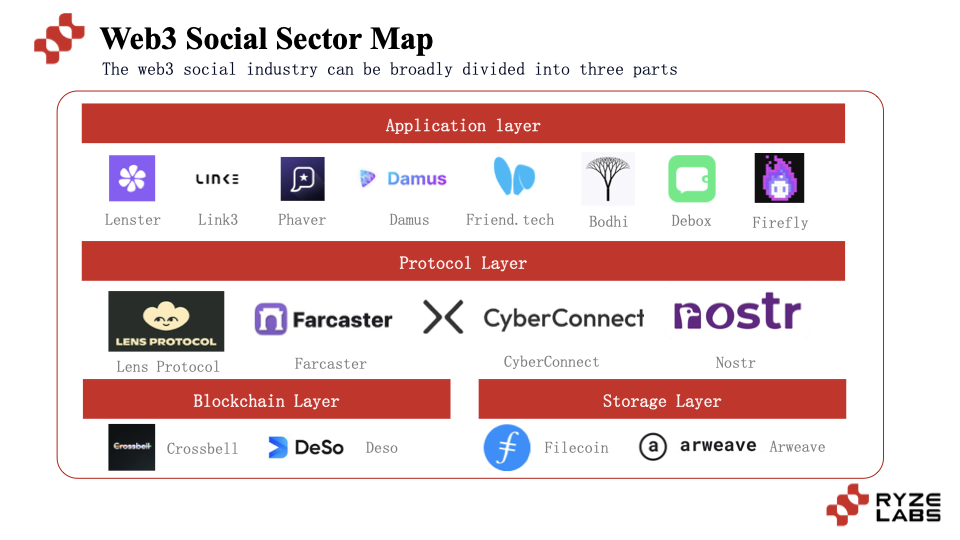 Since the entire Web3 social sector remains in the value-validation phase, this study analyzes projects based on different social needs, aiming for a comprehensive overview of current developments.
1. Returning Data Value to Users
In traditional social products, user data is treated as platform property rather than personal assets. Platforms leverage this data for targeted ads and personalized marketing, but users rarely benefit from the value they generate. Effectively, user data becomes a free resource exploited by platforms.
In this model, both creators' content and users' data contribute to revenue, but most profits are monopolized by centralized platforms. This concentration severely limits what users and creators can earn from their data.
New Web3 social products aim to disrupt this model through token incentives, NFT-based data ownership, and other mechanisms.
1) Lens Protocol
Lens Protocol is a decentralized social graph protocol launched on February 8, 2022, by the team behind Aave, running on Polygon. Its defining feature is that all user social graph data—including profiles, posts, comments, and social relationships—is stored as NFTs.
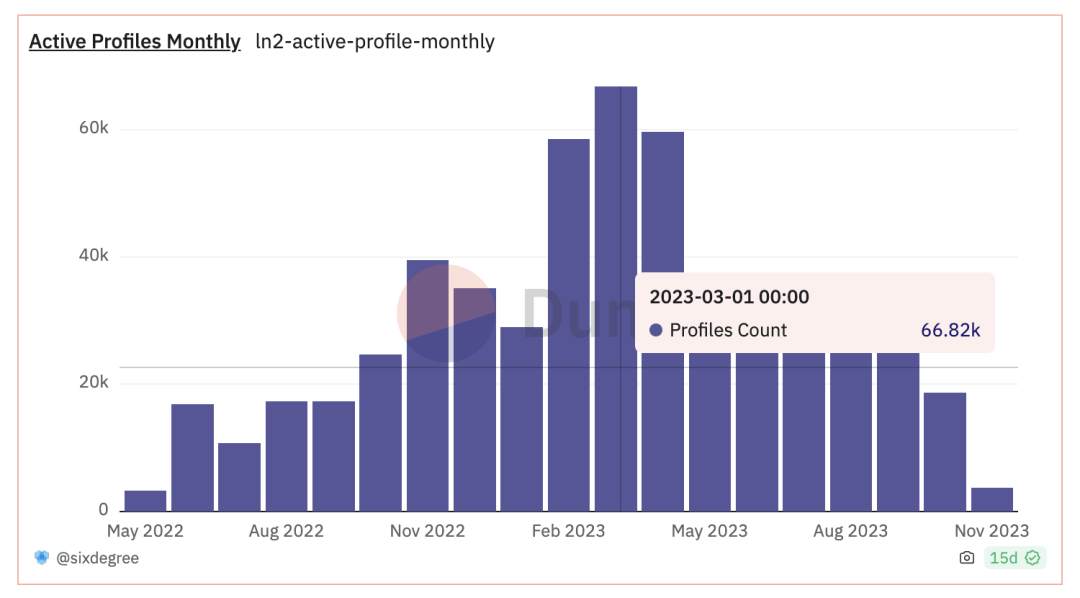
As a flagship protocol in the Web3 social space, Lens hosts over 200 applications, with a total user base of 370,000. Monthly active users peaked at over 60,000 in March this year and currently hover around 3,000.
 (Source: Dune)
Lens Protocol has three key features:
- Data Value Can Be Traded: In traditional social apps, user-generated content and social relationships hold significant value but lack proper incentives. For example, many KOLs on X cannot monetize their quality content directly and must rely on ads or promotions, which can harm their reputation. Lens addresses this by tokenizing user data—each account becomes an NFT tradable on open markets. However, since most people strongly identify with their social identities, the actual demand for trading accounts remains questionable.
- Data Interoperability: By operating at the protocol layer, Lens provides modular components for developers building social dApps. User profiles and content exist as NFTs under DID control. When logging into any Lens-based app, users bring their full data history, enabling seamless cross-app data portability. For instance, a “Lens version of Twitter” or “Lens version of YouTube” can share data via a single NFT.
- High Degree of Decentralization: All content, relationships, and identity on Lens are on-chain, making it a deeply crypto-native social protocol.
Several interesting applications have emerged on Lens, such as Lenster and Phaver. Lenster closely resembles X in functionality and UX, effectively serving as a decentralized alternative.
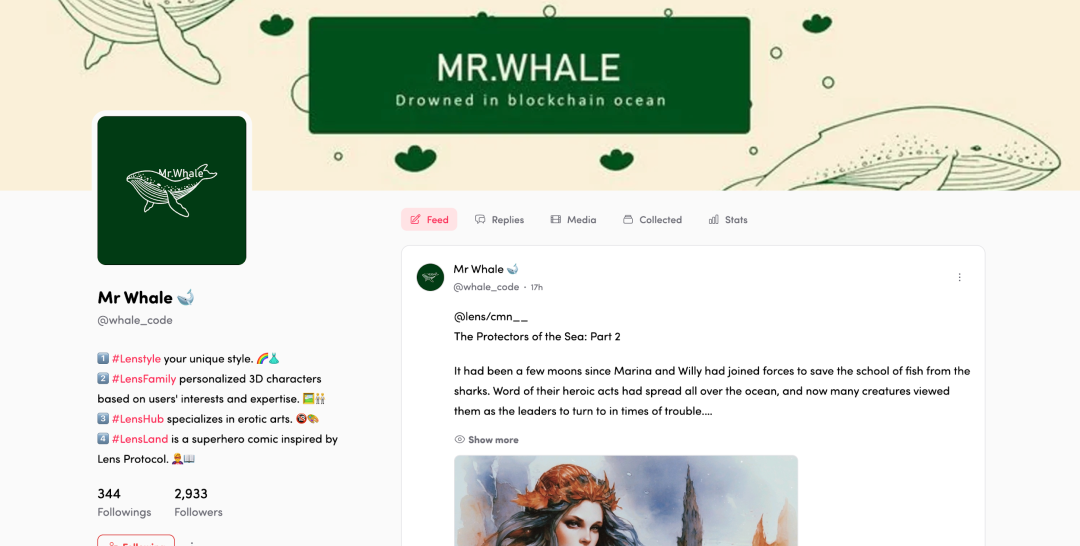
Phaver’s model is also noteworthy—its “like-as-reward” system uses tokens to stake on quality content. If staked content gains further backing, rewards are distributed, with a portion going to the original creator. To prevent users from only staking on already-popular content, rewards for widely supported articles are reduced, incentivizing users to discover high-potential content early—similar to venture capitalists identifying promising startups. This approach not only solves creator incentives—where content value depends on community recognition—but also encourages users to continuously seek out valuable content.
2) friend.tech
friend.tech recently exploded in popularity as a SocialFi project, accumulating $12.48 million in trading volume, with a single-day peak of $530,000 on September 13.
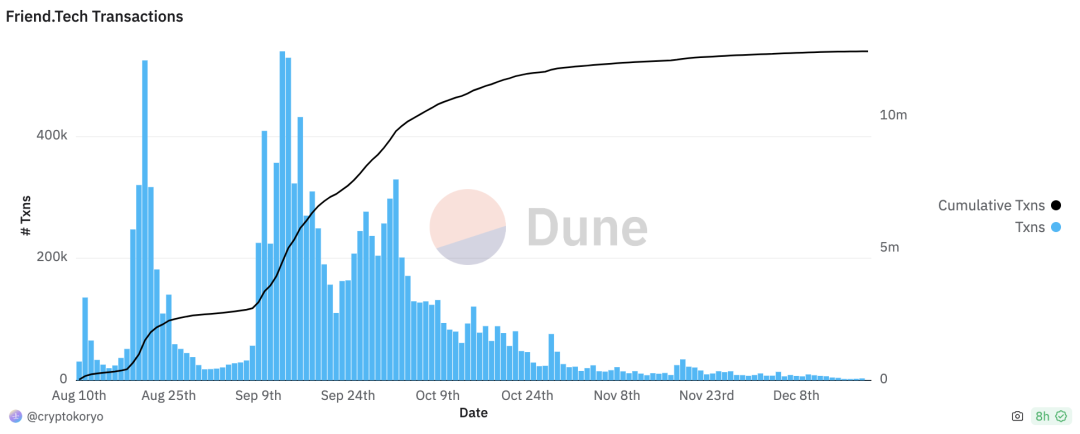 (Source: Dune)
At its core, friend.tech tokenizes personal influence to enable fan economies:
- For fans: Followers can buy a KOL’s “key” on friend.tech to join private chat groups and interact directly. As more people buy a KOL’s key, its value rises, allowing early buyers to profit by selling later.
- For KOLs: Each transaction incurs a 10% fee, half of which goes directly to the KOL. Thus, as their influence grows, KOLs are financially incentivized to attract more buyers.
In short, friend.tech monetizes KOLs’ influence: the more reputable a KOL, the more users buy their tokens, increasing their price and resale value.
friend.tech’s August–September surge sparked widespread discussion in global crypto circles, with numerous podcasts, videos, and communities discussing the trend. Its success can be attributed to several factors:
- Innovative Model: Buying KOL keys via tokens introduces a novel fan economy. Though the economic model resembles a Ponzi scheme, the loop—KOL promotes, fans buy, KOL promotes more, fans buy more—creates a smooth positive feedback cycle. KOLs and fans become aligned stakeholders, jointly achieving (3,3), a key factor in driving momentum.
- Capital Boost: On August 19, friend.tech announced a $50 million seed round led by Paradigm. Trading volume quadrupled the next day, fueled by top-tier VC endorsement.
- PWA Strategy: Instead of native apps, friend.tech uses Progressive Web Apps (PWA), allowing app-like experiences through mobile browsers. This avoids App Store/Google Play downloads and associated fees—a viable strategy for simple apps.
Additional tactics like invite-only scarcity and Web2-style login options helped drive initial traction.
Although activity declined after its peak, friend.tech’s innovation in fan economies and value redistribution has inspired many builders and projects.
3) Bodhi
Bodhi is a fascinating new SocialFi project that created a major buzz in Chinese-speaking communities immediately after launch, with trading volume and participation skyrocketing. Just one day after release, its TVL hit 165 ETH. The author’s first article (also the project’s whitepaper) sold for over $4,000 initially and remains above $2,000.
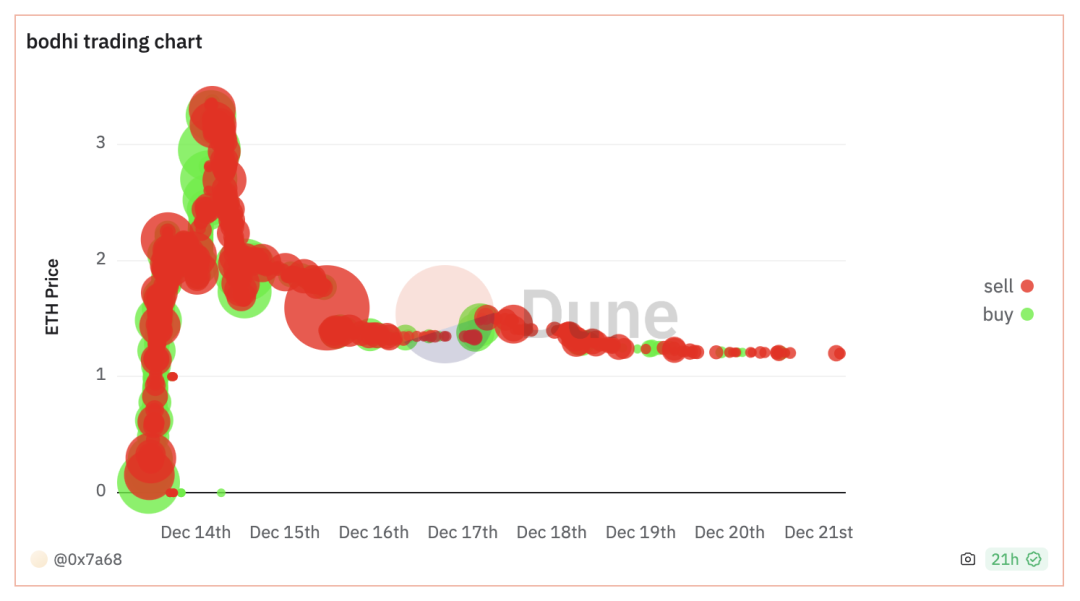 (Source: Dune)
 (Source: Bodhi Top Assets)
In essence, Bodhi assetizes content—similar to friend.tech’s assetization of KOL reputation, but with a key difference. While friend.tech tokenizes an entire creator’s reputation (trading keys for the whole profile), Bodhi allows trading of individual pieces of content, enabling finer-grained, scalable transactions. All Bodhi content is stored on Arweave for true decentralization.
As noted in the Bodhi whitepaper, content monetization in Web3 remains difficult because it's fundamentally a public goods funding problem. If content lives on centralized servers, it risks deletion. If hosted on-chain with paywalls, decryption usually happens on centralized servers—no better than traditional hosting. True on-chain decryption remains publicly accessible.
Deeper analysis reveals that on-chain content inherently possesses two traits of public goods: universal accessibility and non-rivalry—your access doesn’t hinder others’. This defines public goods. While Bodhi couldn’t sustain momentum due to economic design issues, its exploration of content incentives brought meaningful innovation to the social space.
4) Summary of Current State
Overall, in returning data value to users, projects like Lens Protocol at the protocol layer, and applications like friend.tech and Bodhi, are tackling this challenge from different angles.
Lens Protocol uses NFTs to represent user social graphs, enabling DID-controlled ownership and free market trading—creating opportunities for high-value accounts. Its modular design supports data interoperability, letting users sync data across apps. friend.tech tokenizes KOL reputation, letting fans buy “keys” for private chats and financial upside. These projects use value-monetization mechanisms to let users and creators fairly share in the value they create.
These new models return data value to users, enabling liquidity and tradeability. While projects like Bodhi face challenges in sustaining content incentives, they’ve opened new paths for innovation, pushing social platforms toward greater fairness, usability, and creativity. Going forward, with technological and community progress—and new incentive curves—Web3 social will continue transforming how we interact, offering more opportunities and rewards.
2. Censorship Resistance
Beyond data value redistribution, censorship resistance is another critical focus in Web3. Traditional Web2 platforms impose centralized content moderation and speech restrictions, raising growing concerns about free expression. Web3 social, being decentralized, reduces reliance on platforms, lowers censorship risks, and promotes open discourse. Two standout projects here are Farcaster and Nostr.
1) Farcaster
Farcaster is a decentralized social protocol enabling developer-led, user-centric app development. Founded by Dan and Varun, former Coinbase executives, the project enjoys strong support from Vitalik Buterin. Beyond the protocol, the official frontend Warpcast has ~2,000 DAU and ~40,000 total users.
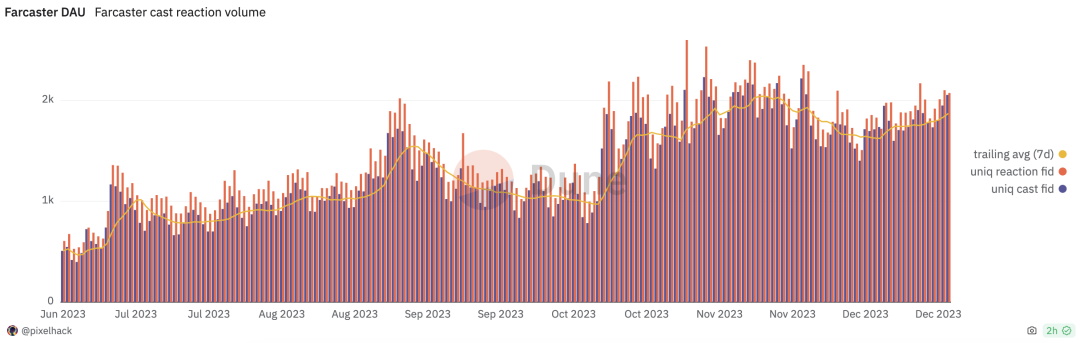 (Source: Dune)
Farcaster’s two key features:
- Decentralized Identity: User identities are stored on-chain, ensuring decentralization. Like Lens, data binds to identity, minimizing migration costs across Farcaster apps.
- Hybrid On/Off-Chain Design for Better UX: High-frequency data—posts, interactions—are stored off-chain in Farcaster Hubs, enabling fast transfers and smoother UX. This sacrifices some decentralization for performance.
In metrics, Farcaster lags behind Lens in DAU and total users, but exceeds it in daily posts (~7,000) and interactions (>19,000), indicating stronger engagement. Still, both pale in comparison to Web2 platforms. Additionally, Warpcast’s $1 subscription model poses a barrier for Web2 users accustomed to free services.
2) Nostr
Nostr is an open-source, decentralized social protocol developed anonymously. Its core mission is censorship resistance. Creator Fiatjaf is a Bitcoin and Lightning Network developer.
Nostr uses a unique architecture of clients and “relays.” Anyone can run a relay; relays operate independently, communicating only with users. Each user has a public/private key pair—like a mailbox address and key. Knowing someone’s public key lets you send messages; private key signatures verify sender identity, while recipient keys ensure message delivery.
A landmark project on Nostr is Damus. Many readers likely encountered Nostr through Damus, which went viral globally after Jack Dorsey, former CEO of X, announced its App Store launch earlier this year.
Damus works much like X, but fully decentralized. Built on Nostr, every user is a client; countless relays form the communication network. Since anyone can run a relay permissionlessly, official censorship (like X blocking posts) is nearly impossible. Users can choose any or self-hosted relays, maximizing censorship resistance. Despite its rudimentary interface, it powerfully satisfies the human desire for freedom.
Though Nostr and Damus have cooled recently, whenever Musk bans users on X, Web3 advocates flock back to censorship-resistant alternatives. Damus’ brief explosion highlighted enduring user demand for anti-censorship tools.
While Farcaster and Nostr haven’t yet spawned sustained killer apps, viewing them as social Layer 1s—Ethereum-like (Farcaster) or Bitcoin-like (Nostr)—they await their breakthrough application.
3) Summary of Current State
In traditional Web2 platforms, centralized control leads to censorship and speech suppression. Frequent bans and content moderation on platforms like X have heightened awareness of censorship resistance. Before Web3, projects like Mastodon aimed to break censorship. Now, with blockchain, more Web3 projects aim to build censorship-resistant versions of X, Facebook, etc.
Both Farcaster and Nostr represent important experiments. Though neither has yet produced a consistently active app, and Farcaster’s user base remains small versus Web2, its high post and interaction counts show engagement. However, its paywall may deter users, especially those used to free services. After Damus’ spike, user retention on Nostr was weak.
Yet Damus’ viral moment and social media buzz revealed deep public curiosity and longing for Web3 censorship-resistant social tools. These projects expand possibilities for Web3 social and lay groundwork for the next killer app.
3. Native Web3 Social Scenarios
Beyond data value return and censorship resistance, blockchain enables entirely new native social scenarios. Some projects target niche use cases. Here, we highlight DeBox, a star in the social space.
DeBox
DeBox’s core solution is “holding-based chat.” In traditional group chats, it’s hard to filter out non-holders of a token or NFT, leading to scammers and bad actors. DeBox allows chat groups to restrict entry to users holding specific tokens/NFTs above a threshold, establishing shared consensus.
According to official data from August, DeBox has over 1.1 million registered users and 13 million logins. It’s highly popular in Web3, with its BOX token recently sparking discussion.
DeBox used select NFTs for cold-start, attracting users around shared holdings as a basis for consensus. This fosters organic community governance and reduces noise. With off-chain logic and storage, UX feels similar to Web2 social apps.
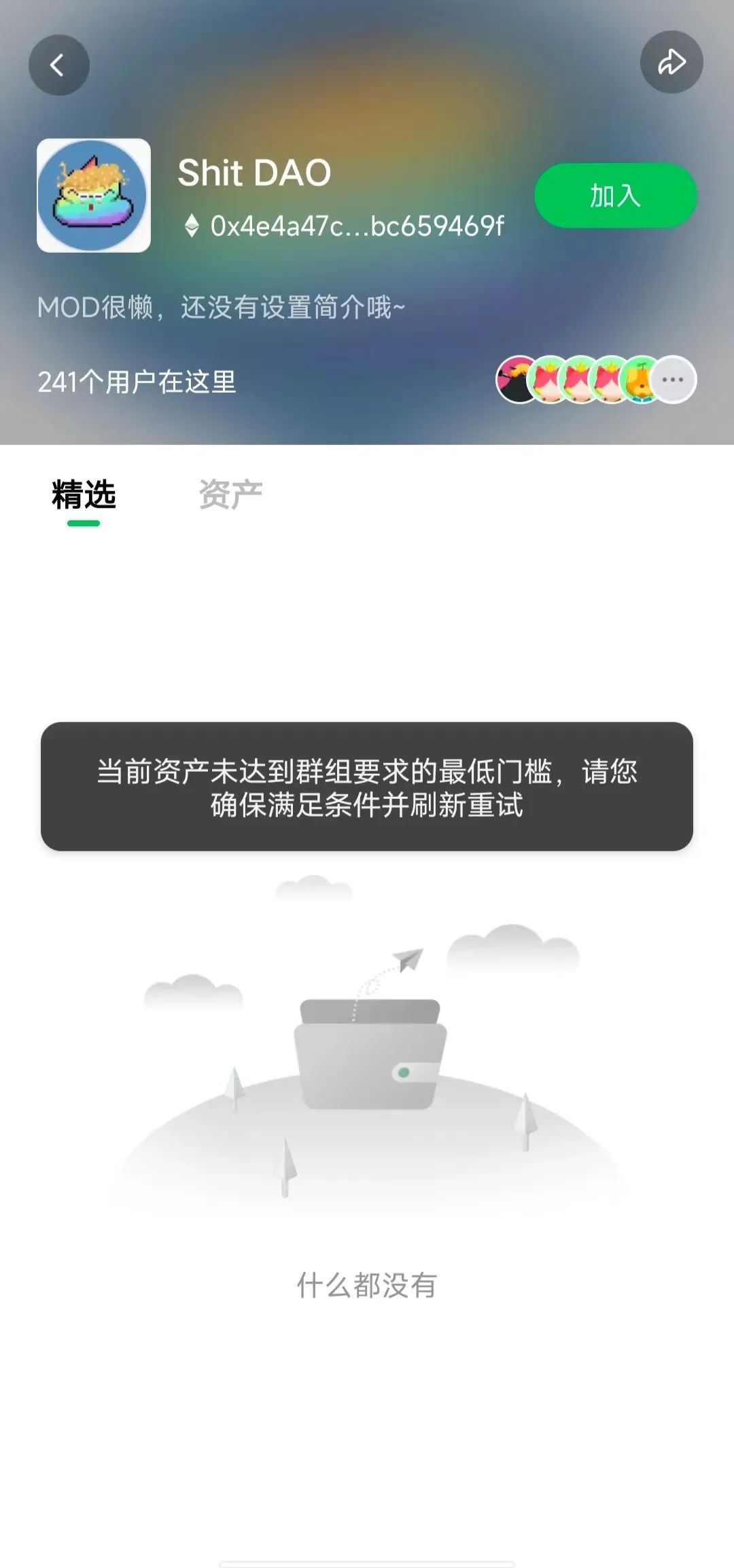
In exploring Web3 social, beyond value return and censorship resistance, blockchain enables new native social needs. Projects like DeBox address “holding-based chat,” creating consensus mechanisms for token/NFT holders. By focusing on community governance, DeBox attracted a large user base and fostered self-organized communities. Using holdings as consensus strengthens alignment among like-minded members, improving governance and reducing noise.
Beyond DeBox, many projects tackle social from different angles: CyberConnect focuses on social graphs; its Link3 product aggregates on/off-chain data, verifying off-chain activities on-chain to enrich social profiles; Mast Network’s Firefly aggregator combines content from Lens, Farcaster, X, etc., becoming a one-stop Web3 social platform.
These projects reflect the diversity and innovation in Web3 social. Leveraging native Web3 scenarios, they address varied social needs, building richer, more diverse social environments.
IV. Why Is Web3 Social Relatively Quiet Compared to Other Sectors?
As mentioned, despite blockchain advancements, many Web3 social projects struggle to gain traction. Even those that briefly surged quickly faded. Web3 social still lacks mass adoption. Key challenges include:
1. Trade-off Between Decentralization and User Experience
The biggest hurdle for current Web3 social projects is user experience.
On one hand, most Web3 social interfaces are complex. Requiring wallet logins creates friction for Web2 users unfamiliar with crypto. Blockchain and crypto concepts remain obscure, demanding more education. Many don’t understand how blockchains work or their value, limiting acceptance of Web3 social platforms. Some projects reduce barriers by supporting Web2 login methods.
On the other hand, decentralization inherently conflicts with efficiency. Requiring every action and data point to go on-chain lengthens user journeys. Projects adopt varied approaches: Lens puts everything on-chain; Farcaster only identity; DeBox and friend.tech keep most data off-chain except NFTs/tokens. Each balances UX and on-chain presence differently to meet specific social needs.
Full on-chain brings cost and speed issues; partial on-chain invites criticism of being “Web2.5.” The space remains in flux, experimenting with what to put on-chain. Balancing UX with real user needs is a long road ahead.
2. High Switching Costs for Social Products
Popular social products like Facebook, X, Instagram, and WeChat have high switching costs—time, effort, learning curve, data migration, rebuilding networks. Once users establish stable relationships, upload data, and adapt to a platform’s UI, they tend to stay, resisting change.
New Product Value = (New Experience – Old Experience) – Switching Cost. Given social products’ high usage frequency and strong network effects, switching costs are exceptionally high, locking users into existing platforms.
Thus, Web3 social projects that merely copy Web2 with minor decentralization tweaks struggle to attract migration. Ordinary users care less about decentralized storage and more about UX and migration friction. To succeed, Web3 social must offer significantly better experiences or fulfill unmet needs.
3. Sustainability of Returning Data Value to Users
Due to Web3’s financial nature, many social/SocialFi projects use economic models to capture influence or content value. But most remain in Ponzi-like stages, relying on new entrants to fund earlier ones, lacking sustainable models. Often, they devolve into pure speculation.
Finding balanced tokenomics and incentive curves that reconcile financial appeal with long-term sustainability is crucial for data-value-returning social products.
4. Low Overlap Between Social Target Users and Web3 User Profiles
Per Messari data, Q3 2023 Social sector funding was ~$10M, far below DeFi’s $200M and Gaming’s $150M. Only 6 social projects raised funds vs. 67 in DeFi and 25 in Gaming. A key reason: low overlap between social target users and typical Web3 users.
Many enter crypto seeking wealth, driven by speculation and profit motives. Social, however, requires authentic users engaging in genuine interactions. Unlike other sectors that attract sybil users or inflate TVL via airdrops, social projects need real, retained users with actual social needs—not one-time speculators.
Gamers often possess gambling and competitive traits, making GameFi naturally appealing. DeFi easily attracts investors. BRC20’s boom stemmed from massive wealth creation. Social users differ more from Web3 users than gamers or financiers do—explaining why social remains quieter than gaming or DeFi.
In sum, social users are farther from money, gambling, and competition—less aligned with Web3’s user base. Attracting the right audience remains a long-term challenge for social projects.
V. Business Models of Social Platforms
Finally, let’s discuss business models in social platforms.
The evolution of social business models includes several key phases:
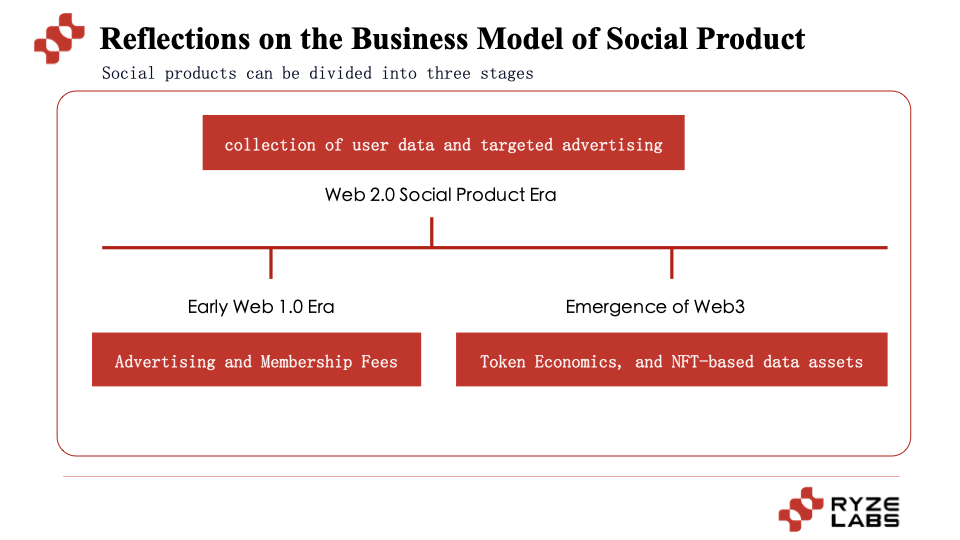
- Early Web 1.0 (late 1990s–early 2000s): Social products were forums and chat rooms. Revenue came from ads and membership fees. AOL charged subscriptions; Yahoo Groups used ad displays.
- Web 2.0 Era (mid-2000s–2010s): With tech advances, social media platforms rose. Business models centered on ad targeting and data harvesting. Platforms earned via ads; user data became valuable for personalized marketing. Facebook, X, TikTok follow this model.
- Rise of Web3 (late 2010s): Web3 brought blockchain and decentralization. New models emerged: data value return, token economies, NFT-ized data assets. Users gain data control and earn via governance or sharing. Lens NFT-izes data; friend.tech and Bodhi price influence/content to return value; Farcaster uses traditional subscription.
 Additionally, regional differences affect Web3 social strategies. Returning data value often involves solving creator economy issues.
Currently, creators rely mostly on B2B income, supplemented by B2C. Due to low per-view payouts on many platforms, most creators depend on traffic volume for ad revenue, or try B2C methods like merchandising—both potentially harming brand reputation. Thus, many Web3 social projects aim for B2C models, letting creators earn directly from quality content—friend.tech and Bodhi’s approach via influence/content incentives.
- Domestically, social and creator platforms are highly monopolized—WeChat, Douyin, Kuaishou dominate. Platforms hold strong bargaining power, offering minimal revenue share, making it hard for creators to survive on platform incentives alone. Hence, they resort to B2B monetization—ads, live-stream shopping. But due to platform dominance, redirecting traffic to private domains is difficult. Domestic creators thus focus on mastering platform algorithms—producing viral content—to scale and monetize.
- Overseas, platform monopolies are weaker; public and private traffic flow more freely (unlike China, where strong public platforms gave rise to “private domain” concepts). Overseas creators on Instagram, YouTube, etc., can redirect followers to independent sites to sustain themselves. This allows more creative freedom in niche content and better private domain cultivation.
Given differing competitive landscapes, Web3 social projects can adopt region-specific strategies.
Overall, Web3 social business models are still in an experimental phase. Historically, models evolved from simple ads/memberships to precise ad targeting via data monopoly, now shifting toward token/NFT-based value return. Future trends may emphasize data value, user engagement, community governance, and diversified monetization.
VI. Future Exploration: Web3 Social Meets the AI Wave
In recent tech waves, Web3 and AI stand out. Social exploration reflects this: alongside Web3/Crypto projects, many AI initiatives—some from traditional Web2 teams—are merging AI with social features in matching, translation, and virtual avatars.
In China, Soul launched “AI Goudan,” an intelligent chatbot for personalized interaction. Baidu released “Skyclub,” an AI social app, re-entering the social race. Overseas, Meta boosted engagement by integrating AI into social feeds. Last year’s algorithm upgrades increased Facebook session time by 7% and Instagram’s by 6%. This shows AI-social integration is a major trend.
AI, as a productivity tool, enhances social applications—especially AI agents creating virtual partners to meet human needs for companionship and emotional support. A16Z-backed Character.AI generates human-like responses and contextual conversations, enabling smart chatbots for user interaction.
As noted, fulfilling emotional needs and building supportive relationships is a core human social need. Most AI-social projects target emotional fulfillment, using virtual companions to address unmet real-time companionship needs, exploring new possibilities. Whether AI virtual beings truly satisfy emotional needs remains in early validation.
In social product evolution, Web3 and AI show complementary potential. While AI boosts productivity, Web3 enhances production relations and financial incentives. For example, Binance-incubated Myshell merges AI and Web3, letting users create AI bots and launching Samantha, a Telegram voice chatbot for emotional support. Its SHELL token powers ecosystem incentives—consumers pay for features, creators spend tokens for exposure.
Recently, Siya.AI on Solana aims to build a companion platform with both AI and real users, positioning AI agents as gateways to Web3. Via Realy’s SDK, it introduces incentives for creator economies and AI companions. Combining AI and Web3 to meet emotional needs, users chat with AI partners to mine tokens and孵化 NFTs.
In sum, AI and Web3, as twin forces of a new era, attack social from different angles. AI focuses on emotional support; Web3 on data value return and censorship resistance. Both are early-stage. Yet each seeks to better fulfill humanity’s core social needs. Their convergence opens collaborative and complementary paths. With new tech and models emerging, we eagerly anticipate the next mass-adoption social app—one where AI and Web3 spark new innovations, better meeting diverse human social needs.
VII. Conclusion
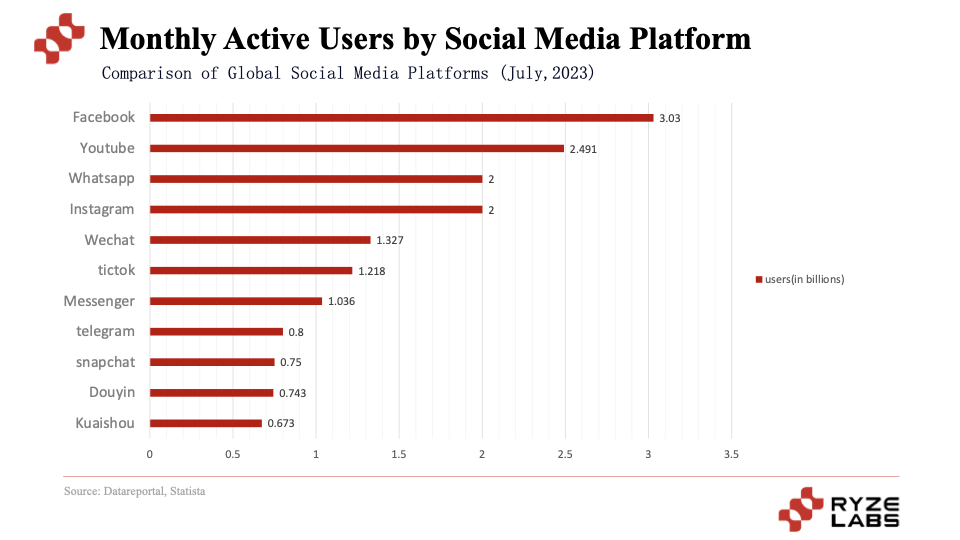
Social, a fundamental human need across ages and contexts, dominates Web2’s traffic and leads in DAU. Since its inception, Web3 social has carried hopes for mass adoption among builders.
Positively, Web3 social brings revolutionary changes in data value and user feedback. Unlike Web2, it treats user data as valuable assets, using token incentives and NFTs to return value—building on data sharing, creator rewards, and community consensus.
Also, Web3 social’s censorship resistance grants users greater freedom and privacy. Through blockchain and decentralization, it reduces censorship and deplatforming risks, promoting open discourse. This creates safer, freer social environments, enabling more authentic interactions.
Yet, Web3 social faces challenges—no mass adoption yet. High switching costs and network effects are major hurdles. Web2 platforms have entrenched user habits, investments, and dependencies, making migration hard. Merely copying Web2 with slight decentralization won’t scale. Another challenge is balancing sustainability and UX. Some Web3 social products sacrifice usability for decentralization and data control. Maintaining ease of use and appeal is vital for retention and growth.
As Tom Standage writes in “Writing on the Wall,” humans have always needed social connection. No matter how technology evolves, we always seek information exchange. From papyrus letters among Roman politicians to pamphlets during the American and French Revolutions, from newspapers and radio to TV, internet, and blockchain—humanity constantly evolves amid tensions between speed/convenience and free speech vs. censorship.
Compared to phones, SMS, and newspapers, Web2 platforms like Facebook, X, and WeChat enabled faster, better, cheaper communication. Web3’s focus lies in censorship-resistant free speech and returning data value to users. Though not yet achieving Web2-scale adoption, the demand for censorship resistance and data ownership persists, awaiting its breakout moment.
For future directions, community attributes deserve focus: Social isn’t broadcast—it constantly swings between centralization and decentralization. Community is a key trait of Web3 social; its data sovereignty and openness align well with community dynamics, enabling multi-directional, interactive experiences. This could be a key direction for future Web3 social products. Also, cross-domain integrations—like with gaming—may spark unexpected innovations.
As noted in Web3 social’s challenges, the misalignment in user profiles makes the sector quieter than hot areas like BRC20. Yet, Web3 social holds great promise. Constantly emerging projects and technologies push the field forward. Amid ongoing technical evolution, we see growing efforts to improve sustainability and UX. The space is maturing, finding its path, bringing more innovation to users, and profoundly impacting the broader social landscape.
Last but not least, heartfelt thanks to partners Hei Tie, Adazz, A Shan, Harlan, Trinity, and others for their help and generous insights. Wishing all builders in this space continued success!
Join TechFlow official community to stay tuned
Telegram:https://t.me/TechFlowDaily
X (Twitter):https://x.com/TechFlowPost
X (Twitter) EN:https://x.com/BlockFlow_News
 @RyzeLabs