Why We Remain Bullish on BTC's Performance for the Second Half of the Year
TechFlow Selected TechFlow Selected
Why We Remain Bullish on BTC's Performance for the Second Half of the Year
Looking ahead to the second half of the year, despite ongoing macroeconomic uncertainties, BTC has the potential to experience a rally regardless of how the situation evolves. We remain optimistic about market performance in the second half.
 Navigating Web3 tides with focused insights
Produced by: LK Venture
Author: 0x1987
Summary
Recently, the U.S. SEC sued Binance and classified several tokens as securities, triggering a market-wide sell-off of altcoins and spreading panic. In our view, the bottom may already be near. Capital from altcoins is flowing into BTC and ETH, and the market will likely complete its bottoming process through consolidation. Looking ahead to the macro environment in the second half of the year, we analyze three potential scenarios for the U.S. economy and their impact on the crypto market. Although the path may not be smooth, BTC is expected to resume its upward trend after volatility.
Short-term volatility likely continues, but the bottom may be near
SEC regulatory actions trigger altcoin sell-offs; short-term focus on BNB stabilization
The SEC filed a civil lawsuit against Binance and classified tokens such as ADA, SOL, and MATIC as securities, reigniting market concerns about regulation. For compliance reasons, certain institutional investors have been forced to sell their altcoin holdings. Even trading platforms like Robinhood are delisting these tokens, adding short-term selling pressure to the market.
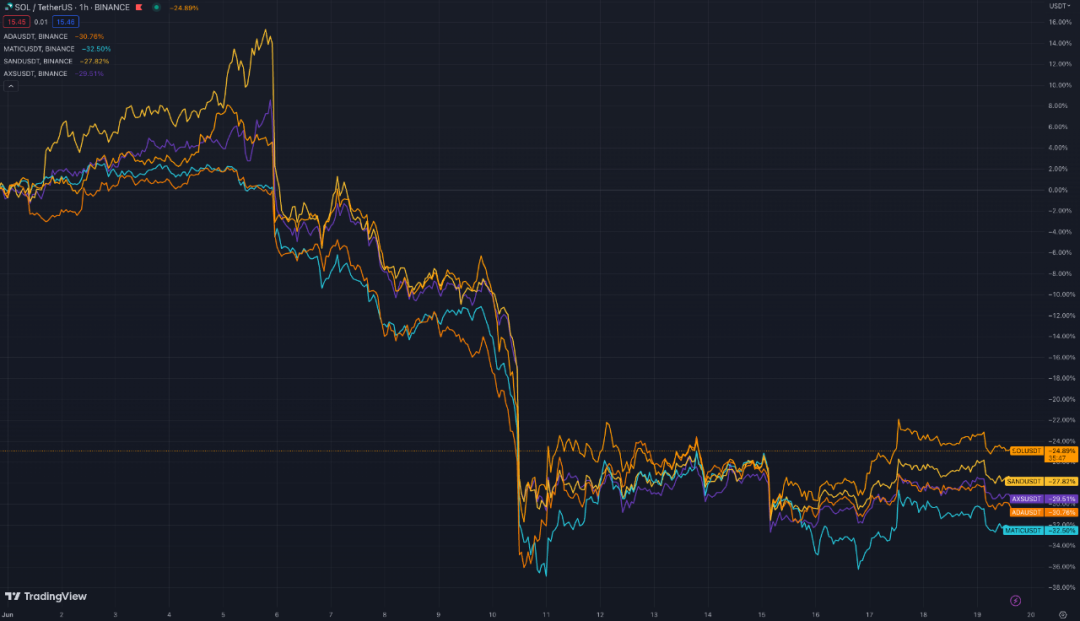
Tokens identified by the SEC as securities—ADA, SOL, MATIC—plunge sharply
BNB also dropped over 20% at one point, and its price action serves as a market barometer reflecting sentiment toward the regulatory event. During last December’s Binance FUD that triggered a mass withdrawal event, BNB fell as low as $220 before rebounding and stabilizing. The $220 level is a critical support—both a prior low and widely watched "liquidation price" linked to the Venus hacker (though Binance has stated it has taken control of the hacker's position, eliminating actual liquidation risk). This time, BNB retested the $220 support and quickly rebounded. Binance also launched a new Launchpool to support BNB’s price. If BNB can stabilize and consolidate for a period, it would signal that the market is gradually digesting the negative SEC news.
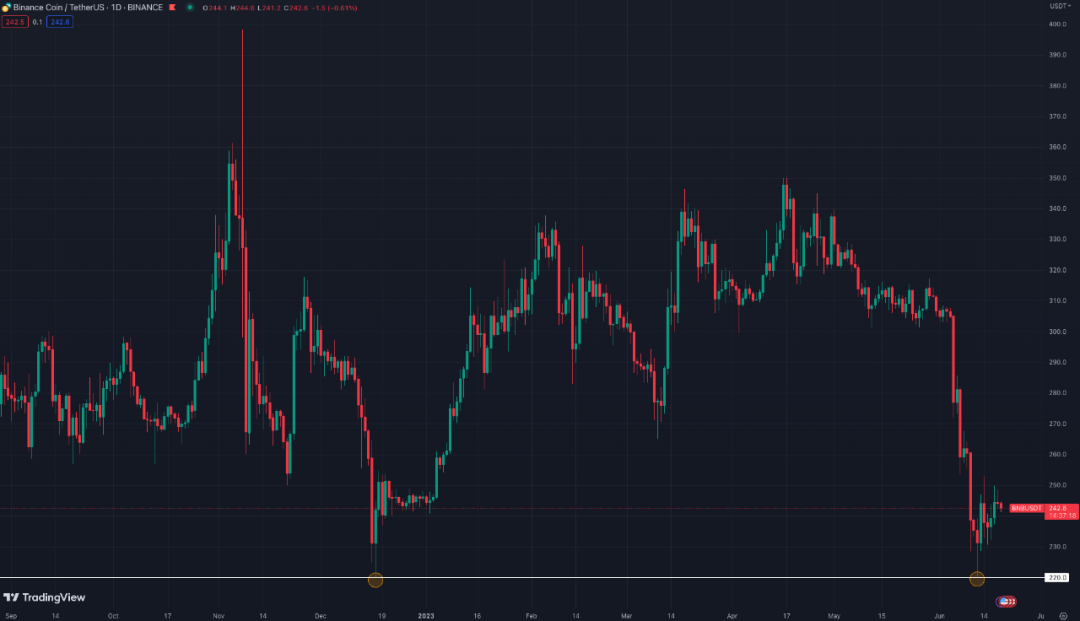
BNB finds support at previous low of $220
Altcoins fall back to lows while BTC holds firm—bottom may be near
From a price perspective, many altcoins have returned to levels seen before the January rally, with some even breaking below their November 2022 lows. This Binance regulatory event differs significantly from last year’s FTX collapse—there is no indication that Binance misused user funds or incurred insolvency. At worst, Binance may shut down its U.S. operations, meaning the overall market impact will likely be smaller than during the FTX crisis. Given that altcoins have already fallen back to prior lows, further downside appears limited, suggesting we may already be near the bottom.
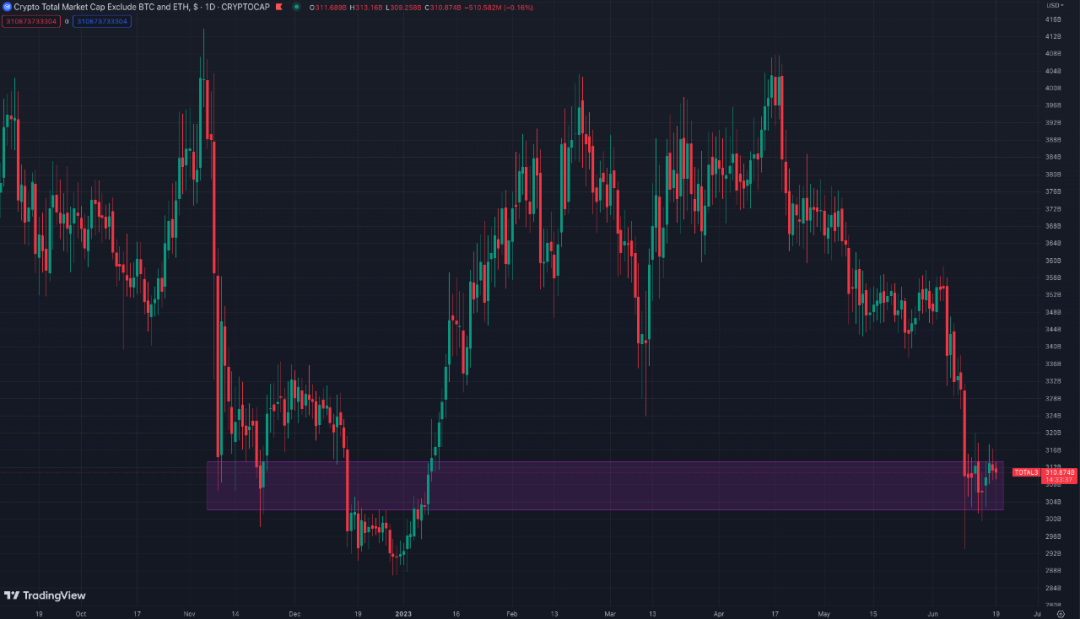
Total market cap of cryptocurrencies excluding BTC and ETH has fallen to levels seen after the FTX collapse in November 2022
Meanwhile, BTC and ETH have held up relatively well. Despite regulatory headwinds, both assets are still up around 50% year-to-date, indicating strong confidence among large investors. Capital from altcoins may not have left the market entirely but instead shifted toward BTC and ETH.
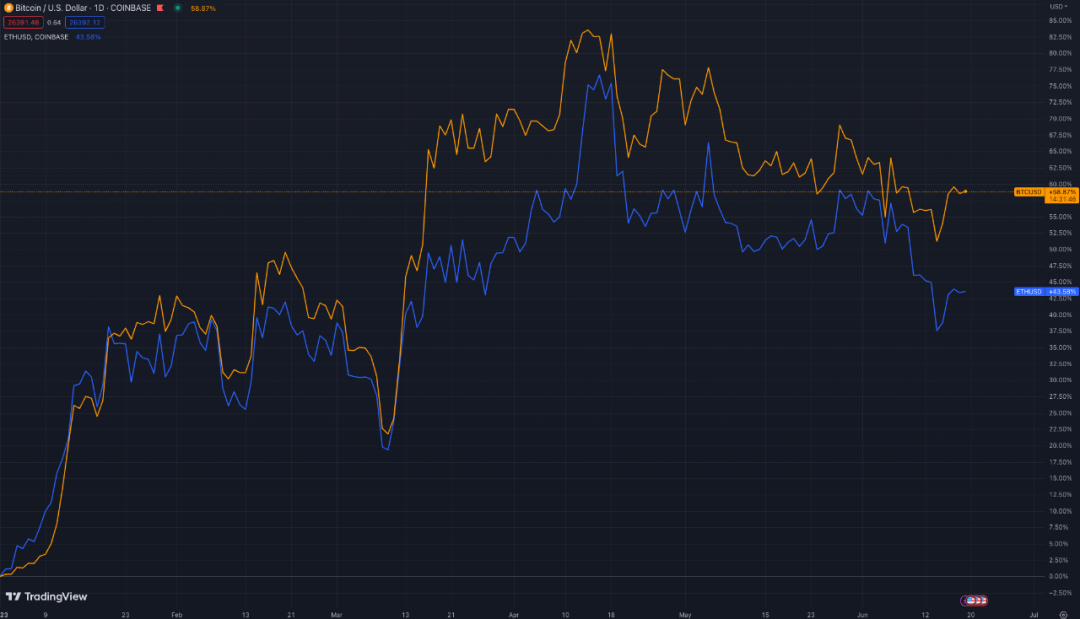
BTC and ETH remain up approximately 50% YTD
Of course, there remains a small chance the SEC could escalate sanctions against the crypto industry. However, after a round of price declines, much of the risk has already been priced in, limiting further downside. In the short term, the market is likely to bottom through a period of consolidation, allowing negative sentiment to fully dissipate.
Three Scenarios for Crypto Market Growth in the Second Half
Looking ahead to the second half of the year, the overall macro environment is expected to gradually turn favorable. The U.S. remains the most influential country for the crypto market. Based on the trajectory of the U.S. economy and corresponding Federal Reserve monetary policy, we could face three scenarios: 1) No U.S. recession, with equities entering a bull market, leading to capital spillover into crypto assets; 2) A mild U.S. recession, prompting the Fed to begin rate cuts by year-end, boosting BTC on looser monetary expectations; 3) A deep U.S. recession triggering a liquidity crisis, forcing the Fed to restart QE, leading to a rapid surge in BTC similar to March this year.
No U.S. recession: Equity bull market drives capital overflow
So far this year, U.S. inflation has declined faster than expected, while employment data and earnings from major tech companies have remained strong, indicating a robust economy. Fueled by the AI boom, the Nasdaq has surged more than 30% from its January low, with Apple and NVIDIA reaching all-time highs. This rally has been primarily driven by large-cap tech firms. If the U.S. avoids recession, the equity market could extend its uptrend into a full bull run. In the mid-to-late stages of such a bull market, capital typically spills over into smaller, higher-risk markets like crypto, pushing prices higher.
Looking back at the last bull cycle, crypto rose during the early phase of the equity bull market but largely followed equities without outperforming. It wasn’t until the mid-to-late stages that capital began flowing out of equities and into smaller-cap crypto assets, marking the period of fastest and largest gains across the sector. BTC surged from $10,000 to $60,000 within five months. Therefore, if the U.S. avoids recession and equities enter a sustained bull market, capital could spill over into crypto in the later stages.
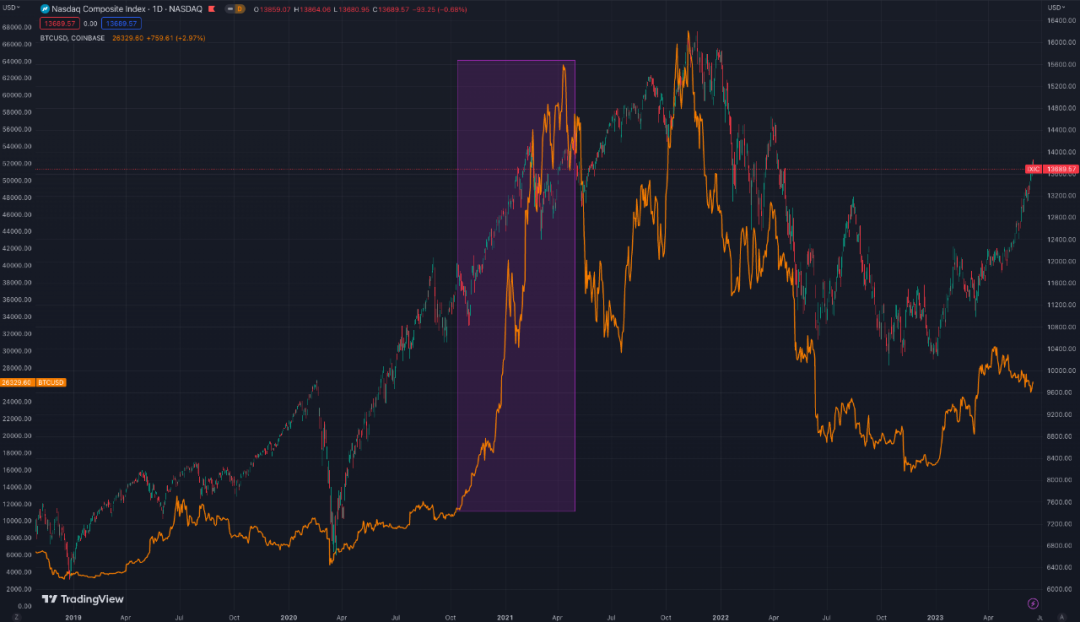
BTC accelerates during mid-to-late phase of equity bull market
Mild U.S. recession: Rate cuts fuel loose monetary expectations
Due to the rapid pace of rate hikes, the U.S. economy has a significant chance of entering a recession—but likely a shallow one. In such a scenario, the Fed would be unable to maintain high interest rates and could begin cutting rates as early as year-end. Rate cuts lower the cost of capital, encouraging investment in risk assets. More importantly, they signal the start of a new easing cycle. BTC tends to rise in anticipation of such a shift, even before actual cuts begin.
During the previous easing cycle, the Fed made its final hike in January 2019 and began cutting rates in July 2019. In between, fueled by growing expectations of looser policy, BTC surged from $3,300 in February to $13,000 in June. Similarly, once the Fed signals a pause in rate hikes, markets will eventually anticipate the start of rate cuts, and BTC is likely to rise on those expectations alone.
In 2019, BTC rose from $3,300 to $13,000 during the Fed’s pause in hiking; the white line shows the effective federal funds rate
Deep U.S. recession: Fed restarts QE to rescue markets
Currently, almost no data suggests a U.S. “hard landing” is imminent. Yet from a probabilistic standpoint, we cannot completely rule it out—especially if it catches the market off guard. Should a deep recession occur, a liquidity crisis could follow, causing broad-based asset sell-offs and forcing the Fed to restart QE. Crypto assets would initially fall due to liquidity crunches and risk-off sentiment, but would later rally on the flood of new liquidity.
Recall the U.S. banking crisis in March this year: BTC first dropped on fear and safe-haven flows, but then surged when the Fed introduced emergency liquidity facilities, expanding its balance sheet again. Benefiting from this mini-QE, BTC rebounded from $20,000 to $28,000 in just one week. Thus, should a liquidity crisis emerge, the Fed is highly likely to restart QE—and BTC could repeat its rapid March rally.
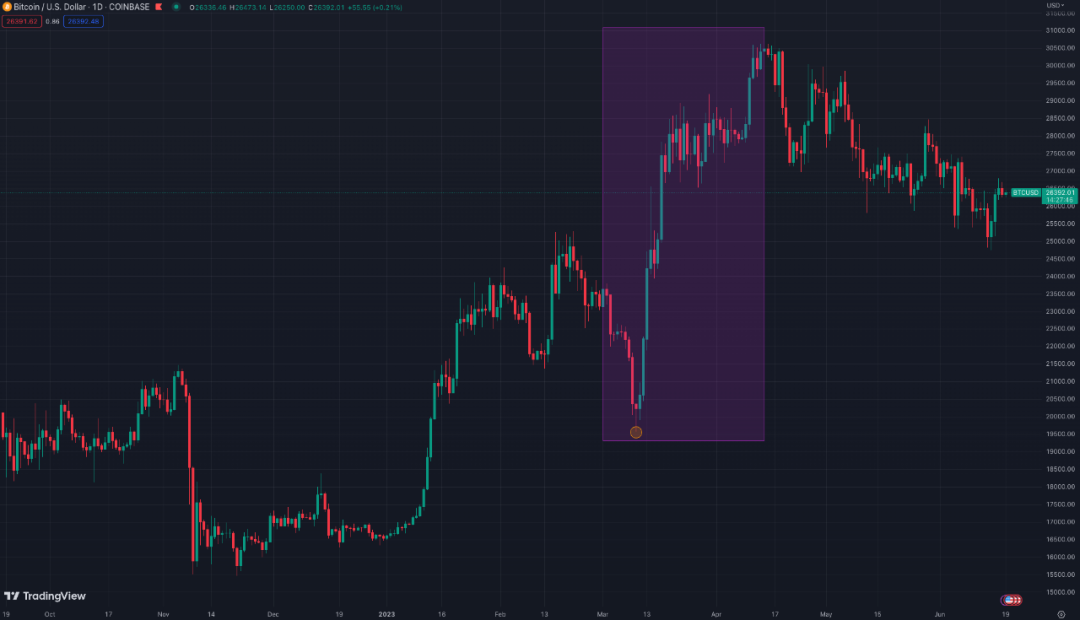
During the March banking crisis, BTC first fell, then rose
Conclusion
In the short term, BNB’s quick rebound at the key $220 support level suggests it may stabilize and consolidate, helping the market absorb the negative regulatory news. Altcoins have already fallen back to early-year lows, leaving limited room for further decline. Capital is shifting toward BTC and ETH, and the market may complete its bottoming process through sideways movement. Looking ahead to the second half, despite ongoing macro uncertainty, BTC stands to benefit under any of the potential scenarios. We remain optimistic about the market’s performance in the coming months.
Join TechFlow official community to stay tuned
Telegram:https://t.me/TechFlowDaily
X (Twitter):https://x.com/TechFlowPost
X (Twitter) EN:https://x.com/BlockFlow_News
 LK Venture