Nansen Decodes the CEX Landscape: Crisis of Trust and the Path Forward
TechFlow Selected TechFlow Selected
Nansen Decodes the CEX Landscape: Crisis of Trust and the Path Forward
In intense competition, successful exchanges will prioritize security, transparency, user trust, and ecosystem development.
 Navigating Web3 tides with focused insights
Authors: Osgur Murphy O Kane, Frank Fu, Yohji Van Weert
Translation: Luffy, Foresight News
Key Takeaways
-
The collapse of FTX and the loss of customer funds severely damaged crypto users' trust in centralized exchanges (CEX). Users now demand greater transparency and protection measures from exchanges.
-
Many exchanges have started offering proof of reserves. Exchanges like Binance and Bitget have added protection funds. Note that without liability disclosures, these do not guarantee solvency.
-
Binance has maintained market dominance, but it was not the only beneficiary after FTX’s exit. Following FTX's collapse, Bitget saw significant growth in derivatives trading volume, while Binance and OKX continued to hold strong positions in derivatives.
-
After the FTX crash, exchange platform tokens MX, BGB, and OKB showed strong price performance.
-
In a competitive environment, successful exchanges will prioritize security, transparency, user trust, and ecosystem development. Meeting user needs, offering robust feature sets, and delivering excellent user experience are also critical.
Overview of Recent CEX Landscape
FTX was a poster child for CeFi, endorsed by numerous high-profile figures and even sponsoring sports arenas. Behind the scenes, however, the exchange had been commingling customer funds with its market maker Alameda, resulting in a $4 billion shortfall in customer deposits and ultimately leading to bankruptcy. The FTX incident sent shockwaves across the industry, causing confidence in centralized exchanges to plummet. This report aims to examine the CEX landscape post-FTX and identify key emerging trends.
Renewed Focus on Credibility
The FTX incident significantly damaged user trust in CEXs. Since then, users have demanded greater transparency from exchanges, focusing on proof of reserves and protection funds.
Proof of Reserves
Many exchanges have begun providing Proof of Reserves (PoR) in response to the crisis of trust. Proof of Reserves refers to public declarations by CEXs about their reserve assets. This is typically done through independent audits, aiming to provide transparent and verifiable evidence that an exchange holds sufficient assets to cover customer deposits.
While this is a step in the right direction, PoR alone cannot guarantee an exchange's solvency without corresponding proof of liabilities. A Proof of Liabilities would be more convincing, but as it is off-chain, it requires independent auditing—and audits themselves have proven problematic, as FTX had undergone audits prior to its collapse.
Below is an example of Binance’s Proof of Reserves on Nansen:
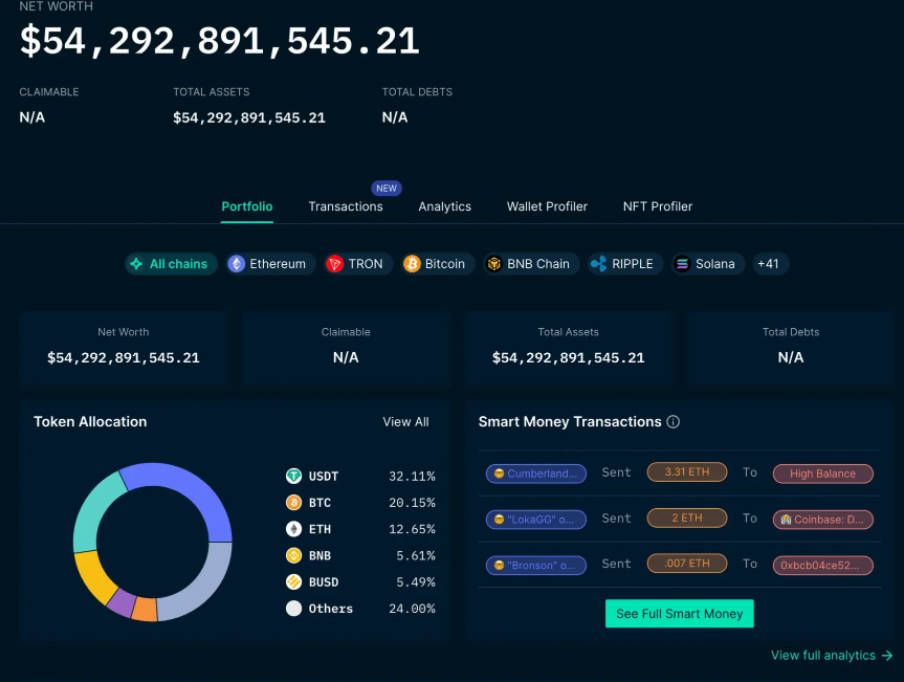
Source: Nansen
For more data on exchange reserves from Nansen, click here.
Protection Funds
The purpose of protection funds is to compensate users in case of lost customer assets. By establishing such funds, exchanges aim to reassure customers that they will have capital available to reimburse deposits—provided the fund size exceeds the scale of any hack. This model can be seen as over-collateralizing customer deposits.
Beyond protection funds, implementing best practices in risk management—such as distributing funds across multiple addresses—is also crucial for effectively mitigating various types of hacks. After the FTX collapse, Binance increased its fund value from $735 million to $1 billion. Similarly, Bitget raised its protection fund from $200 million to $300 million.
The table below lists the largest protection funds among major exchanges. Notably, at the time of writing, Binance and Bitget are the only two centralized exchanges that have publicly disclosed wallet addresses for their protection funds:
Proof of Reserves should become the minimum standard in the exchange industry. However, as noted above, while positive indicators, these measures alone are insufficient to guarantee solvency.
Shifting CEX Landscape
Total Trading Volume
Binance has maintained relatively stable trading volumes. In the six months before the FTX implosion, its average monthly volume was $470 billion; in the five months after, it dropped slightly to $428.4 billion—a decline of about 10%, indicating relative stability. It should be noted that trading volume, while an important metric, can be manipulated via wash trading and other means.
Below are the monthly trading volumes of 10 selected exchanges in the months following the FTX event. Note that this does not represent the entire industry, but rather popular and well-known exchanges.
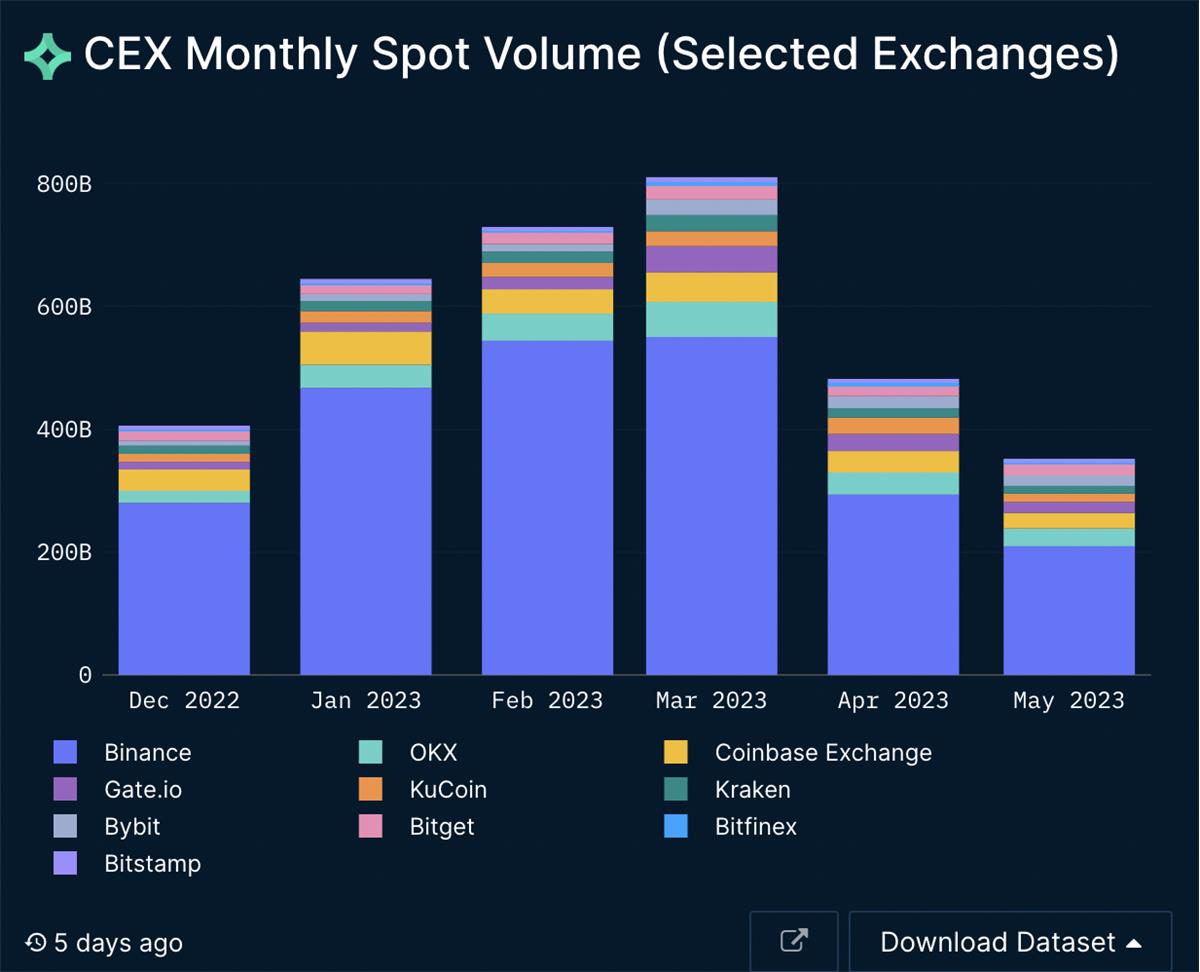
Source: Nansen
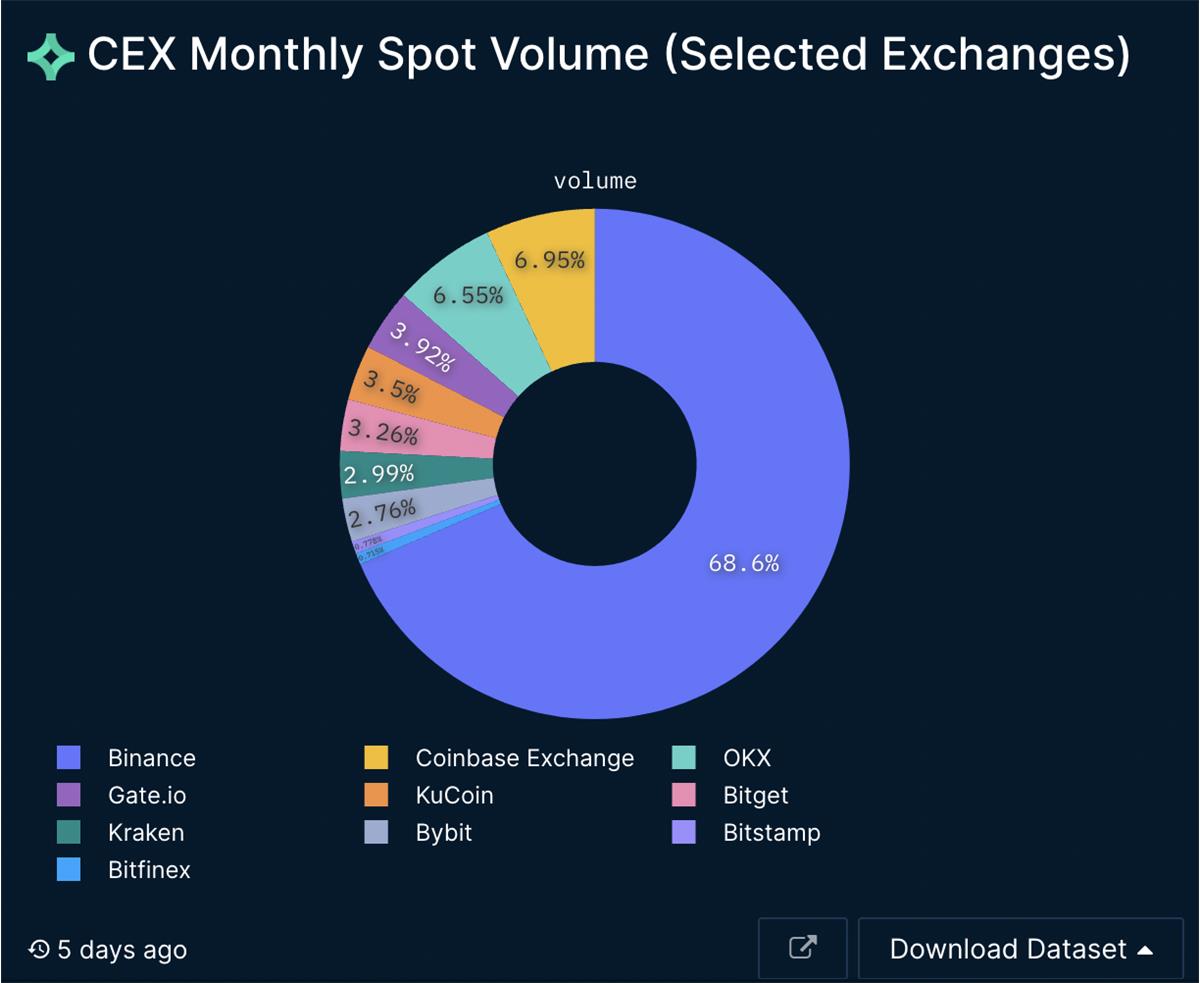
Source: Nansen
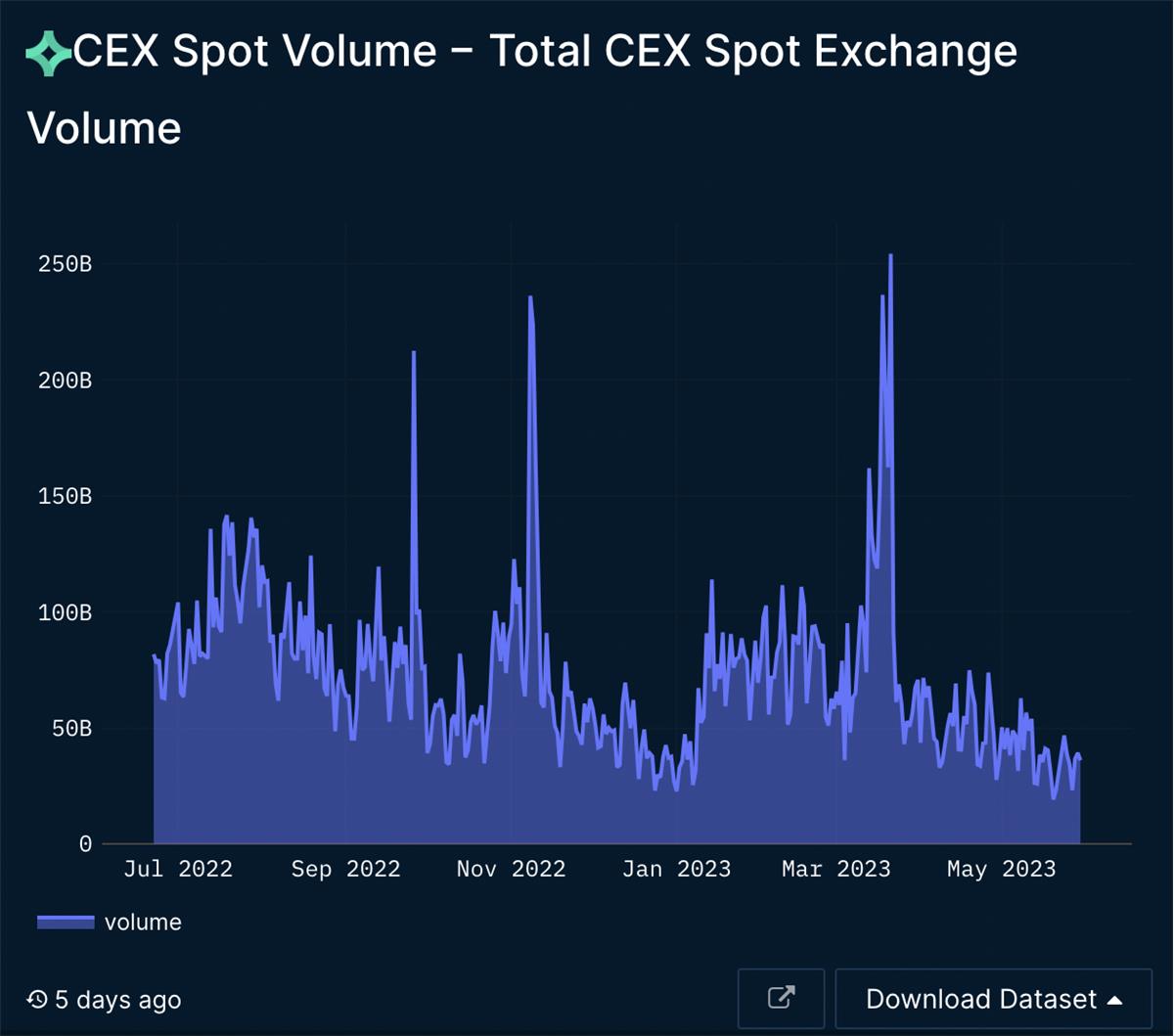
Spot Trading Volume
Source: Nansen
Data shows that spot trading volume declined slightly in the six months following FTX’s collapse. The sharp spike in late March can be attributed to the Arbitrum airdrop frenzy. Most exchanges saw declines in spot volume, with Bybit and Kraken being exceptions—they managed to increase volume through strategic initiatives.
Meanwhile, DEX trading volume remained relatively stable during the same period. This may reflect declining trust in CEXs after the FTX collapse and growing regulatory uncertainty.
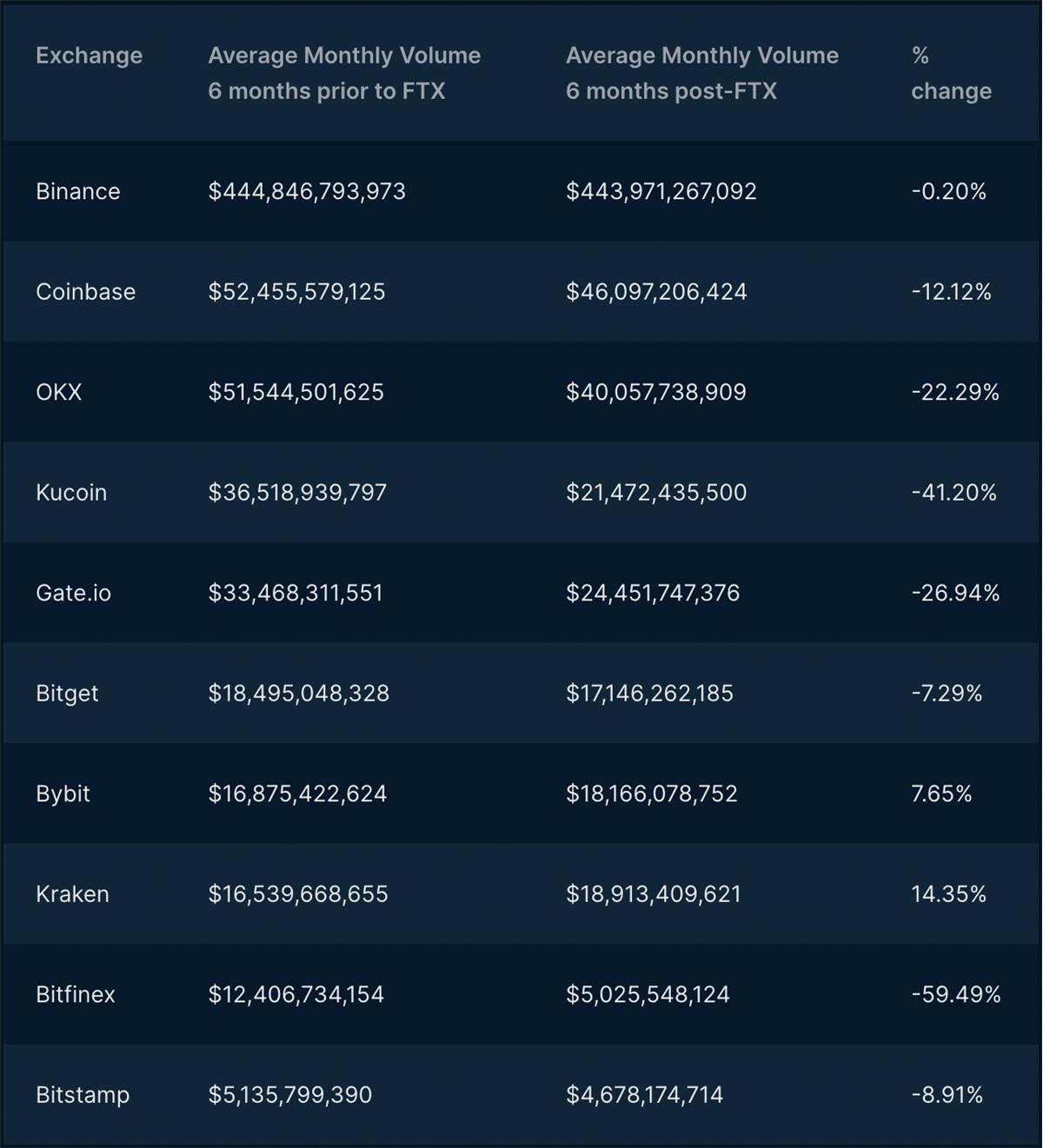
Data as of May 31, 2023
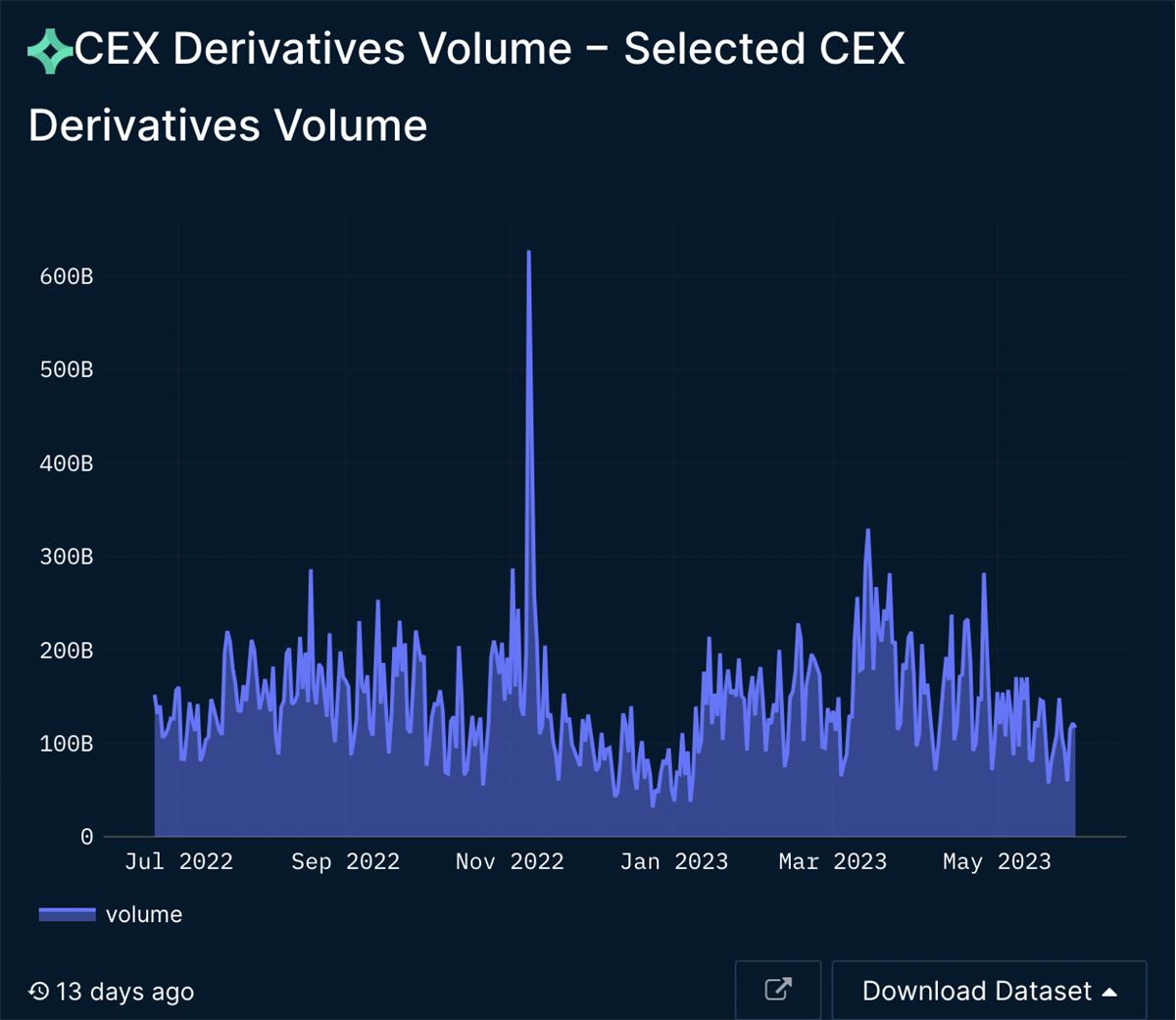
Derivatives Trading Volume
Note: This does not represent the entire industry, but rather a selection of user-preferred exchanges.
Source:Nansen
Cryptocurrency derivatives trading volume experienced a slight dip. Volumes spiked immediately after FTX’s collapse in early November, followed by a general decline. However, since mid-January this year, volumes have recovered and stabilized at pre-collapse levels.
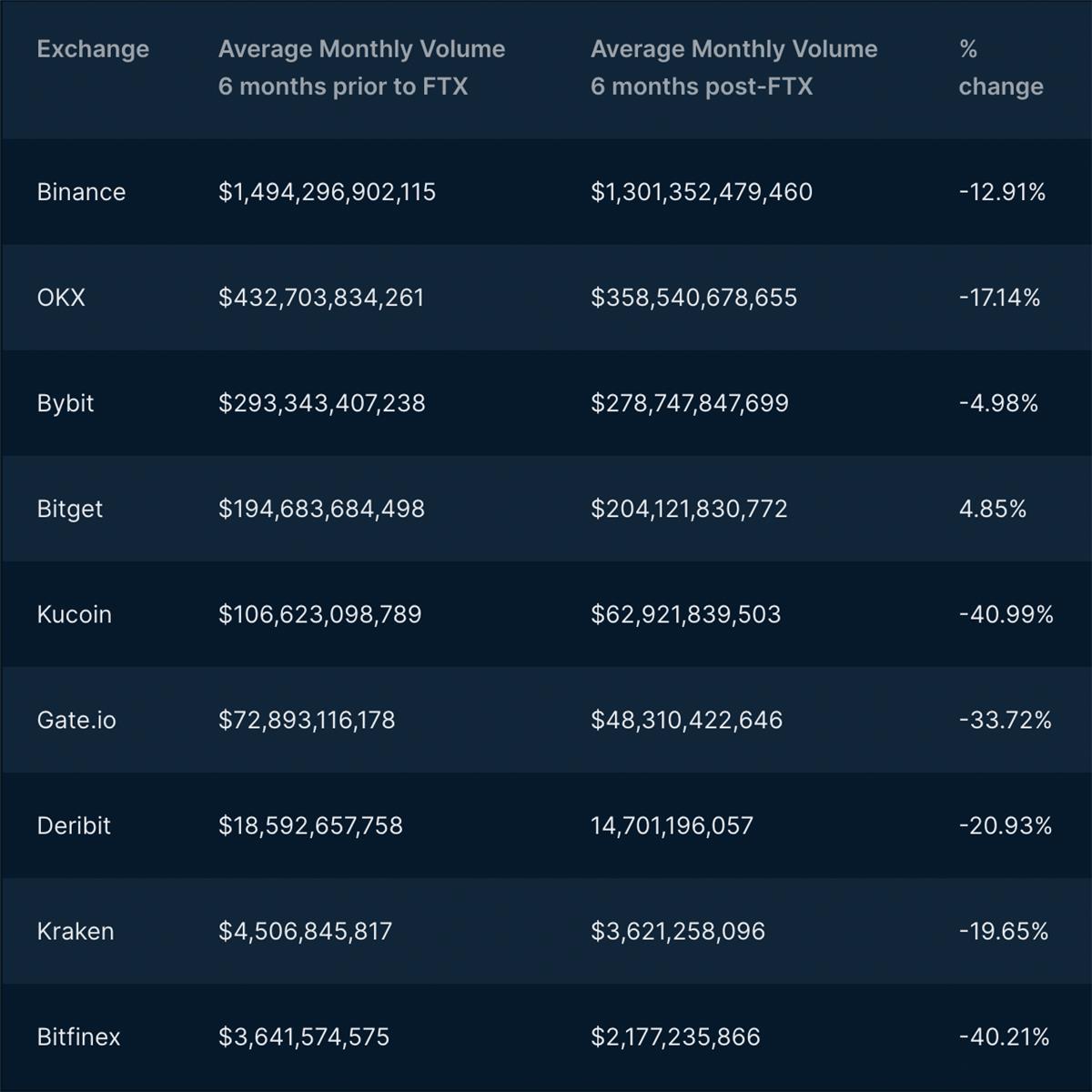
Data as of May 31, 2023
FTX initially gained fame for its leading derivatives business. While top CEXs generally saw a drop in derivatives volume, Bitget was an exception—its derivatives trading volume grew over the six months following FTX’s collapse.
Exchanges that performed relatively well in the aftermath of FTX’s collapse include:
-
Bitget
-
Bybit
-
Binance
Overall, Bitget stood out in capturing additional trading volume. Bybit and Binance saw slight declines but retained most of their volume (and expanded market share), whereas other exchanges experienced larger drops. This may also reflect broader declines in trading activity amid the ongoing crypto bear market.
Number of Listed Tokens
Different exchanges adopt different listing strategies. For example, Binance only lists projects that have demonstrated substantial market interest and trading volume elsewhere. In contrast, Gate.io takes a more lenient approach, listing many tokens ahead of initial exchange offerings (IEOs).
Since the FTX collapse, some exchanges have become more responsive to user demands and market trends. Take BRC-20 as an example—it reached a $1 billion market cap within three months of launch.
The first four exchanges to list BRC-20 tokens were Gate, Bitmart, Digfinex, and Bitget.
-
Gate.io: Listed ORDI on May 8
-
Bitmart: Listed ORDI on May 8
-
Digfinex: Listed ORDI on May 9
-
Bitget: Listed ORDI on May 10
Quickly listing new tokens is key to meeting evolving user demands, allowing traders to benefit from emerging opportunities. However, exchanges must balance this against protecting users from scams. This is crucial for maintaining reputation, which explains why major exchanges like Coinbase, Binance, and Kraken take a more conservative approach. Yet, slow listing decisions may hurt exchanges—for instance, missing out on trading volume from trending tokens or recent memecoin surges.
Compliance
Upcoming regulations targeting DeFi and cryptocurrencies could pose significant challenges for exchanges. SEC Chair Gary Gensler believes nearly all tokens are securities, which could force many exchanges to cease operations in the U.S. If the U.S. adopts this stance officially, it could create serious global implications for CEXs.
Exchanges also differ in their KYC and anti-money laundering requirements. These are essential for legitimacy and ensuring continued operation across jurisdictions. Moreover, CEXs found to facilitate criminal activities due to inadequate safeguards face reputational damage. For example, zachXBT claimed that an account named "Kim Jong-Un" was registered on Gate.io using an email linked to the North Korean hacking group Lazarus.
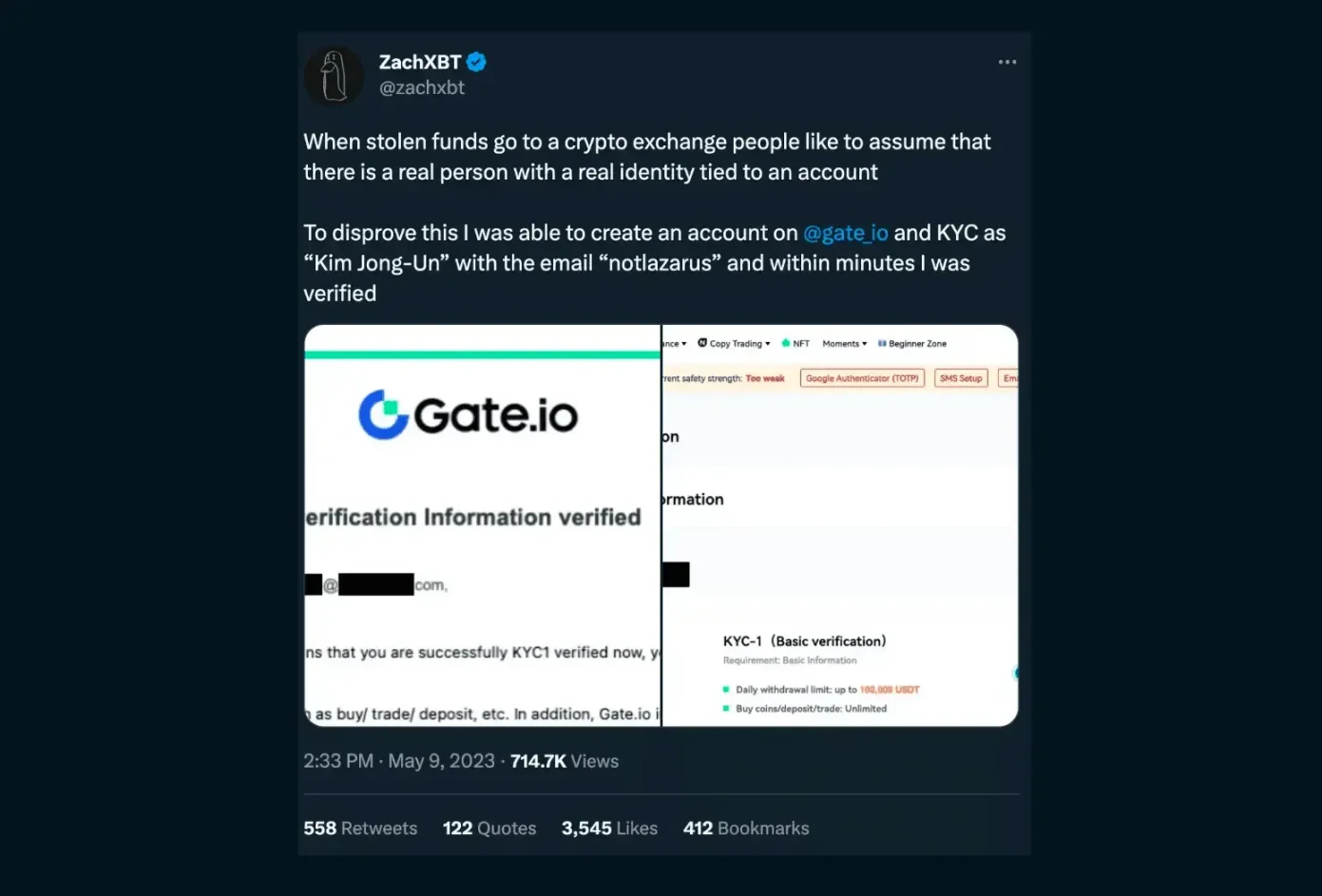
Source:Twitter
Platform Tokens
Some exchanges have launched native platform tokens to incentivize users. The chart below shows the top 10 platform tokens by market cap and their performance after the FTX collapse. Standouts include MX, BGB, and OKB—these tokens performed strongly during the bear market and remain near all-time highs.
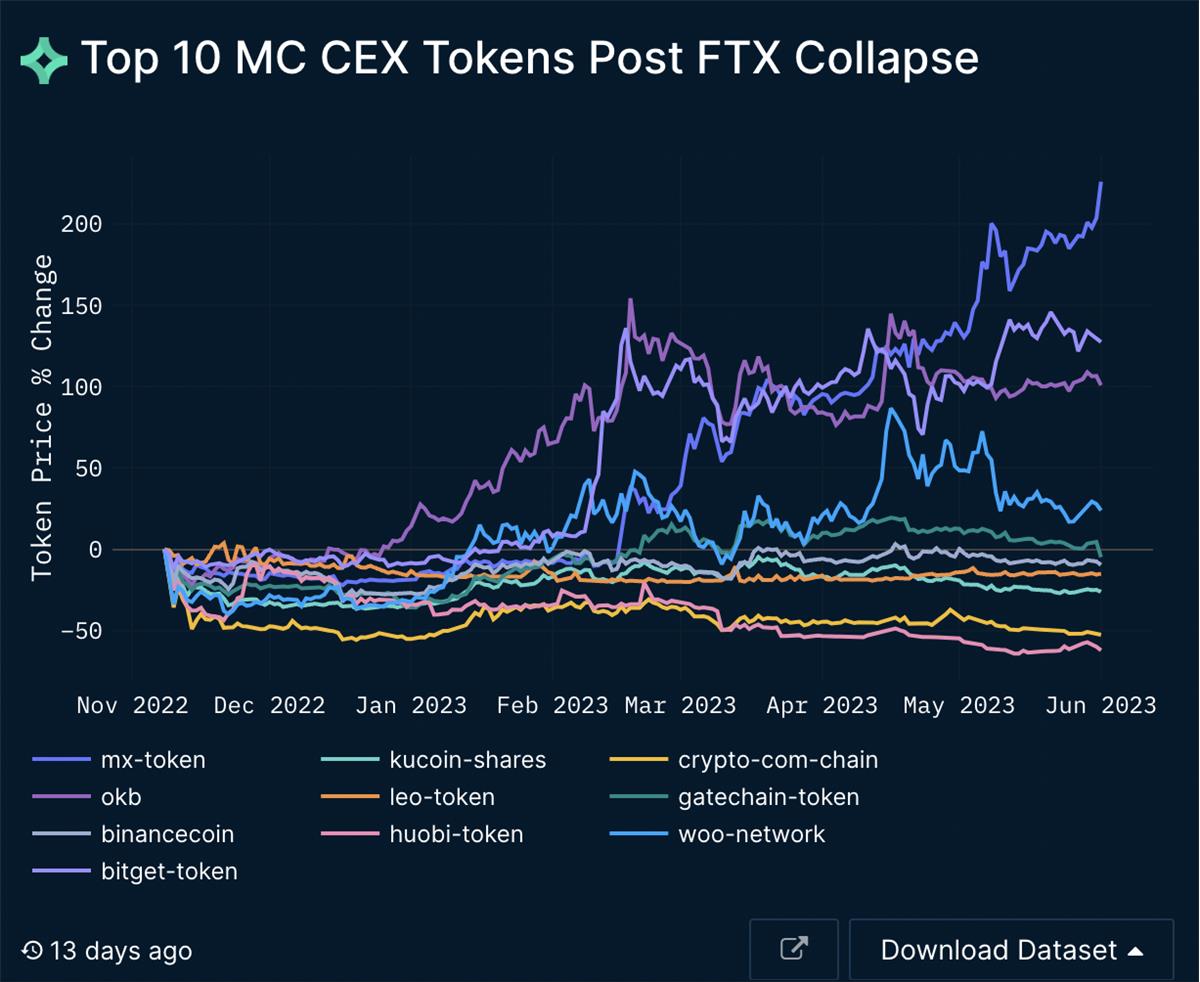
Source:Nansen
MX
MX offers users additional utility and yield on the exchange. Additionally, MEXC uses 40% of its quarterly profits to buy back and burn MX, keeping the circulating supply capped at 100 million tokens.
BGB
BGB enhances the Bitget user experience through fee discounts and exclusive product access. Bitget is expected to soon launch a buyback and burn program for BGB. Read more here.
OKB
OKB serves as a gateway to various products and benefits on the platform. It undergoes quarterly buybacks and burns based on “seasonal market and operational performance.” In its last report, it burned OKB worth $177 million over three months.
The impact of buybacks and burns on token prices is debated, with critics arguing they don’t create real value. However, with consistent cash flow, the purchasing power from buybacks may contribute to stronger token performance.
BNB
BNB remains the largest CEX token by market cap. It serves as the gas token for BNB Chain and unlocks various features and privileges on Binance. BNB has a burning mechanism designed to maintain a supply of around 100 million tokens, with the amount burned depending on BNB’s price and the number of blocks generated on BNB Chain each quarter.

Data as of May 31, 2023
The table above shows the market performance of CEX platform tokens from December last year to May 31 this year. MX, WOO, and BGB performed exceptionally well, while HT saw the steepest decline.
Security Track Record
An exchange’s security track record is crucial to its legitimacy. Indeed, most CEXs have suffered hacks, some fatally. Since 2012, hacks have resulted in losses exceeding $2.85 billion. Since FTX’s collapse, no top-tier exchange has been directly hacked. However, attacks still occur, including:
-
GDAC was hacked in April 2023, losing $13 million.
-
Bittrue was hacked in April 2023, losing $23 million.
CEXs remain vulnerable to hacks, making robust risk management and protection funds more important than ever to ensure customers aren't left exposed in unforeseen circumstances.
Latest Trends in CEXs
CEXs are increasingly investing in Web3 product development. For example, Coinbase not only offers custodial wallet services but also plans to launch Base, an L2 built on the OP stack. Binance has clearly launched BNB Chain and is actively investing in a broader ecosystem. Similarly, Bitget launched MegaSwap, a DeFi aggregator enabling users to easily swap tokens—similar to typical DEXs. Given the massive success of NFT markets in the last bull run, major exchanges like Binance and Coinbase have launched their own NFT platforms to capture a share of NFT trading volume and associated fees.
Copy Trading
Another popular feature offered by CEXs is copy trading, which allows users to replicate the strategies of top traders on the platform.
A key difference from on-chain copy trading is that traders must explicitly authorize the exchange to allow others to copy their trades. In contrast, on-chain replication is permissionless—anyone can copy strategies from any address.
Exchanges offering copy trading include:
-
Bitget
-
Bybit
-
OKX
-
Gate.io
The above exchanges offer copy trading for both spot and futures.
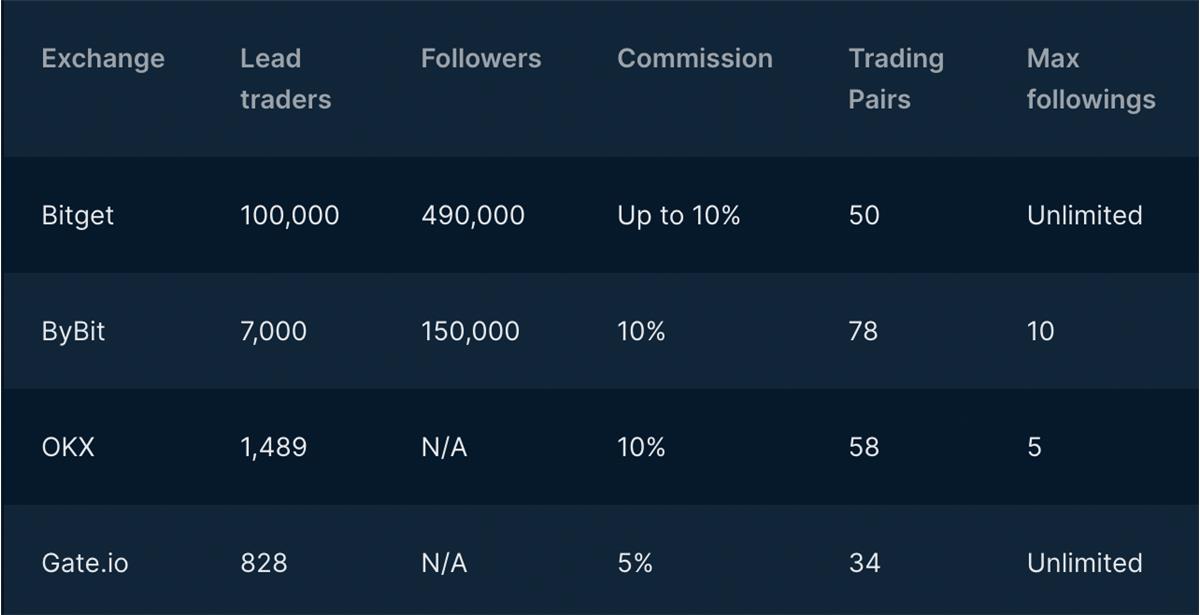
According to official data, Bitget’s copy trading service has over 100,000 signal providers and 490,000 followers. Signal providers earn up to 8% commission by sharing strategies and must meet specific requirements and go through an application process.
Bybit reports that 150,000 users have used its copy trading feature, replicating strategies from over 7,000 traders. Signal providers are ranked by 7-day win rate, 3-week win rate, and 7-day PnL, and receive 10% of profits generated by followers. Various parameters—including position size, leverage, stop-loss, and other factors—can be customized.
OKX offers copy trading across 58 tokens, with 1,489 signal providers to choose from. Fees are the same as regular trading, and signal providers receive 10% profit share. Users can follow up to five different traders. The feature includes spread protection and allows setting maximum investment amounts. Signal providers can make up to 50 trades per day and can only close positions using market orders.
Gate.io currently has 828 signal providers, who charge 5% of profits generated by followers.
Factors to consider when copy trading include track record, performance metrics, trading strategy, risk-adjusted returns, and community engagement (follower count). Diversifying across multiple traders to reduce overall portfolio risk is also considered a sound practice.
Exchange Ecosystem Initiatives
Many users increasingly expect CEXs to participate in and contribute to the broader crypto ecosystem.
Coinbase
In February 2023, Coinbase announced the launch of the BASE testnet, an Optimistic Rollup built using the OP stack on Ethereum. It aligns with the Superchain vision, where multiple interconnected rollups built on the OP stack will exist. Coinbase has partnered with the core development team at Optimism and committed to decentralizing the sequencer in the future—indicating progress in on-chain and broader ecosystem involvement.
Binance
After the FTX collapse, Binance deployed a $1 billion “Recovery Fund” to support projects that were otherwise healthy but distressed due to market turmoil. As of March, 18 organizations had joined the fund, which grew to $1.1 billion. This reflects the exchange’s commitment and responsibility toward the broader industry.
Bitget
In April this year, Bitget announced a $100 million venture fund focused on Asia. It has begun expanding into the crypto ecosystem, acquiring Bitkeep in March 2023. The exchange is also collaborating with fetch.ai and CORE DAO to jointly develop its ecosystem.
Who Will Win?
History tells us people are unwilling to “put all eggs in one basket.” Different exchanges serve different purposes, and depending on global regulatory developments, there may be several large, geographically and legally distributed exchanges. Exchanges that actively contribute to the ecosystem should earn greater user trust and preference. Above all, beyond robust functionality and excellent user experience, exchanges must prove themselves secure, transparent, and trustworthy. Additionally, they must ensure compliance with upcoming regulations, as global regulators move to implement digital asset frameworks—potentially impacting many exchanges’ operating models.
Conclusion
The FTX collapse was a catastrophic event for the entire industry, especially for CEXs. It heightened challenges around transparency and depositor protection. Since the FTX incident, Proof of Reserves has essentially become an industry standard. But some exchanges are going further—implementing protection funds, with Binance and Bitget increasing their fund sizes after FTX’s downfall.
Binance has maintained its lead, but it did not monopolize the market left behind by FTX. Compared to DEX spot trading, we observe a relative decline in CEX spot volume. Most derivatives platforms saw volume drops—Bitget was an exception, experiencing slight growth in the months after FTX.
Despite efforts to become more transparent, exchanges must adhere to higher standards. Proof of Reserves and protection funds are improvements, but they do not guarantee safety. Successful exchanges must consistently deliver the best features while building trust through transparency, protection funds, and ecosystem participation.
This report was co-authored by Nansen and Bitget.
Join TechFlow official community to stay tuned
Telegram:https://t.me/TechFlowDaily
X (Twitter):https://x.com/TechFlowPost
X (Twitter) EN:https://x.com/BlockFlow_News
 Nansen