Beyond Web3: The Fantastical Journey of AIGC, Capital's New Darling
TechFlow Selected TechFlow Selected
Beyond Web3: The Fantastical Journey of AIGC, Capital's New Darling
If blockchain represents the innovation and optimization of production relationships, then AI is the leap forward in productivity.
 Navigating Web3 tides with focused insights
By: 0xmin
Recently, I casually asked some internet investors in Silicon Valley what sectors they were focusing on.
I expected the usual buzzwords like "SaaS" or "Web3," but surprisingly, "AI" has become a high-frequency keyword. Top-tier Silicon Valley VCs are now targeting AI startups, with massive funding rounds emerging one after another.
For example, Lin Qiao, a former Meta (formerly Facebook) engineer, left to start a company based on the open-source deep learning framework PyTorch, providing infrastructure support for AI image generation tools such as Stable Diffusion.
Major VCs fiercely competed to invest—despite having only a PPT and a vision—the project eventually secured tens of millions in funding at a valuation exceeding $100 million, with participation from Benchmark and Sequoia Capital.
This is merely a snapshot of the current AI FOMO frenzy.
On October 17, UK-based open-source AI company Stability AI announced it raised $101 million at a $1 billion valuation, joining the unicorn club, with Coatue, Lightspeed Venture Partners, and O'Shaughnessy Ventures LLC leading the round.
If you're discussing today's booming AI-generated art scene, this company is unavoidable. Stability AI launched Stable Diffusion earlier this year—a deep learning text-to-image model that generates detailed images from textual descriptions—and its release has supercharged the AI art movement.
According to Tiger’s latest investor letter, they have quietly invested in OpenAI, an AI powerhouse.
An AI hurricane is sweeping through the tech investment world, and this wave of FOMO is also linked to an article by Sequoia Capital.
On September 23, 2022, Sequoia US published an article titled “Generative AI: A Creative New Era,” arguing that AIGC (AI-Generated Content) represents the beginning of a new paradigm shift.
The authors were two Sequoia partners, Sonya Huang and Pat Grady. Interestingly, the third listed author was none other than GPT-3, OpenAI’s language prediction model based on deep learning—essentially, a context-aware generative AI system.
When given prompts or context, GPT-3 can generate the rest of the content—meaning you provide the input, and it writes the article for you.
Moreover, the illustrations in the article were generated using Midjourney: input keywords, receive a beautiful illustration. This development has alarmed many artists, sparking heated discussions on Weibo under the trending topic “Will AI replace illustrators?”

Image source: Zhizhu Network
Text and images can be AI-generated—so can audio and video.
In the debut episode of Podcast.ai, the late Apple co-founder Steve Jobs appeared as the first guest, engaging in a 20-minute conversation with renowned podcast host Joe Rogan about his views on college, computers, work habits, and beliefs.
The dead cannot return—but AI made it happen.
Podcast.ai is a fully AI-generated podcast. By leveraging biographies of Jobs and collecting all available online recordings of his voice, Play.ht trained its language model extensively to produce this “fake Joe Rogan interviews Steve Jobs” audio.
All these examples fall under AIGC (Artificial Intelligence Generated Content). Previously, AI served only as a tool to assist content creation; today, AI itself has become the creator, independently completing creative tasks such as writing, design, painting, and video production.
From PGC to UGC, the content industry has flourished immensely. Now, the rise of AIGC will bring revolutionary breakthroughs to the content industry—and may even reshape the course of human history.
Play.ht stated: “We believe that in the future, all content creation will be AI-generated but human-guided. The most creative work will depend on humans’ ability to express their desired creations into the models.”
AIGC and the Metaverse
When considering the convergence of AIGC and Web3, the first thought is naturally the metaverse. The reasoning is simple: a true metaverse requires vast amounts of high-quality “content” to fill it.
Under the PGC business model, content production and monetization rights are concentrated in the hands of a few. Human labor is limited, making it difficult to meet the massive content demands of a metaverse.
UGC empowers everyone to become creators, partially solving the bottleneck in production capacity and addressing user diversity needs. However, content quality varies widely, and large volumes of low-quality “junk content” remain damaging, still falling short of the metaverse’s content requirements.
Only AIGC can free humanity from productivity constraints, enabling efficient generation of high-quality content and paving the way into a true metaverse.
Take gaming—one of the most tangible applications—as an example. Game assets such as artwork, voiceovers, and scripts could theoretically be completed autonomously or with AI assistance. Recently, Bilibili UP master “Basi Lemon Production Team” used AI to create a simple anime-style galgame demo in just six hours.

The growth rate in this field will far exceed most people’s expectations.
At the Intersection of AI and Web3
If Web3’s core principle is “decentralization,” then today’s AIGC is undoubtedly centralized.
Previously, AI models were often open-sourced, but over recent years, large models have become increasingly closed and tightly tied to internet giants.
Take OpenAI, the king of AIGC: founded in 2015 and initiated by Elon Musk, OpenAI positioned itself from day one as a “non-profit organization,” aiming to achieve general artificial intelligence safely so that all humanity could benefit equally—not to generate profits for shareholders.
But in 2019, OpenAI betrayed its original mission, transforming into a for-profit entity called “OpenAI LP,” controlled by a parent company named “OpenAI Inc.”
Shortly after restructuring, Microsoft invested $1 billion, with the condition that Microsoft would gain commercial rights to certain OpenAI technologies, including GPT-3 and Codex.
Criticism poured in. Oren Etzioni, director of the Allen Institute for AI, said: “I disagree with the notion that non-profits aren’t competitive… If bigger scale and more funding guaranteed success, IBM wouldn’t have been pushed out of the top spot.”
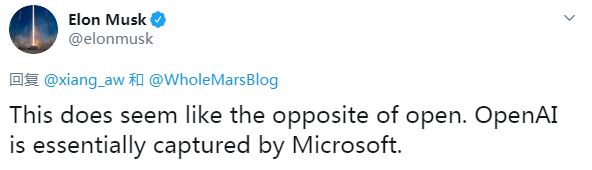
Even OpenAI co-founder Elon Musk criticized the move after news broke that Microsoft obtained exclusive access to GPT-3: “These decisions seem contrary to the idea of ‘openness.’ In effect, OpenAI is now controlled by Microsoft.” (Note: Musk left OpenAI’s board in 2019)
If OpenAI is the king of productivity, it has encountered problems with production relations—public good versus profit-driven organization, and how to sustainably develop long-term…
In our view, Web3 offers an opportunity to develop public goods and commons paradigms. In the past, public goods created immense value but lacked sustainable value-capture mechanisms. Web3’s economic systems can help define new ways for public goods to capture value while ensuring optimal redistribution back to the commons and public resources.
First, data required to train AI models can be aggregated through Web3 organizational structures.
A mature and powerful AI model requires massive datasets for self-learning, as well as external training and fine-tuning, giving rise to professions like AI trainers.
Data inherently possesses “monopolistic” characteristics—today, vast troves of data are owned by major tech companies, who have little incentive to open access to data production or distribution.
However, we’ve seen global open-source communities beginning to share data and model training with researchers worldwide.
-
Common Crawl, a public repository of ten years of web data, available for general AI training.
-
LAION, a non-profit dedicated to providing large-scale machine learning models and datasets to the public, released LAION5B—a dataset of 5.85 billion image-text pairs filtered by CLIP—becoming the world’s largest publicly accessible image-text dataset upon release.
-
EleutherAI, a decentralized community, released The Pile—one of the world’s largest open-source text datasets—at 825.18 GiB of English language data drawn from 22 different sources, used for language modeling.
Currently, these organizations remain non-profit, largely sustained by volunteers contributing out of passion.
So, how can Web3 optimize AI data production and access?
CoinFund has proposed some ideas—for instance, tokens could serve as incentives to encourage the creation of open datasets, distributing rewards based on data contributions, such as labeling large text-image datasets for AI training. Such open communities could evolve into DAOs, where well-curated open datasets are critical to expanding accessibility and improving performance in large-model research.
A high-quality large-scale AI model could have its own token, and downstream revenue from products built atop the model could accrue to the token’s value. This way, dataset contributors receive fair compensation. In short, Web3 enables better data monetization and fosters stronger public goods.
Second, training large neural networks demands enormous computing power. Over the past decade, the computational requirements for training AI models have doubled every three to four months.
For example, OpenAI’s GPT-3 has 175 billion parameters and requires 3,640 petaFLOPS-days to train—equivalent to two weeks on the world’s fastest supercomputer, or over a thousand years on a standard laptop.
Thus, AI training typically relies on specialized hardware optimized for mathematical operations, such as GPUs and ASICs—resources predominantly controlled by a handful of cloud service oligopolies like Google Cloud, AWS, Microsoft Azure, and IBM.
This presents another intersection point between Web3’s decentralized governance/market models and AI computing.
For instance, decentralized governance and incentive systems could motivate and allocate computing resources. Imagine a bounty system powered by tokens to crowdfund model training—successful backers gain priority compute access.
Today, similar players already exist—for example, Gensyn uses blockchain to verify whether deep learning tasks have been correctly executed and triggers payments via tokens, monetizing unused computing power.
If blockchain represents innovation in production relations, then AI signifies a leap in productivity. Their convergence might spark transformative breakthroughs—making it a key focus area for many investors. For instance, CoinFund investor Rishin Sharma explicitly states he’s seeking three types of teams at the AI and Web3 intersection:
1. Teams whose core mission is open AI
2. Communities building better management of shared resources (like data and compute) to aid AI model development
3. Product teams leveraging AI to bring creativity, security, and innovation to mainstream applications
TechFlow is highly optimistic about entrepreneurial and investment opportunities in this space. If you’re interested in exploring AIGC or Web3, feel free to reach out—we welcome conversations via Twitter (@TechFlowPost) direct message or WeChat: Mintomoon.
Join TechFlow official community to stay tuned
Telegram:https://t.me/TechFlowDaily
X (Twitter):https://x.com/TechFlowPost
X (Twitter) EN:https://x.com/BlockFlow_News