








UGC and Creator Economy: The Sector with the Most Web3 Spirit
TechFlow Selected TechFlow Selected
UGC and Creator Economy: The Sector with the Most Web3 Spirit
User-generated content ("UGC") has become one of the hottest trends in the world.
 Navigating Web3 tides with focused insights
By Sam Peurifoy
Translated by Arena Wang, TechFlow volunteer
User-generated content (UGC) has become one of the most dominant trends in the world.
Games built on Roblox, short videos on TikTok, or even the article you're reading right now—user-generated content (UGC) already occupies the core of the internet.
Who owns this content, how it can be monetized, and where it can be accessed will largely determine the future value trajectory of the internet.
Undoubtedly, user-generated content (UGC) is currently the most representative application embodying the spirit of Web3.
The topic of UGC was also discussed in videos by Sebastian Park from Infinite Canvas and BITKRAFT; click here to view.
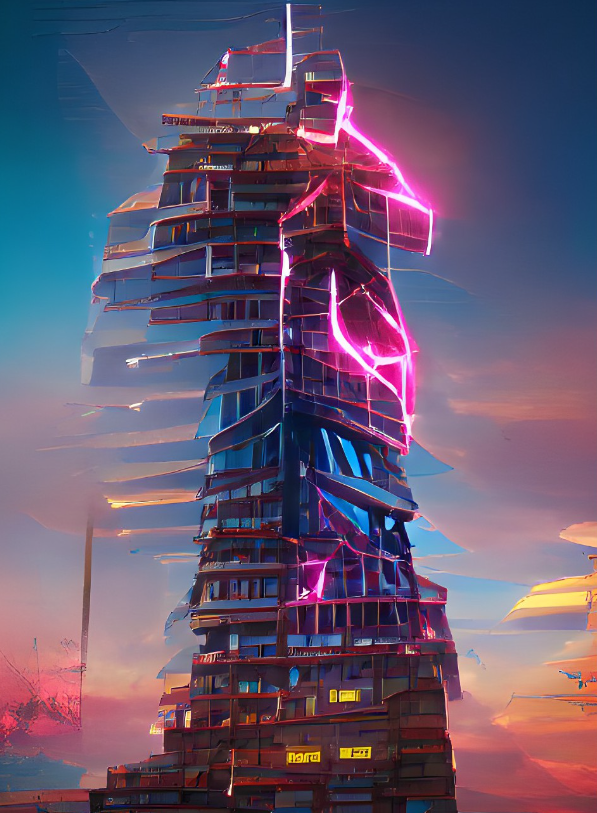
Source: wombo.art
UGC Powers Phenomenal Apps
Roblox is an online game creation platform primarily targeting younger audiences, with a current market capitalization of around $30 billion. Yet Roblox does not spend billions annually building a single "perfect game," nor has it made any breakthroughs in underlying technology or graphics. More strikingly, TikTok’s valuation is ten times that of Roblox, slightly under $300 billion.
Here's the key point: Neither Roblox nor TikTok creates content themselves.
Roblox and TikTok are just two of countless internet platforms driving the development of user-generated content (UGC) and its business models. In the past, although “content was created by users,” platforms rarely shared revenue with them. Now, things are changing.
Let’s start with Roblox—it’s one of the easiest examples to understand when discussing platform-based monetization.
On Roblox, you’re either a game developer or a player. When a creator’s game becomes popular within the community, they receive 30% of the revenue as a reward, while the remaining 70% goes to Roblox.¹
This creates a self-reinforcing cycle: users create games, promote their own games (sometimes even paying for ads), attract more users, and eventually earn money—all without requiring any direct action from Roblox. However, at the end of the day, Roblox ends up with a $30 billion valuation, while only a few independent developers actually make meaningful profits.
Beyond gaming, TikTok has started allowing select creators to run sponsored content and share ad revenue. This new incentive model enables creators to earn nearly 50% of ad revenue—an enormous breakthrough for the industry. Previously, creators had to negotiate deals with advertisers off-platform to monetize their influence.
This business model works: users love creating, and they especially enjoy getting paid for it. But who will ultimately benefit from this infinitely expanding system?
The Importance of Ownership
Roblox, TikTok, and other UGC platforms retain full ownership of all content. If a platform suddenly changes its revenue-sharing policy, users have no transfer rights, no resale rights, and no recourse over content they created. Users are entirely dependent on the platform they choose, often muted without clear reasons, with little to no appeal process—and may lose overnight everything they’ve built over years of effort.
Simply put, Web2 creators do not own their content.
Web3 has the potential to reverse this trend by assigning ownership to creators in a provable way. In the case of Roblox, this would mean creators could buy and sell the games they build—or even use them as collateral—creating entirely new markets and liquidity options for developers. For TikTok, it means creators could trade their short videos, music, and filters, unlocking novel incentive structures and commercial opportunities.
Regardless of the platform, standardized data related to content could be stored on-chain (e.g., via Filecoin Foundation) and migrated off-platform if disputes arise between users and platforms. Because this approach allows creators to move freely across platforms, Web3 creator platforms will likely adopt such standardized formats. Moreover, as evaluation standards and trends evolve, users will migrate between platforms and may soon negotiate with platforms on much more equal terms—unlike today’s Web2 environment dominated by unilateral control. Both platforms and creators can earn royalties from these digital assets, and platforms might even encourage users to leave, so long as they continue earning royalties. This shift will create a far more fluid market in terms of user base and capital, ultimately driving greater innovation across industries and increasing individual value creation.
UGC Will Grow Much Faster in Web3 Than It Did in Web2
Yet what we've discussed so far is just the tip of the iceberg. True digital asset ownership represents a fundamentally different paradigm. It's hard to imagine how next-generation creators could transfer, trade, or verify these content assets without centralized exchanges.
Incentive tools in Web3 (such as tokens) enable users to own a significantly larger share of value compared to Web2.
This is because Web3 allows flexible programming of revenue distribution directly into on-chain smart contracts, enabling earnings to flow directly to genuine creators across the ecosystem—without passing through layers of corporate middlemen.
In the next five years, we may see the rise of open-source creator platforms that operate almost autonomously, serving merely as marketplaces connecting creators, users, and advertisers.
All actions taken by creators are ultimately in their own best interest—and the ultimate form of self-interest is building a platform truly owned by creators themselves.
[1] In certain specific cases, creators may receive 70% and Roblox 30%, but this is not the norm. Click here for details.
[2] I know how difficult it is to develop a real-time multiplayer UGC game creation platform—kudos to Roblox for doing it so well.
Join TechFlow official community to stay tuned
Telegram:https://t.me/TechFlowDaily
X (Twitter):https://x.com/TechFlowPost
X (Twitter) EN:https://x.com/BlockFlow_News


