I'm a digital nomad working in Web3
TechFlow Selected TechFlow Selected
I'm a digital nomad working in Web3
Longing for life abroad and being able to survive and succeed overseas through one's own abilities are two different things.
 Navigating Web3 tides with focused insights
Interview & Writing: Claudia
Scuba diving in Bali, visiting exhibitions in Mexico, skiing in Hoh Xil, hunting in Laos, watching the sunset in Queenstown… These simple phrases made up of place names and daily life activities may seem ordinary, yet they represent a utopian romance that many office workers can only dream of.
Yet, there are always people living different kinds of brilliance in parallel worlds. They navigate the digital realm of WEB3 while experiencing time at their own rhythm. They share a general label describing their lifestyle and collective traits: digital nomads in the WEB3 world.
Many people long for this mysterious and romantic life as WEB3 digital nomads, yet hesitate at the threshold of this new world.
With curiosity and questions, TechFlow interviewed five WEB3 digital nomads currently working and living around the globe—from North America, Latin America, Southeast Asia to Japan—attempting to portray the lifestyle of this atypical group through the following five questions:
1. Could you introduce yourself?
2. What prompted you to become a digital nomad? How has it changed your life?
3. How is the local crypto ecosystem where you’ve lived or traveled? Have you met any interesting people or had memorable experiences?
4. What challenges has being a digital nomad brought to your life/work, and how have you overcome them?
5. What advice would you give to those considering a digital nomad life in WEB3?
At the end of each interview, we invited our guests to share memorable moments from their journeys—the unforgettable meal, a stunning sunset, or a surprising encounter during their travels…
Sally: From North America to Asia, Blending WEB3 with Hotpot
I’m Sally, formerly working at a crypto VC firm. In May, I embarked on an unknown journey as a digital nomad.
Earlier this year, a close friend in the industry and I launched a Hotpot DAO based on an idea we had while eating hotpot during a blockchain event week. We envisioned it as a social network bridging East and West—one that’s fun, non-transactional, culturally inclusive, and where everyone could find their own space.
We found the concept exciting, but also realized how underrepresented Asian culture is in the space despite so many Asians in the industry. Hotpot, like a melting pot, allows anything to be thrown in and cooked together.
As we defined ourselves—"HotpotDAO means to be a social network for crypto people with different backgrounds and interests"—more and more people joined. Some came because they met over hotpot; others joined online simply because it looked fun. Gradually, our community grew. We started receiving friendly DMs offering to help us "scale the hotpot," introducing us to more friends. That’s when I realized the “hotpot” was actively influencing many around us.
I’d always said I wanted to be a digital nomad, but never imagined it would actually happen. Earlier this year, after moving from Beijing—where I’d lived for years—to Shanghai, the words “leaving,” “wandering” had never appeared in my vocabulary. I never felt ready to become a digital nomad, nor did I imagine my current life. Even the courage to leave wavered several times before I finally took the step.
When I left Shanghai in May, the early-morning highway was nearly empty. With just a 28-inch suitcase, I began my wandering journey. From that moment, I knew my life would never be the same. Looking back, perhaps it was the crypto spirit—or rather, the desire for freedom—that gave me the courage. At that moment, I thought, Forget it, location doesn’t matter—freedom matters more.
My first stop was Singapore. After a short stay, I moved on to the U.S., traveling through New York, Austin, Seattle, and Los Angeles, eventually settling in the Bay Area for nearly two months. Then I headed back to Asia, reaching Thailand and Bali. This unstable, drifting lifestyle has profoundly reshaped my thinking about life and my previous values.
Since starting this nomadic life, I no longer feel the urge to buy physical possessions—things that anchor you to one place. Another noticeable change is my reduced desire for consumer goods. While traveling, such items only add unnecessary risks and burdens, so I’ve mostly given them up.
Of course, with my current lifestyle—constantly moving across countries—finding accommodation has become a major challenge. Besides high costs, housing options are also limited.
Singapore’s crypto scene remains vibrant and flourishing overall. There are many OGs here, though perhaps fewer actual builders. Still, it’s very welcoming to Chinese nationals—you can quickly find friends who share your culture.
In the U.S., things are much more relaxed. But the vibe differs by city. New York, for example, has many builders, new funds, and new projects. It feels like there’s something happening every day, especially among young people—very active, rich in leisure activities.
San Francisco is quite different from New York—better suited for work, home to many established capital firms.
Thailand also has a strong crypto atmosphere, with favorable policies. But I think Bali is becoming a magnet for web3 people, where most of my time is spent with friends.
Finally, Sally says that while on the road, she’s seen countless sunrises and sunsets, and uncovered hidden culinary gems in every city.
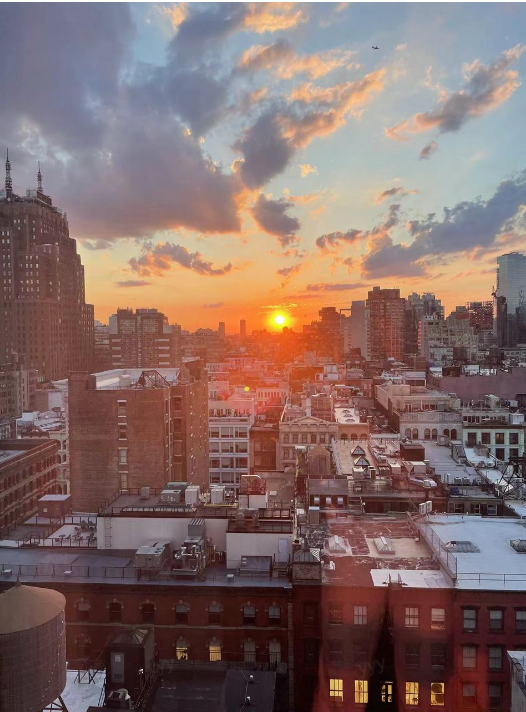
Photographed in New York
Vincent: A VC Partner Adventuring Across Southeast Asia
I’m Vincent, partner at Web3 investment firm AC Capital. I entered the crypto space in 2015. Over the past decade, I’ve lived overseas long-term, working across Australia, New Zealand, and all of Southeast Asia except Brunei. I’ve recently returned to Southeast Asia, currently staying temporarily in Bangkok, Thailand.
My digital nomad lifestyle began around late 2015—a laptop, a tool car, working wherever I go. The biggest change it’s brought is achieving true “work-life integration” (not just balance), and learning to proactively solve problems.
Australia is a major Web3 powerhouse, having produced numerous influential teams in the space. Australians have strong gambling instincts, so Australian-born projects tend to carry a strong “Degen” flavor. While there are many outstanding developers locally, the VC ecosystem hasn’t kept pace—dominated instead by legacy money or regional VCs like Blackbird or Airtree, often viewing Web3 only through DeFi. That’s slowly changing, though.
In 2019, I went to Vietnam and started doing business with locals. I was shocked by how widely crypto was used there—I could even pay rent directly in USDT. In Ho Chi Minh City, the developer culture is quite strong. There’s a solid pool of local developer talent and teams. While they may not match the engineering experience of employees from top Chinese tech firms, they’re competitive in speed, creativity, quality, and cost. One unique aspect of Vietnam is its fragmented landscape—cliques dominate, making entry difficult for outsiders.
The hardest part of being a digital nomad is that you must first become an entrepreneur—mentally and skill-wise. From now on, no one will hold your hand—you are your own boss.
Maintaining productivity without someone setting your schedule is incredibly difficult.
Becoming a digital nomad also brings intense anxiety. In the beginning, you might feel like you’re not progressing, and compared to those stable “office warriors” with steady incomes, you’ll feel deeply insecure, repeatedly questioning: Did I make the wrong decision?
This phase is inevitable. You need to accept that you’re in a transitional period—audit your resources, clarify your priorities, set modest goals. This is crucial.
Finally, my advice to those wanting to become digital nomads: Always maintain a strong sense of crisis. The world is a jungle, not a playground. Stay alert, and never assume your surroundings are safe.
As a WEB3 professional, you must understand that you are a global arbitrageur. I’ve personally experienced terrorist attacks, civil war conflicts, and natural disasters—death threats that felt terrifyingly close. I know firsthand how vital it is to always have a Plan B. Secure a long-term visa from a relatively stable country, and always stay aware of your surroundings. If necessary, while transportation is still available, leave everything behind and evacuate immediately. Finding your next destination isn’t hard.

Vincent hunting in Luang Prabang, Laos
Song Ting: An Encryption Artist Constantly Pushing Beyond Boundaries
I’m Song Ting. Since sophomore year, I’ve frequently wandered around the world. During my undergraduate studies at Tsinghua University, I visited many developing countries for charity work and picked up several minor languages.
My works include China’s first NFT artwork auctioned by a traditional art house, the first GAN-generated AI artwork sold at a traditional auction, and the world’s first NFT artwork collected by a national museum.
In 2021, I spoke at VOGUE’s inaugural NFT Forum, was named on Forbes’ 30 Under 30 list for artists, and won the Gen T x Chanel Asia Young Pioneer Art Award.
In 2022, I participated in Art Dubai’s first NFT exhibition—the Middle East’s largest art fair—and became the first Chinese artist featured in NVIDIA’s global AI art gallery. I also served as the sole Asian juror for Porsche Germany’s NFT Innovation Week.
If I didn’t have responsibilities beyond myself, I’d prefer a stable life. But I can’t stop. I keep pushing beyond boundaries and can’t pause. Because I want more people—across nations and skin colors—to understand blockchain technology and NFT art as I see them, and to see where I can contribute.
I also don’t believe women can’t lead breakthroughs in cutting-edge tech. I’m actually quite introverted, preferring to stay at home. A regular life with books, paintings, and good food is what I truly desire. Constant travel has brought many hardships—disrupted routines, broken health habits, and safety concerns. After all, Beijing is extremely safe.
Regarding the crypto atmosphere, I find Southeast Asia very dynamic, with high GameFi penetration, but weaker in crypto art. Contemporary art traditionally follows capitalist commodity development. However, the caliber of young Web3 founders in Southeast Asia exceeds my expectations, as does their level of international integration.
Since last May, I’ve been communicating with cultural officials across Latin American governments, educating them on blockchain and metaverse applications. But due to cultural characteristics and broader contexts, Latin America naturally moves at a slower pace.
Many say the industry is overly competitive now. I think that’s because too many people have overlapping information, lacking the ability to dig for original insights or think independently. So they “compete” pointlessly over insignificant details for psychological comfort.
People say emerging markets are full of uncertainty. But rather than endlessly circling outdated ideas, I’d rather embrace the unknown and cultivate my own “practical wisdom”. I don’t believe what others say—I believe what I see with my own eyes.
Still, anyone considering this lifestyle should decide carefully. Being an international digital nomad isn’t low-cost or low-effort. It demands greater self-discipline: constantly moving, how do you manage your time well, handle jet lag and irregular lifestyles, while maintaining sufficient work, study, and research output? After all, if you don’t move forward, you fall behind.
Longing for the appealing side of overseas life is completely different from actually surviving and thriving abroad using your own abilities.
If possible, many should cherish the time spent with family. Life isn’t just about career—family love is one of the greatest emotional supports.
Overseas life isn’t as perfect as imagined, and successful Chinese expatriates abroad may be fewer than commonly believed. Figuring out how to live well and what kind of life you truly want are essential questions to answer before deciding to become a digital nomad.
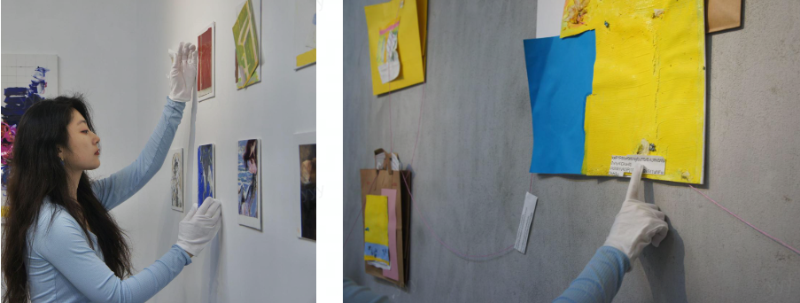
Runcheng: Digital Nomadism as a Romantic Adventure
I’m Runcheng—literally “smooth success” in Chinese, perhaps destined to keep moving. I’m currently founder and CEO of a startup: a Web3 and crypto-native IP studio. Think of us as the Web3 version of Supercell. We have our own on-chain middleware platform and recently launched our first NFT series, MonoCats. In the future, we’ll build IPs across various blockchains.
I’m now in Bali, but this isn’t my first stop as a digital nomad. Actually, digital nomadism was already common before the pandemic—a practice we call “geographic arbitrage”: earning salaries from developed countries while living in lower-cost developing nations, constantly moving while working and exploring the world.
Before Bali, I’ve been to many fascinating places—Ukraine (pre-war), Montenegro, and spent time in Singapore, Bangkok, and Chiang Mai. Overall, I think Bangkok and Chiang Mai are currently the best cities for crypto digital nomads—safe, good infrastructure, close to Singapore, and low living costs.
There’s great joy in being a digital nomad—we control our time, allowing us to try things most people can’t. For me, once my company stabilized, my schedule became flexible. I can go diving in the morning, nap at noon, then work in the afternoon until midnight. But similarly, wandering means facing new challenges daily—unexpected twists. Like today, stuck in traffic while needing to join a meeting, forcing me to participate while battling motion sickness.
There are many downsides to being a digital nomad, including accepting an irregular lifestyle. Constant movement and instability take a toll on your health. Aside from silently increasing weight, I’ve had COVID twice—each time buying medicine alone, eating alone, living alone, recovering alone.
Making local friends or integrating into local communities isn’t easy. Yet integration is a key part of the digital nomad experience. Many people merely “find a place and live there,” barely interacting with locals—in some sense, they’re just working from a different location.
Finally, I’d say Web3 ushers in a de-nationalized, globalized era, seemingly making digital nomadism instantly accessible. But it’s far from the glamorous image of casually backpacking into the distance. Especially in a bear market, this lifestyle isn’t suitable for everyone.
Digital nomadism is a lifestyle filled with adventure and romance, but it may only suit a few. Traveling across foreign lands involves more loneliness than romance. Often, digital nomads still long for a place to truly root themselves.
When we interviewed Runcheng, he had just finished his diving session in Bali. Word has it he recently obtained his diving certification and is preparing for his next stop—Bangkok.
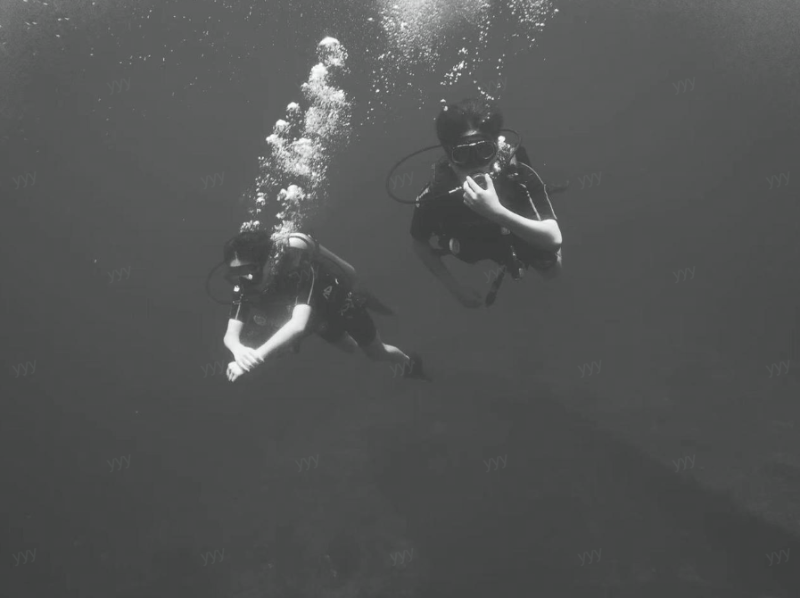
Photographed in Bali
Guo Yu: Retired from ByteDance, Now Building in WEB3
I’m Guo Yu. I worked at ByteDance for six years (2014–2020) and was one of its early employees.
After leaving in 2020, I moved to Japan to retire. Two years later, I’m now launching a web3 company in Japan. My daily life is roughly half leisure, half work across various locations.
Most of the time, I live in rural areas or on islands in Japan, working less than six hours a day, managing my company and team remotely and asynchronously. Since most of my work happens at night, I dedicate daytime to gatherings or personal hobbies. Compared to my days in Beijing, it’s significantly more relaxed.
In truth, most parts of Japan change slowly. But in Tokyo, you’ll often see NFT billboards in Omotesando or Shibuya, and StepN has a sizable youth user base.
Post-pandemic, Japan’s widespread adoption of contactless work methods has accelerated its digital transformation. Many large corporations now support permanent remote work. On the supply side, numerous Japanese companies are abandoning old practices, shifting to SaaS tools and online office software—this marks a massive, lasting shift.
Japan hosts many small NFT-related startups. Some focus on simple NFT issuance with strong sales skills; others integrate closely with offline businesses or have backing from major chains. Some teams even target overseas WEB3 markets. At this summer’s IVS Okinawa Crypto Conference, I learned about a Japanese team building a thirdweb-like contract deployment SaaS for African users, primarily targeting Nigeria. This revealed to me the entrepreneurial enthusiasm Japanese have for WEB3.
In Ginza, bars now accept crypto payments, and hotel chains are selling room key NFTs.
Since WEB3 is a global phenomenon, whether it’s first-tier investors or collaborating engineers, they may be scattered worldwide. Building a global team is an unavoidable challenge for entrepreneurs anywhere—meaning members come from diverse cultures and time zones. Communication can flip day and night. Without managing work-life balance well, sustaining product development rhythm becomes impossible.
Looking ahead, I believe many WEB3 products will enter mainstream awareness in various ways, potentially becoming one of the few major user growth vectors globally. Therefore, maintaining rhythm is critical.
Before ByteDance launched its video recommendation project, it spent 3–4 years on technical accumulation, team building, and product data validation. To excel at something truly important, our goals must be ambitious enough, and our models robust enough to sustain long-term investment.
A robust revenue model is essential preparation for entering WEB3—surviving the cycles, choosing feasible product directions, and ultimately reaping significant rewards.
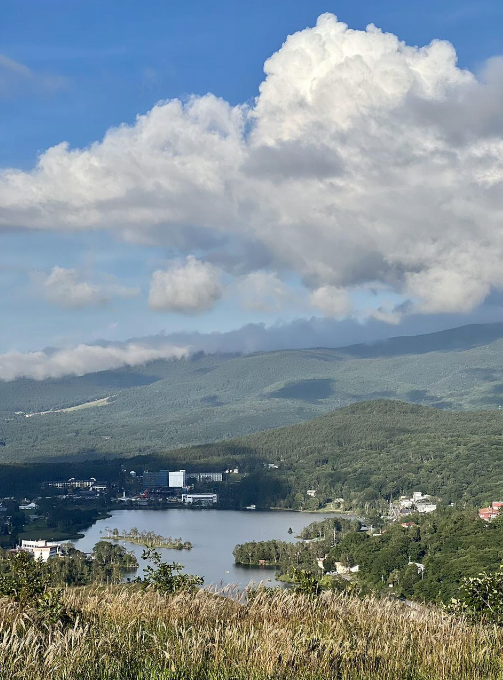
This photo was taken at Hakuba Lake. I love sitting there quietly, thinking. Whenever I try to regain my rhythm, I soak in hot springs, use the sauna, or meditate.
Join TechFlow official community to stay tuned
Telegram:https://t.me/TechFlowDaily
X (Twitter):https://x.com/TechFlowPost
X (Twitter) EN:https://x.com/BlockFlow_News