Young Chinese digital nomads, "adrift" in Southeast Asia
TechFlow Selected TechFlow Selected
Young Chinese digital nomads, "adrift" in Southeast Asia
Alcohol, tobacco, the number of places visited, the number of impressive people met—superficial freedoms cannot constitute the flow of life.
 Navigating Web3 tides with focused insights
Text: Offshore Current
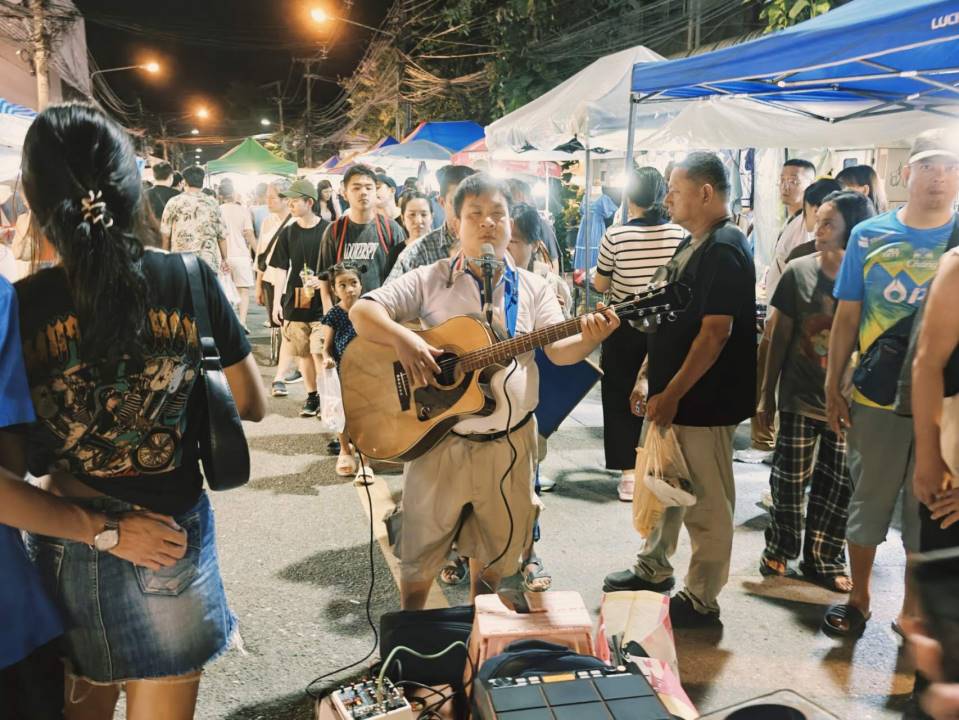
"I'm out of money. Thinking about going back home to find a job."
Jane looked up at me on a Chiang Mai street in the early morning hours. Jane is 25, from Yunnan. This isn't the first time she's had to interrupt her journey, return home, find work, save money, quit, and then resume life on the road.
This time she stayed in Chiang Mai longer than usual—she lost count of how many times she'd drained her savings. She was curious how other young people managed to travel while still earning money.
After all, in most Chinese philosophies, survival matters more than belief. Travel is merely seasoning sprinkled atop survival.
Throughout history, people have always left their homelands out of necessity—crossing frontiers, sailing southward, leaving hometowns to earn a living. In the digital age, foreign lands have become today’s youth’s exploration of distant places—and even daily life. A new group has emerged: transnational digital nomads.
Chiang Mai, nestled against Doi Inthanon—the tallest mountain in Thailand—and populated by digital nomads drifting through this ancient city, follows its own logic of survival and freedom.
The Myth of Life Reset
"I knew about Web3 back in high school, but during college I interned twice at internet companies and realized I didn’t like the pace of big tech firms. Before graduation, I joined a Web3 company, and I’ve been there ever since."
Zoe, a post-00s girl from Shenzhen, is the youngest member I’ve met in Chiang Mai’s digital nomad community. With the sun-kissed tan typical of Southeast Asian islanders, she recently graduated and already achieved what many dream of: work-life balance (WLB). Together with friends from the same community, she travels and works across Dali, Shenzhen, Chiang Mai, and Bali—an existence that sounds more like a white girl’s lifestyle narrative.
During my half-year journey through Southeast Asia, Zoe was one of the few rare cases whose career began directly within digital nomadism. Most other young people aim to escape Beijing, Shanghai, Guangzhou, or Shenzhen, rebuilding their lives abroad in Southeast Asia.
Prior to meeting them, most nomads I encountered had gone through multiple struggles—sometimes urgently exploring, sometimes passively waiting. No matter what, simply surviving abroad became their goal.
This reality differs greatly from how digital nomads are portrayed on Chinese social media platforms.
It's neither the clichéd image of rebelliously rejecting meaningless "bullshit jobs," chasing spiritual freedom, then living under sunshine, beaches, and oceans—resetting life entirely through digital nomadism.
Nor is it the so-called “disenchantment” with digital nomadism—quitting impulsively, seeing Cangshan Mountain and Erhai Lake, touring the world, suddenly grasping life’s meaning, then announcing online that digital nomadism is just a traffic monetization game, eventually turning to selling courses on抖音 or Xiaohongshu and harvesting followers like韭菜 (chives).
Like Che Guevara wrote in his journal while riding a motorcycle across South America: “I feel that I am no longer the same person as when I started.” Digital nomads also experience such “life moments.”
In rickety Malaysian ferries rocking on the South China Sea; on motorbikes weaving through shifting shadows beneath Chiang Mai’s ancient city walls; in the back of pickup trucks speeding along slippery tropical forest roads near the equator. Each time they're immersed in the humid, sticky air of Southeast Asian wilderness, that familiar sensation of floating returns—arriving suddenly during unknown journeys, then fading away quickly.
This fleeting feeling keeps many young digital nomads lingering and wandering.
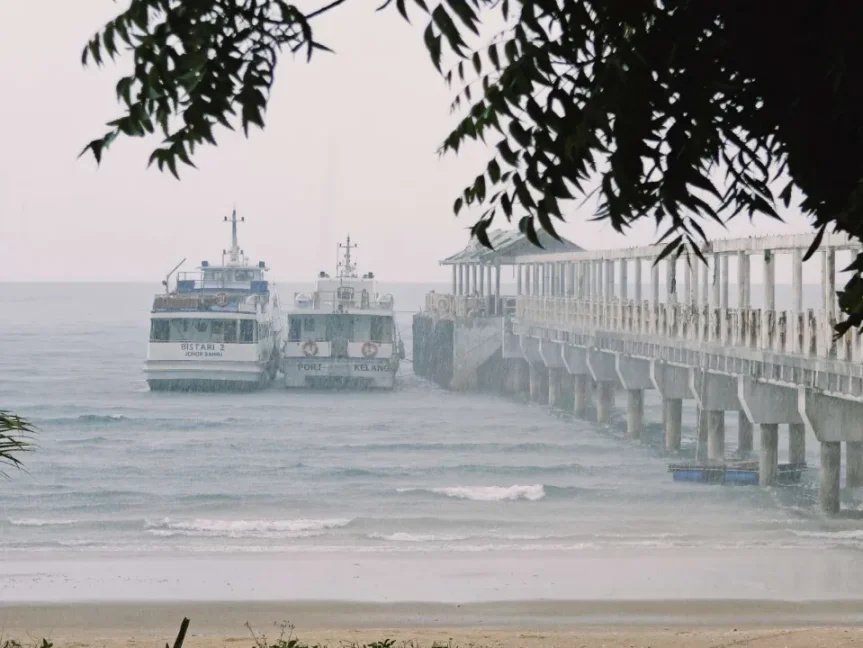
Ferry at a Malaysian port
Yet even in Southeast Asia, mundane and helpless daily realities remain unavoidable.
Nomadic lifestyles aren't magic pills for life. In Chiang Mai—a low-cost hub for digital nomads—friends often complain about difficulties settling overseas. When clients delay payments, some have been left with only a few hundred Thai baht, relying on loans to survive.
Venerable Damika, an Australian Theravāda Buddhist monk, said in *Good Questions, Wise Answers*: “Afraid, people go to sacred mountains, sacred groves, sacred places.”
In context, this quote suggests people seek refuge due to external fears, trapped in comfort zones. But for nomads, foreign lands aren’t utopias either. Their outward exploration stems equally from fear of rigid, routine lives.
Urban office workers grow tired of monotonous routines, materialistic values, and lack of meaning—they worry about the future and lose touch with the present. Meanwhile, in Chiang Mai, where coffee and hobbies can be freely enjoyed, many nomads live chaotic lives with reversed schedules, drifting between cafes and bars.
One thing is certain: even in Chiang Mai’s ancient city, dense with temples and steeped in Buddhism, many digital nomads still cannot escape the constraints of basic survival.
Alcohol, tobacco, number of countries visited, influential people known—surface-level freedoms don’t constitute the flow of life.
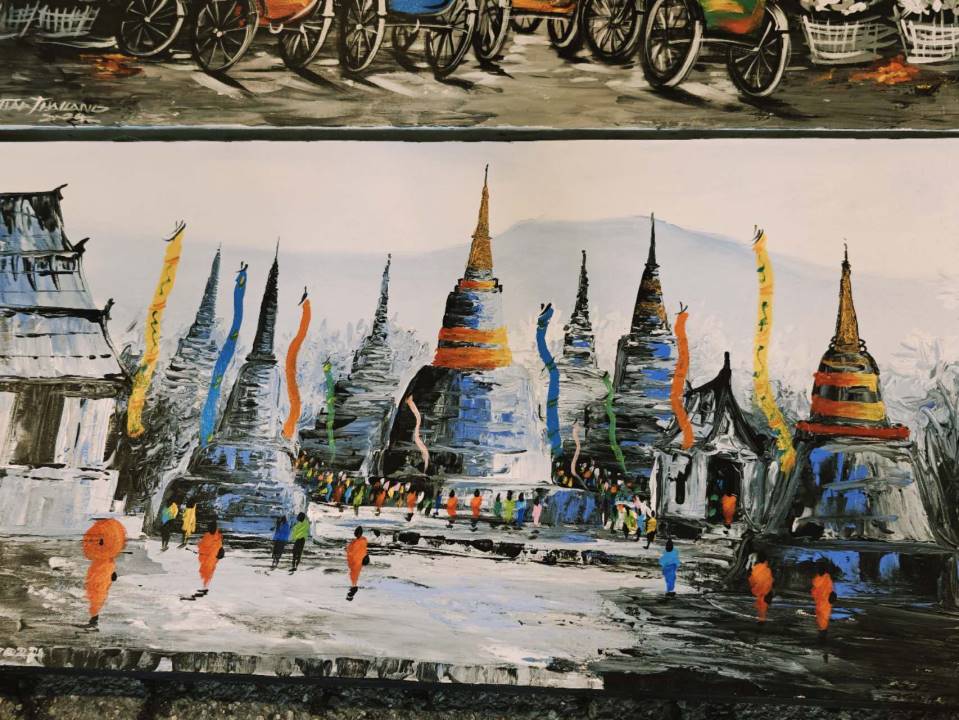
Local artwork depicting monks and stupas
In 2021, international consulting firm MBO Partners conducted a study titled *The Digital Nomad Search Continues*, revealing most digital nomads sustain their lifestyle for no more than three years.
Three years—that timeframe becomes a curse upon confident adventurers who believe they’ve mastered their youth.
Wilderness or Rails?
Compared to crowded, bustling Bangkok, rainy-season Chiang Mai—with far fewer tourists—is another world altogether.
Ride a motorcycle in any direction beyond the old town for less than an hour, and you’ll see green hills stretching endlessly, occasionally dotted with dark, tranquil ponds. By evening, the noisy engine roars fade into silence, leaving only massive clouds overhead. If lucky, stars emerge behind cloud gaps parted by mountain winds. This makes Chiang Mai a long-standing ideal place for meditation and retreat.
Jun’an, over thirty, moved from Dali to Chiang Mai last year. His workplace lies hidden among Chiang Mai’s rural hills.
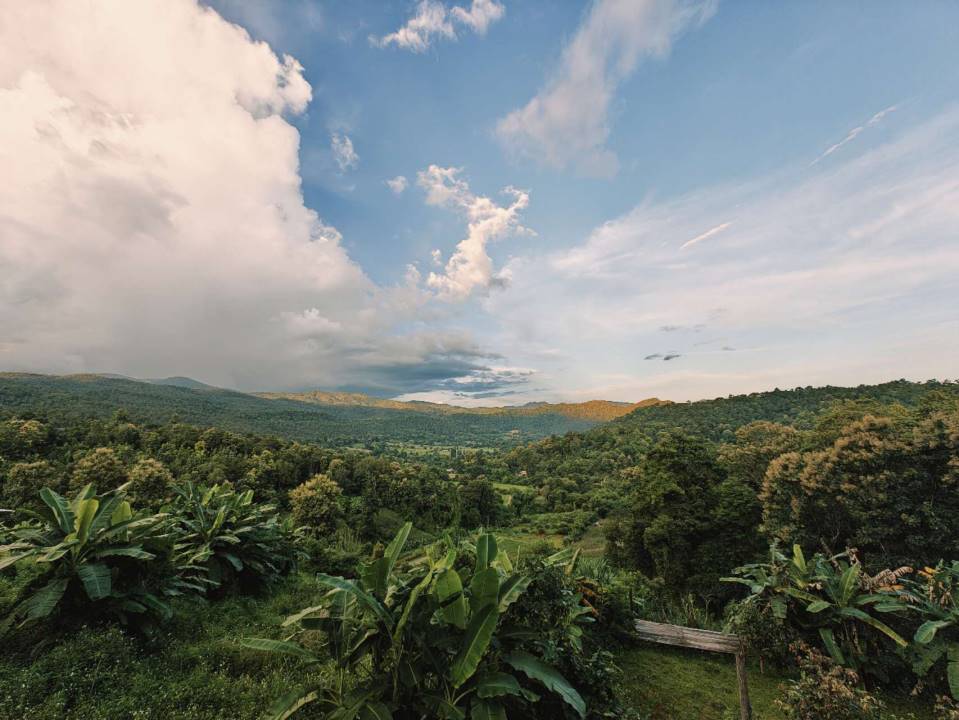
Foot of Doi Inthanon
Strictly speaking, Jun’an isn’t a typical digital nomad—he doesn’t rely on internet connectivity for his profession.
From the perspective of long-term urban dwellers, Jun’an and his work might represent absolute freedom—he’s a mind-body-spirit practitioner.
He leads participants into the wild, playing guitar, blowing didgeridoos (a traditional Aboriginal Australian instrument, one of the world’s oldest), dancing, singing sacred songs. In Southeast Asian-style lofts, he sets up idols, burns incense, arranges various medicinal herbs, guiding others on “spiritual journeys.”
Originally a music teacher in Dali, whenever he craved novelty, he’d head to Southeast Asian rainforests, to Chiang Mai’s countryside—eventually becoming a symbol of wilderness and freedom in others’ eyes.
“Do these spiritual connections actually improve your real life?” My question was rather pragmatic.
“Hmm, yes, they do,” Jun’an pondered briefly. “I now have a clearer idea of what I want. Most attendees at our rituals are foreigners. Right now, my goal is helping more Chinese people experience the spiritual realm.”
Participants often include founders, investors, and professionals from domestic tech and Web3 industries. “Most have positive experiences—over 80% come back.”
Spiritual connection may transcend class, but attending these sessions comes with a price—starting at 10,000 RMB per session. Yet Chiang Mai’s 2021 GDP per capita was around 135,991 THB (approximately 28,000 RMB).
A key reason digital nomad life appears relatively free is geographic arbitrage—earning USD or RMB across blurred global boundaries. Jun’an’s livelihood thrives in low-cost Chiang Mai, progressing exactly as he hoped.
Beyond Web3 hubs, digital nomad life isn’t as comfortable as imagined—especially for those whose careers aren’t naturally suited to remote work, hoping to transition into nomadism.
Jane, who has traveled abroad multiple times, meticulously calculates daily expenses. She hunts for reselling opportunities and asks fellow nomads about income sources.
When Mad Monkey (a well-known budget hostel chain in Southeast Asia) exceeds 300 THB (about 60+ RMB), she immediately opens accommodation apps to find cheaper alternatives. She limits meals to under 100 THB and rarely joins popular activities like elephant sanctuaries or Muay Thai matches.

Local band performing charity concert for flood relief
Alian, who quit a major Chinese internet company, represents a relatively smooth career transition.
On social media, Alian’s self-media channel focuses heavily on how digital nomads worldwide earn money to support global living.
“Self-studied Web3 development for over a month—quickly mastered frontend trio and REACT, blockchain development, Solidity coding. Listened intensely to industry podcasts, attended virtual conferences, scrolled Twitter, read news. Built small projects uploaded to GitHub, polished my LinkedIn profile seriously. Originally planned to join communities, take simple projects, gain practical experience before transitioning roles—but unexpectedly ended up chatting directly with founders. Maybe sincerity touched them? Got an opportunity by late August, officially joining a project team. Starting from scratch, beginning as an intern.”
Beside rippling swimming pools or beneath bright floor-to-ceiling windows, nomads like Alian each claim a table, facing their tools, heads down typing furiously. The quiet yet urgent atmosphere resembles university library cram rooms during graduate exam season.
If Chinese digital nomads arriving in Chiang Mai carry traces of East Asian depth and faces filled with stories, long-term Western residents exude an unimitable ease. For young Westerners, moving to Southeast Asia or flying to Australia on WHV (Working Holiday Visa) has become a trendy way to navigate their exploratory youth phase.
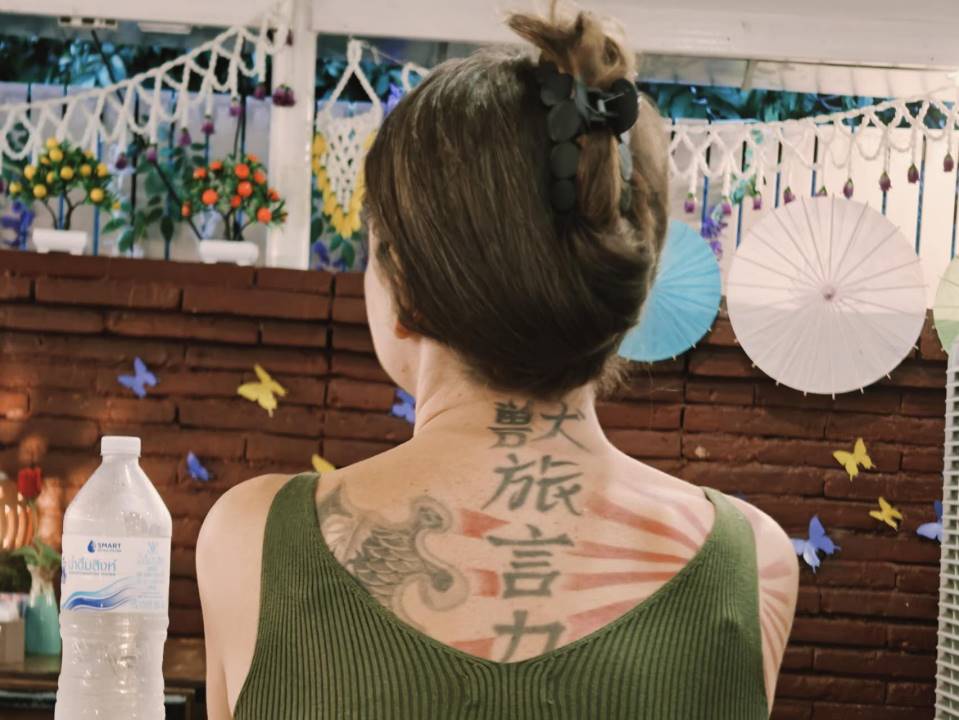
Foreign backpacker with Chinese tattoo
I know a French guy, William, living off unemployment benefits while taking occasional remote gigs—free to wander Malaysia, Singapore, and Thailand for half a year without worrying about gap years. An Australian punk guy works two to three months annually, then rides a motorbike bought in Laos to tour Southeast Asia for the rest of the year. A Kiwi girl I met at a Chiang Mai hostel doesn’t worry about retirement—even without ever working or paying personal insurance, she’ll receive full pension benefits upon retiring.
Chiang Mai features hip shared workspaces on Nimman Road, and dim, aging rooms in low-rise buildings near Ping River—just as Westerners, holding high-exchange-rate currencies, working remotely for well-paid, high-welfare Western companies, complete their “geographic arbitrage.” Different cultural classes of digital nomads in Chiang Mai follow their own wilderness paths and rail tracks—some born directly into what others perceive as “wilderness.”
Everyone’s narrative stems not only from themselves, but also from underlying histories and cultures.
As French writer Didier Eribon said: “This place I tried so hard to escape: a social space I deliberately distanced myself from, a spiritual space serving as a negative model throughout my upbringing, is nonetheless the homeland that constitutes my inner core, no matter how much I resist.”
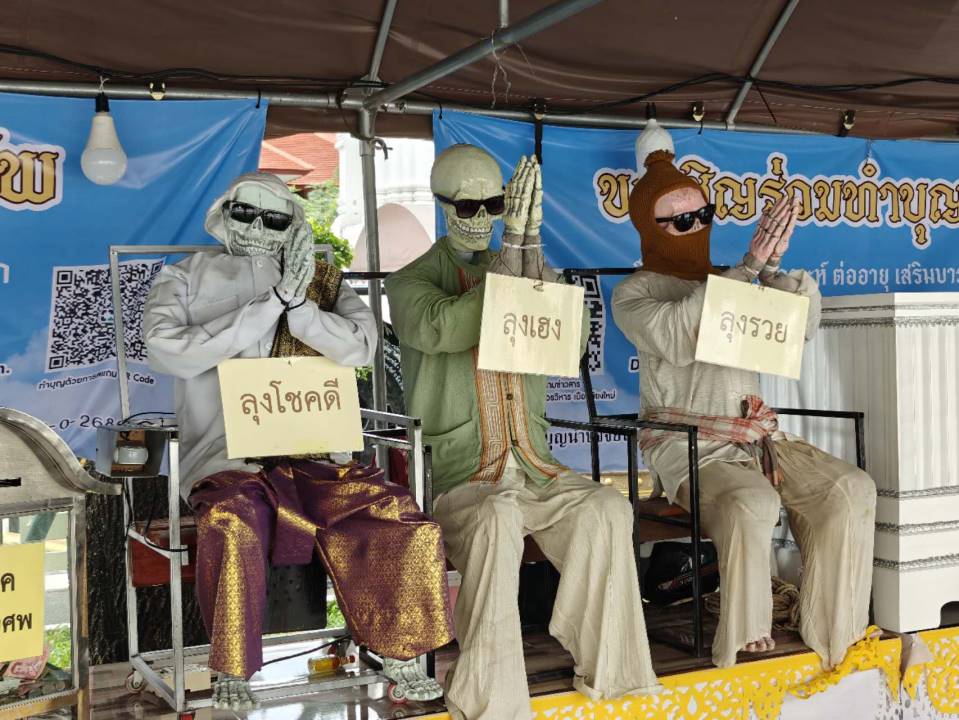
Unique Buddhist worship inside a Chiang Mai temple
Recognizing certain cores continue as inseparable parts of oneself—this may be the first lesson overseas for digital nomads fleeing elsewhere.
Returning to the Real Present
“Endless, continuous monsoon rains—perhaps otters will once again transform into whales.” This sentence by Malaysian-Chinese writer Ng Kim Chew refers to whales’ evolutionary origin: fish that came ashore to become mammals, then returned to the sea. Their closest relatives are otters.
Malaysia’s rains resemble giant whales cyclically returning to deep seas. Chiang Mai’s rains pulse with life rhythms. After every downpour, greens outside appear fresher, ancient city walls grow heavier.
Xiaoxia is Chiang Mai’s “otter.” Her first job after graduation was as a bank teller in her small hometown—stable public-sector employment, life on solid “land,” day after repetitive day. “My daily work involved helping elderly people apply for and withdraw pension funds. I could clearly foresee my entire future.”
So Xiaoxia chose to return to the sea.
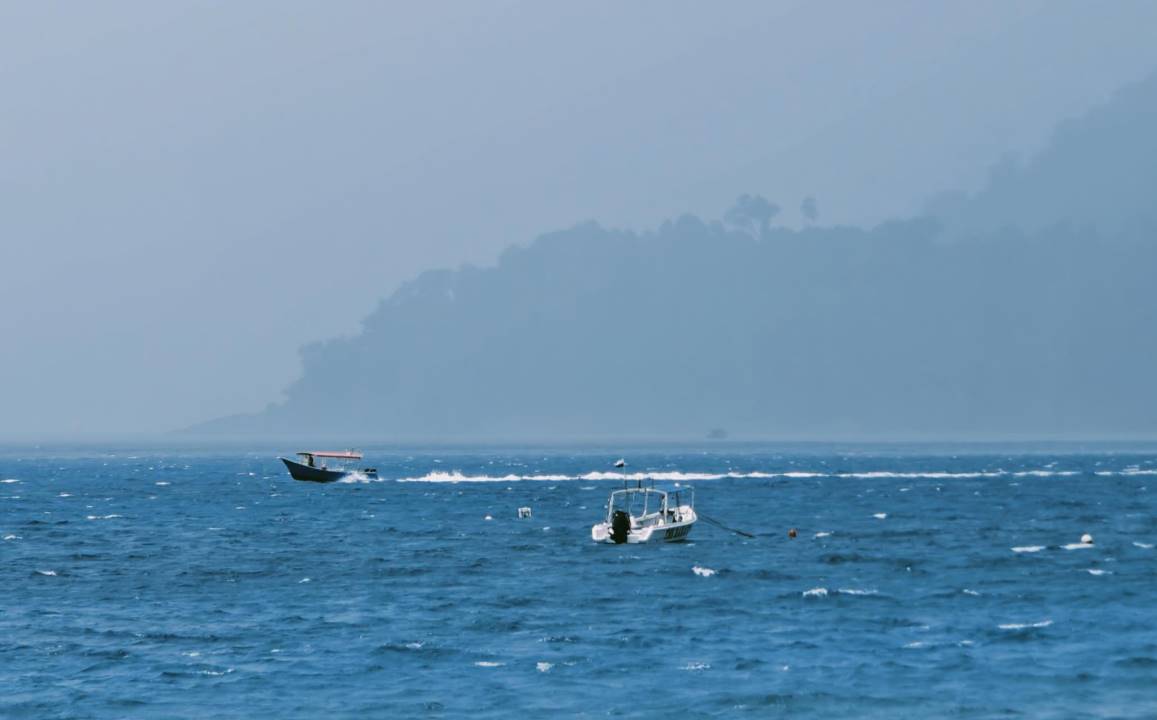
Tioman Island and the South China Sea in the rain
“Cross-border e-commerce was booming then. I applied for an English customer service role since my English was decent. The boss was foreign, workload relaxed. Gradually learned the industry, then started doing things myself.”
Xiaoxia moved beyond entry-level customer service—from labor-intensive hourly wages toward independently handling cross-border projects and remote roles. With increased financial and time freedom, she drifted through digital nomad communities in Anji, Jingdezhen, Dali, then Singapore, Penang, Chiang Mai.
Since choosing nomadism, both her work and life improved. So when she suddenly decided to return home for a job by year-end, everyone was shocked. “Going back for a senior management position. This role allows access to resources via the company platform, and I won’t abandon current collaborations.” Xiaoxia sounded enthusiastic.
For most people, remembering the last time work brought genuine joy feels distant. Today, individuals easily grow impatient with the present, believing better lives lie solely in the future. Eventually, amid dry, stagnant days and nights, they abandon jobs, lose friends, and stand bewildered.
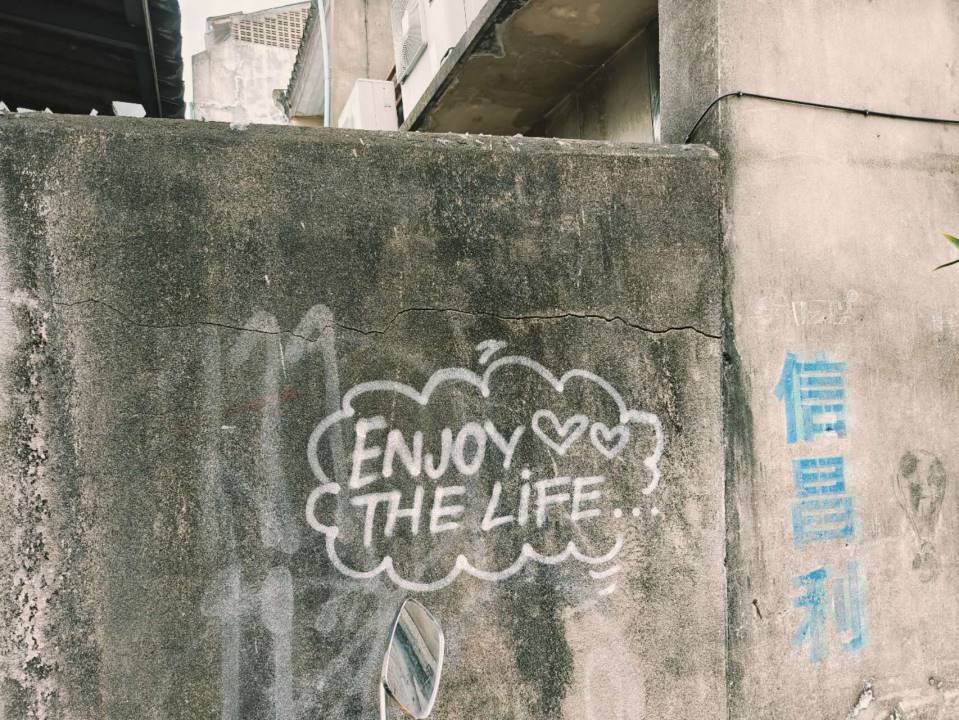
"ENJOY THE LIFE" graffiti on a Chiang Mai street
Xiang Biao, a youth mentor, says Chinese people live suspended lives—immediate enjoyment doesn’t matter; only the moment when the future collapses truly counts.
Xiaoxia is an exception. For her, being a nomad isn’t life’s central theme—it’s merely one self-chosen lifestyle among many.
Urban dwellers project excessive fantasies onto nomadic lives, echoing a line from the film *Into the Wild*: “Undeniably, ‘freedom from constraints’ always brings excitement and happiness. Because it means escaping history, oppression, rules, and tedious obligations and responsibilities—the so-called absolute freedom.”
But people can’t remain perpetually exhilarated. Ultimately, everything returns to the mean.
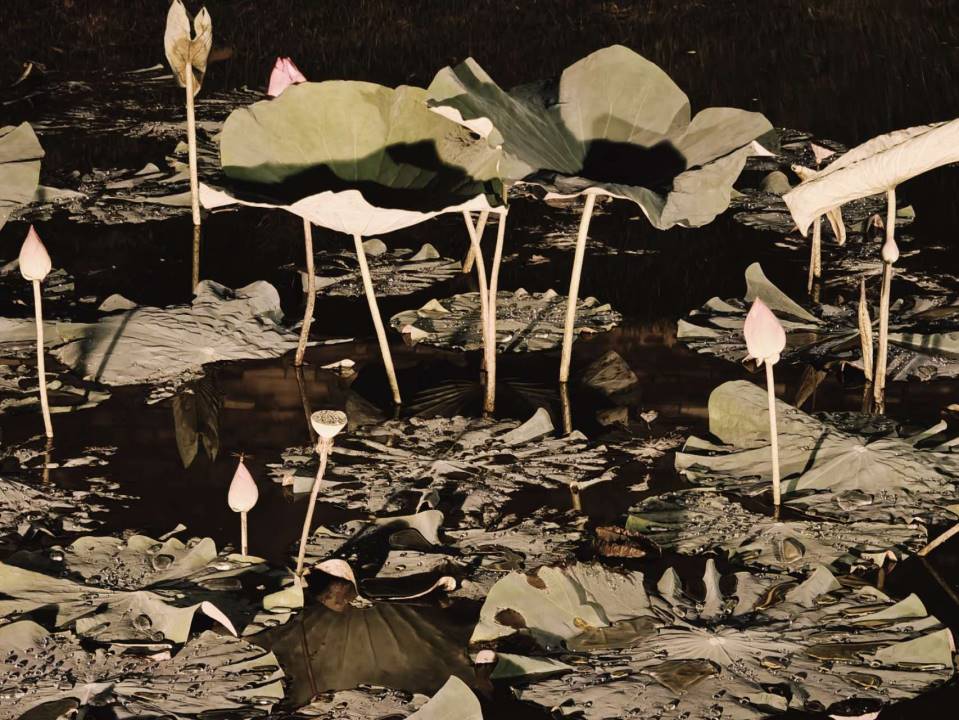
Lotus flowers in Chiang Mai’s moat
For Xiaoxia, choosing to leap from land back into the sea meant a young whale could migrate from warm tropical breeding grounds to polar feeding areas.
Having seen countless coming-and-going youths, Zihua—the community manager of a digital nomad space—never cares where newcomers come from, what they do, or where they’re headed. She barely intervenes, believing the community naturally embraces diverse individuals.
A gaming enthusiast left behind a brand-new PS5, immediately prompting someone else to contribute *Black Myth: Wukong* and *Elden Ring*. Lao Ai, running a hookah business, imported two sets of equipment just to satisfy cravings—turning nightly hookah sessions into a community ritual, with hookah masters now in their fifth generation. Local staff decorate gardens and courtyards according to personal taste, hiding little surprises throughout shared spaces.
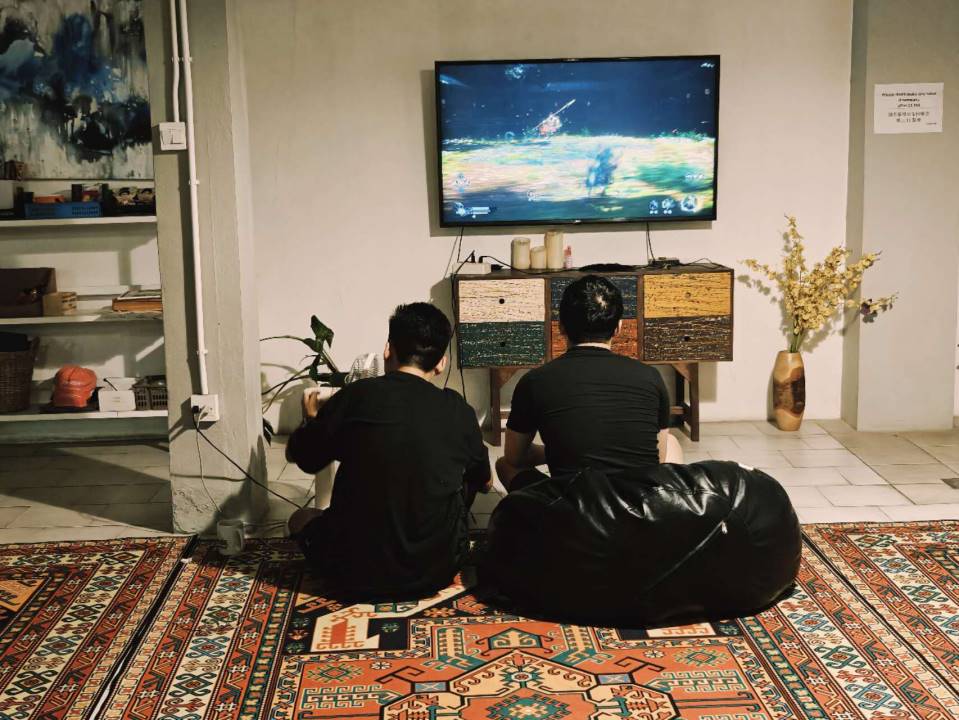
Playing Black Myth in the community
"See what it becomes on its own."
Beyond collaborating with nomad communities like DNA, NCC, 706 Youth Space, Shanhaiwu, and Wamao, Zihua plans next to include feminist groups. “Don’t want to label the guesthouse—just let it be a community. It welcomes any normal human being.”
Nomads are fluid—including the community itself. Some leave but wish to return; others stay indefinitely without particular reason.
“People suited for the community不知不觉 (unconsciously) end up staying a long time.”
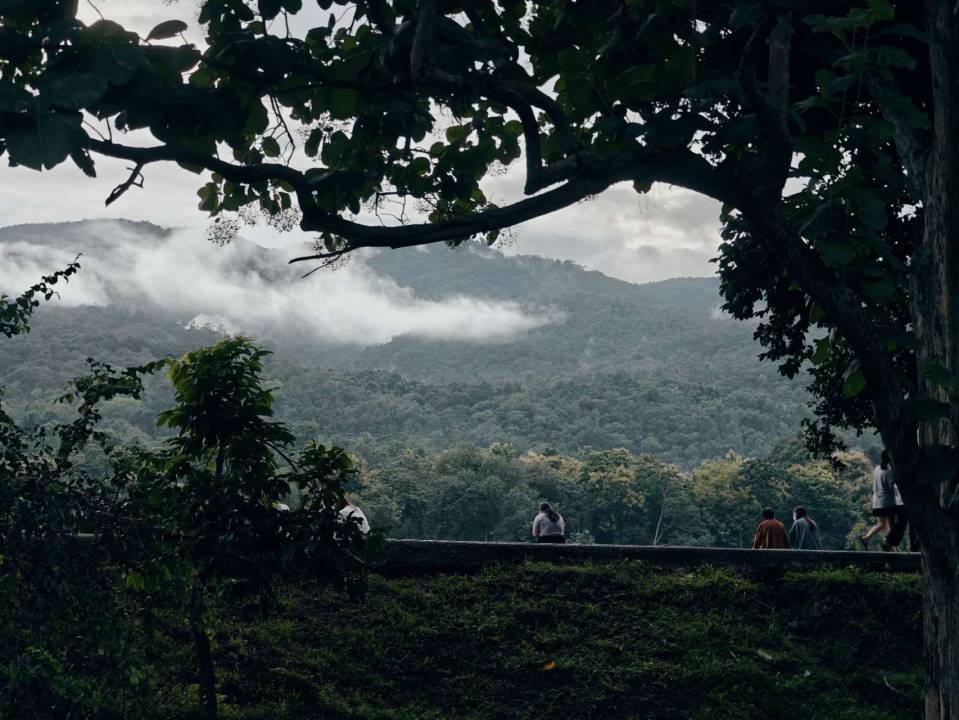
Chiang Mai University at the foot of Doi Suthep
Toward the end of Chiang Mai’s rainy season, one week after Jane left for China, I asked if she’d found a new job. There was silence on the phone:
“Wish me luck becoming a digital nomad soon.”
“Don’t need much money.”
“Just enough to support my wandering.”
Join TechFlow official community to stay tuned
Telegram:https://t.me/TechFlowDaily
X (Twitter):https://x.com/TechFlowPost
X (Twitter) EN:https://x.com/BlockFlow_News