Experiencing a 7.7-Magnitude Earthquake: A Digital Nomad's Account from Chiang Mai
TechFlow Selected TechFlow Selected
Experiencing a 7.7-Magnitude Earthquake: A Digital Nomad's Account from Chiang Mai
Every Web3 remote worker is their own crisis manager.
 Navigating Web3 tides with focused insights
By angelilu, Foresight News
When the Earth Shakes: A Unique Test for Digital Nomads
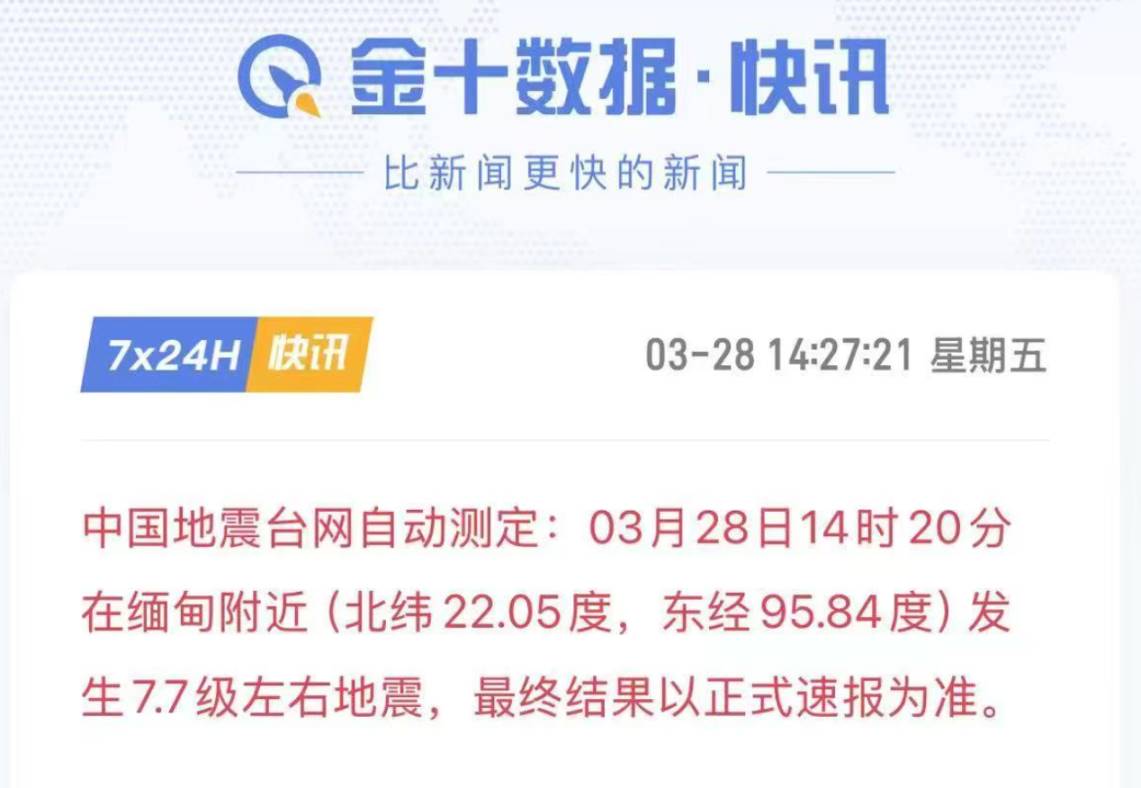
At around 2 p.m. on Friday, March 28, 2024, a magnitude 7.7 earthquake struck Myanmar, its tremors rapidly spreading to neighboring countries. Four days later, the death toll continues to rise as rescue workers search through rubble for survivors. Information and firsthand accounts about the severity and full impact of this disaster appear to lag behind reality.
The quake had a particularly noticeable impact on Thailand, especially since Bangkok was on the verge of hosting Blockchain Week. At that time, both Bangkok and Chiang Mai were filled with Web3 professionals closely following developments. As someone who experienced the earthquake in Chiang Mai, I initially intended to document my experience immediately—but post-quake dizziness and physical weakness made it difficult to concentrate.
In the first day after the quake, there was little reporting about the situation in Myanmar, while updates from Bangkok were more accessible. At first, I didn't think much of it, but as more information emerged, I grew increasingly unsettled. For several days now, I've been experiencing sensory illusions—“phantom quakes.” Every time a motorcycle roars past outside, the faint vibrations through the ground make me wonder if another aftershock has hit. At night, I'm frequently jolted awake by uncertain sensations, scrambling for my phone to refresh earthquake monitoring websites, searching for an aftershock record that may not even exist.
In the face of unease, understanding the full scope of events is the best remedy. After gathering information and talking with others, I’ve compiled this article in hopes of offering reference and comfort to those who went through the same experience.
Note from the Epicenter: When English Class Was Interrupted by a Quake
I came to Chiang Mai primarily for an in-person English course. That day, I was sitting in class, focused on learning, when suddenly tables and chairs began to shake slightly—and then more intensely. Everyone seemed momentarily confused, questioning whether this was really an earthquake. A few quick-thinking Chinese students immediately ducked under their desks for cover, while our British teacher looked bewildered, clearly unfamiliar with such phenomena. When the initial shaking eased slightly, I suggested urgently, "We should go outside into an open area!" One classmate turned to grab their backpack; I quickly stopped them—"Just get out! Take your phone and go."
Chiang Mai’s mostly single-story buildings turned out to be our good fortune. By the time we rushed outside, a small group had already gathered, all looking uneasy despite varied expressions. The fish pond in front of the building, normally mirror-still, was now churning like a coffee cup violently shaken by invisible hands, splashing water onto the surrounding tiles. Everyone pulled out their phones—to contact loved ones and confirm safety, and to search for news about the quake.
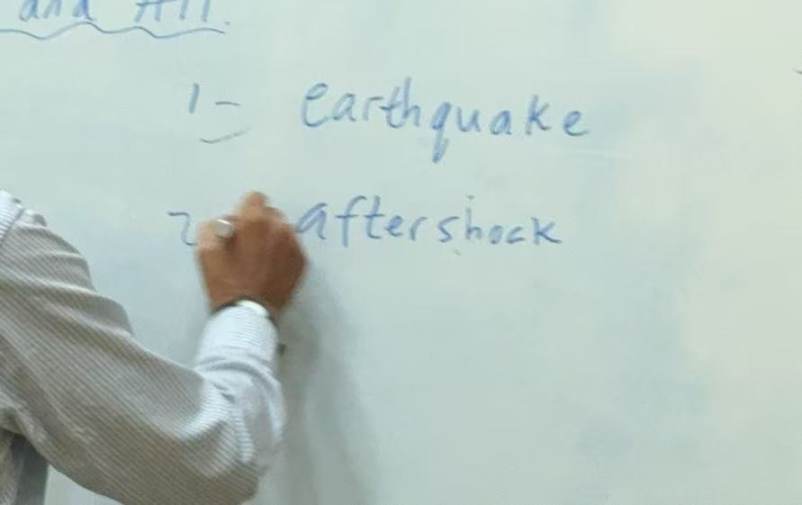
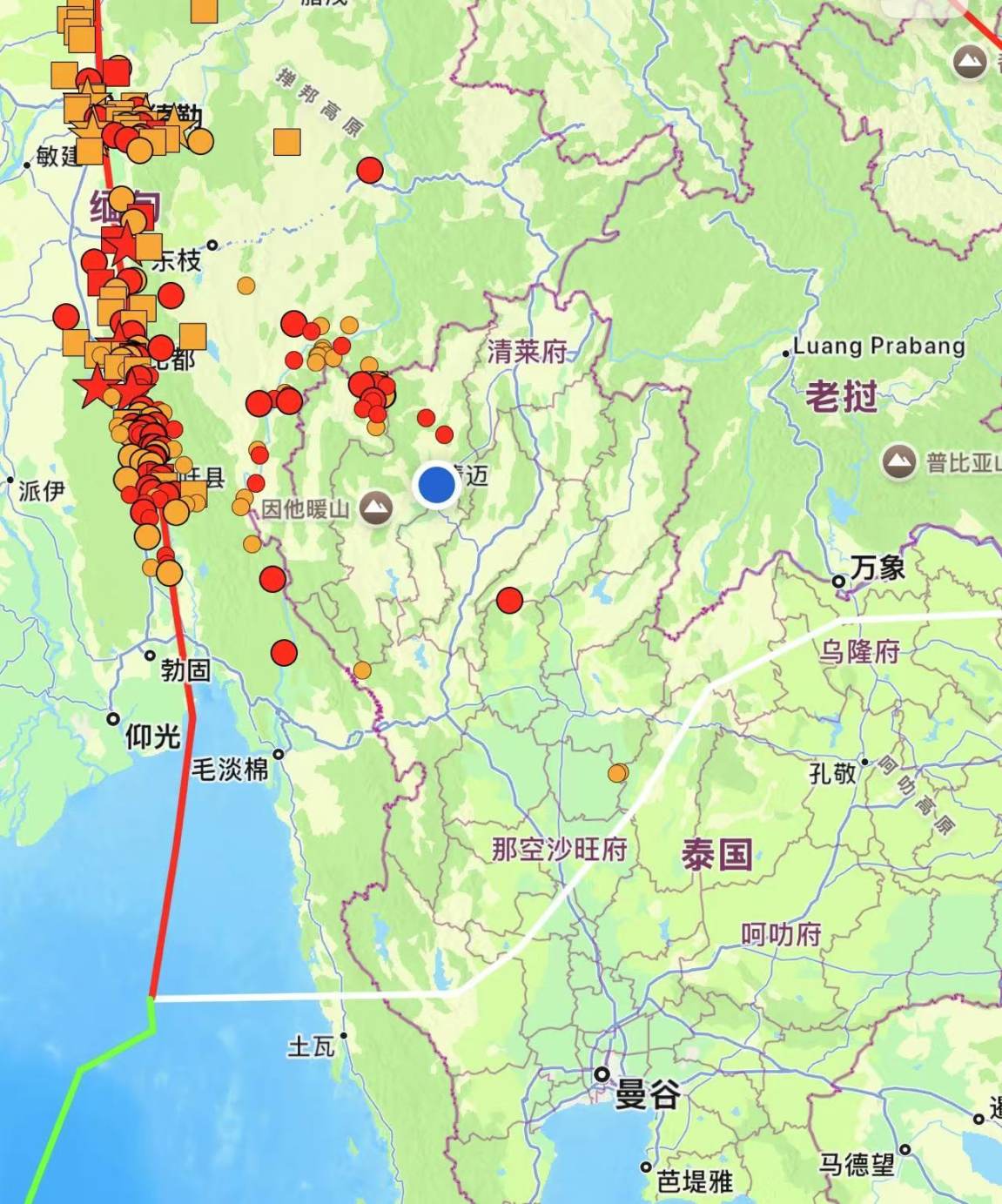
Under the scorching sun, staying outdoors quickly became unbearable. Once things seemed calm again, we returned to class to continue the lesson. In that English class, we informally learned two new words: "earthquake" and "aftershock." Not long after, another clear aftershock hit, prompting us to evacuate once more. This time, we found online confirmation: the epicenter was in Mandalay, Myanmar, 494 kilometers away in a straight line from Chiang Mai. All the anxiety and confusion ended with that English lesson. Later, I met up with friends, chatting and sharing dinner with new acquaintances.
Code and Aftershocks: How Web3 Workers Experienced the Earthquake
Through conversations, I learned that Chiang Mai hosts a significant number of Web3 professionals. When seismic waves rippled through the city, remote-working Web3 practitioners had no unified emergency plan, no company safety officer directing them, no practiced evacuation routes. Each person became their own crisis manager, improvising individual responses.
On social media, one user shared a textbook-perfect reaction: upon feeling the first tremor, he grabbed all electronic devices and ran downstairs to open ground—all within 20 seconds.
But not everyone remained so composed. A friend admitted they couldn’t even dress properly in the panic—the more anxious they felt, the less control they had over their hands, turning simple actions into daunting challenges. Another professional shared that they were in the middle of a meeting and sprinted out holding only their laptop. Some developers said their first instinct was to save their code. One team had planned to launch a new product version at that very hour but had to delay due to the quake.
For long-term digital nomads, moments like these can spark sudden homesickness and a deep awareness of the loneliness of constant movement. Across various local community chat groups in Chiang Mai, practical information spread quickly: from aftershock alerts to safety tips, people did their best to support each other.
Although Chiang Mai is one of the closest Thai cities to Myanmar, most buildings are low-rise, so actual damage was limited. A few high-rise residential buildings reported bent columns, cracked walls, or falling debris, and have been temporarily evacuated. Some mutual aid groups have offered spare rooms or villas to those unable to return to their high-rises.
Impact on Bangkok: Ripple Effects Beyond the Epicenter
Compared to Chiang Mai, Bangkok suffered more severely. Despite being over 1,000 kilometers from the epicenter, an unfinished 30-story skyscraper collapsed during the quake. High-rise buildings experienced intense shaking—water from infinity pools atop luxury hotels on the 50th floor spilled out like waterfalls, cascading onto streets below. This became one of the most visually striking images of the event.
Why did Bangkok suffer such severe effects? Seismologists point to several key factors: First, the earthquake's focal depth was extremely shallow—only 10 kilometers—greatly amplifying surface shaking. Second, the magnitude 7.7 quake released energy exceeding even that of the Hiroshima atomic bomb. Crucially, the fault line extended in a straight direction, acting like a highway to efficiently transmit massive energy across 1,200 kilometers into Thailand. Bangkok’s geology further worsened the situation—it sits on soft sediment layers, essentially forming a giant “jelly” that amplifies rather than dampens seismic waves.
Social media users widely reported that Bangkok’s transportation systems nearly collapsed: metro services halted, roads jammed for hours. A typical half-hour commute stretched into a grueling four- to five-hour ordeal.
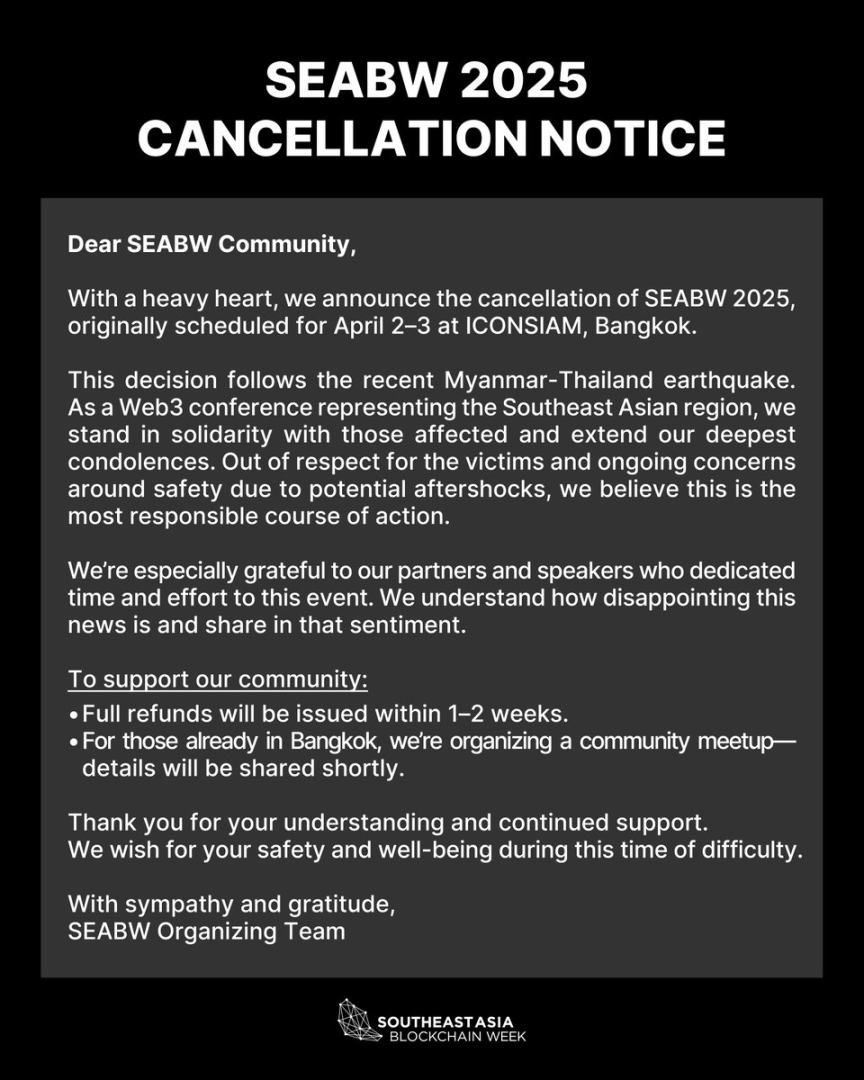
The Southeast Asia Blockchain Week (SEABW), originally scheduled for April 2–3 in Bangkok, was forced to cancel at short notice. The organizers announced they would use their channels to help connect affected individuals. While some side events may still proceed, attendance is expected to drop significantly.
On-Chain Response: Community Power in Crisis
The above perspectives capture just one unfortunate yet fortunate glimpse of this disaster. Across the border in Myanmar, the situation is far more dire. This is the strongest earthquake in Myanmar since 1912, with at least 2,000 confirmed deaths—and the number continues to climb. What can the Web3 industry do in response?
On March 29, Binance founder Changpeng Zhao announced donations of 500 BNB each to relief efforts in Myanmar and Thailand. He added that if no existing distribution system was available, Binance and its Thai branch would handle disbursement. Binance Charity, together with the Czech Republic, also pledged $1.5 million in direct support to affected communities.
The IOST Foundation stated, "Web3 is not just about code and assets—it's about people," launching two transparent donation smart contracts, promising "100% of funds will go directly to local relief," and pledging matching contributions from the IOST Foundation.
According to Decrypt's compilation, multiple international humanitarian organizations have opened cryptocurrency donation channels, including:
-
Red Cross (accepts BTC, BCH, ETH, and various stablecoins)
-
Save the Children (accepts Bitcoin, Ethereum, USDC)
-
British Red Cross (accepts over 70 cryptocurrencies and tokens)
-
UNICEF (accepts Bitcoin and Ethereum)
-
Doctors Without Borders (accepts donations via The Giving Block)
Donations represent the most immediate application of blockchain technology today. When infrastructure is severely damaged and traditional banking systems are temporarily paralyzed, cryptocurrencies demonstrate unique advantages as tools for emergency aid.
When we ask what blockchain can do for the world, perhaps the answer lies precisely in real-world humanitarian applications. Beyond direct financial donations during crises, could blockchain serve as a tool to rebuild trust, connect resources, and empower communities? Decentralized emergency communication systems, resource coordination platforms independent of traditional infrastructure, and truly transparent tracking mechanisms for relief funds... and more?
Join TechFlow official community to stay tuned
Telegram:https://t.me/TechFlowDaily
X (Twitter):https://x.com/TechFlowPost
X (Twitter) EN:https://x.com/BlockFlow_News
 Foresight News