








Understanding NFT Options Protocols from Scratch: Unlocking More Possibilities for NFTFi
TechFlow Selected TechFlow Selected
Understanding NFT Options Protocols from Scratch: Unlocking More Possibilities for NFTFi
What are NFT options? Which protocols are entering this space? How do you use them?
 Navigating Web3 tides with focused insights
Author: Keykey@RongbuDAO
From BendDAO to Sudoswap, more and more NFT-FI projects are coming into view.
These projects aim to address certain pain points in the NFT market without exception. For example:
- Sudoswap aims to provide instant liquidity for NFT trading by allowing liquidity providers to use an AMM model.
- BendDAO enables blue-chip NFT holders to meet immediate borrowing needs through a peer-to-pool approach.
This article will focus on another sector—NFT options, explaining the basic concepts of NFT options, conducting a horizontal comparison of projects in the NFT options space, and exploring potential future directions.
Note: The views expressed in this article are solely those of the author.
What Are NFT Options?
Before understanding NFT options, let's first review the definition of options in traditional financial markets:
Options(Option)are rights to choose whether or not to trade. After paying a premium, the option buyer gains the right to purchase or sell a specified quantity of an underlying asset from the contract seller at a predetermined price (Exercise Price, Strike Price, or Exercise Price) within a specific period (or at a specific time) (Expiration Date). This right is known as an option.
If this right allows buying the underlying asset, it is called a call option (Call Option, also known as a bullish or call option), abbreviated as a call; if the right allows selling the underlying asset, it is called a put option (Put Option, also known as a bearish or put option), abbreviated as a put.
By extension, we can understand that an NFT option consists of the following basic elements:
- Underlying Asset: refers to the NFT asset intended for trading (including a specified NFT Collection and certain ID NFTs under a specific NFT Collection).
- Expiration Date: refers to the date by which the buyer must exercise the option within a specific time frame (or at a specific time).
- Strike Price: is the price at which the option buyer can buy or sell the specified underlying asset on the expiration date.
- Premium: refers to the fee collected by the option seller for selling the right.
The option issuer can create a right to buy or sell an NFT at the strike price before the expiration date (or at a specific time) (Expriation Date) and collect a premium (Premium).
The option buyer pays the premium (Premium) and can then buy or sell the NFT at the strike price (Strike Price) before the expiration date (Expriation Date) (or at a specific time).
We can illustrate the basic operation of an NFT option through an example:
- Alice owns a CryptoPunk NFT with ID #1000. Alice chooses to create a right to buy the NFT (sell a call option).
- "Buy CryptoPunk#1000 for 100 ETH before December 31, 2022, with a premium of 10 ETH."
- In this case, the underlying asset is CryptoPunk#1000. Once the right is purchased, Alice receives 10 ETH as premium income.
- Bob can pay Alice a 10 ETH premium to obtain the right to purchase this NFT for 100 ETH before December 31, 2022.
- If the price of CryptoPunk reaches 150 ETH before expiration, Bob can exercise the right, purchasing the NFT for 100 ETH and then selling it on the market for 150 ETH.
- If the price of CryptoPunk drops to 70 ETH before expiration, Bob can choose to let the option expire, losing only the 10 ETH premium.
Advantages of NFT Options
NFT options fill a gap in existing derivative tools within the NFT market and clearly demonstrate several advantages:
- Leverage
Compared to spot markets like OpenSea and LooksRare, NFT options can provide leverage for NFT buyers.
An NFT option buyer can lock in the price of an NFT for a certain period by paying a premium.
Typically, the premium is significantly lower than the spot price of the NFT, and the maximum loss is limited to the premium paid.
- Yield
Currently, a large proportion of NFT assets consist of artworks and PFP-type assets, while equity-based NFTs are relatively rare. Thus, NFT holders often lack yield sources beyond token airdrops (such as APE) and minting benefits from project V2 launches.
With NFT options, users can generate yield by creating options and collecting premiums.
NFT Options Protocols
The author has researched the following NFT options protocols (listed in order of product launch dates):
- Nifty Option
- Putty
- Hook
- OpenLand
- Jpex
- Capsid
- Fuku
Nifty Options
Website:https://niftyoptions.org/
Twitter:https://twitter.com/NiftyOptionsOrg
Discord:discord.gg/mh7RMqEFSD
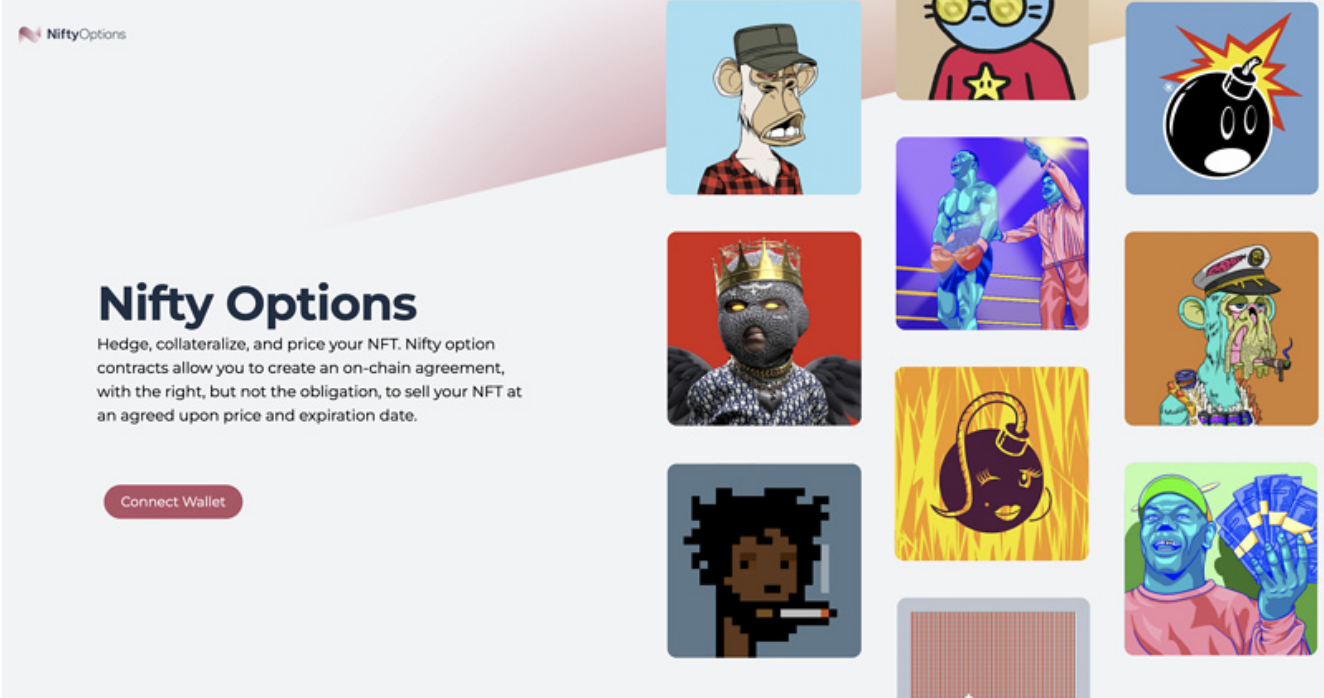
Nifty Options is one of the earliest NFT protocols, launched in September 2021, with a relatively simple product design.
In the Nifty Options product design, the order creator is the rights holder, while market participants collect the premium and have the obligation to fulfill the terms.
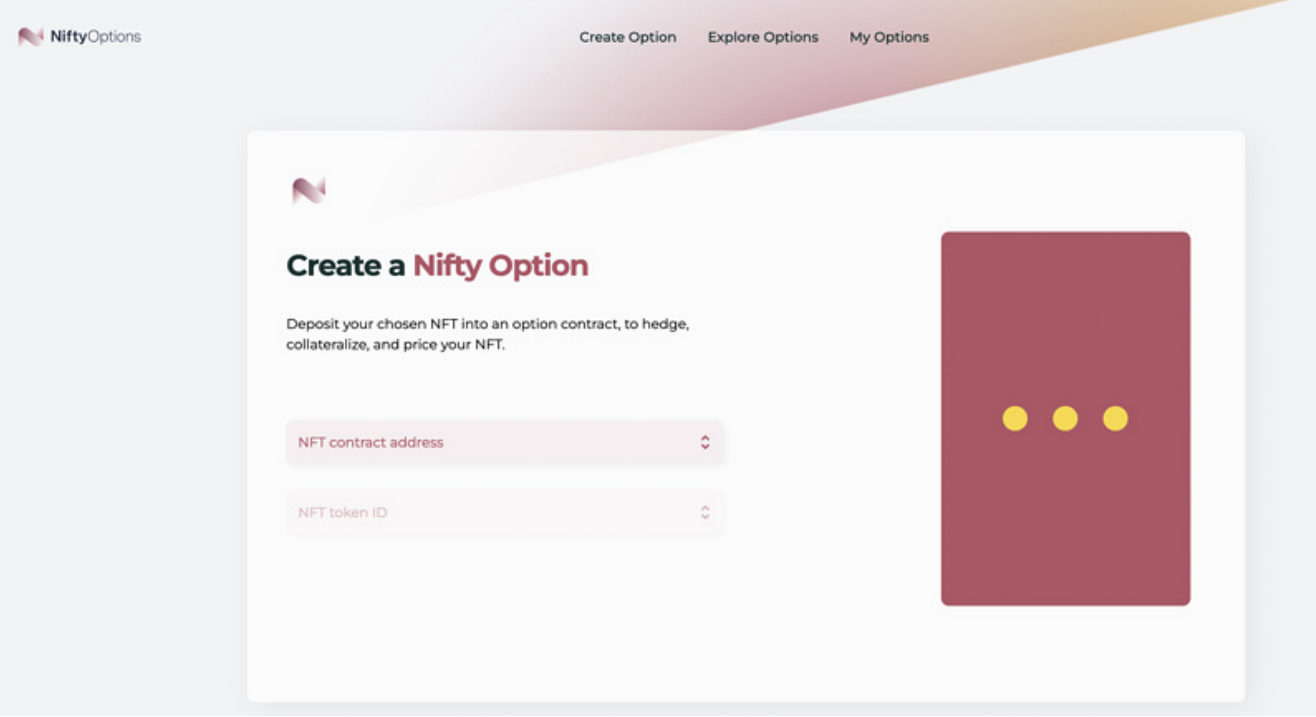
On Nifty Options, the order creator can input the underlying asset, premium, strike price, and expiration date to generate a put option (Long Put) for their NFT.
The order creator must deposit the set premium into the Nifty Option contract. When a market participant B purchases it, B must deposit the strike price amount in tokens into the Nifty Option contract and receive the premium set by the order creator.
Therefore, on the marketplace page, when a user selects "Purchase Option," they do not actually "buy an option," but instead receive a premium and take on the obligation to buy the NFT.
Summary: As one of the earliest NFT options protocols, Nifty effectively demonstrates the application of NFT options and offers up to $10 million in TVL contract security.
However, due to its overly simplistic design—where only NFT holders can create rights (not obligations)—market liquidity is significantly constrained. Additionally, because Nifty Options uses a fully on-chain process, high gas costs occur in peer-to-peer markets when there is no counterparty.
Putty
Website: putty.finance
Twitter: https://twitter.com/puttyfi
Discord:discord.gg/rxppJYj4Jp
Putty was founded in January 2022 and launched its current product on August 30, 2022.
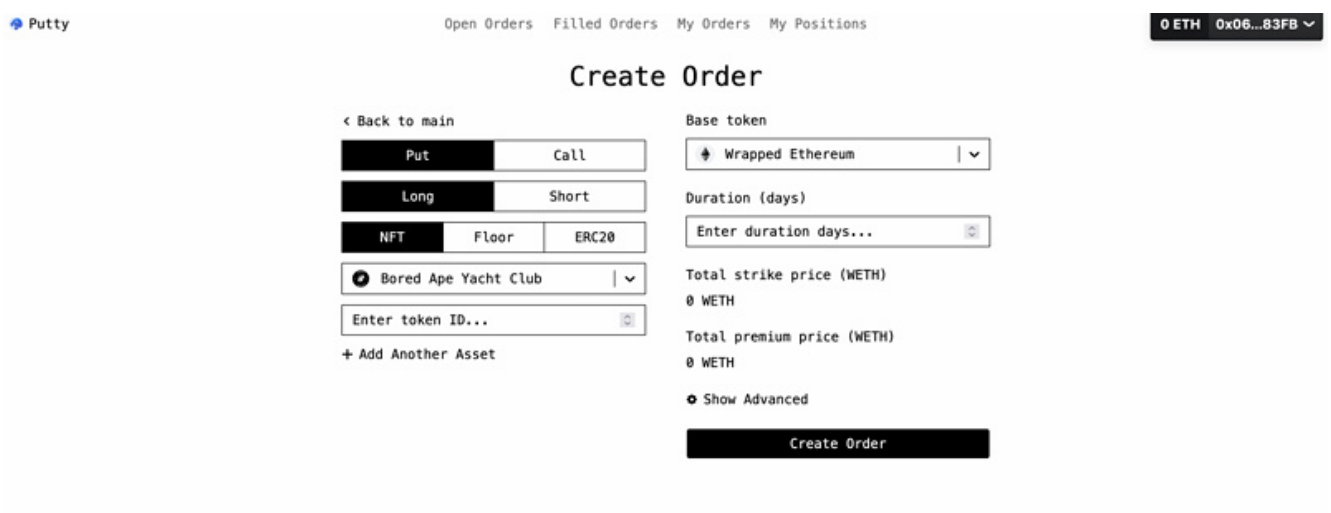
On Putty Finance, users have more choices. They can combine Put (sell)/Call (buy) with Long (bullish)/Short (bearish) to meet various needs.
- When a user creates a "Put - x days - Long" on Putty, it resembles the Nifty Options design: the order creator holds the right, sets the option details, and stakes the premium. Market participants receive the premium but must stake tokens equivalent to the strike price as collateral to fulfill their obligation.
- When a user creates a "Put - x days - Short" on Putty, the order creator assumes the obligation. By setting option details and staking tokens equal to the strike price, the creator secures their commitment. Participants pay a premium to gain the right to sell the specified NFT in the future.
- When a user creates a "Long - x days - Call" on Putty, the order creator holds the right, sets the details, and stakes the premium. Participants receive the premium but must stake the required NFT as collateral to fulfill their obligation.
- When a user creates a "Short - x days - Call" on Putty, the order creator assumes the obligation. By setting the details and staking the NFT, the user secures their commitment. Participants pay a premium to gain the right to buy the specified NFT in the future.
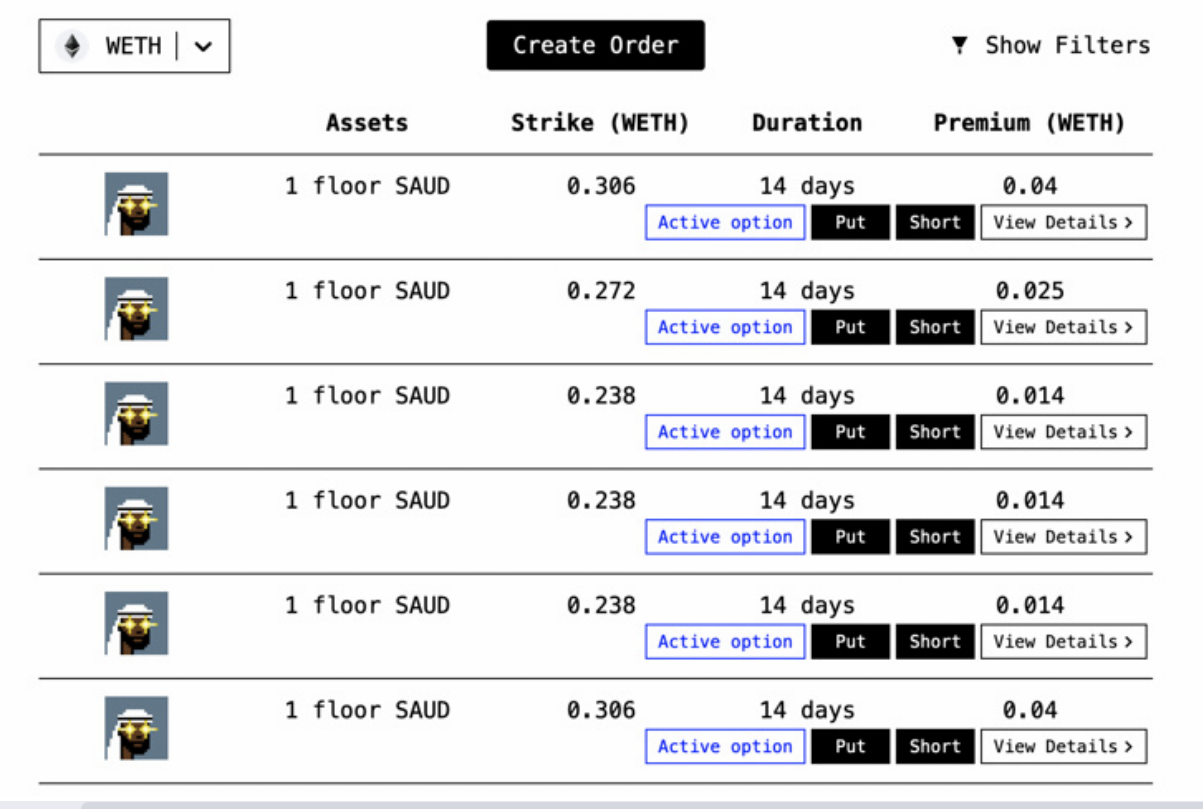
Summary: On August 30, 2022, Putty’s latest product release showcased essential features for a peer-to-peer NFT options market, along with several standout functionalities.
In addition to supporting specific NFTs, Putty also supports NFT Floor, Bundle, and ERC20.
It also provides an options pricing calculator to help creators and participants evaluate option prices.
However, currently Putty only supports 10 NFT projects and does not allow users to add custom projects. Hopefully, Putty will open up custom project functionality in the future.
Hook
Website : hook.xyz
Twitter: https://twitter.com/hookprotocol
Discord:https://discord.com/invite/eFz9MDHZW9
Hook Protocol was created in February 2022 and is now live on the Ethereum mainnet.
Option creators select the creation of a Call Option based on the NFT category and choose from system-defined expiration dates, strike prices, and corresponding premiums.
Option buyers can select and purchase the corresponding option within a collection, pay the premium, and then have the right to purchase at the strike price upon expiration.
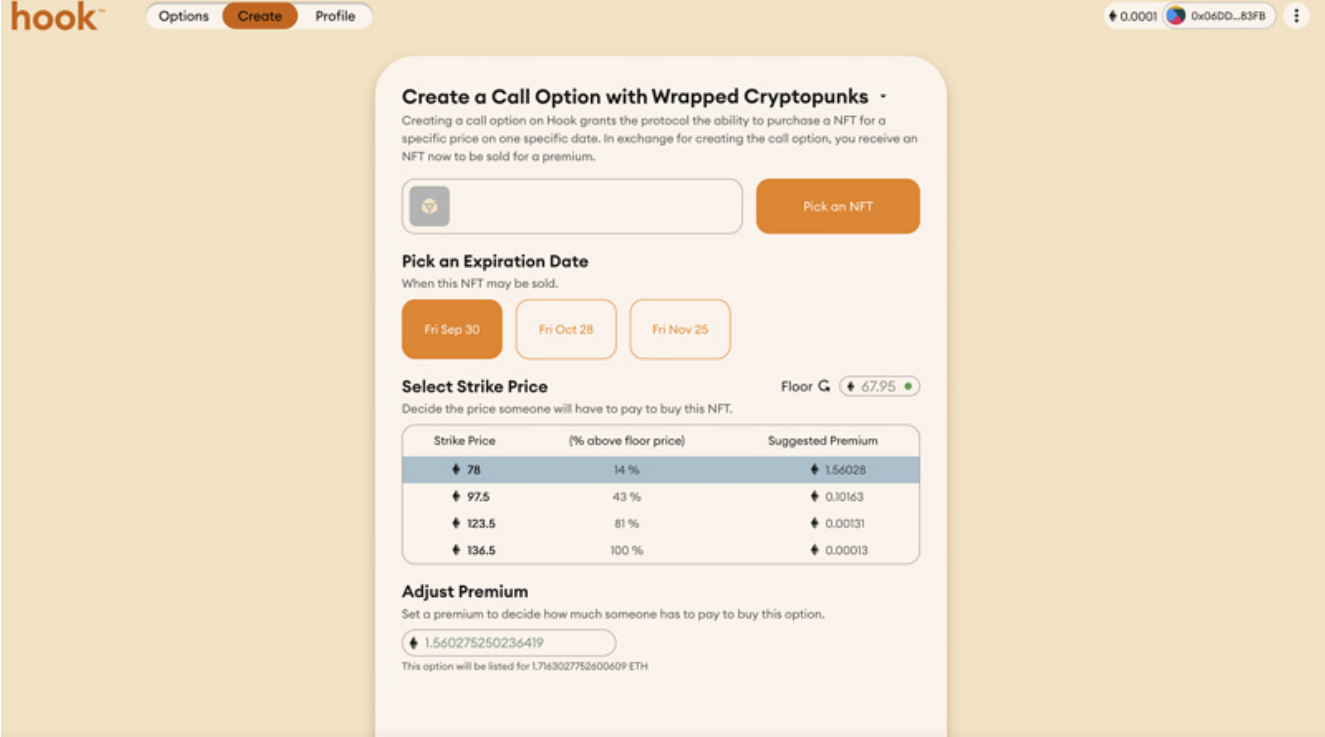
Summary: Currently, the Hook option creation page only supports creating Long Call options and only supports two collections: CryptoPunk and Good Minds.
Exercise dates are fixed monthly dates, and suggested premiums are provided for different system-defined strike prices (adjustable by users).
Thus, Hook aims to build a standardized NFT options protocol through preset conditions.
However, since the project is still in its early stages, it remains uncertain whether these preset conditions, while lowering market-making barriers, might limit diverse user needs.
OpenLand
Website : openland.wtf
Twitter: https://twitter.com/openlandwtf
Discord:discord.gg/openland
Openland was founded in September 2021 and currently operates on the Goerli testnet.
Compared to similar projects, OpenLand’s product design resembles an NFT Marketplace, making it more intuitive for typical NFT users and providing clear distinctions between the rights and obligations of order creators and participants.
Simply put, the order creator takes on the obligation, while all available purchases in the market represent rights.
Notably, after a participant purchases an option on OpenLand, they receive an Option NFT representing that right, which can be transferred on an NFT Marketplace to realize its intrinsic value early.
- When an order creator creates a "“Put” on Openland, it means the creator commits to buying the underlying asset at an agreed price over a future period.
- When an order creator creates a "“Call” on Openland, it means the creator commits to selling the underlying asset at an agreed price over a future period.
- When an order participant purchases a "“Put Option" on OpenLand, it means they have the right to sell the underlying asset at an agreed price over a future period.
- When an order participant purchases a "“Call Option" on OpenLand, it means they have the right to buy the underlying asset at an agreed price over a future period.
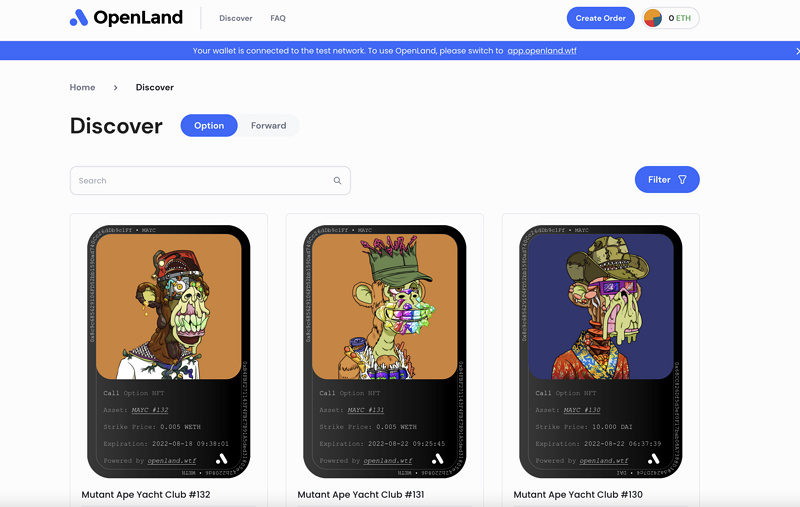
Summary: OpenLand adopts a familiar
Join TechFlow official community to stay tuned
Telegram:https://t.me/TechFlowDaily
X (Twitter):https://x.com/TechFlowPost
X (Twitter) EN:https://x.com/BlockFlow_News






