TheTie Report: In-Depth Analysis of the Mina Protocol and Its Potential
TechFlow Selected TechFlow Selected
TheTie Report: In-Depth Analysis of the Mina Protocol and Its Potential
Mina—the world's lightest blockchain—is a PoS blockchain and cryptocurrency that supports smart contracts.
 Navigating Web3 tides with focused insights
Author: Vaish Puri, TheTie
Translation: TechFlow
Roughly a decade into blockchain development, early adopters realized that a hidden form of centralization was taking place. As chain utilization increases, the chain grows longer, increasing computational and bandwidth demands. Over time, nodes with the highest network and operational capacity will dominate, driving centralization.
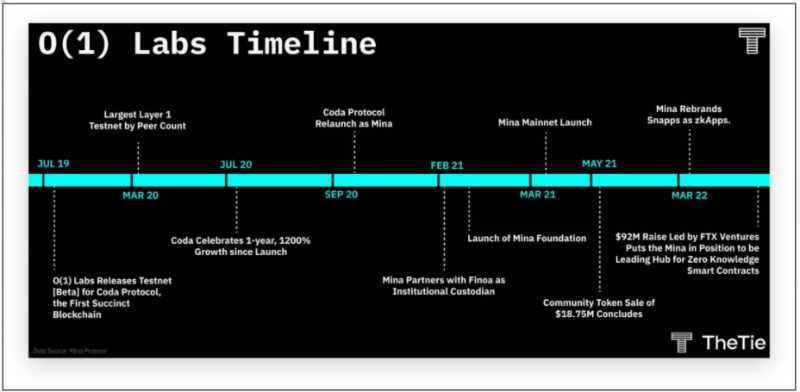
In July 2019, incubated company O(1) Labs launched an ambitious new open-source project: Mina Protocol (formerly Coda). Their goal was to build a Layer-1 blockchain that achieves true decentralization while maintaining scalability and security.
Mina is a PoS blockchain and cryptocurrency that supports smart contracts. The protocol’s key innovation lies in limiting block size to just 22 KB, making it a “succinct” blockchain—earning it recognition as “the world’s lightest blockchain.”
Mina is currently managed by the Mina Foundation and has made significant progress since its inception. After proving itself across several adversarial testnets, the network successfully launched its mainnet in March 2021. Since then, the team has focused on advancing zero-knowledge technology—most notably through the introduction of zkApps, or zero-knowledge proof-based decentralized applications. zkApps allow users to interact with dApps without compromising privacy or security.
Technical Overview
Mina is the first cryptocurrency to use a succinct blockchain, enabling fast and consistent verification times for every transaction. It achieves this by including a succinct state validity proof in each block, allowing long lists of transactions to be verified quickly and inexpensively.
Mina uses incrementally computable SNARKs, ensuring that the cost of generating a proof for each block is proportional to the number of transactions added since the previous block. Instead of storing the entire chain state on every full node, only balances are verified in the block header. However, validators in this system must store the full state, as it serves as witness data when proving the validity of new blocks. Currently, state proofs are 864 bytes in size and take about 200 milliseconds to verify. As a result, even ordinary smart devices (like an iPhone) can handle the computational load.
There are two primary roles in the Mina Network:
-
Block producers—collect transactions to be SNARKed
-
SNARK workers—generate zk-SNARK transaction proofs to compress transactions
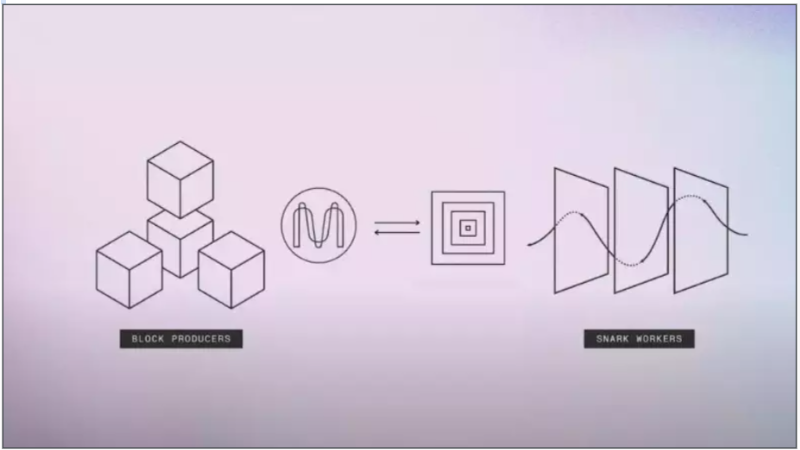
Mina incentivizes SNARK proof creation through a marketplace they call the "Snarketplace"—where nodes can exchange services for fees (in $MINA).
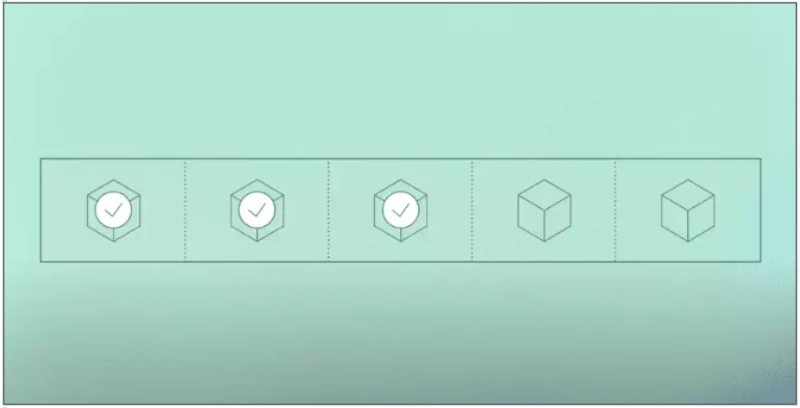
The Snarketplace includes a fixed-size buffer, operating like a queue. Block producers add transactions requiring SNARKs to this queue, while SNARK workers generate proofs to process them. Because Mina's block size is fixed, block producers must purchase completed SNARKs before adding them to the chain.
Before a SNARK worker generates a SNARK for a transaction in the queue, they create a special digital signature called a knowledge signature. This signature contains information about the fee amount and who pays it. While block producers wait to produce new blocks, SNARK workers generate proofs—enabling participation from users with any level of hardware, making the network inclusive for everyone.
Consensus Mechanism
Mina’s consensus protocol, called Ouroboros Samisika, is the first provably secure Proof-of-Stake (PoS) consensus mechanism. Block production is determined by a Verifiable Random Function (VRF)—a random function that requires a private key to run and can be verified using a public key. The randomness is computed according to the Ouroboros framework. If a staker’s VRF output exceeds their stake fraction, they gain the right to produce a block.
Additionally, because only the private key holder can compute the VRF output, block producers can determine in advance when they will produce a block. This enhances overall security, as malicious actors cannot identify the next block producer to launch a DoS attack. Furthermore, multiple block producers may be selected for the same slot, further reducing the risk of successful attacks.
Due to how VRF operates in Mina, a new block is expected to be generated on the main chain approximately every four minutes.
Token Economics
-
$MINA is inflationary with no supply cap;
-
The initial allocation includes 1 billion MINA tokens (excluding future block rewards), with an 8-year full unlock period featuring “supercharged rewards” (double block rewards) for unlocked accounts during the first 15 months of the mainnet;
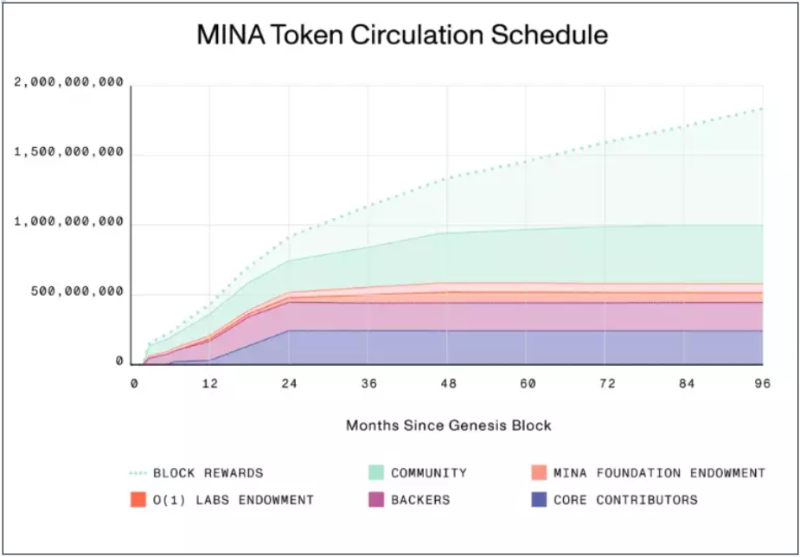
In Mina’s PoS system, block rewards and fees are distributed proportionally. Assuming high participation, non-stakers will experience dilution relative to those who choose to stake. To encourage staking, Mina starts with an inflation rate of 12%. This rate is designed to decline and stabilize at 7% over the first five years, after which it will be subject to chain governance—though governance mechanisms have not yet been formally released.
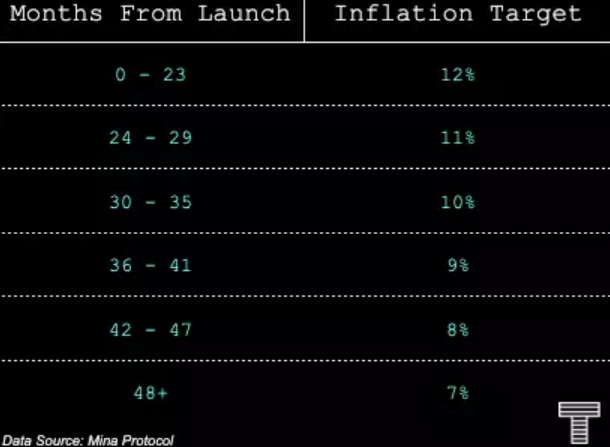
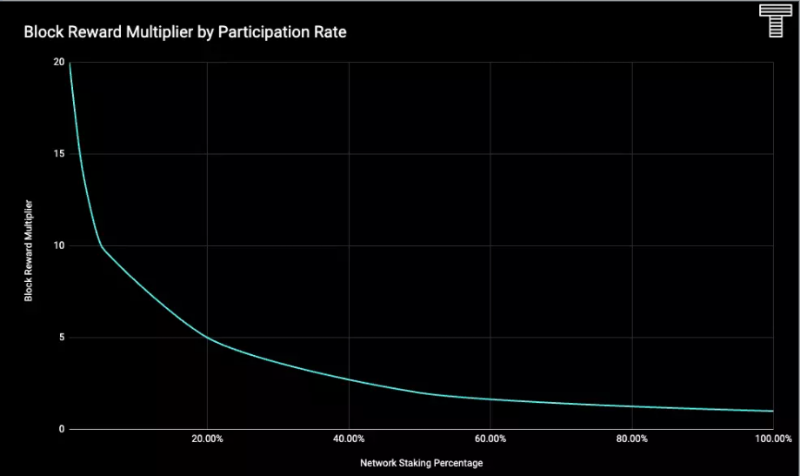
The protocol targets these inflation rates regardless of staking participation, leading to dynamic changes in block rewards. For example, if only 50% of the network is staked, block rewards will double. This stems from the Ouroboros consensus design: the number of blocks produced is proportional to the staking ratio. This naturally incentivizes participation when staking rates are low.
zkApps
Within the Mina ecosystem, there is a suite of zero-knowledge-powered smart contracts known as zkApps. These function like traditional smart contracts but come with added capabilities such as privacy preservation and off-chain computation.
A zkApp consists of two components:
-
A smart contract (written in SnarkyJS)
-
A user interface
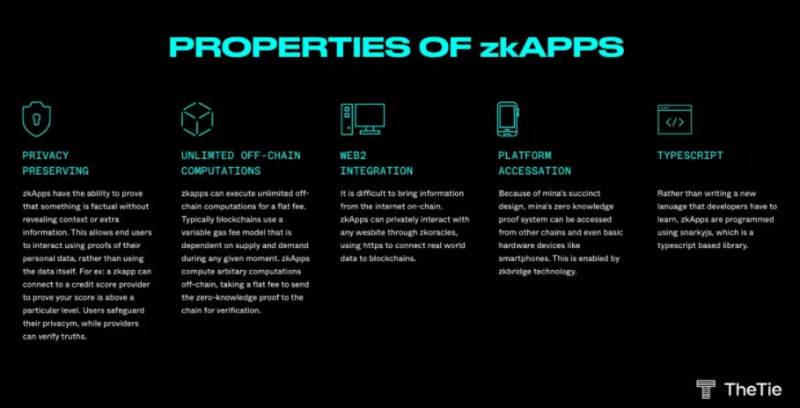
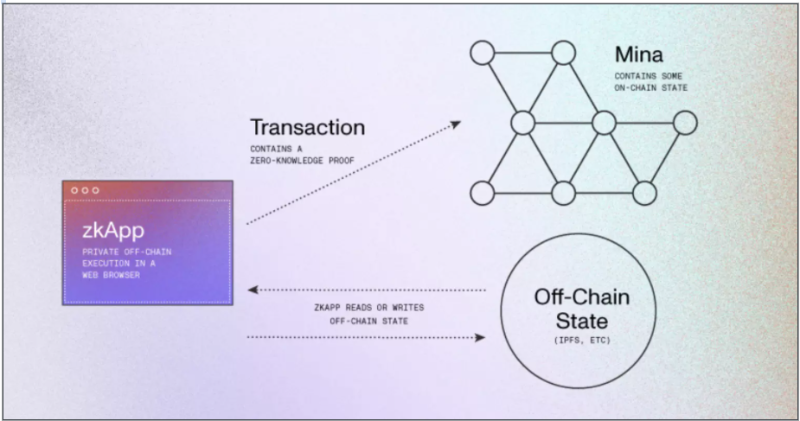
The planned integration of zkApps and their use cases paints a highly positive picture for users. Once a zkApp is deployed on a host website, users can freely interact with it via their Auro wallet. When users engage with a zkApp and input relevant data (e.g., purchasing an asset on an AMM), the validator function within the zkApp generates a ZK proof based on the user’s data—visible only to that user. The frontend experience resembles current interactions with MetaMask or other browser wallets, with the only difference occurring in the backend. When the Mina network receives the transaction, it verifies the proof’s validity and updates the zkApp’s state. Since all processing occurs within the user’s web browser, their privacy remains fully protected.
With zkApps in mind, Mina is focusing on developing three core functionalities:
-
End-to-end data privacy on and off-chain [in production];
-
Permissionless Web Oracles (zkOracles) [in development];
-
Private internet login (zkIdentity) [in development].
Conclusion
Mina claims to be the world’s lightest blockchain, entirely user-driven, built using recursive zk-SNARKs so that the entire blockchain remains around 22 KB in size—roughly equivalent to a few tweets. As a Layer-1 protocol, it enables efficient implementation and programmability of zero-knowledge smart contracts, known as zkApps.
With its unique privacy features and ability to connect to any website, zkApps create a secure and private bridge between the real world and the crypto ecosystem. As one of the pioneering projects delivering zero-knowledge enterprise solutions, Mina is undoubtedly positioned at the forefront of this rapidly expanding zero-knowledge landscape.
Join TechFlow official community to stay tuned
Telegram:https://t.me/TechFlowDaily
X (Twitter):https://x.com/TechFlowPost
X (Twitter) EN:https://x.com/BlockFlow_News