Unlocking data interoperability through recursive zero-knowledge proofs: Mina boasts a rich ecosystem of application scenarios
TechFlow Selected TechFlow Selected
Unlocking data interoperability through recursive zero-knowledge proofs: Mina boasts a rich ecosystem of application scenarios
How to break through performance bottlenecks and achieve more secure, private, and efficient on-chain and off-chain data interaction is an urgent issue for blockchain's expansion beyond its current circle, and also represents the opportunity for zk-SNARKs-based public blockchains like Mina Protocol.
 Navigating Web3 tides with focused insights
On September 2, 2021, Ethereum co-founder Vitalik Buterin replied to a user on Twitter:
I expect ZK-SNARKs to penetrate the mainstream world over the next 10 to 20 years, becoming a major revolution.
zk-SNARKs technology allows vast amounts of information to be compressed into what's known as succinct proofs, playing a crucial role in boosting network TPS and reducing computational gas costs. Over more than a decade of blockchain development, we've witnessed the rise of DeFi, the NFT boom, and the popularity of the metaverse—each expanding the possibilities and boundaries of the blockchain ecosystem.
Looking ahead, as application scenarios continue to expand, deeper integration between blockchain and the real world is inevitable. Breaking through performance bottlenecks and achieving more secure, private, and efficient on-chain and off-chain data interactions has become an urgent challenge for blockchain’s mass adoption—and presents a key opportunity for zk-SNARKs-based public blockchains like Mina Protocol.
Recursive Zero-Knowledge Proofs: Building a Simpler and More Secure Blockchain
Issues such as price discrimination based on big data, user data sales, and fraud due to opaque data highlight the growing drawbacks of centralized systems. People hope to leverage blockchain’s decentralized, tamper-proof, trustless architecture to eliminate intermediaries and enable various transactions and collaborations—where all information is recorded on-chain and everyone acts as a witness.
However, recording all information on-chain conflicts with privacy protection. Moreover, decentralization leads to redundant repeated computations. As transaction volume grows, every participant must store increasing amounts of data, making blockchains heavier. Newcomers face long synchronization times and require expensive hardware and high energy consumption—raising the barrier to becoming a node. This reliance on third-party validation compromises network security in today’s blockchain landscape.
zk-SNARKs offer a viable solution to this problem.
Before diving into zk-SNARKs, let’s first understand zero-knowledge proofs.
Setting aside complex mathematical logic for now, a zero-knowledge proof means that a prover can convince a verifier that a statement is true without revealing any useful information. Consider the example of finding a panda:
A group of people are searching for a panda in an image. Alice finds it first but cannot immediately point it out, as that would ruin others’ experience.
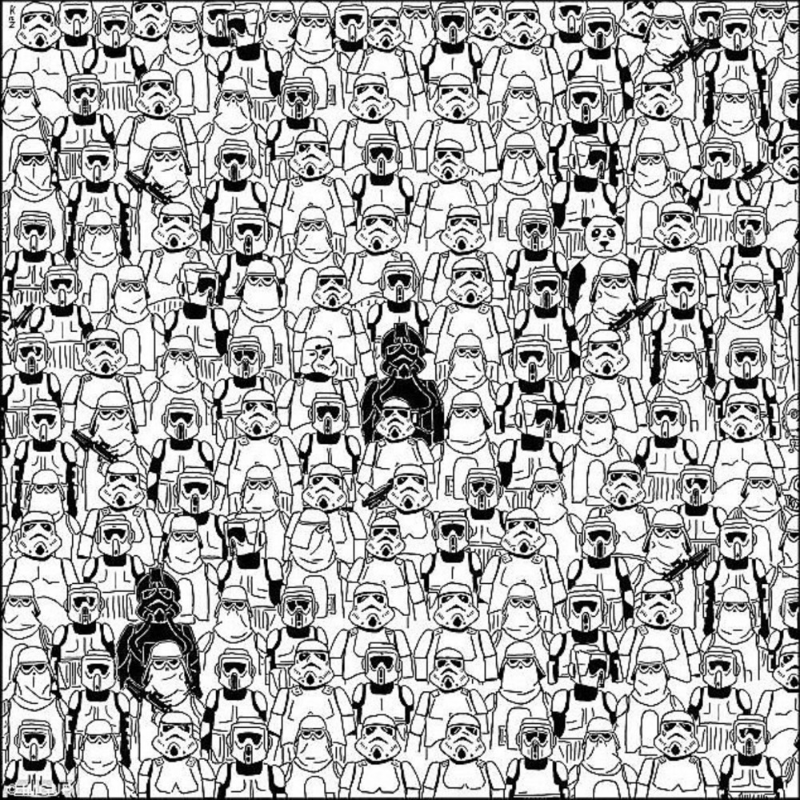
Is there a way for Alice to prove she knows where the panda is without revealing the answer to anyone else?
Alice comes up with a solution:
She takes a large blank sheet and randomly covers the image. Then, she cuts a small hole in the paper so only the panda is visible.
The panda’s location—the critical piece of information—remains protected, yet Alice proves she found it without revealing its position. This is a zero-knowledge proof.

zk-SNARKs stands for Zero-Knowledge Succinct Non-Interactive Argument of Knowledge—an innovation built upon zero-knowledge proofs. zk-SNARKs provide "non-falsifiable proofs," verifying correct computation without exposing the full process. Compared to traditional zero-knowledge proofs, zk-SNARKs not only protect information but also eliminate the need for interaction, allow easy verification of complex logic, and compress proofs into tiny sizes.
Therefore, many public chains using zk-SNARKs generate a SNARK proof per block—each about 1 KB in size—that verifies the accuracy of the block’s transaction history without showing individual transactions, significantly reducing block size.
Although blocks with zk-SNARKs are already small, as blocks accumulate, the number of SNARKs grows linearly—blockchain data still expands. Blockchains could be even lighter.
Thus, the lightweight blockchain protocol Mina Protocol innovatively introduced recursive zero-knowledge proofs:
It takes a snapshot of the entire blockchain state and generates a SNARK proof. When the next block is created, it takes another snapshot based on the previous state and generates a new SNARK proof, which is nested into the next block. This iterative and nested process keeps the blockchain size constant.
A commonly cited example:
To prove you visited a plaza every day for a year (with a date-displaying clock), the simplest method is taking a selfie each day—resulting in 365 photos as evidence.
Alternatively, starting from day two, each selfie includes the previous day’s photo. After one year, only one photo remains. This is the recursive proof approach adopted by Mina.
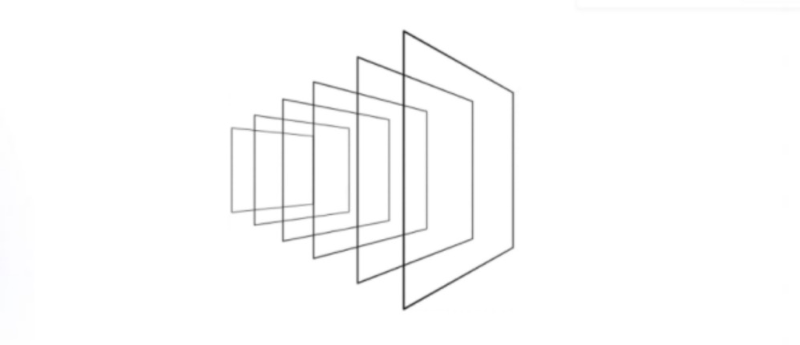
With this method, Mina nodes don’t need to sync the entire history. Though not full nodes, they maintain the same level of security as full nodes because SNARKs verify transaction correctness.
Thanks to recursive zero-knowledge proofs, Mina’s blockchain becomes extremely "light." Full nodes in Mina can be as small as 10KB, giving Mina a significant edge in efficiency and security compared to other public chains:
Because it’s "light," the network operates efficiently, avoiding long-standing congestion issues like those seen on Ethereum;
Because it’s "light," syncing historical data requires minimal hardware, drastically lowering the barrier to becoming a Mina node—even low-power mobile devices like smartphones and tablets can sync and validate the network;
Because it’s "light," more nodes can join the network, improving both verification speed and overall security: if someone submits an invalid SNARK proof, any device—even a phone—can quickly detect it.
Snapps: Decentralized Applications Powered by SNARKs
Every public chain aims to grow its ecosystem, and Mina is no exception.
Mina envisions building an ecosystem centered around zero-knowledge proofs, composed of Snapps—decentralized applications powered by SNARKs.
In most blockchain applications, all transactions and data are publicly recorded on-chain. However, often we only need to verify data accuracy—not the data itself—making much of the computation unnecessary.
The key feature of Snapps is their ability to use offline data while preserving user privacy. In Snapps, users don’t upload private data directly; instead, they submit proofs of their data. Mina doesn’t run the full computation but verifies whether the data meets certain criteria.
Therefore, Snapps built on Mina’s zero-knowledge proofs offer these advantages:
1) Privacy protection;
2) Ability to securely verify large volumes of data;
3) Low cost and high scalability due to succinctness.
Take DeFi as an example:
Most current lending DeFi platforms require over-collateralization, reducing capital efficiency. By building a secure and private credit evaluation system on Mina, under-collateralized loans could become feasible.
Before borrowing, a user logs into a credit score service, checks their score, and locally generates a proof of that score, which is then submitted on-chain.
The user’s financial details, social security account, and other sensitive data remain off-chain, avoiding redundant computation and protecting privacy. With this proof, lenders can decide whether to approve the loan and determine the amount.
Given these features, Mina Snapps have broad application potential.
Becoming a Trusted Bridge: Building an Ecosystem Around Zero-Knowledge Proofs
At its core, blockchain is a decentralized ledger. Interactions between chains or between blockchains and internet applications are often clunky, leading to data silos that limit blockchain’s utility—hence the growing importance of "bridges."
In the blockchain world, Mina is exceptionally well-suited to serve as a cross-chain bridge.
Suppose you're an Ethereum developer wanting to bridge to another chain. You'd face several challenges: you’d need to know the target chain’s consensus state, requiring massive data downloads and computations—costly and inefficient. But Mina is tiny; nearly any chain can fully verify Mina’s data within its own smart contracts.
For users, this integration is seamless and secure: if you're an Ethereum user wanting to access a popular Snapp, you can use a trusted Mina bridge to generate a proof and use the Snapp without migrating any data.
This enables Mina to easily integrate into any chain’s ecosystem, bringing multi-chain use cases and user traffic into the Mina ecosystem.
As a public chain leveraging recursive zero-knowledge proofs to build a lightweight blockchain, Mina is also ideally positioned as a scaling solution for other blockchains, enabling cross-ecosystem collaboration. Indeed, Mina has partnered with Ethereum, the leader in the public chain space. Both foundations are funding third-party teams to develop an efficient EVM-compatible solution for verifying Pickles SNARKs, combining the strengths of both chains and enabling interoperability between Mina and ETH.
On another front, Mina is uniquely capable of serving as a gateway connecting blockchain to the real world—a gateway that is both open and private.
It’s open because any HTTPS-enabled website can seamlessly feed verifiable data into Mina.
It’s private because the raw user data isn’t exposed—only proofs derived from that data are shared and verified.
For example, a company wants to elect its Employee of the Year, and only employees with over one year of service may vote.
In the voting system, employees can prove eligibility by showing their onboarding email, generate a proof after voting, and submit it to update the voting app’s state on Mina.
Throughout this process, voters remain anonymous—their identities and votes are never revealed. Once voting ends, anyone can verify the results.
Beyond anonymous voting, the Mina gateway is suitable for:
1) Identity login verification;
2) Account balance verification;
3) Creditworthiness verification;
4) University transcript verification;
5) Work achievement verification;
6) Health information verification…
In every scenario requiring data verification, Mina’s “composable smart contracts without trusted setup” provide secure, efficient, and fully third-party-independent proofs—demonstrating Mina’s immense scalability potential.
Developer SDK: On the Way
Of course, whether these visions for Snapps become reality depends not only on Mina’s technical sophistication but also on lowering development barriers.
Understanding and applying zero-knowledge proofs typically requires strong mathematical knowledge and development experience. To lower the entry barrier, Mina’s co-founders Evan and Izaak developed Snarky in 2017—a programming language for building zero-knowledge proofs that works as a DSL (domain-specific language) within JavaScript. Developers don’t need to learn a new language, greatly simplifying ZK development.
Additionally, to make recursive zero-knowledge proofs accessible to a broader audience, the Mina SDK toolkit is under active development. The SDK will allow developers to embed SNARK proof generators, hash generators, and Mina interfaces directly into their apps. Once released, developers will be able to integrate core Mina functionalities by simply calling a few API endpoints.
According to the official team, the Mina SDK is expected to launch in Q4 2021. Alongside it, a range of support policies and incentive programs for app deployment and SDK usage will also be introduced. At that point, the Mina ecosystem may experience a phase of explosive growth—something developers and the entire community can look forward to.
Join TechFlow official community to stay tuned
Telegram:https://t.me/TechFlowDaily
X (Twitter):https://x.com/TechFlowPost
X (Twitter) EN:https://x.com/BlockFlow_News
![Axe Compute [NASDAQ: AGPU] completes corporate restructuring (formerly POAI), enterprise-grade decentralized GPU computing power Aethir officially enters the mainstream market](https://upload.techflowpost.com//upload/images/20251212/2025121221124297058230.png)