








Cryptocurrency Proof: Machines and Stability
TechFlow Selected TechFlow Selected
Cryptocurrency Proof: Machines and Stability
Explore the role of decentralized oracles in securing off-chain data for blockchains and maintaining stablecoin price pegs.
 Navigating Web3 tides with focused insights
Exploring the role of decentralized oracles in securing off-chain data for blockchains and maintaining stablecoin price pegs.
Table of Contents
-
Decentralized Web3: Cryptographic Truth and Transparency
-
Stablecoin Issuance: DeFi vs. CeFi
-
Using Decentralized Oracles for Reserve Audits and Re-anchoring Algorithmic Stablecoins
-
Web3 Composability: Oracles Critical to Stability
Defining the term stablecoin within Web3 is straightforward at a high level. A stablecoin is a crypto asset that maintains a stable spot price, pegged to the spot price of a given non-crypto asset. USDC tracks the spot price of the U.S. dollar, for example, while Paxos Gold (PAXG) is priced per ounce of gold. Thus, investors gain exposure to both assets while benefiting from the liquidity offered by cryptocurrency exchanges and blockchain technology.
Since stablecoins represent significant value circulating within DeFi applications, they require the same security guarantees as the blockchain and dApps using them. The interconnectedness, or composability, of Web3 demands that stablecoins be as strong as any component in the ecosystem.
In practice, this means oracles must be decentralized and feature multiple layers of cryptographic security. This provides users with transparency and trust, assuring them their wealth is digitally safeguarded—not subject to double-spending, inflation through fractional-reserve issuance or lending, or other forms of misuse by stablecoin issuers. With SupraOracles, price pegs can be maintained with the highest degree of certainty, as refresh rates occur within seconds.
At a deeper level, stablecoins fall into two main categories: directly collateralized and algorithmic. Directly collateralized stablecoins are typically backed by a centralized third party holding reserves at a 1:1 ratio of stablecoin to pegged asset.
Algorithmic stablecoins, on the other hand, are dynamically minted or burned in real time to adjust the circulating supply based on demand, thereby pushing prices up or down to maintain a stable peg to a given asset.
Decentralized Web3: Cryptographic Truth and Transparency
Blockchain technology and Web3 more broadly have transformed expectations around financial transparency and accountability. Through transparent and immutable shared ledgers in the form of blockchains, users expect to know they can trust the solvency of entities managing their assets.
Bitcoin was, of course, the supernova that erupted in 2009, introducing immutability, transparency, decentralization, and strict rules governing the issuance of new bitcoins on the blockchain.
Critically, it's important to note that transactions on blockchains cannot be reversed—even in cases of accidental payments or funds sent to incorrect addresses. Greater caution and personal responsibility are therefore required, as one cannot call a bank and request intervention to correct such errors.
Because blockchain transactions are irreversible and there is no central custodian responsible for user assets, there is no room for error. In traditional banking, fraud may occur, but infrastructure exists to recover or freeze stolen funds and restore affected users.
“Without tamper-proof and robust oracles, the entire blockchain ecosystem could be compromised, leading to transactions executed based on false or stale price data.”
Banks, as trusted entities, can intervene when needed to manipulate their ledgers. This cannot be done on a blockchain, where the ledger is shared across all network nodes and thus immutable—ledger history cannot be rewritten without consensus from network participants.
Regardless of which stablecoin is examined, accurate pricing data from decentralized oracles is essential. Oracles must continuously retrieve spot prices for various commodities and currencies and update on-chain prices accordingly to maintain pegs—even for stablecoins simply backed 1:1 by fiat deposits.
Without tamper-proof and robust oracles, the entire blockchain ecosystem could be compromised, resulting in transactions being executed based on false or outdated price data. After all, the value of fiat currencies constantly fluctuates against each other and in relation to other goods.
Therefore, Web3 is an internet of decentralization, accountability, network consensus, and cryptographic proof. Online financial protocols and transactions must strictly adhere to cryptographic primitives, on-chain transparency, and blockchain immutability. SupraOracles will play a key role in protecting these features, particularly in auditing tokenized assets and stablecoins.
Stablecoin Issuance: DeFi vs. CeFi
Stablecoins can be issued by centralized custodians holding collateral assets in off-chain accounts, or by decentralized protocols providing collateral for assets held on the blockchain ledger. Each option has unique advantages and disadvantages and requires different audit methods to verify that stablecoins are indeed backed by the claimed value of collateral.
For instance, a centralized custodian holding fiat USD in a bank account must use oracles to provide transparency via proof-of-reserves audits. Such stablecoin issuers require some level of trust in the custodian, necessitating third-party mechanisms to enhance transparency between custodians and issuers.
Oracles must regularly scan the custodian’s account for USD deposits and ensure the amount matches the number of issued and circulating stablecoins. A notable example is Coinbase’s USDC, which maintains its peg to the dollar and is backed 1:1.
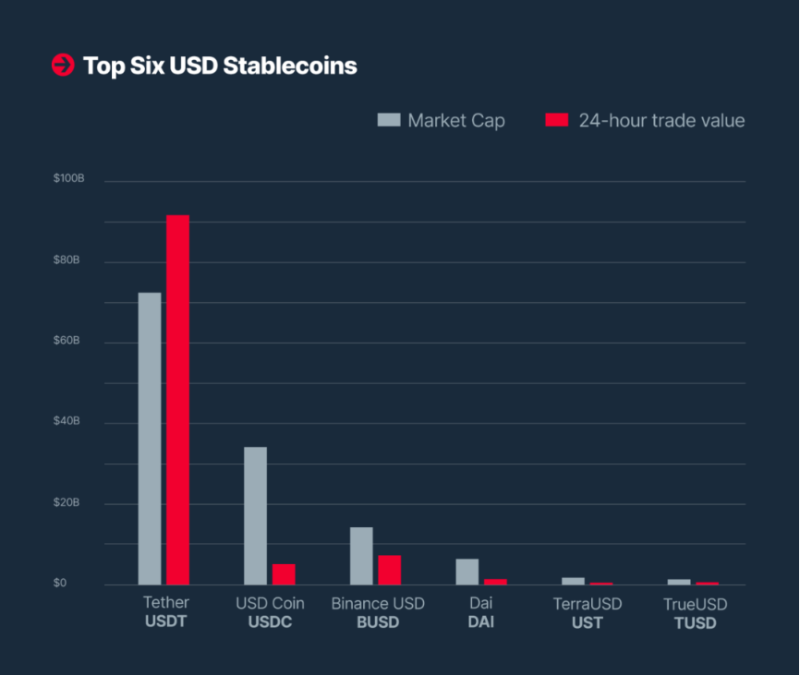
If stablecoins are to represent real and verifiable value on the blockchain, they must be backed by off-chain assets.
Alternatively, decentralized stablecoin issuers use over-collateralization with crypto assets that can be audited on-chain. This is feasible because all assets on public blockchains are transparent and verifiable, offering continuous accountability in the form of on-chain audits. This eliminates the need for depositors to “trust” third parties to honestly report and maintain proper collateral backing for issued stablecoins—hence the term “trustless” associated with decentralized protocols.
Central banks worldwide are also beginning to issue their own stablecoins, known as Central Bank Digital Currencies (CBDCs), backed by sovereign governments and their local fiat currencies—each with distinct collateral and audit requirements. Depending on local conditions and the nature of financial reporting and regulatory bodies, these may or may not be as transparent as decentralized or private stablecoin issuers.
After all, the collateralization levels of fiat debt issuance by central and commercial banks do not match those of their crypto counterparts, which often exceed 150%. In the U.S., fractional-reserve lending allows fiat banks with less than $16.3 million in assets to issue bonds without reserve requirements. Larger banks with more assets need only hold 3%–10% of their issued fiat reserve debt.
Proof-of-Reserves Audits and Re-anchoring Algorithmic Stablecoins Using Decentralized Oracles
As previously mentioned, stablecoins maintain their peg to commodities or fiat currencies either through direct collateral or algorithmically, using elastic supply that is burned or minted on-chain. To assure depositors that stablecoins are truly backed by equivalent assets, decentralized oracles must continuously monitor the issuer’s reserves to provide verifiable and transparent on-chain proof that reserves and circulating stablecoin supply are properly aligned.
The mechanism used to verify reserves of stablecoins or other crypto assets is called a Proof-of-Reserves (PoR) audit. Oracles obtain the necessary data from stablecoin issuers to maintain highly accurate knowledge of the actual collateral backing their issued stablecoins in circulation.
PoR reference feeds can be operated autonomously by a decentralized oracle network. Because transparent collateral audits occur in real time, user funds are protected from fraudulent activities, black swan security breaches, fractional-reserve deception, or other abuses stemming from stablecoin issuers.
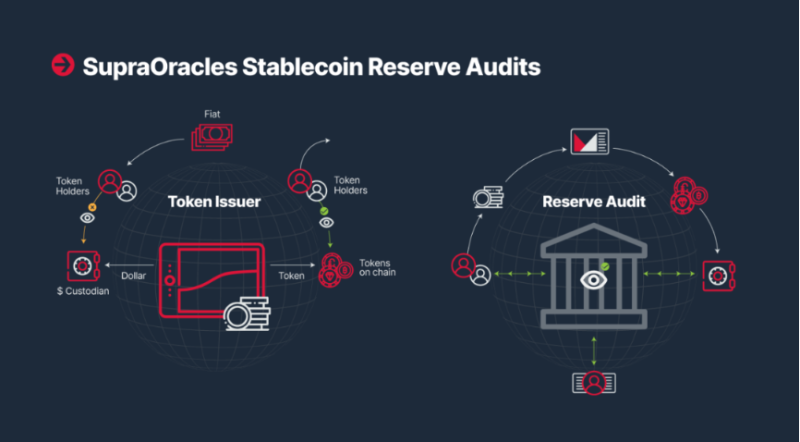
Stablecoin reserve audits showing over-collateralized reserve levels increase investor confidence and promote sound decision-making incentives among stablecoin issuers and custodians.
Paxos uses an oracle-based PoR audit system for its dollar-backed stablecoin Paxos Standard (PAX) and its gold-backed token PAX Gold (PAXG). However, if spot prices for USD or gold experience sharp volatility, their oracle price updates may not be fast enough.
As noted earlier, some algorithmic stablecoins maintain their peg by burning or minting tokens linked to their underlying collateral, relying on oracles to continuously relay spot prices back to the issuer so the peg stays as close as possible to the spot price. MakerDAO is an example of a decentralized protocol that uses oracles and adjustable interest rates to issue a dollar-pegged stablecoin called DAI.
MakerDAO is a decentralized stablecoin protocol that maintains its peg by allowing users to lock collateral into smart contracts via over-collateralized debt positions. Smart contracts enable users to borrow newly minted stablecoins, known as DAI, at fixed rates depending on the chosen over-collateralization tier. For example, higher rates accompany 130% over-collateralized ETH deposits to borrow DAI, while deposits at 170% over-collateralization receive better rates.
Protocols using oracles to deliver real-time PoR audits offer users transparency by proving the true backing of their tokens. These oracle-based audits also provide collateral data for pegged assets, increasing stablecoin transparency. They further encourage healthy incentive structures for lenders and borrowers of these tokens, as Web3 over-collateralization standards increase accountability for all participants.
Web3 Composability: Oracles Vital to Stability
Oracles are absolutely essential for acquiring and verifying external data for stablecoin issuers, smart contract platforms, NFT markets, and more. Without high-throughput oracles keeping the data pipeline flowing at full speed, the utility of DeFi and slippage risk would suffer negatively—without high gas fees, operating costs would rise and further network congestion would occur, just as seen on other blockchains. Therefore, oracles bear the responsibility of fostering trust in crypto assets by adding verifiable cryptographic randomness and decentralized layers to the Web3 ecosystem.
Perhaps due to the novelty of digital assets and DeFi, the legitimacy required for stablecoin issuers to achieve broader adoption will inevitably come down to earning depositor trust through transparency and sound proof-of-reserves. As global adoption grows in the coming years and traditional assets find themselves moving in and out of Web3 protocols, oracles will enhance the stability of the entire digital asset ecosystem.
Given the composability of blockchains, dApps, and crypto assets, SupraOracles strictly adheres to principles of decentralization and verifiable randomness to ensure liquidity between digital assets, traditional assets, and Web3 assets. For stablecoin issuers maintaining off-chain fiat or commodity reserves, SupraOracles’ regular PoR audits will provide transparency and accountability, while broadly monitoring reserve health and the well-being of Web3 protocols.
Join TechFlow official community to stay tuned
Telegram:https://t.me/TechFlowDaily
X (Twitter):https://x.com/TechFlowPost
X (Twitter) EN:https://x.com/BlockFlow_News






