Secret Ecosystem Analysis
TechFlow Selected TechFlow Selected
Secret Ecosystem Analysis
Provable, compliant privacy technology that can scale at will is a consumer-friendly component of Web3 for the mass market.
 Navigating Web3 tides with focused insights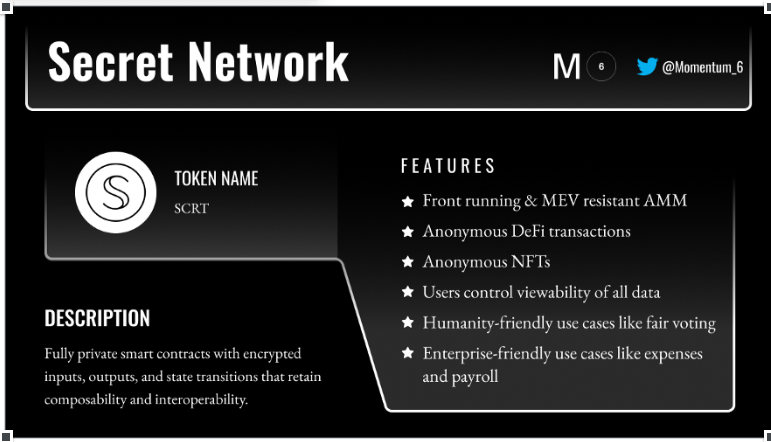
Author: Cardfarm
TL;DR
1. A default-privacy protocol built with Rust and using Tendermint's dPoS consensus algorithm, enabling decentralized applications (dApps) to perform encrypted computations, transfers, and contract calls.
2. It’s not just about private transactions and transfers—we're talking about front-running-resistant AMMs, private NFTs, and more.
3. Major ecosystem funds and accelerator pools have just launched to attract users and developers to explore and drive explosive growth in the ecosystem.
4. Developers will slowly, then suddenly realize that building everything future-facing on Secret is better.
Why Privacy Matters
The content of this article rests on one assumption: privacy is a human right. Here are some compelling reasons: control, empowerment, freedom, choice, transparency, and security. These words are essential as we strive to live happy, healthy, fair, and peaceful lives—and privacy is part of that.
Like Enigma co-founder Guy Zyskind, many members of the Secret Network community believe blockchain technology cannot truly achieve mass adoption or unlock its full cross-industry potential without first solving privacy at the foundational layer. Many also recognize these tools could make national regulations more effective, practical, verifiable, and fair. If we expect decentralized finance to reach real-world adoption levels, end-to-end privacy is a requirement.
Background Story
What began as a question in an MIT blockchain course evolved into the Enigma whitepaper—the dream of creating a decentralized, privacy-first blockchain framework. About a year ago, when Secret Network launched its mainnet, that vision became reality, making it the first of its kind in the space.
They chose to build on Tendermint with Cosmos IBC integration—a straightforward decision. Their initial options were Tendermint or Substrate, but Tendermint/IBC was ahead by a year and already available. Opting for a sovereign chain proved the best proposal, giving the network maximum flexibility and relevance as new and improved privacy-security solutions emerge over time.
Founders
Tor Bair—Excels at identifying problems before others even realize they exist, and figuring out how to solve them. He understands the power of getting an early start—sometimes you can be ready with solutions just as people begin to recognize the issues. He took the first-ever blockchain course at MIT taught by Guy Zyskind. Graduated in economics with a focus on game theory and options theory, studied derivatives markets for 3–4 years, enjoys volatility and high-risk trading.
Guy Zyskind—Founder of Enigma and Tor’s blockchain professor at MIT, now leading the Secret Labs team.
(Enigma is one of the core development teams behind Secret Network and has been a key contributor from day one.)
Technology
Secret Network
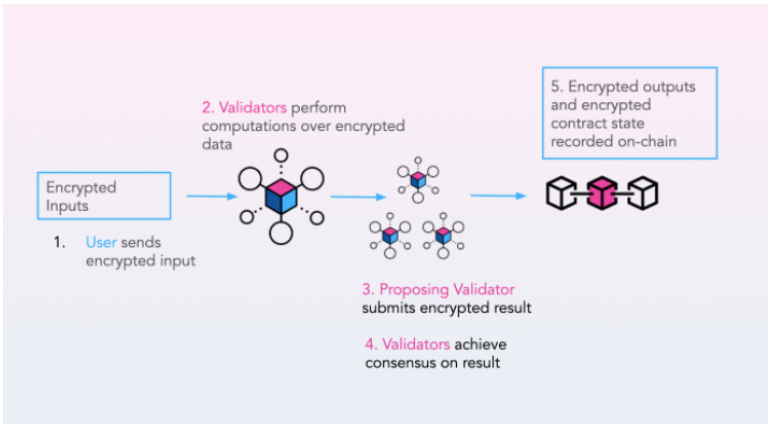
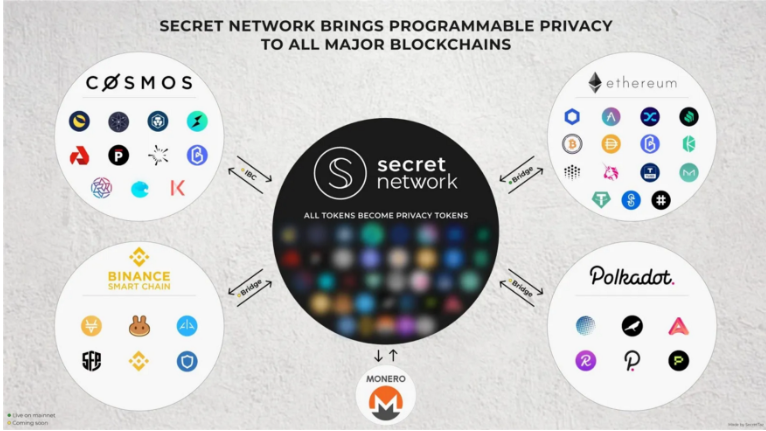
Secret Network is a privacy-preserving computation platform. Built on CosmWasm, written in Rust, and compiled to Wasm. Contracts feature encrypted inputs, outputs, and state transitions, leveraging a combination of secure enclaves, key management, and cryptographic protocols to protect privacy. They’re like Ethereum smart contracts, with Cosmos scalability and interoperability, plus Monero’s “default privacy,” offering the potential for “programmable privacy”—unlocking vast possibilities and enabling cross-chain composability.
Recent Upgrade
In August 2021, Secret Network launched its first major network upgrade since Secret Contracts debuted a year earlier. The upgrade introduced IBC integration, connecting Secret Network to the broader Cosmos ecosystem, along with numerous other network improvements.
Guy Zyskind summarized it well: “By introducing programmable privacy, we aim to break down data silos, empower users, and enable people around the world to freely pursue growth and experimentation—allowing them to use and build unprecedented permissionless applications.”
Secret Token
The Snip-20 token standard enables the creation of private fungible tokens. This tool allows us to create privacy equivalents for any ERC-20. Tokens created and issued on Secret Network are inherently private.
Secret NFT
NFTs are rapidly evolving beyond jpegs and profile pictures. Private NFTs are, so far, the most valuable and versatile form we’ve seen.
This is just the beginning of what you can do with Secret Network tools:
-
Galleries can limit view rates to maintain true rarity and exclusivity,
-
Collectors can share their art in galleries of their choice without revealing their identity,
-
Both artists and collectors can maintain financial privacy,
-
The ability to use “sealed-bid auctions” means collectors get a fairer auction experience.
Stashh — NFT Marketplace
Many NFT projects are emerging, forming around the community values of Secret Network.
XP.network—A multichain NFT bridge.
Legendao—A multiverse from minting to earning NFTs.
SCRT Labs is launching a new platform leveraging Secret Network’s data privacy technology to bring top-tier NFT projects and creators into an environment that rewards participation and contribution. NFTs that upgrade through community engagement and those granting exclusive access to hidden content showcase outstanding examples of NFT utility and offer compelling incentives for NFT artists.
Secure Enclave
A Secure Enclave is a hardware-based trusted execution environment that ensures data cannot be observed by external parties, the nodes performing computation, or the node operators themselves—and that data cannot be tampered with.
Default privacy does not mean unviewable or non-shareable. Data on Secret is encrypted by default, but users can selectively share certain data with chosen recipients or the public using Viewing Keys.
Nodes
Secret Network currently has 70 validators, most of whom are also active contributors to the network. Using hardware- and software-based encryption during data execution ensures nodes cannot see the data being computed.
What Can We Build?
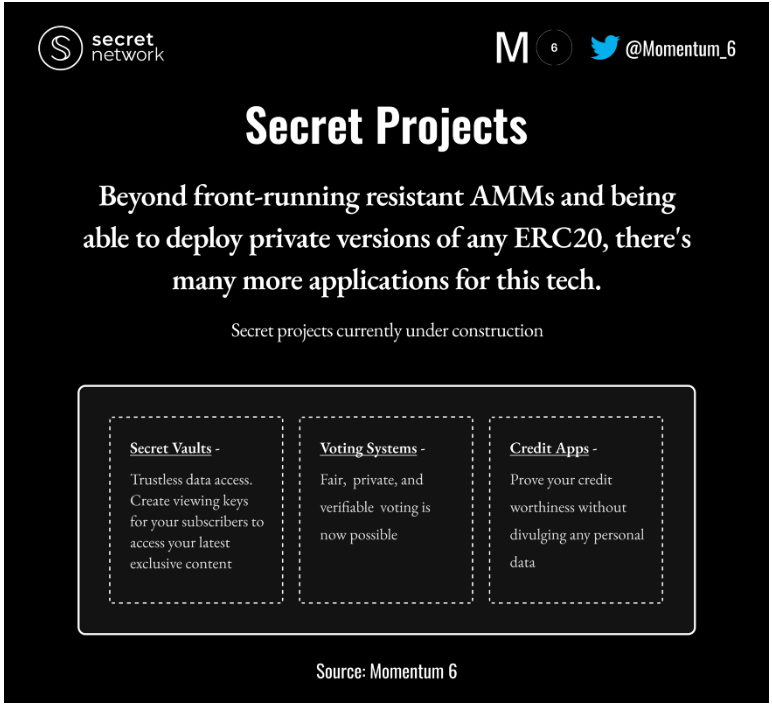
Beyond creating Secret versions of any ERC-20 and bringing privacy to existing chains, Secret’s technology has many clear and direct applications—here’s a list of things already built or nearly ready:
-
A leading, MEV-resistant AMM,
-
Secret Vault offers trustless data access, usable for paywalls, gated content, etc.
-
Voting systems that prevent “bribery attacks” and other vote manipulation issues,
-
Credit scoring apps that generate scores using verified user data without exposing that data on-chain.
BlackBox
Trivium Node is building BlackBox, a suite of convenient privacy-focused dApps. Their first products are exactly what we need right now.
Cloak
Cloak lets you send SCRT gas to a new wallet without leaving a trace, escaping doxxing without links to your old address. Deposit traceless sSCRT into the Cloak pool, which is programmed to convert sSCRT to native SCRT once a random threshold is reached, then send all funds to everyone’s new addresses.
DeadDrop
DeadDrop allows users to create an alias for senders, enabling anonymous receipt of payments. You provide your alias to the sender, who sends payment to the protocol. The protocol privately forwards the payment back to your Secret address.
Bridges
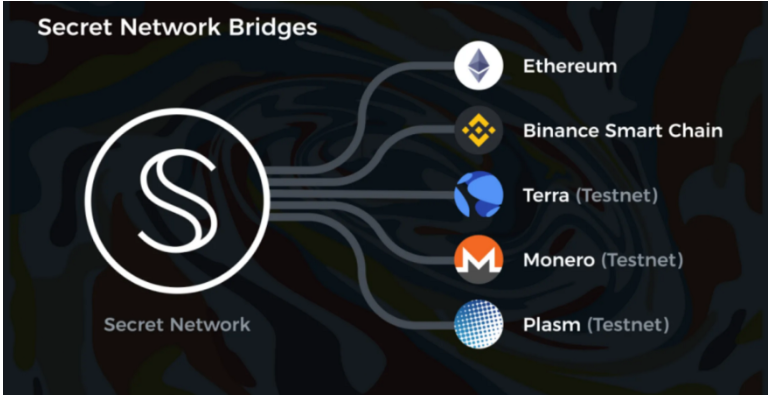
Suppose you’re on Binance—you can simply withdraw to your new Secret address using compatible wallets like Keplr, Math Wallet, or Citadel.one.
If you’re a DEX maxi like me, move some funds to BSC, grab some tokens from a faucet, then use their multisig-secured Secret Bridge to get some sBNB into your new Keplr wallet. Swap sBNB for SCRT—like any gas token, don’t spend all your SCRT.
Bridges to Polkadot, Shiden, Astar, and Terra are underway, and growing interest is expected.
Staking
Stake SCRT tokens directly from Keplr or Citadel.one wallets, currently offering 25–30% APY.
Swap
Use Secret Swap or Sienna Swap, with native SCRT as gas—remember to keep some SCRT after every trade.
You can convert SCRT to sSCRT via the Keplr dashboard.
Ecosystem Funds and Accelerator Pools
$225 Million Ecosystem Fund
Announced on January 19, led by SCRT Labs, this fund aims to help launch hundreds of new applications, attract hundreds of thousands of new users, and ensure Web3 applications have the data privacy guarantees and customizable privacy controls needed for global adoption.
Projects onboarded via the ecosystem fund:
-
Sienna Network—Cross-chain, privacy-first DeFi protocol
-
Altermail—Private and secure messaging application
-
Shade Protocol—Launching algorithmic stable, private DeFi protocol
-
Stashh—NFT platform
Investors & Partners
DeFiance Capital, Alameda Research, CoinFund, HashKey, Momentum 6 (shameless plug).
$175 Million Accelerator Pool
Secret will use this pool to support key growth initiatives in Secret DeFi, NFTs, gaming, and metaverse—especially focusing on active usage, user base, and TVL.
Over ten projects have already been approved:
Secret NFT—Private non-fungible token standard,
Polar—Environment for developing, compiling, testing, and deploying secret contracts,
Griptape—Frontend application development framework written in JavaScript,
Secret Monero Bridge—Enables DeFi for Monero users,
Fardels—Privacy-preserving decentralized social network for sharing,
SecretPY—Python library for SecretJS,
Secret Code Verification System—Contract verification,
SecretNet—Secret library for Unity3D,
Secret Heroes—Hero battle game based on secret NFTs,
Prediction Market Module—Prediction market for SecretSwap,
Silk—Private algorithmic stablecoin,
XP.network—Multichain NFT bridge.
Challenges
Security
This will always be on the list.
Regulatory Issues
These tools can effectively address current compliance needs, but the word “privacy” itself often causes misunderstanding.
Adoption
The more people use Secret Network’s technology, the stronger its security becomes. People are gradually realizing the importance of privacy in blockchains, but there still aren’t enough users yet.
Competition in the Space
Oasis Protocol—A privacy-enabled blockchain platform
Obscuro—A decentralized Layer 2 privacy solution built on Ethereum, focused on solving front-running.
It’s important to distinguish between Ethereum-compatible L2s and L1s interoperable with Ethereum. Obscuro is the former; Oasis is the latter.
Other interesting projects: Phala, Manta, and Railgun
Value Proposition
Monero currently has a $3B market cap, having peaked above $8B. Secret Network is unlocking “programmable privacy” for tokens across many chains, not just its own. We believe SCRT surpassing Monero is inevitable, especially as more protocols recognize the benefits of shifting development to privacy chains—this only strengthens our view.
Secret NFTs also appear powerful, offering exciting and novel use cases.
Private smart contracts are inherently difficult to build, and they’ve unexpectedly established a strong moat. So far, they haven’t faced intense competition, though a few projects are catching up. Perhaps it won’t remain the only one forever, but for now, it holds a massive first-mover advantage.
Given recent sociopolitical events and global conditions, we expect more people to increasingly value privacy and seek out existing technologies. When they do, they’ll find Secret Network.
Conclusion
We love this quote from Evan Feng, CoinFund’s Director of Research: “Scalable, provable, compliant privacy technology is a consumer-friendly component of Web3 reaching mass-market audiences. CoinFund is proud to support Secret Network’s mission to realize and accelerate trust-minimized privacy networks within composable base layers.”
Join TechFlow official community to stay tuned
Telegram:https://t.me/TechFlowDaily
X (Twitter):https://x.com/TechFlowPost
X (Twitter) EN:https://x.com/BlockFlow_News