








Which projects recently emerging in the Cosmos ecosystem are worth watching?
TechFlow Selected TechFlow Selected
Which projects recently emerging in the Cosmos ecosystem are worth watching?
5 interesting projects on the Cosmos ecosystem.
 Navigating Web3 tides with focused insights
Written by: The DeFi Investor
Compiled by: TechFlow
The number of projects being built on Cosmos is rapidly increasing. Over the past few weeks, I've researched over 30 of them—here are some of the most interesting ones I’ve come across.
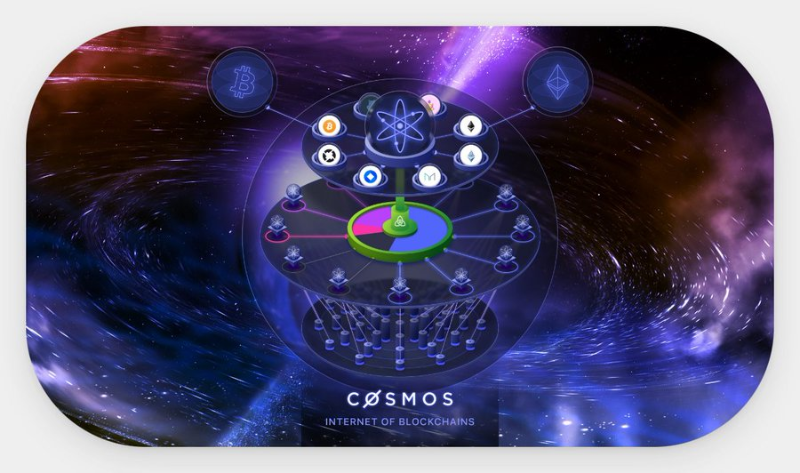
What is Cosmos?
Cosmos is an ecosystem composed of interconnected applications and infrastructure services. Applications built on it are connected via the IBC (Inter-Blockchain Communication) protocol.
But unlike other blockchains: applications on Cosmos are fully autonomous and customizable.
Why do projects deploy on Cosmos?
Although existing L1s have improved significantly over the past few years, most still aren't perfect. Applications requiring high transaction throughput (such as order books) cannot be effectively built on most of these L1s.
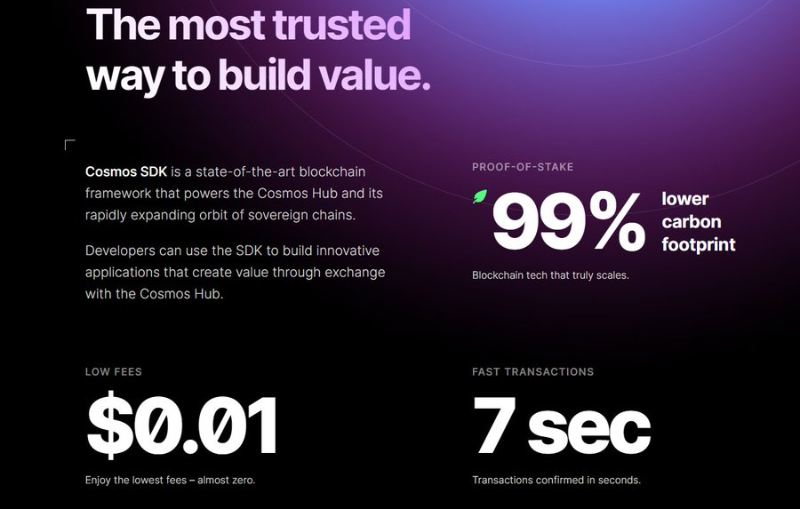
Protocols built on Cosmos are essentially independent, sovereign chains. This gives developers full control over application design, meaning they aren’t constrained by the technical limitations of a specific L1.
Since Cosmos applications are sovereign, they don’t need to pay rent to Cosmos. This means gas fees paid by users are retained by the application itself. However, they must secure their own validators.
Now let’s dive into the most interesting Cosmos projects I’ve discovered.
Celestia
Celestia is a project focused on building the first modular blockchain network, greatly improving scalability by separating the three core functions of a blockchain:
- Consensus
- Execution
- Data Availability

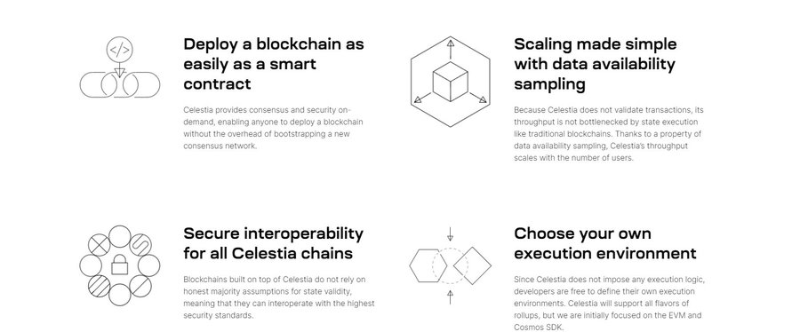
By decoupling these core functions, Celestia does not need to execute every transaction that occurs.
Instead, Celestia only needs to verify that transaction data within a block is available, using a technique called Data Availability Sampling (DAS). This enables much greater scalability.
Celestia provides consensus and security on demand. Developers can deploy blockchains on top of Celestia, use any execution environment they want (such as EVM), and launch their own sovereign chains.
Sei Network
Sei Network is a Cosmos SDK-based blockchain purpose-built for DeFi.
Its goal is simple: to become the optimal environment for DeFi applications.
It features unique capabilities such as frontrunning prevention and a built-in order matching engine.
The built-in order matching engine makes Sei an ideal chain for order book applications, which often face performance issues on other L1s. Notably, transactions on Sei settle in under 600ms.
Kujira
Kujira is a community-governed Cosmos L1 platform where only projects approved through governance voting can deploy applications. As a result, Kujira is becoming a hub for high-quality projects.
The team has launched FIN, an on-chain order book DEX built on the Kujira L1.
In addition, they’ve developed an Over-Collateralized Redemption Marketplace (ORCA) and introduced a new over-collateralized stablecoin called $USK.

Secret Network
Secret Network is the first blockchain with customizable privacy, allowing users to choose what information to reveal and to whom.
DeFi applications built with Secret's privacy-preserving smart contracts maintain user confidentiality.
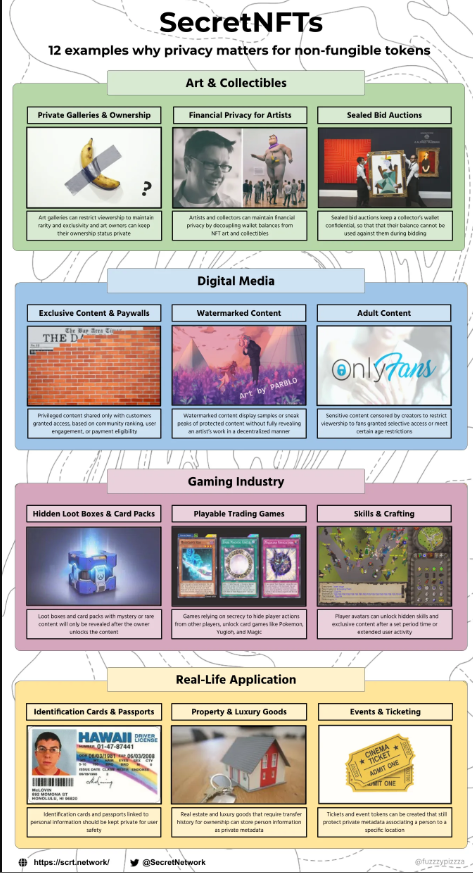
Secret NFTs are an intriguing concept introduced by Secret Network.
Holders can choose to keep the verifiable ownership of their NFTs private, opening up entirely new possibilities for creators and collectors alike.
Quicksilver
The Quicksilver team is building a liquid staking platform for any IBC-connected Cosmos application. Compared to other liquid staking solutions, this protocol offers key advantages:
- Validator Choice—One of the biggest issues with existing liquid staking platforms is that staked tokens are delegated only to a small set of whitelisted validators. With Quicksilver, users can delegate their staked assets to any validator of their choice.
- Proxy Governance—Quicksilver allows users to retain their voting rights while their assets are liquid-staked. This means users can participate in governance while simultaneously using their staked assets in DeFi protocols.
With these two features, Quicksilver aims to solve the centralization problems faced by its competitors.
Join TechFlow official community to stay tuned
Telegram:https://t.me/TechFlowDaily
X (Twitter):https://x.com/TechFlowPost
X (Twitter) EN:https://x.com/BlockFlow_News
 The DeFi Investor






