Interview with the Founders of Monad, Sei, and Eclipse: Exploring the Future of High-Throughput Blockchains Together
TechFlow Selected TechFlow Selected
Interview with the Founders of Monad, Sei, and Eclipse: Exploring the Future of High-Throughput Blockchains Together
This episode discusses the technical advantages of parallelizing the Ethereum Virtual Machine (EVM), strategic decisions behind blockchain architecture, and innovations driving the next generation of high-speed chains.
 Navigating Web3 tides with focused insights
Compiled & Translated: TechFlow
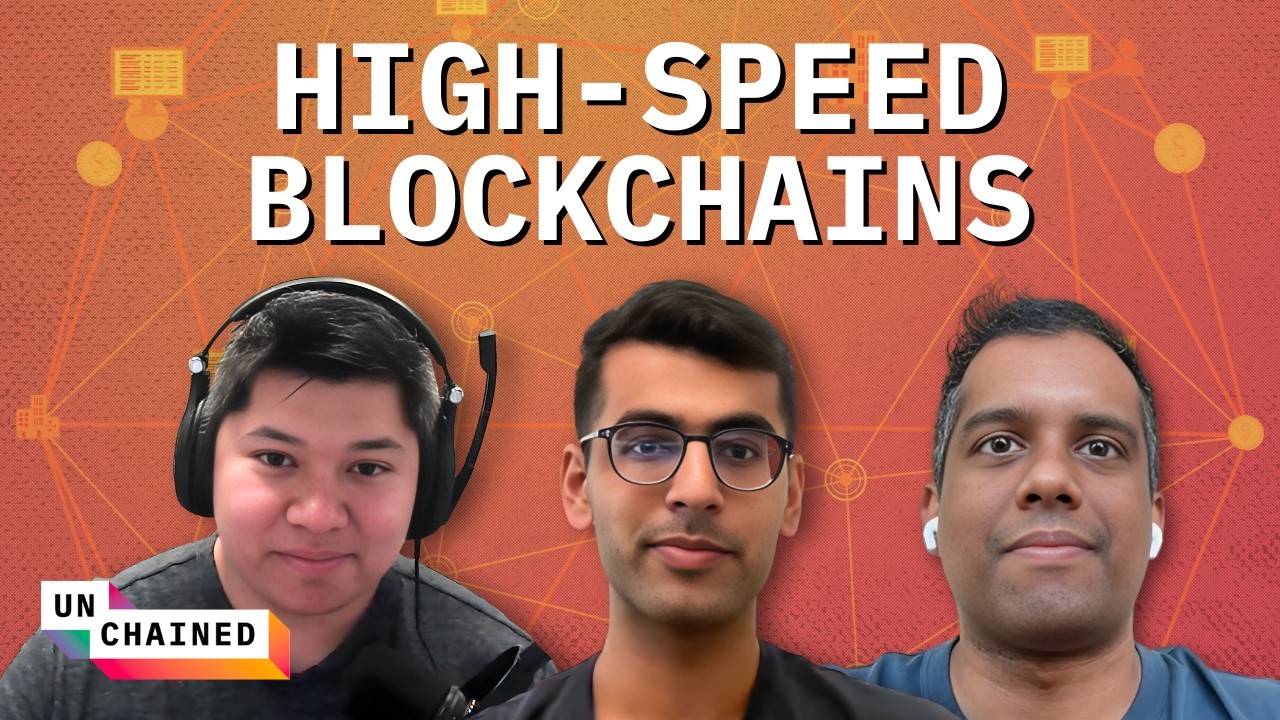
Guests: Keone Hon, Co-Founder & CEO of Monad Labs; Jay Jog, Co-Founder of Sei Labs; Vijay Chetty, CEO of Eclipse Labs
Host: Laura Shin, Author and Host of Unchained
Podcast Source: Unchained
Original Title: How to Build the Fastest Onchain Experience With Monad, Sei, and Eclipse
Air Date: August 28, 2024
Key Takeaways
In this episode, Keone Hon from Monad Labs, Jay Jog from Sei Labs, and Vijay Chetty from Eclipse Labs shared their distinct approaches to scalability and performance on high-throughput blockchains. They discussed the technical advantages of parallelizing the Ethereum Virtual Machine (EVM), strategic decisions behind blockchain architecture, and innovations driving the next generation of high-speed chains.
Monad
How Monad Started and Its Original Mission
-
Keone introduced Monad’s origin and mission. Monad is an EVM-compatible blockchain built with a pipelined architecture designed for high throughput—capable of processing 10,000 transactions per second—with one-second block times. Founded in early 2022 by three co-founders—Eunice Girda, James Hon Saker, and Keone—Monad emerged after Keone and James spent about eight years at Jump Trading, focusing on high-performance trading systems and working on Solana DeFi within Jump’s crypto team.
-
Recognizing a pressing market need for higher-performance EVM execution, they decided to leave Jump and launch Monad alongside Eunice Girda.
-
Keone emphasized that Monad’s core goal is to extract maximum performance from minimal hardware, requiring them to build new software from scratch and introduce architectural improvements. Monad’s design philosophy stacks four major enhancements, each multiplying the system’s overall efficiency to achieve exceptional performance.
Features That Make Monad a High-Throughput Blockchain
-
Keone detailed several key features enabling Monad’s high throughput:
-
First, Monad uses a custom state database that natively stores Ethereum Merkle tree data on SSDs, enabling more efficient state access.
-
Second is optimistic parallel execution, allowing multiple transactions to run concurrently while ensuring final results match those of serial execution.
-
Third is asynchronous execution, which creates independent “lanes” between consensus and execution, enabling full utilization of the entire block time rather than just a fraction.
-
Finally, Monad BFT is a high-performance consensus mechanism capable of synchronizing hundreds of globally distributed nodes.
-
-
Regarding composability challenges with parallel processing, Keone explained that Monad blocks remain linear, with transactions defined sequentially within each block, preserving total transaction ordering. Parallelization occurs in the background without affecting final execution outcomes. The guarantee of optimistic parallel execution is that even though processing happens in parallel, final commits follow the original transaction order—ensuring correctness—and any changes in inputs can trigger re-execution.
-
Additionally, Keone noted that the custom state database addresses blockchain bloat. As state grows, access costs and latency increase. Existing Ethereum clients use complex database structures that require numerous interactions when accessing Merkle tree states. Monad’s custom database (called Mona DB) is specifically optimized for storing Ethereum Merkle tree data. Though building a database from scratch is complex, it's a critical step toward improved execution efficiency.
Why Monad Chose to Build a New Blockchain Instead of an L2
-
Keone explained why Monad chose to be an independent blockchain rather than an L2.
-
First, decentralization was paramount. They believe decentralized block production and node participation in consensus are crucial for censorship resistance and overall network decentralization. Most existing L2 solutions still rely on centralized sequencers, conflicting with their vision.
-
Second, performance and cost were key considerations. Building a truly high-performance system requires optimizing every layer of the tech stack—including execution, consensus (to keep nodes synchronized), and data availability. Keone stressed that Monad aims to solve these holistically, creating a single, highly efficient system for maximum performance.
Why Keone Believes Monad Offers the Best Developer Experience—and Why He Dislikes the Term "Ethereum Killer"
-
Keone highlighted that Monad offers superior developer experience primarily through performance and compatibility. First, Monad is fully EVM-compatible, meaning developers can continue using familiar tools and libraries like Solidity. This compatibility allows reuse of existing components or ensures backward compatibility with Ethereum standards when building new apps.
-
Second, Monad delivers significant performance gains. Through asynchronous execution and efficient consensus, developers deploying apps on Monad enjoy much higher transaction throughput—critical for mainstream adoption where applications must handle large volumes of transactions.
Views on the Term "Ethereum Killer"
-
Keone expressed disagreement with the label, calling it inaccurate. He said Monad focuses on under-explored areas of Ethereum scaling. Rather than replacing Ethereum, the team aims to enhance its capabilities by exploring different technical pillars. Their goal is to contribute to Ethereum’s roadmap by proposing EIPs and collaborating with other researchers.
-
Keone added that Monad could serve as a pioneer environment for certain Ethereum improvements, potentially influencing future upgrades to Ethereum or other ecosystems. Thus, Monad’s purpose is to strengthen Ethereum—not eliminate it.
Monad’s Major VC Funding Round and Use of Funds
-
Monad recently completed one of the largest funding rounds of 2024, raising $225 million. Keone said the funds will be used across several areas, primarily to expand the team by hiring talent capable of advancing both the Monad project and the broader industry. They aim not only to recruit experienced crypto professionals but also to bring low-level engineers from other fields into crypto.
-
Keone expressed gratitude for investor support, noting the funding provides ample resources to realize their vision.
-
Keone also mentioned that despite not having officially launched yet, Monad has already attracted significant interest from VCs and application builders. For example, Monad-based apps like Kintsu and Kuru have recently raised funding. This reflects confidence in the talent within the Monad ecosystem and investor anticipation around high throughput, low fees, and full EVM compatibility. Investors are also confident in ongoing improvements the Monad team is driving, which will help scale and enhance EVM capabilities long-term.
Monad’s Strong Community
-
Keone pointed out that Monad has a strong community, largely due to active contributions from members and internal team efforts. He believes community growth is ultimately driven by individuals who feel empowered to contribute. The Monad team’s role is to create a welcoming environment, manage spam, and foster positive vibes.
-
Keone thanked engaged community members who set high standards, create compelling memes and artwork, and organize events. For instance, the Monad Running Club—a Strava group—encourages members to log runs and improve health. There’s also Mon Lingo, a program for learning new languages together.
-
These activities highlight the fun side of the Monad community, emphasizing friendship and relationships beyond financial gains or “farming.” Building such social networks is vital for a successful blockchain community.
Monad’s Next Steps and Token Launch Timeline
-
Keone said Monad’s testnet and mainnet are coming soon, with the team working hard. While no exact release date is confirmed, progress is going very smoothly.
-
On the topic of a Monad token, Keone couldn’t provide specifics, despite rumors and retractions about the token name. He stated he cannot comment on it at this time.
Sei
What Is Sei and the Role of the GameStop Event in Its Creation
-
Sei is a fully functional Layer 1 blockchain, initially inspired by Jay Jog and his co-founder Jeff Feng's experience during the 2021 GameStop event. At the time, Jay was Engineering Lead at Robinhood and witnessed internal chaos firsthand. When purchases of GameStop and other stocks were halted, Robinhood faced massive public backlash—yet internally, they lacked full context, making the reputational risk deeply unsettling.
-
After the incident, Jay and Jeff decided to build a decentralized trading platform to prevent similar issues. Initially, they wanted to create an on-chain decentralized exchange (DEX), but found no suitable ecosystem supporting orderbook-based exchanges on-chain. So they opted to build it as a standalone chain—what eventually became Sei, a blockchain platform focused on efficient trading and decentralized finance.
Why Jay Believes the EVM Developer Ecosystem Is So Powerful
Jay believes the EVM (Ethereum Virtual Machine) developer ecosystem is strong for several reasons:
-
High Developer Share: Roughly 80% to 90% of developers in crypto today are EVM developers, giving the ecosystem a vast talent pool.
-
Technical and Ideological Stickiness: EVM is more than a tech stack—it’s an ecosystem. A rich set of tools and developer culture has formed around it, creating strong belonging and retention. Many developers resist switching environments due to technical complexity and security risks associated with migrating code.
-
Performance Limitations: Jay notes EVM’s biggest constraint is insufficient throughput, leading to poor UX. Ethereum’s low transaction capacity forces users to pay high fees during peak times, making on-chain operations difficult for average users.
-
Parallel Processing Potential: Jay points out that EVM currently processes transactions in a single thread, while modern computers are multi-core and capable of handling multiple workflows simultaneously. Their insight was that parallelizing EVM could better leverage modern hardware to boost transaction throughput—motivating them to build Sei as the first parallelized EVM.
-
Combining Strengths: By merging EVM’s strengths with high-performance traits from blockchains like Solana, Sei delivers better performance and user experience while retaining access to the EVM developer ecosystem.
Why Sei Shifted from Cosmos to EVM, Leading to V2
Jay explained the transition from Cosmos to EVM and the launch of Sei V2, citing several factors:
-
Initial Choice: In Sei’s early stages, the team used the Cosmos SDK to build an app-specific chain because it was a well-tested framework that enabled rapid prototyping and infrastructure setup.
-
Shift to General-Purpose Chain: As the project evolved, the team realized they needed a more general-purpose solution. While Cosmos SDK remained a good starting point, inefficiencies were identified and subsequently optimized.
-
Consensus Optimization: Initially using basic Tendermint consensus, they enhanced block propagation and processing, eventually developing “Twin Turbo Consensus,” making Sei one of the fastest blockchains today.
-
Performance Edge: These improvements allowed Sei to achieve 400ms finality—faster than Solana and other chains—giving it a competitive edge.
-
Decision to Adopt EVM: With deeper understanding of market needs and developer ecosystems, Sei decided to launch V2 with EVM compatibility. This shift would attract a large base of EVM developers and leverage the rich tooling and resources available in the EVM ecosystem, improving both UX and developer productivity.
What Makes Sei the “Fastest Chain, Even Faster Than Solana”
Jay explained how Sei became the “fastest chain” and detailed the features of Twin Turbo Consensus:
-
Mechanism of Twin Turbo Consensus:
-
In traditional Tendermint, processing a block requires two voting rounds—pre-vote and pre-commit—before block processing begins, which is time-consuming.
-
Sei’s innovation is starting block processing in parallel during these voting rounds. For example, if voting takes 300ms, Sei uses that time to process the block, significantly reducing latency and boosting performance.
-
-
Optimized Block Propagation:
-
In standard Tendermint, submitting a block requires sending the full block over the network—even though validators may already have most transactions in their mempools.
-
Sei solves this by sending only transaction hashes (~32 bytes each) instead of full transactions. This drastically reduces network data load, allowing validators to reconstruct blocks locally and improving performance.
-
-
Introduction of Parallelization:
-
Beyond Twin Turbo Consensus, Sei introduced parallelization to further boost execution-layer performance, enabling more efficient use of computing resources.
-
-
Market Feedback and Pivot:
-
When Sei V1 launched with support only for Cosmos and Rust smart contracts, developer adoption was limited due to reluctance to learn new languages.
-
Feedback from developers consistently requested EVM support. This led the team to pivot to EVM and further optimize on that foundation.
-
-
Successful V2 Launch:
-
Sei announced V2 last November and launched it in May this year. V2 supports both EVM and Cosmos smart contracts, enabling developers to use different languages on the same chain.
-
Following V2’s launch, Sei’s ecosystem rapidly expanded, attracting numerous new projects and investors, with TVL (Total Value Locked) growing significantly.
-
How Sei DB Works and Why Jay Believes Monolithic Architecture Has Advantages Over Modular Architecture
How Sei DB Works
-
State Storage and Data Writing:
-
With parallelized transactions and higher throughput, the volume of data written to the Sei blockchain increases significantly, causing state load—the primary bottleneck for blockchain performance.
-
To address this, Sei introduced CDB (a new database solution) based on two core ideas:
-
Memory-Mapped IVL Tree: In V1, the entire tree structure was stored on disk. In V2, Sei split it into multiple files and removed excessive metadata, reducing stored data by ~60%. This makes running full nodes easier and enables faster scaling.
-
Asynchronous Disk Writes: State is created in memory and written to disk asynchronously, greatly increasing write speed. Jay noted a 287x improvement in write speed during block commits. This enhancement significantly boosts performance, reduces latency, and increases throughput.
-
-
Advantages of Monolithic Architecture
-
Complexity Management:
-
Jay believes monolithic architecture has clear advantages over modular designs in managing complexity. In modular architectures, dependencies among microservices increase system complexity. Separating execution, settlement, and data availability layers can lead to communication bottlenecks and increased fragility.
-
-
Performance Optimization:
-
In a monolithic architecture, all components run within a single system, eliminating inter-module communication delays and enhancing overall performance. Jay emphasizes that top-tier performance on monolithic chains consistently outperforms modular systems, which incur additional communication overhead.
-
-
Fault Tolerance:
-
If parts of a modular system fail, it can impact finality and availability across the network. In contrast, monolithic systems centralize functionality, limiting the blast radius of failures.
-
-
Jay stresses that while modular architectures may suit specific use cases (e.g., dedicated blockspace), monolithic designs offer better solutions for applications demanding peak performance. Sei DB is engineered to support high-performance needs through optimized state storage and faster writes, while minimizing system complexity.
Eclipse
How Eclipse Operates by Combining Ethereum, Solana, and Cosmos
Vision and Goals of Eclipse
-
High-Throughput L2 Solution: Eclipse aims to build a high-throughput Ethereum Layer 2 (L2) solution by optimizing the execution environment for greater efficiency. Vijay emphasized that Eclipse chose the Solana Virtual Machine (SVM) because it offers higher parallelism and throughput compared to the Ethereum Virtual Machine (EVM).
Modular Architecture
-
Modular Design: Eclipse adopts a modular approach, leveraging different blockchain technologies to meet diverse needs:
-
Execution Layer: Eclipse uses SVM due to its higher throughput and large Rust developer community. This enables Web2 developers to easily transition to Web3 and build high-performance applications.
-
Settlement and Consensus Layer: Eclipse uses Ethereum for settlement and consensus, tapping into its large user base and diverse asset ecosystem. This combination lets users enjoy Solana-like UX while accessing Ethereum assets and dApps.
-
Data Availability Layer: Eclipse uses Celestia for data availability, as it leads in modular DA and offers the lowest-cost block data publishing.
-
ZK Fraud Proofs
-
Fraud Proof Layer: Eclipse plans to implement zero-knowledge (ZK) fraud proofs to create a trust-minimized L2. Vijay believes all optimistic rollups will eventually move toward ZK fraud proofs, and Eclipse aims to lead in this space.
Solving Industry Problems
-
Addressing Fragmentation: Vijay noted that fragmentation in the current Ethereum ecosystem complicates coordination between different RFQs and liquidity providers. Eclipse aims to provide a universal L2 solution that meets most application needs, reducing coordination overhead caused by fragmentation.
How Eclipse Manages Complexity in Its Modular Architecture
Internal Development and Testing
-
Team Effort: The Eclipse team has conducted extensive internal development and testing to ensure efficient communication between layers. Close collaboration with Celestia has significantly improved data publishing efficiency.
Optimizing Data Publishing
-
Data Volume and Metadata: Vijay mentioned that Eclipse recently set a record for highest daily data published—a feat achieved through data structure optimization. He noted that besides transaction lists, compressed Solana blocks contain substantial metadata. Reducing metadata and improving data publishing efficiency are key optimization targets.
Ongoing Learning and Optimization
-
Dynamic Adjustment: The Eclipse team continuously learns and adapts to rising activity levels. The goal is to reduce the ratio of published data to activity volume over time, improving overall efficiency.
Ecosystem Collaboration
-
Joint Testing and Cooperation: Vijay emphasized that “collective battle testing” with Celestia and other ecosystem partners is a crucial part of optimization. Such collaboration not only improves Eclipse’s solution but also advances the broader ecosystem.
Ways to Trade SOL on Eclipse
Bridging Mechanism
-
Requires Bridging: Trading SOL on Eclipse requires a bridging mechanism. Eclipse will operate a dedicated bridge to transfer ETH onto its network.
Asset Bridging Partnerships
-
Partners: Eclipse also collaborates with other bridge providers (like Hyperlane) to enable asset bridging from various L1s and L2s, making it easier for users to bring assets to Eclipse.
Wrapped SOL Tokens
-
Wrapped SOL: On Eclipse, SOL will exist as a wrapped token. Users will convert native SOL into a wrapped version during bridging to trade on the Eclipse network.
Vijay’s Response to Allegations Against Eclipse Labs’ Founder and Former CEO Neel Somani
-
Focus on Product and Team: Vijay emphasized that his focus is on the company’s future, product, and roadmap. He is committed to aligning the team toward a unified direction, dedicating 99% of his energy to product and team development.
-
No Comment on Personal Conduct: Vijay stated he won’t comment on Neel Somani’s personal behavior or allegations, as he cannot judge their validity. However, he supports those speaking up and their right to do so.
-
Company and Product First: Vijay stressed that what matters most is focusing on the company and the product being built. He views the controversy around Neel as a personal matter, noting Neel has already left the company and the team will continue moving forward.
How Eclipse Attracts Developers
Attracting Solana Developers
-
Easy App Porting: Eclipse offers Solana developers a simple way to migrate their apps to Ethereum, gaining access to Ethereum’s users and assets. This presents growth opportunities for protocols like Mango and Soul Land, enabling them to attract more users and capital while delivering Solana-grade UX to their audience.
Attracting Ethereum Developers
-
Cross-Chain Development Opportunities: Vijay noted that interaction between Ethereum and Solana developers has historically been limited due to language differences (e.g., Solidity vs. Rust). Recently, this has improved, with developers exploring how to use Rust on Ethereum. Tools like Rep are beginning to support such cross-chain development.
Solving Ethereum’s Scalability Issues
-
Decentralized Trading Experience: Due to scalability limits, many Ethereum developers have moved DeFi trading off-chain or onto app-specific chains. Vijay believes this fragments the user experience and hinders liquidity unification and transparency. Eclipse offers a solution by enabling developers to deploy institutional-grade Central Limit Order Books (CLOBs) and seamless Request-for-Quote (RFQ) systems—all fully on-chain.
Delivering High-Quality DeFi Experiences
-
Institutional-Grade DeFi Apps: Eclipse aims to deliver high-quality DeFi experiences while maintaining fully on-chain operations—contrary to the trend of moving intent and RFQ systems off-chain. This approach helps developers achieve better UX and greater transparency.
Areas Vijay Expects to Thrive on Eclipse
DeFi Sector
-
Institutional-Grade DeFi UX: Vijay is excited to see institutional-grade DeFi experiences emerging during hackathons—especially CLOBs and RFQ systems. He emphasized that these systems must offer excellent UX to be accessible to everyday users.
Meme Coin Space
-
Fair Launch and Community Ownership: Vijay noted significant meme coin activity on Solana and expects innovation around fair launches and community ownership. These concepts could apply to venture-backed crypto firms, fostering deeper community engagement and growth.
Consumer Experience
-
High-Throughput Consumer Apps: Vijay emphasized that Eclipse’s high throughput opens exciting possibilities for world-class consumer experiences. He pointed out that mainstream Web2 social apps involve thousands of transactions and interactions per second, and leveraging Eclipse’s capabilities for such apps is a compelling design space. Examples like Friend Tech, Forecaster, and Lens already demonstrate potential in this area.
Infrastructure
-
Decentralized Physical Infrastructure: In infrastructure, Vijay sees potential in decentralized sensor networks and decentralized AI. While there’s some hype, he believes there are still many interesting possibilities in large-scale sensor and deep network design spaces.
Eclipse’s Next Steps and Mainnet Launch Timeline
-
Vijay mentioned that Eclipse has already launched mainnet for developers but hasn’t yet pushed frontend tools for general users. Their current focus is helping developers and infrastructure partners deploy apps to mainnet.
-
A public mainnet launch is expected around September, introducing various interfaces and gamified experiences for end users.
Post-Launch Development Plans
-
Withdrawal Functionality: Before public launch, users will be able to withdraw funds—an essential requirement.
-
Phased Rollout: After mainnet launch, Eclipse will transition over the following months into Phase 1 rollup, including permissionless fraud proofs, trust-minimized bridges, and forced inclusion.
-
Gradual Open-Sourcing: Eclipse plans to gradually open-source parts of its tech stack. Currently released components use the Apache 2.0 license, allowing academic use and reuse.
Decentralization and Governance
-
Decentralized Future: Vijay emphasized that decentralization and governance are part of Eclipse’s roadmap, with the Eclipse Foundation currently setting timelines.
Competitiveness and Innovation
-
High-Throughput Opportunity: Eclipse aims to deliver significantly higher throughput and plans to be the first to implement the independent validator client developed by the Jump team for Solana.
-
Hardware Acceleration: Vijay said Eclipse will also research hardware acceleration, targeting tens of thousands of transactions per second to support Web2 and Web3 scale applications.
Ideal Application Types
-
Target Applications: Vijay specifically highlighted that Eclipse is best suited for on-chain CLOBs and RFQ systems, consumer apps reaching millions of users, and deep applications like large sensor networks.
Summary
In summary:
-
Monad focuses on optimizing EVM performance to deliver a high-efficiency Ethereum experience.
-
Sei enhances DeFi trading efficiency through a decentralized trading platform and a parallelized EVM.
-
Eclipse combines multiple blockchain technologies via modular architecture and ZK fraud proofs to offer a high-throughput Ethereum L2 solution.
Each of these projects presents innovative solutions to different challenges in blockchain performance and decentralized applications, contributing to the diversification and advancement of blockchain technology.
Join TechFlow official community to stay tuned
Telegram:https://t.me/TechFlowDaily
X (Twitter):https://x.com/TechFlowPost
X (Twitter) EN:https://x.com/BlockFlow_News
 深潮TechFlow