








Starry Skies and Vast Oceans — Krypital Group 2021 Review and Outlook
TechFlow Selected TechFlow Selected
Starry Skies and Vast Oceans — Krypital Group 2021 Review and Outlook
For the crypto industry, 2021 was undoubtedly a year to go down in history. It was the worst of times, but indeed the best era for Crypto.
 Navigating Web3 tides with focused insights
2021 was another extraordinary year, with the real world still divided. The shadow of the pandemic continued to loom over people around the globe, making staying at home the new norm and drastically changing lifestyles. After a dramatic riot in the United States, the Federal Reserve issued over $21 trillion in new money during 2021—an unprecedented "flood irrigation" policy that seemed to restart the repetition of financial history. This fractured environment led to the retreat of globalization, further intensifying economic, political, and cultural conflicts, which were amplified through network effects.
Yet for the crypto industry, 2021 was undoubtedly a year for the history books. Bitcoin forged ahead relentlessly, repeatedly setting new all-time highs; Ethereum advanced further toward becoming the foundational platform of a "world computer"; DeFi continued its development, sparking ongoing discussions in traditional finance; public blockchains moved beyond the notion of being "Ethereum killers," each finding their own unique paths while cross-chain demand expanded; from JPEGs to Loot to digital art, NFTs sparked wave after wave of excitement; P2E revitalized blockchain gaming and gave rise to new industries such as play-to-earn guilds; the concept of DAOs began to resonate deeply, inspiring passionate community-led experiments; and the "metaverse" evolved from mere storytelling into reality—so much so that even Facebook rebranded itself to explore this frontier—clearly a victory for Crypto.
It was the worst of times, yet unquestionably the best era for Crypto. Fortunately, having been founded in 2017, we have remained steadfast throughout. Today, Krypital Group (Jinkē Capital) joins you in reflecting on, sharing, and looking forward to the future we envision and tirelessly strive toward.
Part 1 2021 Crypto Recap: The Triumph of HODLers and New Narratives
1. Bitcoin
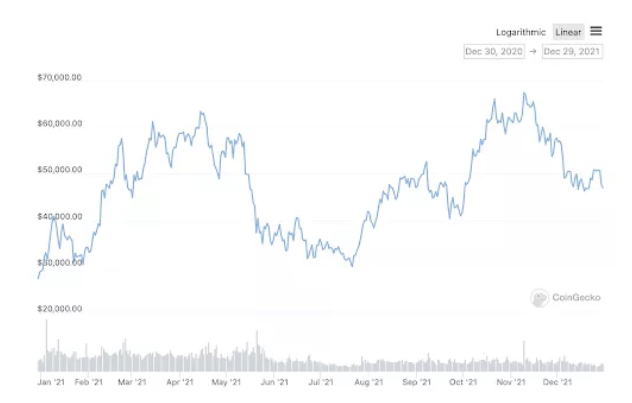
In the first half of 2021, Bitcoin surged with even greater momentum, climbing from just over $20,000 at the beginning of the year to a peak of $64,000. Despite a sharp mid-May correction due to regulatory pressures—halving its price—the market recovered over several months, reaching a new high of $69,000 in November. Even with a year-end pullback, Bitcoin ended more than double its starting price.
Beyond price, what’s more encouraging is that Bitcoin has gradually become an accepted asset class within the traditional world. Grayscale's story is now widely known; MicroStrategy, a publicly traded company, has committed nearly all its resources to buying Bitcoin and has become the largest institutional holder; Tesla purchased Bitcoin and briefly accepted it as payment; and El Salvador made headlines by adopting Bitcoin as legal tender and aggressively acquiring it for national reserves.
For most participants in the crypto space, Bitcoin remains the "Bible." Regardless of how one defines it, HODLing has proven sufficient—and Bitcoin has richly rewarded those who held on.
While debates continue about whether Bitcoin's evolution aligns with Satoshi Nakamoto’s original vision, and mainstream adoption sparks broader discussion, we believe progress itself is positive. Bitcoin’s future will be shaped collectively by humanity and technology.
2. Ethereum, Its Competitors, and Cross-Chain
2021 belonged even more to Ethereum—not only did ETH outperform Bitcoin in price appreciation, but nearly everything in today’s crypto ecosystem connects back to Ethereum. When people discuss Ethereum now, they rarely focus solely on price. Instead, conversations center on DeFi, smart contracts, Layer 2 solutions, Ethereum 2.0, and its potential role as the foundational settlement layer for global finance.

However, despite its bright future, Ethereum's network congestion, delays, and inefficiencies became glaringly apparent amid rapid growth. Meanwhile, former competitors seized the opportunity—Solana, Avalanche, Fantom, Matic, BSC, and others. Spillover wealth effects from Ethereum fueled developer interest, drove token prices upward, and enabled these ecosystems to build through incentive-driven growth. Together with Ethereum, they are shaping a larger crypto landscape. While Ethereum 2.0 remains promising, Layer 2 solutions are increasingly becoming the mainstream path forward. Arbitrum, Optimism, Boba, Zksync, and Starkware have all secured massive funding rounds and are poised for takeoff.
Having witnessed Ethereum’s journey firsthand, we remain firmly confident in its long-term prospects and will continue investing accordingly. At the same time, we are also allocating capital across other L1s and L2s. We believe a multi-chain crypto world will ultimately be richer and more resilient.
3. DeFi
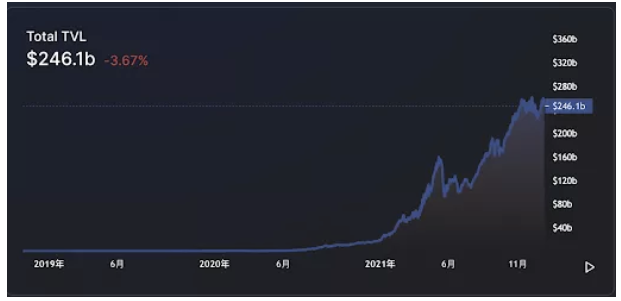
Following the explosive growth of DeFi Summer, the total value locked (TVL) in DeFi protocols surpassed $240 billion. Major DeFi tokens delivered strong performance throughout 2021.
On the protocol front, Uniswap launched V3, significantly improving capital efficiency; Sushi evolved into a one-stop financial hub offering swap, IDO platforms, and lending; Aave introduced cross-chain functionality, making cross-chain borrowing a reality; DyDx saw derivatives trading volumes briefly surpass Coinbase; Terra’s UST captured the largest share of the decentralized stablecoin market.
The DeFi narrative continues evolving, and early signs of DeFi 2.0—focused on maximizing capital efficiency—are emerging. DeFi continues to attract attention from traditional finance. Looking ahead, we anticipate a future where CeFi and DeFi converge more seamlessly.
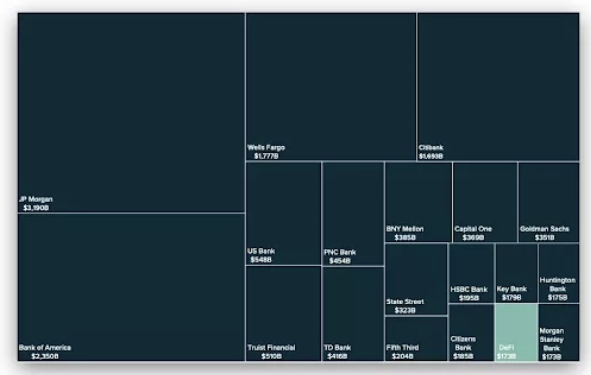
(Compared to traditional finance, DeFi’s entire scale is still smaller than Goldman Sachs—DeFi has only just begun)
Meanwhile, New Narratives Continue Flooding Into Crypto
1. MeMe Tokens
Crypto has never lacked memes, but this year’s meme mania reached new heights—from animal coins in spring to letter-based tokens like GM and People in October and November. Each successful meme token generated massive wealth effects and broke into mainstream consciousness. For example, Elon Musk has become Dogecoin’s most influential advocate.
The success of meme tokens lies in their narratives, which unite communities around shared stories. As value-focused investors, while we don’t FOMO into memes, we respect and appreciate them. Perhaps this is precisely crypto’s magic—letting the impossible become possible.
2. GameFi / P2E
As a novel crypto-economic model, P2E (exemplified by Axie Infinity) ignited the GameFi boom, giving rise to guilds (YGG, GF), IGO platforms (Gamestarter), and related industries. The explosive growth of P2E is exciting—it allows players to earn while enjoying gameplay. To reduce entry barriers for new users, organizations like guilds have created new value streams.
At the same time, we recognize the unsustainability behind many P2E models—pure reliance on token incentives inevitably leads to heavy sell pressure. Nevertheless, we believe P2E will persist as part of the GameFi ecosystem. As both a token distribution mechanism and economic model, P2E will continue driving GameFi innovation, and we plan to maintain long-term exposure in this space.
3. NFT, Metaverse, Web3, and DAO
From profile picture NFTs to Loot’s meme-infused genesis, from million-dollar digital artworks to virtual land sales, NFTs captivated both insiders and outsiders alike. In our view, NFTs redefine ownership expression through blockchain. In the future, NFTs will integrate more closely with identity verification, self-expression, value representation, and transmission.
Steven Spielberg’s 2018 film *Ready Player One* brought the concept of the metaverse into mainstream awareness. In 2021, Facebook’s rebranding to Meta cemented the metaverse as the hottest trend bridging traditional tech and crypto, embodying boundless imagination about the future of digital life. We believe projects delivering immersive experiences and tangible achievements will define the next wave.
Web3 represents a more open, inclusive, and user-friendly internet. For those engaging with Web3, understanding and exercising digital ownership will be foundational to individual and organizational success over the next decade and beyond. Currently, Web3 infrastructure remains relatively weak—we will continue monitoring developments in this area.
DAOs represent the future of organizational structures. We’ve already seen early successes with PleasrDAO, FingerprintDAO, and others. 2022 may well be the breakout year for DAOs.
Part 2 Krypital Group 2021 Investment Review
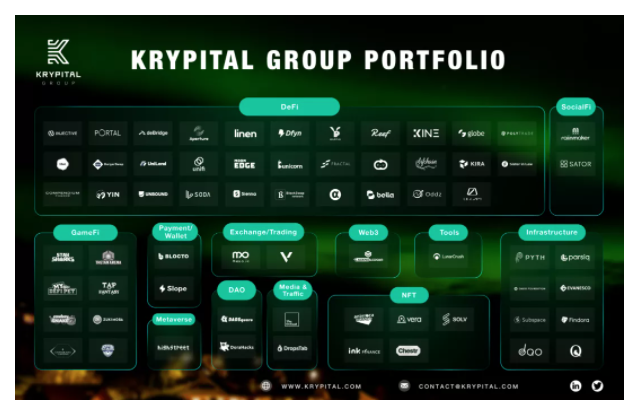
As one of the most active investment firms in the industry, we remain committed to creating value for projects and growing alongside them, maintaining strategic positions across multiple sectors.
1. L2 Project: Boba Network
Boba Network was rebranded from OMG Network, one of the earliest pioneers of the L2 concept. BOBA employs an Optimistic Rollup-based L2 scaling solution fully compatible with the Ethereum EVM. Additionally, BOBA offers fast withdrawals via community-driven liquidity pools, reducing withdrawal times from up to a week down to minutes—allowing users to access funds promptly without relying on external bridges, greatly enhancing user experience.
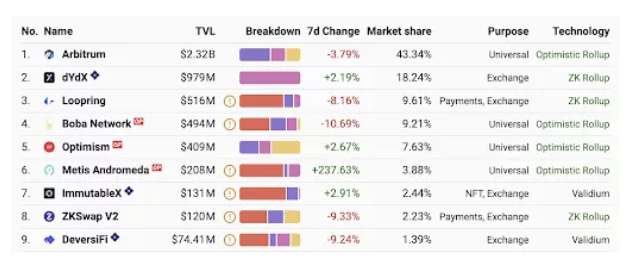
Though BOBA’s mainnet launched less than two months ago, it has already achieved impressive results, ranking fourth among all L2 projects by TVL. As Ethereum adoption grows, L2 solutions will gain increasing traction—and BOBA is well-positioned to compete strongly.
2. DeFi
Solv Protocol – A DeFi Protocol Based on Financial NFTs
Financial NFTs are an inevitable evolution in DeFi. While art NFTs dominate the current NFT market, Solv is pioneering the use of NFTs in financial instruments, enabling them to encode complex financial data. Solv’s flagship product, Solv Vouchers, uses divisible NFTs to help projects manage liquidity for locked tokens. Voucher holders can freely trade on any NFT marketplace or use them as collateral in lending protocols. Solv Vouchers enhance liquidity for all locked token holders. At the same time, projects benefit from better control over circulating supply and deeper alignment with investors through structured lockups.
Yin Finance – Active Liquidity Management Protocol
Liquidity is the core of DeFi. Improving capital efficiency and optimizing liquidity utilization remain key challenges. Uniswap V3 enhanced capital efficiency through concentrated liquidity and range orders, but increased management complexity for LPs. Yin Finance is an active liquidity management protocol designed for Uniswap V3 markets. Users can subscribe to CHI strategies—Yin Finance’s managed liquidity positions—for optimized returns. Additional features include yield compounding and aggregated liquidity mining. Furthermore, Yin Finance plans to launch structured products based on Uniswap V3—worth watching.
Aperture – Cross-Chain Yield Aggregation Protocol
Yield aggregators like YFI use smart contracts to generate returns for deposited assets while minimizing risk and cost, becoming dominant players in DeFi. With cross-chain maturity, Aperture combines DeFi protocols across Ethereum and other chains to offer higher-yield products for Ethereum users. Set to launch next year, we expect Aperture to elevate yield management on Ethereum and secure a place among leading DeFi 2.0 protocols.
Debridge – Cross-Chain Interoperability Protocol
As multi-chain ecosystems mature, demand for cross-chain solutions becomes clearer. Whether for new L1s or Ethereum Layer 2s, cross-chain bridges are now essential.
Although numerous cross-chain protocols exist, we believe security must come first—it is the foundation and core of any bridge. DeBridge is a Chainlink ecosystem project providing cross-chain interoperability infrastructure. It locks native-chain collateral 1:1 to mint wrapped assets (deAssets), facilitating interoperability and liquidity transfer between blockchains and smart contracts. Unlike many other bridges, DeBridge uses validator nodes to enhance cross-chain security.
3. Web3 Infrastructure
Slope – Multi-Platform Wallet for the Solana Ecosystem
As one of the top-performing public blockchains in 2021, Solana earned recognition for its exceptional performance, and its ecosystem has taken shape. Krypital Group (Jinkē Capital) was among the earliest investors focused on Solana’s ecosystem, backing DEXs, lending platforms, portal tools, wallets, and oracles.
Wallets serve as the primary gateway to on-chain ecosystems. Slope is a wallet built on Solana. It currently offers two products: Slope Wallet and Slope DEX, with plans to launch Slope NFT Market and Slope DAO. As Solana’s first cross-platform wallet, Slope delivers a seamless user experience for entering the Solana ecosystem. Slope DEX is Solana’s first mobile-native DEX, combining the interface feel of centralized exchanges with the decentralized nature of DEXs.
Blocto – Leading Wallet on Flow
Flow was one of the most notable blockchains in 2021, playing a crucial role in connecting NBA and crypto. We are highly optimistic about Flow’s potential in gaming and NFTs and invested early in Blocto, Flow’s primary wallet. We believe Blocto will bring more users and developers into the Flow ecosystem, helping co-build its future.
Pyth – A New Paradigm for Oracles
Oracles act as bridges between the crypto world and traditional finance, making them one of the most critical infrastructures in the Web3 era. Built by Jump Trading—one of Wall Street’s largest high-frequency trading firms—and partnered with major Wall Street institutions and leading crypto entities, Pyth delivers the most timely and accurate data to blockchains. Currently, 41 top-tier traditional and crypto institutions provide data to Pyth, including GTS—one of NYSE’s largest market makers—and premier crypto derivatives exchange FTX—with more partners joining continuously.
Beyond supplying high-fidelity data to crypto, we see Pyth as a bridge connecting traditional finance and Web3, helping legacy institutions enter the decentralized world.
Subspace – Building Low-Cost, Permanent, and Scalable Decentralized Storage for Web3
Storage is one of Web3’s most vital infrastructures. Subspace, a perpetual decentralized storage solution built on the Polkadot ecosystem, promises superior storage for Web3. Leveraging a hard drive-based Proof-of-Capacity (PoC) consensus, Subspace ensures freedom, fairness, and environmental friendliness while resisting centralization trends seen in PoW and PoS networks. Thanks to its innovative consensus, Subspace enables cheap, permanent, and scalable decentralized storage—users can embed data directly into transactions. The project received early support from the U.S. National Science Foundation.
4. GameFi, NFT, Metaverse, and DAO
StarSharks – Shark-Themed GameFi
StarSharks is an NFT-GameFi ecosystem on the BSC chain developed by gamers, a governance council, and game developers. It integrates various game genres, breaking down silos so players can use the same character across the Shark Metaverse. It empowers players to gather, build, and govern a new metaverse, fostering community culture within the Shark universe. We believe StarSharks will enable “play to earn, play for fun” and cultivate a healthy blockchain gaming ecosystem.
Chestr – Making Collaborative NFT Creation Possible
Composability is one of DeFi’s greatest innovations and a defining feature of the Web3 era. Chestr brings composability to NFTs. Individual creative fragments can be combined via Chestr into new works, with revenue shared through a creative pool. In the coming year, we expect more innovative and valuable NFTs to emerge from Chestr, enriching NFT utility and co-creating cultural classics for the Web3 age.
Highstreet – Opening the Door to the Metaverse with VR and NFTs
Immersion is the core narrative of the metaverse. Highstreet is an open-world metaverse integrating shopping, gaming, NFTs, and both traditional and crypto brands within an MMORPG framework. By directly integrating with existing e-commerce systems, players can buy physical goods to use in-game or redeem virtual items purchased in Highstreet for real-world delivery. Highstreet not only builds a metaverse for exploration and interaction but also introduces a new form of retail and entertainment, supporting nearly all major VR devices to deliver immersive experiences.
DAOSquare – An Incubator for the Web3 Era
Openness defines Web3—from participation models to project growth trajectories. That’s why we believe DAOs will become the dominant organizational form of the future. DAOSquare is a pioneering force in this transformation.
Guided by openness, DAOSquare enables everyone to contribute to ecosystem development, grow together, and empower one another. Driven by community, it discovers, incubates, and propels projects to maturity. We’ve seen DAOSquare evolve from a media outlet into a full-fledged incubator. We look forward to the day it fulfills its vision: becoming a “community-driven innovation farm.”
Due to space constraints, we won’t detail every project here. For each investment, we remain committed to adding value and growing alongside the teams, cherishing every step of the journey.
Part 3 Future Outlook
As an investment firm dedicated to supporting innovation and uncovering deep value, Krypital Group (Jinkē Capital) continually seeks visionary builders with both entrepreneurial spirit and grand strategic vision. As we enter 2022, we reflect on the past while looking ahead, committed to advancing the blockchain field and discovering more high-potential, innovative projects to create lasting value for the industry.
In our 2020 “Review and Outlook,” we identified several trends: 1) Bitcoin’s continued growth; 2) DeFi’s rise; 3) ETH 2.0, Polkadot & Cosmos; 4) Privacy computing; 5) Stablecoins and infrastructure. All have since been validated—and as discussed in Part 1, there were even more surprises. Today, we offer our outlook for the year ahead.
1. Further Appreciation of Bitcoin’s Value
Despite all the miracles and surprises Bitcoin has already delivered, there’s every reason to keep believing. With broader institutional adoption, Bitcoin’s value will continue to expand.
Notably, in November, Bitcoin completed the Taproot soft fork upgrade. This enhancement allows complex transactions (multi-sig, time-locks) to appear indistinguishable from regular transactions, improving privacy. Multi-sig transactions will incur lower fees and become easier to deploy. This boosts usability and could broaden Bitcoin’s market reach, potentially amplifying its overall value.
2. Accelerated Development of L2 and Multi-Chain Ecosystems
With mainnet launches of Arbitrum, BOBA, and Optimism, and Zksync expected next year, competition among L2s will officially begin. Compared to other L1s, L2s have a clear advantage: inheriting Ethereum’s security and decentralization—critical attributes in the crypto world. We anticipate a surge in L2-native applications.
Meanwhile, alternative L1s will continue progressing. In 2021, competing chains accumulated talent, capital, and developer activity, while user awareness reached new levels. The multi-chain landscape in 2022 will be even more dynamic and compelling.
3. GameFi’s Major Breakout
GameFi’s popularity proves the successful fusion of gaming and crypto. In 2022, P2E models will persist, with guilds playing increasingly vital roles. As GameFi infrastructure matures and more traditional game studios enter the space, we’ll see richer gameplay mechanics, more AAA-quality titles in development, and stronger appeal to mainstream audiences.
4. Web3 Infrastructure
Web3 paints an inspiring vision of the internet, but current infrastructure remains severely underdeveloped. We look forward to seeing more foundational Web3 infrastructure projects emerge—covering base-layer protocols, DID, communication, and storage—as indispensable building blocks for the future internet.
5. DAO
As DAO mechanisms mature, more crypto communities and institutions will join this paradigm shift in modern organizational design. DAOs will strengthen early-stage value discovery, pool large-scale capital, and unite the most passionate contributors to ecosystem growth. They will operate across more sectors, tackle localization challenges in governance, establish key industry metrics, and give rise to organizations surpassing today’s internet giants. 2022 may well be the breakout year for DAOs.
Final Thoughts
The past year was undeniably thrilling, but what’s truly inspiring is that the industry as a whole is rapidly maturing and advancing toward greater health and sustainability. Recognition of crypto is rising, and its impact on traditional economies continues to grow. Now, we can say without hesitation: The future is bright!
Join TechFlow official community to stay tuned
Telegram:https://t.me/TechFlowDaily
X (Twitter):https://x.com/TechFlowPost
X (Twitter) EN:https://x.com/BlockFlow_News






