Understanding SupraOracles: Oracles That Make Blockchains Better
TechFlow Selected TechFlow Selected
Understanding SupraOracles: Oracles That Make Blockchains Better
An oracle is a mechanism that writes information from outside the blockchain into the blockchain, serving to bring external data onto the blockchain and enabling data interoperability between the blockchain and the real world.
 Navigating Web3 tides with focused insights
By: 0xtree
After the noise came a sharp downturn, and the market quieted down... People seem to be gradually stepping back from the grand narrative of Web3.0—an opportune window perhaps, to reflect on what Web3.0 truly needs.
This article may serve as a dose of clarity, focusing on SupraOracles—a new player in the oracle sector, which has had relatively low visibility lately in both the crypto world and broader Web3.0 discourse.
Previously, we offered a primer on "oracles," roughly summarized as follows:
An oracle is a mechanism that writes off-chain information onto blockchains, enabling data interoperability between blockchain and the real world. It allows deterministic smart contracts to react to the uncertain external environment and serves as the sole conduit for smart contracts to interact with external data—essentially acting as the interface between blockchain and reality.
Simply put, an oracle is the bridge connecting the blockchain world with the real world, enabling blockchains to access real-world data.
SupraOracles performs this bridging function—but more precisely, it’s an upgraded version of such a bridge. Like DeFi 2.0, the project aims to be part of a new era for oracles.
What Problems Does It Solve?
Historically, the oracle space has struggled with decentralization, security, scalability, and other challenges. The first two are closely linked—lack of security often stems directly from excessive centralization, especially given the complex and subjective nature of off-chain data environments.
For example, questions like “What is Bitcoin’s current market price?” or “What’s the weather like in New York?” can yield vastly different answers depending on the data source. This raises a critical question: What exactly constitutes the correct answer?
Importing external data into the foundational layer of blockchains easily triggers a cascade of issues around security, reliability, and governance—like opening Pandora’s box, once started, things quickly spiral out of control.
A key issue lies in data source quality. Nodes may access different sources—some use paid APIs connected to professional aggregators offering high service quality, decades of experience, and broad market coverage. But not all nodes can or will pay for premium off-chain data, making it extremely difficult to enforce consistent data quality across the network.
Another major challenge is scalability of data sources. Adding a new data source or modifying existing aggregation methods requires extensive community governance and coordination among all nodes to reach consensus. Rising governance costs increase friction, slow development of core blockchain functionalities (e.g., PoS and sharding), and constrain innovation speed within the oracle ecosystem.
SupraOracles aims to fundamentally solve these problems by extending Layer 1 security principles to the oracle layer.
Specifically, SupraOracles employs a proof-of-stake mechanism as its solution. The core idea is that node providers earn a reputation score that evolves over time after joining the network.
For instance, when a node provider joins, their initial reputation score starts at 80%. Over time, if they consistently respond quickly and remain reliably online, their reputation can rise to 100%. Higher reputation translates into higher rewards. Effectively, nodes begin earning only 80% of potential rewards, needing sustained good performance to reach full payout—similar in theory to Polkadot’s NPoS mechanism.
On decentralization, the team notes single-source APIs are vulnerable to manipulation, so their nodes pull data from multiple sources. On scalability, they’ve achieved high throughput—capable of processing hundreds of thousands of transactions per second—with near-zero fees. Thanks to fast speeds, data latency is nearly eliminated, delivering more accurate data with reduced price deviation and slippage.
Finally, regarding finality, while many oracles require minutes to finalize, SupraOracles operates faster, offering a 3–5 second on-chain refresh rate. In terms of interoperability, the project is already compatible with Ethereum, Solana, Polygon, Cardano, Hashgraph, Tezos, Avalanche, BSC, and others.
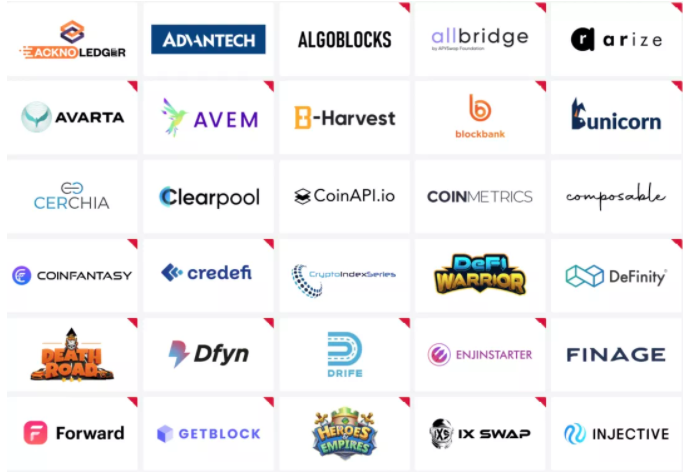
Currently, SupraOracles has over 80 partners spanning various DeFi, GameFi, and NFT projects.
The Team and Their Story
Had it not appeared on UC Berkeley's 2021 incubator accelerator program list, I might never have discovered it—and it turns out this could be considered a “long-running project.”
According to Joshua D. Tobkin, co-founder and CEO of SupraOracles, in 2018 the team conducted blockchain-related research at Unity Chain’s crypto R&D lab shortly after formation—right during the blockchain winter.
Yet they never lost sight of their original goal—to scale smart contracts and oracles.
In 2017, the team established the Entropy Foundation headquartered in Switzerland, with Supra Oracles as its flagship initiative. The team comprises professionals with deep expertise in cryptography, enterprise integration, IoT solutions, DeFi, randomness research, and oracle research.
Following the winter, in 2019, Joshua was invited by Walmart China to attend a food safety challenge in Shenzhen. They proposed an uninterrupted cold-chain logistics solution from farm to table, using smart QR codes, IoT sensors, and blockchain to track data and enable digital payments.
Through this experience, the team deepened their understanding of connecting real-world data to blockchains, and began exploring alternative Layer 1 consensus algorithms—eventually formulating and applying their novel approach in the oracle space.
Overall, from initial concept to core team formation, research breakthroughs, implementation, application of MHL, establishment of the Entropy Foundation, Supra Labs, Inc. SaaS, and Unity Venture Studio—the project has now been running for five years.
Joshua D. Tobkin mentioned in a past AMA that they received significant support from Berkeley Blockchain Xcelerator and Mastercard’s Start Path program in token economics design, legal structuring, investor outreach, and cross-project collaboration. “We applied years ago but weren’t accepted. But persistence, growth, and continuous improvement matter,” he added.
After thousands of hours of R&D and simulation, the project now boasts over 80 partners.
I recall a story Joshua shared during an AMA: during the crypto winter, SupraOracles received little attention, yet the team never considered giving up. They even turned down several offers from investors willing to invest millions of dollars in tokens in exchange for large equity stakes—because they feared the project would be ruined.
We often say investing is a victory of values—but entrepreneurship even more so. Most chase trends; showing support for slow, patient infrastructure-building teams is itself a form of “charity.” Persistence is hard, but worth encouraging.
Just as their website slogan says: “We didn’t invent blockchain, but we’re making it better.”
TechFlow is a community-driven platform committed to delivering valuable insights and thoughtful perspectives.
Community:
Official WeChat Account: TechFlow
Telegram: https://t.me/TechFlowPost
Twitter: TechFlowPost
To join our WeChat group, add assistant WeChat: TechFlow01
Join TechFlow official community to stay tuned
Telegram:https://t.me/TechFlowDaily
X (Twitter):https://x.com/TechFlowPost
X (Twitter) EN:https://x.com/BlockFlow_News