









2021 Year in Review: Ten Major Events in the Crypto World
TechFlow Selected TechFlow Selected
2021 Year in Review: Ten Major Events in the Crypto World
Growing interest in digital assets drove the asset class into the spotlight in 2021, leading to soaring market caps for Bitcoin, Ethereum, and Dogecoin.
 Navigating Web3 tides with focused insights
Author: Monolith
Translation: TechFlow friends
We’re approaching year-end, arguably the busiest time yet. Growing public interest in digital assets made this category especially prominent in 2021, driving market caps for Bitcoin, Ethereum, and Dogecoin to new highs. Beyond rising prices, significant developments occurred across multiple domains, accelerating progress and revealing pathways through which the world may begin adopting crypto technology in the coming years. 2021 was pivotal for us as we shifted focus toward launching a new product designed to bring crypto into mainstream use. While we haven’t yet reached our goal of one billion users, our technology has crossed the chasm—no longer confined to niche applications. Here are ten major crypto events from 2021:
Beeple’s $69 Million NFT Sale

In 2020, DeFi exploded onto the scene with yield farming, but in 2021, attention turned to another emerging sector: NFTs. Non-fungible tokens began gaining traction early in the year, attracting digital artists, musicians, and celebrities eager to mint their own digital collectibles on the blockchain. Superstars like Grimes, Eminem, and The Weeknd released works in 2021. But it was digital artist Beeple who dominated headlines in March with a landmark sale.
Beeple, real name Mike Winkelmann, sold an NFT titled “Everydays: The First 5,000 Days” at Christie’s, one of the world’s most prestigious auction houses. The piece compiled 5,000 individual artworks created over 5,000 consecutive days. It sold for $69.3 million, shaking the art world. This price made Beeple the third most valuable living artist ever sold at auction. As the world struggled to grasp the value proposition behind tokenized “JPEGs,” NFTs entered the mainstream consciousness.
Coinbase Listed on Nasdaq
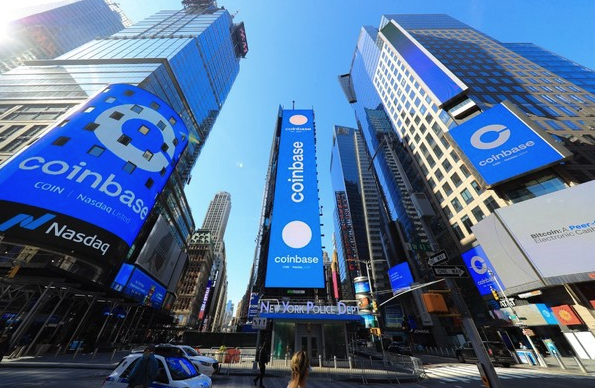
In Q1, news about Coinbase preparing for listing flooded headlines, coinciding with Bitcoin, Ethereum, and other assets rebounding to record highs. The leading exchange then announced it had filed Form S-1 with the SEC to prepare for going public. In April, Coinbase confirmed it would list on Nasdaq via a direct listing rather than a traditional IPO. Many speculated this event could push Bitcoin to new all-time highs. On its first day of trading, Coinbase reached a valuation of $100 billion—an industry watershed moment. While the listing signaled growing institutional acceptance of digital assets, it didn’t immediately translate into sustained momentum for the broader crypto market. After peaking at $64,000, Bitcoin plunged post-listing and only barely reclaimed new highs five months later.
China’s Crackdown
Over the past few years, China maintained tight control over cryptocurrency. While earlier reports suggested possible bans on Bitcoin and other digital assets, in 2021, China officially outlawed them. The country imposed strict mining bans in its three major Bitcoin mining hubs: Sichuan, Xinjiang, and Inner Mongolia. This forced many miners to relocate overseas—to places like Kazakhstan and Texas.
While China’s crackdown negatively impacted the industry and contributed to the May market crash, some see long-term benefits. Until this year, Bitcoin mining was heavily concentrated in China, so this shift may ultimately strengthen network decentralization. Initially, Bitcoin’s hashrate dropped sharply after the ban, but it later recovered as miners migrated to other regions.
Ethereum Launches EIP-1559
It was a monumental year for Ethereum—its value hit record highs, its DeFi ecosystem surged past $100 billion in total value locked (TVL), and NFTs flourished. Beyond market activity, the network rolled out a major upgrade: EIP-1559.
Launched in August as part of the London hard fork, EIP-1559 introduced a fee-burning mechanism. Instead of requiring users to bid for block inclusion, it set a base fee to make gas prices more predictable. The base fee is the minimum cost to include a transaction in a block; users can add tips to miners for faster processing. A key change under EIP-1559 is that users no longer pay the base fee—it gets burned. This creates deflationary pressure on ETH. Analysts estimate that once Ethereum fully transitions to Proof-of-Stake in 2022, ETH could become deflationary. To date, over 1.2 million ETH have been burned through this mechanism.
EIP-1559 was a landmark event for Ethereum, improving network functionality and fundamentally reshaping ETH’s economic model. It also marked the last major upgrade before the planned transition from Proof-of-Work to Proof-of-Stake, expected in early next year.
NFT Summer

Beeple’s high-profile sale early in the year kept the NFT space in the spotlight, drawing in a wave of new users. Early collections like CryptoPunks saw values skyrocket, reaching floor prices above $500,000 at their peak. Rising interest gave rise to what crypto enthusiasts dubbed “NFT summer.” Auction houses Christie’s and Sotheby’s began featuring digital artists such as FEWOCiOUS, XCOPY, and Pak, whose works fetched coveted sums backed by wealthy crypto art collectors. Generative art gained massive popularity on the Art Blocks platform. However, the most notable trend this year was the emergence of avatar-based projects inspired by CryptoPunks.
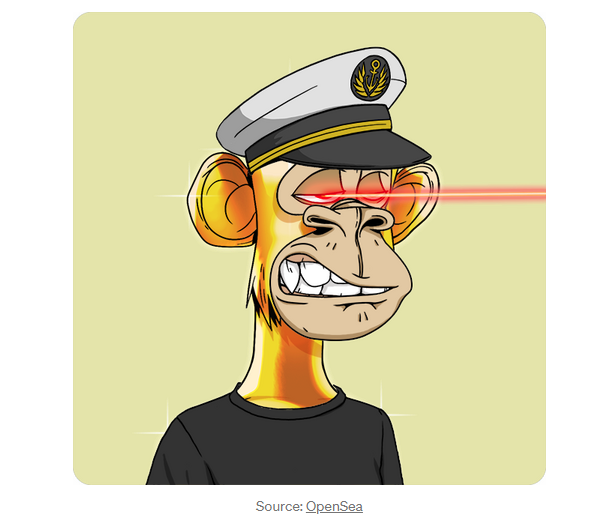
The NFT space saw an explosion of algorithmically generated character sets—often animals or humanoid figures—featuring traits denoting varying degrees of rarity. While other chains like Solana also expanded their NFT ecosystems, most collections were still minted on Ethereum. Crypto enthusiasts adopted these avatars as profile pictures on social media, and the most successful ones evolved into vibrant communities. Notable collections beyond CryptoPunks included Bored Ape Yacht Club, Cool Cats, and World of Women. During NFT summer, Visa made headlines by purchasing a CryptoPunk for $150,000, while archival collections like EtherRocks gained renewed attention—one ultra-rare EtherRock now has a floor price exceeding $2 million. Although trading volume and asset prices cooled afterward, NFTs have firmly established themselves in the digital economy. Many exchanges launched or announced plans to launch their own NFT marketplaces, potentially ushering in a new wave of user adoption.
The Layer 1 Boom
In 2021, Ethereum usage continued growing, with unique addresses surpassing 177 million. Meanwhile, the network processed over one million transactions per day throughout the year. While increased adoption is positive, surging demand for block space pushed gas fees to record highs. Combined with rising ETH prices, network usage became prohibitively expensive for many users.
Although Ethereum is developing multiple scalability solutions, high gas fees helped fuel the growth of alternative Layer 1 networks. EVM-compatible blockchains like Avalanche and Fantom saw rapid expansion of their DeFi ecosystems. Polygon, a Layer 2 scaling solution for Ethereum, successfully attracted many yield farmers as top applications deployed their protocols on its network. Another standout in the Layer 1 surge was Solana, whose DeFi and NFT ecosystems grew dramatically over the past year. Most major Layer 1 chains now offer bridges to Ethereum, signaling a move toward greater cross-chain interoperability.
Ethereum Layer 2 Begins to Scale
Ethereum aims to solve the so-called “blockchain trilemma” of security, scalability, and decentralization. Full scalability will come with Ethereum 2.0, which includes sharding the network into 64 new shard chains. In the interim, Layer 2 solutions are being developed to scale the network. Layer 2 refers to frameworks built atop the base chain to enhance throughput and reduce costs. We’ve extensively researched Layer 2 for our own product, but current solutions remain unsuitable due to the high cost and long withdrawal times when moving funds back to the mainnet.
Two primary types of Layer 2 solutions exist: Optimistic Rollups and ZK-Rollups. Optimistic Rollups bundle transactions as calldata and post them to Ethereum mainnet, significantly lowering fees and increasing speed—but withdrawals take a long time. ZK-Rollups use ZK-SNARKs to validate transactions off-chain and submit proofs to the main chain. In 2021, Optimistic Rollup projects Optimism and Arbitrum made major strides. Arbitrum hosts over $2 billion in TVL across various DeFi apps, while Optimism is integrating with several leading Ethereum projects. ZK-Rollup teams like StarkWare, zkSync, and Loopring are also advancing rapidly—StarkWare went live on mainnet in November and already powers platforms like dYdX and Sorare.
Layer 2 is a critical component of Ethereum’s scaling roadmap, and adoption is accelerating fast. With Ethereum usage continuing to grow, Layer 2 activity is likely to increase further in 2022 and beyond.
El Salvador Adopts Bitcoin as Legal Tender
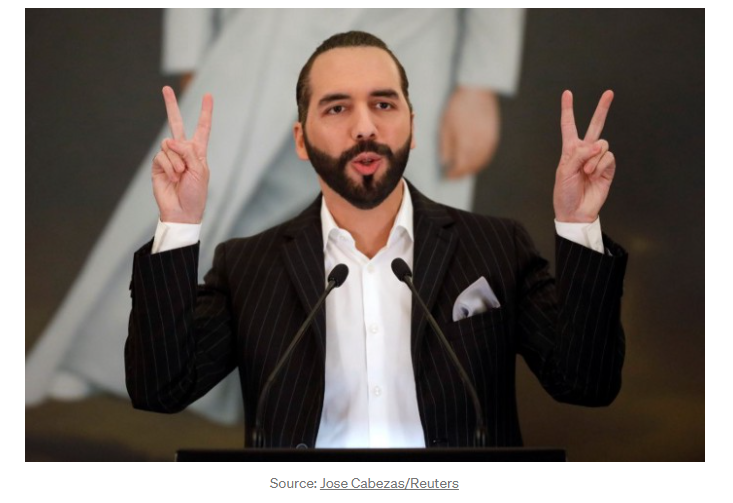
One of the biggest and most surprising crypto events of the year: In June, El Salvador President Nayib Bukele announced during Bitcoin Miami 2021 his intention to introduce legislation making Bitcoin legal tender. Bukele said he hoped Bitcoin would create jobs and “improve the lives and futures of millions.”
The historic bill passed, and in September, the country officially launched Bitcoin alongside the U.S. dollar as legal currency. Bukele rolled out a government-backed digital wallet and distributed $30 in Bitcoin to citizens. He also began mining Bitcoin using geothermal energy from volcanoes. However, adoption hasn’t been smooth. International organizations like the IMF warned of risks, and protests erupted nationwide. Ethereum co-founder Vitalik Buterin criticized the move, calling it “reckless” and contrary to the core crypto ideal of freedom, particularly because businesses are required to accept Bitcoin.
While the long-term impact of El Salvador’s Bitcoin experiment remains unclear, it signals growing openness to crypto assets entering the mainstream. Despite controversy, political support for Bitcoin grew in 2021, and it may only be a matter of time before other cryptocurrencies gain similar traction among policymakers.
Dogecoin Mania
Growing interest in crypto led to several surprises this year. While Bitcoin and Ethereum rose in value, they were overshadowed by Dogecoin, a meme-inspired cryptocurrency. Alongside Shiba Inu, dog-themed tokens surged in 2021, capturing retail investors’ attention. Elon Musk’s vocal endorsement brought Dogecoin into the spotlight, and mid-year saw a flood of copycat tokens. Both Dogecoin and Shiba Inu broke into the top ten largest cryptocurrencies by market cap—unexpected for those anticipating growth solely within DeFi niches. Dogecoin stands out due to its strong meme culture and uncapped supply, resulting in low per-token prices. One DOGE trades around $0.22, while one SHIB is worth less than a cent. Though fundamentals remain unclear, low price points made these tokens attractive to newcomers, helping them thrive in the expanding crypto landscape.
Facebook Rebrands as Meta
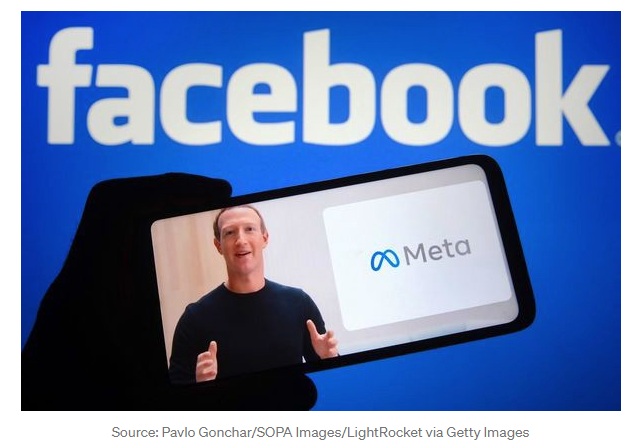
At year-end, a major event shook the crypto world: Mark Zuckerberg announced in a video that Facebook would rebrand as Meta, as part of its mission to “bring the metaverse to life.” The metaverse refers to the next evolution of the internet, where users interact in immersive virtual environments combining gaming, augmented reality, and social experiences. Cryptocurrencies are expected to play a foundational role. NFTs are closely tied to the metaverse, representing avatars, in-game items, digital art, and music. Users could earn crypto tokens while using apps or interacting with others. Facebook’s rebranding is significant—it signals a tech giant’s recognition of where the internet is headed. In short, Web3 is inevitable, and Zuckerberg intends to lead it.
Zuckerberg also revealed plans to integrate NFTs into Facebook’s platforms. The company isn’t alone: Twitter, Nike, Coca-Cola, and others have taken steps to adopt NFTs in various ways. Discord announced plans to support Ethereum in November but paused after community backlash against perceived promotion of NFTs. This highlights that while the metaverse era is approaching, widespread acceptance of NFTs’ potential will take time.
TechFlow is a deep-content platform focused on alternative asset investment. Follow our official account for more insights, or add WeChat TechFlow01 to join the TechFlow community and participate in discussions.

Join TechFlow official community to stay tuned
Telegram:https://t.me/TechFlowDaily
X (Twitter):https://x.com/TechFlowPost
X (Twitter) EN:https://x.com/BlockFlow_News






