








Beginner's Guide: How to Participate in Fair Launch Auctions on Copper
TechFlow Selected TechFlow Selected
Beginner's Guide: How to Participate in Fair Launch Auctions on Copper
The purpose of using the LBP mechanism is to maintain price fairness by allowing the market to determine the token valuation.
 Navigating Web3 tides with focused insights
By MIM, TechFlow
Note: Recently, many people have been asking how to participate in token auctions on Copper, what the LBP Dutch auction mechanism is, and why they incurred losses after participation. We've referenced content from GOGOcoin's blog post and un.Block's weekly blockchain report to compile this step-by-step guide.
On December 8 at 2:00 AM Beijing time, open-source DeFi protocol GOGOcoin will launch its auction on Copper’s Polygon network.
GOGOcoin is building the most user-friendly open-source DeFi protocol for asset management and savings, and will be the first DeFi protocol to offer on-chain segregated funds.
What is a Fair Launch Auction (FLA)?
FLA gives everyone an equal opportunity to participate. It operates based on a mechanism called Liquidity Bootstrapping Pool (LBP).
LBP dynamically adjusts the weight ratio of tokens within the pool (e.g., changing A:B from 1:99 to 50:50), allowing project issuers to customize pool weights. These weight changes can follow linear or exponential curves, thereby regulating the token’s value. Using LBP for token distribution can somewhat reduce speculative trading behavior, though it cannot eliminate it entirely.
The goal of using LBP is to maintain price fairness by letting the market determine the token’s valuation.
Below, we’ll explain how it works using previous examples such as GuildFi’s LBP auction on Copper and other similar cases.
LBP Initial Settings
By reviewing public information about GuildFi and details on Cooper Launch, we can gather some basic facts about the GF token LBP:
Auction duration: 3 days
Initial price: $1
Ending price: $0.05
Initial weight: GF 95% : USDC 5%
Final weight: GF 50% : USDC 50%
We see that the initial price is $1, meaning the first buyer pays $1 per token when the auction starts. The ending price is $0.05, but this does not mean the token will be worth $0.05 after three days.
The $0.05 price assumes zero trading activity throughout the auction. As weights adjust over time, more GF tokens are gradually introduced into the LBP, causing prices to smoothly decline along a predefined curve.
During the 3-day auction, any purchase of GF tokens will push the price up, while selling will cause it to drop. Therefore, the final closing price depends entirely on actual trading activity during the auction period.
Typically, LBP auctions may follow several possible price trajectories:
No one buys at all
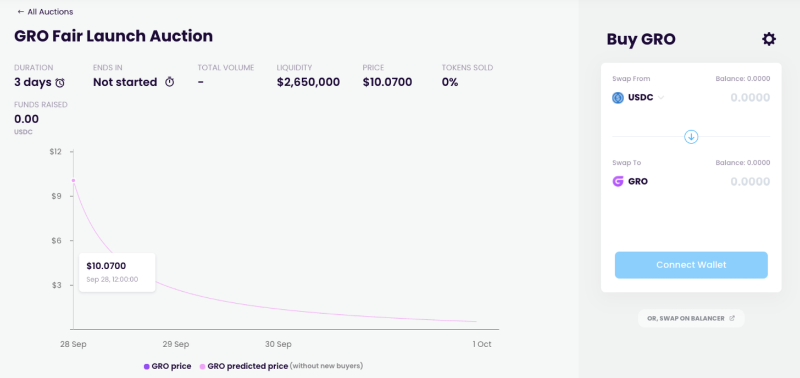
The image above shows a screenshot before the GRO LBP auction began. As shown, the price trend was steadily declining prior to the auction start. If no trades occur during the entire auction period, the price will slowly fall along the pink curve until reaching the preset end price at conclusion.
Early small purchases, but limited
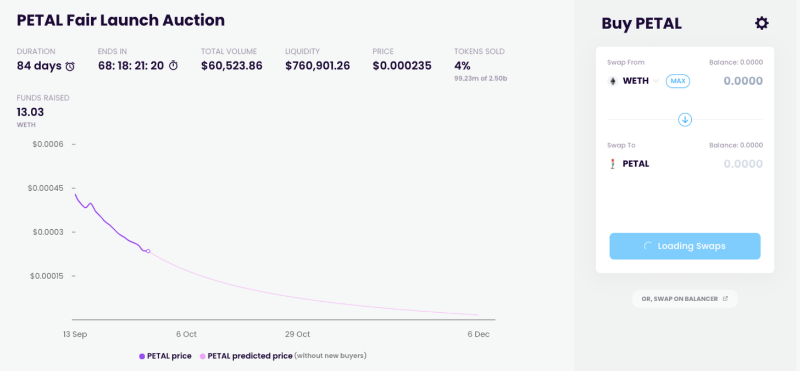
The image above shows a PETAL LBP auction snapshot. After the auction started, there were minor purchases, causing slight upward price fluctuations. However, due to lack of sustained buying interest afterward, the price resumed its gradual downward trajectory.
Peak at opening — buying too early
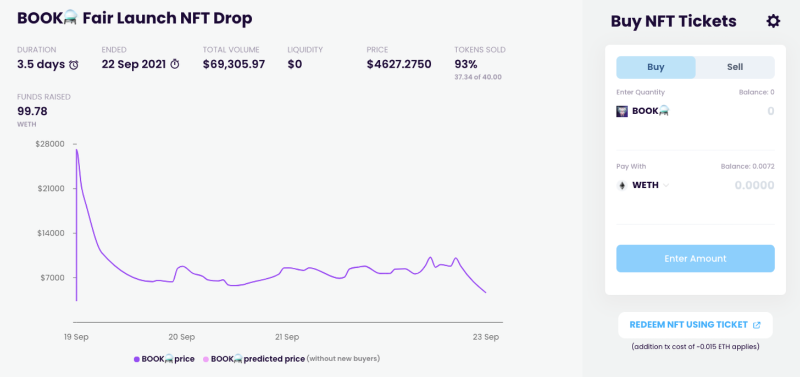
The image above shows the BOOK LBP auction. Immediately after launch, heavy buying caused the price to spike sharply. However, without continued buy pressure, the price slowly declined. Later, consistent purchasing activity supported the token price, accompanied by sell orders, resulting in ongoing price volatility.
Those who bought at inflated prices early in the auction were essentially left "hanging at the top."
Quiet start, followed by late-stage FOMO frenzy
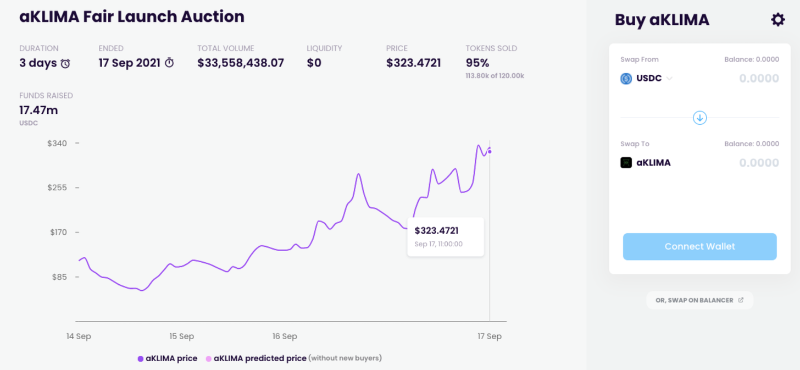
The image above illustrates an extreme case: the aKLIMA token remained obscure and steadily declined at the beginning of the auction, but suddenly saw massive buying at a certain point, followed by significant selling and rebuying. This deviated completely from LBP’s original design of gradual price decline toward a balanced equilibrium. Well, the market always holds infinite possibilities.
Timing & Strategy for Purchasing
Given that LBP weights change over time with an inherent downward pricing trend, maintaining rationality throughout the auction is crucial. If you think the price is too high, you can patiently wait — the built-in downward trend means the price may eventually reach your desired level. Some users prefer dollar-cost averaging by making multiple smaller purchases over time, which is also a valid strategy.
How to Participate in a Copper Auction?
Using the upcoming Gogocoin auction as an example, here’s how to participate:
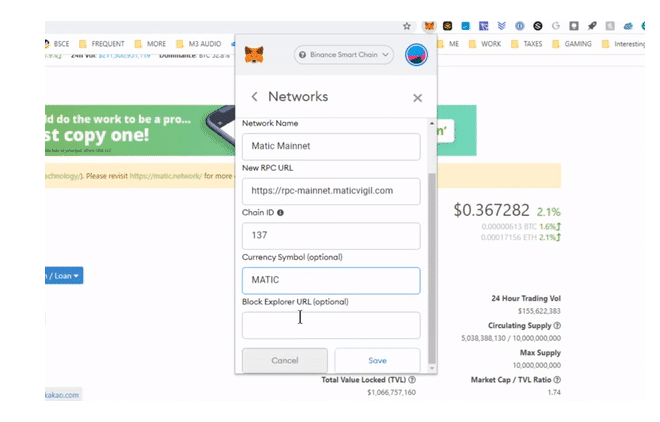
Install MetaMask wallet as a browser extension — you should already have this. Since Gogocoin is launching on Polygon (Matic), you need to add the Polygon network to your wallet.
Acquire USDC or MATIC on Polygon
You'll need USDC or MATIC tokens to participate in the fair launch auction.
There are several ways to get USDC or MATIC on Polygon:
1. Use Polygon Network's Direct On-Ramp
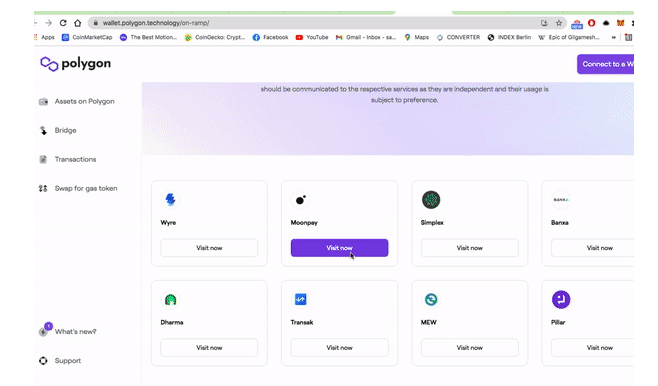
Once you access the link shared above, you’ll see various inbound services available on the interface. These on-ramp services allow users to acquire USDC and MATIC directly into their MetaMask wallets via bank transfer or credit card. You can choose any available option to obtain the required tokens.
( https://wallet.polygon.technology/on-ramp/)
2. Use Centralized Exchanges (CEX)
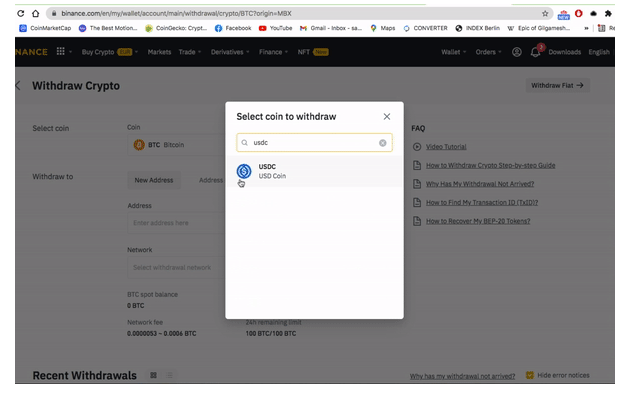
Major centralized exchanges such as Crypto.com, Binance, KuCoin, and OKX allow direct withdrawals to your MetaMask wallet on Polygon. Make sure to check the withdrawal instructions carefully on your chosen exchange.
3. Buy ETH using Apple Pay or Credit Card
In MetaMask, after setting up your account, click “Buy” to be directed to trusted partners like Wyre or Transak.
After purchasing some ETH, proceed to Step 4 to bridge it to Polygon. If Wyre or Transak isn't supported in your country, use the official guide to find local service providers. Then, transfer the cryptocurrency to your MetaMask wallet.
4. Bridge from Ethereum to Polygon
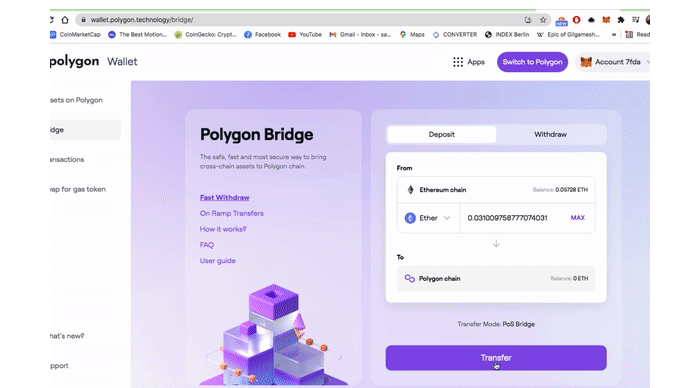
Users familiar with the Ethereum blockchain and holding USDC can use the Polygon Bridge to transfer USDC to MetaMask (Polygon).
I'm ready — how do I join the Fair Launch Auction on Copper?

1. At 6:00 PM UTC/GMT on December 7, 2021 (2:00 AM Beijing time on December 8), go to www.gogocoin.io and click the "Buy Now" button, which will redirect you to the GOGO auction page on the Copper Launch platform.
2. Connect your MetaMask wallet by clicking the blue "Connect Wallet" tab in the top right corner of the Copper Launch website. Ensure your wallet is connected to the Polygon network.
3. Choose the price at which you believe GOGO is fairly valued. As long as the price seems reasonable to you, use the "Swap" menu on the right to enter the amount you wish to exchange, then submit. You will be prompted to confirm the transaction in your wallet.
4. Submit — please note, this action is irreversible.
Good luck!
References:
https://gogocoin.medium.com/how-to-participate-in-the-gogo-token-fair-launch-auction-8f693b32af4d
https://unblock256.substack.com/p/unblock-28uniswap-v3-lbp-?justPublished=true
Join TechFlow official community to stay tuned
Telegram:https://t.me/TechFlowDaily
X (Twitter):https://x.com/TechFlowPost
X (Twitter) EN:https://x.com/BlockFlow_News






