








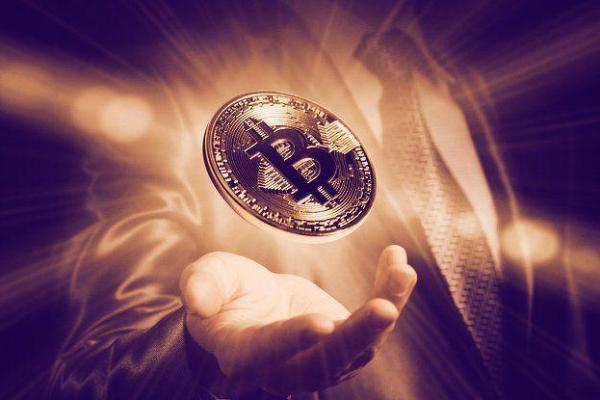
Feng Lun: On Bitcoin, my view is a bit different from Munger's
TechFlow Selected TechFlow Selected
Feng Lun: On Bitcoin, my view is a bit different from Munger's
As regulations and laws improve, those who violate them should be held accountable. But we shouldn't dismiss the inherent rationality and future potential of Bitcoin just because some people speculate with it or use it for other purposes.
 Navigating Web3 tides with focused insights
Q: Uncle Feng, in recent years I've heard many people talk about Bitcoin. Some say it's a "decentralized currency" that represents the future; some view it as an investment vehicle; others see it as purely speculative; and there are those with very negative views, like Munger. At this year's Berkshire Hathaway annual meeting, he said: 'Of course I hate the success of Bitcoin. I don't welcome a currency so useful to kidnappers and extortionists. I don't like seeing billions of extra dollars go to someone who simply invented a new financial product out of thin air. I should probably humbly say that I think the whole damn development is loathsome and contrary to the interests of civilization.' I'm really curious—what do you think about Bitcoin?
Feng: On this topic, my view differs somewhat from Munger's. I'm more optimistic, and I'd like to discuss it from the perspective of innovation.
Many innovative things, when they first appear, seem like monsters to so-called normal people. They resist them and point out all their flaws.
But interestingly, in the end, it's often these new things that defeat the old and eventually become dominant.
Take a very simple example: online dating. When online dating first emerged, there was a lot of controversy. Many parents thought it was practically equivalent to流氓behavior (hooliganism). They believed that forming relationships over the internet—without ever meeting in person—would inevitably lead to deception and crime.
But today, online socializing is completely ordinary. Many young people first meet online, then have video chats, eventually meet offline, and start dating. Lots of people now casually exchange a few words online with someone they've never met before. Society has already accepted this reality.
In fact, over the past 40 years, many things have followed this pattern. Something new appears, seems strange at first, and then gradually becomes accepted.
Stocks are the same. In Western market economies, stocks may seem commonplace. But here in China, during the early stages of reform and opening-up in the 1980s, research on stocks only began slowly. I remember when people first started studying stocks, even the idea of "shareholding systems" was heavily criticized—let alone stock trading.
Then around 1992, regulations for pilot joint-stock companies were introduced. Not only did joint-stock companies emerge, but so did stock exchanges and stock trading.
When the stock market first opened, some investors, if they lost money, would even threaten to smash up the exchange. Today, people accept market fluctuations—gains and losses—as normal.
I think Bitcoin is similar. It wasn't noticed at first, then suddenly everyone became aware of it, and debates erupted.
Actually, discussing Bitcoin requires understanding blockchain. Advances in blockchain technology have enabled many financial applications and led to numerous cryptocurrencies similar to Bitcoin.
Here’s how I see it: If humanity is inevitably moving toward a digital society, then finance must also become digital. And digital finance will necessarily rely on fintech. Blockchain, artificial intelligence—these technologies will definitely be used. In this process, the form of money will first move away from paper, becoming paperless transactions, and ultimately fully digital transactions.
As a unique and new form of currency, digital currencies have certain advantages over traditional paper money—such as greater security, better privacy, increased fairness, easier record-keeping, and improved traceability.
Because of these advantages, digital currencies will eventually replace traditional paper money. That’s why I’m relatively optimistic about this trend.
Of course, as transaction frequency and usage scope grow, related regulations will inevitably increase and become more standardized.
Just like how stock markets evolved. This is something the entire world will eventually have to face.
As for whether people use it for speculation, I don’t think that matters much. Why? People can drink alcohol to excess and even die from it—but we can’t ban drinking just because some people die from alcohol abuse. Similarly, some people commit marriage fraud, but we can’t abolish marriage because of that. Those who commit fraud should be arrested—that’s all.
Bitcoin and other digital currencies are the same. As systems and laws improve, those who break the rules should be punished. But we shouldn’t dismiss the inherent rationality and future potential of these innovations just because some people misuse them or speculate. We need to make that distinction clear.
02
Q: Speaking of innovation, what do you think is important for enterprises—or entrepreneurs?
Feng: I think innovation stems partly from entrepreneurial spirit within companies, and partly from external institutional factors—such as venture capital mechanisms, intellectual property protection, ease of capital flow, and openness of capital markets.
I believe China isn’t lacking in entrepreneurial spirit today, but other areas could still be improved—like fostering a market culture that “allows people to say the wrong thing or make mistakes.”
Isn’t taking the wrong path, spending money foolishly, or falling in love with the wrong person all normal parts of life? If you were born an 80-year-old man who never does anything wrong, what would be the point of living? The same goes for society—we must allow mistakes. Without making mistakes, how can we innovate?
Last year, a child was reprimanded for imitating a teacher. Why shouldn’t a kid be allowed to imitate a teacher? Maybe the next Zhao Benshan will come from such imitation. If children aren’t allowed to imitate, they may behave well, but growing up always playing it safe—where’s the creativity in that?
Back to business: Why has venture capital declined recently while private equity investment has increased? Venture capital provides essential support when a company is struggling—like giving charcoal in snow. Private equity, by contrast, adds flowers to brocade—it comes after success is already evident.
Fewer people are starting risky ventures today than before, and one reason is that our current error-tolerance mechanisms are still insufficient, and society doesn’t adequately tolerate failure.
Why did Musk, Bill Gates, and Jobs all emerge from Silicon Valley? It’s not just about money. It’s the entrepreneurial spirit, combined with institutional environments that foster innovation—angel investment systems, capital market frameworks, a market culture that tolerates mistakes and encourages experimentation, along with independent personalities and scientific thinking.
In recent years, China’s business environment has improved significantly, but this is actually a double-edged sword for enterprises. While the growth environment seems better, comfort can actually hinder creativity. If you're always well-fed and sheltered, you lack urgency. But if you’re hungry and forced to go out and find food, your ability to innovate might actually be stronger.
Join TechFlow official community to stay tuned
Telegram:https://t.me/TechFlowDaily
X (Twitter):https://x.com/TechFlowPost
X (Twitter) EN:https://x.com/BlockFlow_News






