Industry Overture | Highlights from the 3rd World Digital Asset Summit
TechFlow Selected TechFlow Selected
Industry Overture | Highlights from the 3rd World Digital Asset Summit
How do infrastructure projects view the current stage of DeFi development—does it still hold potential, or has it hit a bottleneck? What are the possible breakthroughs for DeFi market growth? Will the storage sector produce another Filecoin?
 Navigating Web3 tides with focused insights
In 2021, industries such as DeFi, NFTs, infrastructure, computing power, and storage began entering a new development cycle, presenting numerous emerging opportunities. How do infrastructure-focused projects view the current stage of DeFi's evolution? Is it still full of potential, or has it hit a bottleneck? Where might DeFi markets find new breakthroughs for value appreciation? Could the storage sector produce another Filecoin?
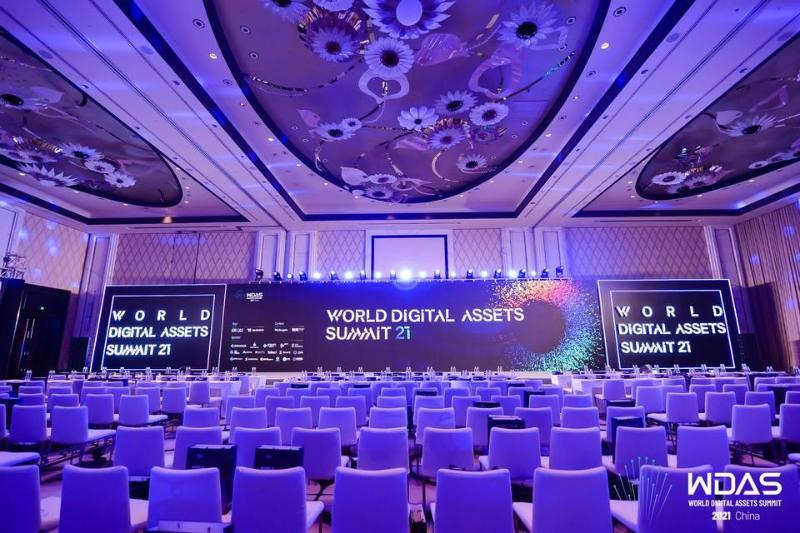
This article records core content from the "Third World Digital Assets Summit" held on May 19–20.
The summit featured four keynote speeches and five panel discussions. Over forty guests—including Yaoqi Jia, Head of Parity Asia; Shuoji Zhou, Founder of FBG; Sandy Liang, CMO of RAI Finance; James Qu, CTO of PlatON; Ciara Sun, Huobi Global Vice President and Listing Director; Athena Yu, Executive Director of Binance NFT and Binance Charity—delved into in-depth discussions on topics including Polkadot, Filecoin, Web3.0, DeFi, NFTs, computing power and storage, public blockchains, and industry investments. The event was gold-sponsored by FBG Capital and Block72, and co-hosted by ChainNews and Winkrypto.
Below are highlights from the event, edited for clarity.
Keynote | Ultimate Capital Efficiency in DeFi
Speaker: 0xAlpha, Founder of Deri Protocol
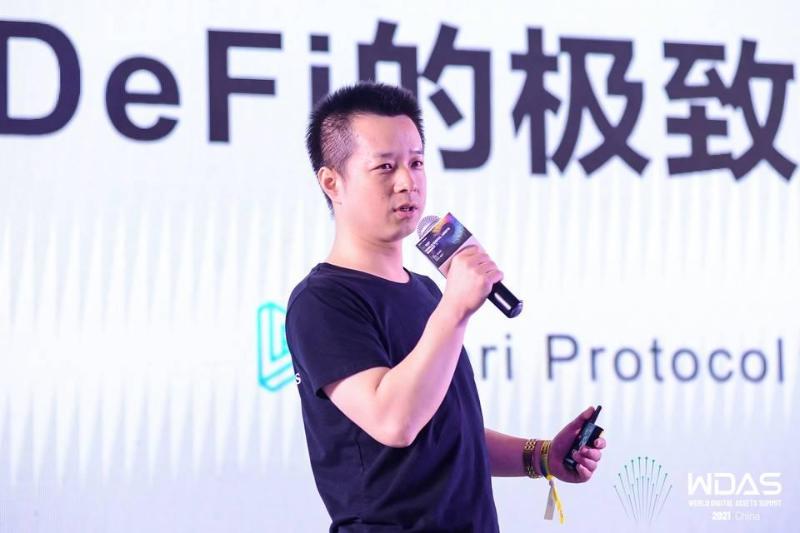
During his speech titled "Ultimate Capital Efficiency in DeFi," 0xAlpha stated that DeFi is undergoing two historical trends: one being the shift in trading paradigms—from traditional finance to CeFi and then to DeFi—and the other being the evolution of asset conversion efficiency.
The current bottleneck in capital efficiency lies in asset conversion. In the pre-DeFi era, nearly all asset conversions relied on cash-like assets (M1) as intermediaries, creating friction between different assets. Forcing leverage under low conversion efficiency easily triggers liquidity crises. DeFi, however, offers extreme efficiency—two tokens on the same chain are just one trade apart, and soon, even tokens across different chains will be only one transaction away.
Finally, 0xAlpha introduced Deri Protocol, describing it as a BitMEX-style Uniswap, with its V1 version offering a liquidity pool-based DeFi derivatives solution, and V2 aiming to surpass CeFi in capital efficiency. Deri’s liquidity comes from pools provided by LPs, accepting non-cash tokens as liquidity—revolutionizing liquidity for non-cash assets. In the future, Deri plans to aggregate multi-chain assets as liquidity sources.
Keynote | Understanding Polkadot Parachains
Speaker: Yaoqi Jia, Head of Parity Asia
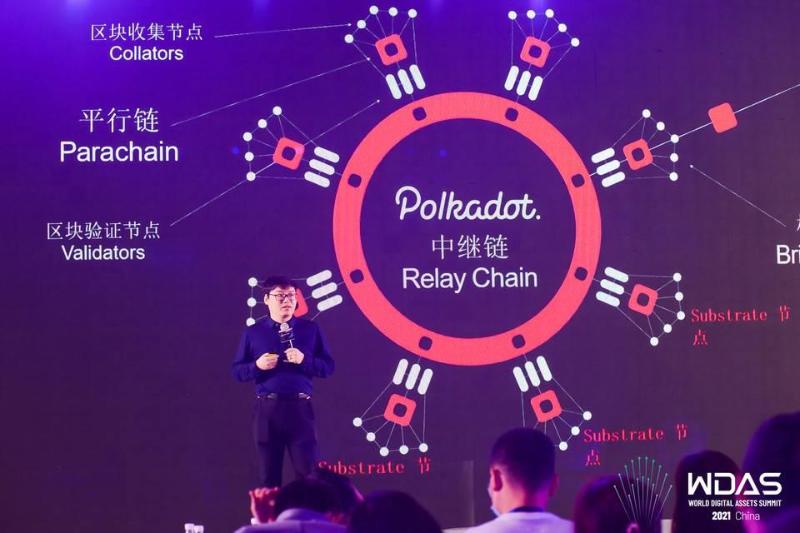
In his talk titled "Understanding Polkadot Parachains," Dr. Jia noted that with continuous improvements in high-quality components, development today is far more convenient than in 2018. Public chains built on the Substrate framework support seamless upgrades without hard forks. Additionally, Polkadot enables easy submission of Web2.0-related data directly onto the chain via off-chain workers. Compared to Ethereum’s reliance on oracles for off-chain data, off-chain workers avoid update issues. Polkadot also supports seamless migration for Ethereum and EVM-compatible projects. Currently, the Polkadot ecosystem hosts over 300 projects.
Panel Discussion | New Drivers and Engines for DeFi
Moderator: Hitters, Founder of Nebulas
Panelists:
Philip, Head of Chainlink China
Iris, Head of Business & Strategy, Asia at Edge and Node
Myra, China Community Advisor, Oasis Network
0xAlpha, Founder of Deri Protocol
Amo, CTO of Oin Finance
Tan Yuan, Technical Lead, Poly Network
Ticky Chen, Marketing Lead, Kava
Dr. Lin Huang, CTO of Suterusu
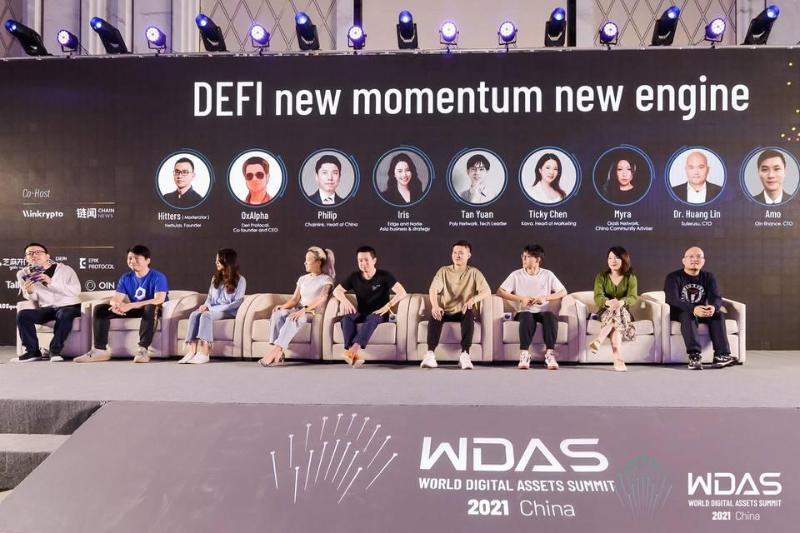
Hitters: From your respective perspectives—such as developer tooling or specific DeFi projects—please share your views on where DeFi came from and where it’s heading.
Philip: DeFi started with MakerDAO back in 2016 and has since evolved into a vast landscape of diverse projects. What does this indicate? Demand. And what kind of demand? Financial demand. The earliest protocols offered lending services, which gradually expanded into trading, automation, and other functionalities.
This demand will continue growing steadily, whether driven by applications or games. I believe that in the coming years, DeFi may displace some uncompetitive financial institutions. We project that DeFi could surpass $1 trillion by next year due to its competitive advantages—no intermediaries, no banks extracting fees—and borderless accessibility. Anyone with blockchain-based assets can grow or borrow against them. This is precisely why traditional banks, exchanges, and financial institutions are rushing into blockchain—they fear being replaced by DeFi.
Iris: Whether in bull or bear markets, DeFi’s development path consistently mirrors the credit expansion model of traditional finance.
Next, we’ll see more non-standard traditional financial assets being tokenized on-chain. On the financial services side, products like leverage, futures, and options will emerge to enhance market liquidity. We believe different underlying platforms and projects will arise to meet diverse market and financial use cases. That’s why we’re committed to supporting multi-chain ecosystems and empowering developers.
Myra: First, enhancing security through privacy protection is critical. Many wealthy individuals haven’t entered this space due to concerns about asset safety. Through the Oasis Network, enhanced security and privacy features can boost the overall market cap of DeFi products.
Second, DeFi’s programmability allows anyone who can code to build their own DeFi products.
Therefore, ensuring product security and user privacy is essential for expanding DeFi’s market value.
0xAlpha: Currently, DeFi is experiencing a phase of declining热度. I see this as a transitional moment—a shift from the first half to the second half of DeFi’s evolution. In the first half, DeFi successfully established foundational infrastructure like spot trading and lending. But these projects share one trait: they haven’t yet entered the “deep waters” of finance. To progress, we must deepen our engagement with risk.
We’re now transitioning toward a phase where DeFi fully embraces risk management—the core of traditional finance: “Dancing with risk.” This includes derivatives, structured financial products, and leveraged funds. But engaging deeply with risk is gradual—it should progress from simple to complex.
From this “deep water” perspective, the playing field remains wide open. I believe DeFi still has greater missions to fulfill. The second half of DeFi will unleash a wave of dazzling new projects—something truly exciting to anticipate.
Amo: DeFi has immense room to grow. First, consider the numbers: Ethereum has 58 million non-zero address accounts, but only 2.8 million DeFi users—about one-third. Clearly, there’s vast untapped potential. Second, protocol interaction fees remain high; once Layer 2 scales, better DeFi protocols will emerge. Third, current DeFi protocols lack strong composability. Future growth will require a robust infrastructure ecosystem enabling application proliferation—likely across multiple chains, with strong public chains like Polkadot providing foundational support while excellent DeFi protocols co-build the broader blockchain ecosystem.
Tan Yuan: If Layer 2 performance improves significantly, we’ll see substantial growth. Additionally, cross-Layer 1 asset transfers remain a key challenge to solve.
Ticky: The issue isn’t bringing blockchain to traditional finance, but bringing DeFi deeper into the blockchain world—self-expansion is needed. Vertical niches within DeFi offer many opportunities. While most DeFi activity centers on spot trading, there’s strong demand for derivatives like futures, options, and margin trading. Moreover, DeFi shows institutionalization trends. Users still trust brand-backed platforms, giving large institutions and financial platforms a major edge.
Lin Huang: Privacy protection is an emerging direction. Unlike traditional finance—which benefits from state-backed privacy safeguards—blockchain exposes all user data. This privacy gap is a major distinction between decentralized and traditional finance.
Keynote | Blockchain, AI, and The Matrix
Speaker: Eric Yao, Head of EpiK China
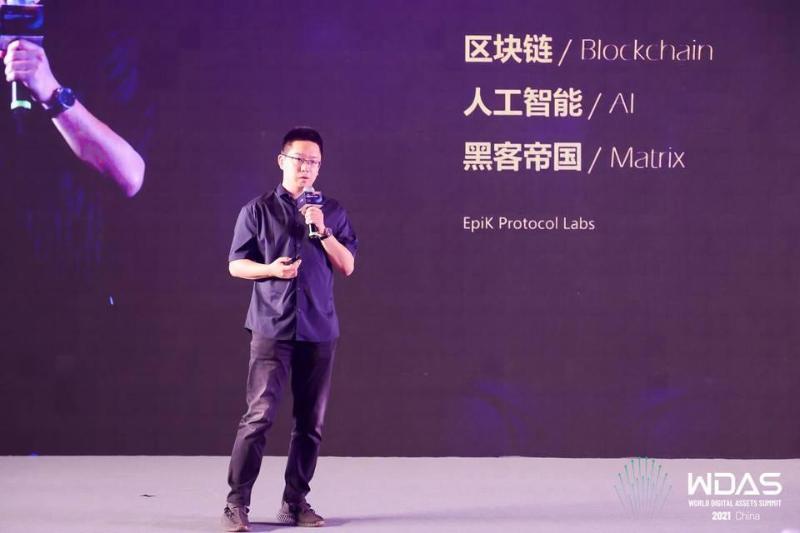
In his talk titled "Blockchain, AI, and The Matrix," Eric Yao noted that AI faces new challenges. As big data红利 fades, perception intelligence led by deep learning approaches its limits. AI urgently needs to advance from perception to cognitive intelligence. Machine intelligence relies on large-scale, structured background knowledge—enabled by knowledge graph technology. However, existing knowledge graphs face challenges: high construction costs and severe centralization. Blockchain can address these issues.
Eric explained that EpiK Protocol is a decentralized, collaborative, trustworthy knowledge graph platform composed of four roles: Domain Experts design graph structures and validate data sources; Bounty Hunters collect data through incentivized tasks; Knowledge Gateways act as data aggregators; and Knowledge Miners stake EPK tokens to store and mine data.
Panel Discussion | New Computing Power, New Storage
Moderator: Guijun Gao, FBG Filecoin Business Lead
Panelists:
Andy Tian, Co-founder, 1475
Aboat Lai, Founder,时空 Cloud
Roland Sun, Partner, Distributed Capital
Zhong Gengfa, Co-founder, Open Mining Pool
Zhao Qianjie, Chairman, 12ships Foundation
Eric Yao, Head of EpiK China
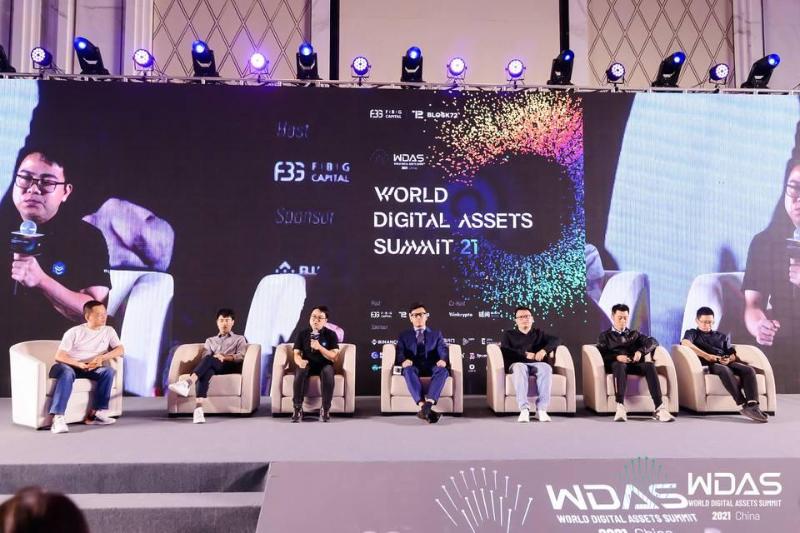
Guijun: What opportunities exist in the Filecoin space? What strategies have you deployed? Why bet heavily on Filecoin? What motivated EpiK’s choice to build within the Filecoin ecosystem?
Andy: We’re optimistic about the sector. Filecoin, both in economic design and real-world applications, can outperform previous cycles. The next big opportunity lies in retrieval. We’re discussing with the team the possibility of forming a dedicated retrieval committee, potentially launching in Q4 this year. Whether through basic mining, commercially viable data deployment, or upcoming retrieval mining, massive wealth awaits.
Lai: Unlike Bitcoin or Ethereum, Filecoin stores real data and aims to serve real industries, generating tangible value. Filecoin has vast future applications. Last year, we addressed liquidity by forming a miner alliance with top mining firms and investing in Filecoin lending—using DeFi to solve Filecoin liquidity. This year, we’ll focus on developing a Filecoin wallet.
Gengfa: I’m highly bullish on this sector—it’s sustainable long-term. Currently, Filecoin mining costs are high, with hardware-to-FIL质押 ratios around 1:7 or 1:8. But compared to Chia or Bitcoin/Ethereum, hardware costs are relatively low—making it a strategic choice.
Qianjie: From a mining enterprise perspective, part of our business focuses on POW, including self-developed chips with independent IP rights. We’ve progressed steadily. Yet, I believe blockchain foundations lie in diverse consensus mechanisms, so we maintain strong interest in new consensus models and confidence in experimenting with new technologies.
Roland: Personally, Filecoin resembles early Ethereum—it opens a new dimension. Filecoin mining involves delivering internet services, fundamentally different from early mining. Providing internet services is more demanding than securing chains—it requires constant, stable operations. You can’t afford to slack—that’s why mining is so tough. Additionally, entry barriers are extremely high—not just hardware, but computation and collateral costs. This excludes retail miners. During bull runs, this isn’t obvious, but in bear markets, it proves effective—large holders can’t easily exit.
Thus, Filecoin’s development path diverges clearly from earlier mining models. Its goal is to deliver genuinely valuable internet storage services. Many enterprises are already positioning themselves and exploring solutions, with initial results emerging. But like viewing Ethereum in 2015, it’s still very early.
Eric: Blockchain first reduces transaction costs between people. This feature optimizes large-scale, micro-collaborative scenarios. Data collection and labeling perfectly fit such human-driven, micro-collaboration settings. Knowledge graph data lacks high sensitivity—mostly common knowledge, not requiring personal information—making it suitable for on-chain storage. Also, useful knowledge is limited; total knowledge graph size is only ~10+ TB after years of work, ideal for small-compute miners to participate and utilize idle resources. Leveraging blockchain’s core mechanisms greatly reduces management overhead.
Panel Discussion | Intelligent Chains, Co-Creating the Future
Moderator: Andy Ma, Director, FBG One
Panelists:
John Wang, Neo Ecosystem Growth Lead
Wilson Wu, Avalanche APAC Lead
James Qu, CTO, PlatON
Chris, Solana China Lead
Amos, Near APAC Lead
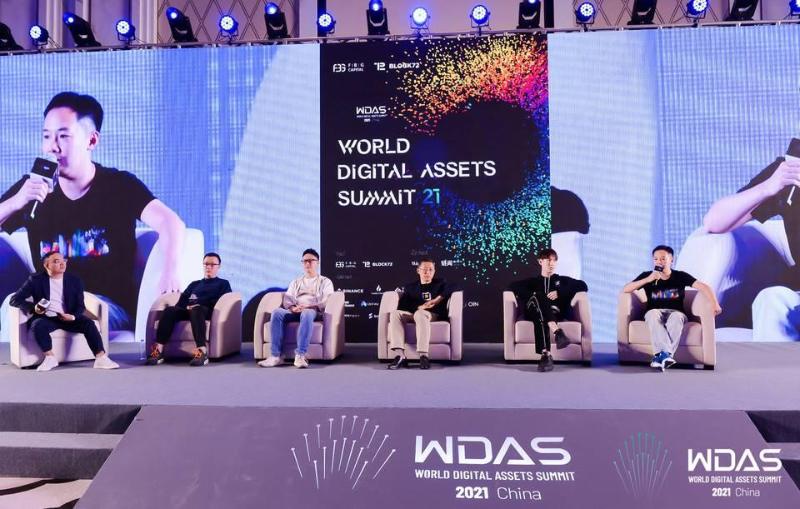
Andy: How do your respective public chains balance performance, cost, and decentralization? How do you navigate trade-offs based on market conditions and use cases?
John: From Neo’s perspective, balancing decentralization and performance, we prioritize network security above all. A secure network is paramount—Layer 2 solutions can address scalability later. Security and stability are the most critical aspects for any public chain.
Wilson: All three factors are vital. Initially, I didn’t grasp the importance of consensus. Today, I see traditional consensus like single-core chips, whereas ours resemble multi-core. In confirmation processes, traditional chains operate serially; we function in parallel—enabling much higher speed. But pursuing speed is like driving fast on a highway—if only one car runs, 100–200 km/h is fine, but can it handle 100 cars? When chip-level improvements occur, scalability improves too—this solves our second challenge.
James: The impossible triangle theory indeed proves you can't maximize all three. I believe security is paramount. Within that, we push speed as high as possible. Cost fluctuates dynamically based on community needs. If real value exists, cost can be higher—Ethereum is expensive, yet widely used. We hope our chain becomes similarly popular, then explore other methods—perhaps new Layer 2 concepts—to reduce costs. It’s a technical challenge we keep tackling.
Chris: We’ve solved part of the triangle—achieving high security. Beyond that, I’d add a fourth dimension: composability. When developers enter an ecosystem, they shouldn’t rebuild basic modules from scratch. They should Lego-like assemble advanced apps using existing ones—this saves developer costs. Solana is a single-chain network without Layer 2, offering developers a ready list: how to bridge from Ethereum. They simply reuse modules to build higher. Adding composability atop the impossible triangle is crucial.
Amos: People care less about this now—it’s all about ecosystems. Near currently focuses on two areas: superior user experience—even sacrificing some performance for it—and ecosystem interoperability. I envision a future with fewer chains but strong cross-chain connectivity. Our strategy is bridging other ecosystems with Near, enabling mutual liquidity.
Andy: Between technology and operations, which do you prioritize? For chains with minor tech breakthroughs but strong operations, what advantages do you hold?
John: Technology and operations should complement each other. Public chain development inherently involves trial and error. Fundamentally, operations attract users and projects, revealing technical gaps, which are then improved—leading to more users and further refinements. This iterative process is standard across industries, including internet and traditional sectors.
Wilson: Two factors are crucial for building ecosystems: projects/institutions and community. These elements reinforce each other. Ultimately, users choose what feels most familiar or preferred. As mentioned earlier, they don’t care about underlying tech—they care whether top-layer tools meet their needs.
James: Ecosystem demands are critical. Our focus is on data—an emerging need. Yet, regulations and ecosystem maturity lag. For us, this path is uncharted, difficult, and lacks deep community understanding, making feedback ineffective. Still, we persist—having worked on it for years—and remain committed. We welcome experts from various fields to provide input on data protection, privacy computing, artificial intelligence—our so-called “privacy economics,” or privacy AI computing networks.
Chris: The emphasis depends on the project stage. Solana prioritized technology early, then shifted to ecosystem development. The core focus remains the public chain itself.
Amos: Technology is a baseline requirement. Implementation details matter less—as long as it meets acceptable standards for target users.
Keynote | The Future of Trading
Speaker: Sandy Liang, CMO of RAI Finance
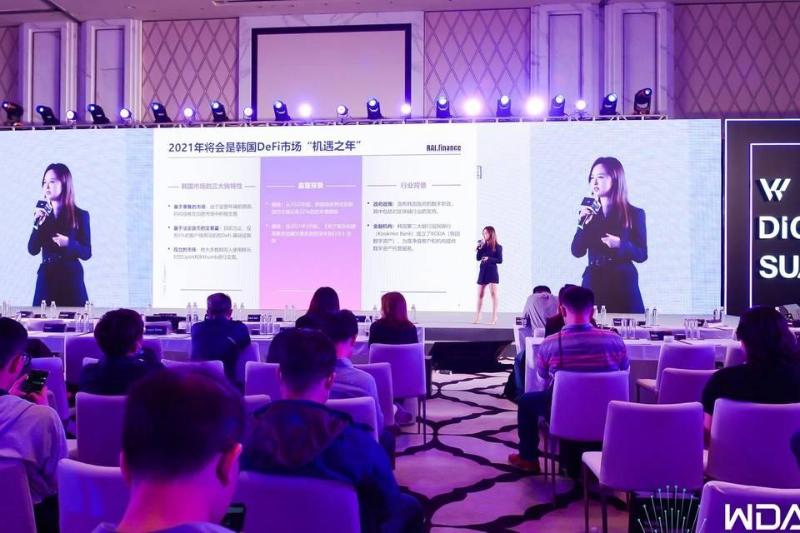
In her talk titled "The Future of Trading," Sandy Liang noted that with the rise of decentralized exchanges, crypto trading has entered a "from zero to one" growth phase. Beyond this, four areas offer room for improvement: offering more tradable assets; providing freer, diversified trading methods; enabling interactive experiences breaking silos; and emphasizing valuable, targeted regional markets. Given Korea’s retail-driven market, local currency dependency, isolated ecosystem, and government openness, Sandy sees vast potential—predicting 2021 as a "year of opportunity" for Korean DeFi. RAI Finance, a Polkadot-based decentralized DeFi project, will focus primarily on the Asian market centered on Korea. RAI Finance offers four core features: IDO, order-book DEX, trading, and social trading.
Panel Discussion | Reclaiming the Investor Identity Amid Volatile Markets
Moderator: Alice Y, Investment Manager, FBG
Panelists:
James, Founder, DFG
Deng Chao, Executive Director, Hashkey
Pima, Co-founder, Continue Capital
Howard Yuan, Managing Partner, Fundamental Labs
Li Rongbin, Founding Partner, SevenX Ventures
Mable Jiang, Partner, Multicoin Capital
Anyu, Partner, Daosquare
Mandy, Managing Partner, Kernel Ventures
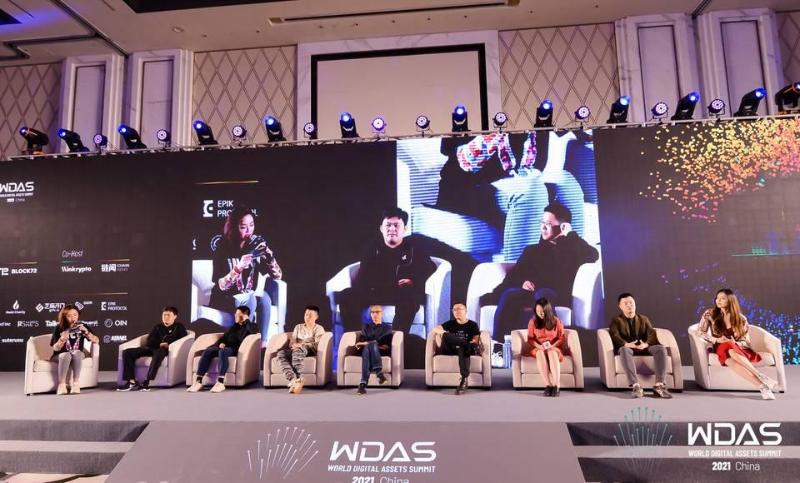
Alice: How do investment firms view market cycles? How do you allocate across sectors?
James: This bull run differs from 2013 or 2017. We don’t favor specific sectors—we focus on leading projects. Personally, I don’t think we need so many Layer 1 chains; much is redundant. Intense competition among Layer 1s will follow, with top performers thriving while others struggle.
Deng Chao: Our investment strategy takes a longer-term view. Evaluation and risk control standards are set higher. We need mechanisms to constrain influential figures whose actions could negatively impact markets. Regulation and more professional institutions are needed.
Pima: We go all-in on sectors and assets we believe in, rarely participating elsewhere. Market size determines your sector’s potential.
Howard: We adhere to long-termism. Internally, investments fall into two broad categories: infrastructure and applications.
Li Rongbin: Loving this industry requires discipline—not just during bull markets, but maintaining rhythm and style in bear markets too. Discipline means smoothing emotional highs and lows. Regarding sectors, many so-called “sectors” today aren’t truly sectors. Real sectors must stem from solid foundational logic. If we believe blockchain will become humanity’s foundational technology in the future, that’s where true opportunity lies.
Mable: At the core, investors must understand their own styles. Macro-wise, cycles are shifting from Bitcoin halvings as primary drivers toward faster iterations driven by Web3.0 and product evolution. Cycle speeds are accelerating. “Sectors” are hard to define. Ideally, investment should start from the top—understanding the Web3.0 stack. Typically, we prefer investing when a stack layer hasn’t been built yet, but its inevitable trajectory is clear.
AnYu: Daosquare pays close attention to market cycle characteristics.
Mandy: In bull markets, stockpile resources; in bear markets, fortify defenses. Yesterday’s crash might signal a reshuffling—or the official start of the second-half bull run.
Panel Discussion | New Frontiers in the NFT Era
Moderator: Emma Zhu, China Lead, DeFine
Panelists:
Cao Yin, Managing Director, Digital Renaissance Foundation
Nicky Li, COO, Seascape
Amber, COO, CoinTalk
Cao Zhen, Asia Partner, Republic

Emma: What was the most memorable NFT moment for you over the past year? How has crypto transformed art compared to traditional art—and what enduring principles remain unchanged? What are the strengths and weaknesses of crypto art marketplaces versus traditional art markets? How can NFTs unlock new fan economy models?
Cao Yin: In the internet age, everything about art—its expression, creators, and the power structure of the traditional art world—has undergone radical transformation. NFTs offer self-aware artists a fair trading ground. Internet openness and inclusivity allow subculture artists to connect with sympathetic collectors via NFTs—something traditional art cannot achieve. Any successful crypto art platform must be crypto-native.
Nicky: NFTs hold enormous potential, especially for fan economies. Once foundational infrastructure matures, mainstream live-streaming platforms could adopt customizable NFT content models.
Amber: Contemporary art often confuses or eludes viewers due to an information gap between artwork and audience. NFTs, especially interactive NFTs, help bridge this gap—enhancing narrative depth and strengthening interaction between art and viewers.
Cao Zhen: Viewed dialectically, fan economies are challenging to implement. Once fan tokens gain liquidity, part of an artist’s reputation becomes subject to price fluctuations. Stable, top-tier celebrities may feel no need to pursue this, though new solutions will likely emerge to overcome these hurdles.
Charity Auction
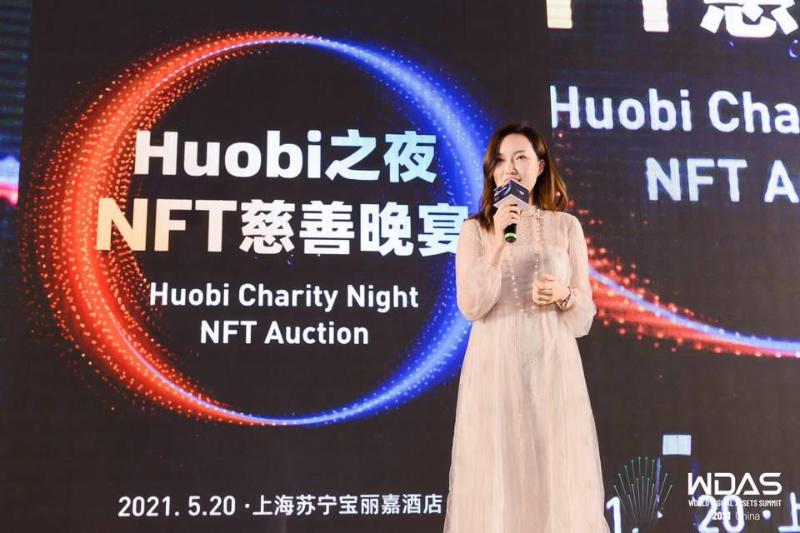
The conference hosted two charity auctions for crypto artworks. The auction benefiting Binance Charity raised 219,000 USDT, while the auction supporting Huobi Charity raised approximately 1,313,000 USDT. Proceeds will support global initiatives combating COVID-19, aiding autistic individuals, promoting gender and racial equality, and environmental protection—spreading altruism throughout the cryptocurrency industry.
Join TechFlow official community to stay tuned
Telegram:https://t.me/TechFlowDaily
X (Twitter):https://x.com/TechFlowPost
X (Twitter) EN:https://x.com/BlockFlow_News