BTC Ecosystem Flourishes: Exploring New DeFi Opportunities
TechFlow Selected TechFlow Selected
BTC Ecosystem Flourishes: Exploring New DeFi Opportunities
This episode provides a pros and cons analysis of investing in the BTC ecosystem market at this moment, and shares a review of promising DeFi projects.
 Navigating Web3 tides with focused insights
Written by: veDAO
The Bitcoin (BTC) ecosystem has delivered one highlight after another this year, with a continuous emergence of native and innovative protocols. The ecosystems around Ordinals, Atomicals, Stacks, and RGB have rapidly matured and expanded, featuring numerous promising projects worth sharing.
More importantly, Bitcoin’s recent strong performance has captured market attention, attracting significant capital inflows. BRC-20 tokens and other BTC ecosystem assets have experienced substantial rallies, creating abundant investment opportunities.
This article provides a comprehensive analysis of the advantages and risks of investing in the current BTC ecosystem, along with an overview of promising DeFi projects.
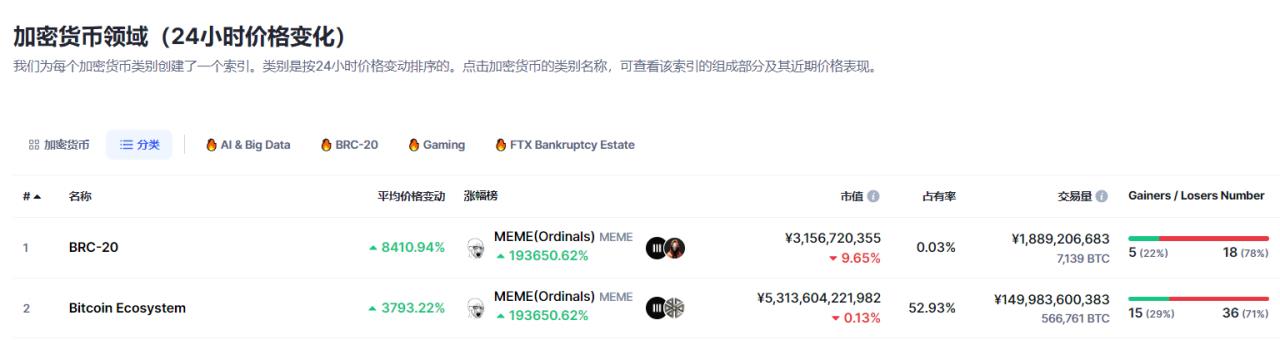
Analysis of Bitcoin Ecosystem Strengths and Weaknesses
Advantages:
1. Market Hotspot Sector
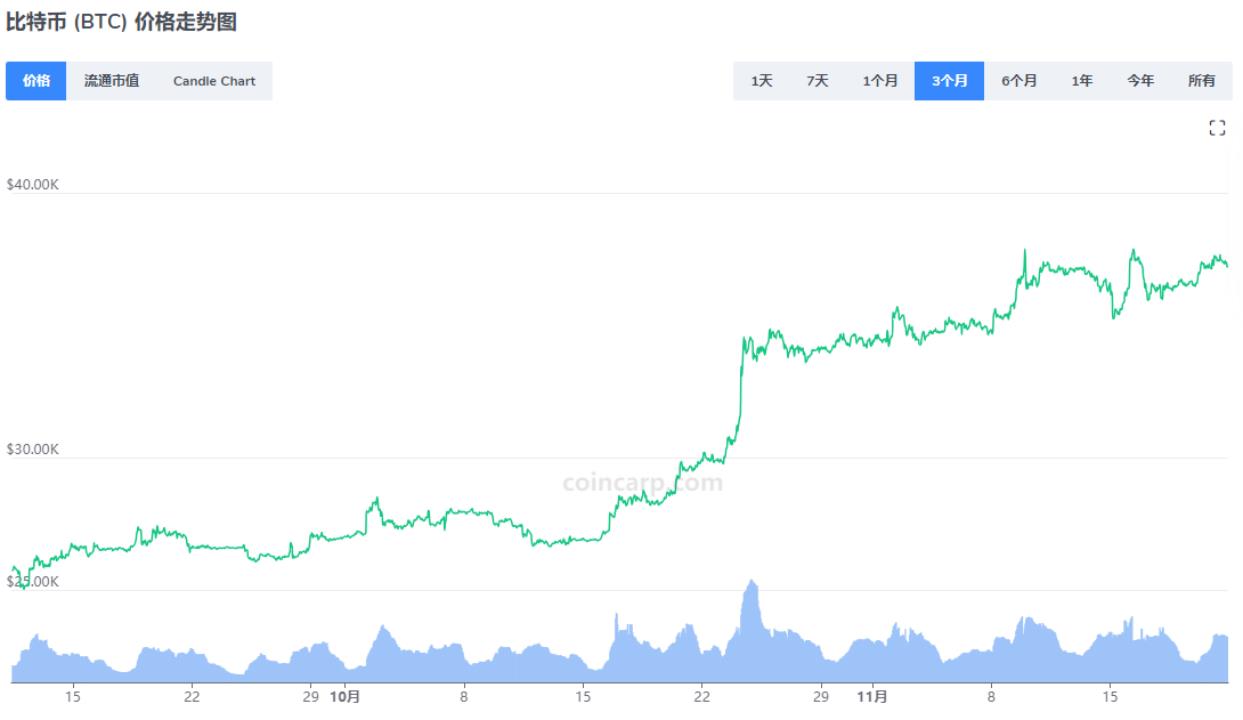
Over the past month, Bitcoin's price surged from $25,000 to $37,000, achieving a gain of over 40%. This momentum has quickly drawn widespread market attention, driving substantial capital into the BTC ecosystem from institutional investors, retail traders, and speculators alike.
2. Abundant Capital and New Participants
The sustained rise in Bitcoin’s price has generated significant public interest and discussion, channeling large amounts of capital into BTC ecosystem projects. This influx not only supports the growth of existing early-stage projects but also provides crucial resources for those still in development.
Moreover, after six months of market validation for new concepts like Ordinals and BRC-20, the recent surge in ecosystem token prices has instilled confidence among previously观望 participants, encouraging them to join. The growing user base and capital inflow create a healthy, self-sustaining cycle that enhances the long-term viability of the BTC ecosystem.
3. Protocol Upgrades and Emergence of New Protocols
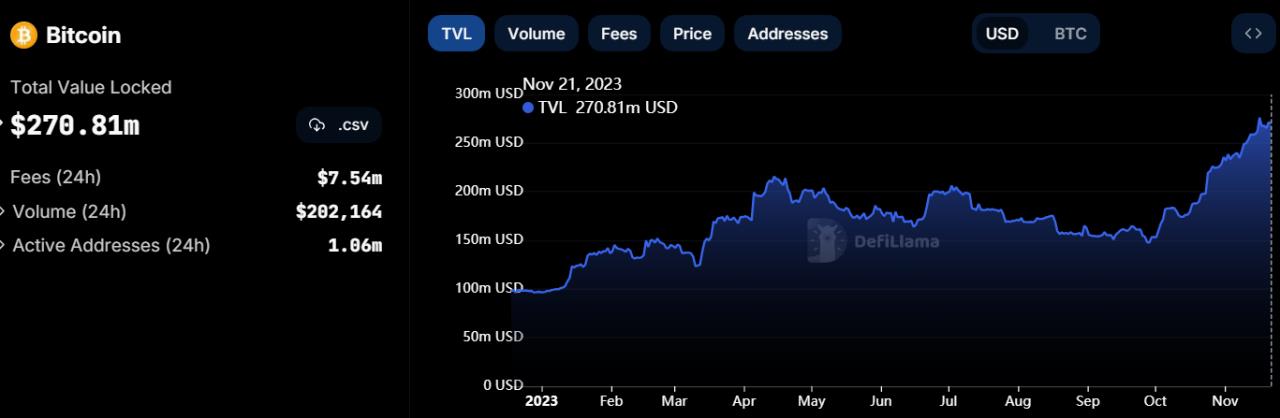
The BTC ecosystem was reignited at the beginning of the year by innovations such as the Ordinals protocol and BRC-20 tokens. Since then, multiple protocols—including ORC20, Atomicals, Stacks, the Lightning Network, RGB, Taproot, BRC100, BRC420, Rootstock, and BEVM—have contributed to its expansion, demonstrating strong vitality and active development. With increasing multidimensional support flowing into the Bitcoin blockchain, more new protocols are expected to emerge, and existing development plans can proceed as scheduled—enabling smoother token launches, improved DeFi liquidity, richer trading pairs, functional GameFi applications attracting more users, breakout NFT collections, and continuously improving infrastructure.
4. High Return Potential with Low Entry Barriers
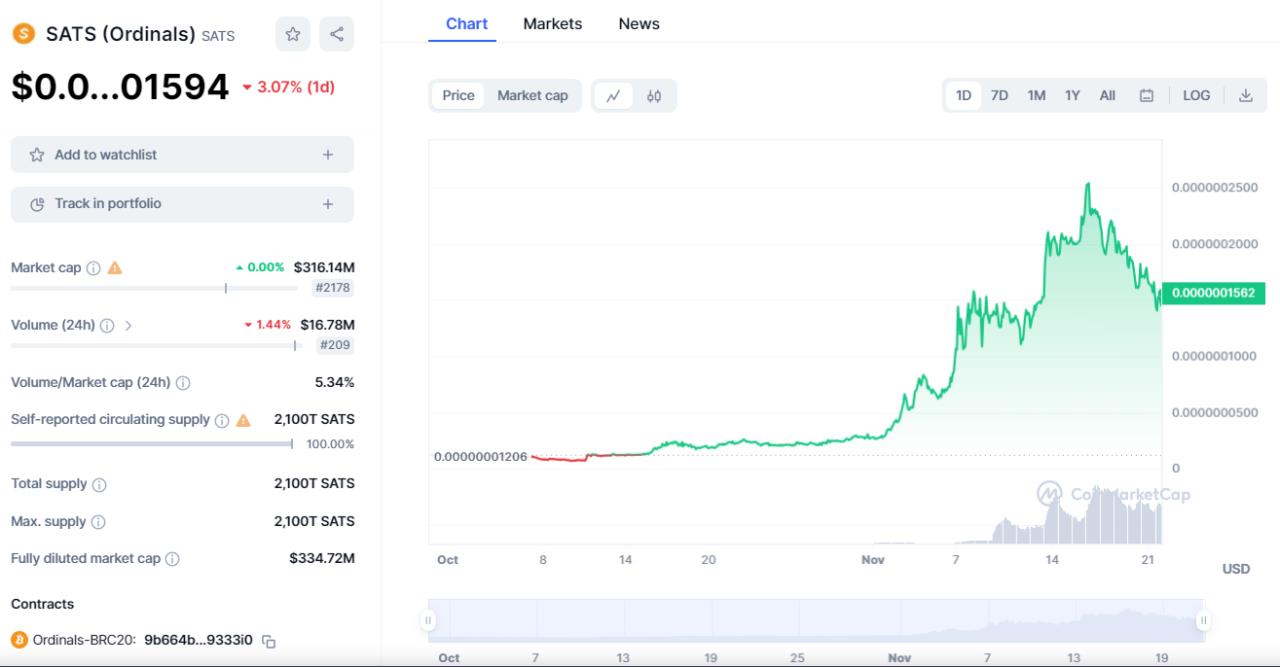
One major advantage is the relatively low barrier to entry, which is common in the BTC ecosystem due to its novel nature. Early activities like inscription minting allow users to easily experience cutting-edge features while simultaneously participating in investment opportunities. For example, users who minted SATS tokens have seen their value increase tenfold, peaking at over 15 times the initial price. Such high-return opportunities are rare in more established ecosystems. As the BTC ecosystem remains in its early stages, the constant emergence of new protocols and mechanisms continues to excite the crypto community and unlock repeated opportunities.
Risks:
1. Inadequate foundational infrastructure during the early stage of ecosystem development; hardware deployment and basic operations remain difficult and costly, with most transactions still requiring off-chain OTC methods;
2. Intermittent security concerns due to reliance on OTC transactions, exposing users to scams and fraud;
3. Poor user experience—most new protocols involve long order waiting times and prolonged transaction congestion;
4. Uncertainty regarding how long the current market hype will last. A potential decline in Bitcoin’s price could significantly impact the ecosystem and burst any speculative bubbles, necessitating cautious consideration.
Featured Projects Overview
1. ALEX
ALEX is an open-source Bitcoin DeFi platform built on the Stacks ecosystem and currently one of the most important protocols on Stacks. As of this writing, Stacks’ total value locked (TVL) reached $18M, with ALEX accounting for $14M. ALEX offers products including a credit launchpad, DEX, order book, and futures contracts—functioning much like Uniswap on the Bitcoin chain, enabling fully decentralized swap, staking, lending, borrowing, and liquidity mining on the Bitcoin network.
As a DeFi platform, ALEX also provides non-liquidatable lending, allowing users to securely lock assets in smart contracts to earn interest or perform financial operations without fear of liquidation due to market volatility.
With future developments on the Stacks platform and Bitcoin technology upgrades, more projects are expected to build on Stacks. ALEX’s Launchpad service offers these emerging projects a launching ground—an inherently forward-looking feature that greatly enhances the platform’s sustainability.
ALEX has launched its governance token $ALEX, currently valued at $36M with 600 million in circulation, offering users participation rights and potential upside. The project raised $5.8M in November 2021 and $2.5M in March 2023, totaling $8.3M in funding.
2. Arkadiko
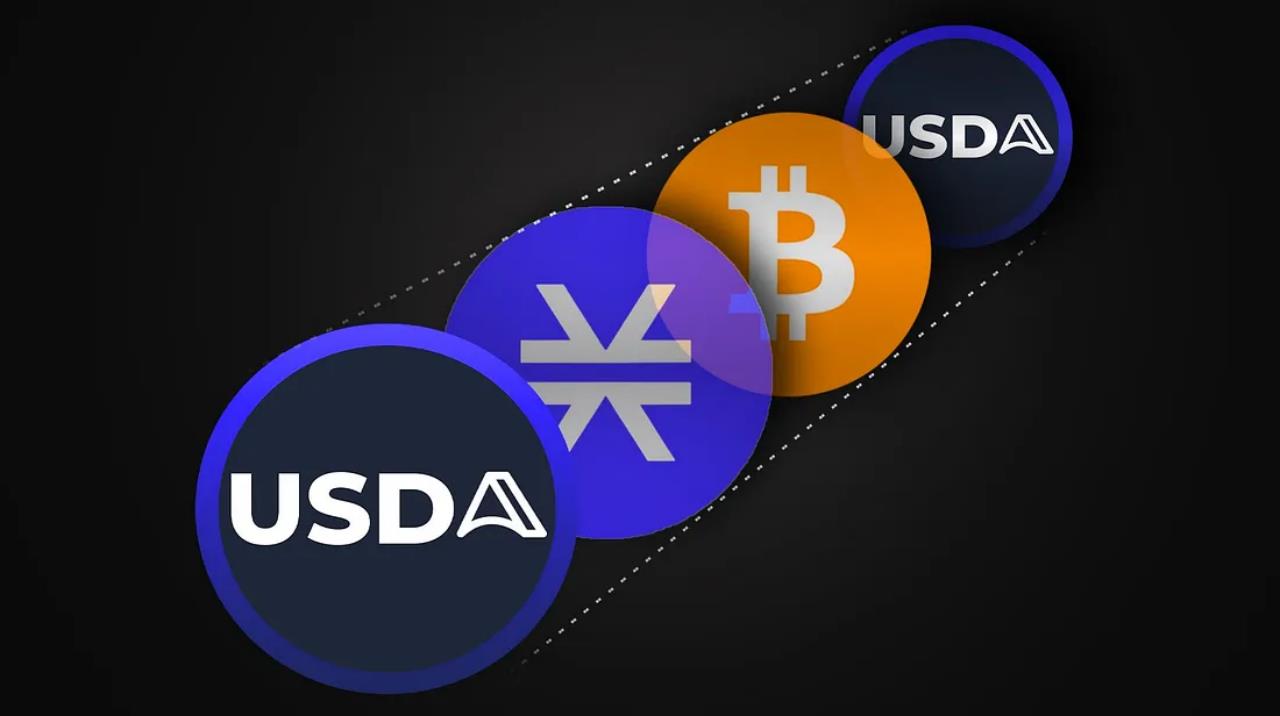
Arkadiko Protocol is a decentralized liquidity protocol based on Stacks. Its core focus is addressing a fundamental need in every ecosystem: a decentralized stablecoin. Arkadiko serves as the stablecoin solution within the Bitcoin Stacks ecosystem.
Through Arkadiko, users can collateralize Stacks’ native token $STX to mint USDA, Arkadiko’s own dollar-pegged stablecoin. The platform also supports swapping and lending. USDA can be used in Arkadiko’s yield farming (“Farm”) to repay loans, with rewards generated through participation in Stacks’ Proof-of-Transfer (PoX) consensus mechanism.
3. Sovryn
Sovryn is the first non-custodial smart contract application for Bitcoin lending and margin trading on the Rootstock (RSK) network. Unlike traditional Ethereum-based DeFi models, Sovryn enables users to borrow, lend, and leverage Bitcoin’s native assets without surrendering control of their private keys. Users also have direct governance power through the Bitocracy system. Additionally, Sovryn introduces EVM-compatible Ethereum-style smart contracts to Bitcoin—a critical innovation, as developers view Bitcoin as the center of cryptocurrency, boasting greater user adoption, deeper liquidity, and widespread institutional use.
Sovryn offers the following services:
- Lending pools: Users earn interest by lending tokens to borrowers and margin traders;
- Margin trading: Users can open long and short positions with up to 5x leverage;
- Spot exchange: The platform operates as an automated market maker (AMM), enabling instant trades between tokens with low cost and minimal slippage;
- Fast BTC Relay: Allows users to instantly utilize Bitcoin across smart contracts and other decentralized applications using any BTC wallet.
The project has a native token SOV, currently valued at $11M with 37M in circulation. Sovryn raised $2.1M in 2020, followed by three rounds in 2021 ($2.5M, $10M, $9M), and $5.4M in 2022, totaling $29M in funding.
4. MoneyOnChain
 MoneyOnChain is a decentralized stablecoin protocol built on RSK, backed entirely by Bitcoin. Supported by Bitcoin, the protocol consists of four tokens, offering several use cases for Bitcoin holders—including leveraged Bitcoin exposure.
- The first token is Dollar on Chain (DOC), a USD-pegged stablecoin. Users can send and receive any amount of DOC quickly and efficiently.
- The second token is BitPRO (BPRO), designed specifically for Bitcoin holders to generate passive income. BPRO holders earn from multiple sources: a share of platform fees, interest rates, and slight leverage on Bitcoin’s price movements. BPRO absorbs unwanted Bitcoin volatility from DOC and sells it to BTC2X.
- The third token is BTC2X, tailored for traders seeking 2x leveraged exposure to Bitcoin’s price increases. Traders pay interest on these long positions, which goes to BPRO holders, who also receive a portion of platform fees and subsidies in MoC tokens.
- The fourth token is Money On Chain (MoC Token), used to govern the decentralized autonomous organization (DAO), pay reduced platform fees (lower than BTC), and reward contributors. MoC holders vote on contract modifications and new features, fundamentally deciding whether to update smart contract code.
5. BEVM
 BEVM is an EVM-compatible BTC Layer 2 solution whose core mission is to expand Bitcoin’s smart contract capabilities. It aims to overcome Bitcoin’s limitations—its non-Turing completeness and lack of native smart contract support—by enabling decentralized applications (dApps) with BTC as native gas on the BEVM Layer 2.
BEVM’s design philosophy is to extend Bitcoin’s functionality without altering its original technical framework. It achieves decentralized cross-chain bridging from native BTC to BEVM Layer 2 using MuSig2 multi-signature aggregation combined with Bitcoin light nodes. Because BEVM is fully EVM-compatible, all types of dApps—DeFi, GameFi, SocialFi, NFTFi—that run on Ethereum’s EVM can now be deployed on BEVM. The key difference: while ETH Layer 2 uses ETH as gas, BEVM uses BTC. Every transaction on BEVM is batched by sequencers and committed to BTC Layer 1 at a 10:1 ratio, ensuring BEVM inherits Bitcoin’s robust security. In the long term, BEVM represents a vital BTC Layer 2 solution aimed at enhancing scalability, reducing costs, and fostering a more secure and decentralized financial ecosystem—making it highly significant for Bitcoin’s future evolution.
6. HOTFI
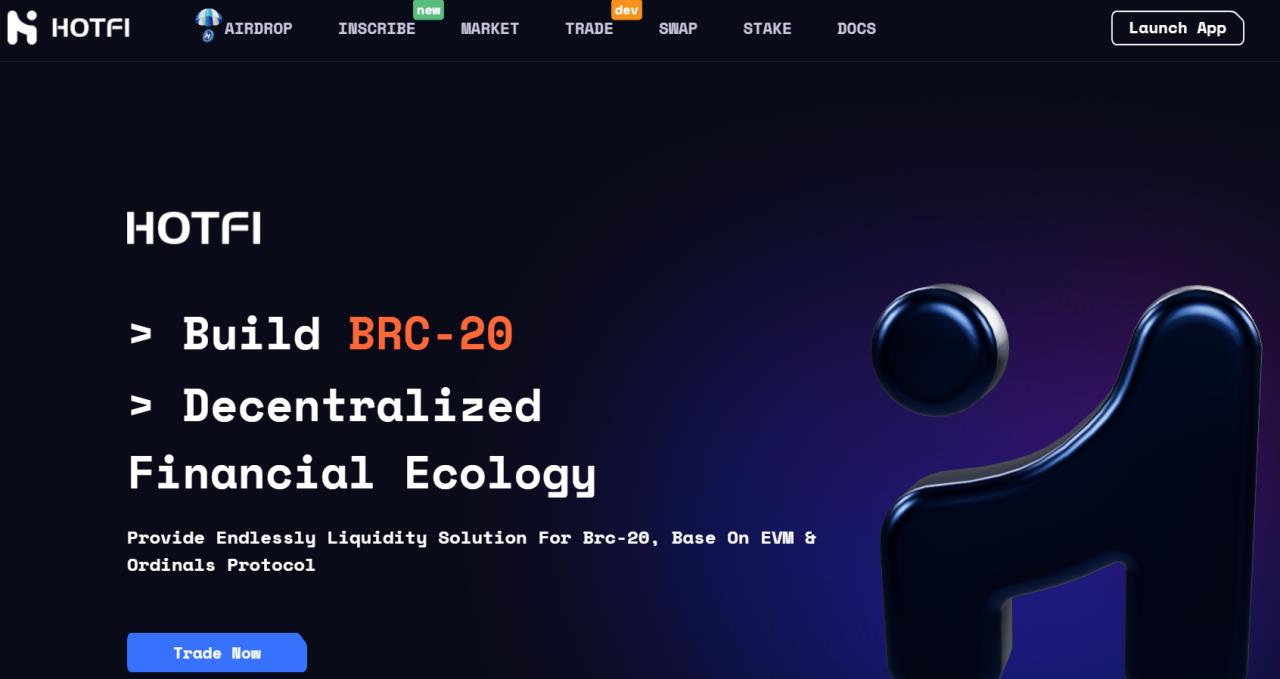
HOTFI is a liquidity solution built on the Ordinals and EVM protocols, leveraging BRC-20 standard tokens. It introduces a Launchpad function to accelerate high-quality project launches, aiming to provide sustainable momentum for the Ordinals-based DeFi ecosystem.
HOTFI offers the following features for Ordinals users:
- Decentralized peer-to-peer matching trading for BRC-20 standard tokens;
- Real-time Swap functionality;
- AMM-based liquidity provision with passive income rewards;
- Staking module where users deposit BRC-20 tokens to earn yield farming rewards;
- Community-driven development and open DAO governance, co-building the DeFi ecosystem with users.
HOTFI covers nearly all common DeFi user needs. Through deeper community engagement, DAO governance, and a focus on launching high-potential projects, it progressively strengthens the Ordi ecosystem. As the BTC and BRC-20 ecosystems continue to grow, HOTFI is poised to become a pivotal player within them.
7. Orders
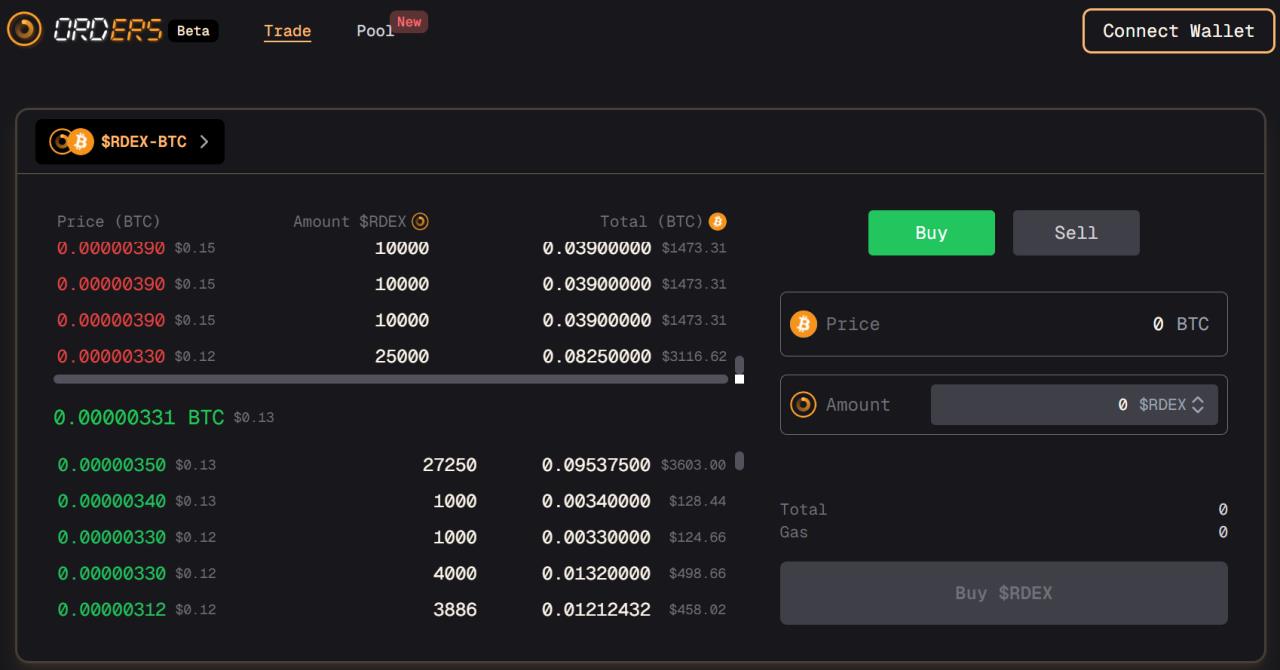
Exchange Orders is the first fully on-chain DEX operating entirely on the Bitcoin network, with its order book stored natively on Bitcoin. Orders aims to deliver a trustless order book DEX, liquidity pools, swap DEX, and LaunchPad, fully leveraging Bitcoin Layer 1’s potential through a combination of the Ordinals protocol, PSBT technology, Bitcoin scripts, and the revolutionary Nostr protocol.
Key highlights of Orders:
- Orders cleverly adapts Blur’s NFT mechanics, bringing complex and hard-to-trade BRC-20 tokens onto a fully on-chain DEX system;
- Combines liquidity mining, order books, and bid/ask mechanisms with a simple, intuitive interface similar to Blur, making it easy to use;
- Native token RDEX has real utility and strong liquidity as a trading pair;
- Backed by a seasoned team with proven technical expertise evident in the whitepaper.
Orders has already released a beta version and is live with real-world use cases. The team’s professionalism, as demonstrated in the whitepaper, inspires confidence in the project’s future. However, as a pioneering DEX on Bitcoin, it still faces mechanisms requiring optimization. Additionally, given its token distribution model, there may be risks such as future dumping. Interested parties should thoroughly understand the project before considering investment in RDEX.
8. MultiBit
MultiBit is the first-ever two-way bridge designed specifically for cross-network transfers between BRC-20 and ERC-20 tokens. Its most notable advantage is enhancing BRC-20 token liquidity by breaking down barriers between different blockchain networks. This innovative design improves token accessibility, enabling users to transfer assets across networks more conveniently and flexibly.
MultiBit simplifies the transfer process between Bitcoin’s BRC-20 and EVM networks. Users first send BRC-20 tokens to a dedicated address. Once confirmed, these tokens are ready to be minted on EVM networks. What sets MultiBit apart is its dual-sided bridging capability, allowing seamless transfer back from EVM networks to Bitcoin.
Undoubtedly, MultiBit breaks the isolation of BRC-20 tokens, significantly advancing the BTC ecosystem—a foreseeable and commendable achievement. Beyond interoperability, MultiBit emphasizes secure and user-friendly facilitation of BRC and ERC token liquidity and accessibility. By prioritizing security, it builds user trust and confidence. Achieving and maintaining this balance of security and convenience is essential for any cross-chain project aiming for longevity and sustained growth.
9. Bitlight Labs (Cosminmart)

Bitlight Labs develops infrastructure based on the RGB protocol and deploys multiple applications on the Lightning Network, including Bitswap and the Bitlight Wallet. This ecosystem provides users with faster and more efficient transaction and interaction methods, enabling high-speed, high-volume transactions.
Its key features include:
- Smart contract system capable of managing rich states;
- Uses Peter Todd’s client-side validation model: data is held by “state owners” (e.g., asset owners), not publicly verified;
- Operates atop Bitcoin transactions, utilizing Lightning channels from the Bitcoin blockchain;
- Supports Simplicity scripting language—formally verified by Blockstream—for writing secure scripts.
Lightning Labs’ open-source, secure, and scalable Lightning system enables more efficient fund transfers than ever before. It also offers a suite of verifiable, non-custodial financial services built on the Lightning Network.
Join TechFlow official community to stay tuned
Telegram:https://t.me/TechFlowDaily
X (Twitter):https://x.com/TechFlowPost
X (Twitter) EN:https://x.com/BlockFlow_News
 @TrendX_official