15 Old-School Altcoins: Which Ones Have Potential for Explosive Gains?
TechFlow Selected TechFlow Selected
15 Old-School Altcoins: Which Ones Have Potential for Explosive Gains?
The market is chilly; perhaps brew a pot of aged wine and listen to tales of the old江湖.
 Navigating Web3 tides with focused insights
Author: Chain Revelation
In the chaotic world of cryptocurrency, legends about old-school altcoins never fade.
They're like forgotten martial arts masters in a corner of the江湖—quietly sipping wine, not competing, but once they act, their rise is breathtaking.
This issue presents our "Historical Review of Veteran Altcoins":
-
Why were they popular back then?
-
Are they still alive today?
-
Why haven't they died?
-
Is there still potential for explosive growth?
As market chills intensify, let's brew an old pot of wine and listen to tales from the past江湖.
If you're a seasoned veteran who has lived through multiple cycles and have held over half of the coins mentioned—forward this article to newcomers, reminding them to wear an extra layer.
The mountaintop is truly cold. But old hands understand:
No matter how long winter lasts, spring will return.

Chapter One: The Old Guard of Payment Coins
1. XRP: The Most Litigation-Savvy Veteran in Blockchain
Background
Born in 2012—older than Ethereum—created by Jed McCaleb (an early Bitcoin OG) and the Ripple Labs team.
The goal was clear:
Not to be another "crypto-native token," but to build a "cross-border clearing network for banks." Its ambition: replace SWIFT and reduce traditional international transfers from days to seconds.
It quickly secured partnerships with banks, financial institutions, and major payment companies, rising to become the third-largest cryptocurrency by market cap during 2017–2018, trailing only BTC and ETH. Yes, XRP once genuinely played with bankers.
But in 2020, the U.S. Securities and Exchange Commission (SEC) struck hard: “You are a security—we’re fining you.”
Ripple: ?
XRP: ??
Investors: ????
After years of legal battles, XRP has become the most legally savvy coin in crypto. It possesses strength, technology, and bank partnerships—only awaiting improved regulatory sentiment. Ripple’s appeal against the SEC concluded in March 2025, and the case officially closed on August 7, confirming that XRP is not a security in secondary markets, with the fine reduced to $50 million (down from the original $125 million).
Technology & Features
-
Uses consensus mechanism Ripple Protocol Consensus Algorithm (RPCA)
-
Transaction speed is impressively fast: 3–5 seconds
-
Low fees + no mining required + primarily targets financial institutions and banks
Potential Growth Triggers
-
Approval of XRP ETFs
-
Global adoption by banks for cross-border payments
-
Explosive growth of RLUSD stablecoin ecosystem
XRP exemplifies the type of project that can “take off again once regulations ease.” Winning its lawsuit, securing ETF approval, and solidifying bank partnerships—the combination could transform XRP from a “repressed giant” into a “liberated beast.”
If global financial institutions suddenly decide they need faster cross-border settlements, XRP stands ready to rewrite its story.
2. LTC: Bitcoin’s Most Level-Headed “Little Silver Brother”
Background
Bitcoin too expensive and slow? Then use a lightweight version—LTC (Litecoin).
Created in 2011 by Charlie Lee, a former Google engineer, as a lighter alternative to Bitcoin.
LTC is a native fork of BTC, designed for faster and cheaper transactions. Upon launch, it was seen as Bitcoin’s silver (with BTC being gold), listed early on all major exchanges. In every bull market cycle, LTC delivers a sudden reminder: “I’m still here.”
The biggest controversy: the founder sold all his holdings at the peak. Yes, Charlie Lee sold all his LTC during the 2017 bull run, citing “avoiding conflicts of interest.”
Investors: ???
Market: ????
Price: ??????
Since then, LTC has entered a prolonged “low-key operation mode.” Latest update: in 2025, Canary Capital announced the launch of the Canary Litecoin ETF (Nasdaq: LTCC), the first spot Litecoin ETF approved by the SEC. Additionally, LitVM launched the first zero-knowledge Layer-2 network built using Polygon CDK, supporting EVM-compatible smart contracts and cross-chain interoperability with Bitcoin, Cardano, and Dogecoin.
Technical Features
-
Scrypt PoW consensus mechanism
-
Block time one-quarter of Bitcoin’s (2.5 minutes)
-
Focused on stability, speed, and micro-payments
Potential Growth Triggers
-
Ongoing momentum in payment and privacy narratives
-
Captured by capital flows when BTC ecosystem regains favor as a “veteran stable asset”
-
Positive market sentiment
LTC belongs to the “old soldiers never die, they just wait for the wind” category. It won’t surge 10x like new smart chains, nor will it collapse to zero like meme tokens.
Chapter Two: The Legitimate Schools of Smart Contracts—“We Also Want to Challenge Senior Brother Ethereum…”
3. ADA: The Academic Elite of Blockchain
Background
Cardano (ADA) was founded in 2015 by Charles Hoskinson, one of Ethereum’s co-founders, and officially launched in 2017.
The ambition was clear:
Don’t rush to market—instead, build the “most rigorous and scientific blockchain”; every upgrade must go through: paper → peer review → formal verification. This earned ADA the early reputation of being the “most academically sound blockchain system.”
With its founder coming from Ethereum’s founding team, ADA started with a “legitimate school” label, attracting many academic and institutional investors. Recent news: its quarterly report announced collaboration with Brazil’s PUC-Rio to establish Ada Labs, focusing on blockchain economics, DeFi, and renewable energy solutions.
Biggest drawback:
The market has limited patience for “writing papers.” dApp ecosystem remains weak, leading investors to joke: “The roadmap is strongest—not the ecosystem.”
Technology & Features
-
Uses Ouroboros PoS consensus (the first peer-reviewed PoS algorithm)
-
Layered architecture: settlement layer (CSL) + computation layer (CCL), enabling functional separation and enhanced flexibility
-
Plutus smart contract language: based on Haskell, supports formal verification
-
Emphasizes security, scalability, and sustainability
Potential Growth Triggers
-
On-chain governance fully implemented
-
Launch of major applications (finance/gaming/social)
-
Adoption by African nations (projects already underway)
ADA’s breakout logic resembles a “slow-burn revival.” The good news is that its ecosystem has been gradually growing in recent years.
But challenging Ethereum’s dominance remains as difficult as “becoming an academician right after getting a PhD.”
4. DOT: The Elegant Architect of Cross-Chain
Background
Polkadot (DOT) was founded in 2016 by Gavin Wood, former CTO of Ethereum and founder of Parity Technologies, with mainnet launching on May 26, 2020. With parachains, shared security, and slot auctions… its cross-chain model is nearly the most complete in the industry, directly rivaling Cosmos and forming one of the “two great cross-chain powers.”
In a recent PolkaWorld English livestream, officials announced that Polkadot was included in Hong Kong’s “Strategic Enterprise” program (managed by the OASES initiative under the Financial Secretary), making it one of the few blockchain projects to receive such official recognition. The stream also noted institutional investments entering the ecosystem, such as HIC (Harbor Industrial Capital) investing in Polkadot-based projects.
Why hasn’t it dominated?
The architecture is elegant but complex. High development difficulty and high setup costs for new chains have slowed ecosystem expansion beyond expectations.
Technology & Features
-
Relay chain + parachain architecture: relay chain handles security, parachains handle execution
-
Shared security: all parachains inherit the relay chain’s security without needing separate validators
-
XCM cross-chain messaging protocol: enables seamless communication between chains
-
Slot auction mechanism: projects bid for parachain slots by locking DOT
Potential Growth Triggers
-
Real explosion in cross-chain demand
-
More parachains going live
-
Emergence of a star application in the ecosystem
DOT represents “infrastructure-level value”—it won’t disappear, and if the cross-chain narrative returns, it still has takeoff potential.
5. NEAR: High-Performance Sharding Chain, King of Developer Experience
Background
NEAR Protocol was founded in 2018 by former Google engineers Illia Polosukhin and Alexander Skidanov, with mainnet launching in April 2020. The mission was clear: build the “high-performance public chain developers love most.” Builders consistently describe it as “comfortable”—a rare quality in the public chain space.
Why hasn’t it dominated? Because now every chain claims to be fast, cheap, and user-friendly. Competition is fierce, weakening NEAR’s edge. It remains strong—but less flashy. Latest update: OceanPal and the NEAR Foundation jointly announced a $120 million PIPE investment to launch SovereignAI, building blockchain-native confidential AI cloud infrastructure on NEAR powered by NVIDIA technology, supporting agent-based commerce.
Technology & Features
-
Nightshade sharding: dynamic sharding supporting infinite scalability
-
Rainbow Bridge: seamless cross-chain connection with Ethereum
-
Human-readable account names: no more long strings—just use names like alice.near
-
Developer-friendly: supports Rust and AssemblyScript, with mature tooling
Potential Growth Triggers
-
Launch of major social/AI applications
-
Strong user growth in ecosystem
-
Deep integration with trending narratives (AI/Web3 gaming)
NEAR is a “low-key powerhouse”—once the AI + Web3 narrative truly explodes, it will be in the first tier.
6. ICP: The Most Ambitious Public Chain Dreaming of “Rebuilding the Internet on Chain”
Background
Internet Computer (ICP) was created by the Swiss DFINITY Foundation, led by distributed systems expert Dominic Williams. The project began in 2016, with mainnet launching in May 2021.
ICP’s ambition is mind-blowing: it doesn’t aim to build just a blockchain, but an entire blockchain-based replacement for the internet itself.
Imagine chain-based versions of YouTube, TikTok, and cloud services. The vision is massive—even sci-fi-like—directly competing with AWS and Google Cloud, aiming to move all of Web 2.0 onto the blockchain.
Biggest flaw: unfavorable token unlock schedule at launch caused price to plummet at “reverse light speed,” falling from hundreds of dollars to single digits.
Technology & Features
-
Chain Key technology: allows smart contracts to interact directly with external systems—no oracles needed
-
Canister architecture: similar to smart contracts but more powerful
-
Network Nervous System (NNS): fully on-chain governance
-
Infinite scalability: supports large-scale dApps running directly on-chain
Potential Growth Triggers
-
Emergence of a major on-chain application
-
Trend toward migrating internet services on-chain
-
New cross-chain capabilities (progress already made)
If it ever runs a true “on-chain Instagram,” it could laugh its way back into the top ten. ICP is the type that “dreams too big, but the tech is genuinely impressive.”
7. ATOM: Father of the Interchain Ecosystem, Yet the Most “Zen-Like” Native Token
Background
Cosmos (ATOM) was founded in 2016 by Jae Kwon and Ethan Buchman, with mainnet launching in 2019.
Why did it explode initially? Because the Cosmos architecture (IBC + SDK) allowed countless projects to easily launch their own blockchains.
Many strong chains today—Osmosis, dYdX (new version), Celestia ecosystem—all bear Cosmos’ fingerprints. It didn’t offer just one public chain, but an entire “toolkit for building blockchains.”
Biggest issue: weak value capture for ATOM itself
The overall Cosmos ecosystem is robust, yet ATOM often underperforms compared to its child chains. Some jokingly call it: “father of the ecosystem, yet poorest himself.”
Current 2025 update: staking surges, annual yield stabilizes. According to institutional analysis, despite market volatility, ATOM staking increased by 15.7%, reaching a record high of 274.04 million ATOM. Cosmos staking yield stabilized at 16.34%, driven by proposal #996, which redirects 98% of inflation to stakers.
Technology & Features
-
IBC protocol: interchain communication standard, now an industry benchmark
-
Cosmos SDK: enables developers to rapidly build custom blockchains
-
Tendermint consensus: high-performance BFT mechanism
-
App-chain model: each app can have its own dedicated chain
Potential Growth Triggers
-
ATOM economic model upgrade (already underway in 2025)
-
Broader adoption of IBC
-
Explosion of ecosystem chains
ATOM belongs to the type where “value may be delayed but never absent”—the stronger the ecosystem grows, the more ATOM will eventually catch up. ATOM is the kind where “value may be delayed but never absent.”
Chapter Three: The Big Three of Decentralized Finance—“The Smartest Money Makers On-Chain”
8. AAVE: On-Chain Bank, Magician of Flash Loans
Background
Aave was founded in 2017 by Finnish entrepreneur Stani Kulechov (originally named ETHLend), rebranded as Aave and launched V1 in 2020. It was the first project to bring “flash loans” into mainstream awareness—a magical on-chain feature allowing users to borrow without collateral, perform operations, and repay—all within a single transaction.
Sounds like a “free money hack”? Indeed, but in reality it serves as:
-
An arbitrage tool
-
A liquidation tool
-
A core infrastructure piece in the DeFi Lego set
Additionally, it leads the DeFi lending sector, boasting the largest asset scale and highest security recognition. During DeFi Summer (2020–2021), Aave became synonymous with “on-chain banking.”
Technology & Features
-
Flash Loans: uncollateralized borrowing, must be repaid within the same transaction
-
Multi-chain deployment: available on ETH, Polygon, Avalanche, Base, Arbitrum, etc.
-
GHO stablecoin: Aave’s native over-collateralized stablecoin
-
Isolated markets mode: introduced in V3 to reduce contagion risk
Potential Growth Triggers
-
Recovery of the DeFi market
-
Expansion of multi-chain lending markets
-
Integration of new asset types (RWA - real-world assets)
Aave is one of the most stable “cash-flow protocols” in crypto—if DeFi survives, Aave is a printing press.
9. UNI: The Patriarch of AMMs, Eternal King of DEXs
Background
Uniswap was founded by Hayden Adams in 2018, launching V1 on the Ethereum mainnet in November 2018. It defined the AMM (Automated Market Maker) model, enabling anyone to instantly create trading pairs on-chain.
Before Uniswap, on-chain trading required order books and centralized matching. Uniswap rewrote the rules:
-
Permissionless
-
Anyone can provide liquidity
-
Any token can be listed
Uniswap’s emergence marked the beginning of DeFi; without Uniswap, there would have been no DeFi Summer. On January 31, 2025, Uniswap officially launched Uniswap v4—an upgrade dubbed the “New Era of DeFi.” v4 introduces greater customization and lower costs. The new “hooks” contracts allow developers to customize pools, fees, and LP behaviors, greatly enhancing protocol flexibility.
Technology & Features
-
AMM model: x * y = k constant product formula, pioneering a new era for DEXs
-
Permissionless: anyone can create trading pairs
-
V3 concentrated liquidity: LPs can provide liquidity within specific price ranges, improving capital efficiency
-
V4 Hooks: launched in 2025, enabling developers to customize AMM logic
The “weakness” of UNI:
UNI is primarily a governance token with no protocol revenue sharing, meaning its price isn’t tied to protocol income. This makes it seem “lackluster” much of the time.
Potential Growth Triggers
-
Protocol revenue model reform
-
Improved regulatory environment
-
DEX trading volume hits all-time highs
-
If UNI ever starts buybacks or dividends
Then it would explode spectacularly.
10. MKR: Guardian of the DAI Stablecoin
Background
MakerDAO (now announced to rebrand as Sky Protocol) was founded by Rune Christensen in 2014, officially launching the DAI stablecoin and MKR governance token in December 2017.
DAI is the largest decentralized stablecoin on-chain, while MKR governs and manages risk. MakerDAO peaked during DeFi Summer (2020–2021), serving as the cornerstone of the entire DeFi ecosystem—nearly every DeFi protocol relies on DAI as its stablecoin layer.
Key highlight: It’s a truly decentralized stablecoin, unlike USDT/USDC, which are backed by centralized entities.
Technology & Features
-
Over-collateralized stablecoin: users lock ETH and other assets to generate DAI
-
MKR governance: holders vote on key parameters like collateral ratios and stability fees
-
RWA (real-world assets): MakerDAO was among the first to bring real-world assets like government bonds on-chain
-
Sky Rebrand: renamed Sky in 2024, MKR converted to SKY
Current issue:
MakerDAO’s risk structure is complex, even managing real-world assets like treasury bonds. Increased complexity amplifies MKR’s volatility.
Potential Growth Triggers
-
RWA (real-world assets) igniting on-chain finance
-
Surge in demand for stablecoins
-
Organizational reforms within MakerDAO
As long as demand for stablecoins persists, MKR remains a super-core asset. It’s the “central bank” of DeFi—its position is unshakable.
Chapter Four: The Three Meme Gods—“Logic? Doesn’t Exist.”
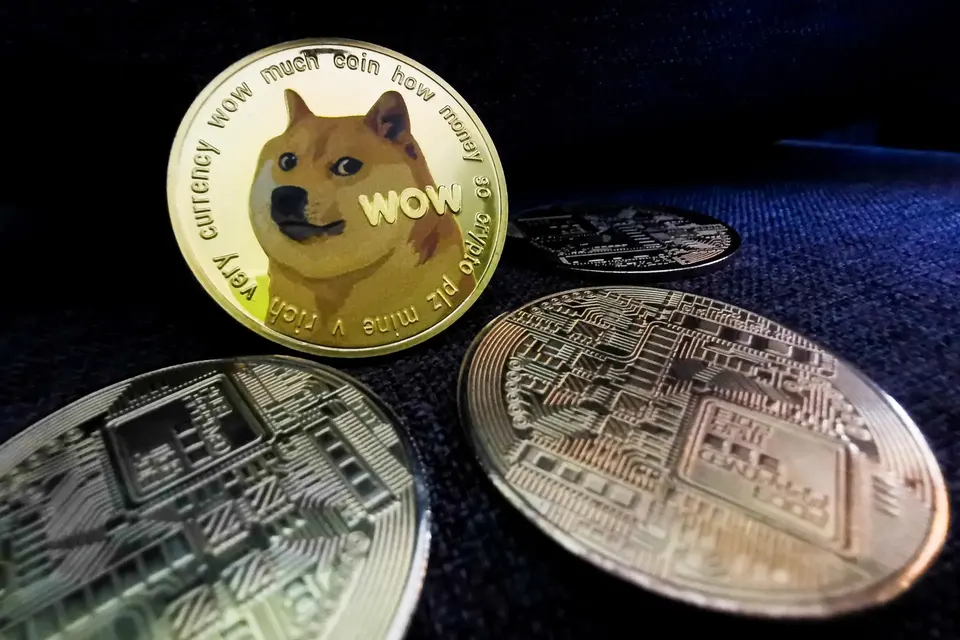
11. DOGE: Canine Emperor of Crypto, Elon Musk’s Favorite Toy
Background
Dogecoin was created in December 2013 by Billy Markus and Jackson Palmer, originally intended as satire of crypto speculation.
Its story is brutally simple:
-
A dog 🐕
-
A community 💪
-
Elon Musk 🚶
That’s enough.
DOGE doesn’t rely on technology—it thrives on internet culture, community power, and Elon Musk’s supernatural influence. From a joke to a top-ten cryptocurrency by market cap, DOGE itself is the greatest satire of “value investing”—yet it undeniably holds value because consensus is value. In November 2024, Donald Trump announced the creation of a new government agency called the “Department of Government Efficiency” (abbreviated DOGE), to be led by Elon Musk. This political-brand fusion isn’t just hype—it strengthens DOGE’s status as a “meme coin” and symbol of power.
Technology & Features
-
Built on Litecoin code, uses Scrypt algorithm
-
No supply cap: 5 billion new coins minted annually (inflationary design)
-
Fast transactions, low fees
-
Focused on micro-payments and tipping culture
Potential Growth Triggers
-
One tweet from Musk—or even just a photo of a dog—and DOGE surges.
-
Meme coin logic remains valid: internet culture + consensus = value
-
Technical upgrades unlock long-term potential: if ZKP or Libdogecoin materialize, DOGE could combine community heat with on-chain utility—no longer just a joke, but potentially infrastructure.
12. SHIB: From Meme to “Hardworking Hustler”
Background
Shiba Inu (SHIB) was created in August 2020 by anonymous founder Ryoshi, branding itself as the “Dogecoin Killer.” As DOGE’s younger brother, it boasts higher community activity. More importantly—it doesn’t just clown around like typical meme coins. It attempts to build:
-
ShibaSwap (DEX)
-
Metaverse (Shib The Metaverse)
-
NFTs
-
Games
Technology & Features
-
Built on Ethereum ERC-20
-
Shibarium: its own Layer-2 solution
-
Three-token ecosystem: SHIB (main token), LEASH (liquidity), BONE (governance)
-
Burning mechanism: continuously reduces supply to counter inflation
Potential Growth Triggers
-
Real ecosystem rollout (Shibarium, Metaverse)
-
Another wave of meme frenzy
SHIB is a hybrid player—“wanting both meme traffic and real products.” If Shibarium’s ecosystem takes off, it’ll be far more than just a meme.
13. PEPE / FLOKI: Emotion + Memes = Market Cap
Background
PEPE: Launched in April 2023, based on the iconic internet frog meme Pepe the Frog. The coin is purely a MEME revolution product, akin to Dogecoin and Shiba Inu. No official team claims long-term commercial plans or technical support—instead emphasizing “no tax, no presale, no team token allocation.” After listing on Binance, it officially joined the “Big Three Mainstream MEME Coins” (DOGE, SHIB, PEPE).
FLOKI: June 2021: Elon Musk tweeted “I’m naming my Shiba Inu Floki,” and the Floki Inu token instantly emerged and exploded in popularity. Like DOGE and SHIB, it initially relied on the “Musk effect” and meme virality; yet FLOKI is among the few meme projects actively developing real application ecosystems.
The intent behind both tokens is simple:
-
Community
-
Emotion
-
Virality
-
High-frequency trading
PEPE is a pure emblem of culture and emotion; FLOKI combines community culture, practical applications, and compliant investment value.
Technology & Features
PEPE:
-
Pure meme, no utility
-
Relies on social media virality
-
High volatility, highly speculative
FLOKI:
-
(1) Valhalla metaverse game
-
A Play-to-Earn game on-chain, using FLOKI as in-game currency.
-
(2) FlokiFi DeFi ecosystem
-
FlokiFi Locker: an asset lock-up protocol, claimed by the team to be used by multi-chain projects (locking millions in TVL).
-
Future plans include FlokiFi Bank, lending, and other services.
-
(3) Educational platform “Floki University”
-
A learning platform for Web3 users, offering beginner to advanced courses.
Potential Growth Triggers
Two words:
Emotion. Meme resurgence.
If you accept that “value comes from culture and emotion,” then Pepe is your playground.
If you believe “meme investing should consider fundamentals,” then FLOKI deserves attention—for it’s actually building utility 😂
Chapter Five: The Hard Men of Storage—“We’re Not Hottest, But We’re Most Essential”
14. FIL: The Millennium Project of Decentralized Storage
Background
Filecoin was proposed in 2014 by Juan Benet, founder of Protocol Labs, raised $257 million via ICO in 2017 (then the largest ICO in history), and launched mainnet in October 2020. Filecoin was the first project to turn “decentralized storage” into a real industry.
This isn’t storytelling—it’s about actually storing files:
-
Competes with centralized storage like AWS S3 and Google Cloud
-
Turns global idle hard drives into a distributed cloud storage network
-
From tech to business model, it embodies long-term thinking
Filecoin’s vision: rebuild the internet’s storage layer—ensuring data is stored permanently, securely, and decentrally on-chain.
Biggest highlight:
It’s the incentive layer for IPFS (InterPlanetary File System), the foundational protocol for Web3 storage. Filecoin provides the economic engine that powers IPFS.
Why is price so volatile? Due to its complex economic model and storage mining mechanism—miners sell large amounts of FIL, creating downward pressure. Miners must stake FIL to mine, but then sell mined FIL for cash, increasing sell-side pressure.
Technology & Features
-
Proof of Spacetime: proves data was stored continuously over time
-
Proof of Replication: proves data was physically replicated across storage nodes
-
FVM (Filecoin Virtual Machine): supports smart contracts, expanding Filecoin beyond just storage
-
Storage + retrieval markets: dual-market mechanism incentivizing miners to provide services
Potential Growth Triggers
-
Massive Web3 adoption of decentralized storage
-
AI data demand growth (training data, model storage)
-
Global trend toward decentralized storage markets
FIL is infrastructure-grade—so long as crypto exists, it has a place. Like building roads—not sexy, but someone must do it.
Investor: When will FIL rise? FIL: Oh, that’ll happen when Web3 finally explodes. Market: And when will that be… FIL: I said—millennium project.
Chapter Six: The Invisible Champions of On-Chain Infrastructure
15. LINK: The God of Oracles
Background
Chainlink was founded in 2017 by Sergey Nazarov and Steve Ellis, raised $32 million via ICO in September 2017, and launched mainnet the same year. At SmartCon 2025 (Chainlink’s own developer conference), Chainlink officially launched the Chainlink Runtime Environment (CRE)—an orchestration layer for institutions to build end-to-end smart contracts, connecting off-chain data, enabling cross-chain functionality, and meeting compliance and privacy needs.
Chainlink’s importance: Without oracles, there is no DeFi. Without LINK, there are no oracles. Within the on-chain ecosystem, it plays the role of “blockchain weather station + data highway.”
Why so critical? Blockchains are closed systems—they cannot natively access external data (e.g., ETH price, weather, sports results).
Oracles are the bridge between on-chain and off-chain:
-
DeFi protocols need price data → LINK provides it
-
Insurance protocols need flight delay data → LINK provides it
-
Games need random numbers → LINK provides it
Technology & Features
-
Decentralized oracle network: multiple nodes deliver data, preventing single-point manipulation
-
CCIP (Cross-Chain Interoperability Protocol): enables cross-chain communication
-
Chainlink Staking: staking mechanism to enhance network security
-
Price Feeds: deliver real-time pricing data to DeFi
-
VRF (Verifiable Random Function): verifiable randomness for games and NFTs
Why hasn’t it surged recently?
Because everyone chases “new narratives,” yet the entire industry uses LINK daily—just like you use water and electricity every day, but don’t think about the utility company’s stock.
Potential Growth Triggers
-
RWA asset integration (already exploding)
-
Explosion in off-chain data connectivity
-
Mass institutional adoption of on-chain finance
LINK belongs to the “quiet worker, explosive when needed” type—it’s not a celebrity, but it’s the water, electricity, and gas of the entire crypto world.
Conclusion: The Heroes’ Ambush
So, what’s next for the market?
Heroes don’t care about short-term gains or losses. They set the stage, lie in wait in the shadows, ready for the moment the winds shift.
“All human wisdom is summed up in two words; wait and hope.” — Alexandre Dumas
Join TechFlow official community to stay tuned
Telegram:https://t.me/TechFlowDaily
X (Twitter):https://x.com/TechFlowPost
X (Twitter) EN:https://x.com/BlockFlow_News