Knockoff ETFs surge, completing Bitcoin's decade-long journey in half a year: the crypto market is undergoing a structural transformation
TechFlow Selected TechFlow Selected
Knockoff ETFs surge, completing Bitcoin's decade-long journey in half a year: the crypto market is undergoing a structural transformation
A market once driven by speculation and narratives is evolving toward a new order anchored by compliant channels and institutional allocation.
 Navigating Web3 tides with focused insights
By: Clow
It took nearly a decade for Bitcoin ETFs to gain approval, but altcoins achieved it in just six months.
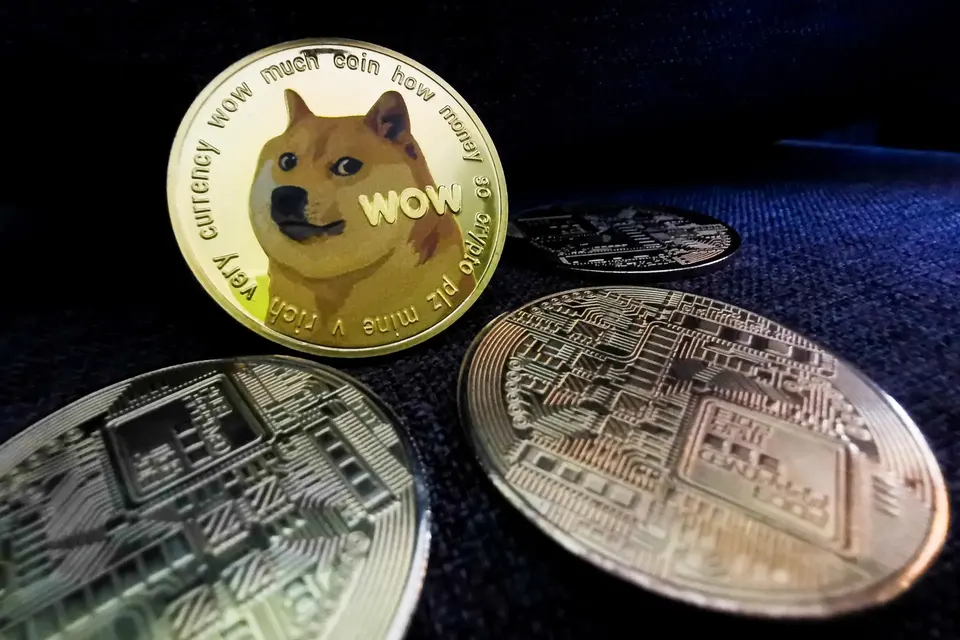
In November 2025, something incredible happened on Wall Street. Solana, XRP, Dogecoin—altcoins once dismissed by mainstream finance as "speculative toys"—collectively launched as regulated ETF products on the New York Stock Exchange and Nasdaq within weeks.
Even more surreal, these ETFs didn't go through individual, rigorous SEC approvals. Instead, they leveraged a new "universal listing standard" and an obscure fast-track mechanism known as "Rule 8(a)," effectively becoming active under what amounted to regulatory silence.
The rules of the game are being rewritten entirely.
01 Regulatory "Strategic Retreat"
For years, the SEC's stance on crypto ETFs could be summed up in four words: delay whenever possible.
Each new crypto ETF application required exchanges to file rule change proposals, giving the SEC up to 240 days for review—and often rejecting them at the last minute over claims of "market manipulation risk." This enforcement-first approach sank countless applications.
But on September 17, 2025, everything suddenly changed.
The SEC approved a revision proposal from three major exchanges introducing a "universal listing standard." Though seemingly technical, this adjustment opened the door for altcoin ETFs: crypto assets meeting specific criteria could now list without individual approvals.
The core requirements were simple:
-
Either the asset has at least six months of trading history on a CFTC-regulated futures market, with the exchange having a surveillance-sharing agreement; or
-
There is already a precedent ETF holding at least 40% exposure to that asset.
Meeting either condition allowed altcoin ETFs to use the "fast track." Solana, XRP, and Dogecoin all qualified.
Even more aggressive, issuers discovered another accelerator—the 8(a) clause.
Traditional ETF filings include a "delayed effectiveness" provision, allowing the SEC indefinite review time. But in Q4 2025, issuers like Bitwise and Franklin Templeton began omitting this clause from their applications.
Under Section 8(a) of the Securities Act of 1933, if no such delay language is included, the registration becomes effective 20 days after filing—unless the SEC actively issues a stop order.
This put the SEC in a bind: either find sufficient grounds to block it within 20 days, or watch the product launch automatically.
With staffing shortages due to government shutdowns, mounting pressure from court rulings in the Ripple and Grayscale cases, and Chairman Gary Gensler’s resignation on January 20, 2025, the SEC entered a "lame duck" phase, overwhelmed by hundreds of pending applications.
Issuers seized this rare window and rushed forward.
02 Solana ETF: A Bold Bet on Staking Yields
Solana, riding its reputation as a high-performance blockchain, became the third "blue-chip" asset after BTC and ETH to receive ETF status.
By November 2025, six Solana ETFs had launched, including Bitwise’s BSOL, Grayscale’s GSOL, and VanEck’s VSOL. Among them, Bitwise’s BSOL was the most aggressive—it not only offered exposure to SOL’s price but also attempted to distribute on-chain staking rewards to investors.
This was a bold move. The SEC has long treated staking services as securities offerings, but Bitwise explicitly labeled its product a "Staking ETF" in its S-1 filing, aiming to design a compliant structure for distributing staking income. If successful, this would allow Solana ETFs to capture not just price appreciation but also cash flows akin to dividends—making them far more attractive than non-yielding Bitcoin ETFs.
Another point of contention: Solana lacked a futures contract on CME. Under past SEC logic, this alone would have been grounds for rejection. Yet regulators ultimately approved it, possibly signaling acceptance that long-term trading data from regulated platforms like Coinbase provides sufficient price discovery.
Market performance has been strong.
According to SoSoValue data, Solana ETFs recorded net inflows for 20 consecutive days after launch, totaling $568 million. While Bitcoin and Ethereum ETFs faced massive outflows in November, Solana ETFs pulled in capital逆势. By end-November, the six funds collectively managed $843 million in assets, representing about 1.09% of SOL’s market cap.
This suggests institutional capital is rotating out of crowded Bitcoin positions and into emerging assets with higher beta and growth potential.
03 XRP ETF: Revaluation After Regulatory Resolution
XRP’s path to ETF status was long blocked by the legal battle between Ripple Labs and the SEC. After both parties reached a settlement in August 2025, the sword of Damocles finally fell, triggering an explosion of ETF applications.
By November, five XRP ETFs had launched or were about to launch:
-
Bitwise’s XRP ETF debuted on November 20, using "XRP" as its ticker—a bold marketing move sparking debate. Some hailed it as genius, ensuring retail investors could easily find it; others criticized it for blurring the line between the underlying asset and the derivative fund.
-
Canary’s XRPC launched first on November 13, setting a record with $243 million in first-day inflows.
-
Grayscale’s GXRP launched on November 24, converted from a trust, eliminating premium/discount volatility.
Despite strong initial capital inflows, XRP’s price came under short-term pressure post-launch. Within days of Bitwise’s ETF launch, XRP dropped about 7.6%, briefly falling over 18%.
This is classic "buy the rumor, sell the news" behavior. Speculative capital bought ahead of approval expectations and exited upon confirmation. Macroeconomic factors—such as strong employment data weakening rate-cut expectations—also weighed on broader risk assets.
But long-term, the ETF introduces sustained passive demand. Data shows cumulative net inflows into XRP ETFs have exceeded $587 million since launch. While speculators exit, allocative institutional capital is entering, establishing a stronger long-term price floor for XRP.
04 Dogecoin ETF: From Meme to Asset Class
Dogecoin’s ETF approval marks a pivotal shift: Wall Street is now embracing community-driven, network-effect-based "meme coins" as legitimate investment assets.
Currently, three Dogecoin-related products exist:
-
Grayscale’s GDOG launched on November 24;
-
Bitwise’s BWOW has filed under 8(a), awaiting automatic effectiveness;
-
21Shares’ TXXD is a 2x leveraged product targeting high-risk investors.
Market response has been lukewarm. GDOG saw only $1.41 million in first-day volume and no net inflows. This may reflect Dogecoin’s highly retail investor base—they prefer holding tokens directly on exchanges rather than paying management fees via ETFs.
However, many expect Bitwise’s BWOW, with its lower fees and stronger marketing, to activate institutional demand in this segment.
05 Next Wave: Litecoin, HBAR, and BNB
Beyond the top three altcoins, Litecoin, Hedera (HBAR), and BNB are actively pursuing ETF status.
As a code fork of Bitcoin, Litecoin shares the closest regulatory profile to BTC and is widely viewed as a commodity. Canary Capital filed its application in October 2024 and submitted Form 8-A on October 27, 2025—the final step for exchange registration—suggesting an LTC ETF is imminent.
HBAR ETF efforts are led by Canary, with Grayscale following. The key breakthrough came in February 2025 when Coinbase Derivatives launched a CFTC-regulated HBAR futures contract, providing the necessary regulated market foundation for HBAR to meet the "universal listing standard." Nasdaq has already filed a 19b-4 form for Grayscale, indicating HBAR is likely next in line for approval.
BNB presents the toughest challenge. VanEck has filed an S-1 for VBNB, but given BNB’s close ties to Binance and Binance’s complex history with U.S. regulators, a BNB ETF is seen as the ultimate test of the SEC’s new leadership’s tolerance.
06 "Crypto Multiplier" Effect: Liquidity’s Double-Edged Sword
Altcoin ETF launches do more than add tickers—they structurally reshape market dynamics through new capital flows.
A study by the Bank for International Settlements (BIS) introduced the concept of the "Crypto Multiplier": crypto market caps respond nonlinearly to capital inflows. For altcoins with far less liquidity than Bitcoin, institutional inflows via ETFs can create outsized price impacts.
According to Kaiko, Bitcoin’s 1% market depth is around $535 million, while most altcoins sit at just a fraction of that. This means equivalent-sized inflows—like the $105 million into Bitwise’s XRP ETF on day one—should theoretically exert much greater upward pressure on XRP than on BTC.
Current "sell the news" behavior masks this effect. Market makers must buy spot assets during ETF creation, but if overall sentiment is bearish, they may hedge via futures or absorb inventory off-exchange, suppressing immediate spot price gains.
Yet as ETF assets grow, this passive buying will gradually drain exchange liquidity, leading to sharper and more upward-biased price volatility in the future.
07 Market Stratification: A New Valuation Framework
ETF launches are accelerating liquidity stratification in crypto markets:
-
First Tier (ETF Assets): BTC, ETH, SOL, XRP, DOGE. These enjoy compliant fiat on-ramps, allowing RIAs and pension funds to allocate freely. They benefit from a "compliance premium" and reduced liquidity risk.
-
Second Tier (Non-ETF Assets): Other Layer 1 and DeFi tokens. Without ETF access, they remain reliant on retail capital and on-chain liquidity, face lower correlation with mainstream assets, and risk marginalization.
This divergence is reshaping crypto valuation logic—from speculation-driven to a multipolar system anchored in compliance pathways and institutional adoption.
08 Summary
The altcoin ETF wave at the end of 2025 marks a decisive leap for crypto assets—from "fringe speculation" to "mainstream allocation."
By skillfully leveraging the "universal listing standard" and "8(a) clause," issuers breached the SEC’s defenses, bringing controversial assets like Solana, XRP, and Dogecoin into regulated exchanges.
This not only provides compliant capital access but, more importantly, establishes a de facto legal recognition of these assets as non-securities.
Despite short-term profit-taking, as institutional investors begin allocating 1%-5% of portfolios to these assets, structural inflows will inevitably lift valuations of these "digital commodities."
In the next 6–12 months, more assets—such as Avalanche and Chainlink—are expected to follow this path.
In a multipolar crypto market, ETFs will become the defining line separating "core assets" from "peripheral ones."
For investors, this transformation brings not just opportunities, but a complete market restructuring: a space once driven by speculation and narratives is evolving into a new order anchored in compliance channels and institutional allocation.
This process is now irreversible.
Join TechFlow official community to stay tuned
Telegram:https://t.me/TechFlowDaily
X (Twitter):https://x.com/TechFlowPost
X (Twitter) EN:https://x.com/BlockFlow_News
 白话区块链
白话区块链