How to plan a perfect TGE launch?
TechFlow Selected TechFlow Selected
How to plan a perfect TGE launch?
This list outlines the key factors that determine whether a project ranks among the top 15% in terms of sustainability or becomes just another chart-topping flop.
 Navigating Web3 tides with focused insights
Author: Stacy Muur
Translation: AididiaoJP, Foresight News
Token issuance is not a marketing event—it’s an economic stress test.
In reality, most TGEs fail not because of poor products or inexperienced teams, but because their foundations were never ready for public scrutiny, competition, and narrative shifts.
In this article, I team up with @AlexTops1 from @CoinList to tell the story of how to increase your protocol’s odds of a successful launch.
You might be a B2B software company, but if you’re launching a token, you’re now also a B2C startup targeting retail users.
The market is ruthlessly efficient:
If your community is hollow, your tokenomics weak, your utility incomplete, or your go-to-market strategy inconsistent, it will all become glaringly obvious within minutes of listing. You only get one chance to launch your token—don’t mess it up.
This checklist outlines the core elements that determine whether a project joins the top 15% of sustainable launches or becomes another “down only” chart.
Community and Mindshare Building
Pre-TGE market heat equals liquidity.
Winners build sustainable, credible mindshare over weeks; losers try to manufacture hype in the final 72 hours.
Your goal: be everywhere, consistent, and never forced.
Build a Story Anyone Can Understand
Your business has two distinct audiences: those who use your product and those who buy your token. To connect with them, ditch jargon and start from the basics:
-
Why does your project matter?
-
Who does it matter to?
-
What’s the core message?
-
How do you plan to spread it?
Once your core message is set, repeat your story—and user stories—over and over. A great product is meaningless if you can’t explain it simply; consistency and clarity are the only paths to capturing attention. If you’re a technical founder who struggles with messaging, hire someone who excels at it. Your token launch depends on it.
Sustainable Mindshare (2–3 Months Pre-TGE)
Top projects maintain steady, organic presence at least 2–3 months before any token sale or TGE event.
-
No sudden negative events
-
No radio silence
-
No last-minute major announcements
Zero Bot Activity and Artificial Hype
Nothing kills credibility faster than seeing your followers jump from 20K to 60K overnight.
Use TweetScout or Moni Discover to audit your own social media.
Check partner KOLs for inorganic engagement. Red flags include large follower counts but low impressions and engagement rates, spikes followed by silence, repetitive replies, and lack of mutual follows. Use tools like Kaito or Cookie3 to verify authenticity.
Avoid giveaways, bot-driven tasks, or mandatory “follow-to-earn” campaigns.
If your audience looks fake, your TGE won’t be real. Exchanges and investors look at your data—they aren’t fooled by vanity metrics.
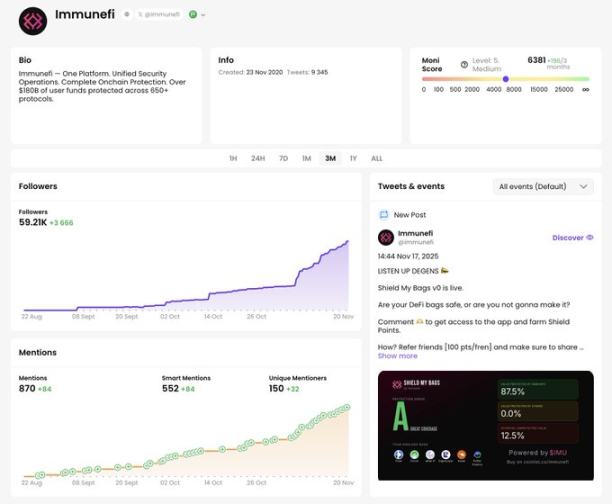
Pre-TGE Sentiment and Community Engagement
Poor market sentiment can kill your launch even before listing, but artificially inflated positivity is equally damaging.
-
Track sentiment using Kaito, Lunarcrush, or Santiment.
-
Overly positive sentiment is as suspicious as overly negative.
-
When working with KOLs, ensure their takes feel organic and balanced.
-
Evaluate influencers based on real engagement, not follower count.
-
A KOL who highlights both strengths and weaknesses of your approach is better than traditional cheerleading.
-
Track the percentage of users generating UGC (memes, threads, fan art, dashboards).
-
A healthy ecosystem should show 5–10% active creators, not just responders.
-
Start with educational content to build credibility, then shift toward conversion-focused messaging as momentum builds.
-
Activate top-tier KOLs across regions and languages, including English, Chinese, Russian, Ukrainian, Turkish, and Spanish.
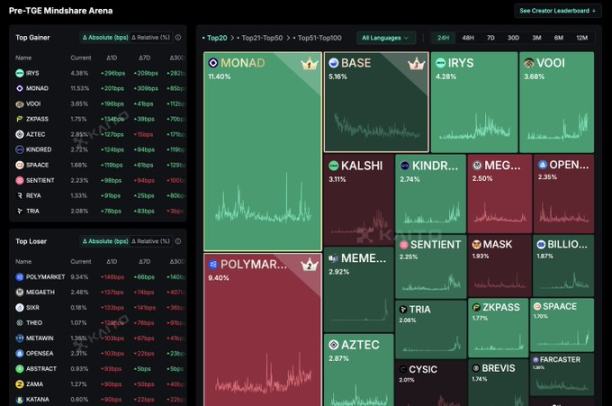
Discord / Telegram Health Check
Silent groups = silent TGE. Community vitality must be visible.
-
Measure DAU (Daily Active Users)
-
Healthy range: 10–20% of total group members
-
Below 8% means you’re operating a ghost town pre-launch
A strong GTM (go-to-market) strategy determines whether your token launch ignites or fizzles out within 48 hours.
Scale Business Development as Launch Nears
Integrations with other crypto projects are a major growth channel to generate pre-launch buzz.
In many ways, it’s easier to secure partnerships with other projects, exchanges, and market makers before you have a circulating token. Once you have a token with transparent metrics and revenue, it’s never enough.
Partner with projects that share similar user bases or target markets so you can leverage their communities and momentum.
Accept any high-quality co-hosted Twitter Spaces, social promotions, or offline events. Extract maximum value from every collaboration.
Never go silent after launch.
Silence kills momentum more than sell pressure.
-
Fail to provide post-TGE demand drivers → token drops.
-
Fail to communicate post-TGE incentives → token drops.
-
Fail to roll out a series of strong partnerships/product launches → token drops.
And nothing kills user acquisition faster than a down-only chart.
Token Economics and Economic Design
Token launches fail not because of “bad marketing.”
They fail because supply overwhelms demand.
A successful token launch (success = long-term potential) is 20% hype, 80% economic engineering.
Here’s the pre-TGE tokenomics checklist every serious team must pass before going live.
Note: I won’t cover basics like vesting/lockups/internal locks here—instead, I’ll focus on often-overlooked categories.
Basic Requirements (Non-negotiable)
These are fundamentals that separate legitimate launches from amateur ones:
-
Full transparency: no hidden allocations, no “TBA” unlocks, no incomplete vesting charts.
-
Minimized sell pressure: airdrops should vest; early buyers shouldn’t exit immediately; FDV (fully diluted valuation) shouldn’t punish retail. In token sales, terms offered to your community should match—or exceed—those given to VCs and insiders in your prior private round.
If these two aren’t met, you’re not ready for TGE.
Claim Mechanism Design
If everyone claims 100% immediately (especially in cases of generous airdrops or favorable FDV public sales), you create a massive liquidity event + no reason to hold the token.
How to fix it:
Use tiered claim options such as:
-
Option A: Claim 100% now, but at an unfavorable FDV (e.g., claim at 2x lower valuation).
-
Option B: Claim 25% now, 75% vested over 6–12 months, with higher, more favorable FDV.
This forces users to choose between liquidity and loyalty, stabilizing early trading.
Governance Is Not Utility
Tokens with governance-only functions = zero natural demand. No reason to buy, no reason to hold.
Ensure your token has real, structural utility:
-
Staking for protocol yield
-
Fee discounts or rebates
-
Access to premium features
-
Buyback-and-burn funded by revenue
-
Collateral use within ecosystem
-
Required for node operation/network security
Utility must directly tie to protocol usage.
Also, if tokens only flow out without returning, it causes price inflation and value erosion.
Consider ongoing deflationary mechanisms such as:
-
Burn a portion (0.5–1%) of every transaction
-
Protocol revenue-funded buyback and burn
-
Burn unclaimed rewards
-
Burn during redemption/minting operations
Without deflationary mechanisms, inflation worsens—you must be able to offset it.
Demand-Driving Utility Must Be Live at TGE
There are countless tokens slowly bleeding to zero because teams rushed to launch tokens before building products that actually require them.
If you haven’t launched yet, delay your TGE.
If your mainnet isn’t live on the same day as token listing, delay your TGE.
You don’t get a second chance here—don’t screw it up.
Product
This article focuses on marketing and token economics, but there’s one critical piece that can’t be ignored: product-market fit.
If your product doesn’t need a token to function, prioritize achieving utility first. Launching a token too early distorts user behavior, locks in flawed assumptions, and masks deeper product issues. While incentives may drive short-term growth, they can’t fix a product that fails to resonate.
I’ve seen this repeatedly: token launches attract massive users, but without utility, engagement collapses once incentives dry up. Tokens work best when layered on top of a product already delivering value.
My Take: What Separates Winners From Losers
Winners:
-
Organic communities, not bought followers
-
Real demand built pre-token
-
Transparent tokenomics
-
Post-TGE momentum plan
-
A token that’s actually useful
Losers:
-
Story built purely on hype
-
Hidden unlocks and questionable vesting
-
Tokens with no use case
-
Radio silence post-launch
-
Teams treating TGE as the finish line
A TGE isn’t a celebration—it’s the beginning of a stress test.
The market is merciless.
You can spend months building momentum, but one mistake—hidden unlock, unfinished utility, fake followers, or a dead community—can erase everything in minutes.
Join TechFlow official community to stay tuned
Telegram:https://t.me/TechFlowDaily
X (Twitter):https://x.com/TechFlowPost
X (Twitter) EN:https://x.com/BlockFlow_News
 @stacy_muur