Hyperliquid vs Aster: A Comprehensive Comparison – New Forces in DEX, Each Excelling in Their Own Way
TechFlow Selected TechFlow Selected
Hyperliquid vs Aster: A Comprehensive Comparison – New Forces in DEX, Each Excelling in Their Own Way
Two flowers bloom apart, in separate corners of the sky.
 Navigating Web3 tides with focused insights
Author: Nick Sawinyh
Translation: TechFlow
The decentralized finance (DeFi) ecosystem continues to evolve, with innovative protocols pushing the boundaries of on-chain trading and financial services. Hyperliquid and Aster are two emerging players drawing significant attention—though both operate within DeFi, they take radically different approaches to solving key challenges in decentralized trading and liquidity provision.
Hyperliquid: A Performance-First DEX
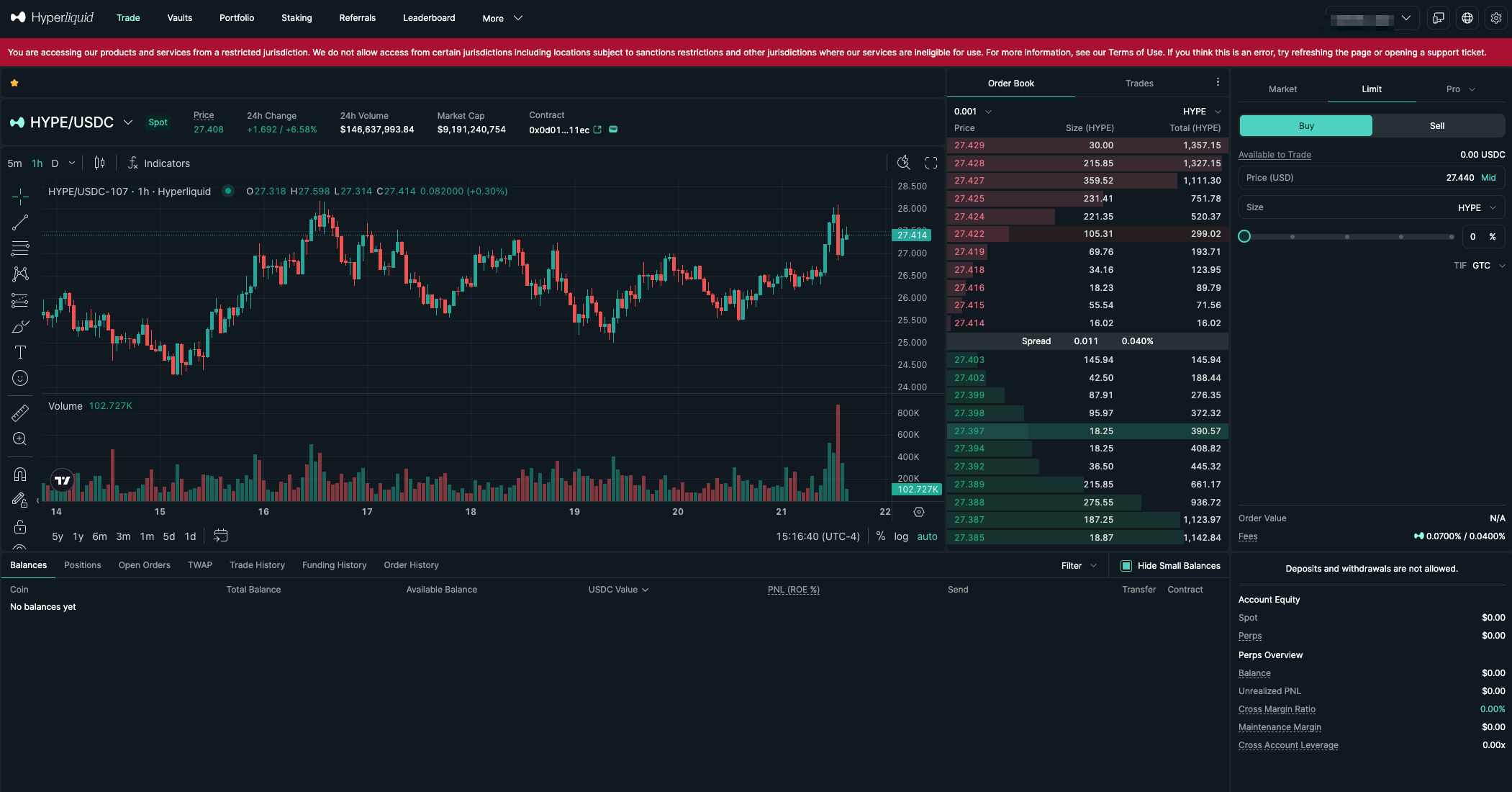
Hyperliquid represents a new generation of decentralized exchanges, built from the ground up to match the performance of centralized exchanges. Launched in 2023, it is a fully on-chain order book exchange operating on its own L1 blockchain, specifically optimized for trading. The protocol has gained notable traction among professional traders and market makers who previously found decentralized exchanges lacking in execution quality and speed. Hyperliquid’s architecture is designed for high-frequency trading, featuring sub-second block times and the ability to process over 100,000 orders per second. This is not merely a different curve AMM—it's a complete reimagining of decentralized trading infrastructure. The protocol supports both spot and perpetual contract trading, offering leverage of up to 50x on certain trading pairs.
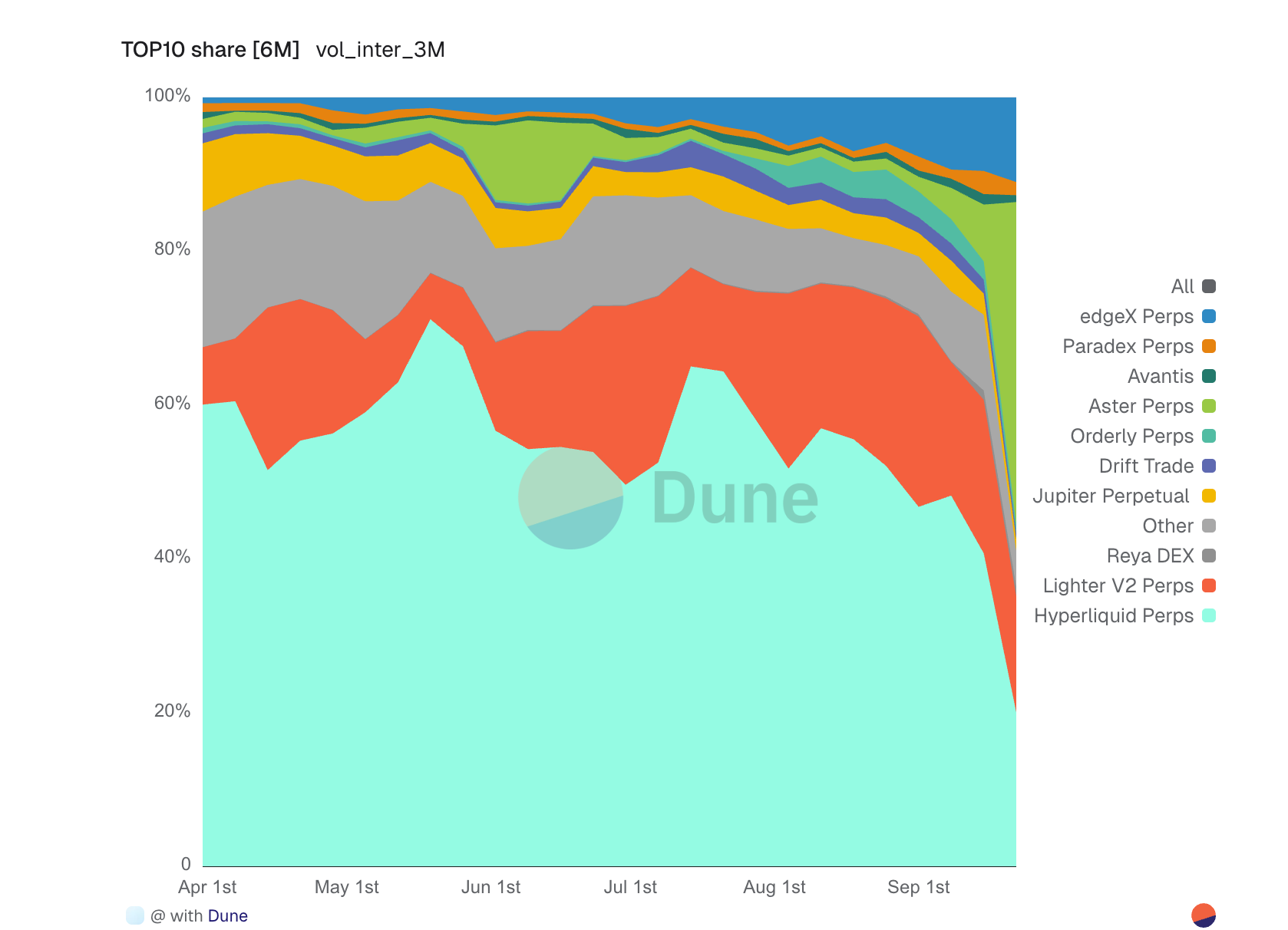
More perpetual market data on Dune
Aster: A Liquidity Aggregation Layer
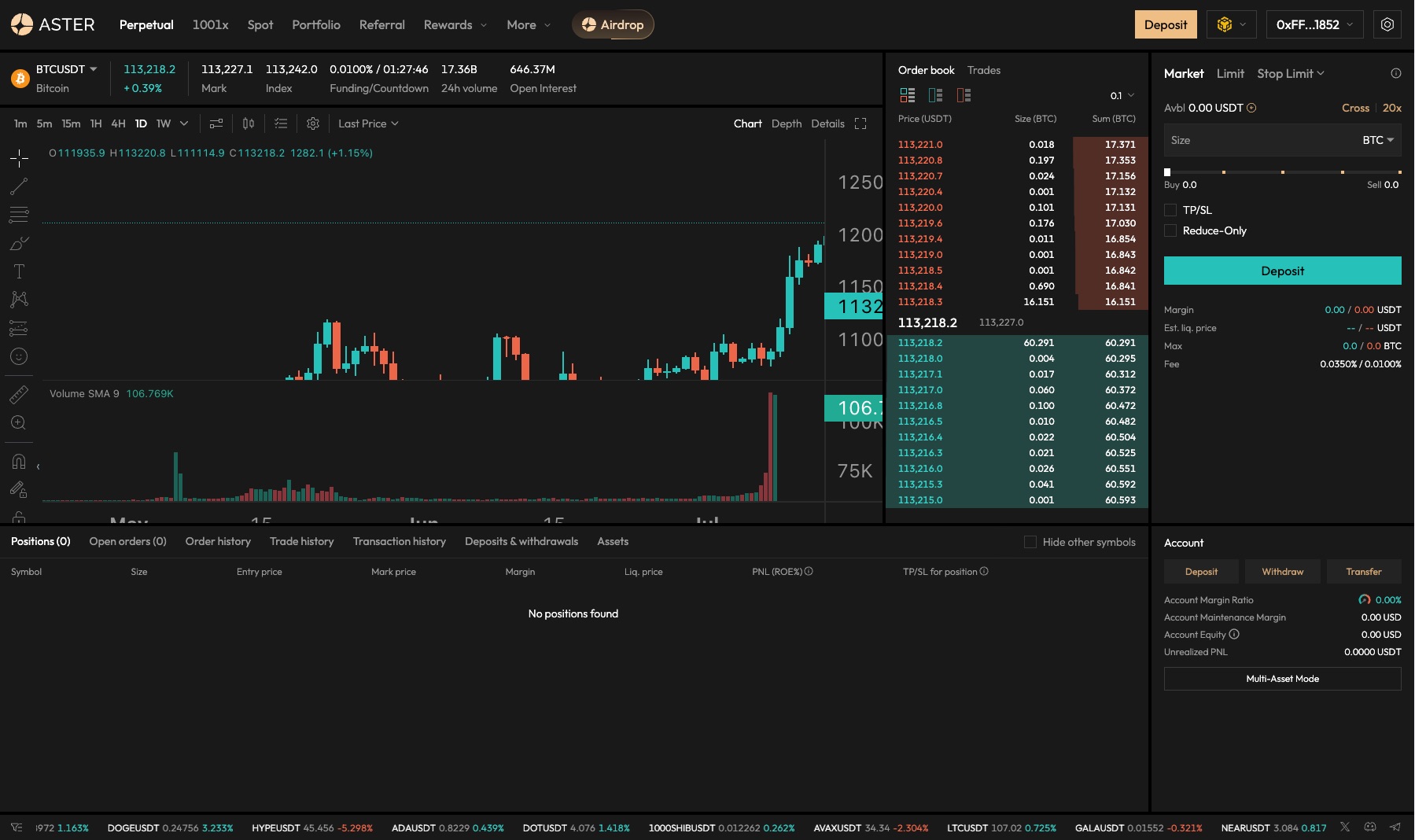
Aster, while less well-known than Hyperliquid, takes a fundamentally different approach to DeFi infrastructure. Rather than competing directly with Hyperliquid, Aster positions itself as a liquidity aggregation and optimization protocol. The platform focuses on addressing fragmentation across chains and protocols, delivering users optimal routing and execution across diverse liquidity sources. The protocol employs sophisticated algorithms to pull liquidity from multiple DEXs, lending protocols, and other DeFi primitives, simplifying the experience for end users. In today’s multi-chain environment, where liquidity is increasingly fragmented across ecosystems, Aster’s approach is particularly valuable.
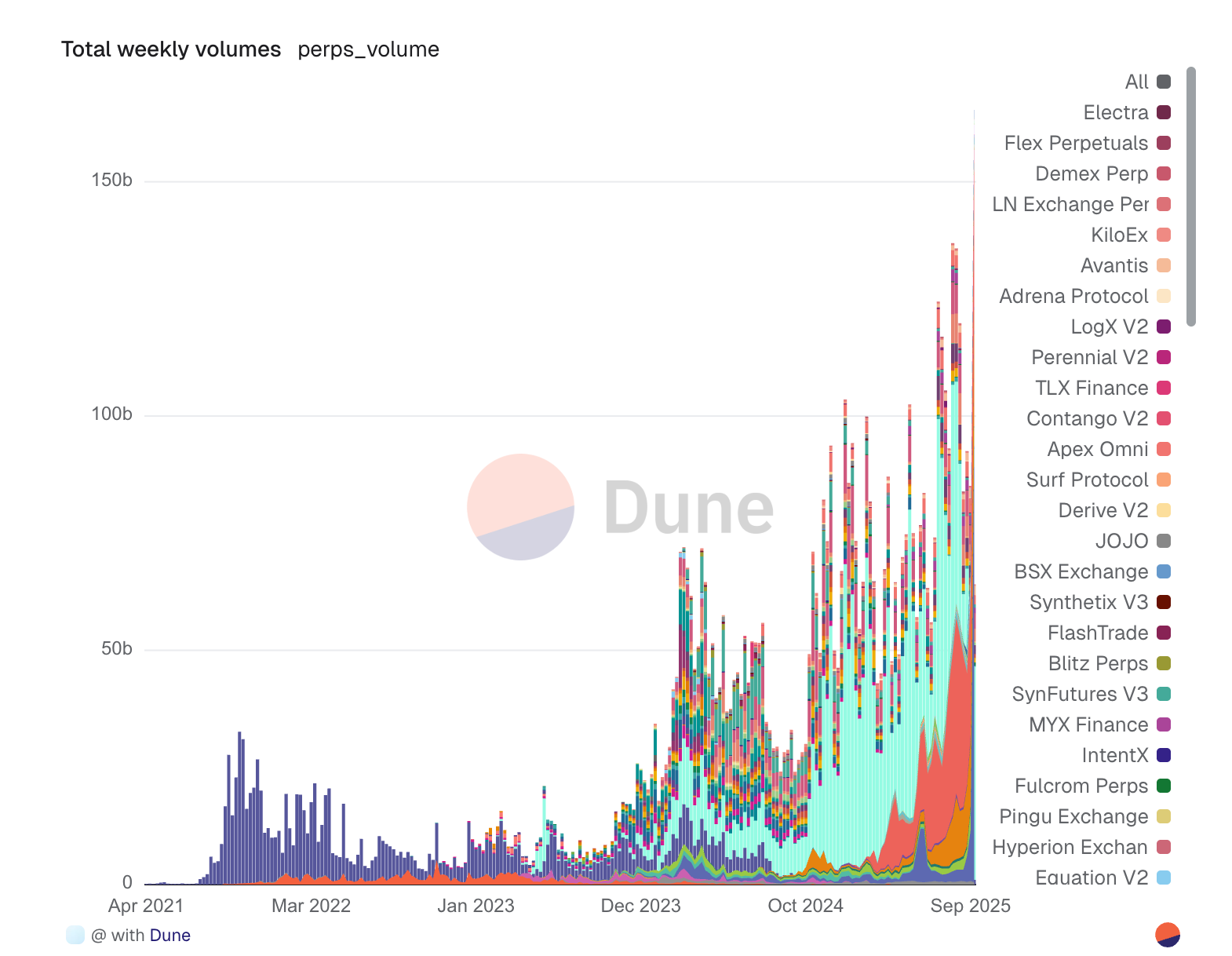
More perpetual market data on Dune
Technical Architecture
Hyperliquid’s Dedicated L1 Blockchain
Hyperliquid chose to build its own Layer 1 blockchain due to limitations in existing infrastructure. Its HyperBFT consensus mechanism, an enhanced version of Tendermint, enables consistent 0.2-second block times and instant finality. This performance is crucial for maintaining tight spreads and enabling complex trading strategies previously only possible on centralized exchanges. The order book itself is fully maintained on-chain, with every order, cancellation, and trade transparently recorded. This contrasts with many "hybrid" decentralized exchanges that keep order books off-chain but settle trades on-chain. The fully on-chain approach ensures full transparency and eliminates centralized points of failure, though it requires substantial engineering effort to achieve acceptable performance. The protocol features an innovative margin system allowing cross-margining across all positions, improving capital efficiency for traders. The liquidation engine operates entirely on-chain via a network of keeper bots, ensuring fair and transparent liquidations without granting privileged access to any participant.
Aster’s Cross-Chain Infrastructure
Aster’s technical architecture centers around its proprietary routing engine and cross-chain messaging system. The protocol maintains indexers across multiple blockchains that monitor liquidity conditions, gas prices, and execution costs to determine optimal trade paths. This real-time data feeds into a complex routing algorithm capable of splitting trades across multiple platforms and blockchains to minimize slippage and total execution cost. Cross-chain functionality relies on existing bridge infrastructures and Aster’s own validator network. Instead of building new bridging services, Aster aggregates multiple bridge providers, selecting the most reliable and cost-effective option for each transfer. This pragmatic approach reduces technical risk while maintaining flexibility as the bridging landscape evolves. Aster’s smart contract architecture emphasizes modularity and upgradability, with separate components handling routing, execution, and settlement. This allows the protocol to quickly adapt to new liquidity sources and optimize individual components without disrupting the entire system.
Trading Experience and Performance
Hyperliquid’s CEX-Like Experience
Users transitioning from centralized exchanges often remark on how familiar the Hyperliquid platform feels. The order book interface, with real-time depth charts and order flow, meets traders’ expectations set by platforms like Binance or Bybit. Order execution is nearly instantaneous, with market orders typically filled within the same block they are submitted. The implementation of perpetual contracts is particularly sophisticated, with funding rates calculated hourly based on the premium or discount of the perpetual price relative to the index price. This mechanism keeps perpetual prices closely aligned with spot markets while creating opportunities for funding rate arbitrage. The protocol supports advanced order types, including stop-loss, take-profit, and more complex conditional orders. Latency measurements indicate that users well-connected to validator nodes can achieve end-to-end order processing delays of under 250 milliseconds. While this doesn’t match the microsecond-level latency of centralized exchanges, it’s revolutionary for a fully decentralized system and sufficient to support the needs of most trading strategies.
Aster’s Aggregation Advantage
Aster’s user experience prioritizes simplicity and optimal execution over real-time trading. Users specify their desired trade, and the protocol handles all complexity in the background. For large trades that might cause severe slippage on any single platform, Aster can distribute execution across multiple DEXs or even different blockchains, often achieving better prices than any single venue could offer. The protocol excels at handling complex multi-hop trades, automatically routing through intermediate tokens when direct pairs are unavailable or lack sufficient liquidity. This is especially important for long-tail assets with scarce and dispersed liquidity. Aster’s algorithms consider not only price impact but also gas costs, bridging fees, and execution risk when determining routes. Performance metrics show that for trades exceeding $100,000, Aster typically achieves 2–5% better execution prices compared to simple single-platform execution, with advantages increasing further as trade size grows. However, this optimization comes at the cost of execution time—while Hyperliquid completes execution in seconds, Aster trades involving cross-chain hops may take several minutes to fully settle.
Tokenomics and Value Accrual
Hyperliquid’s HYPE Token
The HYPE token serves multiple functions within the Hyperliquid ecosystem. As the native gas token of the Layer 1 blockchain, it is required for all transactions. Additionally, HYPE can be staked to validator nodes, with stakers earning a portion of the transaction fees generated by the protocol. This tokenomics model creates a direct link between protocol usage and token value, as increased volume drives gas demand and higher fee earnings for stakers. HYPE’s initial distribution was community-focused, with 40% allocated through various community initiatives, including trading competitions, liquidity provider incentives, and retroactive rewards for early users. Allocations to the team and investors are subject to long-term vesting, mitigating immediate sell pressure. The fee distribution mechanism is particularly attractive to token holders: validators and stakers receive 50% of all transaction fees. Given the protocol’s growing transaction volume, this provides participants with substantial real yield. Currently, staking annual percentage yields (APY) range from 15% to 25%, depending on total stake and trading volume.
Aster’s Governance and Fee Model
Aster takes a more conservative approach to tokenomics, with the ASTR token initially serving primarily a governance role. Token holders can vote on protocol parameters, including which liquidity sources to integrate, fee structures, and treasury management. The protocol accrues value by charging a small fee on each transaction executed on the platform, currently set at 0.05% of the trade value. This fee model aims for sustainability without relying on token emissions to incentivize liquidity. Instead, Aster focuses on delivering real value through superior execution, believing users will pay modest fees for better prices and convenience. This approach may limit growth in the short term, but in the long run, it fosters a more sustainable economic model. Treasury management falls under governance, with fees accumulating in various token forms based on trading activity. A diversified treasury can buffer against market volatility and fund ongoing development without requiring token sales.
Risk Assessment
Hyperliquid Risk Factors
Despite its strong performance, Hyperliquid faces several risks. Its custom L1 blockchain, while high-performing, introduces validation risks if validator nodes are compromised or engage in censorship. Currently, the validator set is relatively small and permissioned, though plans are underway to gradually decentralize. Smart contract risks are mitigated through extensive audits and bug bounty programs, but the system’s complexity—especially the on-chain margining and liquidation engine—still presents potential attack surfaces. The protocol has had no major incidents since launch, but the risk of undiscovered vulnerabilities remains. Market risk is amplified by leveraged trading. Although the liquidation system has performed well during periods of volatility, extreme events could overwhelm the insurance fund, leading to socialized losses. The protocol maintains transparency about insurance fund levels, but users must still understand the risks associated with leveraged trading.
Aster Risk Considerations
Aster’s primary risks stem from its reliance on external infrastructure. Bridge risk is particularly concerning, as the protocol depends on third-party bridges for cross-chain functionality. While aggregating multiple bridges provides redundancy, a catastrophic failure of a major bridge could affect users with active trades. The risk of smart contract integration increases as Aster interacts with numerous external protocols. Each integrated DEX or liquidity source represents a potential vulnerability. The protocol mitigates this through careful integration processes and monitoring, but its attack surface is inherently larger than that of single-protocol systems. Poor execution may occur if the routing algorithm fails to account for rapid market movements or manipulation. While Aster has implemented various safeguards, including maximum slippage protection and sanity checks, sophisticated attackers may still find ways to exploit routing logic.
Market Position and Competitive Landscape
Hyperliquid’s Competitive Position
Hyperliquid has rapidly become a leading decentralized exchange (DEX) for perpetual contracts, consistently ranking among the top five by trading volume. Its main competitors include dYdX, GMX, and Synthetix Perps, each employing a different strategy for decentralized derivatives trading. Hyperliquid’s advantage lies in its superior performance and user experience, attracting traders who prioritize execution quality. The protocol has been particularly successful in capturing market maker traffic, with several prominent trading firms providing liquidity. This creates a virtuous cycle: better liquidity attracts more traders, generating more fees for market makers, which further improves liquidity. Currently, depth and spreads on major trading pairs are approaching those of tier-two centralized exchanges. Competition is intensifying as other protocols recognize the importance of performance. Several new DEXs on L1s and L2s are launching with performance targets similar to Hyperliquid. Hyperliquid’s first-mover advantage and mature liquidity provide a moat, but maintaining technological leadership is critical for long-term success.
Aster’s Niche Market and Growth Potential
Aster occupies a distinct competitive space, competing more with aggregators like 1inch and Matcha than directly with DEXs. Aster’s focus on cross-chain aggregation sets it apart from rivals that typically optimize within a single chain. As the multi-chain thesis matures and liquidity continues to fragment across ecosystems, Aster’s value proposition becomes increasingly relevant. The protocol has seen notable success with institutional users and DAOs executing large trades, where execution quality significantly impacts returns. Accessing liquidity across multiple chains from a single interface—without having to manage bridge complexity directly—delivers clear value to these users. Its growth potential is evident as cross-chain activity increases. The protocol is well-positioned to benefit from the proliferation of L2s and alternative L1s, which create new liquidity pools that need efficient connection to broader markets. Aster’s blockchain-agnostic and protocol-neutral stance allows it to quickly adapt to changing market dynamics.
Recent Developments and Catalysts
Hyperliquid has accelerated its roadmap through several community-approved initiatives:
-
HIP-1 and HIP-2 Stablecoin Proposals: In 2025, Hyperliquid launched its native stablecoin USDH via the HIP-1 standard and an ERC-20 version. Validators selected Native Markets to issue USDH, starting with a capped mint/redeem phase before full rollout. The reserve model combines off-chain assets like Treasuries with on-chain reserves, with earnings supporting HYPE token buybacks and validator rewards.
-
Circle / USDC Integration: Circle launched native USDC on HyperEVM, supported by CCTP V2 interoperability. This enhances dollar liquidity on Hyperliquid and introduces interesting dynamics between third-party USDC and Hyperliquid’s own USDH.
-
HIP-3 Governance Expansion: A new proposal outlines a mechanism for permissionless market listings via auctions, potentially democratizing asset listings while aligning incentives through HYPE staking.
These moves show Hyperliquid is actively working toward self-sustaining liquidity and deeper financial integration—setting it apart from competitors reliant solely on external stablecoins.
In contrast, Aster has not launched a native stablecoin. Instead, it relies on established assets like USDC and USDT for transaction routing. While this avoids regulatory and operational risks associated with stablecoin issuance, it also means Aster lacks the direct fee streams or buyback mechanisms that USDH provides to Hyperliquid.
Future Outlook and Roadmap
Hyperliquid’s Development Direction
Hyperliquid’s roadmap focuses on three main areas: decentralization, feature expansion, and ecosystem development. Gradually decentralizing the validator set is a top priority, with plans to transition to a permissionless validation mechanism once network stability is achieved. This process must be carefully managed to enhance censorship resistance without sacrificing performance. Feature expansion includes adding more trading pairs—particularly in spot markets—and introducing more advanced order types and trading strategies. The protocol is also exploring integrations with other DeFi protocols, potentially allowing Hyperliquid positions to be used as collateral elsewhere or enabling structured products to be built atop the exchange. Ecosystem development involves cultivating a developer community around Hyperliquid. The team is building comprehensive APIs and SDKs to support algorithmic trading and integration with trading bots and platforms. A grants program aims to incentivize the creation of tools and applications that enhance the trading experience.
Aster’s Strategic Direction
Aster’s development priorities center on expanding blockchain coverage and enhancing routing intelligence. The protocol plans to integrate with emerging L2s and app chains to maintain its position as the most comprehensive aggregation layer. Each integration requires careful design to ensure security and optimal routing, but also expands the protocol’s potential market. Ongoing development includes AI and machine learning enhancements to the routing algorithm, aiming to improve execution quality by better predicting market impact and optimizing split strategies. The team is also exploring integration with private mempools and order flow auctions to access additional liquidity sources. Strategic partnerships with wallets and other DeFi interfaces could significantly expand Aster’s user base. By providing aggregation infrastructure to other protocols and applications, Aster has the potential to become the default execution layer for a vast amount of DeFi trading—sometimes without users even realizing they’re using it.
Aster vs. Hyperliquid Comparison Table
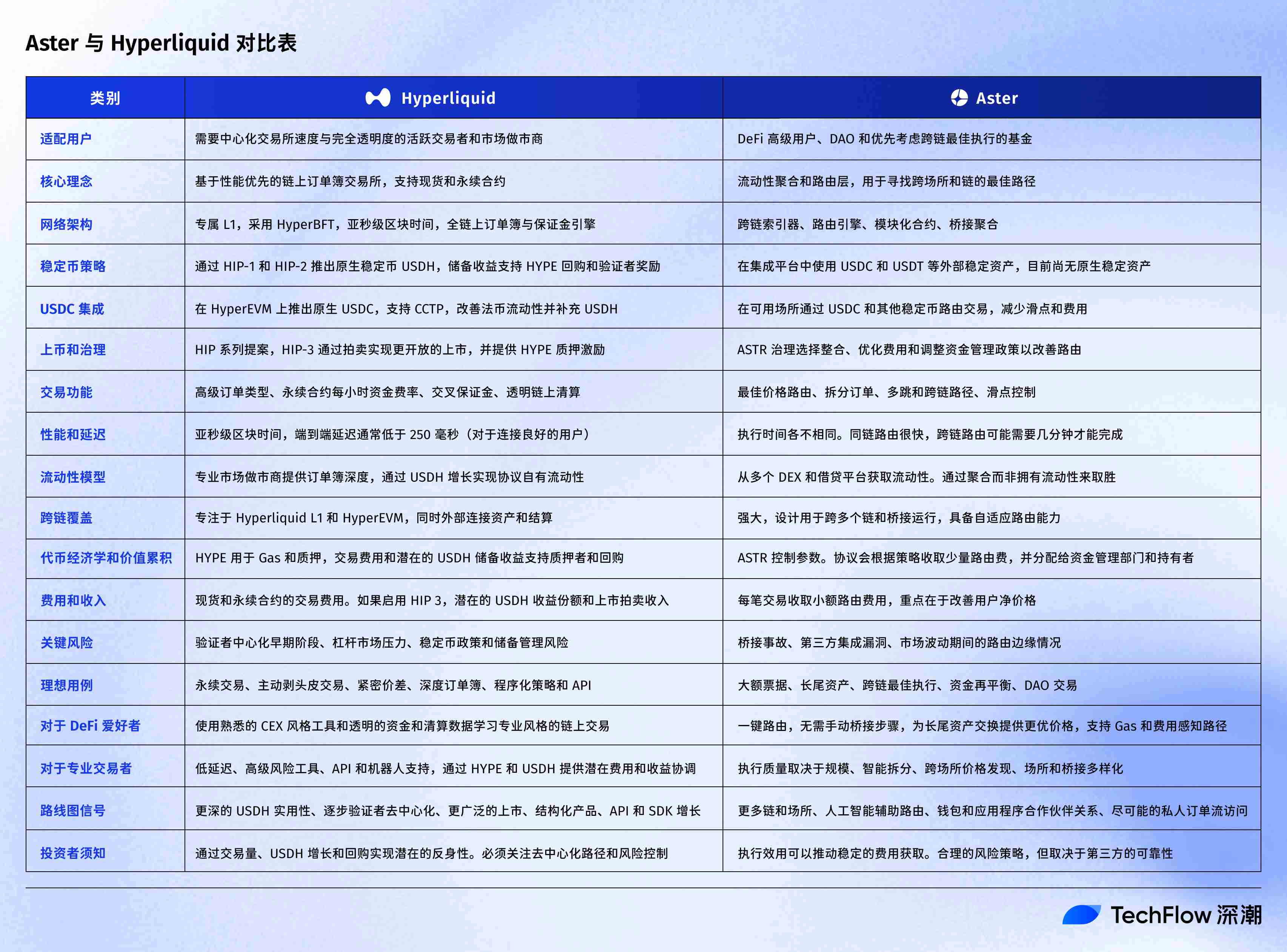
Conclusion
Hyperliquid and Aster represent two successful yet distinctly different approaches to improving decentralized trading. Hyperliquid focuses on replicating—and surpassing—centralized exchange performance on a fully decentralized platform, meeting the needs of active traders and market makers who demand superior execution. Its success demonstrates that decentralized exchanges can compete with centralized ones on performance alone, not just ideological grounds. Aster’s aggregation approach addresses another equally important challenge: liquidity fragmentation in an increasingly complex multi-chain environment. By abstracting away complexity and optimizing cross-platform execution, Aster delivers value even to users indifferent to underlying infrastructure. This pragmatic focus on improving user outcomes—rather than building another DEX—signals maturity within the DeFi space. Both protocols face challenges. Hyperliquid must strike a delicate balance between performance and decentralization while fending off intensifying competition. Aster must manage the complexity and risks associated with integrating an ever-growing number of blockchains and protocols, all while maintaining security and reliability.
The success of both protocols ultimately benefits the entire DeFi ecosystem. Hyperliquid proves that decentralized infrastructure can rival centralized systems in performance, potentially accelerating the migration of trading volume on-chain. Aster shows that a multi-chain future does not have to mean fragmented markets and inefficient capital—intelligent infrastructure can preserve, or even enhance, capital efficiency as the ecosystem grows more complex. For users and investors evaluating these protocols, the choice isn't necessarily binary. Hyperliquid serves traders who need high-performance perpetual and spot trading with a CEX-like experience. Aster serves users seeking optimal execution for large trades or access to fragmented cross-chain liquidity. Both protocols are pushing the boundaries of DeFi, striving to build a more efficient, accessible, and robust decentralized financial system. Their continued evolution deserves close attention, as they reflect broader trends in DeFi: the pursuit of parity with traditional finance performance and the growing need for infrastructure capable of managing increasing complexity. Their successes and failures will provide vital lessons for the next generation of DeFi protocols and shape the future landscape of decentralized markets.
Join TechFlow official community to stay tuned
Telegram:https://t.me/TechFlowDaily
X (Twitter):https://x.com/TechFlowPost
X (Twitter) EN:https://x.com/BlockFlow_News
 @defiprime