Liquidity is constrained, volatility is insufficient, and the apple of the prediction market is not so easy to pick.
TechFlow Selected TechFlow Selected
Liquidity is constrained, volatility is insufficient, and the apple of the prediction market is not so easy to pick.
The prediction market is still very niche at present.
 Navigating Web3 tides with focused insights
Author: David
Translation: TechFlow
This summer, I've been quietly trading while thinking about and building tools related to prediction markets. I've had an on-and-off engagement with this space for over a year since joining Polymarket around mid-2024 to participate in election cycle trading.
In June this year, the conflict between Israel and Iran reignited my passion for prediction markets. At that time, I wasn't just trading real-time events on Polymarket for entertainment—I also used it as a critical information source to guide trades in my actual investment portfolio. Over the following months, I dove deep into prediction markets, exploring their origins and multiple iterations, as well as imagining future possibilities, almost like entering an endless knowledge labyrinth.
Learning about a niche market with enormous potential, yet rarely discussed or taken seriously, was incredibly exciting to me.

Then John Wang appeared. In early August, I noticed John frequently tweeting about his deep dive into prediction markets, so I sent him a direct message suggesting we chat. While I can't share the details of our conversation, shortly afterward he fully immersed himself and, through a series of intense tweets, almost single-handedly brought prediction markets into the public spotlight.
Still, while I'm excited about the early-stage development of prediction markets, they remain in their infancy. Despite much discussion about their positive implications, if prediction markets are truly going to become a mainstream form of trading, many of the current challenges and limitations must be addressed.
Liquidity Constraints
The first major flaw of prediction markets is the liquidity problem. For most professional traders, liquidity in these markets is already insufficient, let alone enough to support large-scale fund trading. Moreover, binary prediction markets are difficult to market-make, resulting in very few willing market makers. Additionally, given the inherently low trading volumes in these markets, market makers have limited profit opportunities, further reducing their incentive to participate.
There are several reasons why binary markets are hard to market-make. First is high inventory risk and difficulty in hedging. Because these markets are event-driven, they rarely exhibit mean reversion after major news breaks. For example, a market might trade at 80% probability ("Yes") for a certain outcome, then drop sharply to 30% following new news. If a market maker is on the wrong side in such a scenario, they could be forced to hold large losing positions that are often difficult to exit. This risk could be mitigated through hedging, but simple or efficient capital solutions for hedging aren't always available.
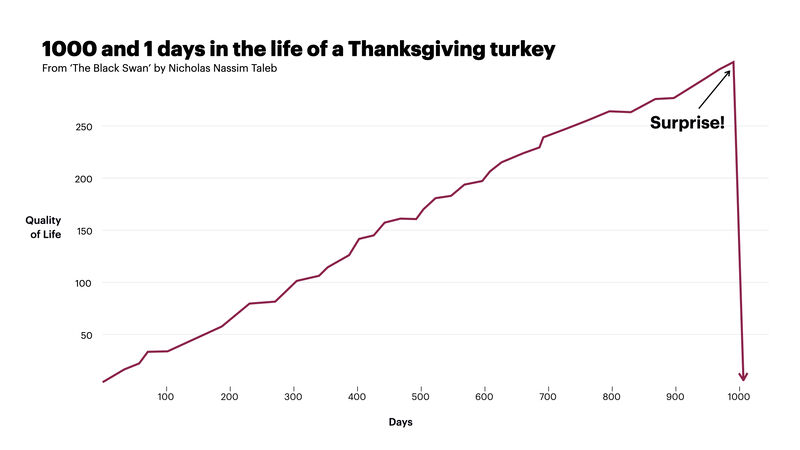
Why are market makers afraid of getting "played"?
Another issue is "toxic flow" and lack of demand diversity. Market makers typically profit from bid-ask spreads—for instance, buying shares of X at $1 and selling them at $1.01 repeatedly, without taking directional views on the underlying asset. Their profitability largely depends on having a higher proportion of "low-information demand" and a lower proportion of "high-information demand."
In the stock market, "low-information demand" usually refers to investors trading to hedge other positions or rebalance portfolios. They're not buying because they think the stock will rise, but due to portfolio construction needs. This type of demand is generally favorable for market makers because buyers are less price-sensitive.
"High-information demand," or "toxic flow," is the opposite. These buyers typically possess non-public information or some edge, believe the market is mispriced, and aim to profit through trading.
A healthy balance between these two types of buyers is essential for market makers to provide ample liquidity profitably. However, prediction markets currently lack demand diversity—beyond speculators, there are hardly any other participant types—and are vulnerable to insider-driven "toxic flow." To improve liquidity, this demand structure must change.
Retail Limitations
From a retail perspective, prediction markets also have significant limitations, which I'll briefly outline.
First, the markets lack sufficiently attractive opportunities and potential returns. Most markets on platforms like Polymarket and Kalshi tend to have low volatility, with potential returns too small to capture retail interest. Even if a seemingly certain outcome trades at 70%, if it expires two months later, it still lacks appeal for modern dopamine-seeking retail traders. Furthermore, due to the aforementioned challenges faced by market makers, these platforms cannot offer leveraged trading options to boost potential returns.
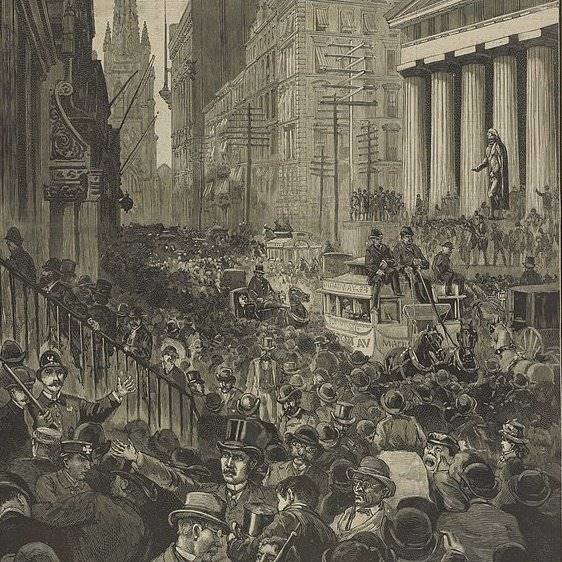
Second, the capped payoff structure of binary markets reduces the incentive for early positioning—something that's a key attraction of stocks and cryptocurrencies. There are now some new prototypes being tested that introduce reflexivity by removing binary outcomes, but it remains to be seen whether they will succeed.
Third, event-based markets reduce reflexivity. This is both a strength and a weakness—it means prediction markets are less prone to manipulation or cabal-like control issues common in crypto. However, it also limits potential returns, making it impossible to deliver the 100x gains retail traders crave. I have some thoughts on this, but won't discuss them today.
Poor Discovery Mechanisms and User Experience
Anyone actively using prediction markets has encountered numerous frustrations with the current UI iterations. The problems are simply too many, especially for power users, where these issues compound into serious headaches. In my opinion, the worst among them is the market discovery mechanism.
Polymarket and Kalshi currently host tens of thousands of markets, with numbers growing continuously, but you've likely never heard of the vast majority, and there's no simple way to find them.
Glimmers of Hope
The good news is that many of these challenges are not unique to prediction markets.
Early-stage decentralized finance (DeFi), perpetual contract exchanges, and short-dated options markets all faced similar issues. If anything, this suggests that prediction markets hold enormous opportunity. Currently, prediction markets remain highly niche.
Take Polymarket as an example: its 250,000 active users generated $1 billion in trading volume last month. In contrast, each of the top 100 traders on HyperLiquid nearly reached that same volume individually.
We can be excited about new things, but we must also stay pragmatic, acknowledging their current realities, in order to push them toward new heights.
Join TechFlow official community to stay tuned
Telegram:https://t.me/TechFlowDaily
X (Twitter):https://x.com/TechFlowPost
X (Twitter) EN:https://x.com/BlockFlow_News
 @d_gilz